Geen Resultaten Gevonden
De pagina die u zocht kon niet gevonden worden. Probeer uw zoekopdracht te verfijnen of gebruik de bovenstaande navigatie om deze post te vinden.


Text JF. Pierets Photos Jill Peters
Northern Albanian women, faced with a culture that subjugates females, live and dress as men in order to provide for their families. These sworn virgins took a vow of chastity, wear male clothing and live as men in the patriarchal northern Albanian society. In an ongoing series, photographer Jill Peters has captured the fascination of a tradition dating back hundreds of years.
When and where did you come up with the idea of making this series?
In late 2008 I was reading a book written by Serena Nanda about gender diversity around the world, and came across a chapter about the Sworn Virgins of Albania. I was intrigued by the idea of such a tradition. I knew nothing about them, nor had I ever heard of their existence. The general consensus that they would soon be dying out made me act quickly. I had to meet one and I was determined to photograph at least one. This idea soon expanded to making a documentary film and I put a crew together. We all traveled to Albania in July 2009 and some of these portraits were taken then. I returned again in late 2011 to continue the project.
Was it easy to find these women?
It was not easy to find them. The Sworn Virgins are very proud but extremely private people. The majority live in very small secluded villages not often seen by outsiders. They remain suspicious of foreigners and their trust must be earned over time. Once they accept you however, they are talkative, warm and hospitable, often offering coffee, tea or cigarettes to their guests.
They live as men yet I guess everybody in the village knows they are women – otherwise you would not have found them. Or am I wrong?
The most remarkable aspect of this tradition is that everyone knows they are women. In this culture however, the way one dresses dictates how they are perceived. A woman who cuts her hair short, wears men’s clothes and adopts masculine traits is accepted as a man. Because this practice has a long history and is associated with family honor, inherited wealth and clan survival, the burneshas are well respected and regarded as a benefit to the family. For the most part, villagers in these areas are so accustomed to knowing a Sworn Virgin, or “burnesha”, first hand that they often wonder what all the interest on our part is about.
What do they think of this paradox?
I was drawn to this project because of the paradox of a strident patriarchal society accepting a woman who switches her gender by choice. I want to make it clear if it isn’t already, that this has nothing to do with sexual identity. As westerners we tend to jump at the chance to label someone gay or straight because those seem like the only two options in our culture. The remarkable thing about these women is that they are beyond labels.
I read that this decision is more related to gender roles than to sexuality. Nevertheless they have to remain virgins. Why is that?
I believe swearing to remain a virgin for life and thus avoiding any kind of romantic relationship altogether was their only way of circumventing such labels. Regardless of any orientation, they could not be with a man and still be considered a man. Nor could they be with a woman, as that would technically be a homosexual relationship since they were known to be biologically female. Also, the Kanun, which is the tribal code still influencing many in the rural north, states that a woman is only worth half as many bags of grain as a man, but a virgin is equal to the value of a man. I find it sad in the broader scope, as a woman, that this extreme sacrifice was necessary in order for a woman to exercise her free will. Because a woman wears a pair of pants she is “suddenly” deemed capable of inheriting property, driving a car or running a business. It simply amazes me. I think the injustice in that is evident to everyone today.
Some women became burneshas when they did not want to marry the man their family had chosen for them. Again this is a sad reflection on what it meant to be a woman in those times. Once the vow is taken though, it is forever. To go back on a vow would be to disgrace the family and could result in a deadly feud between the two families that could perpetuate generations of honor killings. I was relieved to discover that for the most part, the burneshas did not regret their decision and insist they have led happy lives. Most would make the same choice given the same circumstances. They are pleased with the progress women have made in the past 50 years and understand why it is a custom that is dying out.
You said in an interview that this is an ongoing project. What are your plans?
My future plans for the project include finishing my documentary film. I’m proud to say I have a good relationship with my subjects and have developed a level of trust over the years.


De pagina die u zocht kon niet gevonden worden. Probeer uw zoekopdracht te verfijnen of gebruik de bovenstaande navigatie om deze post te vinden.
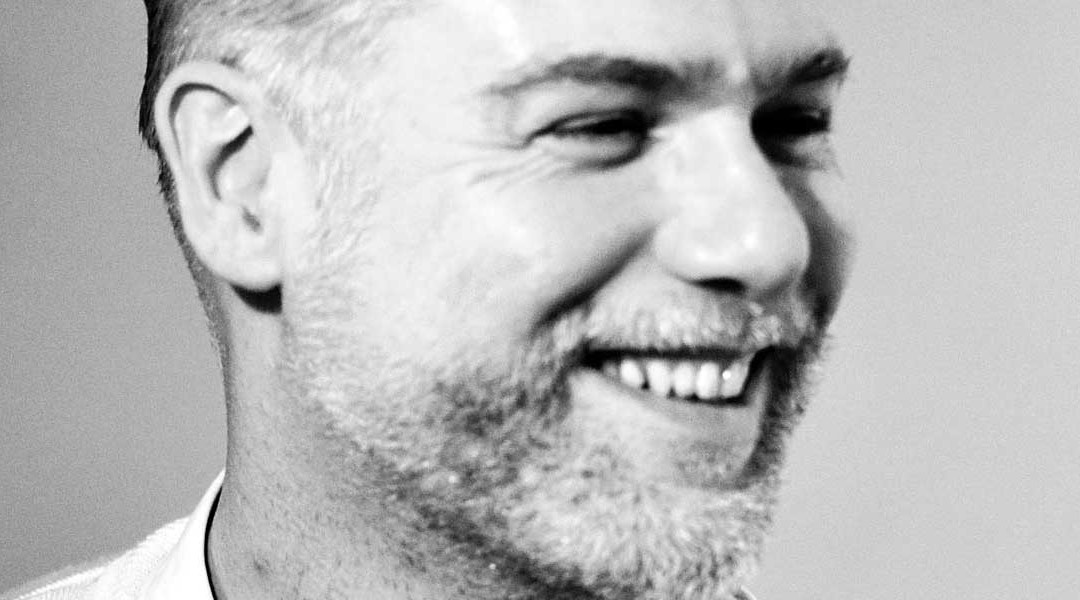
Text JF. Pierets Photos Rudy Thewis
Jonathan Kemp won two awards and was shortlisted twice for his debut London Triptych. Gay bookstore Het Verschil in Antwerp, asked to interview the British author for a live audience due to the Dutch translation of his novel, Olie op doek. A conversation about history, gay writers and a fascination for language and sex.
In London Triptych you tell three stories. There’s the rent boy Jack Rose in the London of the 1890s, of the 1950’s with painter Colin Read and male escort David, living in the London of the 1990s. The three stories explore the subculture and underworld of male prostitution. You seem to know quite a lot about the subject matter?
I did a lot of research in one way or another, and I was very interested in giving a voice to the voiceless. Male prostitution is a minority within the society of prostitution. Most of the historical focus has always been on female prostitution so they’re like a minority within a minority. As a writer you’re always trying to find a perspective that has not been tackled before and this seemed like a really interesting angle.
London Triptych started out as a short story called ‘Pornocracy’, which told the tale of Jack Rose, one of the boys who testified against Oscar Wilde in 1895. Is Jack historically correct?
Jack starts to work as a telegram boy and then he got involved in prostitution through this man called Alfred Taylor. Taylor really existed and supplied boys to Wilde so there are elements of truth from what I had gathered on research. If it weren’t for the fact that Wilde had been arrested and in prison, it would be even harder to find material on the subject matter. Ironically, given the negative outcome for Wilde, that kind of stamped it in the history books in a way that it wouldn’t have been otherwise. The transcripts of the trial have been very useful. Jack himself is an invention. He’s a mixture of a lot of different boys Wilde played with – he called them Panthers. Their danger appealed to him, their lack of gentility. He was a well-educated, upper middle class man so he liked their roughness, this spontaneity that he didn’t find in his immediate circle.
You seem like a big Wilde fan.
I have loved Oscar Wilde ever since I was a teenager. As I got older and came out myself, I got more interested in gay history. Wilde almost became this figurehead. The idea that he established in many ways, the parameters, the identity that was to go on in the 20th century. The concept that he is almost the prototype of the modern homosexual. He gives it a shape, a voice and a way of being. That was always fascinating to me. I often think the work is overshadowed by his life but I find him an incredible wordsmith. The poetry and ideas in his books have always appealed to me.
Your love of Wilde, the fact that London Triptych is populated by rent boys, models, aristocrats, artists and gangsters,… are you a little nostalgic?
I must say that Jack became my favorite character, that was my favorite piece to write, What appealed to Wilde in these boys is what appealed to me when I got under Jack’s skin. There must have been many Jacks in London at that time and the more I read about queer history, the more I became interested in trying to represent that minority voice.
The minority voice stays but times are changing.
Jack could go to prison for what he was doing, but David, the male escort in the 1990s, is free because of the change in the law in 1967. It’s sort of a history of gay liberation and the humanitarian progress during the century.
The book is filled with sex but it remains sexy instead of becoming a dirty story. It’s a thin line between what your write and pornography.
I’m fascinated by the way that language expresses human experience. Pornography is the most straight forward way sex can be represented. It has a very specific aim and that is to turn you on. There’s nothing wrong with that but it felt a bit limiting to me. I’ve always been attracted to writers like Jean Genet, who wrote about sex in a much more poetic way. For me it was essential to the book that sex had to appear but not in a sort of bashful way. The most interesting thing is often ‘what goes where and who does what to whom’, so I wanted to find much more different metaphors and to describe the emotions rather than the mechanics.
When I read the book if felt like all 3 characters were imprisoned. Because of love. Is that so or is it just my imagination?
As much as sex was an important aspect, love was also. When it became clear to me that this was going to be a novel about prostitution, I wanted to write three love stories. Love coming from the least likely places for example. They are very tragic love stories and I wanted to overturn the cliché of the hard-bitten prostitute who is incapable of love. So love and that trajectory of love is very important.
You ran a theatre company in the 90’s. Why did you switch from that to writing novels?
Writing theater plays was actually a diversion from writing prose. I have always written novels. The first one I wrote was when I was about 17. But I didn’t really pursue it very hard. Every writer gets rejected by publishers but when I got the letters I gave up quite quickly, thinking it was no good. At that time I was living with an actor who wanted to do his own plays so I thought ‘how hard can it be?’ We started of with monologues, it was a one-man show, and after a while I added more characters and got more confident with each play we did. When the company disbanded because there wasn’t enough money in theatre – even less than in books – I went back to writing prose. So London Triptych was the first novel I wrote after the excursion into the theatre.
Your second book is called Twentysix. It’s not a novel nor is it a collection of short stories. I wrote down: ‘Poems about sexual encounters between men. One of every letter of the alphabet’. It’s completely different from London Triptych
It is, but I think it picks up on some of the themes of London Triptych. When I was writing about London and its sexuality, I was trying to gain some originality or poetry in the descriptions. I wrote Twentysix almost immediately after the novel was finished. At first I just wrote down these short episodes, these short encounters. I was exploring language and post structuralism, reading Derrida, Bataille, and wanted to experiment. Midway through the book I considered what to do because I could go on writing about these sexual encounters and publish this huge volume, so I had to put a limit to that. 26 seemed like a slim manageable number.
I read on the net that you once said; ‘I think sometimes being gay has led me to broader horizons than it otherwise would be.’
I think straight comes with a script. You are aware of the life trajectory you’re expected to follow. The model you’re expected to conform to. You’re going to get married, have children, a mortgage. I’m not saying that all people do – and I know straight people who forge a different path – but I think that, when you don’t have that script at hand, you create new possibilities. You kind of invent a way of being. And there is a sort of courage that comes from having to live outside that mainstream model. There’s a security in that model that is not available to you.
It’s a different way of being in the world. You have to be more original in the things you are going to be or going to do. Just that slightly greater edge of invention.In London Triptych, David describes playing a game when he was a child, standing on a train track, with all his friends. The game was called ‘chicken’ and was about who could stand there the longest. David always won. This unanticipated courage, that was me. I knew from the beginning that staying where I grew up would kill me. Spiritually.
Being gay is as much about character as having a sexual drive?
Whether moving to London had to do with my sexuality, I don’t know, maybe that was a force of character that made me invent and explore. I do think it had to do with the sexual exploration and with courage, I find it hard to separate the two.
Some gay writers don’t want to be referred to as being ‘a gay writer’. Because they are also a white writer, a male or female writer, an American writer,… Yet you don’t mind being in that category.
I don’t. You can call me a black writer if you want to. I can understand why people are against it but then I think; ‘you are gay and you write, so why not’. I feel that it can work negatively because maybe straight readers wouldn’t go for a gay book. While gay readers will rush to it, but nevertheless will also read lots of straight books. So I understand why that label can feel restricted but I don’t mind. I love to write for gay people. It matters to represent these lives in books. People identify with what they read so why not write for gays. I can imagine that some straight people might find a book like Twentysix quite alien but then again, parts of their lives are alien to me. I’m not trying to write for everyone, I’m trying to write for people who can find something in my work. If a straight reader has an open mind, well go ahead. When I came out, exploring my own sexuality, I discovered there was a whole history of gay men writing. That was great! To know that now, after centuries, you have bookshops filled with gay writers is just fantastic. Its history is very short compared with the history of literature, but to discover people like Genet, Vidal or Capote who were exploring and experimenting was a revelation. By putting a label on it, it allows gay readers to find those books. Because if you are confronted with this huge mountain of literature as a gay man or a gay woman, you are going to want to find the books that speak to you because we are all looking for books that give us alternatives. The alternative to see the world from a different consciousness. So I think if you are looking for gay books and there is a big sign where to look, I don’t mind. I find it very useful. It saves you a lot of time. It’s all about things you want to share.
You are not afraid to exclude readers?
Those kind of closed minds are not the kind of people you want to speak to anyway. I can’t say that I’m never going to read a book by a straight person because they have nothing to say to me. Then you will be missing out so much of the things I’ve read and enjoyed.
You are working on a third book.
Yes, and it’s almost finished. My first two books are very related because I was fascinated about sex and language. My new novel is something completely different. The main character in All There Is + All There Is Not, is a 65 year old woman who lives on a narrowboat in North West London. One day she’s out shopping and she sees the spitting image of her first husband who died 40 years previously. She thinks she’s going mad. She keeps on seeing him and it turns out that he’s not a ghost, not a figment of her imagination but a gay man with a striking resemblance, like people often do. He becomes a portal to her. And like Alice she’s tumbling through a portal to an entirely different life and culture.
Sounds great! Looking forward already.
And last but not least. What’s your most flamboyant future dream?
I would love London Triptych to be made into a TV series. A British 3-part TV drama.
And if you were asked to play one of the characters? Who would you choose?
Oscar, of course.
www.myriadeditions.com/jonathankemp
www.birkbeck.academia.edu/jonathankemp


De pagina die u zocht kon niet gevonden worden. Probeer uw zoekopdracht te verfijnen of gebruik de bovenstaande navigatie om deze post te vinden.

Text JF. Pierets Photos Paul Buijs
Young, reckless and fresh from the Arnhem art academy. In order to find a suitable subject for his graduation project, Paul Buijs went where no other student would follow; the shady underworld of gay darkrooms and sex parties. Hovering unsettlingly between fiction and reality, documentary style and art photography, Buijs’ work is of an unedited realism. What normally stays in the shades is now brightly lit up in an uncomfortable, confronting way. It reveals a curious and previously unexamined aspect of the gay scene, and provides a window into the collision of the club life, kinky sex and dark cellars that color the streets of Amsterdam.
Paul just returned from his exhibition and lecture at the Berlin Porn Film Festival when we meet. He’s once again flabbergasted by the way people react when confronted with his pictures. “It’s weird to experience that people are still to be shocked since it was never my intention to provoke. When searching for ideas that would suit my graduation project, I was a frequent visitor of the Warmoesstraat and the Regulierdwarsstraat in Amsterdam. The gay areas, so to speak. I started to take pictures and soon my teachers pointed out that I was on to something.”
During that time, Paul got very much intrigued by an article called ‘Life When The party is over’. Written by a psychologist who had made a study on gay men in their mid 30’s – 40’s and published in Wink magazine. He stated that a lot of gay men weren’t able to enjoy their teenage years because of their family for whom they only came out of the closet when they were already in their 20’s. Due to the social impact of such oppression, they started their outgoing life when most straight people in society started to settle.
A phenomenon that in a lot a cases leads to heavy party life and the drug use that often goes along with it. Not to speak of a low career expectation. “This article explained what I questioned: what lies behind the surface of that fashionable, sexual and glamourous appearance. What was behind the mask of the people involved in this scene?”
Still in the stream of perfectioning his art school assignment, his teachers advised him to focus on his signature. Being a huge fan of the Disney and populair culture he swiftly found a symbiosis between the personages that populate his work and the alienation of mainstream entertainment. “All Disney characters are drawn in a certain, monotonic way. They all have the same glance, facial expression and are very similar in style. It stroke me that a lot of my fellow party people wore the same Fred Perry shirt, the same Bikkemberg shoes and had the same hair-do. By asking to wear a mask I wanted to underline the oneness of a certain scene, by making it half a mask, I made a pairing between the monotony of the public statement and their own private personality. “
With the best will in the world you can’t say that Buijs’ work is approachable or reassuring, hence the numerous galleries who rejected his work for being too shocking and the multiple reactions of viewers who found his images to confronting, to surreal, to raw and to bright. “I had no idea my work would have such an impact. I have the upmost respect for my models and I always show them their picture before I make it public because they still can be recognized despite of the mask and I shoot them while we both experience an autobiographical moment of obsession and dependency. The images are viewed like a private journal made public and it works out to be a little too much to handle for a lot of spectators. For example I got fired as a teacher because they thought my work to be too dangerous for the children and their parents. I don’t quite get it, but let me tell you that I’m too passionate and too engaged to just give up. I invariably believe that somewhere, sometime my work will be acknowledged so I keep on going”.


De pagina die u zocht kon niet gevonden worden. Probeer uw zoekopdracht te verfijnen of gebruik de bovenstaande navigatie om deze post te vinden.

Text JF. Pierets Photos Courtesy of Buck Angel
Buck Angel is a female-to-male transsexual and founder of Buck Angel Entertainment. As an adult actor, he was able to create a unique niche, calling himself “The Man With a Pussy”, as he had not had any genital surgery and still possessed a vulva. In 2007 he received the AVN Award as Transsexual Performer of the Year and in April 2008 he was presented with a “Feminist Porn Award” for “Boundary Breaker of the Year”. Today, he travels the world as an inspiring advocate, educator, lecturer and writer. A tête a tête with an inspiring personality.
In an interview I read that you always wanted to be a man. Nowadays, your individual self is your brand. How does it feel to be looked at as something special when for you it was inevitable?
I always felt like a man, so of course I wanted to be looked at as a man. I felt this way my whole life, but so many people did not see me that way when I was younger. As I got older it made me feel horrible about myself. When I was able to change my physical appearance to match how I felt on the inside, it made me the happiest person in the world! I am so happy that now people see me for the man I am and it makes people realize that you can become whoever you want to be. Society should not put limitations on you just because they do not understand. So I like that the world views me as something special; I think this is a good thing.
Transwomen are more visible than transmen. Why do you think that is?
Well I cannot speak for transwomen or transmen, really. I think we are all different in how we want to be visible in the world. Though I do think the visibility of transwomen has been more widespread because they have been around longer as a community. Transmen have just started to become more visible because the community is now becoming larger and more active.
You are – amongst many other things – a pornstar, an educator and a writer. Yet, there’s a very fragile glance in your eyes.
I am indeed all the above, though I’d like to think of myself more as someone who motivates people to think outside the box and to become themselves, like I have. My eyes…well I have lived through some rough times before my change. I was homeless and suicidal, and I was a drug addict. My past was sad in many ways, but I like to think that I have overcome it. Maybe my eyes still show the hurt that was in my soul for so many years? I know that this pain has helped me to have compassion for others. I feel very blessed and grateful for the happy life I have now, and I hope that I have the ability to inspire others to overcome the pain.
You just started a dating site for transmen. “Buck Angel Dating. A safe environment for those seeking out relationships or just fun with transmen and the people who love them”. What if it turns out to be a site for fetishists? Would that bother you?
Interesting question. Why do people think that fetishizing something is bad? I am not saying that this site was intended to do that—I just opened the site for people to have a place to meet because there was clearly a lot of demand. It isn’t just for people looking to have a partner but to also for those who want to meet to have sex without having to explain their transgender status. On my dating site that is not an issue, so you can just get on with having a good time. Some people enjoy being fetishized; I do. So maybe some people will go there with that intention? You know there are some in the trans community who call themselves “activist” and they hate that I am a pornographer. They think it hurts the trans community. I think that is so sad, because my whole life changed for the better when I finally learned to love my body and have sex without feeling guilty. Many trans people feel that someone will never want have sex with them or they don’t feel sexy because their bodies are different than what society tells us is sexy and normal. My work helps to change that and show that if you love yourself (and yes, that includes sex) then others will too!
You are a pioneer and an educator. I think that comes with large responsibilities? When did you decide to talk to people about your experiences?
You are right—it came with a bigger responsibility than I thought. I have learned so much by putting myself out there. I have had some in the trans community tell me that I am a bad person for saying things that I felt were important. But you know I think that by talking about my experiences some people (or maybe many people) can relate to me and feel less alone. I had a tough time in the beginning of my change as I had no community and no one to talk to or identify with. I think by me talking about this I can show how far I have come just because I had determination to be myself.
The other reason I feel passionate to talk and educate is because some people in the trans community say there is only one specific way to be a trans person. This makes me even more passionate and I want to help the people who are individuals and who want become their true selves, and not have to fit how the community wants them to be.
Your website reads that you are “re- defining gender and educating an entire generation on the fluidity of sexuality and identity politics.” I guess that sounds very complicated to someone who’s not into the subject matter. How would you rephrase your message to the mainstream public?
I think you are right about that. Maybe I should rephrase it for the mainstream and say something more like, “Showing you that becoming yourself and loving yourself can make you happier.” This is really the message I want to project. Since I have learned to love myself and create the body that I always wanted to have, I am so happy and comfortable with myself. It can be quite tiresome to always worry what people think of you and it can make life miserable—not just for trans people but anyone. I have all kinds of friends and fans who ask me all the time, “How can I live life like you do, without a care of what other people think?” I would always say that “Just learn to love yourself and become yourself.”
The overriding theme of your work is about self-love and acceptance. Are you a positive & optimistic person?
For sure I am! This is truly one of the keys to being happy. It took me many years to learn this but with determination and the desire not to have hate in my life, I have done it. The odd thing is that I notice the more “popular” I become, the more of a target of hate and envy I become for some in the trans community. Their hateful words kind of shock me sometimes, but I learned to not take these comments personally. I know that these people have not learned to love themselves like I have. They experience these reactions towards a person like myself who is free of that.
“A day in the life of Buck Angel”. What to expect?
Ok, you will be shocked! I think people think I have some crazy lifestyle but really I am pretty mellow. My days are spent at my awesome home in Mexico (if I am not on the road working). I am married and have 7 rescue dogs and spend my time with them. I love to read and also workout everyday. I am also very much into health and fitness. I think this is a very important part of loving yourself.
It was great talking to you. Thank you very much and I wish you lots and lots of success.
Thank you so much for the interview and I hope that my work can help to inspire some of your readers.


De pagina die u zocht kon niet gevonden worden. Probeer uw zoekopdracht te verfijnen of gebruik de bovenstaande navigatie om deze post te vinden.
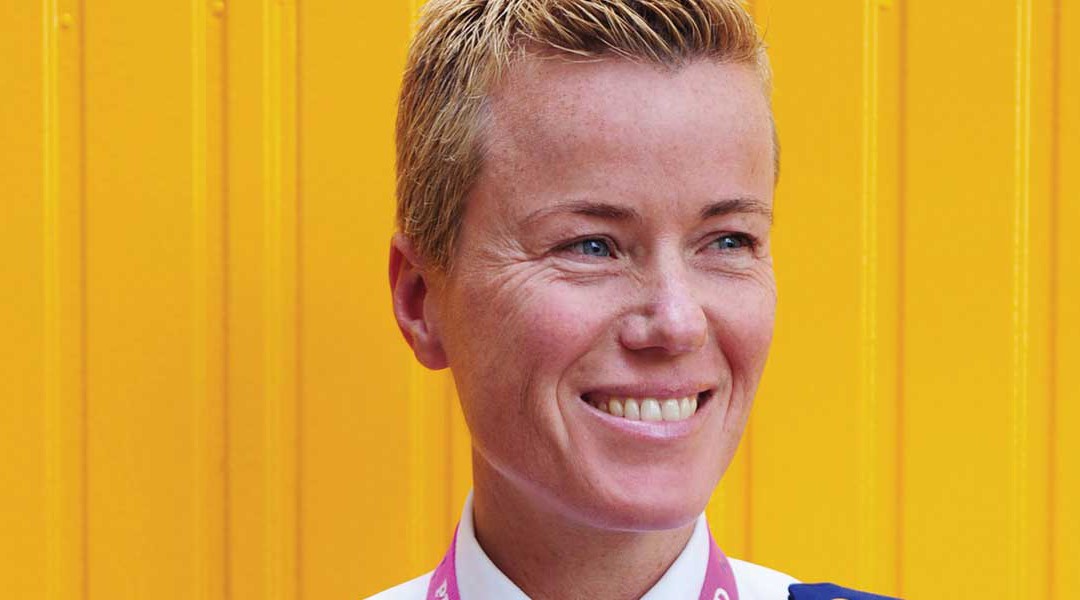
Text JF. Pierets Photos Myriam Missana
There are several networks that focus on specific groups within the Amsterdam police force. One of these networks is ‘Roze in Blauw’ (freely translated as ‘Pink in Blue’). It promotes the interests of gays, lesbians, bisexuals and trans genders in- and outside of the police force. The members of Roze in Blauw are there for people who need to report discrimination, insult, abuse or theft because of their sexual orientation. They offer a listening ear and can refer or mediate when necessary. Et Alors? Magazine talks to Ellie Lust, spokeswoman of the Amsterdam police and president of Roze in Blauw.
In the beginning
Roze in Blauw started in 1998, the year the gay games came to Amsterdam. The numerous participants arrived from different parts of the world. Parts where homosexuality was a criminal offence, or where the death penalty was still sentenced. We thought about how we, as a police force, could let those people know that they were safe with us. We are talking about people who were locked up in psychiatry for 5 years, just because they were kissing someone of the same sex. One of the stories we were told was that twenty people would be trapped in one room and food was shoved under the door, until one day the door would open and they’d be thrown out without a single word of apology, or an explanation for that matter. Because the police would not usually be on their side, we found it quite important to create a safe haven for them to turn to, as you can imagine. The theme of those years Gay Games bethought Friendship, so we invented a slogan that said ‘Proud To Be Your Friend’. We felt we had to let all the guests know that they were welcome here and that they were safe with us. After the festivities ended, we realized there was a great need for a reporting point where people could tell their stories. We tried a lot of things: from consultation times at the COC to pre-announced hours by phone. It was only when we created a separate Roze in Blauw number that it finally started to work, because when people want to report an insult they don’t want to have to wait until office hours to do so. Yet it took until the Chris Crane incident for them to find their way towards us. The American journalist was molested in 2005, when he and his boyfriend walked on the streets of Amsterdam holding hands. Crane wrote about the assault in The Washington Blade, the gay magazine of which he was the editor in chief. “I hope our gay friends in Holland realize that it’s a bit too soon to declare victory and go home, now that they’ve won their legal battles”, he wrote, referring to same sex marriage being legal in the Netherlands. This incident put everything on a roller coaster and soon we had to submit a press release in which we stated that people, faced with violence or behaviour focused against their sexuality, could contact us via that special phone number. Although we were already there for about 8 years, the media picked it up as ‘Amsterdam Police Founded A Special Team’. Suddenly there was a Roze in Blauw team and they started asking us for advice. East European countries and the police top all over the world invite us to inform them on how we make contact with the community. I sometimes proudly call us ‘world champion’.
Facts and numbers
As from 1997 we effectively started to submit the indictments. What we see is that from ‘97 until now there’s an ascending line in violent incidents and other issues that people encounter; threats, discrimination and so on. In 2007, for example, we counted 234 incidents. Those are incidents in the broadest sense of the word; people who were threatened, both physically and psychologically. People who got eggs thrown against their windows or who got beaten up, all kinds of harassments. In 2008 we counted 300 incidents, 371 in 2009 and 487 in 2010. So we register 1 or 2 incidents per day in Amsterdam. Nevertheless, those numbers remain difficult because we never know if those increasing numbers are a sign of the times or because we’re profiling ourselves at almost each event in order to lower that threshold. Two years ago, Dutch newspaper Het Parool and the local news channel AT5 had a research program and one of the questions was, “Do you call the police when something happens to you?” It turned out that only 9% did. But does that mean that the violence is 11 times as high? As you can see, those numbers stay very objective.
The victims
There are various reasons why people don’t report sexually oriented discrimination. For instance, quite some men meet at gay spots but live a heterosexual life in their everyday reality. They don’t go to the police when they are violated. The shame factor is not to be underestimated, either. When you take a man home from a club and you get beaten up, it’s quite likely that it will flash your mind that people will think it’s your own fault. Women experience a different kind of violence. More often they will encounter sexist comments, such as “surely you never met a real man before” or “can I join?”. There are a lot of cases where women get seriously beaten up but the assault remains mostly verbal. We also experience that women don’t think it’s a big enough deal to go to the police and that’s bad because if they don’t report it, it didn’t happen. Unfortunately a lot of people don’t make a fuss about violence when they are gay or trans and that really ought to change.
The perpetrators
Research to perpetrators of gay violence shows that religion has less of an influence than everybody thinks. Macho behaviour, on the other hand, is a very big problem. Young men of between 15 and 25 years old often can’t stand seeing other men behave in a more female way so they want to teach them a lesson in how to be a real man. Not only coloured people are guilty of such behaviour, the Dutch men are also represented.
The roze in blauw team
When people call our team they talk to someone with the same sexual orientation. That helps a lot when it comes to overcoming shame. In order to make the entire force aware of the problem, we now organize – together with COC Amsterdam – sensitivity training days. Until now it’s been very useful and beautiful. And of course there are moments when things go wrong but it’s quite clear how all policemen and -women think about inequality. Police work in general is about 80% behind closed doors. Most people have no idea because the only thing that’s out in the open is when we write a parking violation ticket. We do a lot of social work and next to our Roze in Blauw team we also have – amongst others – a Turkish, Antillean, Jewish and even a Christian network. You name it, we have it. Every specific force can be deployed in a particular problem. In the end, it’s all about connection. People from the outside can only connect with the police when there is certain recognition. In my opinion every police force in the world should be a reflection of the people in the street. That’s the only way to find each other and that’s the only way we can do our jobs properly.
Here and after
The Roze in Blauw team gives lectures all over the world. It’s a process where we take steps forward and the occasional step back. It’s not always easy and it’s a lot of work because next to being part of Roze in Blauw we are also just normal cops. I’m the spokeswoman of the Amsterdam police and the president of this special network. That makes for pretty long days but I cannot tell you how proud I am. I’ve been part of the police for almost 25 years now and I witness progress every day. Nevertheless, I dream about ending the Roze in Blauw team, because that would mean that we no longer experience violence against homosexuality.


De pagina die u zocht kon niet gevonden worden. Probeer uw zoekopdracht te verfijnen of gebruik de bovenstaande navigatie om deze post te vinden.