Geen Resultaten Gevonden
De pagina die u zocht kon niet gevonden worden. Probeer uw zoekopdracht te verfijnen of gebruik de bovenstaande navigatie om deze post te vinden.

Text JF. Pierets Photos Courtesy of Laura Coppens
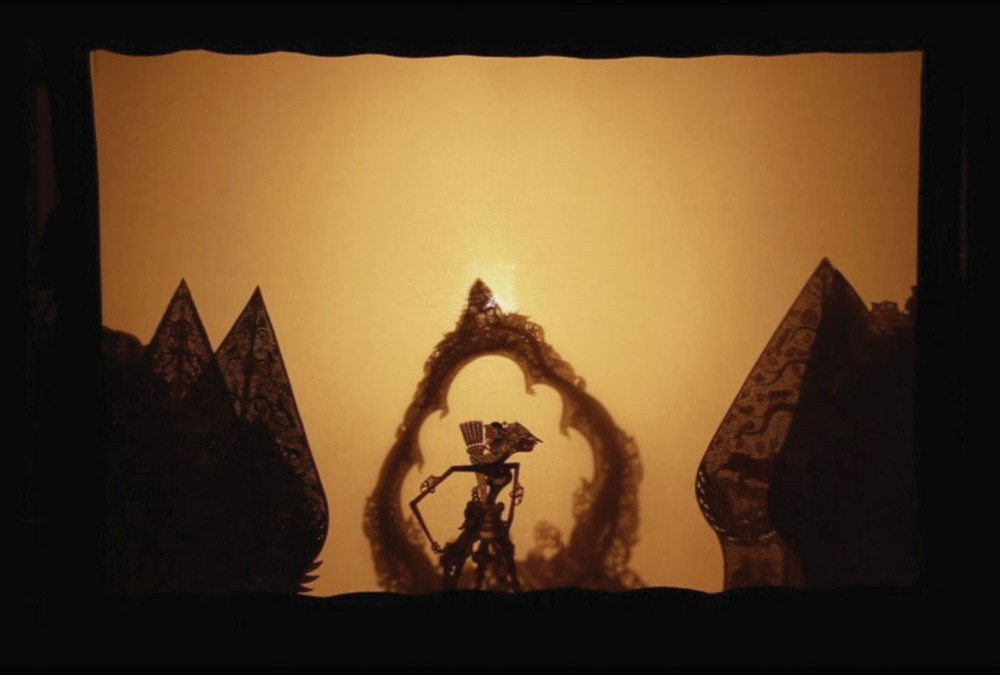
Children of Srikandi is the first film about queer women in Indonesia, the country with the worlds largest Muslim population. Eight authentic and poetic stories are interwoven with beautiful shadow theater scenes that tell the story of Srikandi, one of the characters of the Indian Mahabharata. This collective anthology transcends the borders between documentary, fiction and experimental film.
A little girl wants to be a boy. A bench becomes a home and a witness to life. A house does not feel like home anymore. A veil makes you reflect on religion and sexuality. A verse of a poem is like a day in your life. A love can be in between. A female stereotype can be deconstructed. A label can be changed. In Children of Srikandi, participants collectively worked as crew members or actresses in each other’s film, with individual stories ranging from observational documentary and concept art to personal essay. We see that change is possible on all levels of the film: personal, political and formal. Transformation is always inscribed in the narrative; form and identity are fluid; perspectives are shifted. The moving individual stories are interwoven with the tale of Srikandi, an ancient mythological character of the Mahabharata, a well-known Indian epic, which is still frequently used in the traditional Javanese shadow puppet theatre plays (wayangkulit) throughout Indonesia. Srikandi is neither man nor woman, moving fluidly between both genders. When she falls in love with a woman, she has to understand that the only way to survive is to become a “female warrior”. She is one of the few prominent wayang women figures, and while other women in the tales are devoted mothers and wives, Srikandi is the ultimate model of independent womanhood; strong and brave, heroic and active. She is a female warrior. This explains her popularity with many Indonesian queer and feminist women. The puppeteer Soleh gives his voice to Srikandi, while the singer Anik expresses the character’s emotions. As transgender queens they reinvent themselves within the classic Indonesian perception of women, while the short films deconstruct the classic picture. It is the opposed representation of gender that creates an impression of a fluid, oscillating advancement of the film. A spectacular linguistic and religious diversity is revealed: the original languages are Indonesian, Javanese, high-Javanese and Sundanese. The religions involved are Muslim, Christian and Buddhist. Children of Srikandi brings this tale back to the screen and reminds viewers that homosexuality and gender variety wasn’t imported from the West, but in fact forms a deep and ancient aspect of Indonesian society.
When did you come up with this idea?
Laura Coppens Since 5 years I am programming Indonesian films for film festivals and in that function John Badalu invited me to attend the Q! Film Festival – the Indonesian queer film festival – in 2009. I talked to many people there and especially to queer women. Many were complaining that there are not enough lesbian movies, especially no Indonesian productions. This gave me the idea to organize a film workshop and teach basic filmmaking skills, so they have the means to tell their own stories. But of course I could not do it on my own. I am not a trained filmmaker and I knew that I had to find professional help. This is when Angelika came into play. I asked her to join the project and from the start she was very engaged and did a wonderful job teaching others and editing the film. On the Indonesian part I approached in-docs, a Jakarta based organization that arranges documentary workshops to support the local film industry. They helped us to set up the workshop in Jakarta.
Angelika Levi At the beginning of 2010, Laura Coppens asked me if I would like to direct a film workshop for young Indonesian lesbians in Jakarta over the summer. Her idea was to make an omnibus film with six to ten women presenting their personal experiences by means of autobiographic short films. Our first joint meeting took place in Jakarta. Some of the women came from Yogyakarta or Bandung. All of them brought different social and religious backgrounds. Most of them had never met before. We spent the first weeks of the workshop watching hand-picked documentaries and short films. We discussed different topics: gender, ideology, religion, memory and class. The women began to develop their proper ideas. We worked on the dramaturgic emphasis and narrative style of each tale and developed different narrative strategies.
Why Indonesia?
Stea Lim There is not a lot of visibility of queer women. I feel that it’s a lot better than many years ago but there are still issues in this society when talking about LGBT, or overall sexuality actually. In recent years there have been some violent incidents from ‘religious’ mass organizations against the LGBT community. One of them attacked an LGBT conference and the Queer Film Festival in Jakarta, 2010.
Yulia Dwi Andriyanti Indonesia is a country that considers itself to be an archipelago consisting of different races, ethnicities, religions, social statuses and economic backgrounds, but sexual orientation and gender identity still hasn’t become part of its concern. After the Soeharto dictatorship collapsed, the political situation encouraged people to reclaim their rights and identities. It invoked a sexual identity movement that started with the health issue regarding HIV/AIDS, making gay, transgender and MSM become its main concern. However, it didn’t make queer women more visible within the movement itself. That’s why this film workshop became an opportunity for them to reclaim their voices as lesbian, bisexual, transgender and heterosexual alike. This film could contribute as a way to reconstruct women’s identities in Indonesia that tend to be perceived in a binary gender role and that are stereotyped within the social, economic, political and religious structures in society.
How do you see this film in the context of Indonesia as a country with high Muslim population?
Yulia Dwi Andriyanti I see it as an opportunity to challenge all the norms and the structure that has existed within the society, not only due to religious stereotypical thought on heterosexual and queer women, but also as a way to reflect the whole “inheritance” idea about faith identity so that people won’t put stereotype on faith that is often perceived as conservative.
Did it take a lot of conviction for the people to collaborate?
Angelika Levi No it didn’t. There was a huge interest in the workshop from the start, and after short time everyone wanted to tell a story. It was amazing for me to see social and religious boundaries vanish right from the beginning, while commitment and true interest in the other women’s experiences arose. Although most of them had never worked with film before, it was quite easy for everybody to get used to the technique, do the acting and transform personal experience into the medium. We developed a way of working which I had never experienced before and which you might call a non-hierarchical pulling-together beyond all difficulties.
Yulia Dwi Andriyanti I found that the film workshop process was a great way to hear and understand different experiences of diverse queer women. It stated that everyone’s story was very unique and showed the different layers on how queer women struggled for their identity and also its conflict towards society, not only in the level of state, friends, and families, but also inside the queer community itself. Those different experiences became the basic thing for me to collaborate with other queer women. It’s a learning process to hear, support and criticize both as a group and as a subculture.
What do you hope to achieve?
Stea Lim I really hope the film will help people, especially Indonesian women, to be inspired to make more films. We have such talented people here. Hopefully having this film play out in international festivals will inspire some people to go and do it too.
Laura Coppens When we started the workshop I did not have any expectations about the result. Most of the women had never worked with film before. It was an experiment and it also could have failed easily. But within a very short time the group developed a very amazing dynamic, even though most of them did not know each other before and came from very different religious and social backgrounds. Everybody was eager to learn the technique and they all helped each other, from the development of the script to the actual production of the film. So it is this collective effort that made our film possible despite many obstacles. This makes our film very special in a way. I think it’s both aesthetically engaging and politically empowering. Hopefully popular stereotypes about Muslims and LGBT-people are deconstructed and challenged.
CHILDREN OF SRIKANDI started with a workshop which lead to a collaborative film project reflecting the directors’ lived experiences as queer women in Indonesia and at the same time provides them with the means for filmic self-representation. Over a period of two years and under the guidance of filmmakers Angelika Levi and Laura Coppens, the filmmaking became a truly collective act.
Anak-AnakSrikandi | Indonesia/ Germany/ Switzerland 2012 | 73 min | 16:9 | HDCAM


De pagina die u zocht kon niet gevonden worden. Probeer uw zoekopdracht te verfijnen of gebruik de bovenstaande navigatie om deze post te vinden.

Text Josie Pyke Photos Jan van Breda
Heavily set, rugged and fiercely hyper-masculine, these are males who convey strength, identity and are an ever-growing subculture of the lesbian, gay, bisexual and transgender (lgbt) population. Welcome to the “bear” community.
Evolving in the 1980’s, with a carefree effervescence, this social movement of homosexual males has increasingly become an influence and a symbol of many things, from self-expression to self-identity, from literature to fashion. Literally taken from the English noun “Bear”, these hairy, thick-set males gained this status due to their acceptance of their masculinity. How one defines a Bear is ambiguous. Some refer to it as a way of life, a social movement. Others see it as an image or a perception, more based around aesthetics. Yes, bears have grown in society because of their image, but it’s an image of free-will. There is no rule book within the Bear community that says you have to look thin, well groomed and effeminate, to be classed as a homosexual male.
Even though the Bears on the surface seem a positively unpretentious community, there are several subcultures, sometimes known to be quite strict. There have been debates as to what actually constitutes these subcultures. Younger or aspiring bears are labelled cubs or otters. Otters are the slimmest type of Bear with finer hair, cubs can be as hairy as they like, but are typically younger looking: a baby bear. The wolves exhibit maturity and masculinity and are usually the older and more dominant males. Bearded, larger male covered with a blanket of hair? You’re a definite grizzly. Muscle Bears speak for themselves and have created a successful separate culture to the rest. Their muscular, body builder status has become a demand within gay culture and events such as Mr Muscle Bear pageants are a growing demand. These muscle Bears are known to shun the idea of cubs or the otters being part of the community. Adversely, the muscle Bears have the same idea of Bears with higher body fat, often referred to as “Chubs”. Muscle Bears and their culture have been known to exclude males who do not conform to their standards of a “real Bear”.
Whether you’re a cub, a grizzly, or simply just an admirer, BEAR Magazine caters for all varieties of Bear lovers. 1985 saw the beginning of the Magazine. Published by Richard Bulger in 1987, it was released as an alternative to the mainstream gay men’s mags. It featured erotic content including stories, photos and even dating ads which allowed the readers to meet other likeminded males, making BEAR magazine a successful network. Men would also submit photos of themselves to be featured in the magazine. Although under new direction, BEAR Magazine is still growingly popular in the USA and gracing the top shelves, it’s also available digitally. Two years after Bear Magazine came the Lone Star Saloon, also known as “Bear Bar USA”. Set in San Francisco, the Saloon is known as a defining point in Bear history.
It infamously provided Bears and bikers with a source of familiarity and welcoming. Now known as the world’s most famous bear bar, the Lone Star Saloon is still in full swing today. The bar holds an annual “International Bear Rendezvous” as well as monthly “Cubcake” parties for fans of the younger less masculine bears known as the Cubs. The late eighties became the rise of The Bear Hugs Group and private “play parties”.
Described as inhibited and erotic, these private liaisons provided bears with a safe, intimate environment to meet, play and often result in orgies. Spreading the love of the bear community overseas, these groups and parties reached Great Britain and soon after, steamy hot tub parties known as “Bear Soups” were introduced. Flemish fashion designer and self proclaimed Bear, Walter Van Beirendonck, known for his powerful colour combinations and unconventional context, brought Bears to the catwalk. In preparation for his summer 2010 fashion show, bored of casting for regular male models, Beirendonck held an open casting call for “Muscle Bears”. Understanding the shock element he would be giving to the public, Beirendonck says for him, although there’s a sexual attraction, he simply likes to see different body types on the catwalk. He describes the Bear scene as a “nice vibe” not caught up in drugs or heavily focused things like SizeGenetics penis enlargement and have their minds on sex, they’re a “positive scene” and a welcomed contrast.
Continuing to excel Bears as symbols of vanity and fashion, International Mr Bear contests are now a global event. This wonderfully masculine beauty pageant, in which the winner becomes the symbol and representation for bears in their hometown, first started in Bear birthplace San Francisco 1992, but has now spread to Germany and the UK. The categories for Mr Bear are Grizzly, Cub, and Daddy, with one winning the overall title. There are various Bear comics by Jeff Jacklin, contributing to Bears recognition in the media. These fantasy bear worlds have been known to excite Bear readers with their stories of powerful muscle Bears teamed with fabulous comic book art.
Today, Bears are role models of self belief and confidence, a fierce display of all types of masculinity in this fabulous, rapidly expanding sub culture of the LGBT community. Bears are considered symbols of sex, fashion and lifestyle and have created a whole new category within the LGBT community. If that’s not impressive enough… . What I love most about the Bear community is their desire to break the enclosed stereotype of homosexuality. Right from the beginning, they said no to generalisation. In the 21st century, there are enough problems with generalising as it is, but the Bears questioned the fixed idea that a man had to be thin, hairless and young to be accepted as part of gay culture. What’s wrong with being homosexual but still loving yourself as a man? According to the Bears, absolutely nothing.


De pagina die u zocht kon niet gevonden worden. Probeer uw zoekopdracht te verfijnen of gebruik de bovenstaande navigatie om deze post te vinden.

Text JF. Pierets Photos Dirk Alexander
“I’m confused, I’m sitting here on the sofa, the heart my boyfriend drew on the mirror is still there, my heart in a rice cooker. I think I’ll marry him again at lunch. My cat is sleeping but it’s already been 4 days. Well, I have to go to the supermarket anyway. Guess technology isn’t ready for pancake teleportation”.
This is the diary entry from the main character of Niels Peeraer’s collection. The darling child of the Antwerp Academy’s graduating class of 2011 presents his graduate work Guess technology isn’t ready for pancake teleportation, consisting of couture-like tweed silhouettes, handmade leather armors, accessories, clothes and Japanese wooden sandals. All in candy-colored pastels. His concept revolved around the idea of a young boy who has an imaginary boyfriend and prepares to marry him every day. He plays video games all day long and goes to the supermarket in his pyjamas. He wears the armour that his video games-heroes are clad in, combines this with his grandmothers couture jackets (they’re actually too small but he’s very attached to them) and eats nothing but cupcakes and donuts.
Peeraer’s collection blends sophisticated Chanel-esque and a super-cute look with an ease that makes you curious about what’s going to happen next. Although the pictures show girlish boys wearing soft pink clothes, and cupcakes and teddy bears are placed just right, Niels is the only one who will never mention the words “unisex” or “androgynies” because he wants to achieve the exact opposite. “I want to create beautiful pieces that stand on their own for whomever feels related or touched by them”, he says.
Born in a tiny village in Belgium, Niels later moved to Paris: “Intentionally I wanted to move to Tokyo but plans changed as I found love in Paris. I just love the possibilities here: good Asian restaurants, cosmopolitan people. It’s very vibrant. And of course, residing in such a romantic city with the one you love is the most wonderful thing ever.” Part from moving out of love, Niels also thinks that some countries aren’t ready to appreciate his work or who he is. At least not yet. “I never really intend to shock people but I really want to wear the feel of the moment. When I wake up and feel like putting on a tutu, so be it. In Paris I don’t stand out as much as in Belgium so that’s a good start, but I love Tokyo, they think I’m super cute.” Influenced and inspired by Geisha’s and Japanese boys, Niels has always been thrilled by Asia, mainly Japan. In interviews he sometimes says he was a Japanese Geisha in his previous life.
For him that’s the closest description he can give for how this affection feels. Although not influenced by idols – “I think it limits you a lot” – he’s inspired by people in his everyday life and if he would really have to call someone an idol, it would be Terence Koh, a Canadian Chinese artist. One of his philosophies is “I will marry marry marry again, till marriage out of love becomes as common as drinking water”.
His 3rd year Bachelor collection “Kizokusyakai no Dorei, geisha n°58-65” was granted the “Innovation Award” by Anne Chapelle (the leading woman behind Ann Deumeulemeester and Haider Ackerman) and was selected as a finalist for ITS#9 (International Talent Support, IT). His Master collection Guess technology isn’t ready for pancake teleportation won 5 awards which included a limited edition handbag collaboration with Delvaux. He had a personal gallery exhibition at MOMU (fashion museum, Antwerp), FFI movex Award for the leather usage and Ra Award (included showroom in Paris SS 2012). Did I mention Niels just reached his twenties? What does – let’s call it awardness – do to someone who only just graduated? “I’m very thankful for the appreciation of course, but if I learned one thing from my parents it’s to be humble. I don’t think too highly of myself. To get the highest grades of your class and to win all these awards frankly doesn’t mean that much when you compare it to this huge fashion scene. I’m going to make more than one collection per year but I don’t want to go crazy in following the madness of making four in the same amount of time. I think the fashion industry became too fast – the quality can’t keep up with it. So I want to try to get rid of that pressure and design beautiful pieces that are slightly more expensive. I would like people to buy just one beautiful piece instead of ten pieces of junk at H&M, having to throw them away after a year.”
At the moment Niels is starting a label for leather accessories in Paris. “Becoming a designer was always one of my dreams and all I can hope for is to actually make money by creating the collections I love so much. And maybe one day my designs will be sold in Asia. Wouldn’t that be amazing..”


De pagina die u zocht kon niet gevonden worden. Probeer uw zoekopdracht te verfijnen of gebruik de bovenstaande navigatie om deze post te vinden.
Text JF. Pierets
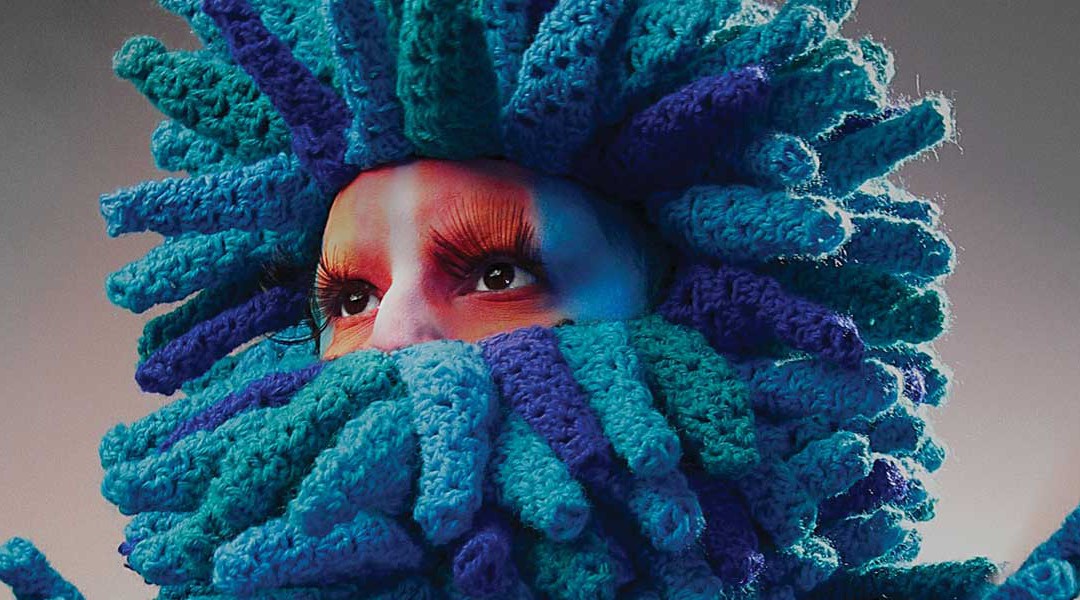
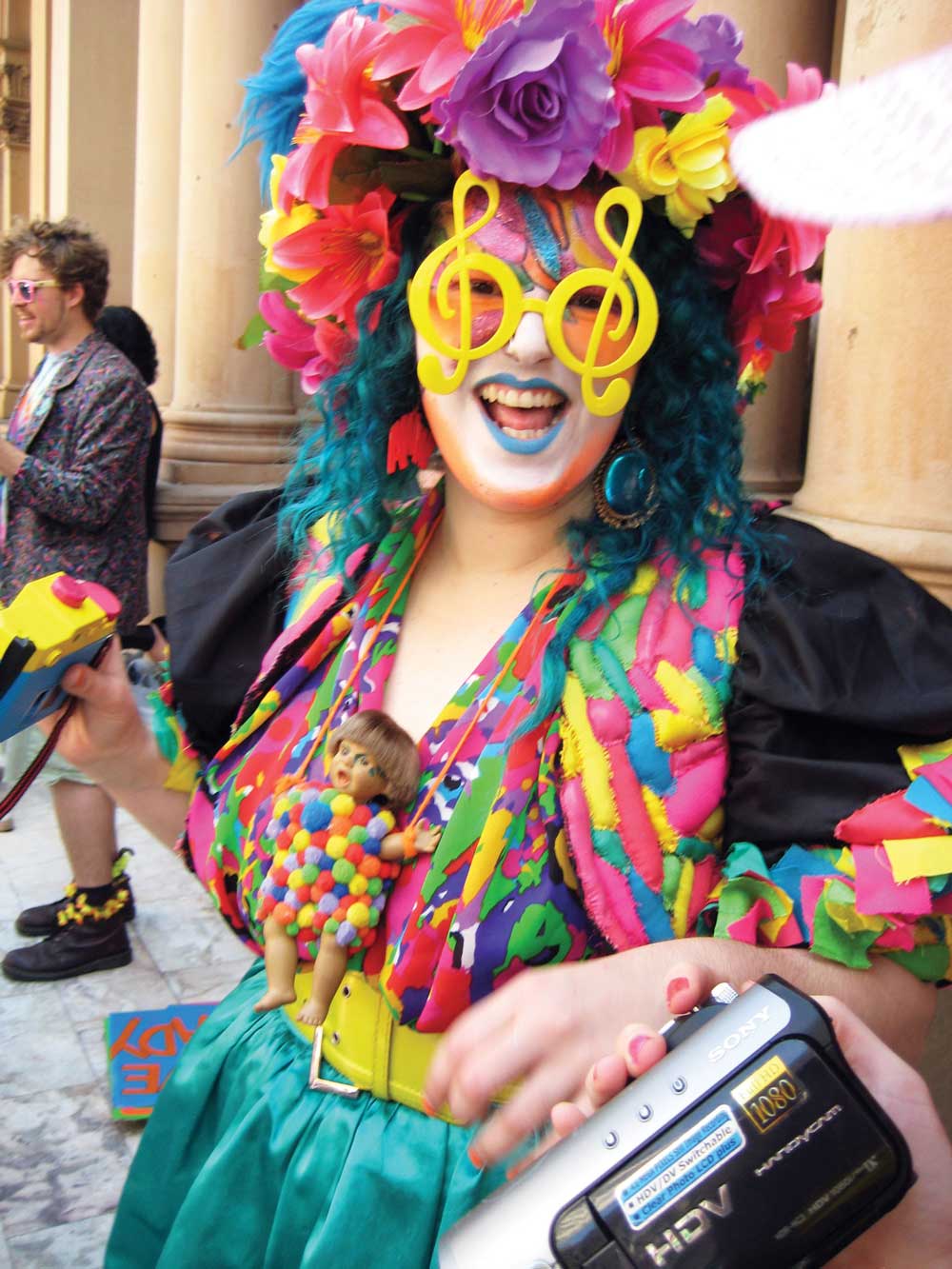
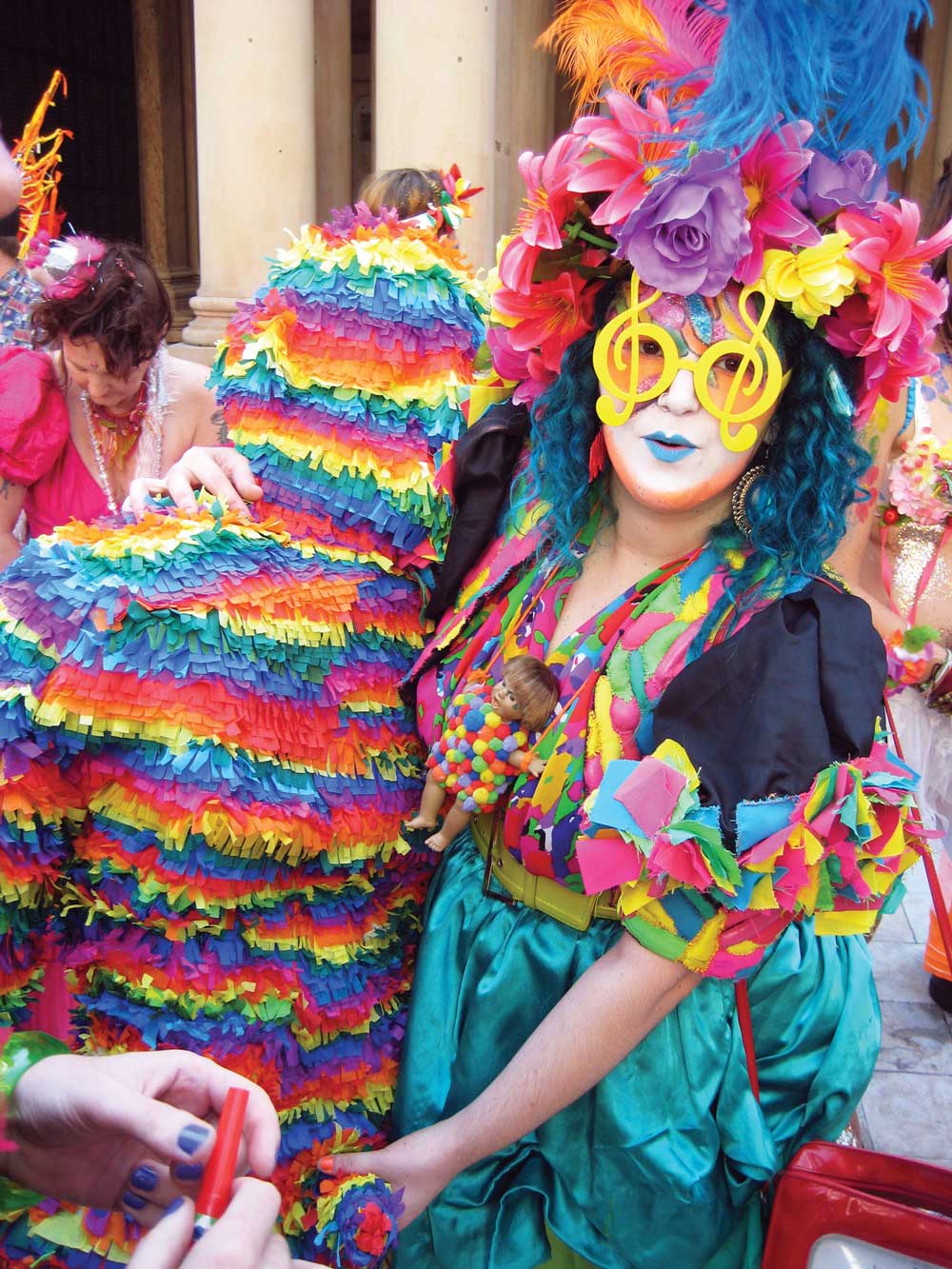
Her calling card in life is to explore and to experiment with different mediums in order to create something new. Creating is her obsession and passion and she refuses to put herself in a bubble by sticking to one thing only. Next to being a designer, artist and performer, she’s also the leading lady of one of the happiest parades in the world. The Sydney Colour Parade.
On dreams
My mother taught me how to crochet when I was eight but everything started when I saw work by the The Icelandic Love Corporation. The crocheted work they did for Björk was so amazing and mind blowing that I knew what I was heading for. I believe that you can be whatever you want to be in this world as long as you do it every day. Let’s say practice makes perfect!
On inspiration
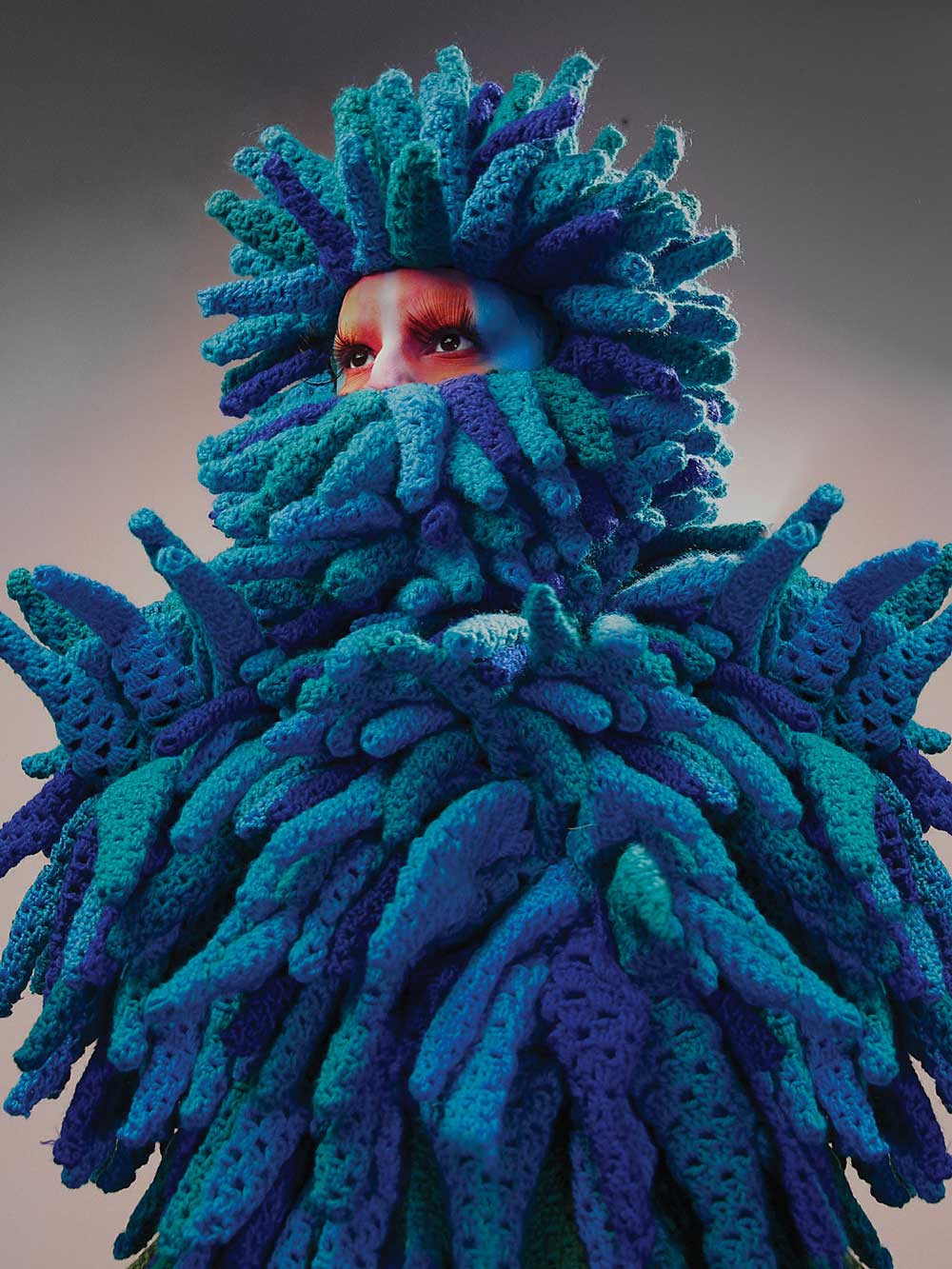
I get my inspiration from plants, insects and the ocean. The ocean is the main place I draw from. My world situates underwater, in the depths of the sea that has not yet been explored. I would like to create an entire world of fluorescent beauty and inspire future creatives to go along with their own endeavors. I want to remind the world that there are no limits.
On fashion
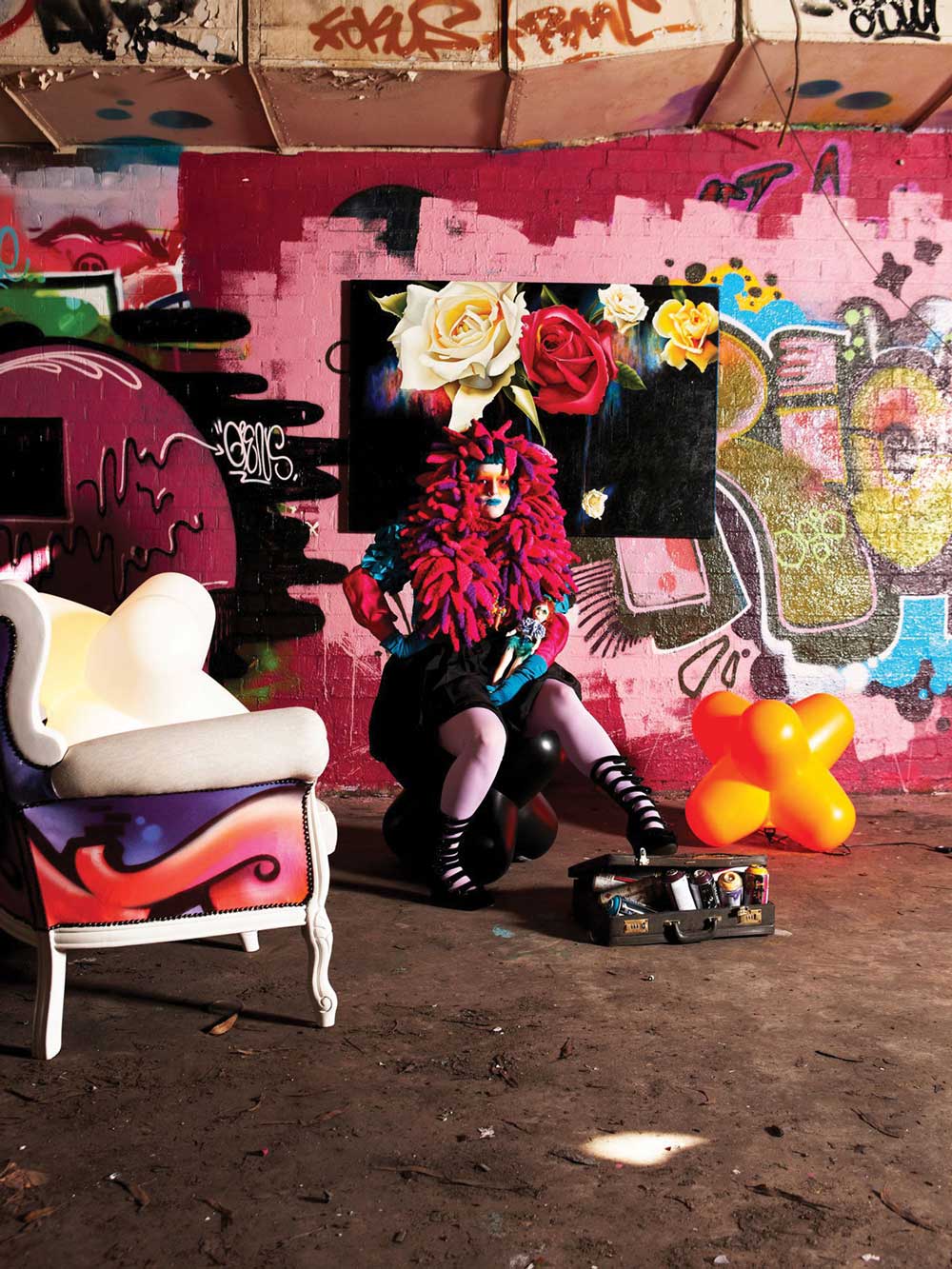
There’s definitely a niche market out there that would be up for some wardrobe jazz-up. Once a year I do a solo exhibition, and I have displayed in galleries in Berlin. I’ve been involved in collaborative fashion shows such as the ‘Being Born Again’ couture show in Sydney. Along with my partner in crime, Casio Ono, we have done commissioned work for a label called Emerald Couture but we’re not really into the commercial fashion industry. Our pieces take so long to assemble that it would be impossible to mass produce. Also, I see myself as more of an artist than as someone who’s working for a giant monster. But don’t get me wrong, we are always open for collaborations. If it means that fashion would be more inspiring to look at, then everyone should have a pair of pom pom gloves!
On changing movements
I can’t deny the other amazing people out there who create, evolve and constantly push their boundaries. Throughout history there have been collectives of artists who pop up simultaneously and inspire the world into evolving. It’s like they’re launching themselves into the future. Groups like Bauhaus, Dadaists and the Surrealists, they created work that’s timeless. Like I said, creativity has no boundaries and these people keep reminding us of that.
On the colour parade
The Colour Parade is an artistic statement that celebrates creativity, self-expression and freedom. It’s an opportunity to meet like-minded characters. We created the parade to show people that you don’t need money to have a good time. It’s a reminder that the human spirit is still very optimistic, even in this day and age. For four years now we have lit up Sydney’s streets with a cacophony of colour and music. The people who are part of the parade express themselves in whatever craziness they like. They bring music makers, hoops, glitter, streamers, flowers and signs they created themselves. Not to mention the incredible outfits. It’s just plain celebration.
On mission statements
The Colour Parade is not a political parade but the more “closed” our society becomes, the more “controversy” we create. The setting around us is so grey and confirmative that we want to inspire everybody to be whom they want to be. It’s about bringing together like-minded people so you can certainly expect to expand your circle of friends with all the activated, inspired, explosive and expressive individuals you will encounter.
On Sydney
The Colour Parade is about opening Sydney’s vision and to let its beautiful, open-minded people out on the streets to connect and make some noise. Sydney is very commercial and mundane and that automatically influences some artists to the extreme. The public always reacts different when they see the parade. Some people are confused, some are scared, but some get inspired and even join us. And why not, because at the end of the day, we are just a bunch of people walking down the streets expressing ourselves with colour and adornment.
On the future
Casio Ono and I are moving to Berlin. We went there for seven months last year and met some amazing people I’m excited to work with. I want to be able to travel and show my work around the world, perhaps even Japan. That place is like another planet! And who knows, at the end that might be the place where I belong.
De pagina die u zocht kon niet gevonden worden. Probeer uw zoekopdracht te verfijnen of gebruik de bovenstaande navigatie om deze post te vinden.

Text & artwork Betty Black
Betty Black started off as a name, just a made up name. An alter-ego that I created for myself in an attempt to perfect one distinctive style of work, rather than end up with a variety of mediocre crap, after having just coasted through a pointless Illustration degree back in 2008.
Only four short years ago on paper, but in reality all of the dimensional shifts and time travel that I’ve experienced since make it seem like another lifetime completely. I can vaguely remember some things. A full time job? My own studio apartment? My Independence? Yes, back then Betty Black was just a made up name. But then my life slowly descended into Hell. And I got to meet her in person. First of all I lost the job and then of course the apartment had to go. I was forced to move back home into the terrible purple bedroom of my teenage self-loathing and, not content with imprisoning me inside a vile indigo box, the fates apparently thought I needed to be taught a much greater lesson in humility, inflicting upon me an impressively revolting medical anomaly which involved a number of degrading surgeries and agonisingly dull stints in beige waiting rooms.
I could neither believe nor understand what was happening to my body and so I fled. I absconded deep into my delirious imagination and firmly locked the door behind me. All I wanted to do was hide behind my new name. I took comfort in sadistically drowning paper in the blackest of black ink, leaving minimal white space for the strange scenarios and characters that seemed to mysteriously well up inside of me. I read stacks of Japanese Ero-guru comics and erotic novels by Von- Sacher Masoch, Anais Nin and the Marquis de Sade to name but a few. I buried myself beneath tomes of folklore, mythology and black magic and I gorged my eyes upon the tangible darkness of Film Noir, Pulpy sexy 50’s B-movies and grotesque eastern horror films.
But try as I might there was something missing from my work, some kind of key transcendental factor was lacking. I couldn’t seem to expand my ideas fully. I was fenced in, blocked – but by what? What was holding me back? “It’s really not good enough to just start writing new initials on your pictures and think that that’s all there is to it, you know?” I heard my own voice whisper in my ear. “I’m afraid that it all goes much, much deeper than that.” My heart stopped and my eyes bulged. I reeled around in total shock only to come face to face with myself, my exact double. Only this version of me was sharply dressed in a black Chanel suit with her hair perfectly coiffed and lips the color of dried blood.
“You can’t just call yourself Betty Black. You have to understand how to be Betty Black.” She tried to smile at me but all she was capable of was an evil grin. “What’s wrong? Isn’t this how you pictured yourself as me?!” “You know it is…” I managed to gasp. She laughed. “Of course I do. I’ve been around for a lot longer than some silly nickname has! I am the darkest part of your heart and The Monster in your mind. I’ve always been here darling, and tonight I’m going to show you a few things to get you on the right track.”
She took me by the hand and pulled me straight into another state of being. She showed me things that I had only ever caught glimpses of in dreams – there was Lucifer’s harem, with its jet black Onyx walls and opulent lacquered torture devices. Giant women with planet sized heads made of marble skewered human souls with meter-long stiletto heels, while Opera music played softly in the background. We traveled to London in 1856 and stole inside the house of an infamous coven. We peered into violently chintzy rooms whilst witches that looked like porcelain dolls – coldly perfect with long, silken hair – fondly degraded initiates with blindfolds and birch whips upon layers of velvet, silk and lace.
She led me into a Japanese summer garden with sweet, overwhelming fragrances and flurries of peach blossom spiraling into the air. Courtesans of the Sun Emperor sat in giant peach halves, partially dressed in heavy, gorgeous Kimonos which were embroidered with intricate patterns and flowers. They made love to each other lazily, licking the dewy peach juice from each other’s golden skin in the dappled light. Then we spied on a rich American heiress in 1925 as she lounged by her pool wearing nothing but a mink coat and blowing rings of opium smoke at a staunch looking Butler. We giggled as she ordered two maids to simultaneously fellate him because “He looked as goddamn bored as she felt.”
Finally, after exhausting ourselves in the black forest with a bunch of insatiable, orgiastic tree nymphs she took me to a place called ‘The house at the end of the world’, a raunchy bar which transcended time and space and that I would be able to get back home from easily, or so she said. We ordered whiskey sours and watched an incredibly oily and voluptuous burlesque dancer twirl two silver octopuses from her breasts. “So even though you’ve really only had a tiny peep into the infinite void of creation tonight, do you see how important it was even just to visit?” She knocked back her drink and lit a cigarette. “It’s the boiling carnal soup of madness where all real ideas come from and you can’t really expect to create any kind of decent, honest art without coming here and seeing it for yourself.
You can’t just guess at this stuff. It’s like I said, you can’t just call yourself Betty Black, you have to be Betty Black and now you know how to get here, you know how to do that. “ “Thank you for showing me…” I began to gush. “I wouldn’t thank me until you look this good”, she interrupted, looking at my clothes with a mix of disgust and confusion. “You need to get a suit like this one, bitch.” And with that she vanished into thin air! I felt like a well of perfect knowledge and infinite vision. I had shed my dead skin and finally, truly become Betty Black in the flesh. A new force of creative will bubbled up inside of me like a freshly opened bottle of champagne and I was giddy with inspiration. But, although on some level I had achieved inner contentment, deep in the back of my mind – I was indeed still thinking about that bitches amazing Chanel suit.
www.bettyblackcomics.deviantart.com


De pagina die u zocht kon niet gevonden worden. Probeer uw zoekopdracht te verfijnen of gebruik de bovenstaande navigatie om deze post te vinden.