Geen Resultaten Gevonden
De pagina die u zocht kon niet gevonden worden. Probeer uw zoekopdracht te verfijnen of gebruik de bovenstaande navigatie om deze post te vinden.

Text JF. Pierets Photos Charlotte Lybeer
From 2003 until 2008, Charlotte Lybeer photographed gated communities and actual “theme parks” in the US, South Africa, Europe, China and the Arab Emirates. ‘The success of these ‘enclaves’ proves that in a society without boundaries, we still desire controllability. It seems that happiness is only possible in an artificial reality where everything is under control of its makers. An architectural décor is being built; a scene in which the inhabitants step away from everyday reality.’
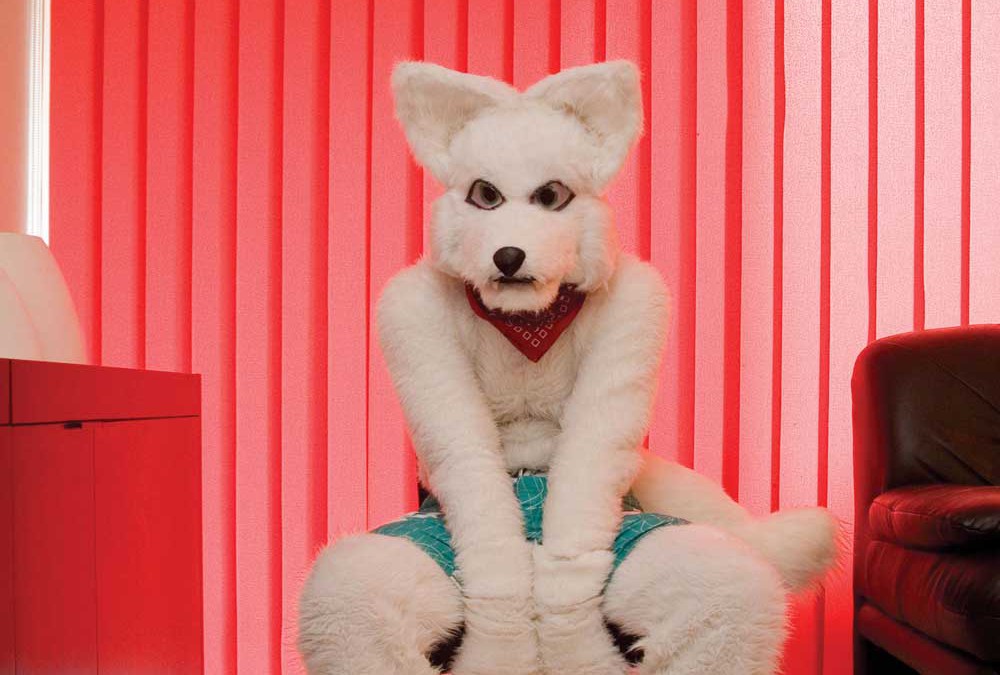
Charlotte Lybeer studied photography at the Academy of Fine Arts Ghent and the HISK in Antwerp. For the series ‘The furtastic adventures of the cabbit and the folf’ she submerged in the world of furries. ‘Each of my series is a logical continuation of the previous one. In this case it was a continuation of ‘Larp, taking a holiday from everydayness’ from 2009. A series of portraits from LARP (Life Action Role Playing) players.
Charlotte uses photography to research the capsular aspects of our society. In her projects Lybeer takes an aesthetic, as well as a social look at people who form groups and/or separate themselves from others. In this case; Furries. The furry fandom is a subculture interested in fictional anthropomorphic animal characters with human personalities and characteristics like intelligence, facial expressions, the ability to speak, to walk on two legs and wear clothes. During the 1980s, furry fans began to publish fanzines, developing a diverse social group that eventually began to schedule social gatherings. By 1987, there was sufficient interest to stage the first furry convention and throughout the next decade, the Internet became accessible to the general population.
To create ‘The furtastic adventures of the cabbit and the folf’, Charlotte had to infiltrate into its fandom. ‘I became a member of different forums and online communities related on the subject matter and went to conventions in England and Germany. They’re gathering yearly in large hotels which they rent for private use.’ For this series the individuals were taken out of their safe groups and placed into their personal and intimate habitats. The contrast between the costume, which the person uses to tell us something about his or hers virtual identity, and the homey interior is an approach rarely to be seen. The setting reveals the personal identity and daily reality of the player, yet he is still in character.
Gaining those people their trust is a tour de force since they are often described as freaks in mainstream media. ‘The hardest part of this project was gaining that trust. If it would have been easy, there would be much more series like this. The first step was to become a member of the group and talk openly and clear about my work and what I wanted to achieve. The second part was to prove that I was serious on the subject matter. That can be achieved by being humorous without being flippant. The hardest part was to get personal so they would trust me enough to let me into their houses.’
‘The furtastic adventures of the cabbit and the folf’ is part of Charlottes project to get her doctors degree. It’s called ‘Lifestyle Supermarket’. She’s photographing different fandoms that are related to virtual, three-dimensional worlds such as Second Life, in which players can create a second identity. ‘It’s a very intriguing given. People can transform themselves into a superhero, a monster or and animal with human characteristics such as furries. The unique feature of these fandoms is, that these trans human identities are nowadays also assumed outside the virtual world. For me, those are examples of how contemporary men tries to fit in the image imposed by mass media such as movies and games. All my projects are inspired by how people react in a world that is changing. Not only geographical, but also on an imaginary level.’


De pagina die u zocht kon niet gevonden worden. Probeer uw zoekopdracht te verfijnen of gebruik de bovenstaande navigatie om deze post te vinden.

Text & photos JF. Pierets
We meet at a terrace on a sunny day in Antwerp. He says he forgot his cigarettes, I say I don’t have any but maybe he can ask one at the table next to ours. Seems that he’s too aware not to step into the “another Moroccan is asking for a cigarette” cliché. Ever since he was a kid, he tried to avoid any stereotypes. Carim Bouzian, 29-year-old, entrepreneur, into politics, Muslim and gay.
Where you raised to be beyond the scope of any cliché?
Yes and no. I was born here so I feel completely Belgian, never had the perception that Morocco is still ‘my country’. It’s a great country to go on holidays and my cultural background lies there, but that’s it. Yet my mother always had an ambiguous conflict in our upbringing. On one hand we had a very Flemish education. We were not allowed to talk Arabic to avoid an accent, but on the other hand she had her own baggage and influences from when she was young. So you can imagine the division. We were brought up very liberal but sometimes it bothered her because it was hard to recognize herself in her kids, mentality-wise.
And your father?
My father passed away but I still remember it was very important to him not to be restrained by boundaries and nationality.
And how is your relationship with your mother now? Because at one point you had to tell her you are gay.
I have a very strong connection with my mother and one day she told me that all my anger, all my tensions had nothing to do with her, but with the fact that I had to concede I was gay. So you can say she did my coming out, but that also means I always had the feeling it would be no issue. Since we were young she always told us we could marry whomever we wanted to, regardless of gender and nationality. As long as we were happy. The only rule was not to get in touch with the justice department.
Considering your upbringing, weren’t you a stranger among other Moroccan kids?
Very much. I was always the one who said it didn’t matter being gay before I even knew it myself. Seems like I was ahead of my time there.
Are you religious?
I believe in something from which there is no tangible proof of existence. It’s based on a feeling so I’m not the kind of religious person who thinks he has all the knowledge. For me, an intelligent believer is an agnostic. The Koran says that Christ has never been crucified and in Christian faith they say he has been. I’m not into this dogmatic thinking so I don’t want to mingle in that kind of discussion. These scriptures are written by witnesses and people who were around and we all know how news facts can be twisted for the better.
So you are more a spiritualist?
Sometimes believing makes you a bit of an anarchist. When you say that you believe in something above us, but you don’t believe in dogmas, you state that everybody is equal. This society is filled with categories and leading job positions but I never felt there was somebody who could tell me what to do.
You are, in spite of any dogmas, a follower of the Islam, so is it not forbidden to be gay?
That it’s forbidden is not quite true. You have the Koran, the first source, but then you also have the Hadith with the traditions of the prophet. In these scriptures there are verses to be found regarding homosexuality. The men who were allowed to be near the prophet’s women, were men who didn’t feel any passionate desire towards women, who wore jewelry, men who behaved femininely. Those are stories we find in the Islam. That is also why transsexualism is allowed in so many Islamic countries. Because one way or another the prophet acknowledged the existence of a third gender. Yet it’s been interpreted that you can’t stay a man if you are homosexual. For instance in Iran, homosexuality is a crime punishable by imprisonment or even execution where transsexualism is legal if accompanied by a sex change operation.
I don’t say that’s correct, don’t get me wrong, but it shows that in the early years there had been possibilities that are now entirely degenerated. Next to that, you can read a lot of stories regarding intersexuality in the Koran. They condemn sodomy in the story of Lot but that story is about violation of integrity. It’s a story about straight married men raping other men, about taking away someone’s honour. That had nothing to do with homosexuality.
Do you know why a lot of Muslims believe that homosexuality is wrong?
A lot of people have a blind faith in what’s been told and 99% don’t even know the content of the Hadith. They go to the mosque and believe what they hear instead of doing some research to check if everything is true. In essence, that’s where people go wrong. You have to keep an open mind and you have to do your investigation in order to be sure of what you believe. I keep on saying it to other Muslims; keep on analyzing things, keep on delving in consideration of the truth. Because there’s a huge difference in scriptures from a thousand years ago and present creeds. And don’t forget that in the dark ages, Europe pointed at Arabia for being decadent, for it’s poems about homosexuality. Today we’re looking at a moral inversion. The Islamic world is now pointing at Europe for being degenerate. Isn’t it about time to raise awareness of the fact that it’s no one’s fault? That someone’s sexual character is just a given?
You seem to know a lot about it?
I really want to inform people on the true story. How is it possible that a religion who is so anti, who even practices death penalties regarding homosexuality – mind you they consider homosexuality as adultery and you can get stoned for that – doesn’t properly verify if that what they hear is true. Even the punishment of stoning is never mentioned in the Koran. I consider this lack of knowledge, a large shortcoming of the Muslim community. We live in a place where millions of documents are available so use it, because otherwise you lose the core message of your religion. Let’s not forget that the greatest followers of Jesus and Mohamed where people who lived on the sideline, small groups. Contemporary religion doesn’t allow these people any more. They condemn them. When you reckon everything and everybody being wrong, it results in a religion with too many taboos. And the more taboos you have, the less you can develop yourself. It’s the largest brake of all because it leads to deterioration of the community.
You take a stand on the subject matter and you talk to people in order to change things. Why this commitment?
I always felt the urge of doing something. I can’t handle injustice. For me it’s a natural reflex to react on unreasonable and unjust behaviour and not only because I’m gay. When I compare myself to other gay men and women I can say I had it quite easy, yet I have to take a stand by some kind of inner pressure. Sometimes my mother complains about it, asking me why I always have to enter into a discussion, but I can’t help it. I put a lot of effort into explaining but I also react on things I hear or read, when dogmas are randomly spread. Not everybody likes that and I’ve had more than one death threat in the past.
Yet that didn’t hold you back to keep on going?
On the contrary. I got more motivated. It depends a lot on how you look at it. The Moroccan community is not just one community, there are several. The Islam is what binds most of them but not all of them are practicing Muslims. Most of the time it’s only the conservative wing that’s not keen on my interferences. The more liberal people think it’s a good thing. I don’t say they agree, but at least it’s tolerated to have another opinion. And then you have the left wing, which are of the opinion that you have to do what you got to do. It’s not all as black and white as people think.
You triggered a campaign regarding homosexuality within the Islam. Can you tell me something about that?
I promoted a poster campaign for acceptance of Muslim homosexuals. The image showed two gay boys and two –girls. Needless to say it wasn’t fully appreciated but those things have to be done. Some gays are confronted with extreme reactions and I feel addressed to try and make a difference. Everybody has to have the guarantee to be safe. That’s a basic human right. You can’t change things by just talking about it, you have to act. And yes, call me an idealist, but I’m motivated, and hopeful.
And isn’t that the perfect combination!


De pagina die u zocht kon niet gevonden worden. Probeer uw zoekopdracht te verfijnen of gebruik de bovenstaande navigatie om deze post te vinden.

Text Nora van Craen
Bart Moeyaert is internationally famous for his work as a poet, a writer, a translator, a lecturer and a screen writer. He once mentioned on television (on ‘Reyers Late’) that society is often overwhelming, that one is alone with one’s thoughts about that, and that it is not always useful to keep on smiling all the time, pretending one is invincibly strong. I could not agree more. Hearing just one of Bart’s quotes was enough to make me realize that he has ‘a certain something’; something that makes him read between the lines of a story. That is why I was not satisfied with simply looking at his Wikipedia page to find out who he is and what he does. I wanted to experience the essence of his inner reality, a reality located in between the lines of Antwerp’s dazzling energy. So, on a sunny, yet rainy Tuesday in sunny, yet rainy May, I managed to meet him in person at the Grand Café in Antwerp. The result of that meeting was an A to Z about Bart Moeyaert, in which I will share with you some of the finest moments of our meeting, some of his unforgettable quotes and some important facts about his life.
A
Astrid Lindgren, a Swedish author best known for Pippi Longstocking, is one of the significant writers that influenced Bart. He even calls Lindgren one of his grandmothers. He cherishes Aidan Chambers’ ‘Dance on my Grave’; a comforting novel about two boys experiencing deep friendship which blossomed into love. This book inspired him to scrutinize his personality and his story telling methods. Bart lives in Antwerp. He was the official poet of this vivid city in 2006 and 2007. ‘Africa Behind the Fence’ (1995) was his first picture book for children. The illustrations were created by Anna Höglund.
B
He was born in Bruges, Belgium, on the 9th of June, 1964. As the 7th son in the family, King Baudouin by tradition became his godfather. In our conversation I mentioned the fact that the number ‘7’ regularly appears in his stories. Interestingly, this fact was new to him. “Blood, sweat and tears are fantastic, so are ugliness and shortcomings,” Bart says when it comes to the difficulties of writing. “Unfortunately, most of us are raised to think that blood, sweat and tears are to be avoided because they are unpleasant.”
C
Bart is i.a. known for his children’s books. The fact that people expect that children always get a message or a lesson from a story makes him nervous. “That is not the way one ought to deal with children. They are not adults yet, there is still plenty for them to learn, but in the meantime adults should not think about them as if they were ignorant or naïve. They can deal with a lot more than adults tend to think. Think deeply about how you were yourself when you were eight, and you will realize how you dealt with adult matters.”
D
With ‘Duet with False Notes’ Bart made his début. He was just 19 years old when he wrote this autobiographical novel. This book emerged from the diary he kept when he was 14 and 15 years old. While reading Bart’s stories, I noticed some sort of distance to the facts, of what has taken place in between two pages. Bart says he would not call this distance. Instead, he believes reality is not primarily constituted by the objective facts of the environment, but by impressions and by one’s thoughts between the lines. He escorts the reader around the covert mind of the main character of the story.
E
Together with illustrator Wolf Erlbruch and the Dutch Blazers Ensemble Bart is writing a trilogy: ‘The Creation’, ‘The Paradise’ and ‘The Heaven’. ‘The Heaven’ is to be published in 2014. In this trilogy a story meets music in a most harmonious way. Not only did he read the Bible to do a background study for ‘The Paradise’, he also made use of gardening manuals to understand why, for example, a tree loses its leaves. The story is very sensual: Eve does not resemble the biblical Eve, she has more of a ‘Lillith’ appearance.
F
Bart wants to be free: he does not want to label people or things, nor does he want his own work to be labeled. When he wrote his début, he never intended for it to be read by young people in particular. He never even thought he was going to become a children’s book author! It was his first publisher who told him an author’s image is important, his being the image of a children’s writer. It took a while before he realized he himself had to determine his writing style and path. “When I am writing a book, I might think the story will probably be read by, say, 7-year-olds, but that’s it. I only know the story I am going to tell and I have some thoughts about the shape or format.”
G
Graz (2009) is a story about Herman Eichler, a pharmacist living in Graz, Austria. One day, a young woman has an accident in front of Herman’s pharmacy. This crucial moment in Herman’s life started off a deep thought process about the man he really is. Is he a homosexual, for example? Bart wrote the largest part of this story while staying at Graz to give lectures. ‘Graz’ was written for the Antwerp theatre group ‘STAN’. Bart was nominated for Gaypersonality of 2011.
H
In 2011 Bart was nominated for the Hans Christian Andersen Award for the 4th time.
I
‘Iemands lief’ (‘Someone’s Lover’) is Bart’s version of ‘l’Histoire du Soldat’ (Stravinsky, Ramuz), written for a narrative performance with top violinist Janine Jansen. It portrays how a soldier cannot resume his normal life because the war has changed him too much. In a similar manner, Bart was so harshly transformed by being a city’s official poet that he could never return to 2005 (see M). “Feeling this sledge hammer blow made this book so much more important to me.”
J
During his stay in Japan, one of the countries where he has been giving lectures, Bart experienced an astonishing moment in a huge store: “In the middle of the computers department I felt euphoric: Japanese was written all over the place and I could not read anything of it and nobody knew my language. In my bag I carried a book which I was able to read, but the funny thing was that it was a Dutch translation of one of Coetzee’s books. This interwovenness of languages and the realization that I am constituted by languages, which I do not mind at all, made me euphorically happy.”
K
The Boekenleeuw 2013 award goes to Bart’s ‘Knock Knock, Who’s There?’ (‘Wie klopt daar?’). This is his 6th Boekenleeuw; he also won one for ‘Kiss Me’, ’Bare Hands’, ‘Its Love We Don’t Understand’, ‘The Creation’ and ‘The Milky Way’.
L
Bart is a lecturer in Creative Writing at the Royal Conservatory of Antwerp. The title of one of Bart’s books is ‘It’s Love We Don’t Understand.’ What he does understand of love is that we are raised to think that the concept of ‘man-woman-child’ and ‘house-garden-dog’ is our target, while the reality is totally different. More interesting than what he himself understands of love is the question why we decide to be with someone after that one spark, he says. Why do we make this choice so quickly, while there might be many other people in the world whom we may be compatible with? When Bart met his boyfriend, he made it clear that there are multiple loves in his life: his love for him and his love for writing. The one cannot live without the other.
M
Bart married Robin Steins in 2006. During Bart’s career as the official poet of Antwerp, it was not easy for him to see eye to eye with the world and its constantly reproducing misery. He wrote a poem, ‘Woman and Child’, about the tragic racist murders by Hans Van Themsche in 2006 and read it out loud at Luna’s funeral, the murdered child. I ask him if he thinks that such a ‘blackened heart’ (‘zwartgeblakerd hart’, used in his poem ‘Lighthouse’) is useful to an artist. To Bart, an artist lives multiple lives: he sees many more things from many more perspectives and tries to describe everything to himself in order to digest it. He sees things he cannot cope with and it gets under his skin, forming that blackened heart. Through writing, a poet can digest his misery.
N
“Now is the moment in which we live. You can only finish the writings you are writing now,” Bart says to me. We were talking about how important ‘trying to be as good as possible’ was to the family he was raised in. I wanted to know how it felt to him, now that he has achieved the status of a successful writer. According to him, ‘At which mountain top would I like to arrive?’ is the most harmful, paralyzing thought to every newbie in writing. Bart did not commence his writing career thinking ‘How am I going to carve this out?’ or ‘How am I going to do this perfectly?’.New York is where he would like to be now if I were able to teleport people. Last year, he stayed there at a writer’s residence to work on his new book.
O
In 2006 he narrated the story of Olek in the musical theatre production ‘Olek Shot a Bear’ with the ‘Flemish Radio Orchestra’.
P
Together with Elisabeth Broekaert, he published ‘Let’s Stick Together’, a photo book with eight of his poems about love. In 2001 the poem ‘Small’ appeared on the side wall of the theatre house HETPALEIS (Meistraat, Antwerp). Broekaert witnessed some weddings with her camera. She took photos and watched the love that had just clinched in its own way.
Q
Most of his books were published by Querido. ‘The 27 Questions Interview’ provides you with non-trivial questions and witty facts about Bart.
R
Many meaningful concepts return in his stories and poetry. For example, he often writes about lighthouses. “In Antwerp, I find the image of a lighthouse important. It is a beacon to know there’s something over there. You can avoid it, but you can also approach it. A lighthouse says: ‘come here’. If you do not want this, then tear down the lighthouse. So if Antwerp wants to be a port city, there has to be a lighthouse. ‘Come here’: you are meant to live with it whether you like it or not.”
S
Bart decided not to have children because of the society we live in. He knows that he himself is capable of dealing with insensitive remarks about homosexuality, but one can never know if a child would be able to do the same.
T
This year he celebrates his thirtieth anniversary as a writer. Congrats, Bart! The only diary Bart isn’t fumbling with is his tumblr. Visit bartmoeyaert.tumblr.com or read his tweets at twitter.com/bartmoeyaert.
U
Many of his poems carry just one word as a title, like for example ‘Lighthouse’ and ‘Choose’. ‘U’ (‘you’) probably has the shortest title of them all.
V
Michiel Verberne was the pseudomym he used at the age of 14. When one of his poems got published in a children’s newspaper, De Stipkrant, nobody believed it was his.
W
‘Plint’, a publishing company which gives poetry a creative twist, has made a window poem of the playful rhyme ‘Once More’ (‘Weer eens’). Window poems are printed in white on transparent plastic and can be stuck to a window. On Bart’s website (www.bartmoeyaert.com) you can find a contest section posing a different question every once in a while. The winner gets one of his works for free!
X Y
“It is important to write for yourself. You should not try to please others by writing. I am not saying that you have to write as if you were the only one to read it, but you write a poem to yourself without considering person X or Y’s preferences. This implies that you allow yourself to be astonished. One has to make peace with one’s way of proceeding.”
Z
Bart lives at a stone’s throw from the Antwerp Zoo. In collaboration with the Antwerp Zoo and the city project ‘O Dierbaar Antwerpen’, the Royal Film Archive compiled a unique anthology depicting rarely seen footage of a bygone age. The first images date from the 1910s. Among others, Bart Moeyaert wrote some reflections on those images.


De pagina die u zocht kon niet gevonden worden. Probeer uw zoekopdracht te verfijnen of gebruik de bovenstaande navigatie om deze post te vinden.

Text JF. Pierets Photos Caldwell Linker
The Haus of Haunt is the Pittsburgh based drag troupe around Sharon Needles, a self-described “stupid genius, reviled sweetheart, and PRB princess,” rose to prominence on the 4th. season of the reality competition series, Ru Paul’s Drag Race. She quickly became a favorite and media darling, lauded for her refreshing alternative “spooky” aesthetic and self-deprecating humor, and was subsequently crowned “America’s Next Drag Superstar” in April 2012.
In The Haus of Haunt: Watch Children, photographer Caldwell Linker presents 120 Pages and over 200 photos, chronicling the Pittsburgh drag troupe. With pictures of performances, backstage, personal and ever day life moments, Linker gives us a valuable document of the Pittsburg queer scene over the past 4 years.
How did you end up in the queer community?
I guess I’m just drawn to folks similar to me, wanted to be around people with divergent gender identities, radical politics, a desire to create something new, folks with a different perspective, and a desire to live a different perspective. I’m queer, most of my friends are queer, I am attracted to queers… I love the queer community, and the people who are part of it. Sometimes things are hard, but there is so much joy, so much love, and laughter. Creativity and creation. Personally, I identify as queer because I don’t have a firm attachment to any particular gender. The people I am attracted to have a wide variety of divergent genders, and gender presentations.
Why make it the main subject of your photography?
Partially it’s a compulsion. I feel compelled to take pictures and I’m most comfortable taking pictures of the folks I know. Also, I think the queer community is incredibly important. I’ve been taking pictures for a number of years now. When I started, things weren’t getting documented and I didn’t want to see our history lost. I see so many people doing such amazing and creative things, I feel like it’s important to archive them. Also, I love color, and the scene is wonderfully colorful, and attractive.
Are you a part of the Haus of Haunt?
Depends on how you define Haus of Haunt. I don’t perform with the Haus of Haunt, but according to how Sharon and Alaska define Haus of Haunt, I would say I definitely am. They include many people other than just the performers; fans, photographers, folks who give everyone a ride, etc. I’ve been taking pictures of these queens for a number of years now.
Why make a book on the subject matter?
When Sharon got on Drag Race – where they have been showing my book, by the way – I started working on it. When it became obvious that she was an instant hit with the fans, I started working. There was a lot I wanted to share about the Haus of Haunt. One of the things that attracted me to the performances is how they have been able to make so much out of almost nothing. I wanted to show people that they don’t need a lot to create something amazing.
Tell me everything about your upcoming show. What/where/when…
My show at The Warhol Museum opens June 14th. 2013. I’m still not sure how many pictures I’m going to use, probably somewhere around 50ish. The show focuses on the queer community of Pittsburgh. I’m trying to focus on themes that I see running through, things that we all experience, things that make us different and set us apart. And of course things that are part of the human condition that run through all of us. Unlike my Haus of Haunt book, the show at the Warhol is more focused on the day-to-day aspects of the queer community, instead of performance.


De pagina die u zocht kon niet gevonden worden. Probeer uw zoekopdracht te verfijnen of gebruik de bovenstaande navigatie om deze post te vinden.
Text JF. Pierets Photos Courtesy of The Irrepressibles
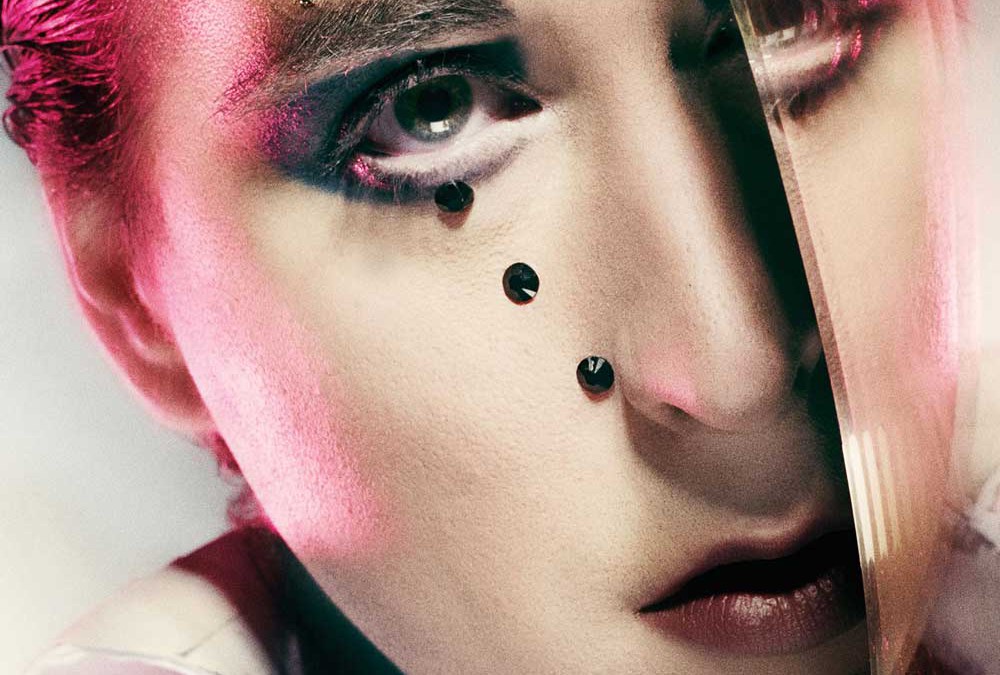
He’s the highly talented artist behind The Irrepressibles, a 10-piece band, using conceptual sets, none-theatrical lighting, projection, dance and couture fashion. Their ground breaking approach continues to push the boundaries of live popular music and they have been commissioned and performed for many of Europe’s leading festivals and institutions including the Latitude Festival, the V&A, the Hackney Empire and guest appearances at the London Fashion Week.
Their heavily emotional style of music is created instinctively, playfully and cathartically by Jamie McDermott, the founding member, and center piece of The Irrepressibles. The moment Jamie knew he was a musician is quite an emotional story. Being in love with his best friend, he wrote songs to express his feelings. Other than the wishful happily ever after, they fell apart as friends and the singer felt so alone he was looking in the face of suicide and wanted to throw himself of the cliffs of the seaside town where he lived. Yet, instead of jumping, he decided to give his life a more noble purpose; “Through music, I wanted to explain the world the beauty of being in love with another man in a way that everyone would understand.” Needless to say this kind of intension is one of the things we love here at Et Alors? Magazine.
As a working class boy from North Yorkshire, he discovered the library and was craving for knowledge. “I read about Vivienne Westwood and Malcolm McClaren, Andy Warhol, about the political force of music in the words of Atalli and Eisler and fell in love with the iconic imagery of film makers Fasbinder and Kenneth Anger”, so his genesis began with a manifesto to “make something that portrays the real originality, drama and intensity of life.”
Irritated by the manufactured pop music, its lack of real emotion and the boring visual aesthetics of indie music at the time, he wanted to create something fresh and reactionary. Most influenced by nonmusical elements such as the sounds of laughter and the hum of the bus; “The movement of people and machines all have a complexity of nature a kind of polyphony in their interaction. My music has this interaction“. It’s an organic machine of emotion, what McDermott calls his ‘performance objects’ or ‘live spectacles’.
What began as an art performance project in 2002 resulted into the release of their debut album “Mirror Mirror” in 2010. The Guardian called all 12 songs humorous, vain and marvelously camp. Two years later, The Irrepressibles released the album “Nude” throughout the world. “Take off your clothes, I want to see you naked” are the first words we hear Jamie McDermott’s deep baritone sing. With reviews like “Consisting of 12 pieces in total, fusing discordant electronica with the more familiar classical orchestrations of old, Nude represents McDermott’s attempts at writing a concept record explaining the rich complexities of life” and “As ever, McDermott sails alongside and above the melody, reaching astounding levels of emotive strength as the song builds to its heady climax”, the world hears that McDermott has a talent that few can match.
Despite these beautifully arranged songs and a great voice, it’s very refreshing to hear someone sing unapologetically about his homosexuality “I wrote much of Nude when I was 19, 20, 21. At that time I was really finding who I was. Blossoming with my sexuality and writing songs about my adolescent experiences, being bullied and isolated. I’ve always been very honest and open. Making music for me has always been a very cathartic emotional process”, McDermott states. “New World” – from the album “Nude” – was a song he wrote to a friend to tell him to come-out and be free. “I was hearing a lot about these kids killing themselves for being bullied because they were gay and I was deeply disturbed by this. I wanted to send this message in the hope of being part of making young people confident in their difference”. The album Nude is heavily about affirming difference and letting it be free.
Comparisons with Antony Hegarty and David Bowie are never far away and the singer explains being very much influenced by what he would call the lineage of gay artists. He believes that gay artists create a slightly different aesthetic of sound and visual. Nevertheless he does not fear that his music will be marginalized because he is not ashamed to promote the so-called gay interest. “It is boring of the music industry to be so conservative when so many other areas of society aren’t and when pop music is meant to be the vanguard of culture. For too many years gay artists have been marginalized when their music has been influential on other more acceptable artists. So why should anyone who is gay be dishonest?”


De pagina die u zocht kon niet gevonden worden. Probeer uw zoekopdracht te verfijnen of gebruik de bovenstaande navigatie om deze post te vinden.