Geen Resultaten Gevonden
De pagina die u zocht kon niet gevonden worden. Probeer uw zoekopdracht te verfijnen of gebruik de bovenstaande navigatie om deze post te vinden.


Text JF. Pierets Photos Jill Peters
Northern Albanian women, faced with a culture that subjugates females, live and dress as men in order to provide for their families. These sworn virgins took a vow of chastity, wear male clothing and live as men in the patriarchal northern Albanian society. In an ongoing series, photographer Jill Peters has captured the fascination of a tradition dating back hundreds of years.
When and where did you come up with the idea of making this series?
In late 2008 I was reading a book written by Serena Nanda about gender diversity around the world, and came across a chapter about the Sworn Virgins of Albania. I was intrigued by the idea of such a tradition. I knew nothing about them, nor had I ever heard of their existence. The general consensus that they would soon be dying out made me act quickly. I had to meet one and I was determined to photograph at least one. This idea soon expanded to making a documentary film and I put a crew together. We all traveled to Albania in July 2009 and some of these portraits were taken then. I returned again in late 2011 to continue the project.
Was it easy to find these women?
It was not easy to find them. The Sworn Virgins are very proud but extremely private people. The majority live in very small secluded villages not often seen by outsiders. They remain suspicious of foreigners and their trust must be earned over time. Once they accept you however, they are talkative, warm and hospitable, often offering coffee, tea or cigarettes to their guests.
They live as men yet I guess everybody in the village knows they are women – otherwise you would not have found them. Or am I wrong?
The most remarkable aspect of this tradition is that everyone knows they are women. In this culture however, the way one dresses dictates how they are perceived. A woman who cuts her hair short, wears men’s clothes and adopts masculine traits is accepted as a man. Because this practice has a long history and is associated with family honor, inherited wealth and clan survival, the burneshas are well respected and regarded as a benefit to the family. For the most part, villagers in these areas are so accustomed to knowing a Sworn Virgin, or “burnesha”, first hand that they often wonder what all the interest on our part is about.
What do they think of this paradox?
I was drawn to this project because of the paradox of a strident patriarchal society accepting a woman who switches her gender by choice. I want to make it clear if it isn’t already, that this has nothing to do with sexual identity. As westerners we tend to jump at the chance to label someone gay or straight because those seem like the only two options in our culture. The remarkable thing about these women is that they are beyond labels.
I read that this decision is more related to gender roles than to sexuality. Nevertheless they have to remain virgins. Why is that?
I believe swearing to remain a virgin for life and thus avoiding any kind of romantic relationship altogether was their only way of circumventing such labels. Regardless of any orientation, they could not be with a man and still be considered a man. Nor could they be with a woman, as that would technically be a homosexual relationship since they were known to be biologically female. Also, the Kanun, which is the tribal code still influencing many in the rural north, states that a woman is only worth half as many bags of grain as a man, but a virgin is equal to the value of a man. I find it sad in the broader scope, as a woman, that this extreme sacrifice was necessary in order for a woman to exercise her free will. Because a woman wears a pair of pants she is “suddenly” deemed capable of inheriting property, driving a car or running a business. It simply amazes me. I think the injustice in that is evident to everyone today.
Some women became burneshas when they did not want to marry the man their family had chosen for them. Again this is a sad reflection on what it meant to be a woman in those times. Once the vow is taken though, it is forever. To go back on a vow would be to disgrace the family and could result in a deadly feud between the two families that could perpetuate generations of honor killings. I was relieved to discover that for the most part, the burneshas did not regret their decision and insist they have led happy lives. Most would make the same choice given the same circumstances. They are pleased with the progress women have made in the past 50 years and understand why it is a custom that is dying out.
You said in an interview that this is an ongoing project. What are your plans?
My future plans for the project include finishing my documentary film. I’m proud to say I have a good relationship with my subjects and have developed a level of trust over the years.


De pagina die u zocht kon niet gevonden worden. Probeer uw zoekopdracht te verfijnen of gebruik de bovenstaande navigatie om deze post te vinden.
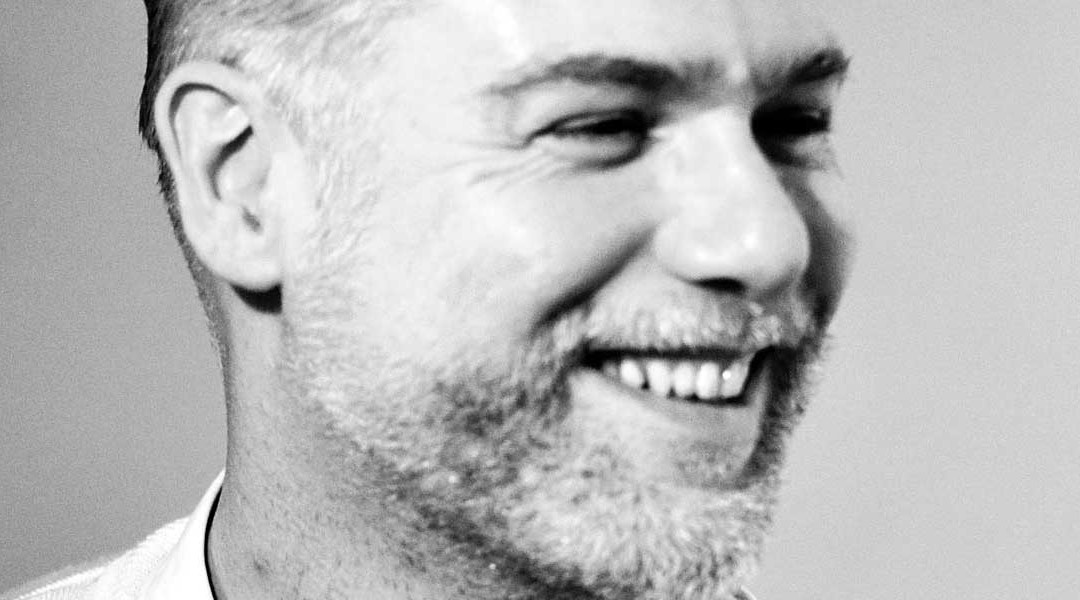
Text JF. Pierets Photos Rudy Thewis
Jonathan Kemp won two awards and was shortlisted twice for his debut London Triptych. Gay bookstore Het Verschil in Antwerp, asked to interview the British author for a live audience due to the Dutch translation of his novel, Olie op doek. A conversation about history, gay writers and a fascination for language and sex.
In London Triptych you tell three stories. There’s the rent boy Jack Rose in the London of the 1890s, of the 1950’s with painter Colin Read and male escort David, living in the London of the 1990s. The three stories explore the subculture and underworld of male prostitution. You seem to know quite a lot about the subject matter?
I did a lot of research in one way or another, and I was very interested in giving a voice to the voiceless. Male prostitution is a minority within the society of prostitution. Most of the historical focus has always been on female prostitution so they’re like a minority within a minority. As a writer you’re always trying to find a perspective that has not been tackled before and this seemed like a really interesting angle.
London Triptych started out as a short story called ‘Pornocracy’, which told the tale of Jack Rose, one of the boys who testified against Oscar Wilde in 1895. Is Jack historically correct?
Jack starts to work as a telegram boy and then he got involved in prostitution through this man called Alfred Taylor. Taylor really existed and supplied boys to Wilde so there are elements of truth from what I had gathered on research. If it weren’t for the fact that Wilde had been arrested and in prison, it would be even harder to find material on the subject matter. Ironically, given the negative outcome for Wilde, that kind of stamped it in the history books in a way that it wouldn’t have been otherwise. The transcripts of the trial have been very useful. Jack himself is an invention. He’s a mixture of a lot of different boys Wilde played with – he called them Panthers. Their danger appealed to him, their lack of gentility. He was a well-educated, upper middle class man so he liked their roughness, this spontaneity that he didn’t find in his immediate circle.
You seem like a big Wilde fan.
I have loved Oscar Wilde ever since I was a teenager. As I got older and came out myself, I got more interested in gay history. Wilde almost became this figurehead. The idea that he established in many ways, the parameters, the identity that was to go on in the 20th century. The concept that he is almost the prototype of the modern homosexual. He gives it a shape, a voice and a way of being. That was always fascinating to me. I often think the work is overshadowed by his life but I find him an incredible wordsmith. The poetry and ideas in his books have always appealed to me.
Your love of Wilde, the fact that London Triptych is populated by rent boys, models, aristocrats, artists and gangsters,… are you a little nostalgic?
I must say that Jack became my favorite character, that was my favorite piece to write, What appealed to Wilde in these boys is what appealed to me when I got under Jack’s skin. There must have been many Jacks in London at that time and the more I read about queer history, the more I became interested in trying to represent that minority voice.
The minority voice stays but times are changing.
Jack could go to prison for what he was doing, but David, the male escort in the 1990s, is free because of the change in the law in 1967. It’s sort of a history of gay liberation and the humanitarian progress during the century.
The book is filled with sex but it remains sexy instead of becoming a dirty story. It’s a thin line between what your write and pornography.
I’m fascinated by the way that language expresses human experience. Pornography is the most straight forward way sex can be represented. It has a very specific aim and that is to turn you on. There’s nothing wrong with that but it felt a bit limiting to me. I’ve always been attracted to writers like Jean Genet, who wrote about sex in a much more poetic way. For me it was essential to the book that sex had to appear but not in a sort of bashful way. The most interesting thing is often ‘what goes where and who does what to whom’, so I wanted to find much more different metaphors and to describe the emotions rather than the mechanics.
When I read the book if felt like all 3 characters were imprisoned. Because of love. Is that so or is it just my imagination?
As much as sex was an important aspect, love was also. When it became clear to me that this was going to be a novel about prostitution, I wanted to write three love stories. Love coming from the least likely places for example. They are very tragic love stories and I wanted to overturn the cliché of the hard-bitten prostitute who is incapable of love. So love and that trajectory of love is very important.
You ran a theatre company in the 90’s. Why did you switch from that to writing novels?
Writing theater plays was actually a diversion from writing prose. I have always written novels. The first one I wrote was when I was about 17. But I didn’t really pursue it very hard. Every writer gets rejected by publishers but when I got the letters I gave up quite quickly, thinking it was no good. At that time I was living with an actor who wanted to do his own plays so I thought ‘how hard can it be?’ We started of with monologues, it was a one-man show, and after a while I added more characters and got more confident with each play we did. When the company disbanded because there wasn’t enough money in theatre – even less than in books – I went back to writing prose. So London Triptych was the first novel I wrote after the excursion into the theatre.
Your second book is called Twentysix. It’s not a novel nor is it a collection of short stories. I wrote down: ‘Poems about sexual encounters between men. One of every letter of the alphabet’. It’s completely different from London Triptych
It is, but I think it picks up on some of the themes of London Triptych. When I was writing about London and its sexuality, I was trying to gain some originality or poetry in the descriptions. I wrote Twentysix almost immediately after the novel was finished. At first I just wrote down these short episodes, these short encounters. I was exploring language and post structuralism, reading Derrida, Bataille, and wanted to experiment. Midway through the book I considered what to do because I could go on writing about these sexual encounters and publish this huge volume, so I had to put a limit to that. 26 seemed like a slim manageable number.
I read on the net that you once said; ‘I think sometimes being gay has led me to broader horizons than it otherwise would be.’
I think straight comes with a script. You are aware of the life trajectory you’re expected to follow. The model you’re expected to conform to. You’re going to get married, have children, a mortgage. I’m not saying that all people do – and I know straight people who forge a different path – but I think that, when you don’t have that script at hand, you create new possibilities. You kind of invent a way of being. And there is a sort of courage that comes from having to live outside that mainstream model. There’s a security in that model that is not available to you.
It’s a different way of being in the world. You have to be more original in the things you are going to be or going to do. Just that slightly greater edge of invention.In London Triptych, David describes playing a game when he was a child, standing on a train track, with all his friends. The game was called ‘chicken’ and was about who could stand there the longest. David always won. This unanticipated courage, that was me. I knew from the beginning that staying where I grew up would kill me. Spiritually.
Being gay is as much about character as having a sexual drive?
Whether moving to London had to do with my sexuality, I don’t know, maybe that was a force of character that made me invent and explore. I do think it had to do with the sexual exploration and with courage, I find it hard to separate the two.
Some gay writers don’t want to be referred to as being ‘a gay writer’. Because they are also a white writer, a male or female writer, an American writer,… Yet you don’t mind being in that category.
I don’t. You can call me a black writer if you want to. I can understand why people are against it but then I think; ‘you are gay and you write, so why not’. I feel that it can work negatively because maybe straight readers wouldn’t go for a gay book. While gay readers will rush to it, but nevertheless will also read lots of straight books. So I understand why that label can feel restricted but I don’t mind. I love to write for gay people. It matters to represent these lives in books. People identify with what they read so why not write for gays. I can imagine that some straight people might find a book like Twentysix quite alien but then again, parts of their lives are alien to me. I’m not trying to write for everyone, I’m trying to write for people who can find something in my work. If a straight reader has an open mind, well go ahead. When I came out, exploring my own sexuality, I discovered there was a whole history of gay men writing. That was great! To know that now, after centuries, you have bookshops filled with gay writers is just fantastic. Its history is very short compared with the history of literature, but to discover people like Genet, Vidal or Capote who were exploring and experimenting was a revelation. By putting a label on it, it allows gay readers to find those books. Because if you are confronted with this huge mountain of literature as a gay man or a gay woman, you are going to want to find the books that speak to you because we are all looking for books that give us alternatives. The alternative to see the world from a different consciousness. So I think if you are looking for gay books and there is a big sign where to look, I don’t mind. I find it very useful. It saves you a lot of time. It’s all about things you want to share.
You are not afraid to exclude readers?
Those kind of closed minds are not the kind of people you want to speak to anyway. I can’t say that I’m never going to read a book by a straight person because they have nothing to say to me. Then you will be missing out so much of the things I’ve read and enjoyed.
You are working on a third book.
Yes, and it’s almost finished. My first two books are very related because I was fascinated about sex and language. My new novel is something completely different. The main character in All There Is + All There Is Not, is a 65 year old woman who lives on a narrowboat in North West London. One day she’s out shopping and she sees the spitting image of her first husband who died 40 years previously. She thinks she’s going mad. She keeps on seeing him and it turns out that he’s not a ghost, not a figment of her imagination but a gay man with a striking resemblance, like people often do. He becomes a portal to her. And like Alice she’s tumbling through a portal to an entirely different life and culture.
Sounds great! Looking forward already.
And last but not least. What’s your most flamboyant future dream?
I would love London Triptych to be made into a TV series. A British 3-part TV drama.
And if you were asked to play one of the characters? Who would you choose?
Oscar, of course.
www.myriadeditions.com/jonathankemp
www.birkbeck.academia.edu/jonathankemp


De pagina die u zocht kon niet gevonden worden. Probeer uw zoekopdracht te verfijnen of gebruik de bovenstaande navigatie om deze post te vinden.
Text JF. Pierets
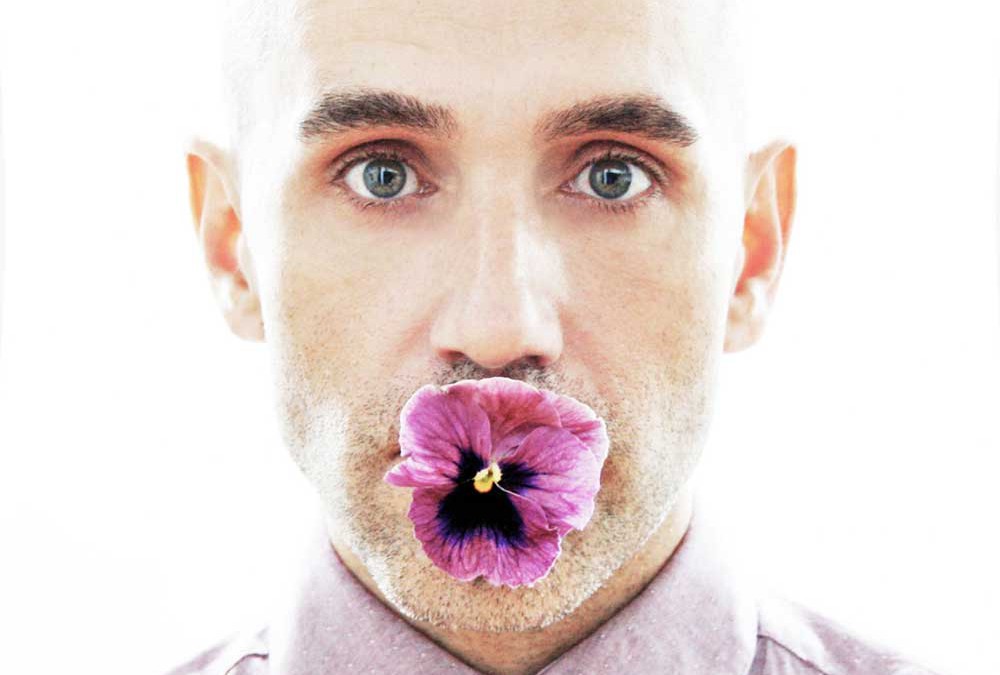
‘The Pansy Project’ is an on-going initiative and artwork devised by Paul Harfleet in 2005. He revisits locations where homophobia was experienced and plants self seeding pansies to mark the spot. They act as a living memorial to the abuse and operate as an antidote to it. After they are individually planted, the pansy’s location is photographed and named after the abuse received.
The Pansy Project has had many incarnations; from small scale unmarked individual plantings to free pansy ‘Hand Outs’ where the artist speaks to passers-by about the project. Additionally, installations of thousands of plants at the site of homophobia and exhibitions of the photographs the artist has made over the last seven years. The Pansy Project has garnered a worldwide following and has featured in various festivals and exhibitions internationally from New York to London.
How it all began.
A string of homophobic abuse on a warm summer’s day was the catalyst for this project. Two builders shouting “It’s about time we went gay bashing again, isn’t it?” is how that day began. It continued with a gang of guys throwing abuse and stones at the artist and his then boyfriend, to end with a bizarre and unsettling confrontation with a man who called them ‘ladies’ under his breath. Over the years Harfleet became accustomed to this kind of behavior, but later realised it was a shocking concept to most of his friends and colleagues. It was in this context that Harfleet began to ponder the nature of these verbal attacks and their influence on his life. Realizing that he felt differently about these experiences depending on his mental state, he decided to explore the way he was made to feel at the location where these incidents occurred. What interested Harfleet was the way that the locations later acted as a prompt for exploration of the memories associated with that place. In order to feel differently about the location and the memories it summoned, the artist wanted to manipulate these associations somehow. Planting unmarked pansies as close as possible to where the verbal homophobic abuse had occurred became his strategy. He would entitle the photograph after the abuse and post an image of the pansy alongside the quoted abuse online.
A positive action versus a negative incident.
Harfleet did not feel it would be appropriate to equate his own personal experience of verbal homophobic abuse with a death or fatal accident; he felt that planting a small unmarked living plant at the site would correspond with the nature of the abuse. A plant continues to grow through experience, as the protagonist does. Sowing a live plant felt like a positive action, it was a comment on the abuse and a potential ‘remedy’. He was interested in the public nature of these incidents and the way one was forced into reacting publicly to a crime that often occurred during the day and in full view of passers-by. He had observed that the tendency to place flowers at the scene of a crime or accident had become an accepted ritual and considered a similar response. Floral tributes subtly augment the reading of a space that encourages a passer-by to ponder past events generally understood as a crime or accident. The artist’s particular intervention could encourage a passer-by to query the reason for his own ritualistic action.
Very quiet yet extremely visible.
Without civic permission to plant one unmarked pansy to mark his own and latterly other’s experiences of homophobia, Harfleet continued as The Pansy Project developed. As growing numbers of pansies were planted with titles such as “Let’s kill the Batty-Man!” and “Fucking Faggot!” a particular view of gay experience which often goes unreported to authorities became apparent. When verbal homophobic abuse is experienced the assailant forces the unwilling participant to assimilate and respond to this public verbal attack; ignore or retaliate? The Pansy Project acts as a formula which prevents the ‘victim’ from internalizing the incident. The strategy becomes a conceptual shield; a behavior that enables the experience to be processed via the public domain, in this case the location where the incident occurred and, latterly, the website which collates and presents the incidents and operates as a virtual location of quiet resistance.
Pansy.
Which plant to use was of course vitally important and the pansy instantly seemed perfect. The name of the flower originates from the French verb Penser (to think), as the bowing head of the flower was seen to visually echo a person in deep thought, hence its Victorian association with effeminate or gay men. The subtle and elegiac quality of the flower was ideal for The Pansy Project’s requirements. The action of planting reinforced these qualities, as kneeling in the street and digging in the often neglected hedgerows felt like a sorrowful act. The bowing heads of the flowers became mournful symbols of indignant acceptance.
How it evolved.
What was originally an autobiographical work has become a project that has been somewhat embraced by the gay community who see the project as a strategy that explores a shared experience. Many statistics reveal that large numbers of the LGBT community have at some time experienced varying levels of homophobic abuse. In association with festivals, Harfleet also regularly hosts events where pansies are often handed out to the general public. At these events the pansies are donated to the public in exchange for hearing about the project. This subtle ‘gift’ presents itself as ‘Free Pansies’ with no catch. However the people receiving the flower take the story of The Pansy Project with them, enabling it to be communicated to a much wider, non-specific, audience.
The various on-line presences of The Pansy Project, such as blog, website, Twitter and Facebook profiles, enable the images of these – mostly ephemeral – acts to be bundled and presented to a wide on-line audience who are then vicariously able to explore and engage with the nature of this artwork and the incidents it documents. The juxtaposition of the images of delicate flowers placed in urban settings with offensive and hurtful abuse creates a complex yet anecdotal anthology of homophobic abuse as experienced by a gay population. The humbly planted pansy becomes a record; a trace of this public occurrence which is deeply personal and concurrently accessible to the public on the street and on-line. After seven years of The Pansy Project Paul Harfleet has planted over ten thousand pansies: Sometimes sowing two thousand at a time as he did for ‘Memorial to the Un-Named’ at the Homotopia Festival in Liverpool, 2008.
Four thousand were planted in the Gold Medal winning ‘Conceptual Garden’ at the RHS Hampton Court Palace Flower Show, 2010, and he continues to seek out locations and plant individual flowers such as the one he recently placed at the British Embassy in Istanbul. Often unsanctioned – though frequently in association with festivals, organizations and even police forces – Harfleet continues to intuit his way through The Pansy Project. In 2011 he collaborated with London based jewelry making company Tatty Devine; together they created a small wooden pin. A hand painted pansy, adorned with “Fucking Faggot”, is a subtle embodiment of The Pansy Project so far.
In September 2012 The Pansy Project featured at the Steirischer Herbst festival in Graz; ‘Truth is Concrete’ was a 24/7 marathon camp attended by over a hundred international artists where Paul planted pansies of historical significance around Graz and spoke about his work alongside Richard Reynolds of ‘On Guerrilla Gardening’; a publication that charts the evolution of guerrilla gardening and features The Pansy Project. The image exclusively included here is taken by Malc Stone and will be the cover image of The Pansy Project publication Paul Harfleet is currently working on. For more information and background visit:


De pagina die u zocht kon niet gevonden worden. Probeer uw zoekopdracht te verfijnen of gebruik de bovenstaande navigatie om deze post te vinden.

Text JF. Pierets Photos Paul Buijs
Young, reckless and fresh from the Arnhem art academy. In order to find a suitable subject for his graduation project, Paul Buijs went where no other student would follow; the shady underworld of gay darkrooms and sex parties. Hovering unsettlingly between fiction and reality, documentary style and art photography, Buijs’ work is of an unedited realism. What normally stays in the shades is now brightly lit up in an uncomfortable, confronting way. It reveals a curious and previously unexamined aspect of the gay scene, and provides a window into the collision of the club life, kinky sex and dark cellars that color the streets of Amsterdam.
Paul just returned from his exhibition and lecture at the Berlin Porn Film Festival when we meet. He’s once again flabbergasted by the way people react when confronted with his pictures. “It’s weird to experience that people are still to be shocked since it was never my intention to provoke. When searching for ideas that would suit my graduation project, I was a frequent visitor of the Warmoesstraat and the Regulierdwarsstraat in Amsterdam. The gay areas, so to speak. I started to take pictures and soon my teachers pointed out that I was on to something.”
During that time, Paul got very much intrigued by an article called ‘Life When The party is over’. Written by a psychologist who had made a study on gay men in their mid 30’s – 40’s and published in Wink magazine. He stated that a lot of gay men weren’t able to enjoy their teenage years because of their family for whom they only came out of the closet when they were already in their 20’s. Due to the social impact of such oppression, they started their outgoing life when most straight people in society started to settle.
A phenomenon that in a lot a cases leads to heavy party life and the drug use that often goes along with it. Not to speak of a low career expectation. “This article explained what I questioned: what lies behind the surface of that fashionable, sexual and glamourous appearance. What was behind the mask of the people involved in this scene?”
Still in the stream of perfectioning his art school assignment, his teachers advised him to focus on his signature. Being a huge fan of the Disney and populair culture he swiftly found a symbiosis between the personages that populate his work and the alienation of mainstream entertainment. “All Disney characters are drawn in a certain, monotonic way. They all have the same glance, facial expression and are very similar in style. It stroke me that a lot of my fellow party people wore the same Fred Perry shirt, the same Bikkemberg shoes and had the same hair-do. By asking to wear a mask I wanted to underline the oneness of a certain scene, by making it half a mask, I made a pairing between the monotony of the public statement and their own private personality. “
With the best will in the world you can’t say that Buijs’ work is approachable or reassuring, hence the numerous galleries who rejected his work for being too shocking and the multiple reactions of viewers who found his images to confronting, to surreal, to raw and to bright. “I had no idea my work would have such an impact. I have the upmost respect for my models and I always show them their picture before I make it public because they still can be recognized despite of the mask and I shoot them while we both experience an autobiographical moment of obsession and dependency. The images are viewed like a private journal made public and it works out to be a little too much to handle for a lot of spectators. For example I got fired as a teacher because they thought my work to be too dangerous for the children and their parents. I don’t quite get it, but let me tell you that I’m too passionate and too engaged to just give up. I invariably believe that somewhere, sometime my work will be acknowledged so I keep on going”.


De pagina die u zocht kon niet gevonden worden. Probeer uw zoekopdracht te verfijnen of gebruik de bovenstaande navigatie om deze post te vinden.
Text JF. Pierets Photos Darren Brade
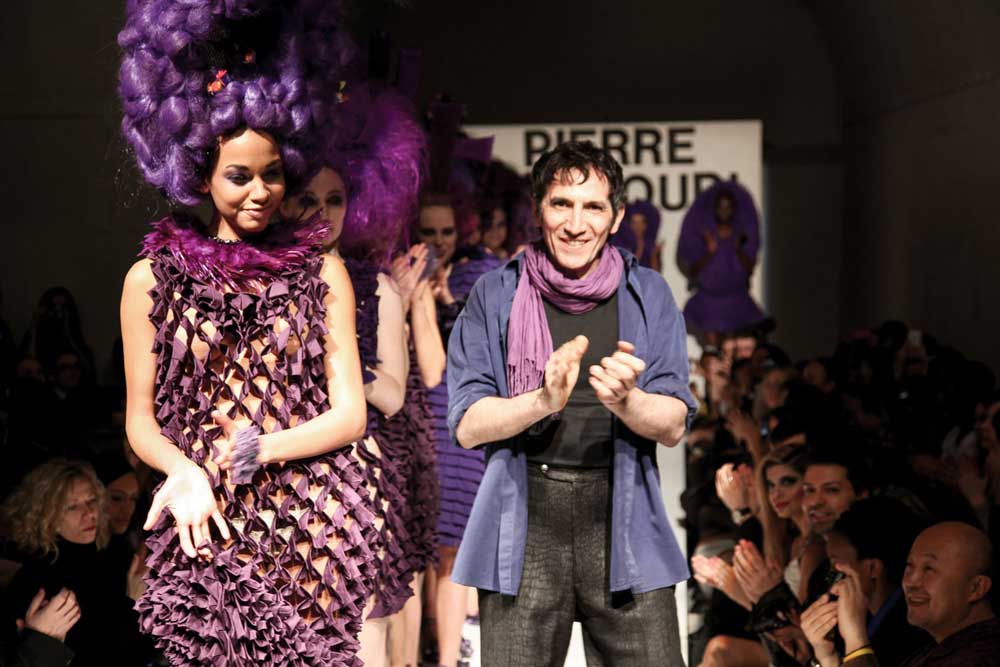
His intricate designs merge the lines between art & fashion and have been worn by some of the world’s biggest style icons from Naomi Campbell to Kate Moss, Scarlet Johansson and Sarah Jessica Parker. He walks the streets of London with his flashmobs and has the tendency to approach his fabrics with the eye of a scientist.
Your résumé reads like a travel trip.
I was born in Iran, lived in Paris for 5 years, 2 years in Lyon, then Shanghai. In Manhattan I ran a Garroudi shop/gallery and stayed there for 14 years. After inhabiting Boca Raton for another year I made my way to London.
How does such a journey influence a person?
I’m a sponge. I try to absorb everything. Having a multicultural background gives me wisdom and inspiration. Knowledge is like light, it opens your eyes to the world.
Why did you end up in London?
London is magical. You should see how the people dress up when they go out. It’s a vessel of inspiration.
When did your carreer start?
I studied in Paris, while working as a hairdresser in my spare time. I moved to New York in 1986. There I joined the Fashion Institute of Technology after working at various retail and design houses. I started my own label in 1993.
Why fashion?
I think fashion is a way of expressing yourself and showing your beliefs and identity because clothes can tell you a lot about a person.
What’s your message?
It’s about being passionate, I believe whatever you put out you get back. My collections are expressions of my own experiences. It’s like looking into a mirror.
Let’s talk technical; you manipulate all your fabric?
Yes. You can’t buy any of my fabric because it doesn’t exist. I love to look at it with the eye of a scientist. The multi-layered matte and sheen silks become second skin to the wearer.
Some call it pioneering fabric-folding work.
It’s all done by hand, which creates an origami effect. I guess it’s quite unique, yes. I believe fabric manipulation it the next evolution in fashion.
And very time consuming.
It is. And you have to be extremely patient to do so. Sometimes it takes me a month to make one dress, but then you create an entirely piece unique. They are one of a kind.
You are known for using interesting and diverse models, which is a breath of fresh air in the fashion industry.
I think it’s generally better to have a diverse selection of models. We live in a world that’s mixed, I mean half of the world is Asian, and only, maybe twenty percent of the world is white.
Where do you get your inspiration?
I’m inspired by talented and creative people and by the sheer beauty of humanity. I try to learn from every person I meet. For example, my life won’t be the same after I talked to you and vise versa.
What kind of women wears your designs?
Naturally the types of women who wear these types of clothes have to be self-secure and strong, have confidence.
Why?
Because you can’t go out there and wear something creative and be shy at the same time. The women who like my clothes use them as a tool to express themselves.
Can I call it wearable art?
I leave it up to you how to call it. I try to make things that are wearable. Expensive, but wearable.
Everybody is talking about the bad economy. Does it influence you?
It does, yes, but I think that everything happens for a reason. Anything good or bad, it teaches you a lesson. Once you learned the lesson you can move forward.
How?
I’m doing a lot of research. Reading up about the business and the marketing side of fashion. These days you need to be on all of the social networks, Facebook, Twitter, Linked-In. I’m looking for different ways to present my designs.
The fashion industry is changing nowadays.
The new generation want things much faster, right away, they don’t want to wait, they’re just looking for something they want, they get it, they move on. We don’t have time. Do you have time to read all the blogs, do you have time to read all the fashion magazines? This is going to reflect on fashion shows, on the fashion industry.
You already took your clothes from the runway into the streets?
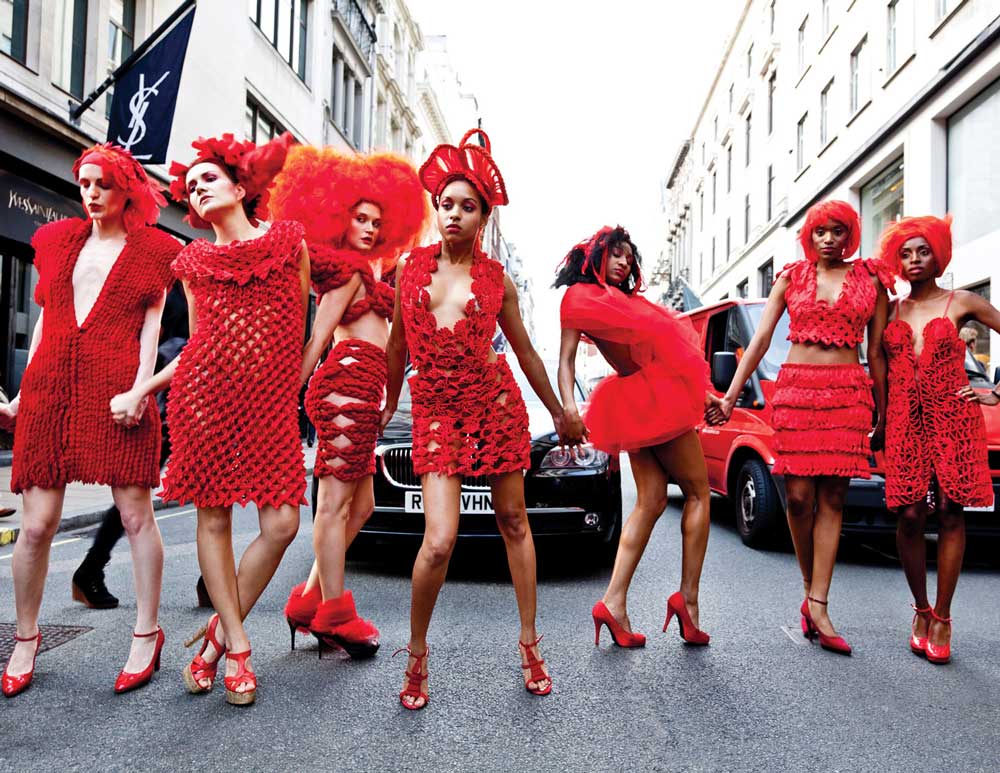
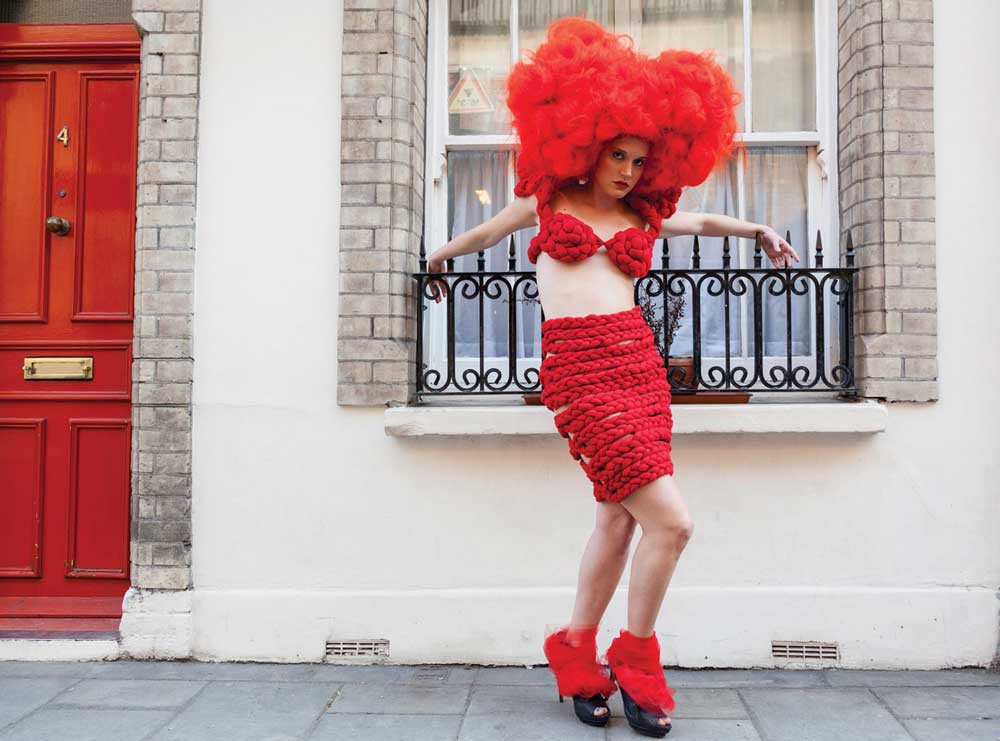
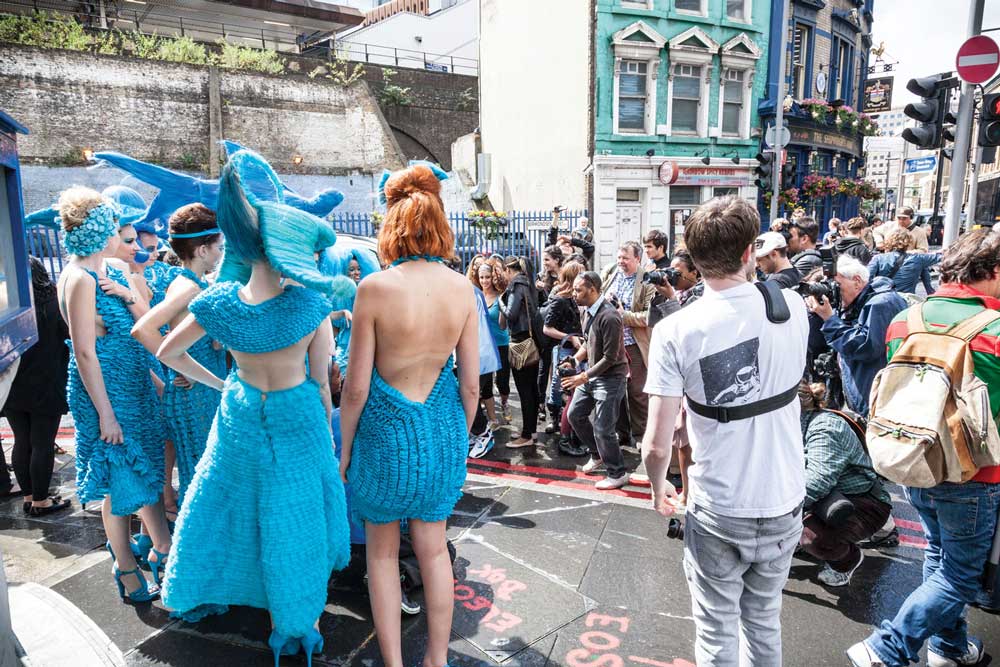
And called it flash-mobs. With my cast of models and dancers, I took my collection ‘Red-Stopping’ to some of London’s most distinguished avenues and tubes.
And it became a big success.
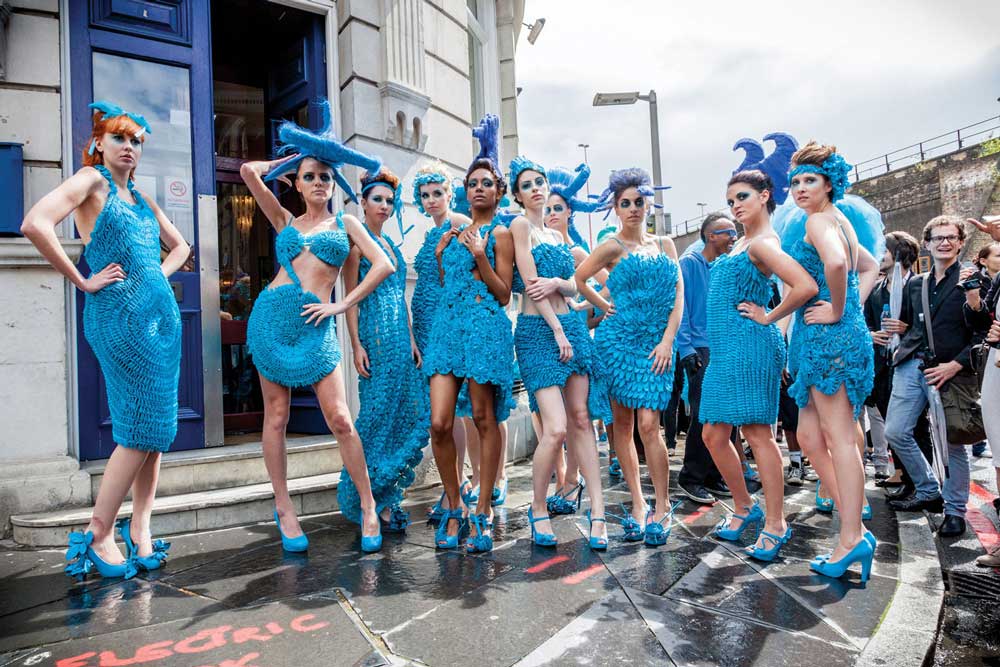
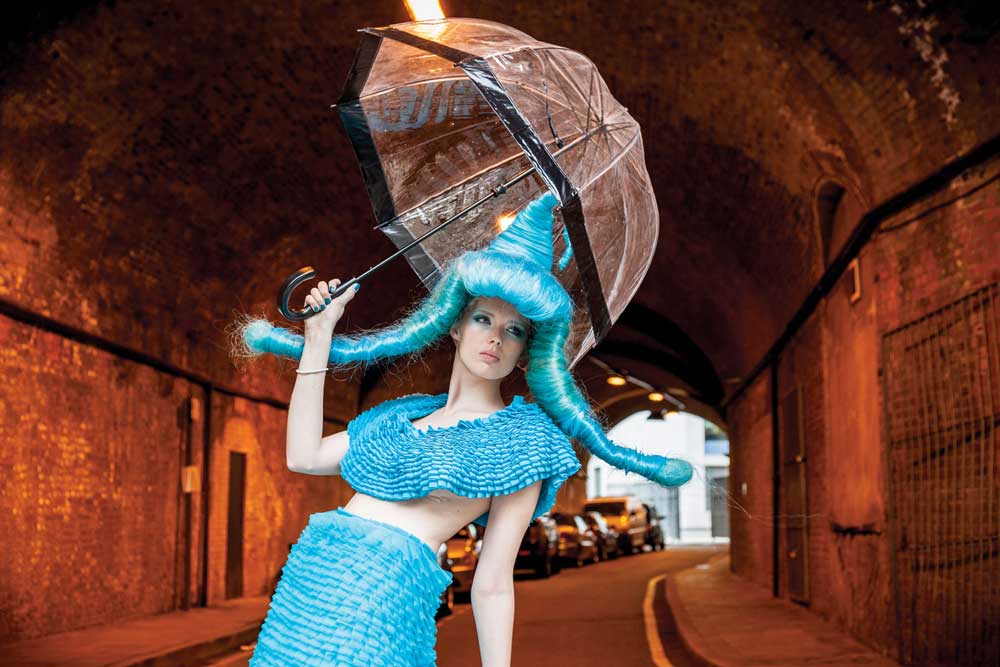
I loved it so much I did it again with the ‘Turquoise Collection’/Beauty of the Sea’ conveying an aesthetically pleasing experience of creatures born of a mystical island, lost at sea. It was raining that day. That was nice.
The future looks bright?
I’m sure it does. The more creative the better so feel free to write that I’m interested in any kind of collaboration. I try to learn from everybody!
De pagina die u zocht kon niet gevonden worden. Probeer uw zoekopdracht te verfijnen of gebruik de bovenstaande navigatie om deze post te vinden.