Geen Resultaten Gevonden
De pagina die u zocht kon niet gevonden worden. Probeer uw zoekopdracht te verfijnen of gebruik de bovenstaande navigatie om deze post te vinden.


Text JF. Pierets Artwork Paul Boudens
Originally, Paul Boudens wanted to become a fashion designer when he first set foot in Antwerp. Yet fate decided differently (he flunked his entrance exam) and nowadays he’s one of the most wanted graphic designers working together with the Antwerp Fashion Museum and icons like Walter Van Beirendonck and Haider Ackermann. We catch up with him just as he returns from the Otis College of Art and Design in LA.
I read you were in LA for a “provocative discussion about the creation, reinterpretation, and presentation of fashion”. Did you also have some fun?
Yes, we had a LOT of fun! Last year, Otis asked me to run some workshops with the students, but after sending some e-mails back and forth, I wondered if it wouldn’t be cool to take designer Walter Van Beirendonck, photographer Ronald Stoops and make-up artist Inge Grognard along with me. That way we had the four-leaf clover of Antwerp fashion: a fashion designer, a photographer, a make-up artist, and a graphic designer. Otis instantly loved the idea, and even involved the School of the Art Institute of Chicago (SAIC) so it turned out to be quite a tour.
Antwerp was put on the fashion map in 1988. How did that happen?
Well, if I remember correctly: six graduates of the Fashion Department of the Antwerp Royal Academy staged a group fashion show at London Fashion Week. The British press called them the “Antwerp Six” and turned Flemish fashion into a (inter)national phenomenon.
And fashion has become the fourth largest industry in Antwerp since then.
It’s amazing how much talent we have over here.
You work with Walter Van Beirendonck for over three decades now. Was it a well-considered decision?
Not at all. I rolled in by accident. He asked me to create prints for his T-shirts in 1989. I was in my third year of Graphic Design and Illustration. We’ve been working together ever since. His work explores challenging social issues and ignores conventional trends. It’s great working with this kind of explosive energy.
And quickly your fluorescent colors and exciting invitations attracted the attention of other designers. Isn’t it difficult to work for and with so many different creative people?
In the beginning we had a blast kicking all things sacred and bourgeois. Something that came both out of rebellion as out of inability, I must say: the folly of youth! Or the ignorance and arrogance, of course. (laughs) As time goes by you develop a kind of empathic skill and I discovered that I’m good in translating what a designer wants or likes to see, without losing my own persona.
Nevertheless you describe your work as ‘classic with a schizophrenic twist’.
You have to: that’s how you become when working with so many different people. (laughs)
The punk twist has become partly one of your signatures and your work communicates a strong vision. Is it possible to hold onto your outspoken style in an industry saturated by hype?
I never was a punk, you know. But, most designers create an aesthetic through a certain photographic vocabulary that is already very strong. There’s no reason for me to re-invent that. The image has to stay close to what they are standing for. But they trust me enough to play around with their ‘vocabulary’.
Don’t you ever feel frustrated not having more to do with the principle image?
No. I love working in the shadow of a fashion designer, helping to expand their vision. Once in a while, I venture out into the limelight, but it quickly bores me. I’m perfectly happy where I am and with what I do.
In the meantime, you can add Dries Van Noten, Olivier Theyskens, Comme des Garçons, Yohji Yamamoto, Wim Neels, Jurgi Persoons, A.F. Vandevorst, Haider Ackermann, The Antwerp Fashion Academy, Het Zuidelijk Toneel and MoMu, the Fashion Museum of the Province of Antwerp, and many others to your palmarès. What are the things you are most proud of?
I consider every thing I design as a sort of ‘baby’, you know. But, two things are very dear to me. First, there’s my monograph Paul Boudens Works Volume I, which was published in 2003, and second there’s my solo exhibition at The Wapping Project in London in 2010 called ‘Trust Me (I Know What I’m Doing)’. How’s that for an ego boost! (laughs)
In 2001, you were responsible for the art direction of ‘Fashion 2001 Landed’, the ambitious fashion city project in Antwerp with Walter Van Beirendonck and Gerdi Esch. Didn’t you become art director and graphic designer of A Magazine during this project?
You are totally right, my dear. (laughs) We wanted A Magazine to be a fashion magazine that explores the universe of a chosen fashion designer in each issue. We invited a guest curator – an international fashion designer, group or house – to develop innovative, personalized content to express their aesthetic and cultural values. Each issue celebrated the designer’s ethos: their friends, their passion, their stories, emotions, fascinations, spontaneity and authenticity. Back then, we made issues with, among others, Bernhard Willhelm, Hussein Chalayan and Olivier Theyskens, and more recently Maison Martin Margiela, Yohji Yamamoto, Haider Ackermann and Riccardo Tisci from Givenchy. The magazine was always a wonderful race against time. I got the material a little ahead of time, so I could do some preliminary lay-outs for when the designer came to Antwerp, we could work like crazy to do the whole magazine in three or four days. Sadly, I had to say goodbye to the magazine: let’s cite musical differences. (laughs)
Does fashion still make you happy?
You know, fashion itself doesn’t interest me. (laughs) But it’s a fun sector to work in. However, society has changed tremendously in the last ten years and fashion became a really serious business. Everything has to be profitable so things are less intuitive, spontaneous and dangerous. Nevertheless, that’s the way it is and I like the fast pace of fashion. I can’t remember what a holiday feels like because I’m always at work and the fashion show invitations are always lurking around the corner.
Next to fashion show invitations you’re also designing books, catalogs, posters. You obviously love your work.
I just love to create stuff. Maybe it’s because I’m easily bored. I always say: ‘the nicest job is always the next one’.
Do you have other ambitions?
Not really, like I said before: I am where I should be, doing what I should do. I once said that finding the right typeface is like falling in love — I guess that illustrates how I feel about my work.
Were you the class swat or the rebel?
As a teenager I was a total wuss: if I would meet myself now I would kick myself and shout ‘MAN UP!’. However, studying graphic design, I had a lot of fun. Mind you, I flunked my entrance exam to the Antwerp Fashion Academy in the mid-80’s and on a comfortable budget from my parents; I tried some other things like Press and Communication and Translation. Nevertheless, the moment I really had to make an effort and discovered Graphic Design, I knew where my heart was and it went rather smoothly.
You started off in the ‘80’s so I guess the tools to work with were quite different from now?
I started off making cassette covers and cards for friends with Mecanorma letters in a time when colour photocopies were still a novelty. Yes, I’m a dinosaur now. (laughs) I guess you can say the possibilities were different, yet not per definition worse; on the contrary: there was a lot more freedom!
Your work shows taped edges and paint splatters on wallpaper or cotton amongst other materials. The result is both rough and sharp, somewhat twisted and leaving a strange impression. Is that where your handywork comes in?
You know, I started analog then went digital — there was no other choice. But I like that combination: design or art is simply not done just on a computer. When you work with tape, paper and scissors, your mind works differently than when behind a screen. Anyway, I always want to give my work a human touch.
What’s your main philosophy when it comes to your work?
I don’t like designs with a shelf life of one day only. How ironic this might seem while working mainly in fashion, I want my work to be timeless, which is actually impossible. However, my work ages quite well, I think — there’s some good genes in it. (laughs)
And does it always work?
Not always, of course. Most of the time the right image pops up in my head and I try to recreate that. If nothing appears, I’m in trouble, but it happens rarely… (laughs) If it takes a little longer, there’s always my gut feeling, which makes me avoid hypes and go for the long run.
Tell me your future dream.
Yuk, what a difficult question! Let’s say ‘publishing the second volume of my monograph’, maybe? It’s Bald Ambition I guess: look at my head! (laughs)


De pagina die u zocht kon niet gevonden worden. Probeer uw zoekopdracht te verfijnen of gebruik de bovenstaande navigatie om deze post te vinden.

Text Nora van Craen
Bart Moeyaert is internationally famous for his work as a poet, a writer, a translator, a lecturer and a screen writer. He once mentioned on television (on ‘Reyers Late’) that society is often overwhelming, that one is alone with one’s thoughts about that, and that it is not always useful to keep on smiling all the time, pretending one is invincibly strong. I could not agree more. Hearing just one of Bart’s quotes was enough to make me realize that he has ‘a certain something’; something that makes him read between the lines of a story. That is why I was not satisfied with simply looking at his Wikipedia page to find out who he is and what he does. I wanted to experience the essence of his inner reality, a reality located in between the lines of Antwerp’s dazzling energy. So, on a sunny, yet rainy Tuesday in sunny, yet rainy May, I managed to meet him in person at the Grand Café in Antwerp. The result of that meeting was an A to Z about Bart Moeyaert, in which I will share with you some of the finest moments of our meeting, some of his unforgettable quotes and some important facts about his life.
A
Astrid Lindgren, a Swedish author best known for Pippi Longstocking, is one of the significant writers that influenced Bart. He even calls Lindgren one of his grandmothers. He cherishes Aidan Chambers’ ‘Dance on my Grave’; a comforting novel about two boys experiencing deep friendship which blossomed into love. This book inspired him to scrutinize his personality and his story telling methods. Bart lives in Antwerp. He was the official poet of this vivid city in 2006 and 2007. ‘Africa Behind the Fence’ (1995) was his first picture book for children. The illustrations were created by Anna Höglund.
B
He was born in Bruges, Belgium, on the 9th of June, 1964. As the 7th son in the family, King Baudouin by tradition became his godfather. In our conversation I mentioned the fact that the number ‘7’ regularly appears in his stories. Interestingly, this fact was new to him. “Blood, sweat and tears are fantastic, so are ugliness and shortcomings,” Bart says when it comes to the difficulties of writing. “Unfortunately, most of us are raised to think that blood, sweat and tears are to be avoided because they are unpleasant.”
C
Bart is i.a. known for his children’s books. The fact that people expect that children always get a message or a lesson from a story makes him nervous. “That is not the way one ought to deal with children. They are not adults yet, there is still plenty for them to learn, but in the meantime adults should not think about them as if they were ignorant or naïve. They can deal with a lot more than adults tend to think. Think deeply about how you were yourself when you were eight, and you will realize how you dealt with adult matters.”
D
With ‘Duet with False Notes’ Bart made his début. He was just 19 years old when he wrote this autobiographical novel. This book emerged from the diary he kept when he was 14 and 15 years old. While reading Bart’s stories, I noticed some sort of distance to the facts, of what has taken place in between two pages. Bart says he would not call this distance. Instead, he believes reality is not primarily constituted by the objective facts of the environment, but by impressions and by one’s thoughts between the lines. He escorts the reader around the covert mind of the main character of the story.
E
Together with illustrator Wolf Erlbruch and the Dutch Blazers Ensemble Bart is writing a trilogy: ‘The Creation’, ‘The Paradise’ and ‘The Heaven’. ‘The Heaven’ is to be published in 2014. In this trilogy a story meets music in a most harmonious way. Not only did he read the Bible to do a background study for ‘The Paradise’, he also made use of gardening manuals to understand why, for example, a tree loses its leaves. The story is very sensual: Eve does not resemble the biblical Eve, she has more of a ‘Lillith’ appearance.
F
Bart wants to be free: he does not want to label people or things, nor does he want his own work to be labeled. When he wrote his début, he never intended for it to be read by young people in particular. He never even thought he was going to become a children’s book author! It was his first publisher who told him an author’s image is important, his being the image of a children’s writer. It took a while before he realized he himself had to determine his writing style and path. “When I am writing a book, I might think the story will probably be read by, say, 7-year-olds, but that’s it. I only know the story I am going to tell and I have some thoughts about the shape or format.”
G
Graz (2009) is a story about Herman Eichler, a pharmacist living in Graz, Austria. One day, a young woman has an accident in front of Herman’s pharmacy. This crucial moment in Herman’s life started off a deep thought process about the man he really is. Is he a homosexual, for example? Bart wrote the largest part of this story while staying at Graz to give lectures. ‘Graz’ was written for the Antwerp theatre group ‘STAN’. Bart was nominated for Gaypersonality of 2011.
H
In 2011 Bart was nominated for the Hans Christian Andersen Award for the 4th time.
I
‘Iemands lief’ (‘Someone’s Lover’) is Bart’s version of ‘l’Histoire du Soldat’ (Stravinsky, Ramuz), written for a narrative performance with top violinist Janine Jansen. It portrays how a soldier cannot resume his normal life because the war has changed him too much. In a similar manner, Bart was so harshly transformed by being a city’s official poet that he could never return to 2005 (see M). “Feeling this sledge hammer blow made this book so much more important to me.”
J
During his stay in Japan, one of the countries where he has been giving lectures, Bart experienced an astonishing moment in a huge store: “In the middle of the computers department I felt euphoric: Japanese was written all over the place and I could not read anything of it and nobody knew my language. In my bag I carried a book which I was able to read, but the funny thing was that it was a Dutch translation of one of Coetzee’s books. This interwovenness of languages and the realization that I am constituted by languages, which I do not mind at all, made me euphorically happy.”
K
The Boekenleeuw 2013 award goes to Bart’s ‘Knock Knock, Who’s There?’ (‘Wie klopt daar?’). This is his 6th Boekenleeuw; he also won one for ‘Kiss Me’, ’Bare Hands’, ‘Its Love We Don’t Understand’, ‘The Creation’ and ‘The Milky Way’.
L
Bart is a lecturer in Creative Writing at the Royal Conservatory of Antwerp. The title of one of Bart’s books is ‘It’s Love We Don’t Understand.’ What he does understand of love is that we are raised to think that the concept of ‘man-woman-child’ and ‘house-garden-dog’ is our target, while the reality is totally different. More interesting than what he himself understands of love is the question why we decide to be with someone after that one spark, he says. Why do we make this choice so quickly, while there might be many other people in the world whom we may be compatible with? When Bart met his boyfriend, he made it clear that there are multiple loves in his life: his love for him and his love for writing. The one cannot live without the other.
M
Bart married Robin Steins in 2006. During Bart’s career as the official poet of Antwerp, it was not easy for him to see eye to eye with the world and its constantly reproducing misery. He wrote a poem, ‘Woman and Child’, about the tragic racist murders by Hans Van Themsche in 2006 and read it out loud at Luna’s funeral, the murdered child. I ask him if he thinks that such a ‘blackened heart’ (‘zwartgeblakerd hart’, used in his poem ‘Lighthouse’) is useful to an artist. To Bart, an artist lives multiple lives: he sees many more things from many more perspectives and tries to describe everything to himself in order to digest it. He sees things he cannot cope with and it gets under his skin, forming that blackened heart. Through writing, a poet can digest his misery.
N
“Now is the moment in which we live. You can only finish the writings you are writing now,” Bart says to me. We were talking about how important ‘trying to be as good as possible’ was to the family he was raised in. I wanted to know how it felt to him, now that he has achieved the status of a successful writer. According to him, ‘At which mountain top would I like to arrive?’ is the most harmful, paralyzing thought to every newbie in writing. Bart did not commence his writing career thinking ‘How am I going to carve this out?’ or ‘How am I going to do this perfectly?’.New York is where he would like to be now if I were able to teleport people. Last year, he stayed there at a writer’s residence to work on his new book.
O
In 2006 he narrated the story of Olek in the musical theatre production ‘Olek Shot a Bear’ with the ‘Flemish Radio Orchestra’.
P
Together with Elisabeth Broekaert, he published ‘Let’s Stick Together’, a photo book with eight of his poems about love. In 2001 the poem ‘Small’ appeared on the side wall of the theatre house HETPALEIS (Meistraat, Antwerp). Broekaert witnessed some weddings with her camera. She took photos and watched the love that had just clinched in its own way.
Q
Most of his books were published by Querido. ‘The 27 Questions Interview’ provides you with non-trivial questions and witty facts about Bart.
R
Many meaningful concepts return in his stories and poetry. For example, he often writes about lighthouses. “In Antwerp, I find the image of a lighthouse important. It is a beacon to know there’s something over there. You can avoid it, but you can also approach it. A lighthouse says: ‘come here’. If you do not want this, then tear down the lighthouse. So if Antwerp wants to be a port city, there has to be a lighthouse. ‘Come here’: you are meant to live with it whether you like it or not.”
S
Bart decided not to have children because of the society we live in. He knows that he himself is capable of dealing with insensitive remarks about homosexuality, but one can never know if a child would be able to do the same.
T
This year he celebrates his thirtieth anniversary as a writer. Congrats, Bart! The only diary Bart isn’t fumbling with is his tumblr. Visit bartmoeyaert.tumblr.com or read his tweets at twitter.com/bartmoeyaert.
U
Many of his poems carry just one word as a title, like for example ‘Lighthouse’ and ‘Choose’. ‘U’ (‘you’) probably has the shortest title of them all.
V
Michiel Verberne was the pseudomym he used at the age of 14. When one of his poems got published in a children’s newspaper, De Stipkrant, nobody believed it was his.
W
‘Plint’, a publishing company which gives poetry a creative twist, has made a window poem of the playful rhyme ‘Once More’ (‘Weer eens’). Window poems are printed in white on transparent plastic and can be stuck to a window. On Bart’s website (www.bartmoeyaert.com) you can find a contest section posing a different question every once in a while. The winner gets one of his works for free!
X Y
“It is important to write for yourself. You should not try to please others by writing. I am not saying that you have to write as if you were the only one to read it, but you write a poem to yourself without considering person X or Y’s preferences. This implies that you allow yourself to be astonished. One has to make peace with one’s way of proceeding.”
Z
Bart lives at a stone’s throw from the Antwerp Zoo. In collaboration with the Antwerp Zoo and the city project ‘O Dierbaar Antwerpen’, the Royal Film Archive compiled a unique anthology depicting rarely seen footage of a bygone age. The first images date from the 1910s. Among others, Bart Moeyaert wrote some reflections on those images.


De pagina die u zocht kon niet gevonden worden. Probeer uw zoekopdracht te verfijnen of gebruik de bovenstaande navigatie om deze post te vinden.

Text JF. Pierets Photos Caldwell Linker
The Haus of Haunt is the Pittsburgh based drag troupe around Sharon Needles, a self-described “stupid genius, reviled sweetheart, and PRB princess,” rose to prominence on the 4th. season of the reality competition series, Ru Paul’s Drag Race. She quickly became a favorite and media darling, lauded for her refreshing alternative “spooky” aesthetic and self-deprecating humor, and was subsequently crowned “America’s Next Drag Superstar” in April 2012.
In The Haus of Haunt: Watch Children, photographer Caldwell Linker presents 120 Pages and over 200 photos, chronicling the Pittsburgh drag troupe. With pictures of performances, backstage, personal and ever day life moments, Linker gives us a valuable document of the Pittsburg queer scene over the past 4 years.
How did you end up in the queer community?
I guess I’m just drawn to folks similar to me, wanted to be around people with divergent gender identities, radical politics, a desire to create something new, folks with a different perspective, and a desire to live a different perspective. I’m queer, most of my friends are queer, I am attracted to queers… I love the queer community, and the people who are part of it. Sometimes things are hard, but there is so much joy, so much love, and laughter. Creativity and creation. Personally, I identify as queer because I don’t have a firm attachment to any particular gender. The people I am attracted to have a wide variety of divergent genders, and gender presentations.
Why make it the main subject of your photography?
Partially it’s a compulsion. I feel compelled to take pictures and I’m most comfortable taking pictures of the folks I know. Also, I think the queer community is incredibly important. I’ve been taking pictures for a number of years now. When I started, things weren’t getting documented and I didn’t want to see our history lost. I see so many people doing such amazing and creative things, I feel like it’s important to archive them. Also, I love color, and the scene is wonderfully colorful, and attractive.
Are you a part of the Haus of Haunt?
Depends on how you define Haus of Haunt. I don’t perform with the Haus of Haunt, but according to how Sharon and Alaska define Haus of Haunt, I would say I definitely am. They include many people other than just the performers; fans, photographers, folks who give everyone a ride, etc. I’ve been taking pictures of these queens for a number of years now.
Why make a book on the subject matter?
When Sharon got on Drag Race – where they have been showing my book, by the way – I started working on it. When it became obvious that she was an instant hit with the fans, I started working. There was a lot I wanted to share about the Haus of Haunt. One of the things that attracted me to the performances is how they have been able to make so much out of almost nothing. I wanted to show people that they don’t need a lot to create something amazing.
Tell me everything about your upcoming show. What/where/when…
My show at The Warhol Museum opens June 14th. 2013. I’m still not sure how many pictures I’m going to use, probably somewhere around 50ish. The show focuses on the queer community of Pittsburgh. I’m trying to focus on themes that I see running through, things that we all experience, things that make us different and set us apart. And of course things that are part of the human condition that run through all of us. Unlike my Haus of Haunt book, the show at the Warhol is more focused on the day-to-day aspects of the queer community, instead of performance.


De pagina die u zocht kon niet gevonden worden. Probeer uw zoekopdracht te verfijnen of gebruik de bovenstaande navigatie om deze post te vinden.

Text JF. Pierets Artwork Jennifer Nehrbass
Someone once wrote that she was dismantling the roles and stereotypes of beauty and femininity, examining the psychology that leads women to go to extremes to maintain beauty and style. Needless to say that our brain got tickled so we checked on some of her thoughts.
On habitat.
I love living in New Mexico. It may seem cliché but the light is dramatic and the landscape boundless. The contrasts of people and their culture are always inspiring. We are at the center of the oldest cultures in the USA with the ancestral pueblo people, but we are also the birth place of the atomic bomb. One has the ability to isolate when necessary and engage with culture when inspired to do so.
On technique.
The photorealistic aspect occurs primarily with the figures in the painting. I choose to have them painted this way to represent the physicality of being alive. We can pinch our skin and know we are physically here. The physical aspect to life is tangible. To contradict the tangible I place figures within abstract areas that refer to the thoughts desires, dreams and perceptions of life. The viewing of my work is meant to be a push and pull exercise between these differing painting styles.
On women.
A lot of my older work dealt with the experience of being a woman in contemporary society. They were primarily self- portraits, with homage to Cindy Sherman. Since that is my gender I felt the critique was a more honest. My experiences as a woman are not unique. The more personal I explored the more universal the paintings became. Currently I am working on paintings that incorporate both genders, which I find to be liberating to the process.
On stereotypes.
I try to reexamine how women are portrayed both in current culture and throughout art history. I am interested in expressing what it feels like to be held up to current ideals of beauty. I create narratives that illustrate a woman’s experience using emotions such as humor, fear, or melancholy. What other thoughts, desires or contributions are ignored when one is overwhelmed with one’s one image?
On intimacy.
Painting is very intimate. Every decision is mine alone on what to put into the painting. Every color is mine to mix, every brush stroke is the coordination between my eyes and the canvas.
On inspiration.
We hike through much of New Mexico and Colorado. The landscape always reinvigorates. I find film and music always a inspiring.
On the future.
Dreams: To design the set for an opera production. Plans: keep painting!!


De pagina die u zocht kon niet gevonden worden. Probeer uw zoekopdracht te verfijnen of gebruik de bovenstaande navigatie om deze post te vinden.
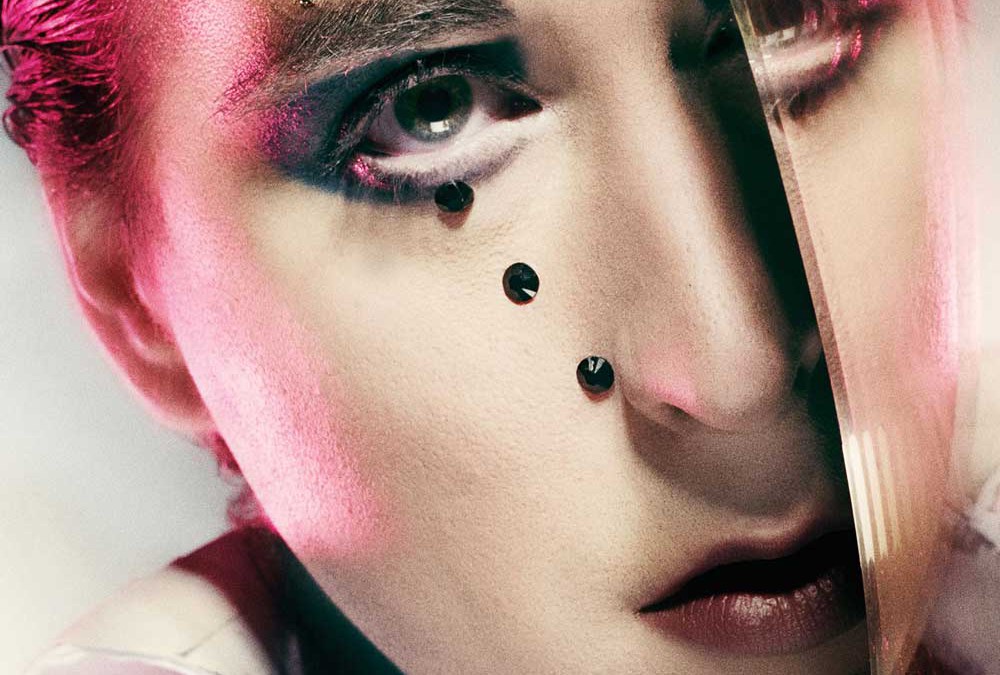
Text JF. Pierets Photos Courtesy of The Irrepressibles
He’s the highly talented artist behind The Irrepressibles, a 10-piece band, using conceptual sets, none-theatrical lighting, projection, dance and couture fashion. Their ground breaking approach continues to push the boundaries of live popular music and they have been commissioned and performed for many of Europe’s leading festivals and institutions including the Latitude Festival, the V&A, the Hackney Empire and guest appearances at the London Fashion Week.
Their heavily emotional style of music is created instinctively, playfully and cathartically by Jamie McDermott, the founding member, and center piece of The Irrepressibles. The moment Jamie knew he was a musician is quite an emotional story. Being in love with his best friend, he wrote songs to express his feelings. Other than the wishful happily ever after, they fell apart as friends and the singer felt so alone he was looking in the face of suicide and wanted to throw himself of the cliffs of the seaside town where he lived. Yet, instead of jumping, he decided to give his life a more noble purpose; “Through music, I wanted to explain the world the beauty of being in love with another man in a way that everyone would understand.” Needless to say this kind of intension is one of the things we love here at Et Alors? Magazine.
As a working class boy from North Yorkshire, he discovered the library and was craving for knowledge. “I read about Vivienne Westwood and Malcolm McClaren, Andy Warhol, about the political force of music in the words of Atalli and Eisler and fell in love with the iconic imagery of film makers Fasbinder and Kenneth Anger”, so his genesis began with a manifesto to “make something that portrays the real originality, drama and intensity of life.”
Irritated by the manufactured pop music, its lack of real emotion and the boring visual aesthetics of indie music at the time, he wanted to create something fresh and reactionary. Most influenced by nonmusical elements such as the sounds of laughter and the hum of the bus; “The movement of people and machines all have a complexity of nature a kind of polyphony in their interaction. My music has this interaction“. It’s an organic machine of emotion, what McDermott calls his ‘performance objects’ or ‘live spectacles’.
What began as an art performance project in 2002 resulted into the release of their debut album “Mirror Mirror” in 2010. The Guardian called all 12 songs humorous, vain and marvelously camp. Two years later, The Irrepressibles released the album “Nude” throughout the world. “Take off your clothes, I want to see you naked” are the first words we hear Jamie McDermott’s deep baritone sing. With reviews like “Consisting of 12 pieces in total, fusing discordant electronica with the more familiar classical orchestrations of old, Nude represents McDermott’s attempts at writing a concept record explaining the rich complexities of life” and “As ever, McDermott sails alongside and above the melody, reaching astounding levels of emotive strength as the song builds to its heady climax”, the world hears that McDermott has a talent that few can match.
Despite these beautifully arranged songs and a great voice, it’s very refreshing to hear someone sing unapologetically about his homosexuality “I wrote much of Nude when I was 19, 20, 21. At that time I was really finding who I was. Blossoming with my sexuality and writing songs about my adolescent experiences, being bullied and isolated. I’ve always been very honest and open. Making music for me has always been a very cathartic emotional process”, McDermott states. “New World” – from the album “Nude” – was a song he wrote to a friend to tell him to come-out and be free. “I was hearing a lot about these kids killing themselves for being bullied because they were gay and I was deeply disturbed by this. I wanted to send this message in the hope of being part of making young people confident in their difference”. The album Nude is heavily about affirming difference and letting it be free.
Comparisons with Antony Hegarty and David Bowie are never far away and the singer explains being very much influenced by what he would call the lineage of gay artists. He believes that gay artists create a slightly different aesthetic of sound and visual. Nevertheless he does not fear that his music will be marginalized because he is not ashamed to promote the so-called gay interest. “It is boring of the music industry to be so conservative when so many other areas of society aren’t and when pop music is meant to be the vanguard of culture. For too many years gay artists have been marginalized when their music has been influential on other more acceptable artists. So why should anyone who is gay be dishonest?”


De pagina die u zocht kon niet gevonden worden. Probeer uw zoekopdracht te verfijnen of gebruik de bovenstaande navigatie om deze post te vinden.