Geen Resultaten Gevonden
De pagina die u zocht kon niet gevonden worden. Probeer uw zoekopdracht te verfijnen of gebruik de bovenstaande navigatie om deze post te vinden.


Text & photos JF. Pierets
Wham!, Boom! and Pow! Pop art is alive and happening and living in Rotterdam. Living amongst posters of Divine, plastic flowers and with a soft spot for John Waters. We talk to painter Peter Popart Radder in his gorgeous house filled with glamour and glitter artifacts. We like!
Off you go.
I started off as a visual merchandiser and window display creator. After 20 years I decided to fulltime spend my days on painting. I used to make decorations and I always wanted to paint, so here we are.
Out of the closet.
I had my coming out at about 16 and I was lucky enough to fall upon the movie ‘Outrageous’. A movie from ’77 about a frustrated hairdresser. He does hair and makeup for the local drag shows but longs to get up on stage himself. I absolutely loved all those movie characters and longed to meet that kind of scene. When you’re only 16, you need something that triggers you to believe in the future. For me it was that movie. Funny to think that my life evolved in a way that I‘m actually around people who are that weird. Hurray!
Back in the days.
I seems like everything was a bit crazier back then. Take for example Studio 54 or club RoXY or IT in Amsterdam. The atmosphere breathes way more freedom than there is nowadays. I’ve been, and still go to quite some parties, experiencing some very cool stuff. But somethings it feels like you’re undergoing a copy from a copy from yet another copy. We’re living in a very tame era. When I enter a gay bar I see people staring at their mobile phones. That’s not what you call; having a wild time. Everything is quite mediocre. But then again, everything has its own particular wave motion.
Bang!
I’ve always been attracted to pop art. I love Warhol, Haring and Lichtenstein and I wanted to make something that I would like to hang on my own walls. You could say that I’m born in the wrong era but I like the fact that some of my work’s spectators, think they are made in the ‘70’s. I like that. Making new things with a retro touch.
Hello Dolly.
My inspiration mostly comes from pop culture, but also from old Hollywood movies, fashion disasters, record covers and disco video clips, you name it. Since I was a child I always wanted to see things that were of the ordinary. Not many weird things happened around me in the early ‘70’s yet I could always find my taste in tv music shows which, in those days, broadcasted clips from The Sweet, David Bowie and Amanda Lear. My preference inclined glamrock videos and the clothes they wore in them. It was pretty amazing to me as a kid.
Lights on.
I had and have quite some exhibitions. One of my favorites was ‘The Non Issue’ in Amsterdam, together with artist Martin C. De Waal. A combination between an expo and a fashion show. I don’t know if I’m aiming for some specific ambition. I love to paint and it’s great if people like my paintings. And of course it would be wonderful to get featured in MoMa, but who wouldn’t like that.
Big Lesbian.
Next to being a painter I also work as a dj. Our formation is called Thunderpussy and DD King. Needless to say people always expect to see a huge lesbian. We Dj at all kind of different gay parties like Flique and Dee Dee’s Dollhouse. This summer we will perform during Gay Pride on the SIN boat at the Amsterdam Canal Parade.
What’s in a name?
I don’t particularly feel like a gay painter. Do you think my paintings look gay? Ok, the work is very flamboyant and in your face. Some spectators think they are all transvestites instead of women. But that’s alright by me. As long as they are having fun. And yes, maybe it’s a little gay. But let’s say I never thought about it. I’m an artiste darling!
Role models.
My latest series of drawings is based on the fact that there is pretty much fuzz regarding gay rights nowadays. And I’m referring to Russia. After watching the two part BBC documentary ‘Stephen Fry Out There’, I was stunned and shocked by all the vicious homophobia on our little planet! I decided to prove all the haters wrong and celebrate those wacky weird wild and wonderful LGBT people who make and made this world so much more exciting and interesting. There have been so many gay icons in the course of history from which some people don’t even now they were gay.
Fast Forward.
I live one day at the time. Having fun, paint and we’ll see about the rest. There are so many nasty things happening that I want to try to make everyday a party. Seize the day!


De pagina die u zocht kon niet gevonden worden. Probeer uw zoekopdracht te verfijnen of gebruik de bovenstaande navigatie om deze post te vinden.

Text JF. Pierets Artwork Lynn Bianchi
Lynn Bianchi is a New York City-based fine art photographer and multi-media artist who has shown work in over thirty solo exhibitions and in museums worldwide. Her photographic art has been featured in over forty publications. Bianchi’s Heavy in White series was inspired by body-consciousness, and the desire to create a fantasy world where women could break free of self-criticism. Small and heavy women celebrate nude while eating and dressing, existing in the moment, challenging societal ideals on weight, beauty and sexuality. The Heavy in White women are not trying to impress or perform. They play dress-up and eat with relish, celebrating their sexuality without trying to be something other than what they are.
Your series ‘Heavy in White’ is right up our alley regarding diversity and a different view on beauty. How did you come up with the idea?
One time, I went to a Whitney biennial exhibition and I saw lots of tables covered with what looked like garbage. They said it was art. Then I went to MoMA. I saw the Impressionist paintings: Monet, Cézanne,… Coincidentally, tables were involved again: beautiful still-life paintings, gorgeous table settings in the impressionist paintings. I went from garbage to beautiful fruits and flowers. After the Whitney exhibits I was very much impressed by the clash of opposites. I thought to myself: I can do that. But what is it that I Iike? I like white. I also could use tables. So tables led to food, food led to body image. Then I wanted a heavy model. And that’s how it started.
Why did you choose to put them in a neoclassic setting?
I guess I’m a neoclassicist inside. One isn’t always in charge of what comes out of ones mind.
Which artist inspires you?
No artist in particular. I’m inspired by my own life experience and by life itself.
How about the models? Were they as positively body-conscious as you wished them to be?
Not necessarily. Being a woman myself, I know that most of us are not satisfied with our bodies, no matter how close to – according to today’s standards – perfection we are. In any case, the photo sessions took away a great deal of the self-consciousness that my models were feeling towards their bodies. For example; I photographed one woman who was bulimic. After our photo sessions, she was able to overcome her bulimia. The sessions were like facing one’s worst fears. Nobody felt self-conscious because the idea of any specific individual or identity was of so little importance compared to the task at hand. The models did not actually lose their identity, however, but rather their sense of ‘self’ was allowed to submerge into the collective. Each model became an important part of the bigger pictures. The photographs weren’t about one individual but spoke of something deep inside each one of them.
How important is diversity in your work?
I love diversity. It’s never boring. It’s life.
It looks like all those women have a lot of fun. Was it a pleasure to shoot them?
Absolutely! The models weren’t self-conscious. Quite the opposite. They were given one task; to eat. And while doing that, they forgot to be in control. They became a monumental sculpture. An exchange of beauty occurred. It was a harmony of shapes and forms. Then came the acceptance of the differences between all of us. It was the best fun.
Why did you want them to eat?
Because that’s what we do every day; we eat and we suffer, we don’t eat and we suffer. You want to eat but you don’t want it to show. But at the core, it is a pleasure to eat. It is a very social thing, too. People get together to eat and have a good time.
Your pictures are very physical. How do you accomplish that feeling?
I just show what’s in front of me. And again; life is very physical.
What do you want your spectators to see?
I want people to see the joy of living, in and of itself. I’m showing them one of their fears, for example the fear of being too fat. But there is a sense of commonality in the nudity and once the differences are exposed, they are more beautiful than scary.
Are you, yourself, free from self-criticism?
I have to say with laughter: no! Absolutely not!
How do you define beauty?
From inside out. Beauty is something that shines through. Physical beauty is pretty to look at, but it disappears quickly if there is nothing much to support it. Beauty is the joy of living.


De pagina die u zocht kon niet gevonden worden. Probeer uw zoekopdracht te verfijnen of gebruik de bovenstaande navigatie om deze post te vinden.
Text JF. Pierets Photos Peter Platel
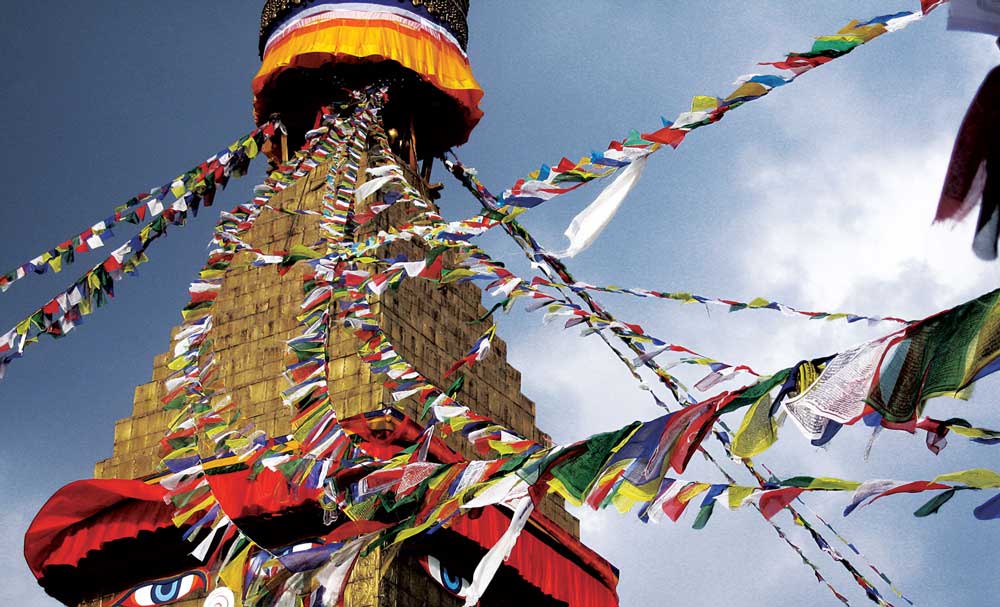
MakeUp2MakeUp is a non-profit organization based in Antwerp, Belgium, that has been supporting the transgender community in Kathmandu, Nepal, since 2008. MakeUp2MakeUp offers training in hairdressing and make up, as well as English language courses to members of the local transgender community, providing those who would otherwise disappear at the edge of society with a supportive environment where they can be(come) themselves, regain and build self confidence, as well as gather the necessary skills for a job on the regular labor market. We talk to Peter Platel, owner of the fabulous Wakko hairdresser salons and founder of the MakeUp2MakeUp project.
First things first; why does someone pick Nepal for such a project?
Well, 4 years ago, I went to visit a friend in Kathmandu, Nepal. One night – in a bar, what did you expect – we met some people from the transgender community and we started talking to them about their lives, their dreams, their goals and possibilities. When I told them I was a hairdresser, they asked if there was a possibility to share my knowledge. The idea to organize a seminar in hairstyling and make up swiftly came to mind.
Why did you choose to help?
I wanted to reach out, to contribute, because I felt like it would make a difference. Yet being a hairdresser, I never knew how and where and when. This was a gift that came at the perfect moment and a unique opportunity since there was a one on one interest from the community itself.
How did you start?
The first thing I did when I came back home was starting to collect make up sundries and hairdressers equipment. By the end of October 2008, I went back to Kathmandu with a suitcase filled with 25kg of brushes, combs and make up stuff. I had to buy my clothes over there because there was no space left in the suitcase.
And they were ready for you?
I guess it doesn’t come as a surprise that nothing happened the way I imagined it. I prepared a 2-week itinerary with a detailed plan on how to proceed but that quickly turned out to be a waste of time. There wasn’t even a suitable place to teach. Fortunately, I was able to connect with The Blue Diamond Society who gave me the opportunity to install a classroom on their rooftop terrace.
The Blue Diamond Society?
The Blue Diamond Society works in Kathmandu with both local communities as well as on a national level to improve the sexual health, human rights and well being of sexual and gender minorities in Nepal including third-genders, gay men, bisexuals, lesbians and so on. Their key activities include health promotion, psycho-social counseling, raising awareness about HIV/AIDS, promoting human rights and sexual health, documenting human right violations and legal counselling and litigation services for the victims and families, legal and constitutional campaigns, lobbying for policy change and advocacy. The Blue Diamond Society has done an exceptional job in publicizing these incidents on a local, national and international level, bringing attention to this situation. The government legalized homosexuality in 2007 and officially recognized the Third Gender in May 2011.
Is Nepal the perfect country for people out of the ordinary?
On paper? Yes. They were the second country in the world where you could register as being transgender. They call it third gender or third sex. Reality shows a different image. Most transgenders stay in the closet because the ones who do speak up, get emitted. They don’t have any access to medication and they randomly take hormones hoping to grow breasts. It works for 2 out of 10, but the others get sick, resulting in skin diseases, liver issues, etc. It’s highly problematic. There’s still a lot of work to do because many things go wrong by lack of information.
And how about the Third Gender? How do you define that?
Third Gender doesn’t have a clear definition. For example: Being physically a man but not identifying oneself as such is an option to register yourself as third gender. Whatever your physical appearance may be. It kind of brings everyone together who stands or lives outside the box. It encompasses a wide range of diversity. Here in Europe we speak in terms of transsexual, transvestite, gay, … from a need to make categories. In Nepal everyone falls under Third Gender.
And what’s their place in the caste system?
Unfortunately, they have a low position in the system, which, for us, is very difficult to understand. Many of them have been rejected by their families. For example, the Hydra’s: Sub-caste castrato’s with a religious function in the Hindi society and cultural life. They believe it’s very important to have a Hydra at a wedding so they can give their blessing in order for the newlyweds to be protected for both good and bad fortune. In spite of their importance, the Hydras are outcasts who live on the street and live a very challenging life. Situations like these make things very incomprehensible sometimes.
It must have been quite an adjustment to work there?
The encounters were very intense since I was confronted with extreme poverty. Most people live from day to day because some of them don’t even know whether they are going to be able to eat or where to sleep at night. Combine this with the transgender issue and you have to deal with something that couldn’t be any further removed from your comfort zone. As a transgender they don’t get any psychological support or guidance, they don’t or hardly have access to any kind of information on the subject matter and no medical care.
How did you manage being part of this community?
Starting with a small group of 7 people, interest grew daily to almost 30 by the end of the first seminar. Some students really kept on practicing and working hard, and were about to embark on an interesting and changing career. One student won a competition prize, to train as a makeup artist for a big brand, some work for tv shows and events, and the best thing was that lots off them returned to class a year later. The group now has new students and others are doing a follow up seminar. It’s great for their self-esteem and personal development. The noble idea is to teach these people more skills so they can develop a regular job away from the sex work, if they want.
You must be proud.
I am most of all very grateful that I was given the chance to do all of this. The fact that it transformed some people’s lives is a wonderful bonus. Sophie for example is a highly motivated girl I worked with and she took this chance with both hands. She is very talented and sat first row at every lesson. Being very verbal, she evolved into being the spokeswoman of the Nepalese transgender community and became a professional make up artist working for television, Miss Nepal and many other things. And then you have Anjali, who is now attending university and working on a career as a model. As you can see, the local motivation is there, it just needs a good follow up.
How do you do that?
There is a great basis from which we can proceed and start to think bigger. The importance of education and training has been proven very clearly. The students realize that this project gives them a great opportunity to change their life and their life-conditions. A real job can provide them with security; keep them off the streets and away from a life in the sex industry if that’s what they want. I will be going back in October with a friend and co-worker from the salon – Fabio – and we are going to take it a step further by including English and eventually computer classes. The general level of English is not good enough yet and it’s a fact that the more communicative the people are, the more they can create and work on a change for themselves and others.
I guess you still need a lot of support?
I am truly amazed and pleasantly surprised to see the impact of what has been realized so far within a few years so yes, it’s important to keep up the support. We need money, as well as logistical and practical help. We are fully committed to this project and return every year to support the students and the local people. The more support, the better the work we can do. In the name of the people of Kathmandu: Thanks for the support.


De pagina die u zocht kon niet gevonden worden. Probeer uw zoekopdracht te verfijnen of gebruik de bovenstaande navigatie om deze post te vinden.
Text & photos Courtesy of National museums Liverpool
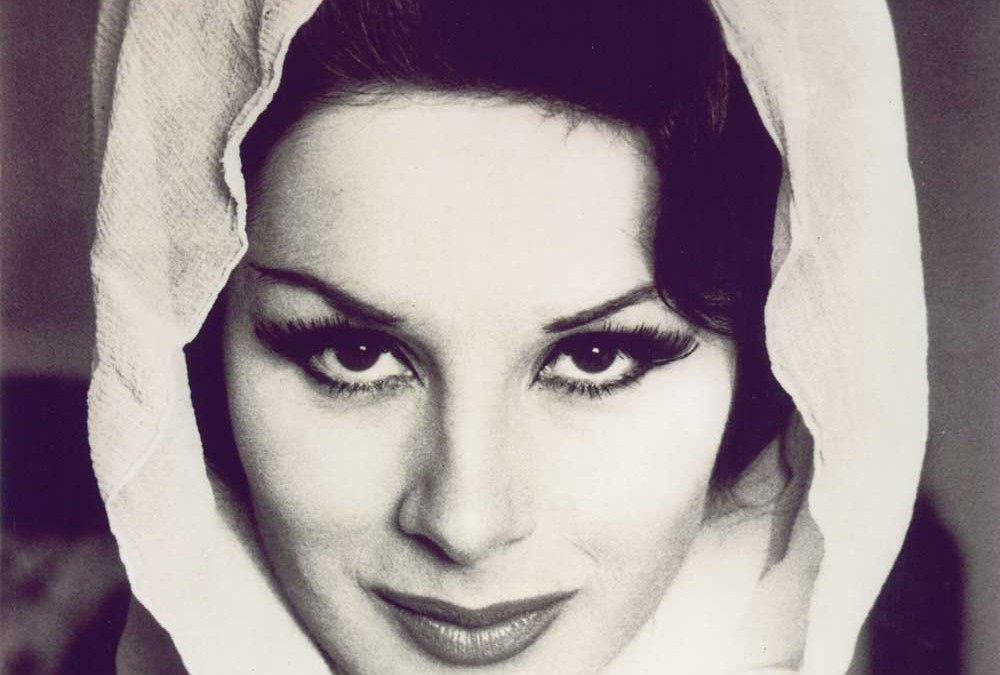
Born in Liverpool in 1935, April Ashley, a former Vogue model and actress was one of the first people in the world to undergo pioneering gender reassignment surgery. As one of the most famous transgender individuals and a tireless campaigner for transgender equality, she is an icon and inspiration to many. For the first time, the Museum of Liverpool explores April’s very public story through her previously unseen private archive and investigate the wider impact of changing social and legal conditions for all trans and lesbian, gay and bisexual people from 1935 to today.
Childhood
April Ashley was born George Jamieson, one of six children to Frederick, who served in the Royal Navy, and Ada, a factory worker. The family’s poor living conditions meant they were soon moved by Liverpool Corporation from Pitt Street, in the Chinatown area, to Norris Green. Although born a boy, April always felt and looked like a girl. Childhood was a lonely and very confusing time. At St Teresa’s primary school she was bullied for being different. As a teenager April did not grow facial hair, her voice refused to break and she began to develop breasts.
Identity
Aged 15, April joined the Merchant Navy as ‘I decided to face up to my situation and it seemed to be one of the things that made you a man’. Feeling and looking different in this very masculine environment, however, was very challenging. Whilst on leave in America, and seeing no way out, she attempted suicide in 1952. After recovering she was given a dishonorable discharge. Back in Liverpool, April continued to struggle alone with her gender identity and in 1953 made another attempt to take her own life by jumping into the River Mersey. She was sent to Ormskirk Hospital psychiatric unit and later treated at Walton Hospital. Her care was brutal and included sodium pentothal injections and electro convulsive treatment followed by a course of male hormones. The experiences were devastating and had a detrimental effect on April’s health and well being. In 1955, aged 20, April decided to leave Liverpool for London. In London April worked at a Lyons Corner House, a bustling cafe and informal, underground meeting point for artists, bohemians and gay men. Being gay or trans was a precarious and illegal life. Homosexuality was not decriminalized until 1967 and trans and gay people faced much discrimination. Being in London gave April anonymity and the freedom to accept and reveal her true identity. In this supportive environment and with other trans role models around her, she began to call herself ‘Toni’ and wear female clothes and make-up. It was here in 1956 that she made an invaluable connection that was to take her to Paris and the world famous Carrousel club.
Le Carrousel
Le Carrousel de Paris was renowned for its spectacular performances by male and female impersonators, which attracted stars such as Ginger Rogers, Claudette Colbert, Marlene Dietrich and Rex Harrison. In stark contrast to post-war England, Paris represented a sexual liberalism, freedom and openness that was previously unimaginable to young April. She was soon employed at the club and paid £12 per week. Assuming a new identity and using the theatrical name of ‘Toni April’, she performed alongside famous female impersonators, Coccinelle, Bambi and Peki d’Oslo. Her confidante and closest friend Bambi introduced her to a Parisian doctor who prescribed the female hormone estrogen which further assisted April’s feminization. April was soon touring with Le Carrousel across Europe. Whilst in Milan she visited the British Consulate to attempt to change the name on her passport from George Jamieson to ‘Toni April’ but was met with hostility. Throughout her life April had recognized that she wasn’t a boy and knew that she could not be ‘cured’ through therapy, medication or psychiatry. She longed to become the woman she felt she had always been. Working at Le Carrousel she had saved enough money to attempt to make this wish come true. Her friend Coccinelle suggested she contact Dr George Burou, a pioneer in gender re-assignment surgery who was based in Casablanca, Morocco. She left for Casablanca on 12 May 1960 and within three days of arriving the correction of her genitalia from male to female was complete. She was the ninth patient on which Dr Burou had performed the surgery. It was a complex but successful operation. As a consequence her hair fell out and she endured significant pain, but April had finally become the woman she had always believed she was. She told Dr Burou that it was ‘the happiest day of my life’.
High profile career
Following gender reassignment surgery in 1960 April returned to London and changed her name to ‘April Ashley’ by deed poll. With her statuesque good looks and newfound confidence she became a fashion model and actress. She was photographed for high profile publications such as Vogue and socialized with famous musicians, actors and members of London’s high society. In 1961 April met and began an affair with Arthur Corbett, an Eton-educated aristocrat. Corbett had frequented Le Carrousel and was fully aware of April’s history and gender re-assignment. Corbett left his wife and four children to begin a relationship with April.
Outing
On Sunday November 19th, 1961 April Ashley was outed as a transsexual in the Sunday People newspaper, prompting numerous other headlines around the world. The press coverage of April’s gender transition was hostile and transphobic, portraying her in an inhuman way. April was humiliated and shocked by the unexpected revelations. Her modeling assignments soon stopped.
Marriage
In 1963 April married Arthur Corbett in Gibraltar, but the relationship soon broke down and April returned to London. Corbett petitioned for divorce in 1967 using the grounds that April was born male and therefore the marriage was illegal. The medical and legal position on transsexuality was divided, no consensus on whether a person could legally change gender could be reached and it was left to the divorce court to decide. This proved to be a test case, which continues to have implications for people throughout the world today.
Corbett vs Corbett
In February 1970 the case of Corbett vs Corbett was heard and became universally known as the divorce case which set a legal precedent regarding the status of transsexuals in the whole country. The judge Lord Justice Ormrod, created a medical ‘test’ and definition to determine the legal status of April, and by extension, all transsexual people. This was a huge personal setback to April, who suffered intrusive tests and more derogatory press attention. The judge ruled in February 1971 that ‘she was male’ and the marriage was annulled. This ruling became a legal precedent used to define the gender of transsexual people for decades. The legal status of transgender people has only been fully recognized since the introduction of the Gender Recognition Act 2004. In the 1990s and early 2000s April continued her campaign to have her true gender recognized. She lobbied and wrote to Prime Minister Tony Blair and the Lord Chancellor, remaining resolutely committed to changing the law for all transgender people. In 2005, after the passage of the Gender Recognition Act 2004, April was finally legally recognized as female and issued with a new birth certificate. The then Deputy Prime Minister, John Prescott, who had previously worked with April in the 1950s, helped her with the procedure. In 2012 she was appointed a Member of the Order of the British Empire (MBE) for services to transgender equality and continues to be an inspiration to many today.
A collaborative project between the Museum of Liverpool and Homotopia – the international festival of queer arts and culture. This exhibition is supported by the Heritage Lottery Fund. It was a key part of Homotopia’s 10th anniversary in 2013.


De pagina die u zocht kon niet gevonden worden. Probeer uw zoekopdracht te verfijnen of gebruik de bovenstaande navigatie om deze post te vinden.
Text JF. Pierets Artwork JJ Levine
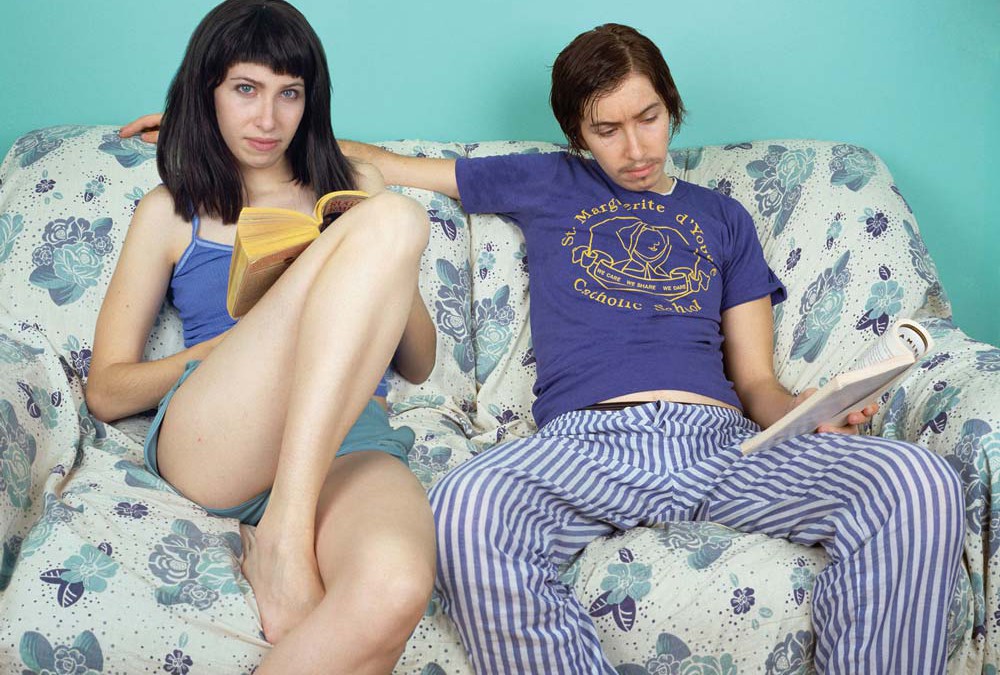
JJ Levine is a Montreal-based artist working in intimate portraiture. Levine’s photography explores issues surrounding gender, sexuality, self-identity, and queer space. In the series ‘Alone Time’ Levine aims to make visually confusing images that call the legitimacy of gender binary into question by using one model, to portray two characters in each photo. The model embodies both a male and female character. A conversation about artistic practice, queerness and identities.
Your life revolves around art and being an artist. Has it always been like that?
Art and creativity in general have always been essential parts of my existence. I have been making all kinds of stuff with my hands since I was a kid. However, it wasn’t until a few years ago that I really began dedicating a substantial amount of my time and energy into making my art practice into a career.
Where did you grow up and how was your childhood?
I grew up in Canada. In many ways I had a comfortable and privileged upbringing, including a really loving and supportive family. I had parents who deeply wanted to be parents and older siblings who paved my way on so many levels (including coming out as queer before I ever did). But when I was quite young, my mother got sick, and she passed away when I was only 11. This shaped my childhood and my life tremendously. Although it is to this day quite painful, I believe living through this hardship at such a young age gave me a lot of tools for coping, and made me into a pretty strong and resilient person. Another positive outcome of that loss is that I developed much closer relationships with my siblings than I may have otherwise; we have really relied on and been there for each other over the years. I am so grateful to have such incredible and inspiring siblings and such a supportive dad.
How do you identify, gender wise?
I identify as trans. My queerness and my gender are inextricably linked.
How is living in Montreal?
I can’t imagine living anywhere else. It’s an amazingly creative city, with a very low cost of living that has allowed me to focus so much on my art. If I was living in any other urban centre of its size, I’m sure I would have to work at my day job two or three times as much as I do here. Also I love all my friends so much, and many of them are committed to staying here as well. Montreal is where my community is, and therefore where my life is.
How does its queer scene differ from other countries?
I can’t speak to other countries, but for Montreal, a lot of people find it not as butch/femme as other queer scenes, but more genderqueer on genderqueer, which can be experienced as hegemonic or exclusionary for some identities and individuals. It is often said that in Montreal there is a lot more gender fluidity and a lot less pressure to conform to the binary than in other places. There are many strong trans communities in Montreal. It’s also an interesting city in that there are really distinct French-speaking and English-speaking scenes, which is not to say that there aren’t mixed spaces, but it does create an interesting environment, especially when it comes to radical queer organizing.
What’s your definition of queer?
For me, queer is not just about a sexuality that exists beyond the gender binary. It’s about fostering community and an ethic that rejects mainstream assimilation and the capitalist isolationist model that so many normative gays strive for and embrace. It’s about remembering the radical roots of the gay liberation movement, and acknowledging that change doesn’t usually come without a fight and that fighting doesn’t always look the same for everyone. It’s about shifting the focus of the movement away from middle-class comforts and towards combating systemic oppression such as racism, transphobia, serophobia and poverty. It’s not who you fuck or how you fuck, it’s a mentality.
Regarding your series ‘Queer Portraits’; why the name? Do all the models identify as queer?
Pretty much! I called the series Queer Portraits because each portrait portrays a member of my queer community. The confrontational gaze of my subjects and unapologetic pose invite the viewer to appreciate the aesthetics of our lives and culture while recognizing that the subjects themselves are not easily consumed.
How’s your relationship with your models? How do you connect?
I only photograph people that I know. So my relationship with each of them is totally different, and the connection is based on our individual relationship history.
How important is their wardrobe? Do you need clothes in order to tell a story about a person?
My models are normally dressed in their own clothes; together we decide on which wardrobe items they will wear during the shoot. These decisions are made based upon the subject’s ideas of self-expression, and how they want to be represented in their portrait. Throughout this process, I am also taking into account the surrounding furniture, wall colour, and general palate within the frame.
In an interview I read, “desire is what queer people connect to one another”. Can you elaborate?
I think that queerness, radical or otherwise, revolves around sexuality and therefore sexual desire—not necessarily sex, but an openness to possibilities beyond the confines of heterosexual, gender-essentialist, binary-upholding relationships.
Could you make a series outside your community? If so, what would it look like?
Making a series outside of my community doesn’t interest me at all. I am interested in the trust and connection that happens between me and my subjects, how that translates onto the final portrait, and by extension, how it comes through to the viewer.
Tell me about your love for working analogue.
I always shoot on film, and for all projects other than Alone Time, I print my work in the darkroom. The analog process is really magical for me—I guess part of it is the anticipation—from the days it takes between the shoot and getting my film processed, from working on an enlarger in the darkroom to waiting for my first test strip to come out of the processor, to the final C-print! I think digital processing is great for a lot of people’s work, but for mine, the colours, the texture of the paper, and the reference to the history of the photographic portraiture tradition are paramount.
Has it something to do with métier, the feeling during the process, or do you actually go for the difference in the end result?
Definitely both equally. When I walk into a gallery or museum, I can normally tell immediately if an image has been shot on film or digitally, and whether it is a C-print or an ink-jet print. Of course there is so much craft involved in printing in the colour darkroom, and I do take pride in that; but since I tend to print my work quite large, the end result, in my opinion, is really superior in terms of image quality as a direct result of the analog process. I’m sure many people will disagree, so when it comes down to it, it’s really a matter of taste.
In your pictures you re-create moments you have experienced. You don’t catch them on camera while you’re IN the actual moment. Why?
Although this re-creation applies to some of my photos in Queer Portraits, the majority of them come about in other ways. And on very rare occasions, I do actually shoot at the moment that I see something beautiful or meaningful for me. The reason that I more often recreate an image after the fact is because my work requires quite a bit of set-up, since I ostensibly create a studio each time I shoot. So saying “hold that thought while I set up my lighting and camera for the next hour” isn’t always appropriate! I will often take some snapshots on a digital camera or on my phone and then use them as a reference when I go back to recreate the scene on film.
Why do you think people find your work provocative?
I think people find my work provocative because it challenges the viewer to rethink certain concepts that they may hold true. For example, in a way, my images encourage cis people think about gender the way trans people sometimes do, even if only for a minute.
How does your work evolve? Person vs. work?
I pay much closer attention to detail now than I did when I started shooting in 2006. My work on gender fluidity/multiplicity definitely preceded my physical transition and maybe paved the way for me on that front. In some way, perhaps I worked out some of my identity through my art before taking action towards being read differently in the world. I don’t know if the work has actually changed that much over the years, other than the fact that on a technical level it is stronger. The concept hasn’t shifted significantly since the project’s inception, but now I have a clearer way of understanding and articulating it.
Regarding evolution: when you work on an ongoing series, isn’t it weird to watch or expose pictures from several years ago?
No, my Queer Portraits feel really consistent, so I think that work from years ago goes really well with recent work. Of course, there’s an element of nostalgia that occurs for me when I look at one of my portraits of a close friend from years ago, or a portrait taken in an apartment that I spent a lot of time in that is no longer inhabited by my friends, for example.
Your work is very personal. When do you, as a person stops, and the story telling starts?
It’s all mixed together. Obviously there are many facets of my life that don’t come up in my work; but since my work is identity based, most of it addresses issues that are really important to my existence as a queer and trans person in the world.
Is the series ‘Alone Time’ a masquerade or does it have a political approach?
Both. In my Gender Fictions, of which Alone Time is one series, I employ techniques of masquerade to put forth my political agenda.
Didn’t your models experience it as a masquerade?
It is a pretty different experience for each model; some find it really comfortable and fun, and others find it challenging or reminiscent of discomfort they have felt with their assigned gender. I certainly never want my models to feel uncomfortable, and we talk about this stuff if it comes up throughout the process.
In the series you celebrate the human capacity for gender fluidity. Can anyone be a model in this series?
In theory yes, but I don’t have any interest in working with strangers. The way I select models is really personal and intuitive, and rarely do I photograph people upon their request.
There’s a gender bending trend going on in fashion these days. What do you think about that?
As far as I’m concerned, the more imagery depicting alternative gender presentations that exists, the better!
You have a lot of exhibitions and shows going on lately. What was your tipping point?
It’s a slow process that’s involved a lot of hard work and perseverance, but the increased attention lately really has been a snowball effect. Every exhibit—and each article that’s been written about my work—has led to the next. It’s an exciting time for me right now, as I am in the process of making two monographs with an artist book grant, as well, I am working on expanding my series Alone Time, and finishing up a video that’s been brewing for a while.


De pagina die u zocht kon niet gevonden worden. Probeer uw zoekopdracht te verfijnen of gebruik de bovenstaande navigatie om deze post te vinden.