Geen Resultaten Gevonden
De pagina die u zocht kon niet gevonden worden. Probeer uw zoekopdracht te verfijnen of gebruik de bovenstaande navigatie om deze post te vinden.

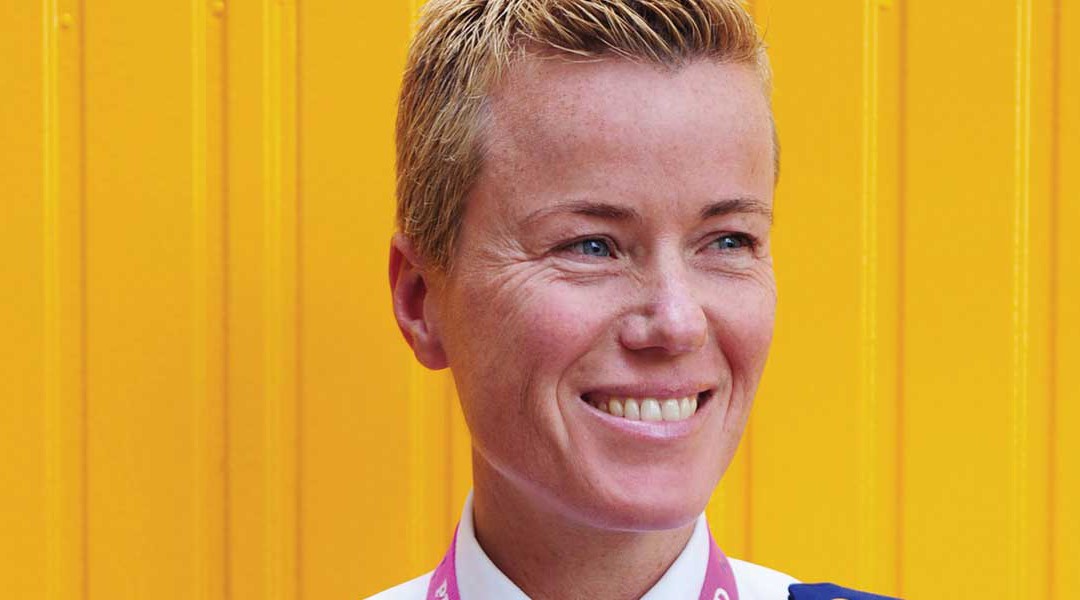
Text JF. Pierets Photos Myriam Missana
There are several networks that focus on specific groups within the Amsterdam police force. One of these networks is ‘Roze in Blauw’ (freely translated as ‘Pink in Blue’). It promotes the interests of gays, lesbians, bisexuals and trans genders in- and outside of the police force. The members of Roze in Blauw are there for people who need to report discrimination, insult, abuse or theft because of their sexual orientation. They offer a listening ear and can refer or mediate when necessary. Et Alors? Magazine talks to Ellie Lust, spokeswoman of the Amsterdam police and president of Roze in Blauw.
In the beginning
Roze in Blauw started in 1998, the year the gay games came to Amsterdam. The numerous participants arrived from different parts of the world. Parts where homosexuality was a criminal offence, or where the death penalty was still sentenced. We thought about how we, as a police force, could let those people know that they were safe with us. We are talking about people who were locked up in psychiatry for 5 years, just because they were kissing someone of the same sex. One of the stories we were told was that twenty people would be trapped in one room and food was shoved under the door, until one day the door would open and they’d be thrown out without a single word of apology, or an explanation for that matter. Because the police would not usually be on their side, we found it quite important to create a safe haven for them to turn to, as you can imagine. The theme of those years Gay Games bethought Friendship, so we invented a slogan that said ‘Proud To Be Your Friend’. We felt we had to let all the guests know that they were welcome here and that they were safe with us. After the festivities ended, we realized there was a great need for a reporting point where people could tell their stories. We tried a lot of things: from consultation times at the COC to pre-announced hours by phone. It was only when we created a separate Roze in Blauw number that it finally started to work, because when people want to report an insult they don’t want to have to wait until office hours to do so. Yet it took until the Chris Crane incident for them to find their way towards us. The American journalist was molested in 2005, when he and his boyfriend walked on the streets of Amsterdam holding hands. Crane wrote about the assault in The Washington Blade, the gay magazine of which he was the editor in chief. “I hope our gay friends in Holland realize that it’s a bit too soon to declare victory and go home, now that they’ve won their legal battles”, he wrote, referring to same sex marriage being legal in the Netherlands. This incident put everything on a roller coaster and soon we had to submit a press release in which we stated that people, faced with violence or behaviour focused against their sexuality, could contact us via that special phone number. Although we were already there for about 8 years, the media picked it up as ‘Amsterdam Police Founded A Special Team’. Suddenly there was a Roze in Blauw team and they started asking us for advice. East European countries and the police top all over the world invite us to inform them on how we make contact with the community. I sometimes proudly call us ‘world champion’.
Facts and numbers
As from 1997 we effectively started to submit the indictments. What we see is that from ‘97 until now there’s an ascending line in violent incidents and other issues that people encounter; threats, discrimination and so on. In 2007, for example, we counted 234 incidents. Those are incidents in the broadest sense of the word; people who were threatened, both physically and psychologically. People who got eggs thrown against their windows or who got beaten up, all kinds of harassments. In 2008 we counted 300 incidents, 371 in 2009 and 487 in 2010. So we register 1 or 2 incidents per day in Amsterdam. Nevertheless, those numbers remain difficult because we never know if those increasing numbers are a sign of the times or because we’re profiling ourselves at almost each event in order to lower that threshold. Two years ago, Dutch newspaper Het Parool and the local news channel AT5 had a research program and one of the questions was, “Do you call the police when something happens to you?” It turned out that only 9% did. But does that mean that the violence is 11 times as high? As you can see, those numbers stay very objective.
The victims
There are various reasons why people don’t report sexually oriented discrimination. For instance, quite some men meet at gay spots but live a heterosexual life in their everyday reality. They don’t go to the police when they are violated. The shame factor is not to be underestimated, either. When you take a man home from a club and you get beaten up, it’s quite likely that it will flash your mind that people will think it’s your own fault. Women experience a different kind of violence. More often they will encounter sexist comments, such as “surely you never met a real man before” or “can I join?”. There are a lot of cases where women get seriously beaten up but the assault remains mostly verbal. We also experience that women don’t think it’s a big enough deal to go to the police and that’s bad because if they don’t report it, it didn’t happen. Unfortunately a lot of people don’t make a fuss about violence when they are gay or trans and that really ought to change.
The perpetrators
Research to perpetrators of gay violence shows that religion has less of an influence than everybody thinks. Macho behaviour, on the other hand, is a very big problem. Young men of between 15 and 25 years old often can’t stand seeing other men behave in a more female way so they want to teach them a lesson in how to be a real man. Not only coloured people are guilty of such behaviour, the Dutch men are also represented.
The roze in blauw team
When people call our team they talk to someone with the same sexual orientation. That helps a lot when it comes to overcoming shame. In order to make the entire force aware of the problem, we now organize – together with COC Amsterdam – sensitivity training days. Until now it’s been very useful and beautiful. And of course there are moments when things go wrong but it’s quite clear how all policemen and -women think about inequality. Police work in general is about 80% behind closed doors. Most people have no idea because the only thing that’s out in the open is when we write a parking violation ticket. We do a lot of social work and next to our Roze in Blauw team we also have – amongst others – a Turkish, Antillean, Jewish and even a Christian network. You name it, we have it. Every specific force can be deployed in a particular problem. In the end, it’s all about connection. People from the outside can only connect with the police when there is certain recognition. In my opinion every police force in the world should be a reflection of the people in the street. That’s the only way to find each other and that’s the only way we can do our jobs properly.
Here and after
The Roze in Blauw team gives lectures all over the world. It’s a process where we take steps forward and the occasional step back. It’s not always easy and it’s a lot of work because next to being part of Roze in Blauw we are also just normal cops. I’m the spokeswoman of the Amsterdam police and the president of this special network. That makes for pretty long days but I cannot tell you how proud I am. I’ve been part of the police for almost 25 years now and I witness progress every day. Nevertheless, I dream about ending the Roze in Blauw team, because that would mean that we no longer experience violence against homosexuality.


De pagina die u zocht kon niet gevonden worden. Probeer uw zoekopdracht te verfijnen of gebruik de bovenstaande navigatie om deze post te vinden.
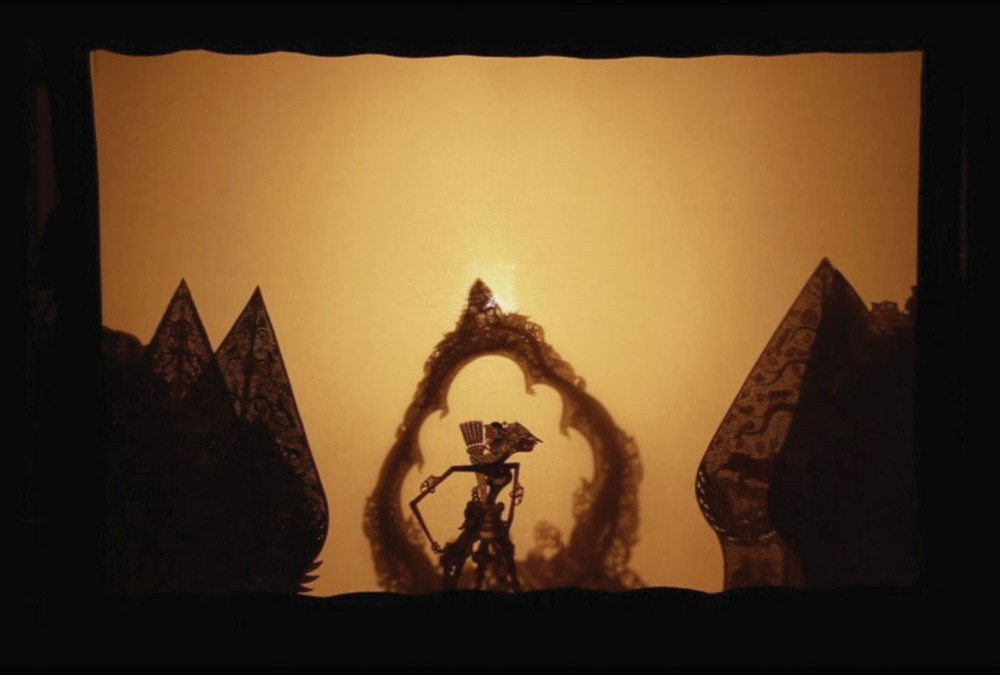
Text JF. Pierets Photos Courtesy of Laura Coppens
Children of Srikandi is the first film about queer women in Indonesia, the country with the worlds largest Muslim population. Eight authentic and poetic stories are interwoven with beautiful shadow theater scenes that tell the story of Srikandi, one of the characters of the Indian Mahabharata. This collective anthology transcends the borders between documentary, fiction and experimental film.
A little girl wants to be a boy. A bench becomes a home and a witness to life. A house does not feel like home anymore. A veil makes you reflect on religion and sexuality. A verse of a poem is like a day in your life. A love can be in between. A female stereotype can be deconstructed. A label can be changed. In Children of Srikandi, participants collectively worked as crew members or actresses in each other’s film, with individual stories ranging from observational documentary and concept art to personal essay. We see that change is possible on all levels of the film: personal, political and formal. Transformation is always inscribed in the narrative; form and identity are fluid; perspectives are shifted. The moving individual stories are interwoven with the tale of Srikandi, an ancient mythological character of the Mahabharata, a well-known Indian epic, which is still frequently used in the traditional Javanese shadow puppet theatre plays (wayangkulit) throughout Indonesia. Srikandi is neither man nor woman, moving fluidly between both genders. When she falls in love with a woman, she has to understand that the only way to survive is to become a “female warrior”. She is one of the few prominent wayang women figures, and while other women in the tales are devoted mothers and wives, Srikandi is the ultimate model of independent womanhood; strong and brave, heroic and active. She is a female warrior. This explains her popularity with many Indonesian queer and feminist women. The puppeteer Soleh gives his voice to Srikandi, while the singer Anik expresses the character’s emotions. As transgender queens they reinvent themselves within the classic Indonesian perception of women, while the short films deconstruct the classic picture. It is the opposed representation of gender that creates an impression of a fluid, oscillating advancement of the film. A spectacular linguistic and religious diversity is revealed: the original languages are Indonesian, Javanese, high-Javanese and Sundanese. The religions involved are Muslim, Christian and Buddhist. Children of Srikandi brings this tale back to the screen and reminds viewers that homosexuality and gender variety wasn’t imported from the West, but in fact forms a deep and ancient aspect of Indonesian society.
When did you come up with this idea?
Laura Coppens Since 5 years I am programming Indonesian films for film festivals and in that function John Badalu invited me to attend the Q! Film Festival – the Indonesian queer film festival – in 2009. I talked to many people there and especially to queer women. Many were complaining that there are not enough lesbian movies, especially no Indonesian productions. This gave me the idea to organize a film workshop and teach basic filmmaking skills, so they have the means to tell their own stories. But of course I could not do it on my own. I am not a trained filmmaker and I knew that I had to find professional help. This is when Angelika came into play. I asked her to join the project and from the start she was very engaged and did a wonderful job teaching others and editing the film. On the Indonesian part I approached in-docs, a Jakarta based organization that arranges documentary workshops to support the local film industry. They helped us to set up the workshop in Jakarta.
Angelika Levi At the beginning of 2010, Laura Coppens asked me if I would like to direct a film workshop for young Indonesian lesbians in Jakarta over the summer. Her idea was to make an omnibus film with six to ten women presenting their personal experiences by means of autobiographic short films. Our first joint meeting took place in Jakarta. Some of the women came from Yogyakarta or Bandung. All of them brought different social and religious backgrounds. Most of them had never met before. We spent the first weeks of the workshop watching hand-picked documentaries and short films. We discussed different topics: gender, ideology, religion, memory and class. The women began to develop their proper ideas. We worked on the dramaturgic emphasis and narrative style of each tale and developed different narrative strategies.
Why Indonesia?
Stea Lim There is not a lot of visibility of queer women. I feel that it’s a lot better than many years ago but there are still issues in this society when talking about LGBT, or overall sexuality actually. In recent years there have been some violent incidents from ‘religious’ mass organizations against the LGBT community. One of them attacked an LGBT conference and the Queer Film Festival in Jakarta, 2010.
Yulia Dwi Andriyanti Indonesia is a country that considers itself to be an archipelago consisting of different races, ethnicities, religions, social statuses and economic backgrounds, but sexual orientation and gender identity still hasn’t become part of its concern. After the Soeharto dictatorship collapsed, the political situation encouraged people to reclaim their rights and identities. It invoked a sexual identity movement that started with the health issue regarding HIV/AIDS, making gay, transgender and MSM become its main concern. However, it didn’t make queer women more visible within the movement itself. That’s why this film workshop became an opportunity for them to reclaim their voices as lesbian, bisexual, transgender and heterosexual alike. This film could contribute as a way to reconstruct women’s identities in Indonesia that tend to be perceived in a binary gender role and that are stereotyped within the social, economic, political and religious structures in society.
How do you see this film in the context of Indonesia as a country with high Muslim population?
Yulia Dwi Andriyanti I see it as an opportunity to challenge all the norms and the structure that has existed within the society, not only due to religious stereotypical thought on heterosexual and queer women, but also as a way to reflect the whole “inheritance” idea about faith identity so that people won’t put stereotype on faith that is often perceived as conservative.
Did it take a lot of conviction for the people to collaborate?
Angelika Levi No it didn’t. There was a huge interest in the workshop from the start, and after short time everyone wanted to tell a story. It was amazing for me to see social and religious boundaries vanish right from the beginning, while commitment and true interest in the other women’s experiences arose. Although most of them had never worked with film before, it was quite easy for everybody to get used to the technique, do the acting and transform personal experience into the medium. We developed a way of working which I had never experienced before and which you might call a non-hierarchical pulling-together beyond all difficulties.
Yulia Dwi Andriyanti I found that the film workshop process was a great way to hear and understand different experiences of diverse queer women. It stated that everyone’s story was very unique and showed the different layers on how queer women struggled for their identity and also its conflict towards society, not only in the level of state, friends, and families, but also inside the queer community itself. Those different experiences became the basic thing for me to collaborate with other queer women. It’s a learning process to hear, support and criticize both as a group and as a subculture.
What do you hope to achieve?
Stea Lim I really hope the film will help people, especially Indonesian women, to be inspired to make more films. We have such talented people here. Hopefully having this film play out in international festivals will inspire some people to go and do it too.
Laura Coppens When we started the workshop I did not have any expectations about the result. Most of the women had never worked with film before. It was an experiment and it also could have failed easily. But within a very short time the group developed a very amazing dynamic, even though most of them did not know each other before and came from very different religious and social backgrounds. Everybody was eager to learn the technique and they all helped each other, from the development of the script to the actual production of the film. So it is this collective effort that made our film possible despite many obstacles. This makes our film very special in a way. I think it’s both aesthetically engaging and politically empowering. Hopefully popular stereotypes about Muslims and LGBT-people are deconstructed and challenged.
CHILDREN OF SRIKANDI started with a workshop which lead to a collaborative film project reflecting the directors’ lived experiences as queer women in Indonesia and at the same time provides them with the means for filmic self-representation. Over a period of two years and under the guidance of filmmakers Angelika Levi and Laura Coppens, the filmmaking became a truly collective act.
Anak-AnakSrikandi | Indonesia/ Germany/ Switzerland 2012 | 73 min | 16:9 | HDCAM


De pagina die u zocht kon niet gevonden worden. Probeer uw zoekopdracht te verfijnen of gebruik de bovenstaande navigatie om deze post te vinden.
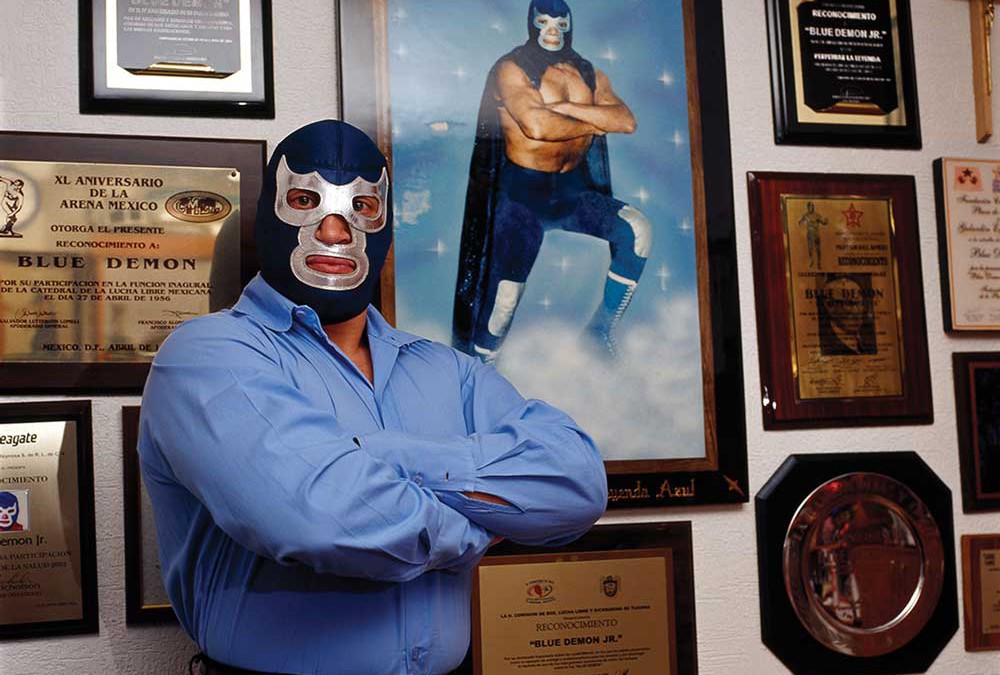
Text JF. Pierets Photos Lourdes Grobet
For thirty years photographer Lourdes Grobet has penetrated the world of one of the most popular sports and deep-seated traditions in Mexico: Lucha Libre-wrestling. She documented the lives of the fighters inside and outside of the ring.
Lucha Libre (Spanish: Free wrestling, lit. “free fight”) is a term used in Mexico for a form of professional wrestling. Being mostly a regional phenomenon in the early 1900’s, professional wrestling remained in Mexico until Salvador Lutteroth founded the Empresa Mexicana de Lucha Libre (Mexican Wrestling Enterprise) in 1933, giving the sport a national foothold for the first time. Grobets childhood was very different from what it is today. She was a rich girl from Lomas de Chapultepec, one of the oldest and most exclusive residential areas of Mexico City. Her classes were taught by nuns and, wearing a uniform, she rode to school in a black Cadillac. She was an athletic girl and her father, a professional cyclist, obligated her to exercise before going to school. This was a routine that allowed Grobet to lead a life without physical setbacks.
As a young woman she was determined to get away from the upper class lifestyle she was used to. “I was always rebellious and that saved me from being stuck as a good girl for the rest of my life”, she recalls. “I never wasted time trying to make money, or getting my own Cadillac.The times I watched fights on television were moments of splendor and leaps of joy but, because I was only a child, my parents never wanted to take me to the arenas to see the action for real. It was quite a mystery to me how my father, being such a lover of sport, would not take me there. It’s ironic that years later I have devoted so much into documenting this spectacle.”
In 1942, Lucha Libre would change forever when a silver-masked wrestler, simply known as El Santo (The Saint), first stepped into the ring. He made his debut in Mexico City by winning a battle royal for eight men. The public became enamored by the mystique and secrecy of Santo’s personality, and he quickly became the most popular luchador in Mexico. His wrestling career spanned nearly five decades, during which he became a folk hero and a symbol of justice for the common man through his appearances in comic books and movies, while the sport received an unparalleled degree of mainstream attention. “I had promised myself not to take pictures of any folkloric bias, but in doing portraits of fighters I found something so deeply Mexican that I was very intrigued. Meeting the fighters gave me another perspective and the one who struck me the most was El Santo. His generosity in dealing with people filled me with joy.
I couldn’t believe that the most famous man in Mexico could be so humble. I hate power, fame, and money because they corrupt people. El Santo broke the hold of fame and never had to be the center of attention, he just didn’t give a damn.” Grobet took the still photographs for one of El Santo’s films and confirmed that he wasn’t using tricks. “He didn’t use a double or strike star poses. When he finished filming there were endless lines of people waiting for an autograph. El Santo stood there and patiently signed his name up to the last person. He gave me a great deal of lessons in generosity.“
Staying anonymous by wearing a mask is a very important part of the Lucha Libre. These warriors need their disguise, because appearance is not only a fine adornment characteristic in the world of wrestling but also a weapon with which to disconcert, astonish, and frighten their opponent. Warriors are transformed by the sublime pleasure of becoming stoically anonymous. Their audience knows they may be well-known legends, but their private lives must remain a secret, for their epic fantasy plays out confrontation between normal, everyday environmental design and their particular mystery. The visual appeal – especially when set in scenarios outside the ring – was quickly apparent to Grobet. In Lucha Libre: The Family Portraits, Grobet shows the wrestlers with their mothers, wives and girlfriends, sitting for what would almost be a generic family portrait, but for the fantastic costumes of the luchadores themselves. By this simple gesture we are brought to the threshold of their identities – and held there. The ungainly, monstrous and splendidly defiant stance they convey with this final preservation of anonymity is of course what gives Grobet’s pictures their edge.
Despite all these great stories you have to keep in mind that Grobet is the only woman whose lens has captured the magic of this exciting sport that is much talked about but known very little of. The only woman who worked in the arena for thirty years. She evolved from taking pictures during fights into a frequent visitor to the private homes where the wrestlers meet, celebrate their victories and live their everyday lives. “The fighters are generous and respectful people. When I started I was young and pretty. Nobody ever failed me in that regard. We began to build relationships; we got to know one another. It didn’t take much to get into dressing rooms even though the majority of the wrestlers are men. I was spending time in gyms and eventually it was just another part of the job, like documenting an office in another profession. Instead of positioning myself as a woman, I was always more interested in myself as an independent human being who doesn’t bow down to anyone. I’ve never been much of a flag-waver and my attitude has been rather unorthodox, but I have fought for women’s rights and equality. What I’ve always rejected is the kind of imported, middle-class feminism that doesn’t correspond to the reality of Mexican women.”
Grobets passion for this sporting ritual has led her to gather not only thousands of photographs, but a vast collection of wrestling posters and programs, newspaper clippings, postcards, flyers, magazine covers, movie posters, stickers, and diverse objects that form part of wrestling paraphernalia. Still, Grobet says she is a “bad portraitist” because she shows people as they are and sometimes people want to be different, better. “I don’t put anyone in a pose. I was invited to their homes, I arrived, sometimes we ate – in fact the mother of Los Brazos was a great cook – and with that feeling of closeness I went to work. Their homes were wonderful. Sometimes people think that I composed the pictures but I never did. You simply enter the house and you don’t know where to look first. Everything is interesting, it’s a marvel of icons and objects.”
Grobet promised her fighters that she would make a book, and she delivered. In 2005 she published Espectacular de Lucha Libre, an effort that brought together a vast collection of images. Grobet has done more than twenty solo shows and, with her transparent and yet kaleidoscopic reflection of an eclectic, suggestive outlook on life, she became one of Mexico’s leading contemporary photographers.


De pagina die u zocht kon niet gevonden worden. Probeer uw zoekopdracht te verfijnen of gebruik de bovenstaande navigatie om deze post te vinden.

Text Josie Pyke Photos Jan van Breda
Heavily set, rugged and fiercely hyper-masculine, these are males who convey strength, identity and are an ever-growing subculture of the lesbian, gay, bisexual and transgender (lgbt) population. Welcome to the “bear” community.
Evolving in the 1980’s, with a carefree effervescence, this social movement of homosexual males has increasingly become an influence and a symbol of many things, from self-expression to self-identity, from literature to fashion. Literally taken from the English noun “Bear”, these hairy, thick-set males gained this status due to their acceptance of their masculinity. How one defines a Bear is ambiguous. Some refer to it as a way of life, a social movement. Others see it as an image or a perception, more based around aesthetics. Yes, bears have grown in society because of their image, but it’s an image of free-will. There is no rule book within the Bear community that says you have to look thin, well groomed and effeminate, to be classed as a homosexual male.
Even though the Bears on the surface seem a positively unpretentious community, there are several subcultures, sometimes known to be quite strict. There have been debates as to what actually constitutes these subcultures. Younger or aspiring bears are labelled cubs or otters. Otters are the slimmest type of Bear with finer hair, cubs can be as hairy as they like, but are typically younger looking: a baby bear. The wolves exhibit maturity and masculinity and are usually the older and more dominant males. Bearded, larger male covered with a blanket of hair? You’re a definite grizzly. Muscle Bears speak for themselves and have created a successful separate culture to the rest. Their muscular, body builder status has become a demand within gay culture and events such as Mr Muscle Bear pageants are a growing demand. These muscle Bears are known to shun the idea of cubs or the otters being part of the community. Adversely, the muscle Bears have the same idea of Bears with higher body fat, often referred to as “Chubs”. Muscle Bears and their culture have been known to exclude males who do not conform to their standards of a “real Bear”.
Whether you’re a cub, a grizzly, or simply just an admirer, BEAR Magazine caters for all varieties of Bear lovers. 1985 saw the beginning of the Magazine. Published by Richard Bulger in 1987, it was released as an alternative to the mainstream gay men’s mags. It featured erotic content including stories, photos and even dating ads which allowed the readers to meet other likeminded males, making BEAR magazine a successful network. Men would also submit photos of themselves to be featured in the magazine. Although under new direction, BEAR Magazine is still growingly popular in the USA and gracing the top shelves, it’s also available digitally. Two years after Bear Magazine came the Lone Star Saloon, also known as “Bear Bar USA”. Set in San Francisco, the Saloon is known as a defining point in Bear history.
It infamously provided Bears and bikers with a source of familiarity and welcoming. Now known as the world’s most famous bear bar, the Lone Star Saloon is still in full swing today. The bar holds an annual “International Bear Rendezvous” as well as monthly “Cubcake” parties for fans of the younger less masculine bears known as the Cubs. The late eighties became the rise of The Bear Hugs Group and private “play parties”.
Described as inhibited and erotic, these private liaisons provided bears with a safe, intimate environment to meet, play and often result in orgies. Spreading the love of the bear community overseas, these groups and parties reached Great Britain and soon after, steamy hot tub parties known as “Bear Soups” were introduced. Flemish fashion designer and self proclaimed Bear, Walter Van Beirendonck, known for his powerful colour combinations and unconventional context, brought Bears to the catwalk. In preparation for his summer 2010 fashion show, bored of casting for regular male models, Beirendonck held an open casting call for “Muscle Bears”. Understanding the shock element he would be giving to the public, Beirendonck says for him, although there’s a sexual attraction, he simply likes to see different body types on the catwalk. He describes the Bear scene as a “nice vibe” not caught up in drugs or heavily focused things like SizeGenetics penis enlargement and have their minds on sex, they’re a “positive scene” and a welcomed contrast.
Continuing to excel Bears as symbols of vanity and fashion, International Mr Bear contests are now a global event. This wonderfully masculine beauty pageant, in which the winner becomes the symbol and representation for bears in their hometown, first started in Bear birthplace San Francisco 1992, but has now spread to Germany and the UK. The categories for Mr Bear are Grizzly, Cub, and Daddy, with one winning the overall title. There are various Bear comics by Jeff Jacklin, contributing to Bears recognition in the media. These fantasy bear worlds have been known to excite Bear readers with their stories of powerful muscle Bears teamed with fabulous comic book art.
Today, Bears are role models of self belief and confidence, a fierce display of all types of masculinity in this fabulous, rapidly expanding sub culture of the LGBT community. Bears are considered symbols of sex, fashion and lifestyle and have created a whole new category within the LGBT community. If that’s not impressive enough… . What I love most about the Bear community is their desire to break the enclosed stereotype of homosexuality. Right from the beginning, they said no to generalisation. In the 21st century, there are enough problems with generalising as it is, but the Bears questioned the fixed idea that a man had to be thin, hairless and young to be accepted as part of gay culture. What’s wrong with being homosexual but still loving yourself as a man? According to the Bears, absolutely nothing.


De pagina die u zocht kon niet gevonden worden. Probeer uw zoekopdracht te verfijnen of gebruik de bovenstaande navigatie om deze post te vinden.

Text JF. Pierets Photos Dirk Alexander
“I’m confused, I’m sitting here on the sofa, the heart my boyfriend drew on the mirror is still there, my heart in a rice cooker. I think I’ll marry him again at lunch. My cat is sleeping but it’s already been 4 days. Well, I have to go to the supermarket anyway. Guess technology isn’t ready for pancake teleportation”.
This is the diary entry from the main character of Niels Peeraer’s collection. The darling child of the Antwerp Academy’s graduating class of 2011 presents his graduate work Guess technology isn’t ready for pancake teleportation, consisting of couture-like tweed silhouettes, handmade leather armors, accessories, clothes and Japanese wooden sandals. All in candy-colored pastels. His concept revolved around the idea of a young boy who has an imaginary boyfriend and prepares to marry him every day. He plays video games all day long and goes to the supermarket in his pyjamas. He wears the armour that his video games-heroes are clad in, combines this with his grandmothers couture jackets (they’re actually too small but he’s very attached to them) and eats nothing but cupcakes and donuts.
Peeraer’s collection blends sophisticated Chanel-esque and a super-cute look with an ease that makes you curious about what’s going to happen next. Although the pictures show girlish boys wearing soft pink clothes, and cupcakes and teddy bears are placed just right, Niels is the only one who will never mention the words “unisex” or “androgynies” because he wants to achieve the exact opposite. “I want to create beautiful pieces that stand on their own for whomever feels related or touched by them”, he says.
Born in a tiny village in Belgium, Niels later moved to Paris: “Intentionally I wanted to move to Tokyo but plans changed as I found love in Paris. I just love the possibilities here: good Asian restaurants, cosmopolitan people. It’s very vibrant. And of course, residing in such a romantic city with the one you love is the most wonderful thing ever.” Part from moving out of love, Niels also thinks that some countries aren’t ready to appreciate his work or who he is. At least not yet. “I never really intend to shock people but I really want to wear the feel of the moment. When I wake up and feel like putting on a tutu, so be it. In Paris I don’t stand out as much as in Belgium so that’s a good start, but I love Tokyo, they think I’m super cute.” Influenced and inspired by Geisha’s and Japanese boys, Niels has always been thrilled by Asia, mainly Japan. In interviews he sometimes says he was a Japanese Geisha in his previous life.
For him that’s the closest description he can give for how this affection feels. Although not influenced by idols – “I think it limits you a lot” – he’s inspired by people in his everyday life and if he would really have to call someone an idol, it would be Terence Koh, a Canadian Chinese artist. One of his philosophies is “I will marry marry marry again, till marriage out of love becomes as common as drinking water”.
His 3rd year Bachelor collection “Kizokusyakai no Dorei, geisha n°58-65” was granted the “Innovation Award” by Anne Chapelle (the leading woman behind Ann Deumeulemeester and Haider Ackerman) and was selected as a finalist for ITS#9 (International Talent Support, IT). His Master collection Guess technology isn’t ready for pancake teleportation won 5 awards which included a limited edition handbag collaboration with Delvaux. He had a personal gallery exhibition at MOMU (fashion museum, Antwerp), FFI movex Award for the leather usage and Ra Award (included showroom in Paris SS 2012). Did I mention Niels just reached his twenties? What does – let’s call it awardness – do to someone who only just graduated? “I’m very thankful for the appreciation of course, but if I learned one thing from my parents it’s to be humble. I don’t think too highly of myself. To get the highest grades of your class and to win all these awards frankly doesn’t mean that much when you compare it to this huge fashion scene. I’m going to make more than one collection per year but I don’t want to go crazy in following the madness of making four in the same amount of time. I think the fashion industry became too fast – the quality can’t keep up with it. So I want to try to get rid of that pressure and design beautiful pieces that are slightly more expensive. I would like people to buy just one beautiful piece instead of ten pieces of junk at H&M, having to throw them away after a year.”
At the moment Niels is starting a label for leather accessories in Paris. “Becoming a designer was always one of my dreams and all I can hope for is to actually make money by creating the collections I love so much. And maybe one day my designs will be sold in Asia. Wouldn’t that be amazing..”


De pagina die u zocht kon niet gevonden worden. Probeer uw zoekopdracht te verfijnen of gebruik de bovenstaande navigatie om deze post te vinden.