Geen Resultaten Gevonden
De pagina die u zocht kon niet gevonden worden. Probeer uw zoekopdracht te verfijnen of gebruik de bovenstaande navigatie om deze post te vinden.

Text & photos JF. Pierets
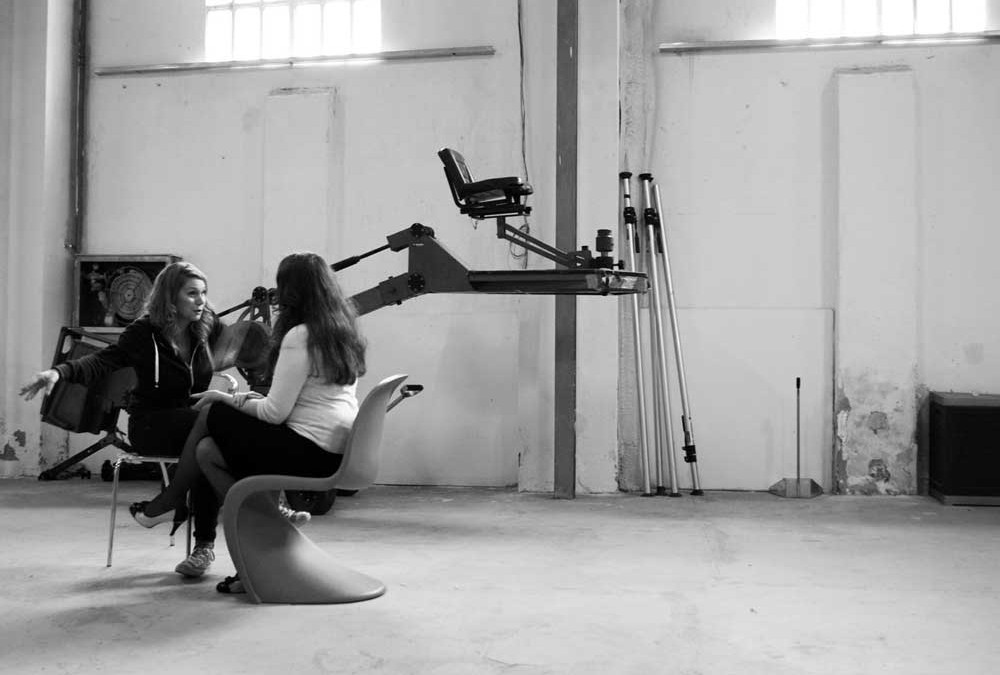
Someone once told her that she must be the cutest porn director he ever met. She thought that was a good thing, because most people still think you have to be a freak to make this kind of movies. We’re in Barcelona, in a huge loft. During lunchtime we talk to the woman on top of Lust –productions. “I’m so normal it almost becomes controversial.” In conversation with Erika Lust.
We’re sitting amongst camera’s, a bed and a woman performing with all kinds of toys. What are you doing?
It’s quite a premiere you’re witnessing here. We are selling all different kinds of sex toys on our website but no one ever thought about the idea of showing all the different ways to use them. It’s strange when you start to think of it; all those toys, all those producers and not a single explicit educational movie on what you can do with it.
How did a sweet looking girl like you…?
It’s a long story so let’s try to make it a little short. I studied political science at the university in Sweden and during the summer I came to Barcelona to study Spanish. In 2000 I met my husband Pablo and decided to stay. It was almost impossible to get a job in political science because of the Catalan politics in Barcelona so I was looking for extra jobs. I had a friend who worked in the audiovisual sector; movies, television and advertising and I started doing the most basic jobs. I was driving actors from the airport, making coffee, you know the drill. Little by little I got better opportunities so I started as a production assistant, then a location manager and afterwards as a production manager. During this process I learned how to make movies. Film has always been my passion so it was quite natural that I started to take evening courses in directing actors, film technics and camerawork. And then….then I had the chance to make a short movie. During that process I came back to the idea I had many years ago in university. Ideas about pornography with the main question being: “Would it be possible to make a movie that was exciting but still had all my values?”. When I looked at porn I always found it physically intriguing because my body responded but my brain didn’t like it. I was quite mixed up because of this huge discrepancy between my body and my brain so I wanted to find a way to make this kind of movie but without losing my esthetics.
So what’s the big difference between male and female porn?
Male producers and directors are all alike. They’re mostly middle-aged straight white guys with a taste in big-breasted blonde airheads. It stands to reason that a homogeneous group is going to create a homogeneous product and that makes those movies very indistinguishable. Women care more about the story that is being told. And also “who” is telling the story? In this case it’s me as a woman, as a feminist, as a mother, as an entrepreneur. For decades men had a monopoly on defining what porn is and in this world of ours, whatever is male-oriented becomes the standard. So it’s time to stand up because it’s not healthy that the only people making pornography are men. Well, at least 99% of it.
And why is that?
It has to do with many things. Men had an easier time to take pleasure in sexuality. Ours has always been closely tied to reproduction. And not only that, mind you that even today there are cultures that are still using barbaric practices like clitoridectomy to nip female sexual desire in the bud. There’s also the structure of society; men go to work, make money, they explore different things. They got into audiovisuals long before women did. When you look at our female history, it’s not so many years ago since we got the right to vote or started to earn our own money. And isn’t that initially the base of independence? If you don’t earn your own money you can’t take a decision, that’s the way it is. There’s been a huge development regarding female sexuality since we started caring for our own pleasure and not only for anybody else’s. And also – and that’s a very important evolution – we are starting to become consumers of things that have to do with sex.
And when did all this change?
It started in the 60’s and the 70’s with the sexual revolution and the liberty to take the pill. But when we are talking about pornography, it’s quite recent. The first woman who started to make this kind of films is Candida Royalle and she started in ‘83 – ‘84. After her there came more and more female directors but still very very little. Maybe we can count 10 at the most. Yet we live in a world where there are thousands and thousands of male pornographers.
Why? Are women afraid to do so?
I think we are a little afraid in one way because it is difficult to stand in society and say: “Hey! I make porn.” You have to stand up against people attacking you from different corners; from feminists to pornographers to Catholics. So many different groups who don’t want us, women, to get involved in that kind of business. But this is where I stand up and say that it’s really important. You have to look at pornography as a discourse. It’s a discourse about sexuality, femininity, masculinity and women don’t participate in that debate because we don’t have anything to say. It’s like we don’t have a voice. So I want us – not only me – but women in general to get into this industry, taking power and starting to make our own movies. Telling the stories we want to be told. We have to express our own sexuality and the only way of doing this, is that a lot of women get into the pool. We have to become a critical mass to be able to change things. In politics we are talking about the 30% rule, meaning that when women are starting to take part of the governments and the parliaments, we have to be 30% of the group. That is when you’re starting to have some power, when your voices will be heard. So let’s work on that quota because otherwise, nothing is going to happen.
But you are pretty busy trying to change things.
I have to. Because I believe we can benefit from watching sexually explicit films. We’re very liberated these days and porn can help us spice up our fantasies and discover tastes we never even knew we had. Porn in and of itself is not a bad thing and believe me if I say that our tastes are as varied as men’s are. So hold the flowers and fireplaces, the candles and novels by Danielle Steele. We want sexually explicit images, but we want to call the shots when it comes to how they’re made.
In your book ‘A woman’s guide to good porn’ you have a chapter called ‘Indephony, predictable porn made by men’. I really laughed out loud reading Nr. 7: Beautiful young women just love to have good sex with fat ugly middle-aged men. Nr. 13: Asian men do not exist and Nr. 22: When a woman is sucking a man’s cock, it’s important for him to give her constant reminders about what to do: “Oh, yeah-suck it!”. Isn’t that too much of a cliché?
I don’t think it is. Young people learn about sexuality from porn. And there we have a problem. I don’t want Rocco Siffredi telling my girls how to have sex. I don’t want him involved in this. I want to have the chance to tell my vision on sexuality. And that doesn’t happen when we don’t participate. Then we will end up with all these porn studs, these macho porn guys, telling our children how to have sex. I want them to take away positive messages about sexuality. With feminist values and discourses. But don’t get me wrong, it’s not that I want to impose some kind of censorship, I just want diversity and the freedom to choose what suits you. The problem regarding young children is that the school education on sexuality is very bad or non-existent. In some countries it’s even called family planning. And what happens when education doesn’t take their responsibility and when still too many parents are afraid to speak to their kids about it? Then kids look at free porn on the internet. And what do they learn? An Italian macho fucks 10 Bulgarian girls in the butt and that’s normal. When you, as an adult, watch this movie, you will have some references. So if you want to see this kind of porn, please do and I hope you enjoy it. But children at that age are not so developed that they can think critically. I think it’s very important to inform and to teach young people how to be critical because it’s not only about porn, it’s also about the models, being really really slim, it’s about television series where we most of the time see men as main characters. We have to be critical towards fashion, photography, because all of it is fake. My point of view might sound quite heavy but it’s true and it’s important that we start to speak about this.
Your message is very clear, but why use porn as your outlet?
Because I love film and I have a base to stand on. I’m not only doing this because the fun or for the money but because I want to see good movie. And that’s another part of it, the esthetics. I find most porn very ugly. And because I like film and I like beautiful things, I want to see a beautiful movie that is well developed, a story that is interesting, characters I can identify with. I don’t want them to be stereotypes like the nightclub singer and the stripper, the babysitters and the desperate housewife. I’m not interested in seeing that kind of women. Neither am I interested in the mafia guy or the pizza delivery boy. Those stereotypes really set my nerves on edge.
You’re not working with actors?
I want normal people to be in my movies so I try to use the less “pornified” looks that I can find. Making an adult movie is not very different than making regular cinema. The main thing with the actors, when they are professional adult performers, is to erase their porn attitude, and make them act and feel naturally. It’s not an impossible mission, it can be done if you treat them with respect and you teach them to relax and forget those strange positions and the athletic sex they do for a living. Nevertheless, I keep looking for the non-transformed bodies. For people who look good and feel fresh and natural. Lately I’ve been very lucky because as my name is kind of growing, people are coming to me. I don’t have to find them, they find me. All those people who were never involved in the adult filmmaking suddenly want to be in my movies. And that’s wonderful, but I also realize this comes with big responsibilities because those people are really having sex and they show every inch of their body in front of the camera. For me it’s very important to get to know the actors. Who are they, what do they like, why do they do this? I don’t want someone doing a scene just because they are in an economic crisis and they don’t have any other way to earn money. Nor do I work with 18 year olds because they cannot fully understand the consequences of what they are doing. I want people to enjoy being in front of a camera. Who are sex positive because believe me, there are a lot of people out there who like doing this.
Do you know your customers?
Yes I do because we have the Lust cinema and the Lust store online. Therefor we can see who’s buying and I can tell you it’s more or less 50/50. 50% men and 50% women. I’m very happy I don’t exclude men from our audience because that was never my intention.
Would you describe it as female porn, or femfriendly porn?
It’s really difficult to find a good word. Sometimes I call it porn, sometimes I call it erotic movies but also Adult independent film. It depends a little on the circumstances. The problem with the word porn is that it’s very ugly. When you say it and you close your eyes, you see something. Something very specific because the norm on what pornography is, is rooted into our minds. Therefor you see something that has nothing to do with my movies. When I use the term porn, you probably see something ugly, most of the time aggressive and violent male dominant. When I’m watching the scenes I shot, I see passion, intimacy. Sometimes I wish I could wash the word pornography. Putting it in the washing machine and take it out all fresh and removed from any negativity because I want to use that word. What else should I call it? Contemporary porn maybe, yet I don’t really think I belong in Tate modern. So yes, I must admit I’m a little lost when it comes to put a word on what I’m doing.
Are you a feminist?
Yes I am, but all too often I realize that a lot of people don’t know what feminism is. We live in a world where men and women don’t have the same possibilities, rights and opportunities. A world in which women as a group have less power than a group of men. Being a feminist means acknowledging this situation and believing it should change. And the only way we can change something is when we can be specific about what the differences actually are. We are modern women in a modern society and yet we are not represented in the mainstream pornography, we are not there. So let’s start making our own porn movies because if we do, we can start choosing what we like most.
How did you get so liberated?
Well, I’m not. I’m still struggling but I think all of us are. I’m a very normal person and I don’t have this super strong sexuality going. I’m quite down to earth and vanilla. But it helps that I’m Swedish. I had the opportunity to grow up in a country that is very liberated when you compare it to others. Sweden was also one of the first countries who started school sex education in 1952. When I talk to people I realize I am very privileged on the subject matter. When I was 12 we had sexologists coming to our school and talking about not only the technical stuff but they also spoke about feelings and butterflies. The good part of sexuality was explained to us as a part of your health and happiness. This kind of approach changes things, it opens up your mind.
Do you feel excepted?
It goes in two different directions. The male porn industry has a very difficult time right now, accepting that suddenly there are young women deciding that they want something else. Bottom-line is that I think a lot of men are afraid of losing their jobs. Regarding my own kind I can feel that the feminist movement starts to accept the idea of women getting into this. In the beginning they were quite chocked but now it’s getting better. They are clever enough to see why this is important.
And in your personal habitat?
Yes I do feel accepted. And that’s because I’m not ashamed of what I’m doing. If you’re ashamed you will have a problem explaining it. People should be ashamed when they are doing bad things, stealing money or dealing drugs. Not because they are making adult movies. For example my mother is 70 but she accepts it, understands it. We’ve been speaking a lot about the message behind it. But of course she would have been a lot happier if I would have become a lawyer or a teacher. Because yes, this is a little more complicated to tell your friends. Nevertheless, everybody responds really well to what I am doing. I can see that people feel the same way, that there is a need for this new niche. Also the parents at my girls’ school are great about it, they love what I do and they certainly don’t say that there kids can’t come to my house because I’m a pornographer. Acceptance lies with you. People understand what you communicate.


De pagina die u zocht kon niet gevonden worden. Probeer uw zoekopdracht te verfijnen of gebruik de bovenstaande navigatie om deze post te vinden.

Text JF. Pierets Photos Renate Breuer
He makes television shows for Dutch channel KRO. One of them is called ‘Uit de kast’ – Out of the Closet – in which he supports youngsters in their coming out. Striking a pose on the cover of a gay magazine is something he does without batting an eye even though he was born and raised as the son of a preacher man in a small village in The Netherlands. He preaches and parties. He’s kind and intelligent but he likes to do things his own way. Yes, there’s a lot to say about Arie Boomsma. A conversation about religion, gay icons and controversy.
When reading the above, one must think you’re quite the schizophrenic type. Yet you sound like you are completely at ease and in balance. How do you combine all these traits in one person?
Let‘s say that I love this kind of tension. I find it very satisfactory to get these contradictions to unite. It gives me the feeling that things are in motion. Maybe it appears to be contradictory but that’s not necessarily so. I sometimes find it difficult to be seen as someone who stands on the barricades while all I want to do is create programs about things that I find important. I feel it is my quest to make youngsters see that they ought to be open and free but I never felt the urge to be a taboo breaker.
You are very religious. Not exactly something you automatically connect with being biased. How come you’re so open minded?
The fundamentals were secured in my upbringing. My parents, who are also very religious, kept the doors to our home open to anyone who needed shelter. People who’d just come out of prison, missionaries from Africa or the occasional vagabond in need of a bath; they were all welcomed with open arms. My parents always said that faith is their basic principle but they also told me to check out their bookshelves and read. They knew that not everybody had the same belief and thought it very important for us to keep an open mind. For us to take a more profound look at the world around us was very important to them.
Is it very narrow minded of me to think that religious people are not tolerant towards any other range of ideas?
It remains a difficult discussion. I know a whole bunch of religious people who really think differently. But those are not the ones you hear the most. Therefore I find it very important to apply myself for a theme such as homosexuality. Because if you take the bible seriously you’ll read that it’s a command to step into the world with love in your hart and not to be judgmental.
I’m often in conflict with people who I think are abusing religion to prohibit people to do or to be something they don’t really are.
And is that the reason why you make television programs like ‘Uit de Kast’?
I want to be inspired by the things around me, by what happens at this moment, contemporary themes. Only, when it comes to sexual orientation, I’m even more motivated because I want to underline that if you acknowledge the existence of God, you know that he would never tell someone what he can or cannot do. God loves everyone and sees no difference between gays, hetero- or transsexuals, lesbians or anyone else. God makes no mistakes; he makes every person the way he or she ought to be. I would never say such a thing during the show, but I like to accentuate this vision during the promotion of it.
Sounds like you get much satisfaction from your work?
I do. Very much. I love to go out, eat, drink and party but in my work I find it very important to make a difference. To be relevant and to make a contribution, to make something right, as you like. Mind you, there’s a shadow side to the whole thing because I can feel pretty guilty when I’m not working. Then again that might be a Calvinistic motivation.
Do you feel successful?
That would be a little too easy. The second season of ‘Uit de Kast’ had about 700.000 viewers. It would be very tempting to sit back, relax and enjoy the success but that’s not my motive. Now, while working on season 3, I want to make it better, I want stories that matter, that inspire even more than the previous series. I don’t want it to end like some kind of trick, a format that works on TV. You have to watch out not to repeat yourself because it’s successful. It has to be repeated to have more impact. I want to keep evolving because even if some people think that homosexuality is widely accepted, it is not. For the biggest part it’s still something many people don’t know about. Something scary.
An idealist.
The core of idealism is that you should always feel that what you do is something good or that it adds something. It’s nice to get confirmation, but it’s not my first aim.
Those kids from ‘Uit de Kast’ really trust you. You can almost hear them say, “Here’s my hart, you can do with it whatever pleases you”.
That’s true. But that’s because we take our time and we talk a lot. We never give those kids the feeling that they are obliged to do anything. They are the ones that decide what will happen. We’re the happy few who can be present at this process. I’m always very proud that they want me there because there’s a lot at stake for those boys and girls. The stories they tell are real and sometimes very raw. That’s why I want a program like this on television. To show all those struggling kids out there that they are not alone. Let’s say I’m not done with trying to bring confidence and a sense of self-worth to those who need it.
It must be hard to get those stories out of your head.
In the previous season there was this boy who told me that he hated himself when he looked in the mirror. He used to call himself a dirty faggot and stated that he would give both his legs to not have to be this way. Can you imagine that? That you are so disgusted of yourself because everyone in your environment always told you that it’s wrong, that it’s not the way you ought to be. So yes, those stories keep wandering through your head while you ponder on how to make this right. Fortunately everything is becoming better. The boy and I stay in touch. He has a boyfriend and slowly he starts to accept who he is. His mother is very interested, his family is strictly orthodox but they had the strength to put love in the first place.
And what about you? Are you very influenced by your surroundings?
I’m aware of my position in society but I try not to be too influenced. Some moments are easier than others and I don’t want to be bound fighting against any form of judgment. Then again I’m aware of my exemplary function. I work with high school kids and some of them look up to me. Personally I can run around, saying I’m a free spirit and it ought to be possible to experiment with whatever you like, but I would never say “go ahead”. Because you never know what goes on in someone else’s mind.
You do so many things, yet they keep calling you a gay icon. Doesn’t that bother you?
In the beginning I was quite bothered by all those questions about being gay or not. I had to keep explaining that it’s not because you are on the cover of a gay magazine or the host of a themed television show, that you are necessarily gay. Nowadays I don’t mind anymore. I keep thinking that as long as hetero men are bothered about being called gay, well, I will keep shaking the tree. It’s very important that men like Obama or John Irving stand up for homosexuality. They should say that gay rights are civil rights, and that everyone should get over it. Those are people with a lot of influence, they could change a lot.
Your quote on Twitter says: ‘Optimism borders on irresponsibility’.
When you are optimistic, you have to be fully so against all odds. You must be prepared to see the beautiful side of things, even if it tends to be a little naïve. Being so hopeful, being so willing for everything to be fine, that it’s almost irresponsible.
Do you have it in your nature?
Yes, but it also became a way of living. People often mistake optimism for weakness but it isn’t. It’s looking at how to get out even when you are down. Like that Baron Von Munchhausen, who grabs himself by the hair and makes decisions to move on, even though it’s hard at times. It’s not in my nature to tend to the negative side of things. I see them and I’m not ignorant about them and sometimes they do kick in, but in the end there’s always something worth fighting for. Don’t get me wrong, it’s not that I’m never sad. I have my downs once in a while and sometimes I need to pull back from the world. I Draw the curtains, watch some movies and read some books to recharge my batteries. During these episodes I sometimes start to feel that the character of it all is temporary. I start to notice that the more you have, the greater your fear is to lose it all. Until now I never had any reason to be afraid. I have a lot of beautiful opportunities. I have a lot of possibilities and room to create, but because of that I also sometimes wonder what I would do if all this wasn’t happening. If I would still have so much satisfaction from what I do if there wouldn’t be any camera’s to register the act.
Would you?
I don’t think so. If you want to make a difference it better be grand and impressive to have the biggest impact possible. Not in the least with an audience. Although a large audience has to be the result, not the goal.
Yet you are working for public television.
I am, but I never have the feeling they keep me on a tight leash. We talk a lot. But indeed, on the other hand I’m dependent on the space they allow me to have. Luckily that’s a lot of space.
Is that why you are writing? Because there’s a chance that it might all end?
Maybe it is. It’s indeed something I could do forever. But the biggest motivation to write is because it’s such a nice antithesis of my public life. Those quiet moments, that kind of loneliness, just letting it all out. It’s a whole different way of expressing myself.
Last question. Almost every article about you is saying how involved, kind, intelligent or good looking you are. What’s the angle?
I don’t know. Even though I am everything that I am, this keeps being a relevant question; who am I, apart from what I do as a public person? A friend of mine once told me that he had the feeling I was living in a world of illusion. People talk different because they know me from television and I’m offered free coffee in a bar. Nevertheless, considering the programs I’m making, I feel like I’m standing right in the middle of it. No illusion at all. It’s what we talked about in the beginning of this conversation; everybody captures another part of your character and it’s not always easy to keep all those facets in one person. In no way do I mean that to be negative because I love being in the spotlights, but on one hand you have to take care that everything keeps on moving fluently and on the other hand you need and anchor. You must not forget what you do and what you do it for. And yes, maybe for some people I’m all paradox, but then again… I love flirting with those boundaries.


De pagina die u zocht kon niet gevonden worden. Probeer uw zoekopdracht te verfijnen of gebruik de bovenstaande navigatie om deze post te vinden.
Text JF. Pierets Photos Myriam Missana
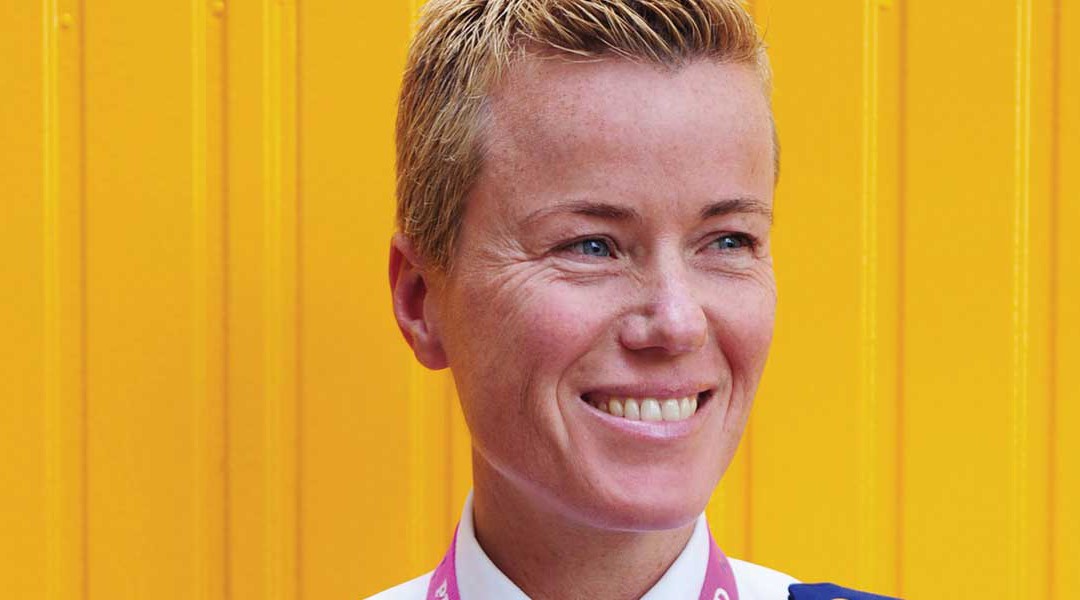
There are several networks that focus on specific groups within the Amsterdam police force. One of these networks is ‘Roze in Blauw’ (freely translated as ‘Pink in Blue’). It promotes the interests of gays, lesbians, bisexuals and trans genders in- and outside of the police force. The members of Roze in Blauw are there for people who need to report discrimination, insult, abuse or theft because of their sexual orientation. They offer a listening ear and can refer or mediate when necessary. Et Alors? Magazine talks to Ellie Lust, spokeswoman of the Amsterdam police and president of Roze in Blauw.
In the beginning
Roze in Blauw started in 1998, the year the gay games came to Amsterdam. The numerous participants arrived from different parts of the world. Parts where homosexuality was a criminal offence, or where the death penalty was still sentenced. We thought about how we, as a police force, could let those people know that they were safe with us. We are talking about people who were locked up in psychiatry for 5 years, just because they were kissing someone of the same sex. One of the stories we were told was that twenty people would be trapped in one room and food was shoved under the door, until one day the door would open and they’d be thrown out without a single word of apology, or an explanation for that matter. Because the police would not usually be on their side, we found it quite important to create a safe haven for them to turn to, as you can imagine. The theme of those years Gay Games bethought Friendship, so we invented a slogan that said ‘Proud To Be Your Friend’. We felt we had to let all the guests know that they were welcome here and that they were safe with us. After the festivities ended, we realized there was a great need for a reporting point where people could tell their stories. We tried a lot of things: from consultation times at the COC to pre-announced hours by phone. It was only when we created a separate Roze in Blauw number that it finally started to work, because when people want to report an insult they don’t want to have to wait until office hours to do so. Yet it took until the Chris Crane incident for them to find their way towards us. The American journalist was molested in 2005, when he and his boyfriend walked on the streets of Amsterdam holding hands. Crane wrote about the assault in The Washington Blade, the gay magazine of which he was the editor in chief. “I hope our gay friends in Holland realize that it’s a bit too soon to declare victory and go home, now that they’ve won their legal battles”, he wrote, referring to same sex marriage being legal in the Netherlands. This incident put everything on a roller coaster and soon we had to submit a press release in which we stated that people, faced with violence or behaviour focused against their sexuality, could contact us via that special phone number. Although we were already there for about 8 years, the media picked it up as ‘Amsterdam Police Founded A Special Team’. Suddenly there was a Roze in Blauw team and they started asking us for advice. East European countries and the police top all over the world invite us to inform them on how we make contact with the community. I sometimes proudly call us ‘world champion’.
Facts and numbers
As from 1997 we effectively started to submit the indictments. What we see is that from ‘97 until now there’s an ascending line in violent incidents and other issues that people encounter; threats, discrimination and so on. In 2007, for example, we counted 234 incidents. Those are incidents in the broadest sense of the word; people who were threatened, both physically and psychologically. People who got eggs thrown against their windows or who got beaten up, all kinds of harassments. In 2008 we counted 300 incidents, 371 in 2009 and 487 in 2010. So we register 1 or 2 incidents per day in Amsterdam. Nevertheless, those numbers remain difficult because we never know if those increasing numbers are a sign of the times or because we’re profiling ourselves at almost each event in order to lower that threshold. Two years ago, Dutch newspaper Het Parool and the local news channel AT5 had a research program and one of the questions was, “Do you call the police when something happens to you?” It turned out that only 9% did. But does that mean that the violence is 11 times as high? As you can see, those numbers stay very objective.
The victims
There are various reasons why people don’t report sexually oriented discrimination. For instance, quite some men meet at gay spots but live a heterosexual life in their everyday reality. They don’t go to the police when they are violated. The shame factor is not to be underestimated, either. When you take a man home from a club and you get beaten up, it’s quite likely that it will flash your mind that people will think it’s your own fault. Women experience a different kind of violence. More often they will encounter sexist comments, such as “surely you never met a real man before” or “can I join?”. There are a lot of cases where women get seriously beaten up but the assault remains mostly verbal. We also experience that women don’t think it’s a big enough deal to go to the police and that’s bad because if they don’t report it, it didn’t happen. Unfortunately a lot of people don’t make a fuss about violence when they are gay or trans and that really ought to change.
The perpetrators
Research to perpetrators of gay violence shows that religion has less of an influence than everybody thinks. Macho behaviour, on the other hand, is a very big problem. Young men of between 15 and 25 years old often can’t stand seeing other men behave in a more female way so they want to teach them a lesson in how to be a real man. Not only coloured people are guilty of such behaviour, the Dutch men are also represented.
The roze in blauw team
When people call our team they talk to someone with the same sexual orientation. That helps a lot when it comes to overcoming shame. In order to make the entire force aware of the problem, we now organize – together with COC Amsterdam – sensitivity training days. Until now it’s been very useful and beautiful. And of course there are moments when things go wrong but it’s quite clear how all policemen and -women think about inequality. Police work in general is about 80% behind closed doors. Most people have no idea because the only thing that’s out in the open is when we write a parking violation ticket. We do a lot of social work and next to our Roze in Blauw team we also have – amongst others – a Turkish, Antillean, Jewish and even a Christian network. You name it, we have it. Every specific force can be deployed in a particular problem. In the end, it’s all about connection. People from the outside can only connect with the police when there is certain recognition. In my opinion every police force in the world should be a reflection of the people in the street. That’s the only way to find each other and that’s the only way we can do our jobs properly.
Here and after
The Roze in Blauw team gives lectures all over the world. It’s a process where we take steps forward and the occasional step back. It’s not always easy and it’s a lot of work because next to being part of Roze in Blauw we are also just normal cops. I’m the spokeswoman of the Amsterdam police and the president of this special network. That makes for pretty long days but I cannot tell you how proud I am. I’ve been part of the police for almost 25 years now and I witness progress every day. Nevertheless, I dream about ending the Roze in Blauw team, because that would mean that we no longer experience violence against homosexuality.


De pagina die u zocht kon niet gevonden worden. Probeer uw zoekopdracht te verfijnen of gebruik de bovenstaande navigatie om deze post te vinden.
Text JF. Pierets Photos Courtesy of Laura Coppens
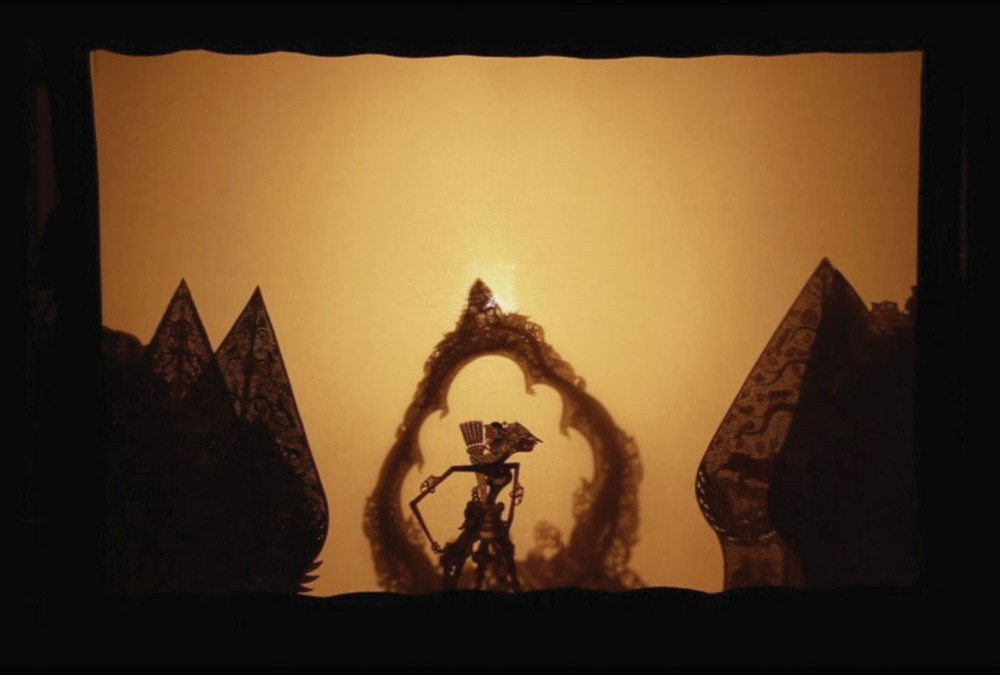
Children of Srikandi is the first film about queer women in Indonesia, the country with the worlds largest Muslim population. Eight authentic and poetic stories are interwoven with beautiful shadow theater scenes that tell the story of Srikandi, one of the characters of the Indian Mahabharata. This collective anthology transcends the borders between documentary, fiction and experimental film.
A little girl wants to be a boy. A bench becomes a home and a witness to life. A house does not feel like home anymore. A veil makes you reflect on religion and sexuality. A verse of a poem is like a day in your life. A love can be in between. A female stereotype can be deconstructed. A label can be changed. In Children of Srikandi, participants collectively worked as crew members or actresses in each other’s film, with individual stories ranging from observational documentary and concept art to personal essay. We see that change is possible on all levels of the film: personal, political and formal. Transformation is always inscribed in the narrative; form and identity are fluid; perspectives are shifted. The moving individual stories are interwoven with the tale of Srikandi, an ancient mythological character of the Mahabharata, a well-known Indian epic, which is still frequently used in the traditional Javanese shadow puppet theatre plays (wayangkulit) throughout Indonesia. Srikandi is neither man nor woman, moving fluidly between both genders. When she falls in love with a woman, she has to understand that the only way to survive is to become a “female warrior”. She is one of the few prominent wayang women figures, and while other women in the tales are devoted mothers and wives, Srikandi is the ultimate model of independent womanhood; strong and brave, heroic and active. She is a female warrior. This explains her popularity with many Indonesian queer and feminist women. The puppeteer Soleh gives his voice to Srikandi, while the singer Anik expresses the character’s emotions. As transgender queens they reinvent themselves within the classic Indonesian perception of women, while the short films deconstruct the classic picture. It is the opposed representation of gender that creates an impression of a fluid, oscillating advancement of the film. A spectacular linguistic and religious diversity is revealed: the original languages are Indonesian, Javanese, high-Javanese and Sundanese. The religions involved are Muslim, Christian and Buddhist. Children of Srikandi brings this tale back to the screen and reminds viewers that homosexuality and gender variety wasn’t imported from the West, but in fact forms a deep and ancient aspect of Indonesian society.
When did you come up with this idea?
Laura Coppens Since 5 years I am programming Indonesian films for film festivals and in that function John Badalu invited me to attend the Q! Film Festival – the Indonesian queer film festival – in 2009. I talked to many people there and especially to queer women. Many were complaining that there are not enough lesbian movies, especially no Indonesian productions. This gave me the idea to organize a film workshop and teach basic filmmaking skills, so they have the means to tell their own stories. But of course I could not do it on my own. I am not a trained filmmaker and I knew that I had to find professional help. This is when Angelika came into play. I asked her to join the project and from the start she was very engaged and did a wonderful job teaching others and editing the film. On the Indonesian part I approached in-docs, a Jakarta based organization that arranges documentary workshops to support the local film industry. They helped us to set up the workshop in Jakarta.
Angelika Levi At the beginning of 2010, Laura Coppens asked me if I would like to direct a film workshop for young Indonesian lesbians in Jakarta over the summer. Her idea was to make an omnibus film with six to ten women presenting their personal experiences by means of autobiographic short films. Our first joint meeting took place in Jakarta. Some of the women came from Yogyakarta or Bandung. All of them brought different social and religious backgrounds. Most of them had never met before. We spent the first weeks of the workshop watching hand-picked documentaries and short films. We discussed different topics: gender, ideology, religion, memory and class. The women began to develop their proper ideas. We worked on the dramaturgic emphasis and narrative style of each tale and developed different narrative strategies.
Why Indonesia?
Stea Lim There is not a lot of visibility of queer women. I feel that it’s a lot better than many years ago but there are still issues in this society when talking about LGBT, or overall sexuality actually. In recent years there have been some violent incidents from ‘religious’ mass organizations against the LGBT community. One of them attacked an LGBT conference and the Queer Film Festival in Jakarta, 2010.
Yulia Dwi Andriyanti Indonesia is a country that considers itself to be an archipelago consisting of different races, ethnicities, religions, social statuses and economic backgrounds, but sexual orientation and gender identity still hasn’t become part of its concern. After the Soeharto dictatorship collapsed, the political situation encouraged people to reclaim their rights and identities. It invoked a sexual identity movement that started with the health issue regarding HIV/AIDS, making gay, transgender and MSM become its main concern. However, it didn’t make queer women more visible within the movement itself. That’s why this film workshop became an opportunity for them to reclaim their voices as lesbian, bisexual, transgender and heterosexual alike. This film could contribute as a way to reconstruct women’s identities in Indonesia that tend to be perceived in a binary gender role and that are stereotyped within the social, economic, political and religious structures in society.
How do you see this film in the context of Indonesia as a country with high Muslim population?
Yulia Dwi Andriyanti I see it as an opportunity to challenge all the norms and the structure that has existed within the society, not only due to religious stereotypical thought on heterosexual and queer women, but also as a way to reflect the whole “inheritance” idea about faith identity so that people won’t put stereotype on faith that is often perceived as conservative.
Did it take a lot of conviction for the people to collaborate?
Angelika Levi No it didn’t. There was a huge interest in the workshop from the start, and after short time everyone wanted to tell a story. It was amazing for me to see social and religious boundaries vanish right from the beginning, while commitment and true interest in the other women’s experiences arose. Although most of them had never worked with film before, it was quite easy for everybody to get used to the technique, do the acting and transform personal experience into the medium. We developed a way of working which I had never experienced before and which you might call a non-hierarchical pulling-together beyond all difficulties.
Yulia Dwi Andriyanti I found that the film workshop process was a great way to hear and understand different experiences of diverse queer women. It stated that everyone’s story was very unique and showed the different layers on how queer women struggled for their identity and also its conflict towards society, not only in the level of state, friends, and families, but also inside the queer community itself. Those different experiences became the basic thing for me to collaborate with other queer women. It’s a learning process to hear, support and criticize both as a group and as a subculture.
What do you hope to achieve?
Stea Lim I really hope the film will help people, especially Indonesian women, to be inspired to make more films. We have such talented people here. Hopefully having this film play out in international festivals will inspire some people to go and do it too.
Laura Coppens When we started the workshop I did not have any expectations about the result. Most of the women had never worked with film before. It was an experiment and it also could have failed easily. But within a very short time the group developed a very amazing dynamic, even though most of them did not know each other before and came from very different religious and social backgrounds. Everybody was eager to learn the technique and they all helped each other, from the development of the script to the actual production of the film. So it is this collective effort that made our film possible despite many obstacles. This makes our film very special in a way. I think it’s both aesthetically engaging and politically empowering. Hopefully popular stereotypes about Muslims and LGBT-people are deconstructed and challenged.
CHILDREN OF SRIKANDI started with a workshop which lead to a collaborative film project reflecting the directors’ lived experiences as queer women in Indonesia and at the same time provides them with the means for filmic self-representation. Over a period of two years and under the guidance of filmmakers Angelika Levi and Laura Coppens, the filmmaking became a truly collective act.
Anak-AnakSrikandi | Indonesia/ Germany/ Switzerland 2012 | 73 min | 16:9 | HDCAM


De pagina die u zocht kon niet gevonden worden. Probeer uw zoekopdracht te verfijnen of gebruik de bovenstaande navigatie om deze post te vinden.
Text JF. Pierets Photos Lourdes Grobet
For thirty years photographer Lourdes Grobet has penetrated the world of one of the most popular sports and deep-seated traditions in Mexico: Lucha Libre-wrestling. She documented the lives of the fighters inside and outside of the ring.
Lucha Libre (Spanish: Free wrestling, lit. “free fight”) is a term used in Mexico for a form of professional wrestling. Being mostly a regional phenomenon in the early 1900’s, professional wrestling remained in Mexico until Salvador Lutteroth founded the Empresa Mexicana de Lucha Libre (Mexican Wrestling Enterprise) in 1933, giving the sport a national foothold for the first time. Grobets childhood was very different from what it is today. She was a rich girl from Lomas de Chapultepec, one of the oldest and most exclusive residential areas of Mexico City. Her classes were taught by nuns and, wearing a uniform, she rode to school in a black Cadillac. She was an athletic girl and her father, a professional cyclist, obligated her to exercise before going to school. This was a routine that allowed Grobet to lead a life without physical setbacks.
As a young woman she was determined to get away from the upper class lifestyle she was used to. “I was always rebellious and that saved me from being stuck as a good girl for the rest of my life”, she recalls. “I never wasted time trying to make money, or getting my own Cadillac.The times I watched fights on television were moments of splendor and leaps of joy but, because I was only a child, my parents never wanted to take me to the arenas to see the action for real. It was quite a mystery to me how my father, being such a lover of sport, would not take me there. It’s ironic that years later I have devoted so much into documenting this spectacle.”
In 1942, Lucha Libre would change forever when a silver-masked wrestler, simply known as El Santo (The Saint), first stepped into the ring. He made his debut in Mexico City by winning a battle royal for eight men. The public became enamored by the mystique and secrecy of Santo’s personality, and he quickly became the most popular luchador in Mexico. His wrestling career spanned nearly five decades, during which he became a folk hero and a symbol of justice for the common man through his appearances in comic books and movies, while the sport received an unparalleled degree of mainstream attention. “I had promised myself not to take pictures of any folkloric bias, but in doing portraits of fighters I found something so deeply Mexican that I was very intrigued. Meeting the fighters gave me another perspective and the one who struck me the most was El Santo. His generosity in dealing with people filled me with joy.
I couldn’t believe that the most famous man in Mexico could be so humble. I hate power, fame, and money because they corrupt people. El Santo broke the hold of fame and never had to be the center of attention, he just didn’t give a damn.” Grobet took the still photographs for one of El Santo’s films and confirmed that he wasn’t using tricks. “He didn’t use a double or strike star poses. When he finished filming there were endless lines of people waiting for an autograph. El Santo stood there and patiently signed his name up to the last person. He gave me a great deal of lessons in generosity.“
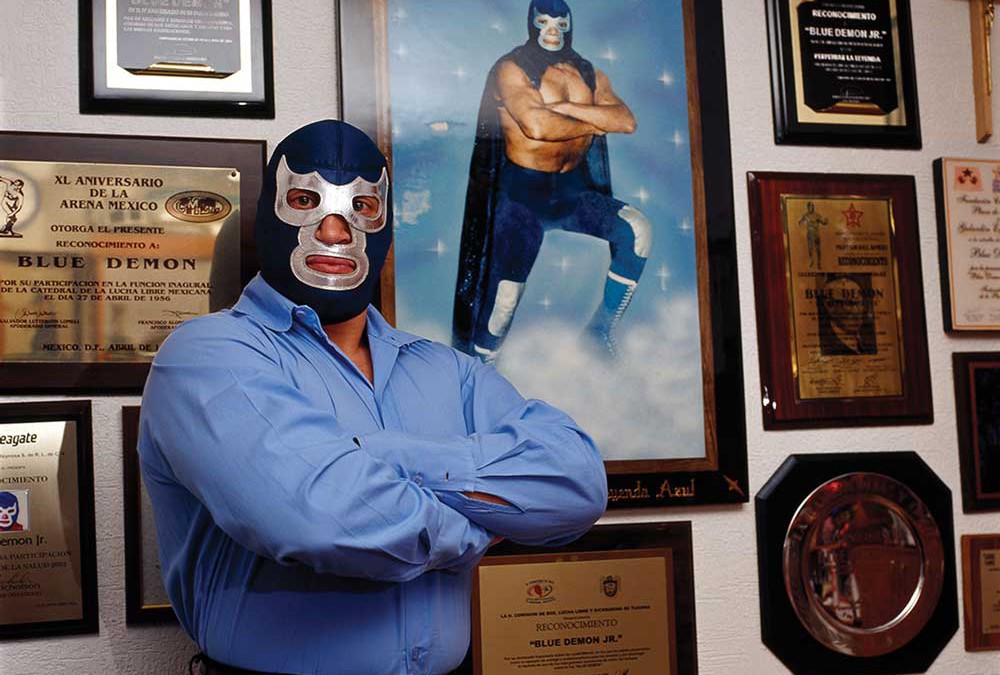
Staying anonymous by wearing a mask is a very important part of the Lucha Libre. These warriors need their disguise, because appearance is not only a fine adornment characteristic in the world of wrestling but also a weapon with which to disconcert, astonish, and frighten their opponent. Warriors are transformed by the sublime pleasure of becoming stoically anonymous. Their audience knows they may be well-known legends, but their private lives must remain a secret, for their epic fantasy plays out confrontation between normal, everyday environmental design and their particular mystery. The visual appeal – especially when set in scenarios outside the ring – was quickly apparent to Grobet. In Lucha Libre: The Family Portraits, Grobet shows the wrestlers with their mothers, wives and girlfriends, sitting for what would almost be a generic family portrait, but for the fantastic costumes of the luchadores themselves. By this simple gesture we are brought to the threshold of their identities – and held there. The ungainly, monstrous and splendidly defiant stance they convey with this final preservation of anonymity is of course what gives Grobet’s pictures their edge.
Despite all these great stories you have to keep in mind that Grobet is the only woman whose lens has captured the magic of this exciting sport that is much talked about but known very little of. The only woman who worked in the arena for thirty years. She evolved from taking pictures during fights into a frequent visitor to the private homes where the wrestlers meet, celebrate their victories and live their everyday lives. “The fighters are generous and respectful people. When I started I was young and pretty. Nobody ever failed me in that regard. We began to build relationships; we got to know one another. It didn’t take much to get into dressing rooms even though the majority of the wrestlers are men. I was spending time in gyms and eventually it was just another part of the job, like documenting an office in another profession. Instead of positioning myself as a woman, I was always more interested in myself as an independent human being who doesn’t bow down to anyone. I’ve never been much of a flag-waver and my attitude has been rather unorthodox, but I have fought for women’s rights and equality. What I’ve always rejected is the kind of imported, middle-class feminism that doesn’t correspond to the reality of Mexican women.”
Grobets passion for this sporting ritual has led her to gather not only thousands of photographs, but a vast collection of wrestling posters and programs, newspaper clippings, postcards, flyers, magazine covers, movie posters, stickers, and diverse objects that form part of wrestling paraphernalia. Still, Grobet says she is a “bad portraitist” because she shows people as they are and sometimes people want to be different, better. “I don’t put anyone in a pose. I was invited to their homes, I arrived, sometimes we ate – in fact the mother of Los Brazos was a great cook – and with that feeling of closeness I went to work. Their homes were wonderful. Sometimes people think that I composed the pictures but I never did. You simply enter the house and you don’t know where to look first. Everything is interesting, it’s a marvel of icons and objects.”
Grobet promised her fighters that she would make a book, and she delivered. In 2005 she published Espectacular de Lucha Libre, an effort that brought together a vast collection of images. Grobet has done more than twenty solo shows and, with her transparent and yet kaleidoscopic reflection of an eclectic, suggestive outlook on life, she became one of Mexico’s leading contemporary photographers.


De pagina die u zocht kon niet gevonden worden. Probeer uw zoekopdracht te verfijnen of gebruik de bovenstaande navigatie om deze post te vinden.