Geen Resultaten Gevonden
De pagina die u zocht kon niet gevonden worden. Probeer uw zoekopdracht te verfijnen of gebruik de bovenstaande navigatie om deze post te vinden.


Text JF. Pierets Artwork Jennifer Nehrbass
Someone once wrote that she was dismantling the roles and stereotypes of beauty and femininity, examining the psychology that leads women to go to extremes to maintain beauty and style. Needless to say that our brain got tickled so we checked on some of her thoughts.
On habitat.
I love living in New Mexico. It may seem cliché but the light is dramatic and the landscape boundless. The contrasts of people and their culture are always inspiring. We are at the center of the oldest cultures in the USA with the ancestral pueblo people, but we are also the birth place of the atomic bomb. One has the ability to isolate when necessary and engage with culture when inspired to do so.
On technique.
The photorealistic aspect occurs primarily with the figures in the painting. I choose to have them painted this way to represent the physicality of being alive. We can pinch our skin and know we are physically here. The physical aspect to life is tangible. To contradict the tangible I place figures within abstract areas that refer to the thoughts desires, dreams and perceptions of life. The viewing of my work is meant to be a push and pull exercise between these differing painting styles.
On women.
A lot of my older work dealt with the experience of being a woman in contemporary society. They were primarily self- portraits, with homage to Cindy Sherman. Since that is my gender I felt the critique was a more honest. My experiences as a woman are not unique. The more personal I explored the more universal the paintings became. Currently I am working on paintings that incorporate both genders, which I find to be liberating to the process.
On stereotypes.
I try to reexamine how women are portrayed both in current culture and throughout art history. I am interested in expressing what it feels like to be held up to current ideals of beauty. I create narratives that illustrate a woman’s experience using emotions such as humor, fear, or melancholy. What other thoughts, desires or contributions are ignored when one is overwhelmed with one’s one image?
On intimacy.
Painting is very intimate. Every decision is mine alone on what to put into the painting. Every color is mine to mix, every brush stroke is the coordination between my eyes and the canvas.
On inspiration.
We hike through much of New Mexico and Colorado. The landscape always reinvigorates. I find film and music always a inspiring.
On the future.
Dreams: To design the set for an opera production. Plans: keep painting!!


De pagina die u zocht kon niet gevonden worden. Probeer uw zoekopdracht te verfijnen of gebruik de bovenstaande navigatie om deze post te vinden.
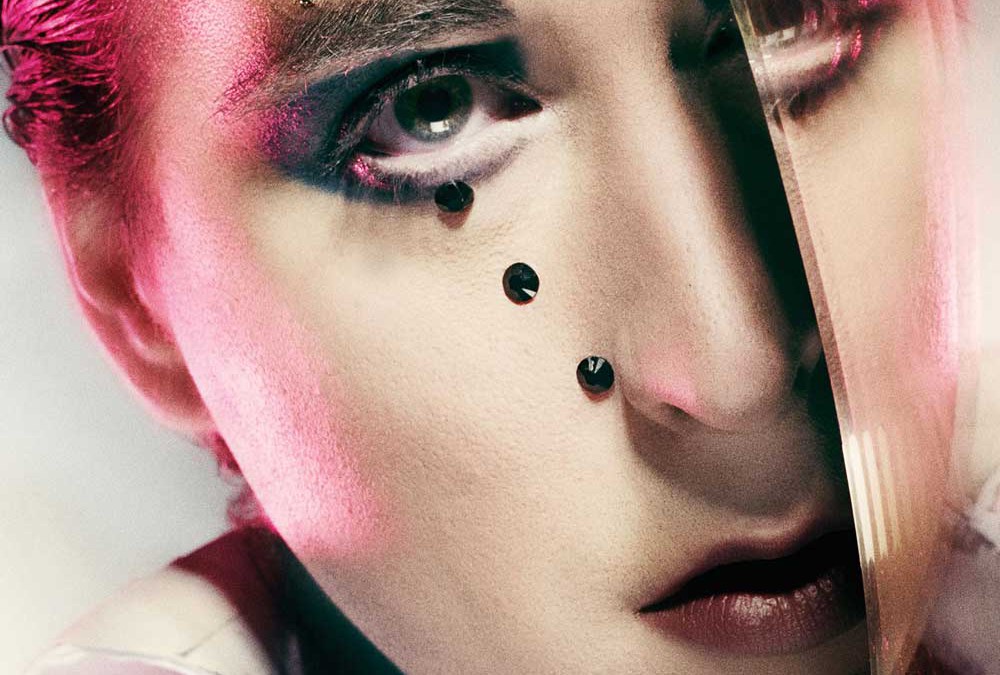
Text JF. Pierets Photos Courtesy of The Irrepressibles
He’s the highly talented artist behind The Irrepressibles, a 10-piece band, using conceptual sets, none-theatrical lighting, projection, dance and couture fashion. Their ground breaking approach continues to push the boundaries of live popular music and they have been commissioned and performed for many of Europe’s leading festivals and institutions including the Latitude Festival, the V&A, the Hackney Empire and guest appearances at the London Fashion Week.
Their heavily emotional style of music is created instinctively, playfully and cathartically by Jamie McDermott, the founding member, and center piece of The Irrepressibles. The moment Jamie knew he was a musician is quite an emotional story. Being in love with his best friend, he wrote songs to express his feelings. Other than the wishful happily ever after, they fell apart as friends and the singer felt so alone he was looking in the face of suicide and wanted to throw himself of the cliffs of the seaside town where he lived. Yet, instead of jumping, he decided to give his life a more noble purpose; “Through music, I wanted to explain the world the beauty of being in love with another man in a way that everyone would understand.” Needless to say this kind of intension is one of the things we love here at Et Alors? Magazine.
As a working class boy from North Yorkshire, he discovered the library and was craving for knowledge. “I read about Vivienne Westwood and Malcolm McClaren, Andy Warhol, about the political force of music in the words of Atalli and Eisler and fell in love with the iconic imagery of film makers Fasbinder and Kenneth Anger”, so his genesis began with a manifesto to “make something that portrays the real originality, drama and intensity of life.”
Irritated by the manufactured pop music, its lack of real emotion and the boring visual aesthetics of indie music at the time, he wanted to create something fresh and reactionary. Most influenced by nonmusical elements such as the sounds of laughter and the hum of the bus; “The movement of people and machines all have a complexity of nature a kind of polyphony in their interaction. My music has this interaction“. It’s an organic machine of emotion, what McDermott calls his ‘performance objects’ or ‘live spectacles’.
What began as an art performance project in 2002 resulted into the release of their debut album “Mirror Mirror” in 2010. The Guardian called all 12 songs humorous, vain and marvelously camp. Two years later, The Irrepressibles released the album “Nude” throughout the world. “Take off your clothes, I want to see you naked” are the first words we hear Jamie McDermott’s deep baritone sing. With reviews like “Consisting of 12 pieces in total, fusing discordant electronica with the more familiar classical orchestrations of old, Nude represents McDermott’s attempts at writing a concept record explaining the rich complexities of life” and “As ever, McDermott sails alongside and above the melody, reaching astounding levels of emotive strength as the song builds to its heady climax”, the world hears that McDermott has a talent that few can match.
Despite these beautifully arranged songs and a great voice, it’s very refreshing to hear someone sing unapologetically about his homosexuality “I wrote much of Nude when I was 19, 20, 21. At that time I was really finding who I was. Blossoming with my sexuality and writing songs about my adolescent experiences, being bullied and isolated. I’ve always been very honest and open. Making music for me has always been a very cathartic emotional process”, McDermott states. “New World” – from the album “Nude” – was a song he wrote to a friend to tell him to come-out and be free. “I was hearing a lot about these kids killing themselves for being bullied because they were gay and I was deeply disturbed by this. I wanted to send this message in the hope of being part of making young people confident in their difference”. The album Nude is heavily about affirming difference and letting it be free.
Comparisons with Antony Hegarty and David Bowie are never far away and the singer explains being very much influenced by what he would call the lineage of gay artists. He believes that gay artists create a slightly different aesthetic of sound and visual. Nevertheless he does not fear that his music will be marginalized because he is not ashamed to promote the so-called gay interest. “It is boring of the music industry to be so conservative when so many other areas of society aren’t and when pop music is meant to be the vanguard of culture. For too many years gay artists have been marginalized when their music has been influential on other more acceptable artists. So why should anyone who is gay be dishonest?”


De pagina die u zocht kon niet gevonden worden. Probeer uw zoekopdracht te verfijnen of gebruik de bovenstaande navigatie om deze post te vinden.

Text JF. Pierets Photos Jill Peters
Northern Albanian women, faced with a culture that subjugates females, live and dress as men in order to provide for their families. These sworn virgins took a vow of chastity, wear male clothing and live as men in the patriarchal northern Albanian society. In an ongoing series, photographer Jill Peters has captured the fascination of a tradition dating back hundreds of years.
When and where did you come up with the idea of making this series?
In late 2008 I was reading a book written by Serena Nanda about gender diversity around the world, and came across a chapter about the Sworn Virgins of Albania. I was intrigued by the idea of such a tradition. I knew nothing about them, nor had I ever heard of their existence. The general consensus that they would soon be dying out made me act quickly. I had to meet one and I was determined to photograph at least one. This idea soon expanded to making a documentary film and I put a crew together. We all traveled to Albania in July 2009 and some of these portraits were taken then. I returned again in late 2011 to continue the project.
Was it easy to find these women?
It was not easy to find them. The Sworn Virgins are very proud but extremely private people. The majority live in very small secluded villages not often seen by outsiders. They remain suspicious of foreigners and their trust must be earned over time. Once they accept you however, they are talkative, warm and hospitable, often offering coffee, tea or cigarettes to their guests.
They live as men yet I guess everybody in the village knows they are women – otherwise you would not have found them. Or am I wrong?
The most remarkable aspect of this tradition is that everyone knows they are women. In this culture however, the way one dresses dictates how they are perceived. A woman who cuts her hair short, wears men’s clothes and adopts masculine traits is accepted as a man. Because this practice has a long history and is associated with family honor, inherited wealth and clan survival, the burneshas are well respected and regarded as a benefit to the family. For the most part, villagers in these areas are so accustomed to knowing a Sworn Virgin, or “burnesha”, first hand that they often wonder what all the interest on our part is about.
What do they think of this paradox?
I was drawn to this project because of the paradox of a strident patriarchal society accepting a woman who switches her gender by choice. I want to make it clear if it isn’t already, that this has nothing to do with sexual identity. As westerners we tend to jump at the chance to label someone gay or straight because those seem like the only two options in our culture. The remarkable thing about these women is that they are beyond labels.
I read that this decision is more related to gender roles than to sexuality. Nevertheless they have to remain virgins. Why is that?
I believe swearing to remain a virgin for life and thus avoiding any kind of romantic relationship altogether was their only way of circumventing such labels. Regardless of any orientation, they could not be with a man and still be considered a man. Nor could they be with a woman, as that would technically be a homosexual relationship since they were known to be biologically female. Also, the Kanun, which is the tribal code still influencing many in the rural north, states that a woman is only worth half as many bags of grain as a man, but a virgin is equal to the value of a man. I find it sad in the broader scope, as a woman, that this extreme sacrifice was necessary in order for a woman to exercise her free will. Because a woman wears a pair of pants she is “suddenly” deemed capable of inheriting property, driving a car or running a business. It simply amazes me. I think the injustice in that is evident to everyone today.
Some women became burneshas when they did not want to marry the man their family had chosen for them. Again this is a sad reflection on what it meant to be a woman in those times. Once the vow is taken though, it is forever. To go back on a vow would be to disgrace the family and could result in a deadly feud between the two families that could perpetuate generations of honor killings. I was relieved to discover that for the most part, the burneshas did not regret their decision and insist they have led happy lives. Most would make the same choice given the same circumstances. They are pleased with the progress women have made in the past 50 years and understand why it is a custom that is dying out.
You said in an interview that this is an ongoing project. What are your plans?
My future plans for the project include finishing my documentary film. I’m proud to say I have a good relationship with my subjects and have developed a level of trust over the years.


De pagina die u zocht kon niet gevonden worden. Probeer uw zoekopdracht te verfijnen of gebruik de bovenstaande navigatie om deze post te vinden.
Text JF. Pierets Photos Rudy Thewis
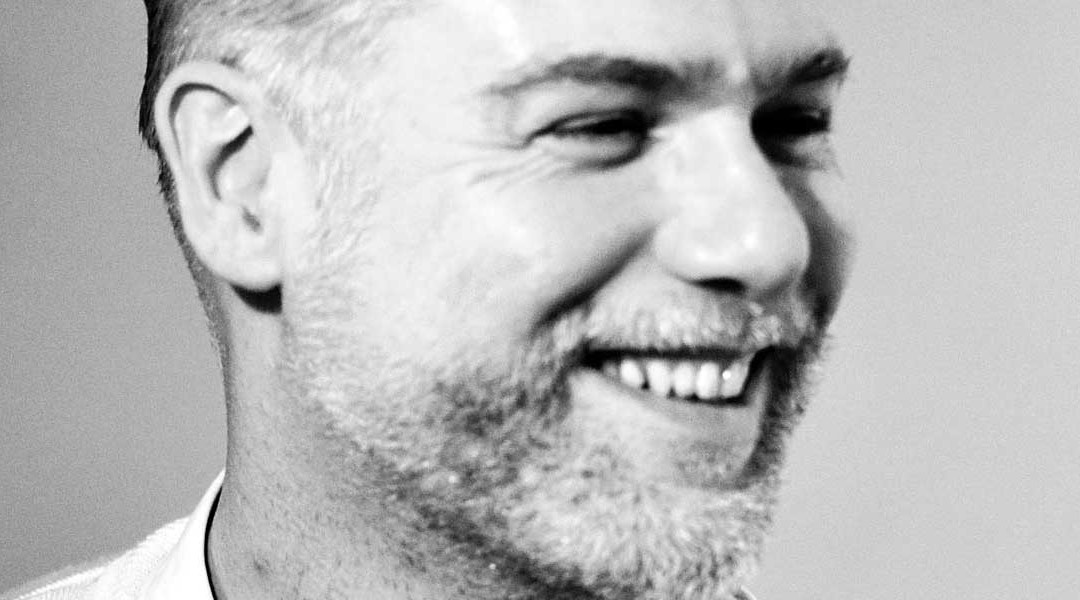
Jonathan Kemp won two awards and was shortlisted twice for his debut London Triptych. Gay bookstore Het Verschil in Antwerp, asked to interview the British author for a live audience due to the Dutch translation of his novel, Olie op doek. A conversation about history, gay writers and a fascination for language and sex.
In London Triptych you tell three stories. There’s the rent boy Jack Rose in the London of the 1890s, of the 1950’s with painter Colin Read and male escort David, living in the London of the 1990s. The three stories explore the subculture and underworld of male prostitution. You seem to know quite a lot about the subject matter?
I did a lot of research in one way or another, and I was very interested in giving a voice to the voiceless. Male prostitution is a minority within the society of prostitution. Most of the historical focus has always been on female prostitution so they’re like a minority within a minority. As a writer you’re always trying to find a perspective that has not been tackled before and this seemed like a really interesting angle.
London Triptych started out as a short story called ‘Pornocracy’, which told the tale of Jack Rose, one of the boys who testified against Oscar Wilde in 1895. Is Jack historically correct?
Jack starts to work as a telegram boy and then he got involved in prostitution through this man called Alfred Taylor. Taylor really existed and supplied boys to Wilde so there are elements of truth from what I had gathered on research. If it weren’t for the fact that Wilde had been arrested and in prison, it would be even harder to find material on the subject matter. Ironically, given the negative outcome for Wilde, that kind of stamped it in the history books in a way that it wouldn’t have been otherwise. The transcripts of the trial have been very useful. Jack himself is an invention. He’s a mixture of a lot of different boys Wilde played with – he called them Panthers. Their danger appealed to him, their lack of gentility. He was a well-educated, upper middle class man so he liked their roughness, this spontaneity that he didn’t find in his immediate circle.
You seem like a big Wilde fan.
I have loved Oscar Wilde ever since I was a teenager. As I got older and came out myself, I got more interested in gay history. Wilde almost became this figurehead. The idea that he established in many ways, the parameters, the identity that was to go on in the 20th century. The concept that he is almost the prototype of the modern homosexual. He gives it a shape, a voice and a way of being. That was always fascinating to me. I often think the work is overshadowed by his life but I find him an incredible wordsmith. The poetry and ideas in his books have always appealed to me.
Your love of Wilde, the fact that London Triptych is populated by rent boys, models, aristocrats, artists and gangsters,… are you a little nostalgic?
I must say that Jack became my favorite character, that was my favorite piece to write, What appealed to Wilde in these boys is what appealed to me when I got under Jack’s skin. There must have been many Jacks in London at that time and the more I read about queer history, the more I became interested in trying to represent that minority voice.
The minority voice stays but times are changing.
Jack could go to prison for what he was doing, but David, the male escort in the 1990s, is free because of the change in the law in 1967. It’s sort of a history of gay liberation and the humanitarian progress during the century.
The book is filled with sex but it remains sexy instead of becoming a dirty story. It’s a thin line between what your write and pornography.
I’m fascinated by the way that language expresses human experience. Pornography is the most straight forward way sex can be represented. It has a very specific aim and that is to turn you on. There’s nothing wrong with that but it felt a bit limiting to me. I’ve always been attracted to writers like Jean Genet, who wrote about sex in a much more poetic way. For me it was essential to the book that sex had to appear but not in a sort of bashful way. The most interesting thing is often ‘what goes where and who does what to whom’, so I wanted to find much more different metaphors and to describe the emotions rather than the mechanics.
When I read the book if felt like all 3 characters were imprisoned. Because of love. Is that so or is it just my imagination?
As much as sex was an important aspect, love was also. When it became clear to me that this was going to be a novel about prostitution, I wanted to write three love stories. Love coming from the least likely places for example. They are very tragic love stories and I wanted to overturn the cliché of the hard-bitten prostitute who is incapable of love. So love and that trajectory of love is very important.
You ran a theatre company in the 90’s. Why did you switch from that to writing novels?
Writing theater plays was actually a diversion from writing prose. I have always written novels. The first one I wrote was when I was about 17. But I didn’t really pursue it very hard. Every writer gets rejected by publishers but when I got the letters I gave up quite quickly, thinking it was no good. At that time I was living with an actor who wanted to do his own plays so I thought ‘how hard can it be?’ We started of with monologues, it was a one-man show, and after a while I added more characters and got more confident with each play we did. When the company disbanded because there wasn’t enough money in theatre – even less than in books – I went back to writing prose. So London Triptych was the first novel I wrote after the excursion into the theatre.
Your second book is called Twentysix. It’s not a novel nor is it a collection of short stories. I wrote down: ‘Poems about sexual encounters between men. One of every letter of the alphabet’. It’s completely different from London Triptych
It is, but I think it picks up on some of the themes of London Triptych. When I was writing about London and its sexuality, I was trying to gain some originality or poetry in the descriptions. I wrote Twentysix almost immediately after the novel was finished. At first I just wrote down these short episodes, these short encounters. I was exploring language and post structuralism, reading Derrida, Bataille, and wanted to experiment. Midway through the book I considered what to do because I could go on writing about these sexual encounters and publish this huge volume, so I had to put a limit to that. 26 seemed like a slim manageable number.
I read on the net that you once said; ‘I think sometimes being gay has led me to broader horizons than it otherwise would be.’
I think straight comes with a script. You are aware of the life trajectory you’re expected to follow. The model you’re expected to conform to. You’re going to get married, have children, a mortgage. I’m not saying that all people do – and I know straight people who forge a different path – but I think that, when you don’t have that script at hand, you create new possibilities. You kind of invent a way of being. And there is a sort of courage that comes from having to live outside that mainstream model. There’s a security in that model that is not available to you.
It’s a different way of being in the world. You have to be more original in the things you are going to be or going to do. Just that slightly greater edge of invention.In London Triptych, David describes playing a game when he was a child, standing on a train track, with all his friends. The game was called ‘chicken’ and was about who could stand there the longest. David always won. This unanticipated courage, that was me. I knew from the beginning that staying where I grew up would kill me. Spiritually.
Being gay is as much about character as having a sexual drive?
Whether moving to London had to do with my sexuality, I don’t know, maybe that was a force of character that made me invent and explore. I do think it had to do with the sexual exploration and with courage, I find it hard to separate the two.
Some gay writers don’t want to be referred to as being ‘a gay writer’. Because they are also a white writer, a male or female writer, an American writer,… Yet you don’t mind being in that category.
I don’t. You can call me a black writer if you want to. I can understand why people are against it but then I think; ‘you are gay and you write, so why not’. I feel that it can work negatively because maybe straight readers wouldn’t go for a gay book. While gay readers will rush to it, but nevertheless will also read lots of straight books. So I understand why that label can feel restricted but I don’t mind. I love to write for gay people. It matters to represent these lives in books. People identify with what they read so why not write for gays. I can imagine that some straight people might find a book like Twentysix quite alien but then again, parts of their lives are alien to me. I’m not trying to write for everyone, I’m trying to write for people who can find something in my work. If a straight reader has an open mind, well go ahead. When I came out, exploring my own sexuality, I discovered there was a whole history of gay men writing. That was great! To know that now, after centuries, you have bookshops filled with gay writers is just fantastic. Its history is very short compared with the history of literature, but to discover people like Genet, Vidal or Capote who were exploring and experimenting was a revelation. By putting a label on it, it allows gay readers to find those books. Because if you are confronted with this huge mountain of literature as a gay man or a gay woman, you are going to want to find the books that speak to you because we are all looking for books that give us alternatives. The alternative to see the world from a different consciousness. So I think if you are looking for gay books and there is a big sign where to look, I don’t mind. I find it very useful. It saves you a lot of time. It’s all about things you want to share.
You are not afraid to exclude readers?
Those kind of closed minds are not the kind of people you want to speak to anyway. I can’t say that I’m never going to read a book by a straight person because they have nothing to say to me. Then you will be missing out so much of the things I’ve read and enjoyed.
You are working on a third book.
Yes, and it’s almost finished. My first two books are very related because I was fascinated about sex and language. My new novel is something completely different. The main character in All There Is + All There Is Not, is a 65 year old woman who lives on a narrowboat in North West London. One day she’s out shopping and she sees the spitting image of her first husband who died 40 years previously. She thinks she’s going mad. She keeps on seeing him and it turns out that he’s not a ghost, not a figment of her imagination but a gay man with a striking resemblance, like people often do. He becomes a portal to her. And like Alice she’s tumbling through a portal to an entirely different life and culture.
Sounds great! Looking forward already.
And last but not least. What’s your most flamboyant future dream?
I would love London Triptych to be made into a TV series. A British 3-part TV drama.
And if you were asked to play one of the characters? Who would you choose?
Oscar, of course.
www.myriadeditions.com/jonathankemp
www.birkbeck.academia.edu/jonathankemp


De pagina die u zocht kon niet gevonden worden. Probeer uw zoekopdracht te verfijnen of gebruik de bovenstaande navigatie om deze post te vinden.
Text Wendy Donckers Photos Courtesy of The Guerrilla Girls
The Guerrilla Girls are a group of anonymous estrogen-bomb dropping, creativily complaining feminists. They fight discrimination and corruption in politics, art, film and pop culture with ‘facts, humor and fake fur’. Behind their scary gorilla masks you can find women of all sorts and kinds with pseudonyms of dead female artists. Let’s take a look at the Guerrilla Girls’ deadly weapons.
Facts.
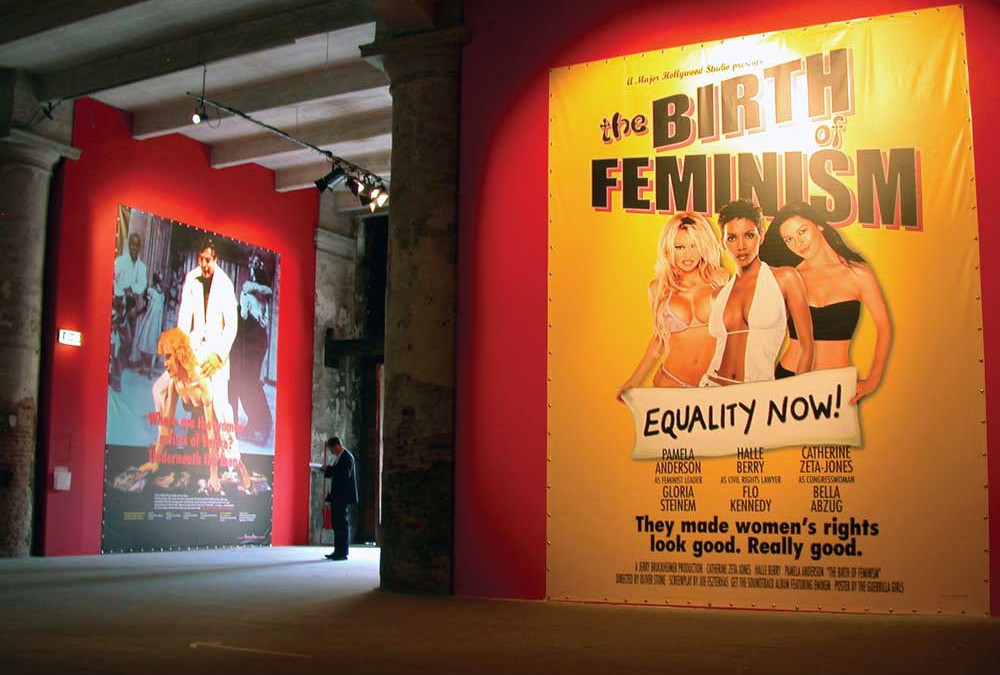
The Guerrilla Girls started off in 1985, after a protest against an exhibition at the Museum of Modern Art in New York, the most influential museum of modern art in the world. The exhibition included only 17 women out of the 165 displayed artists. A bunch of female artists made posters that stated these facts of discrimination and put them up throughout art neighbourhood SoHo. The Guerrilla Girls were born. The group started making statistics of women artists and artists of color in museums, academies and art galeries. They committed themselves to counting, writing letters, and researching museums and galleries. “There’s a popular misconception that the world of High Art is ahead of mass culture. But everything in our research shows that, instead of being avant garde, it’s derriere.”, the Guerrilla Girls stated in an interview on their website. The GG’s even did a ‘weenie count’ in the Metropolitan Museum of Art in New York. They came to the conclusion that less than 5% of the artists in the Modern Art sections were women, while 85% of the nudes were female. A new Guerrilla poster was made and showed the back of a naked gorilla-headed woman that lies down and seems to say: “Do women have to be naked to get into the Met. Museum?” A quarter of a century later the same updated poster demonstrates figures that have hardly changed: female artists at the Metropolitan Museum dropped down to 4% and the female nudes became 76%.
Many other posters came up, as well as stickers, a website and fun fact books. The GG’s hung up female named banners over the generally male artist names on European museum façades, invaded the Venice Biennale with giant banners, launched a anti-film industry billboards in Hollywood right before the Oscar Awards, put up an interactive feminist banner outside the city art gallery at the Art Boom festival at Krakow and many more. With their striking statements and provocative appearances the Guerrilla Girls continuously endeavour to undermine the reigning stereotypes in the art world and other areas. “One poster led to another, and we have done more than hundred examining different aspects of sexism and racism in our culture at large, not just the art world.” In their campaigns the ‘girls’ don’t avoid other sensitive subject that are important to them such as abortion rights, the gulf war, racism, queer issues, homelessness and (sexual) violence. “We are a collaborative group, we don’t work in an orchestrated way. Members bring issues and ideas to the group and we try to shape them into effective posters.” 28 years after the start the Guerrilla Girls have become a habitual -and sometimes notorious- presence in exhibitions, film festivals, newspapers, university aula’s, museum bathrooms and on walls and billboards all over the world. “What started out as a lark has become an ongoing responsibility, a mission. We just can’t abandon our masked duty! It’s been a lot of fun, too!”
Humor.
Another main mission of the Guerrilla Girls is to modernize the word ‘feminism’, their own proclaimed ‘f’ word. Although they call themselves ‘girls’ and sometimes wear short skirts and high heels, the Guerrilla Girls consider themselves pure feminists. “By reclaiming the word ‘girl’, it can’t be used against us. Wearing those clothes with a gorilla mask confounds the stereotype of female sexiness.”, one of the members confirms drily. With their –let’s say- remarkable appearance the GG’s hope to shock and provoke the world. “Our situation as women and artists of color in the art world was so pathetic, all we could do was make fun of it. It felt so good to ridicule and belittle a system that excluded us.”
To the question of how many the Guerrilla Girls are, their answer is that they secretly suspect that all women are born Guerrilla Girls. “It’s just a question of helping them discover it. For sure, thousands; probably, hundreds of thousands; maybe, millions.” Over the years the Guerrilla Girls have become one fluid and crazy but close family off all ages, As they work anonymously they hardly ever accept new members. They rather stimulate their numerous fans all over the world to take them as a roll model and start up their own actions and strategies. And most of all motivate them to complain, complain and complain, but rather in a funny and creative way. To give an idea, they published their Guerrilla Girls’ Art Museum Activity Book, wich is stuffed with funny games, facts and tips like ‘putting up posters and statements in the museum bathrooms’ and ‘dress up and give a do-it-yourself guided tour in your favorite art gallery about the real story behind the displayed art.’ The Guerrilla Girls’ website has several downloadable posters and stickers, like for example the call to drop a new weapon on Washington: the Estrogen Bomb. ‘If dropped on the super-rich trying to take over the country, they would throw down their big guns, hug each other and start to work on human rights.’
Fake fur.
Shortly after their first actions in 1985 and the following press attention, the group members decided to hide their identities when appearing in public. As most of the members are active in the small art world, they prefer to avoid career problems and to bring the focus to the issues, not to the Guerrilla Girls’ personalities. And it seems to help: the mystery surrounding their identities has attracted attention ever since then.The GG’s give themselves names of dead female artists like Frida Kahlo, Eva Hesse, Kathe Kollwitz, Gertrude Stein and Georgia O’Keeffe, in order to reinforce these women’s position in cultural history.The slightly aggressive gorilla masks with sharp teeth were an accidental idea that emerged after a bad speller wrote ‘Gorilla’ instead of ‘Guerrilla.’ The masks immediately became symbol of the Guerrilla Girls’ strength. The good avengers are not afraid to use their loud voice or roll their muscles. But at the end the day, each Guerrilla Girl hangs up her mask and returns anonymously to her daily life. Untill the next mission comes along. And looking at the world today, these kind of missions will still be required for a while. So if you see some Gorilla heads popping up behind the corner of your street, don’t get scared and run away. Just join and play.


De pagina die u zocht kon niet gevonden worden. Probeer uw zoekopdracht te verfijnen of gebruik de bovenstaande navigatie om deze post te vinden.