Geen Resultaten Gevonden
De pagina die u zocht kon niet gevonden worden. Probeer uw zoekopdracht te verfijnen of gebruik de bovenstaande navigatie om deze post te vinden.


Text JF. Pierets Photos Lukas Beyeler & Patrick Mettraux
We’ve met Lukas Beyeler on Facebook and were instantly touched by both his pictures as his intriguing video work. Lukas is working, amongst others, for Bernard Willhelm and Bruce Labruce and is photographing both famous faces like Pharrell and Amanda Lepore and gorgeous creatures out of the mainstream. We asked him some questions and decided quite instantly he’s one of our most favorite artists.
How old where you when you realized you wanted to be an artist?
Pretty young I guess! As far as I remember, the only thing that interested me was to go to art school. It was the logical path to take at that time because I couldn’t see myself doing anything else!
What was the very first work you’ve made and how did you come up with the idea?
I was 8 or 9 years old and spent three days applying all kind of plastic, cardboard, paper and paint on a small piece of paper. Then Ioffered it to my dad. I still have a very clear vision of this ‘piece’ in my head nowadays. About 10 years later, he showed it to me, I was quite surprised that he kept it for so long somewhere in his office.
Do you consider yourself more a photographer or a video artist?
I guess I’m both. I don’t want to limit myself to one media. Depending on what my intensions are or what is needed, I would choose either one. Photography usually requires less preparation and the postproduction is way shorter as well. But I am not completely satisfied with the still-image; I have the impression that motion picture catches peoples attention in a different way and is a lot more compelling to the spectator.
How do you feel about the recent interest in drag?
It might not be only the ‘Drag’ thing that people find interesting or attractive. Probably what people see at first is a strong character stepping out of the mainstream. The fact of changing identity through cross-dressing is somehow a fantasy and has something surreal. In order to have the courage to do so, one has to be brave and have a strong personality. Drag queens tend to be great entertainers with a certain tragedy, sadness and drama that embodies weakness and vulnerability. These characteristics make it very easy to compare yourself to them. Back in time, role models were strong, untouchable and beyond criticism. Nowadays the ‘New Heroes’ are weak and accessible, self-mockery became something appealing.
What do you hope to achieve by taking a picture of a man in a skirt?
Dunno if I really want to achieve anything, first of all I do the pictures for me and my models. We have to be both happy with the image. Most of the time when you do art, you just do it for yourself; it’s a very egotistical process. Taking a picture of a man in a skirt can be very boring, but taking a picture of a man who enjoys being in that skirt is very exiting. The magic has a lot to do with the model. Do you remember this picture of Iggy Pop in skirt saying: ‘I’m not ashamed to dress ‘like a woman’ because I don’t think it’s shameful to be a woman’, Iggy played perfectly with this ambiguity during his entire career.
Do you have a role model?
Sure, Cicciolina Ilona Staller. She was and still is very inspiring to me.
In the early 70’s, drag queens and transvestites where forbidden in public (Mapplethorpe didn’t publish his Book of Portraits until 1983). Would you be able to work in a different era?
Not showing my work to the public is something I could totally live with. I think I am very shy and not so enthusiastic when the time comes to make any work ‘public’ in a gallery and to be confronted by the critics. Nowadays you can access everything from everywhere, so it was probably more interesting when it was forbidden. It was something reserved for friends, family, and people from the scene itself.
Do you feel privileged to be a spectator in the lives of all those people?
I would much rather say that the respect and the appreciation works both ways. Everything is based on a personal level and both parties contribute towards a final product. When you get along, you are part of their universe and they are a part of mine – it’s a family circle.
Some of your models are well known personalities but most of them are anonymous. Are you searching for a balanced mix or are you working per assignment?
I choose the people that I feel most likely comfortable to work with. No matter if they are celebrities or unknown. I see absolutely no difference working with known/unknown personalities. The anonymous people are tomorrows’ stars and well known people were unknown yesterday. The difference is that well known people don’t knock at your door everyday, especially for the few people you really want to work with. Most of the time you have more artistic freedom when working with anonymous people and more time to work with them. Shootings are longer and you have no restrictions about the final result. Where working with famous people a lot more restrictions apply.
Photographer Gilles Larrain was once asked by one of his clients why he’d taken these horrible photos of such ill, deviant people. What would you answer to such a question?
Haaa haaa… well as Frank Zappa would say: ‘Without deviation from the norm, progress is not possible’. As you know, a lot of people still think like Larrain’s client, because his work is a mirror of the beholder. Anyone who’s comfortable in his life won’t ask this kind of question, I guess it’s the frustration that talks once again.
Amongst many others you worked with Bernhard Willhelm, Walter Pfeiffer and Bruce LaBruce. Who else is on your wishlist and why?
I have no specific wishlist; those artists you mentioned got in touch with me because they probably have seen similarities in our work. Collaborations are always fun as long as you have an artistic freedom in your own contribution and that was the case with all of them.
What future project have you got lined up?
I was just awarded by the Musée Cantonal d’Art de Lausanne. So I’ll be doing an exhibition in this museum in 2014, that’s quite a challenging work to do and I am very excited about it.


De pagina die u zocht kon niet gevonden worden. Probeer uw zoekopdracht te verfijnen of gebruik de bovenstaande navigatie om deze post te vinden.

Text JF. Pierets
Strange Bedfellows is a nationally traveling exhibition and catalogue exploring collaborative practice in queer art making. With names such as Annie Sprinkle, Amos Mac and Julie Sutherland they travel the world. Curator Amy Cancelmo is redefining authorship and ‘queerin’ the singular artist/author paradigm. An interview.
When and why did you come up with the idea?
Well my master degree is in Queer Art History, so I had been spending quite a bit of time looking at historical queer art. Since so much of what can be clearly defined within that category is either performative, documentary or politically motivated, there is a huge amount of collaboration that happens naturally. In my thesis I worked specifically with community portraiture as a means of social and political change or reflection of shift in cultural ideas. What recurred in that research was the problematic nature of authorship, specifically when photographers were working with other artists and performers. Who is really the artist that moment, the one documenting it, or the one living it? How do you define authorship of a documentary photograph? The idea for the show started as a series of questions. Why are there so many collaborative queer artworks? Is there something inherently queer about collaboration, or something inherently collaborative about queerness? The answer to both questions for me is yes. Queers have long relied on collaborative practice for a variety of reasons, not the least of which have been physical and emotional safety or political presence. I see collaboration and queerness both as spaces for social, political, personal, and artistic revolution. Collaborative practice, like queer politics, positions itself in radical opposition to commodification- and traditional concepts of identity. I like to think of collaborative practice as a queering the concept of the singular artist or author.
What’s your personal definition of queer?
Queer is often used as a blanket term to attempt and to encompass the range of diversity within the LGBTQQI population. Yet not all homosexuals define themselves as queer and not all those who define as queer are homosexual. Queerness can be defined as both an expression of non-heteronormative sexuality or gender expression or as a social and political stance. Queer is a noun, but it is also a verb.
On your blog, you write: “It is my hope that the exhibition will continue to travel and evolve, raising new questions about the role collaboration plays in queer life and artistic practice.” Can you explain this to someone who hasn’t been in touch with queer art?
It’s funny because ‘community’, for better or worse, is a word that is often thrown around in relation to queerness. The Queer Community. The Gay Community. The Lesbian Community. The Transgender Community, etc. In a sense queer people are often though about as identifying as a multiple, even from an uninformed perspective. Like we are all part of a secret club or something, sharing a common experience. But the truth is that there are so many different ways to experience sexuality, politics, gender or whatever else makes us self define as queer. That’s what I’m interested in. The radical ways in which people define queer for themselves, and how they are incorporating that into their artwork and who they are working with to make it. Maybe a hundred years ago there just wasn’t an audience for queer art outside of ‘the community’ and queer artists relied on each other and worked together to make some of the most interesting artwork in history. Maybe that’s still true to an extent. Maybe it’s a part of being a minority, being an outsider. To me, being queer is a collaborative effort. Partially because you’re defining yourself by who you relate to and partially because you are constantly in dialogue with what you are not. ‘Queer’ doesn’t exist without ‘normal’.
How does a traveling exhibition work?
The travelling happened pretty organically. I first proposed this show to be presented at Root Division in San Francisco and was lucky enough to get funding to present it as part of the National Queer Arts Festival from the Queer Cultural Center. I was so thrilled by all the support from both organizations and the artists I invited to participate, many of whom I had never worked with before. There are so many artists working in collaborative practice! And a show about collaboration begs to keep evolving with more and more collaborators. So I proposed the show to the College Art Association’s Queer Caucus for the Arts and they were extremely supportive as well. They decided to feature it as their sponsored exhibition for the upcoming Chicago conference (Feb 2014).
I just had to find a venue. I reached out to a few colleagues, and proposed the show to several schools and was really lucky. Queer studies is expanding as an academic field, both in the arts and the humanities, so I think many schools are excited to bring the show to open up a dialogue with their faculty and students. I love it because I get to travel to all these schools and talk to students, meet faculty, meets more queer artists.I get to share the important work the artists in the show are doing and scout out local work to feature as well. I am continuing to expand the show with each stop, adding regionally specific artists to the roster and hopefully inspiring new collaborations. So far I’m showing at all university and college galleries, but I’m open to other types of venues as well as it continues to travel.
How did you select your artists?
A lot of the artists I selected for the San Francisco exhibition, I knew in some capacity or worked with them before. I’ve been doing research in the field for a while now, so I had a pretty good list of people I wanted to work with. There are still others I’m hoping to snag for the show as it passes through their part of the country. I selected the artists because I found something interesting about the role of collaboration in their practice. The artists range in their queer identities, politics, strategies and reasons for collaboration. I attempted to present a diverse look at roles in contemporary queer art practice, including the personal, performative and political ones.
About the first exhibitions; how did it go? What where the reactions and who are your visitors?
The first exhibition at Root Division was really well received. I was humbled by the amount of people that came to the opening, including many of my artistic and professional idols! Root Division has a great group of followers and having Strange Bedfellows featured as part of the National Queer Arts Festival added a whole new audience. Several people told me they were deeply moved by the work, which is always nice to hear. I think the work in this show is really powerful and I’m glad that translates. We also had a great turnout for the panel discussion and catalogue release party, which was really encouraging. It’s hard to get people to come out to an academic panel, but we had great speakers such as Amos Mac, Tina Takemoto, Chris Vargas & Greg Youmans, EG Crichton, Annie Sprinkle & Beth Stephens. You can say it was an engaging and fun panel.
Strange Bedfellows is an ongoing project.
It is! I currently have the show booked for four venues but I’m still looking for more! A project that evolves while traveling can remain interesting for quite some time. I love getting to work with new artists and getting to know what’s happening in queer art in different cities.
Any future exhibition plans?
How about an international exhibition? A European tour perhaps? Can you help with that Fleur?
www.amycancelmo.wordpress.com
www.strangebedfellowsexhibition.wordpress.com


De pagina die u zocht kon niet gevonden worden. Probeer uw zoekopdracht te verfijnen of gebruik de bovenstaande navigatie om deze post te vinden.

Text JF. Pierets Photos L. Weingarten
A Series of Questions is an ongoing project by photographer L. Weingarten about the questions asked to transgender, transsexual, genderqueer, and gender non-conforming people throughout the world. The subjects hold wooden signs depicting a question that each has had posed to them personally. Some by strangers, others by loved ones, friends or colleagues. Presented on these wood boards, the questions are then turned on the viewers. The idea is that the images prompt viewers to cast a reflective eye upon themselves, revealing how invasive this questioning can be.
Why did you choose to work on such a subject?
A Series of Questions grew out of my interest in storytelling and narrative, which is my overall focus in photography. I wanted to focus on the narrative itself in this project— the questions people were posed—and make that visible in photographs. I didn’t want to center attention on the identity, gender, or trans status of the people pictured. The project deals with the questions of transgender, transsexual, genderqueer, and gender non-conforming people as opposed to simply trans people or gender diverse people. I’ve learned that while there can be overlap, there is also a lot of distinction between each of these terms. And these distinctions vary geographically and culturally, even within the same country. Were I to say that all the people in the A Series of Questions photographs were transgender or all were gender non-conforming, I wouldn’t be being accurate or honest to their lives. While it may not be fashionable to have a laundry list of terms so to speak, I strive to ensure I’m being inclusive rather than simplifying or glossing over the incredibly wide diversity of experiences.
You’re obviously not a labels person.
I’m not interested in placing labels on the people I’ve photographed – a lot of people may do so when they see the images, and I can’t control that. But that is also what’s very interesting about this work; seeing what assumptions viewers make when presented with these images and these questions and what they believe or assume about the people in these photographs. Because the images aren’t about the gender or trans status of the people I’ve photographed. This project is about the questions they are asked and the viewers’ relationship to that sort of narrative or interrogation. I say interrogation since these questions can feel kind of aggressive when read one after the other.
Where does your interest come from?
The project is a natural outgrowth from my interest in narratives and storytelling. I had been researching the history of Native American portrayals in American photography and how the historical images made at the turn of the century continued to shape the imagery created today. Which is kind of amazing, that images created over a hundred years ago continue to do that today. Around that time I happened to attend talks by two photographers, Zig Jackson, whose work focuses on American Indian experiences, and Loren Cameron, who documents transsexual people. Zig Jackson’s work was very influential and helpful in how I ended up developing and conceptualizing A Series of Questions— particularly his pieces about photographic tourism of Indians and stoic Indian stereotypes. Zig Jackson’s work, combined with a series of portraits I’d seen by Loren Cameron—which included text of all sorts of statements and questions people had asked—percolated for a while in my mind. Some time after these talks I began shooting experimentally for the project. I wanted to create images that functioned on their own, that had an immediate interaction with the viewer and played directly with the whole experience of questions and narrative.
Is it autobiographical?
A Series of Questions is not autobiographical, but the work is a biography of sorts of the people pictured. Each question has been personally asked of the person holding that wood sign. I don’t create the questions. Each person shares with me what question they want to use in their image; often they have a particular question in mind. I believe the questions act as windows into their lives. The viewers get glimpses of all these different conversations that have occurred. In that way in can be biographical.
How is your relationship with the models and how do you find them?
I often spend a few hours with each subject, talking and getting to know one another before setting out to take pictures, as well as spending time together after we’ve finished shooting. Typically I’ve already emailed with them a few times or spoken on the phone. One of my favorite experiences was going to dinner with a model after we finished shooting. We ended up staying long after closing, chatting late into the evening with the restaurant owners and their family about the politics of the day. We were all from different countries, and it was refreshing to exchange different points of view and just generally have a good time. I ended up taking a family portrait for them in the kitchen of their restaurant. Another memorable experience was photographing at a subject’s home near Christmas time. The subject’s young daughter was very excited and energetic and a friend assisting me that day, entertained her while I completed the shoot. She very much wanted to get in front of the camera, too. It was a nice atmosphere with all the joyful Christmas decorations and this bubbly little kid running around. The people in my images are found in a variety of ways, but for the most part people have contacted me through my call for participants. I have correspondences saved and organized by location for places throughout the world. When I’m traveling, I will often photograph someone who knows others in the area that are interested; a lot of connections are made through word of mouth. I’m very grateful for the amount of time my subjects spend with me, and for trusting me when they share these questions. It takes a lot to be willing to share these questions and experiences with me, let alone to be photographed, and I’m honored that they trust me with their experiences. It’s often a risk for them to share these questions with me, a stranger, and to allow themselves to be photographed. They need to feel that I will represent them honestly, without ulterior motives, and will produce their image with dignity. I strive my best to do so.
What about your other work?
My primary interest is in storytelling. I’m interested in exploring the nature of storytelling and narrative. A lot of my other work does this by drawing upon traditional tales, folklore, and mythology. Lately I’ve been very interested in exploring mythology regarding horses, and have plans to photograph horses on a local farm. The farmer has given me permission to use body-safe paint on the horses as well as altered fly masks, which are traditionally used to protect the horses from fly bites, to create costumes for the photoshoots. On and off the past few years I’ve also been working on a photographic study into the lore regarding spirits and the afterlife. Twilight is a time of evening when spirits supposedly appear, a time between day (the living) and night (the dead). It’s also called ‘the blue hour’. There’s really beautiful light at that time, if you can catch it.
A Series of Questions is an ongoing series, what would you like to achieve?
I would like to see A Series of Questions encompass a wide berth of experiences, which is why the project has been ongoing. I have only recently been able to photograph people whose questions were asked in a language other than English, and would like to continue doing so, as I travel to more countries. Funds have been the main limiting factor in expanding this project, but I am patient and in time I’ll be able to travel more extensively. I plan on continuing this body of work for several years and at this time I don’t have a final end date. I am curious to see how, or even if, the questions people are asked differ from country to country, from culture to culture, across generations, and religious and ethnic backgrounds. I’m conscious of the fact that a lot of my images thus far feature people who are white or primarily of European descent and are not as representative of people of other racial and ethnic backgrounds; I want to make sure that the A Series of Questions images are as inclusive as possible in that regard as well. It’s my goal to eventually photograph all the people who’ve contacted me with interest in participating. It will take some time, but slowly and steadily I will be able to travel more extensively. I’m currently planning a trip to Europe in 2014, hoping to revisit the Netherlands as well as travel to Belgium and France to continue photographing. I have also been reaching out to different organizations to connect with different populations, such as immigrants from Arab countries. The next exhibitions with A Series of Questions images will be in the Netherlands in October. My long-term goal is to publish a book of the images upon completion; I would love to amass several hundred images to really reflect the wide scope of experiences.


De pagina die u zocht kon niet gevonden worden. Probeer uw zoekopdracht te verfijnen of gebruik de bovenstaande navigatie om deze post te vinden.
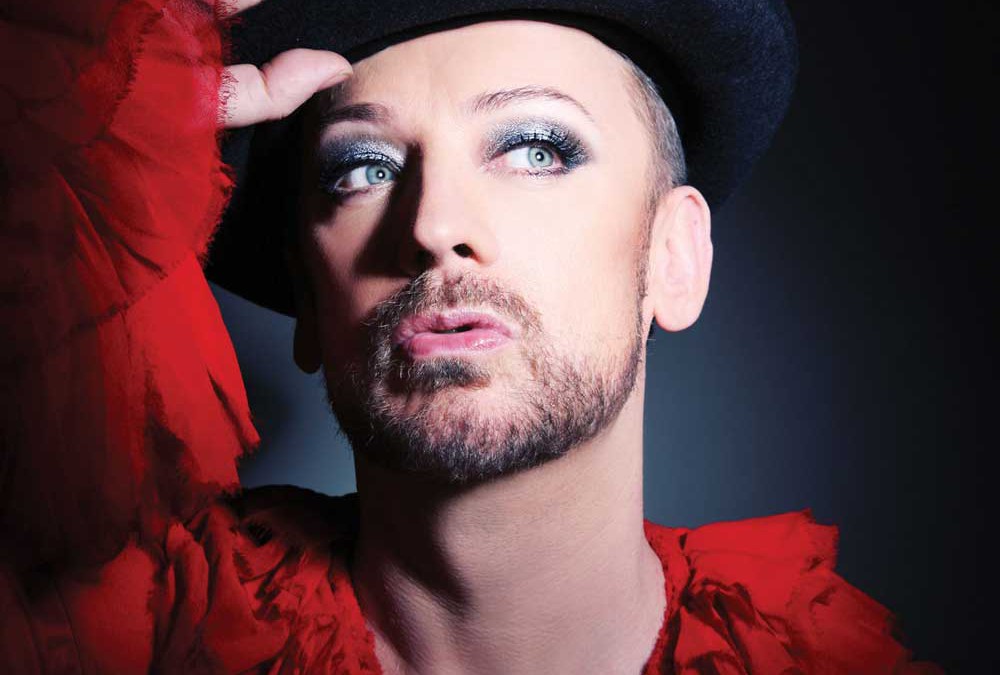
Text JF. Pierets Photos Courtesy of Boy George
Needless to say we were head over heels when we heard Boy George was releasing his first studio album in 18 years. Hence all those years of dj-ing, the Culture Club singer and ‘80’s icon has never been gone, yet we’re very much looking forward to this new creative step called ‘This is What I Do’ which will be released on October 28th. We catch up at the Antwerp Pride where he’s playing a dj set at the Wave festival together with one of the most impressive international DJ talents and creatively consistent producers, Marc Vedo. The last 5 years, they’ve exclusively been playing in a duo set-up and have just released their new single ‘These Gods Will Fall’. First we meet with Marc.
How did you and Boy George meet and when did you decide on working together?
Marc Vedo When I left school I started to organize events en George was one of the first artists I booked as a DJ. At the time I did not know him as a singer. I’d never even heard of Culture Club. I only knew he was a successful DJ in the UK. At the time I only listened to house music and he was a very good house DJ. We’d made a connection and we have been working together ever since. We’ve been touring since 2001, 12 years now. My wife calls him wife number 2.
I guess the music scene has changed a lot in all those years?
Marc Vedo It used to be really underground. Clubs where very dark, you would just go there and dance. Now it has become very commercial. Clubs used to be about music and now it’s about bottle service. People go to a club, hire a table that costs 5000 euro and buy bottles of champagne. People go there because they want to be seen. You need to be very careful regarding your bookings because otherwise you could end up playing for people that are not even listening to your music.
Everybody can be a DJ?
Marc Vedo Yes, apparently Paris Hilton is also a DJ. I actually think that for certain celebrities it’s a great opportunity to stand and perform for thousands of people, yet I’ve worked all my life to get here. I always respect what people do, but for some it’s an easy option to get paid a lot of money and that’s a bit lame. Technology came such a long way that instead of actually mixing, you just have to push a button.
You are a DJ, a producer, a manager and you make music. A lot of things.
Marc Vedo I like being all those things. It would be boring if I were just one thing. I like business as well as music. Doing business deals and making a company grow is very exciting. I left school when I was 18 and went straight into DJ-ing. I was a mid 90’s to early 2000 kind of kid so I’m doing it for a long time.
You and Boy George just released a new single called ‘These Gods Will Fall’.
Marc Vedo Yes, have you seen the clip? Great, isn’t it? I’m the one with the sunglasses and of course George is the one with the hair. We have a lot of music coming out, are going to do a lot of touring and lots of traveling. It’s all very exciting.
You’re working together for over 12 years now. You still feel inspired?
Marc Vedo Always! Yet is takes months before we finish a song because of all our arguments. We’re both perfectionists so that’s not always making it easy. Nevertheless he’s one of the most talented people I work with.
Our time is up and Marc is getting ready to go on stage for a performance we will later refer to, as the best set we’ve heard in quite a while (check the tour dates!). Meanwhile Boy George arrived in the backstage. When I state that he’s even looking better than in the 80’s when I was younger and madly in love with him, he smiles and answers quickly and observant: ‘And look at you now, married to a woman with a beard. You still have the same taste as back then.’ I guess it doesn’t come as a surprise if I tell you that I felt 14 years old again.
When talking about your new album, the media covers that you are ‘back’. Yet you have never been gone.
Not really. I’ve been traveling the world as a DJ for 25 years now yet the dance scene is going through such a big transition. At the moment it’s shifted to America but Great Britain used to have the most vibrant dance scene. Now, there’s nothing. At one point in the early ‘90’s when acid house started in the UK, there wasn’t any small village or town you couldn’t go clubbing. There were clubs everywhere and sometimes we did 4 gigs a night; starting at 8 and going on till 7 in the morning. That was so crazy. Nowadays it’s completely different.
What made that kind of change?
Obviously the world has opened up and I think people have a much shorter concentration span than they used to have. When you’re passionate about music, you can steal it. It’s not such a precious commodity anymore. There’s a good side about technology because it has given a lot more possibilities for anyone to make a record, yet the problem is they’re all making the same record. All that kind of wonderful individuality seems to disaggregate with the rise of technology. What you think and how you do things, is what makes you interesting. I don’t think there’s very much you can do that’s new, but the only way that you can do them is in your own way. The future is therefore all about interpretation.
And about live situations.
Indeed, nobody can be you in a live situation. When you perform as a dj or as a musician, you can only be yourself.
Do people see you as the person you are right now or are they still blinded by the 80’s icon?
If they do, they’re living in the wrong decade. It would be the same, as if I would be hoping for a 14 year old you. It’s such a weird thing, you know, I’ve already been the old Boy George yet now I’m the new Boy George. I don’t live in the past and I don’t exist in past context. It’s really bizarre if someone thinks that I’m not like I used to be. Well no, I’m 52! Surprise!
But isn’t that what usually happens with icons?
I don’t really walk around and think I’m an icon. Get up in the morning, shave and think; ‘well hello icon!’ I just think of myself as a creative person. I love the fact that I get to do what I love and I’m always kind of working on new things. I got the chance to explore my creativity as a job and that’s amazing. Some people get it and some people don’t. Same as back in the days, some people got it, others didn’t.
Regarding your new album, is it autobiographical?
Let’s say it’s a reflection of me, yet less personal than the albums I’ve made before. When I was younger, I felt like I had to tell everybody everything about myself. As I grew older I realized I’m not obliged to do so. Some things are really precious, even sacred, and not for public consumption. My attitude on how I expose myself has changed dramatically because I’ve always been very careless. As a very young man I’ve been shoved in front of a camera and I really had to learn how to behave. I had to learn to protect myself a little bit and to say; ‘actually, this is none of your business.’ When I came to write this album I approached it as a very different person. I’ve been through a lot of interesting experiences in my life and I’ve done a lot of growing up in the last 5 years. I explore myself in a bit more of an inferior way in these songs. I sing about myself but maybe through the eyes of someone else. It’s not just me spitting my guts. And another important thing is that I am not unhappy. When I’ve made records in the past there was always somebody who broke my heart, some relationship gone wrong or some drama because when I was younger, I thought all relationships where about love. Everything was love. Now I realize that it wasn’t all love. Consider that a big revelation to me, and something I sing about on the album. I sing about the fact that I used to think that all of that drama and rubbish was real love, while love is something a bit more ordinary, a bit more organic. Sometimes it even smells a little bit. It’s not all fire works and police sirens.
In a few minutes you’re playing for an LGBT audience of thousands. Do you feel connected?
They’re all my brothers and sisters in various forms and I think at the moment, the subject of gay events is very important. There’s so much stuff going on in the world. It’s terrifying. I feel like it’s going backwards. When I started my journey as a musician in 1982, I really felt like I transformed the world and people were just a little bit less uptight than they are today. People are pretty tolerant in the West but that’s about the only place. I feel like there’s a lot of work that needs to be done and it’s important to do so. On the new album there’s a song called Live Your Life; ‘Now is the time to live your life. There’s no second chance, you can’t rewind’. It’s a reggae song about a young boy. A lot of people have gay children and don’t talk about it, because if they don’t talk about it, it’ll go away, it won’t develop, it doesn’t exist. But it does exist and it doesn’t change. It’s so relevant to sing about those things and the song came instinctually around the time that one of my family members came out. He was 17 and communicated in a very different way than me. He just said; ‘I’m gay, get over it’. Quite an interesting approach.
How old were you?
I was 15 so that was quite young. It was in ‘75, ‘76. As an older man, I now understand that my mother and father also had an experience when I came out. It wasn’t just about me and I realize it wasn’t an easy ride for them too. Especially when you look at how my life evolved, became so public. You look very different at things when you get older.
Do you feel it’s necessary to make statements?
I think it’s part of who I am. It’s not that I necessarily think it’s necessary, but it’s just part of what I do. Sometimes I think that as a writer, a creative person, you subconsciously pick up on things that are happening. Being a very obvious homosexual and being who I am, cuts off a lot of the smalltalk. Wherever I go, everybody knows that I’m gay so I don’t have to explain that. It kind of walks before me with a big sign. For me it cuts out a lot of the difficult stuff. I don’t have to explain anything because they already know. The problem is that they think they know more than they know because of what they read or heard about me. Some of it is true but a lot of it isn’t. Yet the only thing you can ever be is you. And life is about learning to be you. Whatever you are, whether you’re gay or straight; life is about the journey to yourself. Not as a star but as an ordinary person.
You said earlier that you are happy. Why?
I’ve grown into myself a little bit. I don’t have such a complicated relationship with myself anymore. That really helps. 20 years ago I used to say that the universe was a mirror that reflects how you feel about yourself. I really didn’t fully understand what I said back then, but I do understand it now and it makes me feel more relaxed in my body and in my soul. I invest a lot of time into being happy by celebrating things. When I was younger, I didn’t really know you could do that. I didn’t realize that happiness was a choice. Of course life throws things at you and things happen that make you sad, but generally you have a choice on how you see things. You can choose on how you react to something, how you deal with your partner, how you hear things that people are saying to you. When I was younger I always wanted to change everyone around me. I treated them like dolls and wanted to change their hair, their clothes. What I’ve learned now is that you have to change yourself, you can’t change other people.
Yet you still search for the hectic life. Marc told me your schedule and it’s amazing.
It is, but I don’t drink and I don’t party, so for me it’s a very different experience than before. You can say I’m partying in my soul. I love what I do, I love music and I really enjoy being clearheaded and not feeling dreadful when I travel. I did that for years! I wore the t-shirt, did the tour! I’ve done it all and I’ve taken it to the ultimate conclusion. Being sober allows me to concentrate on what I’m doing creatively, to be focused and to do it with respect. It’s not very good to go out on stage when you’re drunk. It’s not very professional. In some scenes it might be considered really chique but at my age? It’s just boring.


De pagina die u zocht kon niet gevonden worden. Probeer uw zoekopdracht te verfijnen of gebruik de bovenstaande navigatie om deze post te vinden.
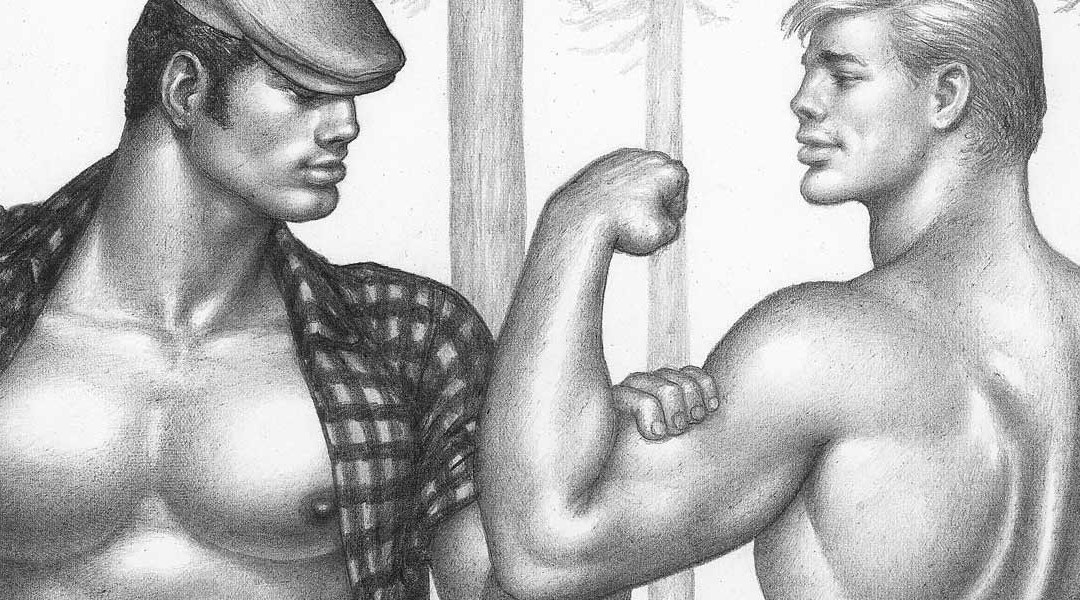
Text & photos Courtesy of MOCA
The Museum of Contemporary Art, Los Angeles (MOCA) presents Bob Mizer & Tom of Finland, the first American museum exhibition devoted to the art of Bob Mizer (1922–1992) and Touko Laaksonen, aka ‘Tom of Finland’ (1920–1991), two of the most significant figures of twentieth century erotic art and forefathers of an emergent post-war gay culture.
The exhibition features a selection of Tom of Finland’s masterful drawings and collages, alongside Mizer’s rarely seen photo-collage “catalogue boards” and films, as well as a comprehensive collection of his groundbreaking magazine Physique Pictorial, where drawings by Tom were first published in 1957. Organized by MOCA Curator Bennett Simpson and guest co-curator Richard Hawkins, the exhibition is presented with the full collaboration of the Bob Mizer Foundation, El Cerrito, and the Tom of Finland Foundation, Los Angeles.
Tom of Finland is the creator of some of the most iconic and readily recognizable imagery of post-war gay culture. He produced thousands of images beginning in the 1940s, robbing straight homophobic culture of its most virile and masculine archetypes (bikers, hoodlums, lumberjacks, cops, cowboys, and sailors) and recasting them—through deft skill and fantastic imagination—as unapologetic, self-aware, and boastfully proud enthusiasts of gay sex. His most innovative achievement though, worked out in fastidious renderings of gear, props, settings, and power relations inherent therein, was to create the depictions that would eventually become the foundation of an emerging gay leather culture. Tom imagined the leather scene by drawing it; real men were inspired by it … and suited themselves up.
Bob Mizer began photographing as early as 1942, but unlike many of his contemporaries in the subculture of illicit physique nudes, Mizer took the Hollywood star-system approach and founded the Athletic Model Guild in 1945, a film and photo studio specializing in handsome natural-bodied (as opposed to exclusively muscle-bound, the norm of the day) boy-next-door talent. In his myriad satirical prison dramas, sci-fi flix, domesticated bachelor scenarios and elegantly captivating studio sessions, Mizer photographed and filmed over 10,000 models at a rough estimate of 60 photos a day, seven days a week for almost 50 years. Mizer always presented a fresh-faced and free, unashamed and gregarious, totally natural and light-hearted approach to male nudity and intimate physical contact between men. For these groundbreaking perspectives in eroticized representation alone, Mizer ranks with Alfred Kinsey at the forefront of the sexual revolution.
Though Laaksonen did not start spending time in Los Angeles until the early 1980s, he had long known of Mizer and the photographer’s work through Physique Pictorial, the house publication and sales tool for Athletic Model Guild. It was to this magazine that the artist first sent his drawings and it was Mizer, finding the artworks remarkable and seeking to promote them on the magazine’s cover, but finding the artist’s Finnish name too difficult for his clientele, who is responsible for the now famous ‘Tom of Finland’ pseudonym.
By the time the gay liberation movement swept through the United States in the late 1960s, both Tom of Finland and Bob Mizer were already well-known and widely celebrated as veritable pioneers of gay art. Decades before Stonewall Inn and the raid on the Black Cat Tavern these evocative and lusty representations of masculine desire and joyful, eager sex between men proliferated and were disseminated worldwide at a time when the closet was still very much the norm—there was no such thing as a gay community. If these artists were not ahead of their time, they might just have foreseen and even invented a time.
Spanning five decades, the exhibition seeks a wider appreciation for Tom of Finland and Bob Mizer’s work, considering their aesthetic influence on generations of artists, both gay and straight, among them, Kenneth Anger, Rainer Werner Fassbinder, David Hockney, G.B. Jones, Mike Kelley, Robert Mapplethorpe, Henrik Olesen, Jack Pierson, John Waters, and Andy Warhol. The exhibition also acknowledges the profound cultural and social impact both artists have made, especially in providing open, powerful imagery for a community of desires at a time when it was still very much criminal. Presenting the broader historical context and key aspects of their shared interests and working relationship, as well as more in-depth solo rooms dedicated to each artist, the exhibition establishes the art historical importance of the staggering work of these legendary figures.
In addition to approximately 75 finished and preparatory drawings by Tom of Finland spanning 1947– 1991, the exhibition includes a selection of Tom’s never before exhibited scrapbook collages, and examples of his serialized graphic novels, including the legendary leatherman Kake, as well as a selection of Mizer’s ‘catalogue boards,’ AMG films, and a complete set of Physique Pictorial magazine. An accompanying publication includes texts by the exhibition co-curators and a selection of images.
The Museum Of Contemporary Art, Los Angeles.
Check the MOCA website on related programs and more info.
All the images are printed with permission of MOCA Museum Of Contemporary Art.


De pagina die u zocht kon niet gevonden worden. Probeer uw zoekopdracht te verfijnen of gebruik de bovenstaande navigatie om deze post te vinden.