Geen Resultaten Gevonden
De pagina die u zocht kon niet gevonden worden. Probeer uw zoekopdracht te verfijnen of gebruik de bovenstaande navigatie om deze post te vinden.


Text JF. Pierets Photos Tareq Sayid de Montfort
First things first: can the Islamic world be called avant-garde?
Like all the monotheistic religions, at its birth, Islam was an avant-garde movement, in this instance of medieval Arabia. During its Golden Age, the Islamic world was avant-garde in comparison to Europe and also in the arts during the brief cultural revolution of the 19th century called Al–Nahda. Now it is very backward, the present forms of Islam are not avant-garde. My work and personal beliefs are, but you asked about the Islamic ‘world’. Saudi Arabia is discreetly leading the way in science and research, it is the avant-garde in science today. So yes, there are examples of the Islamic world leading the forefront of innovation and development.
The main theme in your work is beauty. Do you consider yourself to be an artist or rather an aesthete?
There is no difference between my state of being as a human, an artist, ascetic, aesthete or devotee of beauty. I simply seek to be. ‘Kun’, meaning ‘to be’, is a mystic Islamic state of being. I aspire to be a contemporary Muhsin. A Muhsin is the highest calling in life in conventional Islam and can be explained as ‘one who is in constant pursuit and adoration of perfection and beauty’. So if anything, I am a contemporary Muhsin.
You once said that beauty has been damaged by artists and intellectuals and that you want to revive it. Can you elaborate?
Beauty today has been reduced to a faded image. When the modern avant-garde movement, Dada and others destroyed beauty, or rather attempted to reshape it, they consequently annexed a complex layering of many forms of beauty. Beauty has a noble lineage, it originates with siblings truth, kindness and goodness and divinity itself. To understand this, I think one needs to turn to Plato’s hierarchy of forms and the ideas of the good and the beautiful, or an easier read like Elaine Scarry’s ‘On Beauty and Being Just’. Horribly simplified: at the lowest level of the hierarchy are forms of material beauty. Higher in the hierarchy we find forms of ideas. And at the top of the ideas is that which is divine. Here lie compassion, kindness, and empathy. Beauty is also a metaphoric emblem for justice, a powerful utilitarian gift to humanity to benefit the pursuit of happiness. I could go on.My revivalist aspirations regard the Arab lands and Islam. Islam, in purer, mystic origin is an ideology seeking an ideal state of being. With a doctrine of the pursuit of beauty, mostly forgotten by current Islam, you can define it as Romantic. It is academically accepted that the Romantic poets took much influence from the Levant. The Romantic revolution of the 18th and 19th century affected the arts but also infiltrated politics. Parallels exist between socio-economic issues of the West at that time and the Arab-Islamic world now. Ideals and politics of romanticism as well as the mythos of the Cult of Beauty movements have acute abilities to address various predicaments in the Middle East today. With tradition and history still accessible in the Middle East there is still time to salvage wisdom. A wisdom with the potential to bring into existence Kun, an improved existence which we all desire. Romanticism is seen as irrational and unrealistic from a Western perspective. An Islamic pursuit is to realise a reflection of paradise on earth and a Sufi once said that ‘Rationality destroys this world and the next’. In the Arab, Islamic world romanticism is a reality. The mystic path offers a way to explain all the things that academics and intellectuals have tried for centuries to unravel but couldn’t capture. The Romantic revolution took the moon as its emblem in challenge of the Enlightenment, the Age of Reason represented by the sun. The moon offered the knowledge of mysticism, poetry and metaphysics. This mystic element was Mohammed’s experience of Islam, how it is meant to be experienced.In terms of theoretical narrative, beauty is a platform for unity between dualities in opposition. A meeting of the self and the other. The philosophy of beauty I am developing owes much to Platonic and Sufi thoughts. Sufism is derived from Plato; Sufism and Platonism are siblings from a heritage of Islamic scholars whose rediscovery of classic knowledge lead to the western Renaissance. That harmony, that kind of inspiring relationship between such opposing cultures, the irony that we owe so much to each other and have an intimate relationship that is centuries old: that is a splinter of the definition of a higher form of beauty.
I believe your work is a revolution against our rational society?
Revolution is a word you may use. My idea of revolution does not correspond to how revolutions have played out thus far, with those at the top falling down and those previously at the bottom going up to create something akin to what was just removed. I believe in revolution in accordance to the doctrine of beauty, which starts with the self. A romantic revolution.
What is your philosophy on the concept of gender?
It is in constant change with society, with ideals, with culture. I believe our normative, general and conservative understanding of gender is basicly unsophisticated and incomplete. I don’t think there is one absolute truth or comprehension to gender. It is fluid, an ethereal evanescence that defies understanding and can only be lived. That can only be.
Can you talk about the work that you are showing at the GenderBlender exhibition?
The works are from the collection called ‘Wajahat al–Rajul: The Grace of Men’, displaying the Arab or Eastern male reposing with an elegance, grace and adornment not usually associated with masculinity of Arab males. It confronts Western and Arab, Muslim perspectives of imposed male/masculine stereotypes, hetero-norm social expectations and cultural ideals. The inquiry and its ‘field work’ I engage in originated from the idea that the gender identity of Prophet Mohammed is conventionally regarded as the ‘poster boy’ or perfect ideal of a Muslim and also of Arab, Muslim maleness. I have had an intimate relationship with Mohammed throughout my life, including ten years of researching him as a man: how he was and why he was the way he was, seeking the psychological and social discourse rather than fables to exult over and myths to preach about.Attributed quotes and teachings, the earliest and most reliable Islamic accounts and the Quran, forged together with insights from anthropological, social, economic, cultural and political contexts, formed an intricate sequence of time, events and persons. It introduced me to someone who, in most reports in Western media, is only known from the accounts of bearded men uneasy with modernity or through odious cries of extremists, creating an identity that most people in the West believe to be true while it is unfair and obscene to extremity.
You adhere to the Japanese idea of Wabi Sabi. How does that reflect on your work?
Conservative societies have a reputation of expecting how one should be: the perfect citizen, the perfect believer. Wabi Sabi represents a comprehensive Japanese world view or aesthetic centred on the acceptance of imperfection. Melancholy and other such pains, physical and beyond, go hand in hand with the ecstasy and bliss that are an integral part of my work. Many people feel diminished, unworthy and imperfect on account of physical or emotional scars, psychological trauma, mental issues, etc. Such things that have been considered to be imperfect require a revision of understanding. The idea is to elevate them from a state of imperfection, to an imperfection that has an alternative use, to being beautiful. Basically, this establishes fairness.Just like my work both contexts, narrative and aesthetics, seek mutual acceptance between Islam and the West, between the Arabs and Islam, between the Arabs and the West and of course Israel. Hopefully this acceptance will evolve in reality one day, but until then at least it can exist symbolically, politically and romantically through art.
You grew up being gay and Muslim. What was it like?
Being gay and Muslim didn’t affect me at all, my beliefs and sexuality do not conflict. Growing up in a Muslim country was a bit difficult but then again, also quite exciting.
I understand gay identity isn’t the same in Arab countries as in the West. Can you tell me about this?
That is a very complex, long discussion. I like the article available on the subject that is called ‘Re–Orientating Desire: The Gay International and The Arab World’. There are different rules in the ‘gay’ world. Very strict codes on who is active and passive, which I challenged completely. As a slim boy with feminine sensibility the ‘rule’ was that I would be passive. I challenged this as I am active. In the West there is the lingering notion that the feminine is always passive; that idea is quite militant in Arab culture. Also, the active man is not necessarily considered gay; he is just fucking because that is what men do. Gay became an identity in Britain after the Oscar Wilde trials. Before that, it was just something you did as an act. There are many remains of this perception in the Arab world, which has a history of pederasty. It is different in regard to the idea of gay as an identity. Intimacy between persons of the same sex was a central aspect of Arabic culture but it has warped into something that is still undecided because of this identity issue. That is aggravated by cultures where queerness is still considered wrong.
Future plans?
I am currently in the process of writing proposals and bringing together ideas for an exhibition in London that would use objects from my family’s Islamic Collection in Kuwait, hopefully with some private ones in London. I want to show them along with contemporary art, side by side with object d’art artefacts and antiquities. It will be called Black Cube. The word ‘cube’ comes from Kaaba, the holiest site in Islam where Muslims face when they pray, in Mecca, Saudi Arabia.


De pagina die u zocht kon niet gevonden worden. Probeer uw zoekopdracht te verfijnen of gebruik de bovenstaande navigatie om deze post te vinden.
Text JF. Pierets Photos Matthijs Holland
What do historic figures like Hatshepsut, Pope Joan, Segawa Kikunojo III, Henry III of France and Charlotte von Mahlsdorf have in common? Visual artist Matthijs Holland told us all about it.
Do tell!
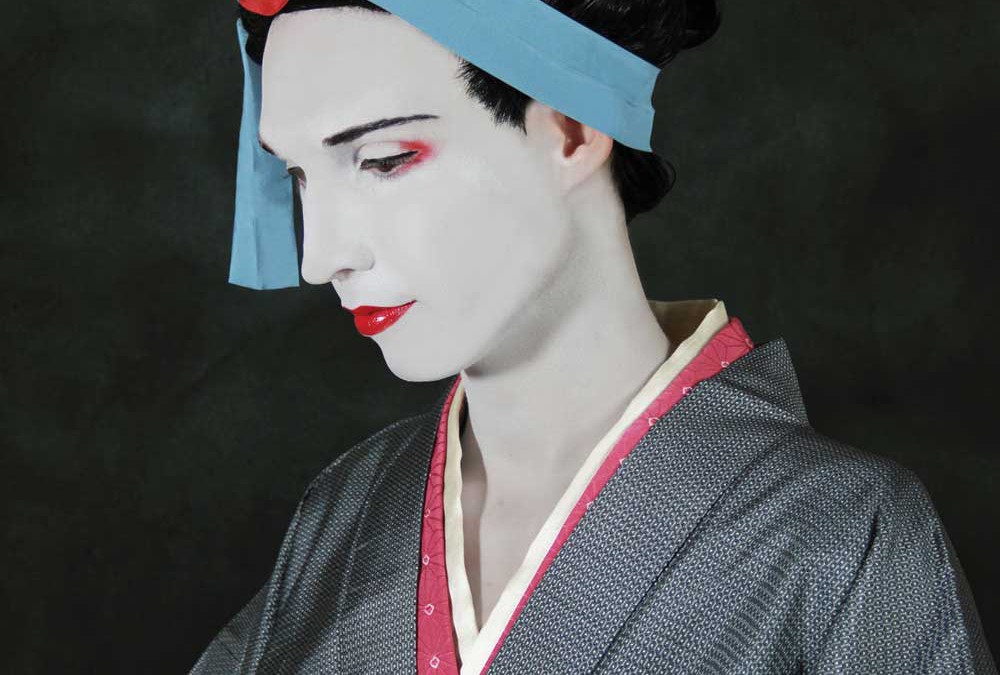
I wanted to create a photo project based on freedom and tolerance regarding gender. First I had my sight on the future, thinking about an ideal world and how wonderful it would be if the concept of gender would no longer be based on any norm or definition. When I decided to look at the past first in order to understand the future, I found many historical figures who disregarded social conventions. They broke with the socially imposed norms of their days. None of these figures from the past fit the role that was created for them. They could not conform to the restrictions they encountered and broke free from them. They show us that questioning gender doesn’t specifically belongs to our culture: it is of all times. It has always been there. The norm in regard to gender is much too limited and unrealistic.
Can you explain your vision on gender?
Each sex is enclosed by a strict socially imposed norm. Masculinity belongs to the man and femininity to the woman. Anything that falls outside either category does not belong to the majority and is unfamiliar territory. The unknown doesn’t fit in the social straitjacket and can’t be easily understood anymore. Because of that, it causes fear and rejection by a large number of people. Dominant women are attacked for their lack of femininity and sensitive men are not considered to be ‘real’ men. People whose gender role doesn’t fit the socially imposed norm have to justify themselves to society. However, between the stereotypical man and the stereotypical woman lies a broad spectrum where they gradually blend together and fall outside of the norm.
So you made a work of art to address these issues.
I searched for a strong basis to tell those stories. I looked at history and brought these historical figures into the present because gender is a universal theme of all times. It is very close to me as a person and a visual communicator.
The series is called NormAll.
I have the strong opinion that ‘everything’ should be the norm. Then words like ‘norm’ and ‘normal’ wouldn’t exist. The man/woman norm is very limited so I called it NormAll.
Who are the people in the series?
The timeline of portraits shows five inspiring people who each in their own way could not conform to the predominant expectations. Hatshepsut, who did the unthinkable in a male-dominated world and crowned herself pharaoh. Pope Joan who, by disguising herself as a man, could escape the female straitjacket of the Middle Ages and was acknowledged for her talents. The Japanese actor Segawa Kikunojo III, who was so feminine that he became the role model for geishas. And Henry III of France and Charlotte von Mahlsdorf, who each in their own time chose to step outside of the expected gender roles to truly be themselves.
You chose to make self-portraits, dressed as those five people. Why?
During my research, I read a lot of books by Judith Butler in which she writes about performativity. She asserts that ‘Gender is an impersonation and becoming gendered involves impersonating an ideal that nobody actually inhabits’. Gender is an ongoing, evolving element that isn’t determined at birth. By considering myself a blanc canvas I was receptive to assume the role of those historical figures. To be entirely honest I must say that Ru Paul’s ‘Drag Race’ was also very inspiring on the concept of transformation.
What conclusion did you arrive at from studying both past and present?
It is my idea that gender is a flexible state, evolving constantly and moving like a wave. Dependent on the phase you are going through. At times you give your male side more space, at times you are more in touch with your feminine side. When it comes to sexuality – and I don’t confuse gender with sexuality – people are more fluid. I see it as a percentage. Some are more hetero or gay than others. When we are talking about conclusions from studying the past, let’s be fair: where do we stand when it comes to gender in the 21st Century? In many places in the world women still have to fight to be heard, feminine men and homosexuals are being violently attacked or even punished with death, and transgender people are still being looked upon as a curiosity. Have we moved forward through history or have we become even stricter? Which stories of our time will we add to this portrait gallery in 10 years?


De pagina die u zocht kon niet gevonden worden. Probeer uw zoekopdracht te verfijnen of gebruik de bovenstaande navigatie om deze post te vinden.
Text JF. Pierets Photos & artwork Silvia B.
She affectionately calls them ‘my boys’, when she talks about her statues. A black and a white series of puppets that almost seem to come alive and that are created with a level of perfection that can only be understood as love. Some of them, with names like Thinker, Ira Jr., Lord Rangda or Mors, are part of the series ‘Les plus Beaux’, the most beautiful of them all. And that is what they are, strangely hovering between man and animal, transcending standard notions of beauty. In conversation with a most versatile and intriguing artist, Silvia B.
All your statues are hybrids, age- and genderless yet existing in some perfect illusion. Highly attractive at first glance but disturbing at a closer look.
I like to make my sculptures as beautiful as possible and I love them to be fluid. They are based on signs of our time. Stereotypes taken to the max. Not only regarding androgyny but also of genetic manipulation, cosmetic surgery. In this day and age you can become whomever you want to be or rather: whomever you have to be in order to fit in.I try to make my sculptures as beautiful as I can, just to arouse the viewers’ sense of duality. Attract them with craftsmanship but unsettle them on second look. Magnetism versus rejection. Not to mention doubt. I like the audience to be in doubt before they judge: that it’s not possible for them to instantly take a stand. For me it is important that you have to think about whether these creatures are beautiful or not and subsequently whether they are good or bad. Doubt is the basis of all thought and I like to advance that as a given. It is my vision on beauty; a kind of beauty that isn’t appreciated most of the time because there is always a dark side to it. Like film stills: you never know what is going to happen next.
Your representations challenge not only our conceptions of normality in regard to beauty but also in respect of human behaviour.
I have always been interested in human behaviour. We are still so very instinctive, aren’t we? Everything we do is based on our desires and our fears. When you see someone on the street who looks a bit different you instantly decide, within three seconds, whether you are going to make eye contact or not. Is the other person a winner or a loser? Do I want to connect or could that be dangerous? We still behave like herd animals and at the same time we think of ourselves as being some kind of super-beings.
Super-beings with the possibility to explore genetic manipulation, cosmetic surgery, artificial intelligence. Is that why you made ‘Almost Perfect’?
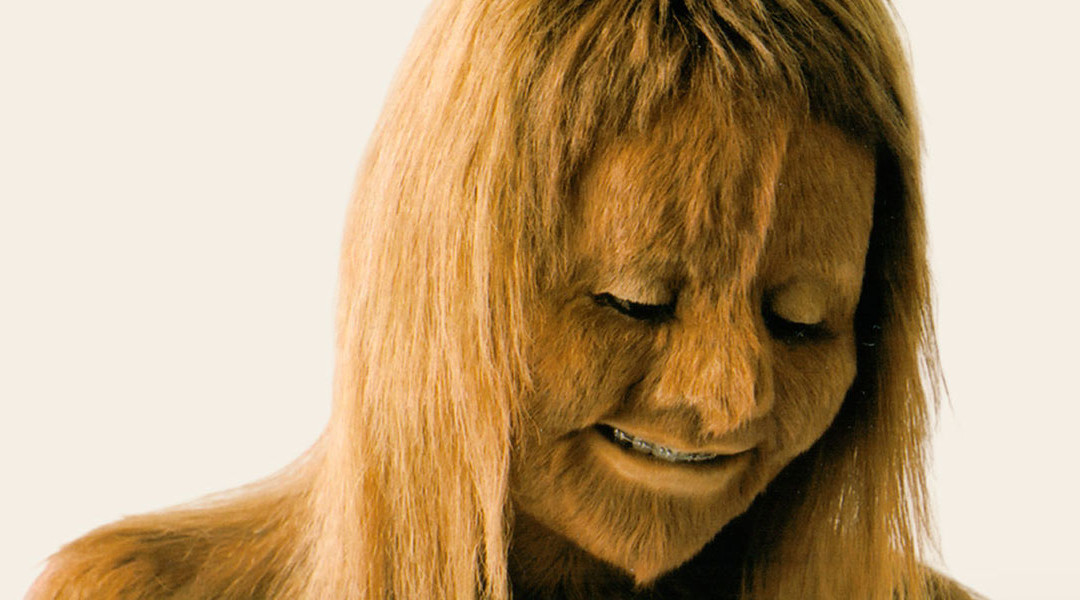
This girl was sitting in my atelier for quite a long time. I found her while strolling around a flea marked. She was so weird: an old doll, an anorexic avant la lettre. I knew there was a statue inside of her but I wasn’t quite sure where she was going. She was my skinny teenager who didn’t know whether to fall in love with boys or with girls. I gave her all the opportunities an era of the makeable human has to offer; the endless growing possibilities of plastic surgery. Her skin is stitched together and I gave her fashionably oversized lips. She is self-conscious of her pubescent breasts and tiny penis. I offered her a choice to grow into whomever she wanted to be.
And all of a sudden everything went black.
Once again I was drifting on the tide of time. Business was going well but all of a sudden the crisis kicked in. People bought less art; they were more careful with their money and I had to jump into a new future without a parachute. That was quite confronting. My white series exists very much in the ‘here and now’. Little boys, decadent and aggressive yet charming and confident regarding their place in time.The black series, starting with ‘Les Bêtes Noires’, is different: more introvert, more me maybe. Most of them have their eyes closed. Not only to give the viewer the freedom to stare but also to express an aloofness that borders denial. I wanted to give them the possibility to shut out the rest of the world. To be self-assured and in no need of approval.
You seem to have a huge fascination for the circus.
My father always told me that they found me at the queue of a Russian parade. You are so weird, he said, you can’t be our child. So I kept on hoping the Tsar and Tsarina would come to get me and take me far away from these ordinary people. So who knows: maybe that is where this interest came from? I love the comical yet theatrical effect of the circus. Don’t you think it is strange that we find it funny when people behave like animals and vice versa? We buy tickets and laugh at people who look displaced. And isn’t it weird that we decorate our homes and ourselves with – literally – someone else’s feathers. It is quite morbid to take pleasure in the remains of dead animals. We think that we are some kind of superhuman beings, that everything is there because of us. We use all species except our own – well, exceptions left aside.
Children that are covered head-to-toe in hair are a constant factor in your work.
Since time immemorial, extremely hairy people have been exhibited in traveling circuses so this inevitably lead to ‘Le Cirque’. A melancholic series of both children in fur and animals behaving like people. The atmosphere of those fancy fairs and the dubiously voluntary aspect of those shows made me choose to create them all in black. Fit for an environment where certain activities might not be suited to be exposed in broad daylight. The fact that everything is black forces you to concentrate on what you see, which strengthens the aspect of voyeurism.
You are not only displaying your work, but people can actually wear it. Your Skinover elbow length gloves offer the possibility to brave the day in someone else’s skin.
When I started to create ‘Almost Perfect’, I first made her hands and I was trying them on myself, feeling the touch of the lambskin leather. Afterwards I couldn’t forget the sensation of living in someone else’s skin, as if I were actually wearing her. So that is where it all started. And since I like to question our current concept of aesthetics, I involved someone else’s tattoos, someone else’s birth marks, scars: to explore the edge between what is beautiful and what is not. The gloves are ‘marked’ with what some people might call imperfections: freckles, scars, hairy moles or even a mutant-like extra thumb. Are they dissonances or signs of beauty? Is everything that deviates from the norm a priori bad, strange? A brown spot on the face of a young woman is called a beauty mark; on the face of an old lady it is considered a shrew’s wart. Understanding this makes mainstream thoughts regarding beauty very relative.
Your work is closely related to fashion.
I love fashion because it is the only art form able to react very quickly on what is happening in the world. Design, art and architecture for example, are much slower in their reflection. Fashion shows the way we are feeling in regard to politics or social issues. I was 18 years old when punk made its entrance and at the time, there weren’t any punk clothes or jewellery available here in The Netherlands; I had to make everything myself. I found them to be very creative and productive times. The ideas of no tomorrow, no future, party every day and wear your most beautiful clothes, were very inspiring. Since there was no future you had to do everything Now: tomorrow might be too late. In a way it is what I am still doing. Customizing things, bringing all those dolls to my atelier to check if there are statues hidden inside. I still play with dolls, only now I get paid to do so.
Inspiration is lifestyle?
Yes. Magazines, movies, human behaviour, how we succeed in society: all very inspirational but quite complicated. Life itself is quite complicated so I like it if certain things stay the same. For example, 20 years ago I chose to have this hairdo and I am not going to change it anymore. I like to wear black, it feels comfortable, I am not going to change it anymore. If I have to make decisions about everything, I wouldn’t be able to work so I make it simple. I choose to keep it simple.
Leaves me nothing but to ask about your future plans. We have seen white, we have seen black. What else can we expect from a very versatile artist who wants to keep life simple?
The future looks very exciting! I am heading towards a solo exhibition and I don’t have a clue what I am going to show. I want to make new work; start all over again. Long live the internet where I can check images from all over the world without leaving the comfort of my atelier. I’ll keep you posted!


De pagina die u zocht kon niet gevonden worden. Probeer uw zoekopdracht te verfijnen of gebruik de bovenstaande navigatie om deze post te vinden.

Photos Sin Bozkurt
When two of Et Alors?’s favorite artists decided to do a personae switch, a smile appeared on our faces. Queen of fetish cabaret and diva extraordinaire Marnie Scarlet, transformes into Mr. Pustra, Vaudeville’s Darkest Muse. We leave it up to them to tell you all about it.
Name Marnie Scarlet
What Getting under Le Pustra’s skin
I have known Le Pustra for a number of years now and I have always valued and admired him as a person and a multi-faceted visual artist. We appreciate each other’s style which both compliments and contrasts. I love the inner strength of his various characters, the dark and melancholy aspects, as well as the beautifully executed make-ups and outfits. When Le Pustra approached me with the idea of a Cabaret Switch, I was honored and excited. We started laying out the plans and asked good friend and experienced Cabaret photographer, Sin Bozkurt to immortalize the project. We have both worked with Sin before and he understands both our characters very well. We decided to swap two of our Looks/Characters. We both have a pop-culture icon based act in our oeuvre: for Le Pustra that’s a phenomenal Klaus Nomi act, for me that’s a tribute to Marilyn Monroe in Warhol style. It was amazing to be transformed into le Pustra and to be transform by him in return. Quite spooky and magical. During the shoot we truly transformed into each other’s creations which was an amazing creative process. When some of the photos went up on our respective Facebook sites, it actually did cause confusion as to who was who, and what was going on. The reaction we wanted!
Name Le Pustra
What Wearing Marnie Scarlet’s (shiny) skin
I approached Marnie regarding this concept in late 2013 as there are so many similarities between our public personas. I thought it would be interesting to portray each other and see what happens. I really adore her visual style and skill as a latex designer and visual artist. Marnie was very happy to be involved and we decided on switching our ‘icon’ characters e.g. Klaus Nomi and Marilyn Monroe – both latex – and our signature ‘Marnie’ and ‘Le Pustra’ looks, e.g. the Pierrot clown and Rubber Dolly. Photographer Sin Bozkurt agreed immediately to be part of the project and we even used our favorite studio in London. I think it was quite tricky to do each other’s make-up and it was interesting to find out how well we knew our own faces. Yet doing our own face on someone else, was definitely a challenge. Marnie even made a latex outfit in my size to wear as her Rubber Dolly. How wonderful was that? Since she has let me keep it, there might be a chance you may spot a slightly larger Marnie running in the streets in the near future. I must confess how much I admire Miss Marnie for wearing her, sometimes restrictive, latex costumes. The amount of effort and thought she has put into those designs. I don’t know any other artist whose work is so detailed and so clever.Bravissima, Marnie! Collaboration between artists can be such a rewarding experience and Marnie is one of my most favorite people on the scene as she is just brimming with talent, color and energy. And she has a heart of latex gold. I would work with her any day and look forward to see how she evolves over the coming years. I expect nothing but greatness from the First Lady of Latex. It was a fun experience being someone else for a day.


De pagina die u zocht kon niet gevonden worden. Probeer uw zoekopdracht te verfijnen of gebruik de bovenstaande navigatie om deze post te vinden.
Text JF. Pierets Photos Extravaganza
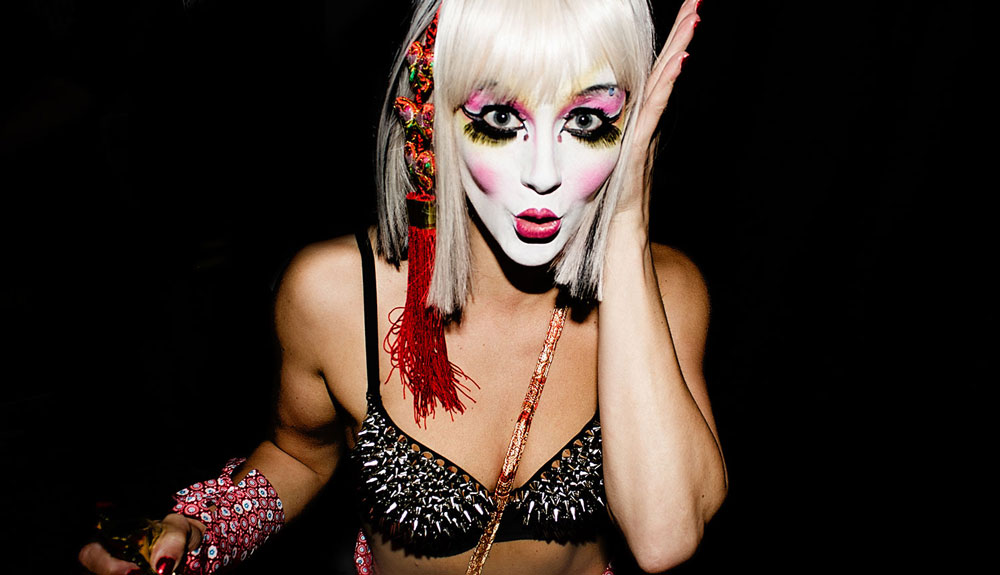
Lars de Valk founded Extravaganza. The first extravagant bears, lesbians, muscle boys, club kids, drag queens, fag hags, fetish clubbers party with a positive vibe in Antwerp, Belgium. Bringing you happiness with themes such as Asian Persuasion, Sinners & Saints and The American Dream. With a crew of 20 performers styled by Harald Ligtvoet and a unique atmosphere, Extravaganza is by far one of the most positive and succeeded ‘be whoever you want to be’-parties we ever experienced so far. 10 reasons why we like the man behind the scenes.
The beginning.
I come out of fashion retail. A family business. When my parents retired I was out of a job and because I wanted to change the course of my life for yet a very long time, it was no disaster. I’m part of a theatre company and every time I was asked to do something creative, I flourished so I started thinking about something that gave me the same amount of satisfaction. I started thinking about an all-round party concept.
The city.
Antwerp was in need for a new party but it had to be good. It had to be a concept instead of once again another mainstream party. Since the inhabitants of Antwerp are quite highbrow, it had to be something that could resist the cynicism of the audience.
The concept.
I had the summer of my life – well, until now – in Provincetown. I was there during the carnival week and never experienced such a feeling of unanimity. From the most trashy transvestites to leather boys and from bears to lesbians. Everybody just accepted everyone for what they were, partying together at one and the same place. I wanted to capture that feeling of equality. It was unique.
The atmosphere.
I didn’t want an underground concept because those are numerous. I didn’t want anything that had to do with sex. Not on top of it. I’m aware of the fact that sex sells, especially in the gay scene, but I was in need of a place where you could be relaxed. A place where you could flirt without the pressure of a darkroom around the corner. I wanted to create a fun and positive night. A place where people got swapped into a certain sphere in which there was no time for negativity.
The music.
When it comes to music I wanted something I heard in New York. No house, no techno, but old songs combined with contemporary beats. It’s a nice angle to start experimenting.
The crew.
We planned the first edition of Extravaganza in November and started preparations in September. I was looking for people to entertain, via Facebook, via people on the street, at parties. I talked to them out of nowhere. Asking if they wanted to be part of a new party concept. People seemed to be extremely enthousiastic. Then I met stylist Harald Ligtvoet who wanted to interpret my moodboard and was willing to ‘design’ all the entertainers. I’m so extremely gratefull for this group of people who are working around the clock on this concept.
The slogan.
I wanted to work in themes. People don’t have to dress up, but they are welcome to do so. Since I wanted to capture the feeling I experienced in Provincetown, I integrated the slogan: ‘Come as you are’. Whoever you are, you can be yourself. It’s not a gay party. Everybody is welcome. It’s a statement.
The look.
Decorating makes me happy. Setting a theme, making a mood board, talking it through with the team. I love it! It’s also great to be able to work in Het Felix Pakhuis because then you know what you are doing and how it’s going to look. We start decorating at 8 o’clock in the morning and the make-up and dressing of the entertainers starts at 5. Its hard work but you know you will be in bed at 8 the next day so you can set your state of mind.
The production.
It’s a lot of work and sometimes I think I’m having three jobs. I’m both graphic designer, organizer and manager. I wanted to do it myself. The marketing, the thinking, the counting. I found that marketing is harder then I thought so I used promo media to help me. All the artwork and campaigns on top of the party organizing part. But it’s worth it. We have a full house, a happy crew and our visitors seem to like it very much.
The future.
You catch me at a moment of complete exhaustion as we just did the closing party at the Gay Pride Brussels. So we’re doing well. Next to our regular parties in Antwerp we were asked to also organize Extravaganza at other locations. We’re having a party at the Antwerp Pride in August and are going to The Netherlands for Milkshake festival. I’m a dreamer while standing with my 2 feet on the ground, but who knows what comes next. As for now: the future looks great!


De pagina die u zocht kon niet gevonden worden. Probeer uw zoekopdracht te verfijnen of gebruik de bovenstaande navigatie om deze post te vinden.