Geen Resultaten Gevonden
De pagina die u zocht kon niet gevonden worden. Probeer uw zoekopdracht te verfijnen of gebruik de bovenstaande navigatie om deze post te vinden.


Text JF. Pierets Photos Marina Rice Bader
Executive Producer of the lesbian themed movies ‘Elena Undone’ and ‘A Perfect Ending’, Marina Rice Bader, is releasing her feature length directorial debut ‘Anatomy of a Love Seen’ as a streaming rental, breaking outside of and bypassing the traditional Hollywood distribution channels. Bader was set on the idea of exploring alternative distribution options in order to engage and connect directly with her fans, and get the film out to as many people as possible. A conversation about lesbian films, about running her independent film company ‘Soul Kiss Films’ and about love & passion.
When did you start to make movies? Lesbian movies, to be correct.
I’m in the movies since 2009. It hasn’t been really long, but I can say it’s been fantastic. That year I fell in love with a woman for the first time. She happens to be Nicole Conn (film director, producer and screenwriter. The lesbian love story, ‘Claire of the moon’, was her debut feature. Red.) I had never fell in love with a woman before, never even kissed a woman. So, when you are walking into an entirely new world, you do your research by watching movies. I rented so many lesbian movies that I noticed there were some really good ones but also some terrible ones because of the lack of chemistry between the actors. Movies have been my non-human loves my entire life and after we were together for almost a year I said to Nicole; let’s make a movie, just for fun! Since the only story she wanted to tell was ours, we made ‘Elena Undone’, which was literally my story. On the set I did about 20 different things. From executive production to preparing food and shuttle driving, just to name some. I had my hands in all the different departments and fell in love with the process. After that I produced ‘The Perfect Ending’ and when Nicole and I split up a couple of years ago, my love of film didn’t die with the relationship. I just continued on my own with ‘Anatomy of a Love Seen’ and the upcoming ‘Raven’s Touch’.
‘Anatomy of a love seen’ is your directors’ debut. There’s quite a difference between being an executive producer and a director. How does one take such a big step?
I don’t like to call myself a control freak, but I do like to have my hands on everything. And I love storytelling. As a professional photographer I spend 18 years telling stories through still images before I got into this rollercoaster business. Directing this film came as a natural progression and besides that I chose the wardrobe, I did the make-up, chose the location and coached the actors into getting the real emotions. I can actually say it was an easy transition because I have already been doing it for so long on a smaller level.
Why did you make another lesbian themed movie?
Well, I love women. I just do. My female friends have been the most important people in my life, up until my kids. I want to tell women’s stories and since almost all my friends are lesbians and we have so many beautiful, committed fans from ‘Elena Undone’ and from ‘The Perfect Ending’, it just makes so much sense for me to continue telling their story. And also; a good story is a good story. It doesn’t matter who’s making love to whom because they are two human beings. They are not anything other than that. I’m trying to tell universal stories because the one thing that every single person on the planet struggles with and what every single person wants, is the ever-illusive true love.
What do you think about lesbian movies in general?
Some of the most beautiful films I’ve seen are lesbian films but whatever niche you name, there are both good and bad films. Of course we all hope that our film goes beyond the niche, that it tells a good enough story that other people want to watch it. But we are forced to make films on a very small budget. When you’ve got a small percentage of the planet that are going to be organically interested in your film, you can’t spend a lot of money because you don’t know how much you are going to get back. And when you have a low budget it’s easy to reach for the moon when you’re for example doing your casting. You continually have to ask, ask, ask for what you feel you deserve for your film and at a fraction of the price. But once again, that’s just not only in lesbian film. It’s niches across the board. It just happened to be what I’m talking about right now.
What is the one thing you would never settle on?
For me, one of the number one things I was missing in a lot of the films was chemistry between the two leads. When Nicole and I worked together we worked really hard to make sure that we did chemistry reads. Nicole was very adamant about that because it’s critical, it really is. When I cast Charon and Jill in ‘Anatomy of a Love Seen’, I did it because their chemistry was phenomenal. They where incredibly comfortable and they adored each other. When you are tossing two actresses in bed, naked, the very first day of filming, those are important attributes.
You shot the movie in only 5 days. That’s quite a challenge.
The reason for that was that I wanted to maintain the production value that I had on the other films that we’ve done…with about one third of the budget to work with. I had one investor who really is an ally in the world of lesbian cinema, and when I decided I wanted to make this film I called her and asked if she wanted to be involved. When she said she had 75000 dollars to invest, I didn’t want to spend one more minute trying to find other investors. I just wanted to make the movie right away in order to get it submitted for the summer festivals. The only way to keep the production value high was to limit the amount of days we where shooting, which is what I did. I can tell you that every shot that I took to make ‘Anatomy of a love seen’ was very carefully thought about.
And then, well, there was no script.
Indeed. Everything was just an idea in my head. I started working on an outline and did not finish until I casted the actresses. There was something in my brain that was not letting me move forward without knowing who was going to inhabit these roles, which, in a fully improvised film, I think you can probably understand that. So much comes from who is stepping into those roles and when I did the audition process, I didn’t even audition the first time around. I just brought these women in to meet them. You can’t cast someone to far outside the character when it’s improvisation.
So you said: we have five days to shoot, we don’t have a script. And everybody followed? More than that; they where incredible. Everyone who came on this ride with me was so brave and non afraid. It was just the right group of people because they loved the story, loved the idea. The thing that sold them all was that we were going to do this in 5 days, but on only one location. After being on numerous sets, I know how much time is wasted when you’re moving your company to another place where you have to reset the lights and everything else. We, on the other hand, had a soundstage and didn’t have to stop for plains nor trains. I made it as doable as possible. Everyone agreed and of we went. All of us. Into this great adventure.
When ‘Anatomy of a love seen’ was finished, you chose not to go via traditional distribution.
The thing that bothers me about traditional distribution is that it’s exclusionary. Inherently I find that to be upsetting. With the last two films we went via traditional distribution and the US was able to watch the film months before many of the European countries, because of the way they have it divided in the territories. That doesn’t only feel bad, but it also leads to piracy. I don’t blame people who have to wait for months and trying to find it illegally. But they shouldn’t have to wait. And that’s why I wanted to do it this way. I wanted a worldwide release and I’m happy to say that the movie has been viewed in 90 countries. It was available on the same day to everyone who had access to Internet and at a very reasonable price for a brand-new film. I released it after our world premier at Outfest here in Los Angeles. I just wanted to try something new and it’s been extremely successful. It really makes me happy that everyone has had the same opportunity as everyone else.
Right now the movie is available on only one platform, which is Vimeo.
There are many platforms I could have gotten the film on myself, but I wanted to start with Vimeo because they are so filmmaker friendly and it’s so easy to figure it all out. They offer high quality and are very responsive to questions. It was a great place for me to start and it turned out being tremendously successful. Our statistics within that one platform are phenomenal. Each person who rented it watched it on an average of three times. A full 10% of people who viewed the trailer had actually gone on to rent the movie. We’ve got a lot of interaction. We’ve got comments, we’ve got 4,5 out of 5 stars after a month of being up, so we’re doing very well. The exiting thing however is that I’ve been approached by Gravitas films, a distributor with tremendous projects in their library and they approached me on taking the film to the next level. I’m really excited about that because my one platform is going to be extended to many, many platforms.
Is that kind of distribution a completely new way of communicating?
I really do think this is the way of the future. In 5 years no one is ever going to buy dvd’s anymore. I don’t even think you’re going to find them. The days of having to worry about not going to be able to have a dvd distribution is over and I think, especially for young filmmakers or people who are just getting started, it’s a beautiful thing to have the opportunity to know that they can follow their passion, make their film and having a platform for people to see it. You don’t have to wait anymore for someone to come along and handle your movie.
When hearing about all those people who’ve watched ‘Anatomy of a love seen’, can I assume you’re much appreciated within the lesbian community?
I think I am. But distributing my movie in such a matter was a bit of a risk. I’m not a Josh Whedon, I’m not worldwide news. If I release my film the day after the world premiere, I have to work my butt of to make sure that every single person knows that it’s out there. At the moment I’m doing a little experiment because I’m curious to see how much the lesbian community supports someone who creates projects just for them. I sometimes think it’s something that is taken for granted in a certain way. We all go to the movies, buy dvd’s. But do people think beyond that? Are they conscious about the fact that they are supporting the artist who created this, allowing him or her to go on and create more? Just for them! For 5 dollars any lesbian out there can contribute, in order for me to be able to go on and make the next film. If I were going to be able to send a message to the lesbian community it would be, please please please support the artists who are creating just for you. Weather it’s by renting my movie, or buying a subscription to an LGBT magazine, it doesn’t matter. Just as long as you know that the reason that these entities exist, is for you. They can’t exist without you. So rent the movie!
What would you like to accomplish with your movies?
We’re doing final editing on ‘Raven’s Touch’ as we speak and my desire is to make another film starting the end of the year. My dream is for ‘Soul Kiss Films’ to be synonymous with quality lesbian cinema. I really dedicated the last 3d of my life to bringing women’s stories to the screen and that would make me very happy. I actually would like to create a film a year, would like to be able to bring a new film into the lesbian library every year.
That’s very ambitious since you are running ‘Soul Kiss Films’ all by yourself.
It is, but it’s doable. I try to get out of thinking in terms of small. I’m trying to live the rest of my life big. ‘Soul Kiss Films’ is just me. I don’t have an assistant or secretary, it’s literally just me. It would be easy to think I’m not going to be able to accomplish much this way, but I would rather think in terms of being able to operate in a way that a larger production company would. In terms of what I want my output to be. A company like ‘Focus features’ is not sitting around working on one project at the time. They’re in postproduction on one, pre production on another. They have multiple things going on. So that is the way I’m running my business. At some point I will have some support but right now it’s not in the budget so I’m just trying to make sure that I stay big. Think big. I think that’s the only way to be successful.


De pagina die u zocht kon niet gevonden worden. Probeer uw zoekopdracht te verfijnen of gebruik de bovenstaande navigatie om deze post te vinden.
Text JF. Pierets
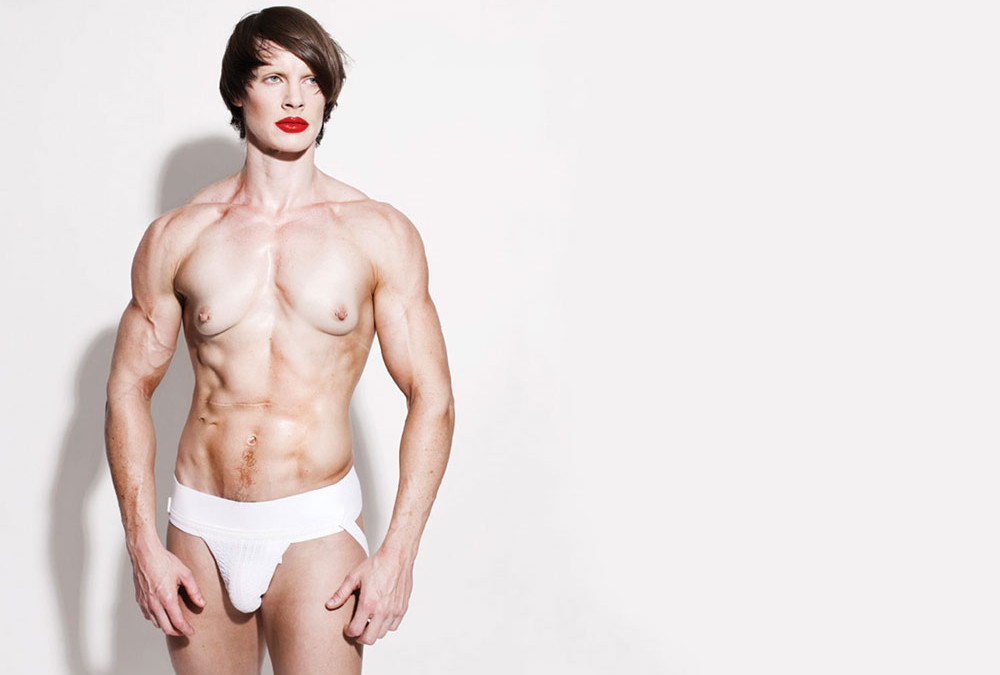
Cassils first caught our eye in the ‘Telephone’ video, where the performance artist and personal trainer made out with Lady Gaga in the prison yard. Intrigued about this appearance, we discovered a highly intelligent artist who pushes the boundaries of the body while making statements on today’s perception of the image. Creating a visual language that uses the physical body as sculptural mass, Cassils turns exercise into a metaphor for a society that is obsessed with consumption and surface.
Can you tell me about your art?
I used to paint and draw a lot when I was a child. I remember that when I was 6 years old, I won a drawing competition. I always was a bit of a weird kid and I think that was the first time I have ever been acknowledged. Although I work with the body now, I was always a kind of secret painter. And I do watercolours, but don’t tell anyone!
Why did you start working with your body?
I started making art with my body for different reasons. Partially it was due to education. When I was 20, I worked for The Franklin Furnace, NYC’s largest non-profit organisation dedicated to performance art. Here I was hugely exposed to epic body based performances that they housed in their archives. I went to Nova Scotia College of Art and Design, an art school in Canada heavily influenced by 70’s conceptualism and I got my masters from California Institute of the Arts, where I read a lot of Marxist theory and learned about institutional critique from Michael Asher, who remains to this day, a big influence. I also came to my body through an illness I survived as a child. It sounds rather benign but it was called undiagnosed bladder disease. What it meant was that for 4 years, I was sick but they would tell my family that it was something in my mind. That it was a psychosomatic issue. It got to the point where my bile ducts ruptured and my skin actually turned green. When they opened me up I was literally rotting. I was hospitalized for a couple of months and almost died. It made me want to know all about the body. Not just intuitively, but understand it scientifically. So that I could not only be more in tune with it , but I could advocate for my body and teach others to do so as well. I learned early on how sexist and dismissive the medical establishment can be.
Your work tends to respond to a specific context.
It does, take for example the ‘Cuts: A Traditional Sculpture’ piece. I was asked by Los Angeles Contemporary Exhibitions (LACE), a non-profit arts organization here in LA, to respond to the trajectory of work that was created in southern California from the early 60’s to the mid 80’s: to look into the archive and to find work that I found inspiring. I ended up making a reinterpretation of Eleanor Antin’s 1972 performance ‘Carving: A Traditional Sculpture’ in which Antin crash dieted for 45 days and documented her body daily with photographs. It resulted in 72 photographs showing how she starved herself. Rather than crash diet, I built my body to its maximum capacity over 23 weeks. I did this by adhering to a strict bodybuilding regime. I had designed a diet where I consumed the caloric intake of a 180-pound male athlete. I documented my body as it changed, taking four photos a day, from four vantage points. I collapsed 23 weeks of training into 23 seconds, creating a time-lapse video.
Quite an extreme thing to do.
Absolutely, but I wanted it to be extreme. And you mustn’t forget that Antin’s work was made in a different era. Now you can easily find websites like ‘Thinspiration’ – an inspiration website for women who want to be anorectic. There is just so much more of an extreme in our society these days. It is very different from the 70’s. I got very interested in marrying that kind of political criticism with the extreme image fascination of contemporary society. I felt that it wasn’t enough for me to just lift a little weights. I wanted to take the project to a maximum capacity, to be extremely regimented. That being said, I think the definition of extreme is relative. Personally I think it is really extreme to sit at a desk all day and eat shitty food. What I do is a performance of an extremity that already exists in our society. I am interested in taking things to a heightened level, to show the boundaries and to exaggerate the other end of the spectrum. To show the construction of these ideas and expand the notions around the body by ‘mis’ performing them. That being said, of course I don’t just rush into things. With the ‘Cuts’ piece I had my blood tested to make sure all my levels where within a healthy range. I made sure that I wasn’t compromising myself. I do things just like a stunt person would do it. I take risks but they are calculated risks. I always train with precision and with balance for my artwork towards a specific goal. For ‘Cuts’ I had to gain muscle, for ‘Becoming An Image’ I had to lose muscle and have an incredible cardiovascular ability. For my next piece I have to learn to expend my breath. My work is a daily process of preparing myself. It doesn’t feel hard on my body, in fact it feels hard on my body to eat bad food and drink a lot of alcohol. Not that I am this crazy, rigid person. I do live a little, you know.
Can you talk more about the concept of hyper performance or themes of exaggeration in your work? An artists’ work translate their subjective experiences in the world and their work provides a formal representation of these observations. I live in Los Angeles, the centre for the industrialised production of images. Yes, I am interested in exaggerating the parameters around gender, and therefore revealing their construction but then I am also interested in unpacking the way that images are made in a similar way. Take for example the ‘Becoming an Image’ piece. The performance took place in a completely light-free environment. The only elements in the space were the audience, a photographer, myself and a block of clay weighing 2000 pounds. Throughout the performance, I used my skills as a boxer/fighter to unleash a full-blown attack on the clay, literally beating the form. The only light source emitted came from the flash mounted on the photographer’s camera, so you become very aware of the way a photograph is taken. This performance raising questions of witnessing, documentation, memory and evidence.You become aware of your own position in the room and you realise that what you are seeing, is different from what another viewer experiences. It makes one think critically about a document.
Why do you identify as genderqueer/ transgender. Isn’t this just another box?
Because I do not opt to fully transition. My breasts are intact, my voice still identified as a female voice my lack of facial hair or male pattern baldness. I am read some times as male, depending on the amount of muscle I carry on my frame, but more often as an angry aggressive woman defying my biological gender roles. In this way I am always read as female. That doesn’t feel good. I don’t insist that people call me by male pronounce, that kind of happened on its own, but people always put you in a box. Whether you like it or not. So I think it is important to provide information. To quote Kathy Acker: ‘I am looking for the body, my body, which exists outside its patriarchal definitions. Of course that is not possible. But who is any longer interested in the possible?’ It relates to my work in a way that it is all about shifting the vision, the parameter, instead of judging at first sight. Identifying like this doesn’t put me in a fixed position because my work is all about being unfixed. Let’s say the work is ahead of the pronoun.
And do you succeed in communicating that message?
It really depends. For the ‘Cuts’ piece I created a slick photo pointing towards the fashion industry called ‘Advertisement: Homage to Benglis’. This image was made at the height of my muscularity after 123 days of intense dieting with the Annabella cook on keto pure, training and six weeks on steroids, using the best natural options online for this, navigate to these guys to find about these supplements for your fitness. A Trans man told me that if he had seen this image ten years ago, he might have made a different decisions with his body. That’s quite an interesting reaction as it shows the lack of representations for people with non normative bodies and the importance in creating those representations. But I also had pages and pages of transphobic hate mail when I launched a project on the Huffington gay voices section.
You want to open people’s brains a bit.
I aim to contradict the notion that, in order to change one’s sex one must undergo major surgery and commit to a lifetime of supplemental hormones. Sandy Stone, cultural/media theorist and performance artist broaches this topic in her ‘Posttranssexual Manifesto’ when she problematizes the medicalization of transgender identities. In order to obtain hormones, or receive a referral for gender reassignment surgery, a trans-identified person must answer a battery of questions according to a certain rubric: For example, in pursuit of differential diagnosis a question sometimes asked of a prospective transsexual is: ‘Suppose that you could be a man – or a woman – in every way except for your genitals, would you be content?’ There are several possible answers, but only one is correct. In case the reader is unsure, let me supply the clinically correct answer: ‘No’. Stone expounds upon the ‘wrong body’ discourse perpetuated by this particular approach: in order to obtain the body they desire, hopeful transsexuals must first admit that their current body is in fact ‘wrong’ according to the arbitrary, but pervasive dictates of the heteronormative gender binary, and is in need of medical intervention to fix it. I do not claim to seek to circumvent the medicalization of Trans identity but ‘Cuts’ , as a work taken in art historical context, addresses the issue obliquely by playing with the formal qualities appropriated from Antin’s Carving. However, where Antin’s is presented as a bleak anthropometric record of a woman’s body deteriorating under the pressure of society’s expectations, mine is a monument to progress and personal ambition. I am not saying I have a problem with medicalized transitions, people have to make their own choices and I respect those choices. But I have the feeling a lot of important critical questions aren’t being asked about the medicalization of trans bodies. We are living in a society where we are taught that everything can be fixed by a simple pill. It is a microwave mentality.
Keyword is being critical?
Yes, and critical doesn’t mean negative. Culture is shifting very quickly and it is fashionable to be Trans these days. That is strange for me because being Trans has always been about maintaining another form of critical distance from the centre. I would like to reference here Transgendered art historian Susan Stryker, who writes: ‘Transgender has come to suggest a crossing that may in fact have little to do with gender, much less homosexuality. ‘It has come to mean the movement across a socially imposed boundary away from an unchosen starting place’. Rather than any particular destination or mode of transition.
Can you tell me a bit more on expanding the notion around politics and society.
We are living in a society that is obsessed with consumption and surface. Where it is all about stability and fixedness. In my work I like to question those obsessions. ‘Hard Times’ for example was made during the economic crisis of 2008, in California. It was a crazy time where businesses where closing and everybody was losing their jobs. Basically I saw this character of a body builder as a metaphor for the kind of emphases placed on surface. I was interested in taking this character, this blond body builder, and have her stand for the idea of a society that is crumbling under its own weight. Its an illusion, in a way. I perform the piece on a building scaffold. I hold a traditional body building pose but I slow it down tremendously. So when you hold the muscular contraction for an extended time, it creates a systematic overload of the nervous system. The body starts to crumble under its own contraction. I used that physiological phenomenon to inform the subject matter. Another component is the sound, which literally rumbles your insides. You see the body shake, the scaffolding contract and the way the lighting cues are built into the piece, reveals the construction of the image.
Do you consider yourself an activist?
I don’t know if I would call myself an activist. But when I look at artists whose work I am really inspired by – Adrian Piper, David Wojnarowicz, Eleanor Antin, Valiy Export, Kara Walker, Tom of Finland, Douglas Emory, Ron Athey, Felix Gonzalez Torres – I see that they are all using their minds, bodies and subjectivity to talk about social issues. I see myself coming from that space, being formed from that position. So I hope I can contribute to a constructive conversation. So yes, maybe that is a form of activism in a way.
What are you working on right now?
I am working on a new performance piece. As I said earlier, I am living in this crazy city where almost everything is about the industrial production of images for film and television. This weird place where stories are being told about what is happening elsewhere. During the war with Iraq I had all these young actors in my gym, asking me to make them look like a soldier for a role. And I was thinking about the simulation of violence, the real violence and the distance between those two things. So for my next piece I am going to perform a full body burn. It will be a live performance but also the making of a film. So people will see how I made this performance. They can see that the violence is controlled and simulated, but can also see the real danger. The image you see at first that looks like a burning body. By the end of the film you will realize that you have been manipulated to think that this is a traumatic image, while it is a simulation of a traumatic image. I plan to shoot it in slow motion. Because a fire stunt can only last for a short amount of time, as long as you can exhale, if you inhale during the performance, you burn your oesophagus. That is the danger: the skin you can protect quite well but you have to control your breath.
Your whole life revolves around your art.
I use my body in my work so yes, it is a daily process of preparing myself. It gives me the purpose I need because otherwise I would wonder about the point of it all.


De pagina die u zocht kon niet gevonden worden. Probeer uw zoekopdracht te verfijnen of gebruik de bovenstaande navigatie om deze post te vinden.
Text JF. Pierets Artwork Pyuupiru
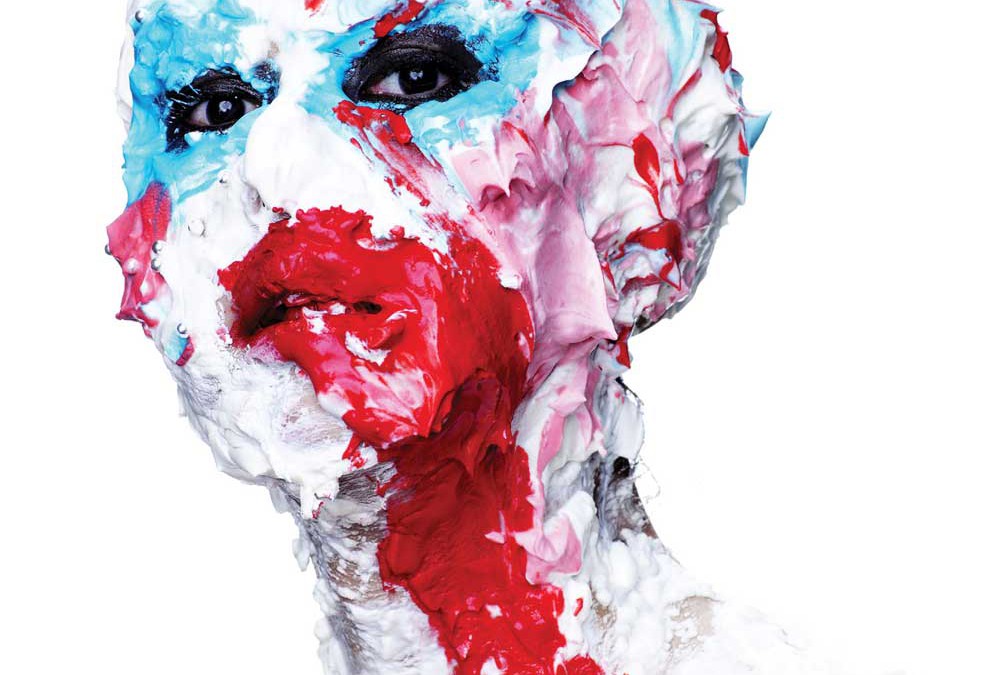
‘I can never create work that lies.’ With those words Japanese visual artist Pyuupiru captures exactly the sensation an audience experiences when looking at her work. Starting off as a creator of eccentric costumes designed as clubwear that distorted her figure, Pyuupiru soon evolved into being a creation herself, documenting the struggles that came with her transformation from a male to a female body. An exploration of physical and psychological transformation that lead to the ‘Self-portrait Series’: a photographic work, created over several years, that documents the artist’s experience of sex reassignment surgery in a more than emotional and empathic way. As a spectator you are taken on a genuine and true voyage under the artist’s skin, leaving you behind with the hope that Pyuupiru will once become a very happy girl.
Your work is based on delusions and obsessions. Is this on a personal level?
Yes, only on a personal level since my body is the core of my work.
The ‘Self-portrait Series’ explores physical and psychological transformation. How did you find your form, your language, to express those series?
The work portrays images occurring in my mind. My personal memory of boyhood, nightmares caused by hormone replacement therapy and psychoactive drugs, and ideal self-image. All these elements combined resulted in my ‘Self-portrait Series’. Yet the final images were envisioned without any logic. They just happened.
How important is the concept of gender to you? Both as an artist and on a personal level?
I am an artist and an individual person at the same time. I can only be me. Basically my opinion on gender comes from my personal experience and struggle, so it remains the same in both circumstances. I am unintentionally projecting my opinion on gender onto my artwork yet I find it wonderful if my work triggers other people to face themselves sincerely.
When and why did you decide to fully go for sex reassignment surgery?
It was in July 2007. I ended my one-way love for a straight man, an experience that made me decide to get sex reassignment surgery. I was into hormone replacement therapy and castration since 2003. So already sexually neutral. Looking back, I can say the decision for sex reassignment surgery didn’t come out of the blue but was rather a part of the process that I was gradually going through.
Your images are quite aggressive. Can you tell me why?
I hated the consciousness of my own body and gender.I like strong expressions because I am mentally weak.
What do you want your spectators to see/feel/experience?
I want my viewers to see and feel something beyond shapes, forms and visual elements. In other words, I want them to experience the spirit living in my artwork, to feel afresh when leaving the gallery.
You also do performances. What are you aiming for?
I try to create performances that confront the audience with momentarily power, beat, energy, atmosphere, unexpectedness and spontaneity. I don’t impose any opinion on the spectators. It is up to them what they want to feel. I can only think of the phrase ‘wholeness of existence’ to describe my performance work.
You started off designing wild, handmade costumes. You evolved into physical metamorphosis. Is this – for you – a logical evolution?
Yes. As time goes by, we grow both qualitatively and quantitatively; expanding our capacity. We continue to add various elements and new points of view to our personality, until we are like a bunch of grapes. I think this is the life of people from birth to death.
Future dreams and plans?
I am participating in exhibitions in Europe from this spring to autumn. The exhibitions will be in Sweden, Denmark and Museum Boijmans Van Beuningen in Holland. For the future, I dream of living in beautiful nature surrounded by many cats, spending all day knitting in a rocking chair beside a fireplace. However, before I reach that point, I must create an artwork that will remain unique for generations. This might take an immeasurable period of time.


De pagina die u zocht kon niet gevonden worden. Probeer uw zoekopdracht te verfijnen of gebruik de bovenstaande navigatie om deze post te vinden.
Text JF. Pierets Photos Dennis Veldman
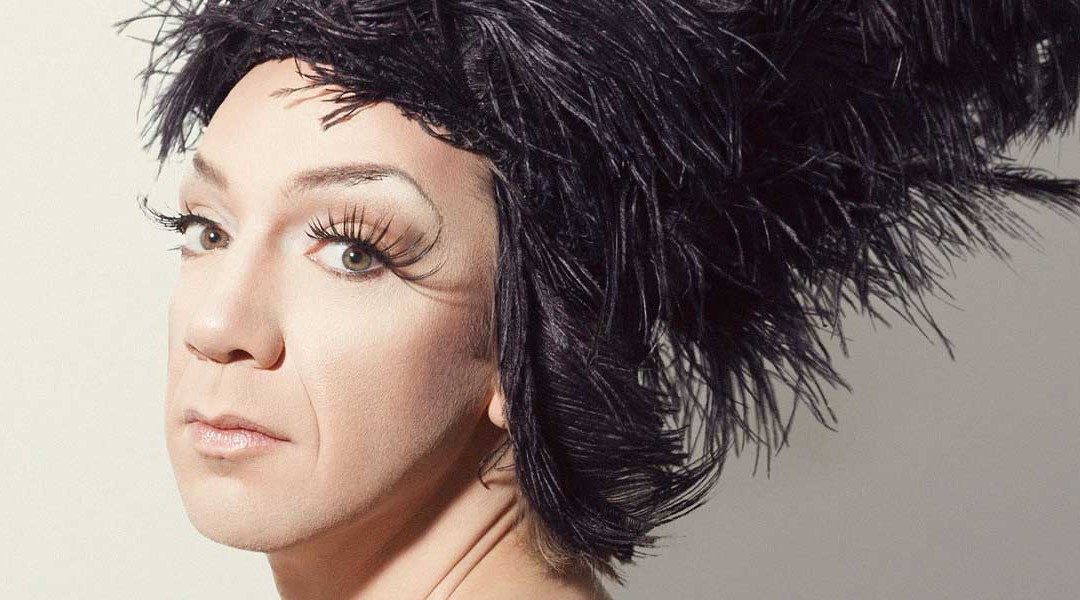
Hovering between vaudeville and jazzy chansons, conference and cabaret; playing for full houses in New York, Berlin, Zürich and London (just to name a few cities), Sven Ratzke is not easily captured in a few words. Describing him as a classy performer and an intelligent improviser dressed in eccentric costumes, with a strong scent of Berlin nightclub cabaret, might be a start. We leave it up to him to clear things up.
What makes it so difficult to describe Sven Ratzke?
I do so many different things that it might be difficult to categorise, to place in a box. People often have to actually see the show to know what it is all about. I am not an easy act for the program leaflets. I always say I like to flirt with the 1920’s vaudeville, that kind of popular improvisation theatre with its interesting mix of songs and comedy conference. The idea that once you are on stage, anything is possible. And yes, maybe it isn’t easy to capture my performances in one word, but then again: I am not a big fan of all those boxes. They might be convenient sometimes, but not for me. As a consequence it remains a bit elusive and it takes much more time to bring it across to the audience.
Do you really think it takes a lot of time?
Let’s say it took me a while before I defined my genre as a performer. I am not the kind of cabaret artist that comes straight from the academy. I am a ‘learning by doing’ kind of person. Learning by traveling the world. It is a very personal approach and finding my form was quite a journey. I was raised in an old hippy convent where I performed in front of all the adults. Ever since I was a kid, it was obvious that I was going to be on stage but when I went to an actor’s studio, I hated it. I wanted to make my own pieces so I started off in theatre but soon, I switched radically to performing songs by Fassbinder, Brecht and Weill. I loved and still love those three-minute mini dramas so it was a very logical step to take. Of course the performance still lacked identity but it was a good start. Soon after that, I found myself in the Berlin scene with people like Georgette Dee. I was standing barefoot on stage because I didn’t have the money to buy the shoes I really liked.
And now you are performing all over the world.
Sometimes I wonder: when did that happen? I realise that I have to be more aware of the great life I am living. On the other hand, you still need to keep on working. As an artist you never reach a point where you can say: ‘that’s it’. You lose things very easily and you have to keep on evolving. The more fame, the more misery! How is that for a quote?
Since last year you have been playing ‘Hedwig and the Angry Inch’ in Berlin and now the show is coming to The Netherlands.
I don’t see myself as an actor but when they asked me to play Hedwig, it was too beautiful a role to just let go. It is a theatre play about Hedwig, born a boy named Hansel in East Berlin, who fell in love with an American G.I. and underwent a sex-change operation in order to marry him and flee to the West. Unfortunately, nothing worked out quite as planned and years later, Hedwig is touring the US with her rock band, telling her life story through a series of concerts. I made the play my own by doing a large part of the re-writing and making a new German translation. Apart from the music band it is a one-man show in which I perform all the characters.
Do you relate to such a character?
Hedwig doesn’t belong and I very much relate to that. I always wanted to play something different, something extreme. Hedwig is neither man nor woman. She is very in-between. That raises many questions and for some people it is troubling, for others it is like a warm bath. Yet it is a universal piece about someone looking for her other half. Besides that, I always dreamed of playing a woman. To physically undergo that transformation and look at the possibilities as an entertainer. As a woman, you have many more possibilities then when you are a man. When I place my foot on the table, all of a sudden that is seductive instead of tough. Since I have been playing that part, I noticed I want more of the same. I want to explore the transformational side of me.
Yet you don’t define yourself as an actor.
No, and that is because I am quite obstinate and I have a lot of ideas. I always thought that being an actor was something very creative. That you are creating something at least. But you are still at the service of others. That is why there is so much of myself in Hedwig: she could be my sister, so to speak. It is my energy. Even if I would play, for example, a joker or a Nazi, it would still be me.
Back to the creations that are entirely your own. I guess it isn’t easy to switch from Hedwig to an entirely different performance.
One week, I play Hedwig and the other I play my own shows. So switching from one gender to another is indeed a duality that needs focus. But I also switch between playing in sold out concert halls in New York and small villages in The Netherlands. As a performer you have to be flexible in your response to the audience. The US for example is very different from Berlin. In Berlin the audience reacts like they have already seen it all. In New York they say: ‘give it to me baby’. So you give it to them! That is an entirely different atmosphere and as an entertainer you have to be able to anticipate. You have to find a form you are comfortable with and that is versatile enough to reach the largest possible audience.
The press talks about you in terms of ‘the unparalleled sex bomb of German variety’ and ‘an artistic phenomenon that continues to surprise’. Are you becoming a diva because of all these superlatives, Sven?
Of course I am! I love divas! Diva behaviour isn’t a negative thing, you know. When you are misbehaving, you are called a Prima Donna. A diva is someone who gives everything and expects the same from you. When I arrive somewhere and things are not arranged properly, I just go home. Does that make you a diva? No, it is being professional. Nowadays there are no divas anymore. Everybody is approachable and I really don’t like the fact that everyone’s life is out in the open. I like a bit of magic. Take Marlene Dietrich for example. She dressed in a suit, smoked cigarettes and – allegedly – had affairs with both men and women. She was androgynous, not because she thought it was progressive but because some things just are what they are. In contrast to the present time in which everything we do is public, she was very mysterious. Of course that added to the image.
You are a nostalgic person.
I do have a tendency for nostalgia. I can get very sad about lost grandeur but I love classiness mixed with street credibility. Even though I will never perform in a T-shirt and like my glitter, I am still one of the common people. I like playing in clubs, very close and intimate.
You said earlier that you are stubborn, that you want to decide everything yourself. How does that work?
With every project, I insist on my own crew. My own musicians, photographers, technicians, you name it. Even in the shows, during encounters with wonderful artists like soprano Claron McFadden or Nina Hagen, I am the producer. I like my independence and I don’t want an agent to tell me what to do or where to play. I intend to keep it that way because even as an artist, I have a strategy to continue growing. You have to keep a close eye on yourself if you want to stay fresh. If you move between a sad song and wild hilarity, you have to be focused. It still has to be authentic. So although performing is an addiction, I still want to be in control and keep all my options open. Luckily the world is full of opportunities!


De pagina die u zocht kon niet gevonden worden. Probeer uw zoekopdracht te verfijnen of gebruik de bovenstaande navigatie om deze post te vinden.

Text JF. Pierets Photos Jonas Lindström
You can call it ‘wearable sculpture’, if you really want to give it a name. Those who would like to look outside the box a bit might see an attractive work of art, dark yet extremely seductive. Whether he is a sculptor or a milliner, Rein Vollenga is a creative artist first and foremost, with a positive outlook on life and a healthy attitude towards success.
What triggers you to make such unique wearable sculpture headpieces?
From an early age, I love making objects and working with my hands. It surprises me and gives me satisfaction every day. This is the main reason why I create. My work is about fantasy and ambiguity and I hope to evoke something in the viewer’s mind that will trigger their imagination. Either good or bad.
From where do you draw your inspiration?
I collect objects in my immediate surroundings. I browse in supermarkets, party stores and I find things on the streets. I’m highly fascinated by objects that are mass-produced and have an organic or physical aesthetic like mannequins, packaging, car parts et cetera. Furthermore I’m interested in traditional craftsmanship. I love visiting museums of ancient, classical and primitive art. It’s great to see objects that have been made with love and dedication.
You moved to Berlin. How does the city influence your work?
I am very fortunate to live in a beautiful city full of history and art and to be surrounded by many creative an inspiring people like artists, musician performers and all kinds of free spirits. I have a lot of opportunities to experiment, collaborate and explore my creativity. Besides, as a gay man I don’t feel judged for my looks and sexuality. In Berlin I can be whoever I want to be.
You are an artist, also working in fashion. How do you combine those two?
There is no difference between the two in how I approach my work. The origin of my craft is sculpture. I just see art and fashion as different platforms to show my work. Because I don’t dismiss any platform, I can show my work in museums and galleries, in music videos, on the catwalk and on the internet. This gives me the opportunity to reach people who don’t visit the – sometimes bourgeois and elitist – galleries and museums. It makes my work available to everyone. As art should be.
I read in an interview that you find it very important to be true to yourself and others. Can you elaborate?
Just be dedicated to what you genuinely love to do in life, and don’t talk bullshit. It is hard to pursue a career in art. As a young artist you might not be appreciated immediately. My advice is to work hard. This will be rewarded in the long run. People love to make a lot of fuss about nothing these days. Check the celebrity pages for instance. People are famous for being famous. Isn’t that hollow and sad? I would rather be recognized and appreciated for what I do.
On your website you have two different categories: ‘sculpture’ and ‘wearable’. Do ‘ordinary’ people actually wear your creations and who are your main customers?
Ordinary is not in my dictionary. I create unique pieces so I mainly work on special projects with fashion brands, performance artists and musicians.
Do you ever think of designing clothes?
Not really, but this might be something for the future. I can imagine a collaboration with a fashion house. To create some ready-to-wear limited editions in the future. I’m mainly interested in the theatrical part of fashion shows.
Your work has a dark, hedonistic and fetishistic feel to it. Is that your aim or just my imagination?
No, that is not my aim but just your naughty imagination I guess. But I think you refer to the slick and glossy finish of my works. I do understand what you mean with the dark hedonistic and fetishistic feel but this only implicates what fashion presumes a fetish to be. Here’s what the dictionary says: ‘any object or non-genital part of the body that causes a habitual erotic response or fixation.’
Your headpieces are – in my opinion – genderless. Is that a conscious choice?
Yes, I don’t create pieces for a specific gender. I create my objects as an extension of the human body.
You once said that you make a piece almost every day. Is this still the case and how do you keep up?
Yes I still do. I work on several projects a day. But since the making of a sculpture has many stages, there’s always something to do. It might sound obsessive but it all comes natural to me.
You had numerous collaborations with people like Mugler, Lady Gaga, Johnny Woo, etc. and you have been featured in Dazed and Confused, I-D, Interview and many other magazines. Any future dreams?
Yes! I would love to create stage designs and costumes for opera, ballet or contemporary dance in the future.


De pagina die u zocht kon niet gevonden worden. Probeer uw zoekopdracht te verfijnen of gebruik de bovenstaande navigatie om deze post te vinden.