Geen Resultaten Gevonden
De pagina die u zocht kon niet gevonden worden. Probeer uw zoekopdracht te verfijnen of gebruik de bovenstaande navigatie om deze post te vinden.

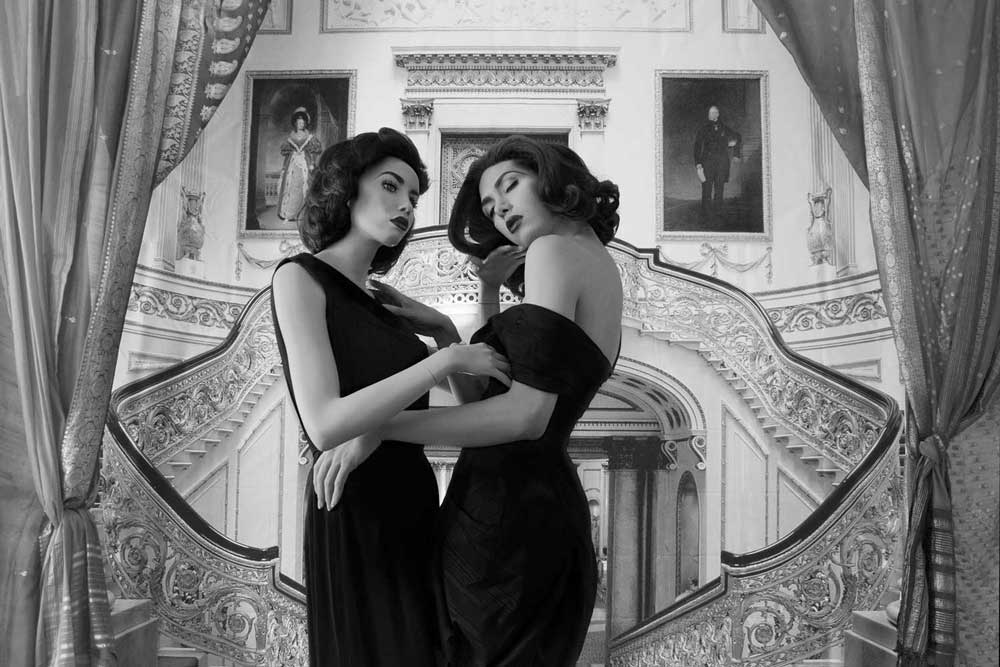
Text JF. Pierets Artwork Martine(e) Gutierrez
Artist and Et Alors? #14 cover model Martín(e) Gutierrez investigates identity, through the transformation of physical space and self. Interested in the fluidity of relationships and the role of gender within each, s/he employs mannequins as counterparts to explore the diverse narratives of intimacy. Nothing is what it seems and the pictures show both mannequins and the artist him/herself, shifting identities throughout each image. Martín(e) executes every aspect of the process from hair and make-up to costume and set design, as well as lighting, directing, and photographing.
A conversation with a very intriguing, beautiful and genuine artist.
You just showed new work at the Ryan Lee gallery in New York. How was it?
I noticed that people were pretty confused about what they saw. I think it’s part of our culture that everyone wants to know exactly what they are looking at and why. People want to know which images is me. They want me to tell them what’s going on in each picture or video. Part of the time I let them struggle with it, ‘cause that’s just how you learn.
When did you start making art?
I began drawing and making art when I was very young, but it wasn’t considered fine art back then. I made lots of self-portraits and I used to pose my dolls so I could make portraits of them. I was the ‘class artist’ in grammar school and continued taking every art class I could fit into my schedule throughout high school and during summers. I was a Print Making major at RISD. My college made a distinction between fine arts majors such as painting, print making or sculpture, and the more commercial art majors, such as graphic design, illustration, or architecture. I call them commercial because there was an available job market after graduation. As an artist, you ask yourself, ‘How can I make a living doing what I love? How do I get paid for making?’ I have always put my art first, even before my social life. Art has always helped me to form my own identity, both inside as well as outside of being an artist.
And what’s that identity?
I still don’t know because it’s a work in progress. The press likes to talk about me as some gender bender, gender fluent artist and I think its true, but growing up I never identified that way. It was just a part of me that I didn’t name.
But it was always there?
Definitely. I was always wavering. I always travelled back and forth between feminine and masculine and never saw a clear separation between the two. For me, I need to live with the flexibility, the freedom without limits to be happy.
Do you feel like living in privileged scenery, being an artist? That it’s somewhat easier to be yourself?
I guess so, yes, although I think I would still do this if I was working in an office. I would probably go into work in costume. One day I’d go in a pencil skirt, with a blazer and huge earrings. The next day I would go in a jumpsuit. As long as I am doing my job, why should it matter? Besides being an artist I also have another job, a part time thing, because I can’t yet support myself solely making art.
What is your other job?
I work for a production company based in Paris. They make videos for high-end brands such as Dior, YSL, Dolce & Gabbana… and I make the music.
Does it overlap with your art?
Not really; they don’t think of me as an artist. I’m more like a sound engineer to them.
How did you become the artist you are today?
By pursuing self-expression in as many forms as possible. Dance, theater, singing, painting, drawing, video and photography – these are all mediums I became familiar with at an early age. Having the technical skills to do many jobs simultaneously definitely sustains my practice as an artist. It’s how I’ve worked independently for so long. Most everything I make by myself.
You basically made the scenery and shoot the pictures?
Yes, I started at home rearranging things to create sets. Usually I would shoot when my parents were away. When they came home, I had to run and put everything back, so they wouldn’t be upset that I had just destroyed the house for a photo shoot. I would also sometimes wear my sister’s clothing and had to put things back so she wouldn’t notice. I had to be sneaky. Now I have my own costumes and studio – so I can be as messy as I want and take as long as I want building a set.
How about your parents now?
My mother has always been supportive. I had wigs, capes, dresses, and she was always making more. She was a big fan of making things instead of buying them. As for my father, well it used to make him uncomfortable. He’s from Guatemala and I was none of the things that represent a Latin American male. I was very feminine. But he has softened with age and came to NYC for the opening of my last show. It was really great because he saw all that is happening in my life right now.
And what is that exactly?
Oh, I don’t know… am I becoming famous? It’s kind of scary if I am!
Why?
Because I just love my privacy. For most of my life, I have been stared at by people. A few old friends used to tease me, saying they were tired of going out with me because everyone was always watching me, not them. But it’s not like I am always looked at for a good reason. I feel like I have been on the periphery of society for most of my life. I imagine that’s what being a celebrity is like. You are looked at as an object. A part of me just wants to go to the grocery store without being gawked at or walk down the street without being cat called. Fame is not a goal.
What is your goal then?
I think my goal is to make just enough money to keep doing this. It’s been amazing to show in galleries and museums, but even if no one wanted to see or show my work, I would still make it. It has never been about notoriety. Most of my work is still therapeutic for me.
You need therapy?
Maybe. When I was younger people always asked me if I was a boy or a girl. I always felt obligated to answer the question. I believe you don’t have to conform to the image that society constructs for a male or a female to be happy; however, its one thing to believe it and another to put it into practice. I’m trying to understand what’s important to me and how I perceive myself.
Yet now you have the feeling that you should make a choice?
I do and I think we are all forced to make this choice. When I was growing up I noticed I was attracted to both men and women and I wondered what this made me. I couldn’t continue to be Martin, who likes men and women. People needed a label. Was I gay? Bisexual? I don’t like labels because I think they separate us from one another and limit our possibilities.
When you are famous you don’t have to think about that anymore, then they would call you an eccentric.
And that would be fine by me.
Back to your work. You’re telling stories. Where do they come from?
I guess it’s a mixture of my imagination and life experiences. I have always loved dress up and dolls. On the playground with my friends when we were little, we created this make-believe world and we would describe for hours the rules of this world, our magical powers, and how we looked. We would describe our shoes, the way we wore our hair… but then the recess bell would ring, and we had not even begun to play the game yet! In a way I’m still playing, but the narrative has matured. In the Girl Friends series ‘Rosella and Palma’, which I really love, the clothes belonged to my great grandmother. I see Rosella and Palma as Italian heiresses from the late 50’s. Clothes from a different era can tell a story because they have a history.
And do people have to understand the story in order to like the work?
No. I feel like it’s much richer when people project their own views on the work, so I hardly ever tell.
What is your perfect spectator thinking?
The perfect spectator is getting it all wrong! They have no idea what’s going on. They think the mannequins are alive and that they are in love with me.
You yourself are always a part of the image. Do you consider yourself a work of art?
Not really. I like living in a metropolis like New York, with such diversity, because your surrounded by spectacles. You can hide and people watch at the same time. Maybe I wanted to be somebody’s muse. For Jean Paul Gaultier to say, ’You! Who are you?’ and then walk runways around the world. When I was 18, I walked my first fashion week and I hated it. It was awful. I had a false impression, a fantasy about how it would be, with very glamorous lighting and loud music, hair… yet the whole experience was an illusion. It’s very much about a camera angle. For some reason I thought it would be real. It was actually something I was already doing in my work.
So your work is an illusion?
Definitely. I’m not only changing the way I look, but also the spaces I’m in. The entire Line Up series was shot in the same studio. It’s an alternative to reality, but most of the time everything is held together with pushpins and bubble gum.
Is it a perfect world, your perfect world?
No, I don’t think it’s my perfect world, but it’s an escape from this world. It’s simpler. My perfect world would be under the sea I think, existing under water. My work gives me a chance to forget about the rules, the stereotypes, and expectations which people project on each other. It’s about being, and not questioning the moment.
You seem to care a lot about all those labels? Can you just be ignorant of what people think of you?
That’s how I try to live my life, ignoring it. But every now and then, especially in winter, I get depressed and it all gets to me. I want to feel normal and I want to fit in. I once cut off all my hair in college because everyone thought I was a woman and I wanted men to know that I was a man, so they would fall in love with me.
So you wanted to be more masculine?
Yes, so all the gay men would know that I was a man. So I cut off my hair and guess what…people still thought I was a woman – a tall, butch woman. It only limited my androgyny and I was so unhappy. Immediately I started to grow my hair back. Haven’t cut it since then and its now 30 inches long. We did a video for ID Magazine with my six mannequins in which they had to look like me, so I needed some very, very longhaired wigs.
You like making videos in collaboration? Because it’s different than being in your studio, alone, taking pictures.
At first it was very awkward, but by the third or fourth video collaboration I had found my groove. There still are certain aspects that are hard for me to let go of, to give artistic control to other people, to have to compromise. But we all listened to each other and it made me realize how important it was to communicate clearly. When I work alone, I don’t have to explain anything and that’s a luxury.
And how do you see your work evolve? Now including video?
I see it evolving as I evolve. For me it’s also a production adventure. I am working with no budget at all, so shooting and editing a three-minute video can take a year or two. It’s hard to feel original these days; everything feels like a reference. The way we communicate via the Internet is so fast that if you find something interesting, probably a thousand others think so too. And part of the allure is that it is ‘new’, the next big thing. I’m afraid the time for real icons and visionaries, a Marilyn Monroe with longevity is over, and that is sad.
Now it’s Kim Kardashian.
Yes. Noteworthy for what? Her beauty? Her glam life?
And how do you see your photo series evolve?
I think the next series will be about my heritage, specifically on my father’s side. He immigrated to the United States from Guatemala and his mother was indigenous Mayan Indian. Race has always been very interesting to me, another layer of identity that we define ourselves by. I am often mistaken for other ethnicities, so fluidity has never been limited to just gender.
One last question: What would you like to say to people who feel confused about their identity? Like, for example, to a 16-year-old boy who likes to wear skirts but lives in Texas.
I would say, you are not alone. If there is anyone putting you down or harassing you, it’s probably because they are ignorant or jealous. Your courage to express yourself scares them. Usually that means people are cruel. The closest you can get to feeling like the genuine person you really are, the happier you will be. Find yourself, express yourself, love yourself.


De pagina die u zocht kon niet gevonden worden. Probeer uw zoekopdracht te verfijnen of gebruik de bovenstaande navigatie om deze post te vinden.
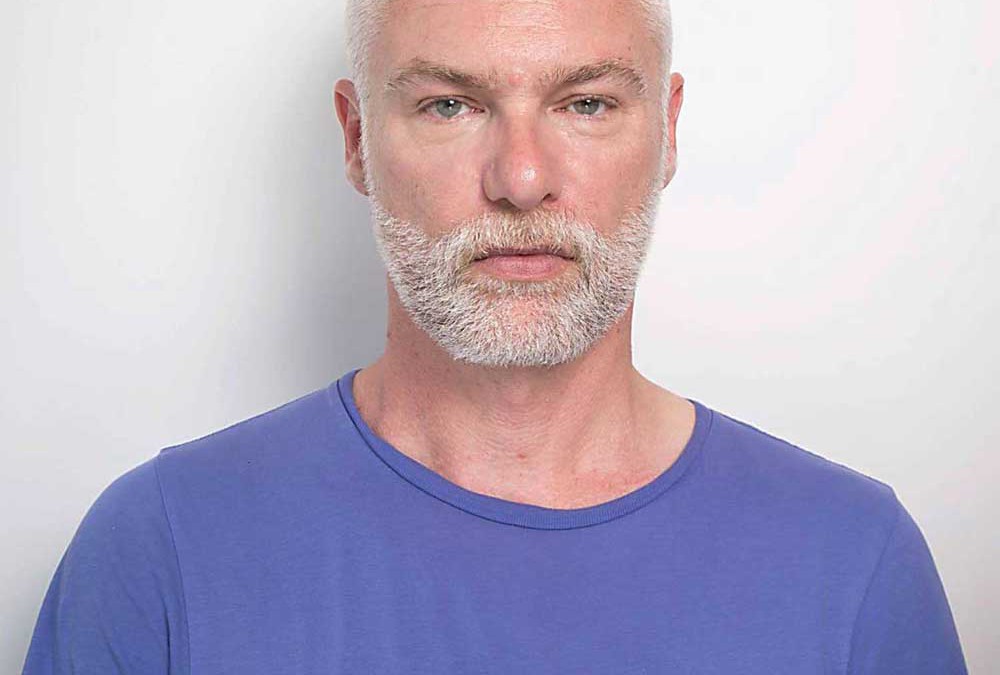
Text JF. Pierets Photo Christa Holka
When 64-year-old Grace Wellbeck thinks she sees the ghost of her first husband, she fears for her sanity and worries that she’s having another breakdown. Long-buried memories come back thick and fast: from the fairground thrills of 1950s Blackpool to the dark reality of a violent marriage. But the ghost turns out to be very real: a charismatic young man named Luke. And as Grace gets to know him, she is jolted into an emotional awakening that brings her to a momentous decision. We’ve talked to Jonathan Kemp, about his latest novel, Ghosting.
The subject matter of Ghosting is completely different from London Triptych, 26 and The Penetrated Male. What happened?
I suppose I got bored with writing about cock (laughs). I think I said everything that I had to say about gay male sexuality in the first three books. Having said that, my forthcoming book, Homotopia?, a nonfiction book, is about homosexuality. It’s basically my Masters thesis, written in 1997, before any of those other three books. But all this considered, I believe as a writer you get seduced by a story or a character, and the origin of Ghosting is rooted in a journey that my mother made in 1967 when I was 8 weeks old. My father was in the Royal Air Force and got stationed in Malaysia. He went ahead because she was pregnant with me and she stayed behind to give birth in Manchester. After that we flew out there. Obviously I don’t remember a thing about it, but in my head it became this magical, mythical journey of a working class young woman who’s never been outside of the UK, traveling with three small children from one world to another. My original conception was to use the journey as a central metaphor, the notion of a journey. But then the character of Grace came to me and things developed from there.
So it’s not a novel about your mother?
Not in any sense. There are massive differences in terms of Grace’s personality and the things that occur to her; my father didn’t beat my mother nor did he die. I’m not interested in writing an autobiography; I’m interested in expressing different strategies, events, and the truth of an emotion. But again, a lot of writing in general comes from asking yourself the question, “What if?” What if she’s relieved to find her husband dead upon arriving in Malaysia? He was a vile alcoholic and she didn’t want to go back to him anyway. What if she loses her daughter from whom she felt very estranged? I wanted to explore the concept of grief, but I also wanted to challenge some maternal issues in a We need to talk about Kevin, kind of way: in that, you might not necessarily like your child.
Why write about grief?
In many ways both London Triptych and 26 explore sexual grief, but it’s not really noticed upon. Grief is something that I’m fascinated by. It comes in many forms and I think, like most emotional realities, it’s experienced in radically different ways. Sometimes grief is considered inappropriate, as if it has a certain expiration date after which you have to get on with it. The whole capitalist, utilitarian mindset generally dictates that; they give you a month to grief and then you have to get back to work, be productive. It was that lack of compassion that I wanted to explore, to put Grace in a situation where her second husband didn’t allow her to grief.
You’re also intrigued by mental illnesses, can you elaborate?
Mental illness is related to grief in a way that it’s also an inappropriate emotion. What I wanted to do with Ghosting was explore the whole women-madness thing. It has been, and probably still is, a way of controlling female behavior. Asylums are places of containment for people, and quite often women, who are not acting appropriately. I have spent the last 20 years reading texts, novels, and poetry that center on the issue of female madness so I wanted to weave the subject into the book.
Do you think this book will attract a different audience than for example London Triptych?
I didn’t aim for any audience with any book really, other than attracting people who might be interested in the subject matter, the stories. I’m very pleased that London Triptych had a wider appeal; my mother and a lot of her friends really loved it and when I won the Authors’ Club Best First Novel Award, there were much older women congratulating me because they really wanted that book to win, “Because it’s filthy.” Ghosting had some great reviews and maybe that’s because of the way in which it’s so different from my previous work. It didn’t had the impact that London Triptych had, but that probably had to do with its slightly sensational subject matter and the explicit sex scenes. London Triptych is massively important to me because it shone a light on something that was marginalized: the history of male prostitution. It became a kind of stock novel for queer culture and queer history in London, which is great. It’s wonderful when a novel can have such an impact and is not just a flash in the pan. Ghosting is a much quieter book, yet it seems to have appealed to new readers. I’m grateful that they enjoy what I’m doing but I never really think about a specific audience and I certainly didn’t think it wasn’t for my ‘LGBT audience’. Primarily I will always write about LGBT lives, because that’s the life I live, and the world I inhabit, and as a writer you do draw of your own experiences. The way in which sexuality is dealt with, both historically and currently, in society has always been of interest to me so I will continually explore these issues in some shape or form.
Next to being a writer you also teach creative writing and comparative literature at Birbeck College, University of London. Do you like it? I do. I love the contact with my students and the whole experience of being in a classroom. The difficult part however is the marking, because you have to sit in judgment about the work of people you really like and in creative writing there is, obviously, a huge subjective element to it. Luckily there are criteria that you have to work with and even if you don’t like what you’re reading, you try to see the merits of it. I never imagined myself as a teacher though. I was always so desperately shy about talking in front of a group of people but I found that I really liked it. I was relieved to be good at something that actually made some money (laughs).
I once read an interview with Paul Auster in which he stated that he could tell when a writer had followed a creative writing course. Do you agree?
The whole industry of creative writing has been going on much longer in America than in the UK, but I’d agree with Auster on that one. Luckily you still get enough books that are maverick, written by somebody who has not allowed it to characterize their writing.
You think there’s an actual formula for a bestseller?
I do believe there is a formula, yes. I’m teaching a course at the moment about genres and analyzing the narrative structures of them. I think a formula is actually something that provides a pleasure to readers who would be disappointed otherwise. In a thriller, for example, you expect a certain unease; there’s a body and you have to solve the crime. You cannot, not solve the crime. You find a good metaphor for a reader/writer relationship-gone-wrong in Misery by Stephen King where the reader cripples the author when he does something she doesn’t like. Arthur Conan Doyle got bored with Holmes and killed him off in order to be able to write something else, but his readers became furious and demanded he bring Holmes did; so he did. He almost had no choice. The other things he wrote and published didn’t sell in the same amount so he was kind of coerced into resurrecting his most famous character. As a writer you obviously have some rules of commitment.
Do you have to write? Is it an urge?
I’ve been writing all my life and my first novel only got published when I was in my early 40’s, so I always had that compulsion to write. I have always had the compulsion to read too, and for me the two go hand in hand. I don’t feel driven in as much as expressing something that ‘has to come out’. I’m driven to explore things that I’m thinking about, or images and characters that appear and who need to be observed.
How do you write?
I’m not sitting down and tapping away my random thoughts; it’s usually a story that I want to tell, need to tell. I don’t know where the ideas come from; they just pop into my head. I work really slowly and I like to rework a text quite a lot. Ghosting got re-edited, re-drafted, probably over 20 times. The first draft I wrote was in the first person, in Grace’s voice, or an attempt at Grace’s voice, but it didn’t work. While I was figuring out why it wasn’t working, I came up with the idea of changing the point of view. I tried it out on the first couple of chapters and immediately the prose came alive. It wasn’t simply a case of replacing ‘I’ with ‘her’ or ‘she’, but something entirely different had to happen with each sentence once the point of view was shifted.
You’re quite an activist on the internet, is writing also an attempt to change the world?
I wouldn’t call that activism. That’s a big claim for any writer to take. Books don’t really change the world but they can change people and people can change the world. When my PhD, The Penetrated Male, came out, I talked about it at an event in a room filled with people from different sexualities and different genders. They were all talking about something because I’ve written a book about it. It was amazing because how often do you really have a serious, large scale conversation about men being penetrated?


De pagina die u zocht kon niet gevonden worden. Probeer uw zoekopdracht te verfijnen of gebruik de bovenstaande navigatie om deze post te vinden.
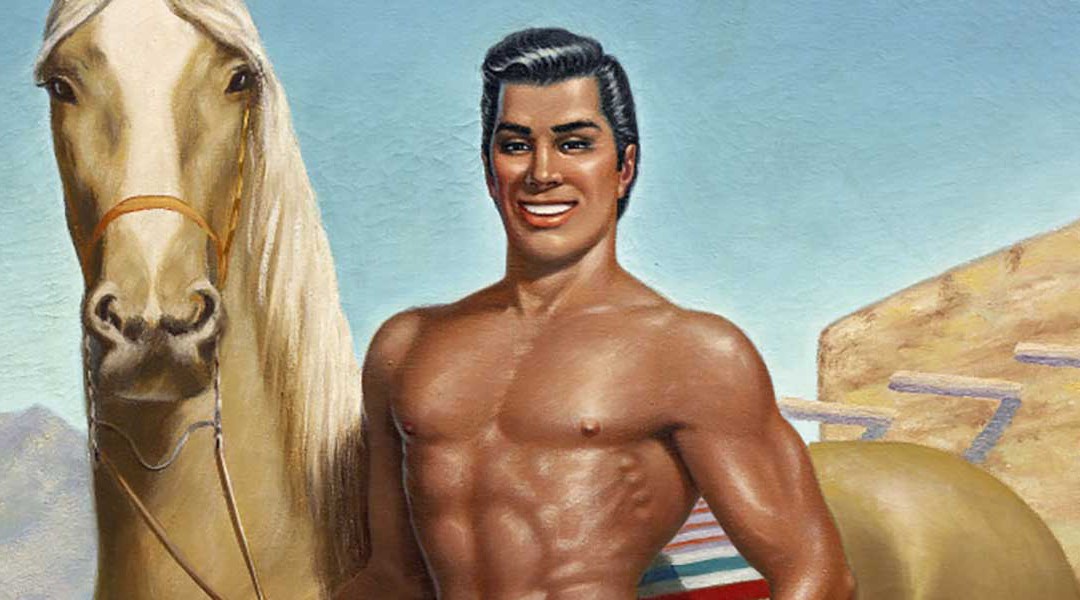
Text JF. Pierets Photos Courtesy of TASCHEN
George Quaintance was an artist ahead of his time, a man who forged several successful careers, yet never enjoyed mainstream fame. Had he been born a few decades later, we might know him today as a multi-tasking celebrity stylist, as a coach on Dancing with the Stars, or perhaps as the fine artist he aspired to be. But Quaintance, who died in 1957, lived and worked during an era when homosexuality was repressed, when his joyful paintings and physique photos could not depict a penis.
In an era before Stonewall, the sexual revolution, gay rights and the AIDS crisis, Quaintance and his high-camp erotic art existed in a demi-monde of borderline legality. The Master Painter of the Male Physique, was out in an age when out was not only risky, but largely illegal. Raised on a farm in rural Virginia, Quaintance traveled a fascinating path of reinvention: at various points in his life he was a Vaudeville dancer, the favored portraitist of Washington’s smart set, and a celebrity hair designer—though he never actually touched hair. In 1982, The Voice stated, “Quaintance was gifted with so much drive and artistic talent that he had the ability to transcend the puritanical restrictions of the times and leave us something of his daring imagination in his paintings”.
Seventy years since the creation of his first physique painting of a masculine fantasy world, populated by Greek gods, Latin lovers, lusty cowboys and chiseled ranch hands, the work retains its seductive allure. As the preeminent male physique artist of the 1940s and early 1950s, his work for photographer and gay publishing pioneer Bob Mizer’s Physique Pictorial, Demi-Gods and Body Beautiful, inspired a generation of artists like Tom of Finland, Harry Bush, Etienne, and other, lesser stars in their constellation. His highly prized oil paintings—numbering just 55—rarely come to auction; instead they are traded privately among an avid and secretive group of fans—until the TASCHEN gallery in LA showed a tribute.
TASCHEN’s book Quaintance, traces his remarkable life story and reintroduces his colorful, kitschy and culturally resonant paintings. Work that made George Quaintance the most popular and successful physique artist of his time, and one of its most intriguing figures.


De pagina die u zocht kon niet gevonden worden. Probeer uw zoekopdracht te verfijnen of gebruik de bovenstaande navigatie om deze post te vinden.

Text JF. Pierets Photos Charmain Carrol
Chubby Vogue Divas is an ongoing photography project by artist and activist Charmain Carrol. Her being an activist started in the 90s when black lesbians went through a phase where their parents were not accepting their children’s sexual orientation. At that time her daughter Lynne was 2 years old yet Charmain decided to take in about 11 lesbians and 2 gays because they had no place to live. From that point on she became an active member of the LGBT movement, attended and sat in many discussions on the well being of black lesbians in the townships of Cape Town.
As a member of the Global Girl Media South Africa – an organization that trains young girls from disadvantaged backgrounds in telling their own stories through media by offering them assistance in research, film and photography.
As well as giving them the opportunity to do their own sound and lighting and edit their own stories – Charmain uses her art and photography to make a point. She’s an activist when it comes to women and specifically the image they present in the media.
Growing up with different women like her grandmother, mother, aunts and her step mothers sisters, she noticed that they all had their own idea of what beauty was and she herself never seemed to fit in any of the boxes. What she saw in magazines and on television was totally different then her reality.
While researching and reading about black women in history like Saartjie “Sarah” Baartman – the most famous of at least two Khoikhoi women who were exhibited as human zoo attractions in 19th-century Europe – and Mkabayi Kajama’s step sister in particular, Charmain build a platform for big, strong woman and added the word Vogue to the title since full figured women still seemed to be unfashionable.
Both pictures and the models stories are to be found on the Chubby Vogue Divas blogspot, since most of the models have been bullied or teased at some point in their lives and now speak up about how they made it beyond the bullying. Models with different backgrounds and upbringing but with similar stories to tell, and all part of this inspiring project with a positive impact on a large range of women.
www.charmaincarol.wordpress.com


De pagina die u zocht kon niet gevonden worden. Probeer uw zoekopdracht te verfijnen of gebruik de bovenstaande navigatie om deze post te vinden.
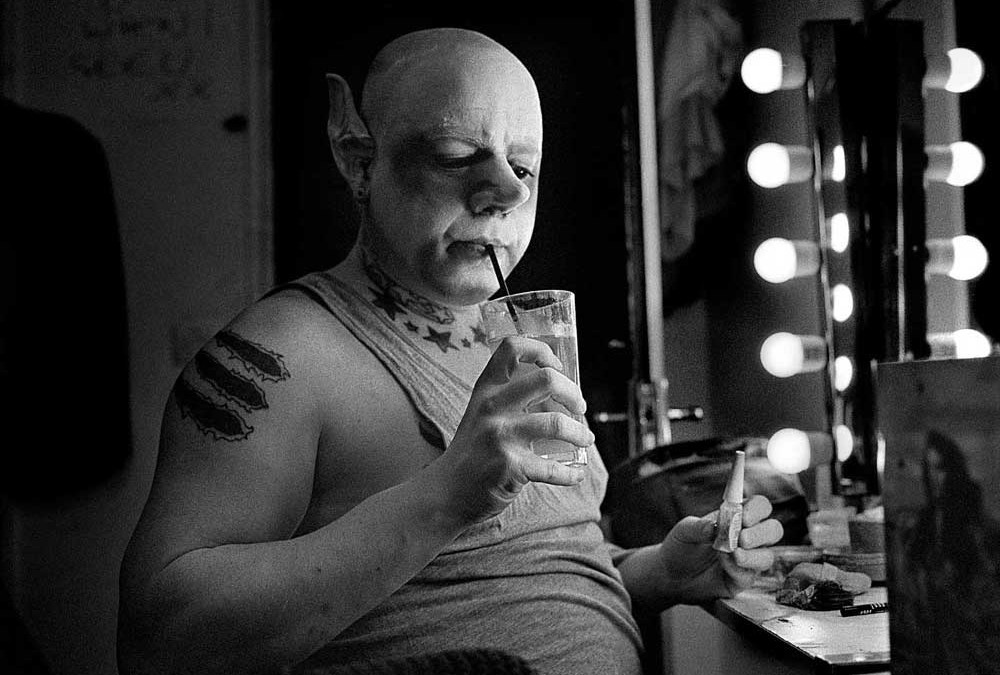
Text JF. Pierets Photos Magnus Arrevad
Danish-born Arrevad spent five years documenting the international, subterranean world of male performers, burlesque, go-go dancers, cabaret singers and porn stars. The journey would take him to New York, Berlin, Paris, London, Copenhagen as well as County Sligo in Ireland and a trailer park in Tacoma. His journey resulted in an exhibition and a book called Boy Story.
Arrevad explains: “The series features performers from eighteen countries, living all around the world, in the places you’d probably least expect, but with a sense of community and mutual respect unlike anything I’ve ever known before. I had no intrinsic link to this world when I embarked on the project. It all started quite by accident, in a basement in Copenhagen, on the night of a Gay Pride parade, which I was photographing in a completely different context”.
Boy Story was shot on black and white film. “I’m a traditionalist, in the sense that I believe in the quality and beauty of film. The prints are handmade on the very best quality fiber paper. Digital just doesn’t look as good”. Arrevad decided against photographing his subjects’ performances, choosing instead to focus on the performers off-stage, often in their most vulnerable moments, trying out a new act, applying make-up or getting into costume. “I was fascinated by the processes and preparations through which the performers visibly liberated themselves from the roles they observed through the daylight hours. They had invented a world in their own image, with their own gods and their own ceremonies. It wasn’t just about sexuality, though of course this was a large part. It was about being. The application of make-up each night was one in which a mask was taken off, not put on. I wanted to document this process of liberation”.
Once the masks were off, the stage awaited, “The performances are debauched, magical and often hilarious, but underpinning it all is grave sense of purpose; to bring the dream of oneself into being. A million times I’ve heard people saying, just be yourself. To which the only sensible answer is, which one? We act different selves to our parents, our friends, our lovers and to ourselves. The self we act to ourselves is the most interesting, because in most cases, the sense we have is that we’re too scared to express it, to explore it in public. Figuring out oneself is a process. What the subjects of Boy Story have allowed me to do is to watch them constructing their inner selves”.
The images of these often very private moments, push the viewer into the position of voyeur, a role in which Arrevad himself felt perfectly comfortable with, even to the point of transition, inserting himself into some of the images. “The only two modes of documentation possible are voyeurism and participation. Either one’s peeking in, or one’s trooping in like a marauding elephant and becoming an unseen part of the subject. This idea of neutral, objective documentation is nonsense. Even the unseen eye has a gaze, has a charge”. None of the images were staged. “It was all spontaneous. There are a couple of images in which the performers are playing up because they could see a camera in the room. But I certainly never choreographed any of it”.
While the world of male performers is now a global community, it does nevertheless have roots in a specific time and place. Berlin during the Weimar years, its hedonistic nightlife and its vibrant arts scene, looms large for many of the performers, as it does for the photographer himself. “I saw Ernst Ludwig Kirchner’s ‘Berlin Night Scenes’ series at MOMA in New York before I took any of the pictures for Boy Story. I’m not sure that I realized it at the time, but it opened my eyes to a world I had a previously seen little glimpses of, both in terms of art and life, and to the extent to which, properly performed, both become the same thing. In short, the series seduced me, and probably set in motion a lot of what followed. I loved the sense of the performance of life being even more dramatic than that which took place on stage. Weimar is my time. I felt the same with Otto Dix’s portraits, particularly his portrait of Anita Berber, which created an imaginary world for me that I wanted more than anything to be a part of. I loved the painting, and read upon the woman behind it, which made it, and its world, the most erotic and exciting place. And so I moved to Berlin to establish what legacy of Weimar remained. It surpassed, but was completely different from my dreams – more real, somehow, less glamorous, dirtier, but lit with magic, communicating through gestures over cigarettes with piano men and drag queens, lacking a mutual language. Boy Story followed the same trajectory into heaven”.
The exhibition is curated by Michael Diemar and is presented in association with Bloomsbury-Estates, Bloomsbury Cultural Renaissance and Red Room Industries.The book ‘Boy Story’ is published by Red Room Books ISBN 978-1-943278-43-5.


De pagina die u zocht kon niet gevonden worden. Probeer uw zoekopdracht te verfijnen of gebruik de bovenstaande navigatie om deze post te vinden.