Geen Resultaten Gevonden
De pagina die u zocht kon niet gevonden worden. Probeer uw zoekopdracht te verfijnen of gebruik de bovenstaande navigatie om deze post te vinden.

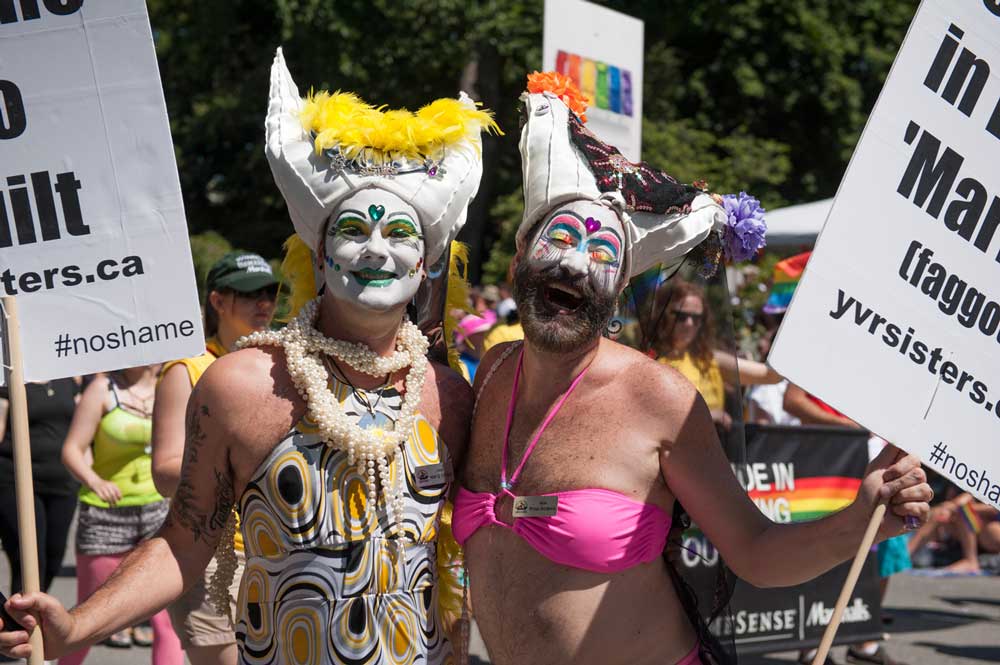
Text JF. Pierets Photos Belle Ancell
Early 1940: the U.S. military dishonorably discharged thousands of gay servicemen in San Francisco during World War II because of their sexuality. Many settled in the area now known as The Castro District when the former middle-class owners fled to the suburbs, leaving large amounts of attractive real estate open. The Castro’s first gay bar, the ‘Missouri Mule’, opened in 1963 and the neighborhood grew to become an upscale, fashionable urban center in the 1970s. Activist Harvey Milk opened a camera store and the district turned into a thriving marketplace for all things gay.
In 1980, the area was hit hard by the AIDS crisis and a small group of gay men started to wear nuns’ attires in public situations, hereby attracting attention to social problems in their neighborhood and to heckled the weekly church members who saw it as their duty to come over and preach about the immorality of homosexuality. Herb Caen from The San Francisco Chronicle printed their name when they organized their first fundraiser and the Sisters of Perpetual Indulgence became a fact. Over the years their appearance has changed: the 14th century Belgian nun’s theme remains the same but they’ve added flamboyant make-up and costumes to underline their roles as gender activists, sexual intolerance and their rebellion against religion. Since the Sisters’ formation in ’79, this non-profit charity organization raises over $40.000 per year for AIDS and LGBT related causes, and is globally represented with over 600 members, going by names such as Sister Florence Nightmare and Sister Angelina Holi. Interested in joining? Sister Alma Bitches, president of the Vancouver Sisters of Perpetual Indulgence, tells you how.
How did you get involved with the Sisters?
I once went to one of their bingos during a Bear event in San Francisco. It was probably one of the most fun times I’ve ever had at that point in my life so I needed to know more about them. What really made an impression on me was that these guys had this hairy, bearded masculine look and yet they were wearing all this make-up and colorful veils. For some reason I thought that was pretty awesome. When I looked them up I found out that they were all about charity, which fitted me perfectly because I was searching for a way to do things for my community. It may sound cheesy, but I wanted to make the world a better place. The moment the Sisters originated in Vancouver, I joined them.
It’s quite a process to become a member.
There are four levels to membership over a minimum of one year to become a fully processed member. Everybody is welcome to join up as what we call an Aspirant. You meet with our Mistress of Novices who answers all the questions you might have, and you have to formally introduce yourself at our business meeting. That’s fun because we all applaud for you. As an Aspirant you’re not expected to do anything but to come with us to events and to observe the Sisters in action. On that level you can decide if you are actually seeing yourself doing this. After two months you become a Postulant. We vote you in as a probationary member of our charitable society. We give you a member’s handbook and ask you to start thinking about a name, as you have to come up with a unique name that’s never been used before. You’re required to come to a certain amount of events and help out. You’re still not supposed to come out with our signature white face, until you’ve reached the next level four months later, when we vote you in as a Novice member. As a Novice you can either become a Sister or – if the make-up and dressing up doesn’t appeal to you – you can become what’s known as in Vancouver as a Paladin, meaning warrior of light. In six months time you have to plan a Novice project, an event that you have to execute to the best of your ability. Yet if you’re not passionate about throwing parties or events, you have to come up with a project that helps the Sisters raise their visibility. You are allowed to wear the headpiece but only with a white veil, that’s how you can be distinguished from a full member who wears colors. After one year you set up your resume and we put you up for consideration. Our first reverent mother here in Vancouver was really great because she never wanted to get anyone to that voting meeting without them knowing that they were going to be successful. We kept this a positive and respectful tradition.
Why such a strict policy?
We never call people and ask if they want to become a Sister, it’s something that you are called to do. People want to join in but they have no idea how much work it is and how much time you have to put into it. We have to follow very strict rules from our government because we are a charitable society within this country. We do have quite a few rules about conduct and as a member you have to support the mission at all times and to the best of your ability. The Vancouver Sisters take their duty very seriously. I for example, like most of my fellow members, don’t drink or do drugs but like to do our work with a clear head. Even if you have a Facebook account that’s dedicated to your Sister’s persona, you cannot complain or be negative, since one of our missions is to spread universal joy. We’re always very conscious about things like that.
What are your charitable causes?
Our main goal is to support those living with HIV and to stop the spread of the disease, which ties us into the worldwide Sisters mission. But we also try to abolish homelessness, since that’s a great issue in Vancouver. We give money to the MAP Van, a project that for seven nights a week provides outreach services to women working on the street. Their purpose is to increase sex working women’s health and safety, including the use of beauty and health safe products from review sites as Product Expert and others, particularly in those areas where there are few or no services open late at night. We have the HUSTLE program, a health initiative for male and trans sex workers, we have school programs in rural communities where they give talks on homophobia. You can see why we have a lot of money to raise.
Are there enough members for this amount of work?
I’ve been around for 5 years now and there was a time where only 3 of us went out every night, working the doors at nightclubs, organizing events. As you can imagine that was pretty tough. Currently we’re at 12 full members but unfortunately a lot of people move away because Vancouver is a very expensive city to live in. That’s just one of those things. But on the other hand it’s not all bad because we are sending people with these amazing hearts to places where they have maybe never heard of the Sisters or where there’s an abbey trying to get off the ground. We’re sending them a member to the rescue.
You had a female member in Vancouver. Is that something you encourage?
People are always shocked when they find out that not only men can be Sisters. It’s probably 90% gay men, but there are also trans Sisters, female Sisters and non-binary Sisters. Everybody is welcome to try. As long as we respect where everybody is coming from, then we should be able to do what we do. The female Vancouver Sister for example was a Muslim and she probably has no idea just how much she has taught me about what Muslims are like or could be like. All I knew was what was on the news so I never thought they would join a group of gay men, or support something queer. It’s always more productive to welcome people and learn something about them, than to judge them because they are different. The Sisters are all about being different so who are we to criticize?


De pagina die u zocht kon niet gevonden worden. Probeer uw zoekopdracht te verfijnen of gebruik de bovenstaande navigatie om deze post te vinden.
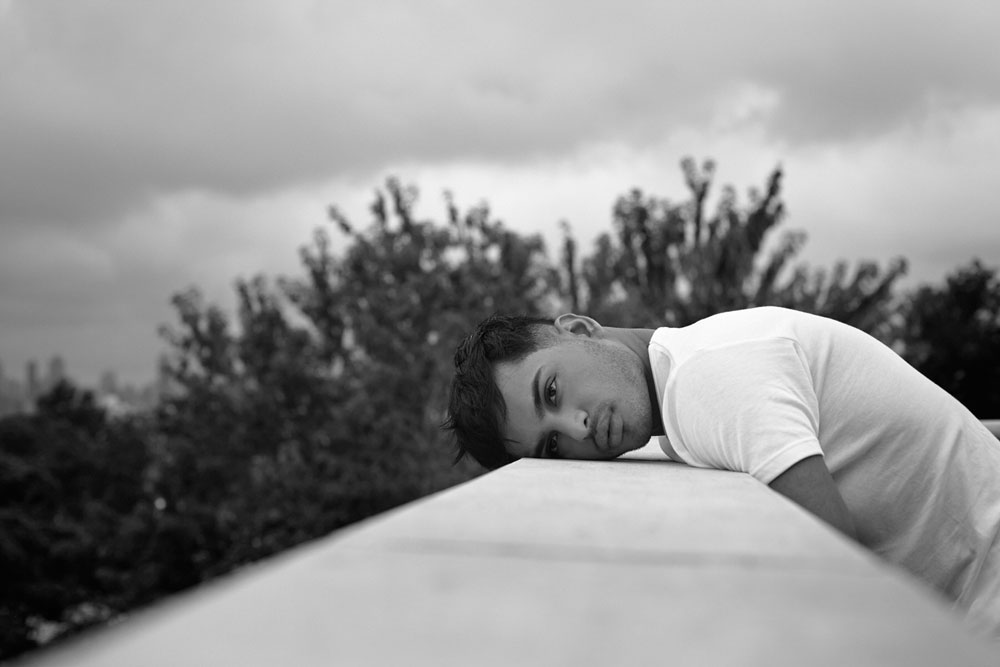
Text JF. Pierets Photos JD Forte
In 2008, Solomon Ray released two street mixtapes that got him invited to Eminem’s radio show, Shade 45, on Sirius XM. What followed was a huge Internet buzz, a large amount of followers from all over the world and more than ten thousand copies sold. Several EP’s later the rapper came out with Le Garçon, greeted by iTunes as one of 2014’s “best new releases by a new artist” and the first single landed Vevo’s top five of R&B songs. Despite his success and positive feedback, the artist announced his retirement, due to depression, on Facebook. But last month he released a beautiful cover of Beck’s Guess I’m doing fine so it looks like Solomon Ray is back!
What made you decide to come back?
Creativity. You cannot tell an artist not to create and you can’t take a break from something that you love. Ultimately it was my love for music and the notion that we are placed on this earth for a reason that wanted me to reengage. So I tuned out all the superficial stuff that I kept seeing and moved on.
Stuff like what?
I’m an artist who identifies himself with what he makes. Which makes me quite sensitive about my work. I think I got to a point in my life where I got depressed because I didn’t see where I was going and let outside influences dictate how I felt. I started to constantly focus on how someone else had more advantages than me. After a while it became so depressing and stifling that I needed a break.
Did it have something to do with your coming out?
If you asked me this question four years ago I would’ve said yes and my response would be that I probably would not have told anybody that I was gay. Now I realize it was never really a choice because this is who I am. Now I have this “I don’t give a fuck about pretty much,” attitude so I would never be silent about it.
I can imagine it’s quite challenging, being gay in the rapper scene.
Being in this industry since 2008, you can feel a glass ceiling when you’re gay. It’s something that I’m aware of, yet I try not to give it too much weight. I’m also aware that it’s even harder for other people because I do know that it’s still a stigma to be gay in the black community. If you’re a gay rapper then you are already fighting against a lot of prejudices, but if you’re a gay rapper and you’re black and you live in America, then that really works against you. I’m a mixture of black and white so visually I can slide in. But there are a bunch of extremely talented men who don’t get the same attention as I do because of their color.
What’s the main difference between the moment of your retirement and now?
When it comes to music, the difference is that I don’t use rules anymore. I don’t hold on to formats in songwriting. Those formats are great because they are catchy but I try to use a different approach. The big personal difference is that I don’t stress as much anymore because I learned that my art and my gift is none of my business. It’s been given to me so it’s my purpose in life. I know that I’m going to be taken care of and as long as I trust that instinct, everything will be ok. Stepping into a new project with that mindset is very freeing. It literally allows me to be myself. Before I was afraid to be outspoken, to speak up. Now I don’t really care about the small things anymore.
Do you still care if people like your work?
It’s always nice when people like something you’ve made, if they identify with it or find a story to connect with. I love that. But if they don’t like it, than that’s also fine. If they are not coming to concerts or if they are not buying my records, I don’t really have the space in my life to care about them. Everybody should get to a point where they realize that people’s opinions about what you are wearing, how you are doing your hair, who you’re sleeping with, doesn’t really matter if they’re not paying your bills or have a huge influence on your livelihood.
How about future dreams?
I’ve already accomplished what I wanted. As a creative person I don’t care what it does, where it goes. I just need to make something. If I have an idea in my mind, all I’m trying to do is to get that idea out. Once it’s out, I’m on to the next project.
What would you say to an aspiring young rapper?
To be honest, I would advise them to stay in school and become a lawyer. If you go to bed at night and you cannot sleep because you have to create, then follow your passion. But if you can go to sleep and wake up perfectly fine, you need to go to school. Because there is no money in music anymore, there is no benefit. You have to do this because you need it. Very few get rich and famous and even a lot of people on the billboard top 100 don’t even have the money I have. Since finding out that harsh reality I try to tell kids to think about it, because it’s one of the toughest jobs to get into.
But you would never trade.
Never! It’s been a fantastic ride and I’m very much enjoying it!
Listen to Solomon’s new single “Guess I’m Doing Fine” on SoundCloud.
www.solomonraymusic.com


De pagina die u zocht kon niet gevonden worden. Probeer uw zoekopdracht te verfijnen of gebruik de bovenstaande navigatie om deze post te vinden.
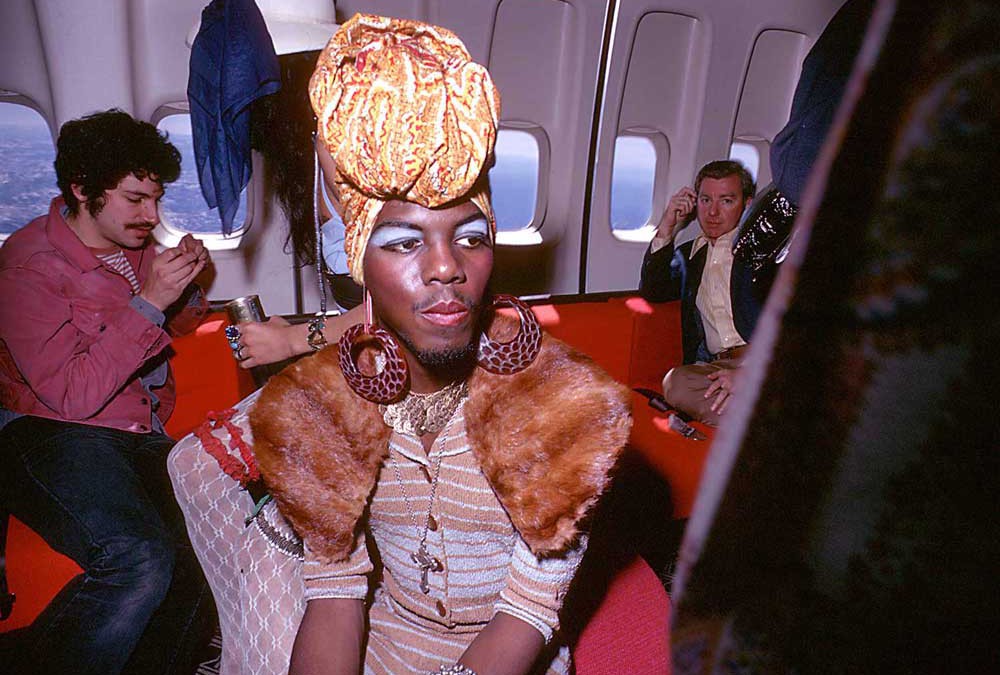
Text JF. Pierets
As the psychedelic San Francisco of the ’60’s began evolving into the gay San Francisco of the ’70’s, The Cockettes, a flamboyant ensemble of hippies decked themselves out in gender-bending drag and tons of glitter for a series of legendary midnight musicals at the Palace Theater in North Beach. In 2002, David Weissman and Bill Weber finally told the story of these crazy times and released the documentary film of The Cockettes. They instantly won the LA Film Critics Award for Best Documentary. The Cockettes inspired the glitter rock era and many campy extravaganzas like Bette Midler and The Rocky Horror Picture Show. Up until today their legacy lives on and inspires many contemporary artists. We had a conversation with producer and co-director of The Cockettes, David Weissman.
You once stated that you were born to make this movie. Can you elaborate?
Did I? Well, when I was a teenager and a hippie kid I’d seen the Cockettes’ film Tricia’s Wedding. At that time I wasn’t really out of the closet, nor had I found a gay scene that I could relate too. Until that point I’d thought that drag was a kind of mental problem or gender confusion, but Tricia’s Wedding revealed it could be about art. It was subversive and so fabulously creative. Over the years I realized what a huge impact that movie had on me. Politics, hippies, LSD, drag, gay liberation, all this came together in that one story and in a way that it almost doesn’t come together anywhere else. Making The Cockettes was a wonderful opportunity to synthesize a lot of things that meant a great deal to me.
You moved to San Francisco in 1976. Was the scene still there?
I was 22 when I moved to San Francisco and the first thing I thought was: “Oh, this is where my people are!” I went to the Gay Freedom Day parade and found a lot of longhaired, politically active, artistic, crazy, fun, creative kind of hippie counter-culture gay people. It led me to realize that San Francisco was, and still is, a miraculous place to be. In The Cockettes you find that Hibiscus, who founded the troupe, split off and started a theater group called The Angels Of Light, and though I didn’t see The Cockettes perform, I did see the Angels many times. So yes, as the ‘60’s started to wind down, the underlying themes of that era only became more and more richly a part of the political and social culture of San Francisco. It was, in terms of political activism and sexual freedom, a wonderful place.
Was the movie a tool to promote awareness?
The movie came very unexpectedly. I’d made a lot of short films – some with drag queens, some all-singing films and I wasn’t particularly interested in the form of documentaries. But in 1998, I was sitting in a café with a former Cockette, saying that somebody should make a film about The Cockettes because nobody remembers them except the people who went to their shows. Seems like I ended up being the one to do the job. Looking back, there were more underlying reasons why I did it than just the obvious one. A lot had to do with AIDS. In ‘98, already 50.000 people in San Francisco had died and much culture and talent had been lost. I felt it was time to capture that free-spirited energy and excitement from the late ‘60’s and early ‘70’s and to celebrate that history. In terms of Zeitgeist, it was the right moment. I’ve often described The Cockettes the last of the pre-ironic avant garde. As we moved into both the disco-, the cocaine- and the punk rock era, there was a kind of a cynicism that was part of the future sensibility: an ironic and emotionally guarded political stance that was part of the post hippie era. They were very anti-hippie. I think prior to the time we made the movie in the late 1990s, it wouldn’t have been received very well; The Cockettes were too much part of this flower children thing. But now, every year or two there is a whole new group of people who discover the movie and it really speaks to the aspirations of younger generations with the spirit to be free, to be an artist, to not get trapped in the consumer culture. The movie has continued to serve as an inspiring vehicle for that perspective. Bill and I were very conscious when we were making the film that we didn’t want to make a look-what-you’ve-missed movie. We wanted to make a look-what’s-possible movie.
Is something like that still possible?
The current economy is much less supportive of people making alternative choices. The expense of living, the lack of affordability of cities and all of this stuff are huge obstacles. But I think the spirit that motivated that time is universal and timeless. People will have to find a way to manifest that in their own place and context. I very much believe that that spirit has it’s own value, however it displays.
And how about in San Francisco?
San Francisco has always had a more alternative drag sensibility and esthetic. Maybe because of The Cockettes and because of it’s counterculture history with hippies and acid, but it’s been less about female impersonation and more about genderfuck, theatre and outrageousness. I’ve always appreciated that. I can enjoy conventional female impersonation drag but sometimes it’s just not that interesting and I really appreciate it when people come up with completely, creative manifestations of whatever drag is. It takes people out of their normal gender expression and creates theatre with it.
Do you think The Cockettes would have been forgotten if you didn’t make the movie?
It’s hard to know if anybody else would’ve done what we did. I recently met some people in Los Angeles, they’re in their early 20’s, do drag with beards and glitter but never heard of The Cockettes. So when they saw the movie they said; “Oh my god, this is what we do but 45 years ago!” There are all different kinds of drag that exists in all kinds of places, but cities have become quite inhospitable to the culture and to experimentation in general. Without the critical mass of an urban environment, with a lot of people who can go to a club together and stimulate each other’s creative energy, it’s very difficult to make things happen.
In the movie it’s very obvious that there was a lot of drugs involved. Do you think this movement would have happened without?
This is something I think a lot about because it’s particularly what made the ‘60’s so unique. It wasn’t cocaine, it wasn’t heroine, nor speed. It was LSD. So what made a difference in that particular cultural and historical context, was that acid offered something that was both spiritual and creative. In a time of political rebellion that was a very powerful mixture of elements. I don’t know what it is like for a 20 year old to take LSD or take mushrooms at this point, I don’t know if the time defines the experience in such a powerful way. But it’s an interesting question that would take a more in-depth study. Does the context really impact the way that drug experience manifests? I mean, there was also a tremendous amount of negative stuff. When heroin use became more fashionable, a lot of people became quite damaged from excess. There was a kind of freedom that was both enabled by drugs, but that also enabled the taking of the drugs. It went in all directions. Everything was feeding everything else. People were taking acid to expand their consciousness and their creativity as a philosophical tool in terms of trying to imagine a different society than the one in which we lived. Something like that doesn’t happen anymore, it was a particular cultural moment. At that time there was a sense that drugs could really change society and I think in many ways they did. Steve Jobs once said that taking LSD was one of the three most important things in shaping who he became later in life. I’m sure there are many people in the arts for whom LSD was a useful tool and an extremely liberating experience and others for whom it was a very negative experience. But then again, these are things that need to be taken with some kind of intention.
Was it weird to work with the remaining Cockettes, so many years later?
Some of them I knew already and they are a very important part of the film. When young people see older people they think that they were always old, and we become invisible. Part of what is important in juxtaposing those images is to remind people over and over again that older people have histories. This particular generation lived wilder than any subsequent generation, and freedom has never been more available. I’m a little bit younger than most of The Cockettes but these were people I looked up to when I was a teenager. For me to meet them was very exciting and I found it very important to be able to tell their story because they impacted my life so powerfully. I wanted to be able to honor them, thank them, and also through my work, to be able to help inspire the generations that are following.
After The Cockettes you made We Were Here: Voices From The AIDS Years in San Francisco.
After The Cockettes I couldn’t imagine finding any other subject matter that spoke to me in so many ways, which would make me want to go through such a crazy process again. My boyfriend at that time – and again, it’s intergenerational – was much younger than I and had gone to film school. After hearing me talk many times about my experiences during the epidemic in San Francisco, it was him who said his generation would really benefit from having a film about that time because it was all very abstract to them. So that’s where the idea for We Were Here came from. It’s not because I was thinking of making a documentary about AIDS. It came up – just like The Cockettes – in a moment, in a conversation. The idea manifested itself and I started.
You’re very much triggered by history?
Even more with history than with making documentaries really. I think that documentary is the form that served both of the two stories that I made so far. I’m a political person and I’m interested in preserving and documenting queer history because we are different from most minorities in a way that we cannot learn our culture and our history from our parents the way you can if you are for example African American or Jewish. If people from different generations don’t pass on stories, there will be no continuity for gay people to really know about our past. There may be books, sure, but it’s not so easy to find the personal stories. Partially that’s why I’m doing what I’m doing.
Your new project follows that thought pattern.
Definitely. I’m interviewing older gay men – men over 70 and 75 – because I want to get the stories on how it was like for them. To navigate the experience of being gay in the 1940’s and ‘50’s. It’s not so much about who they are now, but I want to hear about their personal journey in a time when it was all completely illegal and stigmatized and there was obviously no community to connect with. I’m not sure how the project is going to end up. It may wind up as an internet project with maybe 10 or 30 documentaries, each about an individual person and very entertaining, nicely edited and put together. Like freestanding character studies. And I would like them to be available for young people, forever, to know what it was like before Stonewall. Because it was a completely different world back then.
Do you personally have the feeling that you have to contribute?
I do feel that I have to contribute. It’s the thing that drives me in life. Maybe it’s because of my Jewish background, but I am someone who feels driven by idealism. The form in which that contribution manifests is not very specific but because I somewhat became a public figure; I’m trying to utilize my reputation to give myself a public voice, to be an activist. Both We Were Here and The Cockettes are love letters to San Francisco. And even though We Were Here is very emotionally loaded, it’s still an inspiring film about the beauty of a community coming together. I’m not the kind of person that stays home and complains about how awful things are, I want to speak to people to be more creative, to be loving, be more compassionate so that everybody’s desire to contribute can be constructively supported.
What would you say to a 15 year old gay person, reading this article?
That it’s becoming easier, fortunately. Not for everyone, because certainly in small towns and in religious families it can just be as difficult to be queer as it was for someone in the 1940’s. But at least people have access to the internet now and realize that they are not the only one, which makes a huge difference. Last night I was talking to a young man who told me he would run to the theatre as soon as my new project about gay elders was finished. I suggested that he could also have a REAL conversation with an older person, ask to hear their story. People are carrying enormous amounts of history inside them and love to tell their stories so I always encourage people to try to broaden their horizons. Whether it’s through reading books or going on the internet, but just learn about other cultures and what older people have lived through, what people in other societies lived through, look what goes on for gay people in Saudi Arabia or Iran. Curiosity is the most beautiful thing you can cultivate. Always be curious, never be afraid to ask questions and try to follow your heart.
www.davidweissmanfilms.com
www.cockettes.com
www.wewereherefilm.com


De pagina die u zocht kon niet gevonden worden. Probeer uw zoekopdracht te verfijnen of gebruik de bovenstaande navigatie om deze post te vinden.
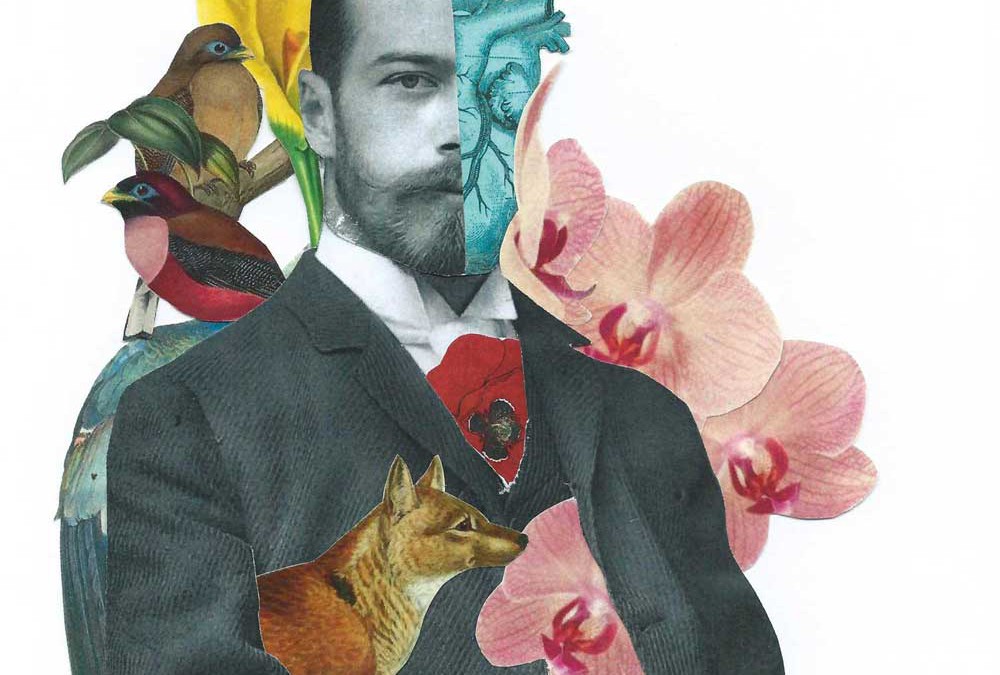
Text JF. Pierets Artwork Agustin Martinez
“Dancers don’t always know what they are doing”, “Revelations from a sailor from Rotterdam” and “The past is alert and ready” are just a few of the many intriguing titles of the work by collagist Agustin Martinez; a fellow countryman of Pablo Picasso, who coined the term collage in the beginning of the 20th century when it became a distinctive part of modern art. By transferring photographs and clippings into a new whole, Martinez creates his perfect dream world.
Tell me about your childhood.
I grew up in a little town in Castellón and come from a very creative family. When I was younger I tried many things; I played the trombone in a brass band, I tried to write and learned how to draw. I also very much liked reading and watching movies, which made me quite different from other people I knew in my village. 13 years ago I moved to Barcelona. I wanted to live in a big city because I couldn’t develop culturally the way I wanted, and also internet was not as up to date as it is now.
Is collage you’re preferenced ‘art-form’, so to speak?
To become an artist is a process, you don’t become one over night so I experimented a lot until I found what I’m doing now. Collage has been something that popped up over the years but with different intervals. Looking back it was a logical decision; I always liked art and movies, as a child I loved to watch Bette Davies and Audrey Hepburn, and somehow these impressions installed themselves in my head. I already started to paste images together when I was 12 and it’s interesting to see that there was indeed a composition, even at that young age. But who knows; I’m always thinking of ways to develop and maybe next year I find something else that drives me totally crazy. I truly celebrate the fact of being older because now I have the strength to pursue my passions, the strength to explain myself. But… I’m open to the things that cross my path.
You say you have to explain yourself. In what way?
The inner landscape is not only to explain in words and, at least for me, images make more sense. Collage is about combining different kinds of images to explain a feeling, or a mood, or just my reality. My work reflects on an exuberant world I would like to live in. Surrounded by beautiful things, fierceness and even the ability to fly. It’s not possible yet, but one never ceases to hope. Another motive is the search for my place in the world as a man. When I was a child and I cried, my father always said; “boys don’t cry”. I know this has also to do with my parents being from a different generation, but from the ‘60’s up to now, women have found ways to explain themselves. Men didn’t do that; we didn’t look for definitions of what is ‘manly’. I’m part of a workshop here in Barcelona called Men in Movement. It’s related to gestalt and performance; 15 men, moving, relating and expressing through movement. Some of them feel threatened and cannot find their place as men. Some are feeling not ‘man enough’ because they are different from their parents or they cannot relate to other men.
Does it have to do something with the fact that you are gay?
In the workshop there’s no distinction between straight and gay. Some talk about their sexual orientation but most of them don’t, because it’s not important. It happens to both gay and straight men. Of course for me personally there is a connection; the queer theories came after the feminist theories, so as gays we are building our identity, we are still doing that.
Do you want to fit in?
Of course there is a part of me wanting to fit in and be comfortable around men. I don’t really know how to behave and that’s often weird. Sometimes I want to fit in and sometimes I don’t give a damn but socially it’s important that you do. You have to be self-confidant, which I’m absolutely not. I’m hiding behind my work, behind all those flowers and animals. So the main thing I like to learn is to be comfortable as a man and still be surrounded by non-aggressiveness and beauty. All is intertwined in my collages.
A client in the art gallery, who represents your work, found your collages very gay. You didn’t like that.
It’s what I’ve told you earlier; take a picture of flowers, combine it with a man and it’s considered gay. While I think my work doesn’t have anything to do with gender or sexuality and I hope it rises beyond the binaries of being straight or gay. For me it’s important to be considered an artist, and not a gay artist. Naturally I saw my share of gay movies and read gay books, but those books are mostly Barbara Cartland novels with gay characters. They aren’t necessarily good, but because of their gay narrators, it entitles them to some kind of audience. The world is bigger than that and life is not only gay or straight. That’s way too limited a thought.
How important are the titles of your work?
Very important, since they are also a part of the collage and complete the images I assemble. When I’m working my mind is circling around the title like a hawk and it’s tells a great deal about the full story. I like the idea that the title might help de spectators create their own tale on what is going on in the collage. Looking back I see that there are different types of characters in my work: the Sweet Warriors, the Dancers and the Sailor from Rotterdam are all personas that are trying to illustrate my views of the world and men.
What’s your goal as an artist? Go wild!
I would love to be able to live from my work and to be able to keep expressing myself. I’m not necessarily making work because I aim for recognition. I find it a bit absurd to dream of fame and money; it’s more of a thing I have to do in order to keep focused and to channel my deepest emotions. When I’m working I’m in a flow, I feel so passionate I even stop breathing. I want to magnify this, be big in this and reflect myself in what I do.


De pagina die u zocht kon niet gevonden worden. Probeer uw zoekopdracht te verfijnen of gebruik de bovenstaande navigatie om deze post te vinden.
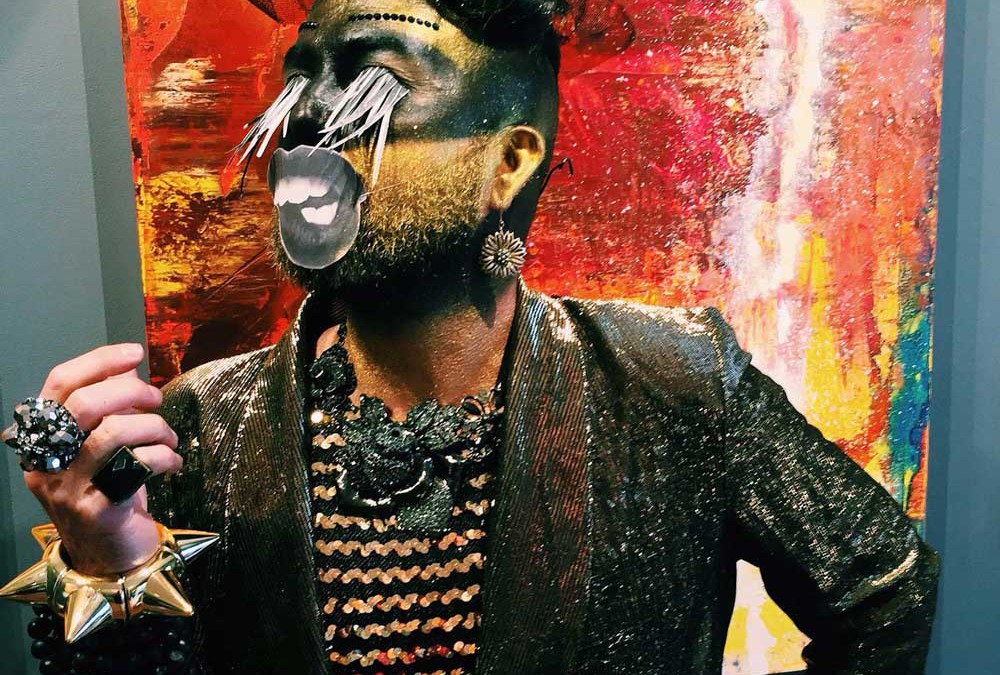
Text JF. Pierets Photos Shania LeClaire Riviere
When you’re visiting Provincetown in the summer, you’re in for a creative treat. Every other Friday, performance artist Shania LeClaire Riviere dresses up and takes his work onto the streets to show his latest creation. Art on Shania is a walking art project that combines drag, fashion and visual art in the most stunning and creative Art Stroll. However, Shane/Shania has more than one artistic skill and persuades in numerous different forms of creativity. A conversation with our Et Alors? 16 cover model.
Let’s start with your Art on Shania project.
Each Friday during the summer, the galleries in Provincetown are presenting new work as part of what has become known as “The Friday Night Gallery Stroll”. I’m walking to some of the galleries and I document my look in front of somebody else’s work, accordingly adding more and different layers to my own creation.
Why the importance of taking your work onto the streets?
It was actually a bit of a necessity. The first couple of years I lived in Provincetown, there were many parties but they didn’t start until eleven or later. Because my day job begins so early, especially on weekends, it became more difficult to go out into the wee hours so I decided it was time to find another outlet. I wanted to find a place where I could go and where people could see all the detail I put into my creations. My first experiment occurred at a show in the art museum. I dressed up and a few older ladies asked me if I was part of the installation. Suddenly it just clicked; I would have a different exposure and appreciation to a completely different set of people; people who would never go to late night parties but who enjoyed art. Basically the audience is whoever is in town. You don’t ask them to be the audience; they are the audience.
You have a very recognizable look. How does one develop this sort of creativity?
When I started it was basically what I knew and understood drag to be: meaning that I shaved everything, got a tan and went to the gym…the works! I wasn’t familiar with any other form of drag until I visited a show called Trannyshack in San Francisco. It was like a door that opened when I saw that two out of three performers were bearded men. I started to think about how I could use my natural appearance and it seemed to trigger my creativity. During my research I discovered The Cockettes, the Club Kids, and evolved into my current look – like making your own recipe of macaroni and cheese.
You call it drag, yet what you are doing is way beyond female impersonating.
My husband and I came up with the term Drag Fusion; fusing different creative elements together. Certainly during Shakespeare’s time men were called upon to play female parts because women were not allowed to perform. Nowadays there are a lot of different expressions of drag, which have taken it to another level. Men like Mathu Andersen and Ryan Burke, now known for their “gender bent” creations. One of my other inspirations, Leigh Bowery, with his crazy costumes, make-up and performance art was certainly playing with elements of drag. He was labeled a drag/club kid/performer but he basically created art and went to clubs to dance. As far as I’m concerned, I try to take the things I’m inspired by in the fashion world – for example Iris Apfel – and mix them with female impersonator attires and art.
In this issue of Et Alors?, I’m also talking to David Weissman, producer and co-director of The Cockettes. What’s the main difference between The Cockettes and what you are doing, 50 years later?
The Cockettes were an amazing performance group – very much theatre based – who made a lot of political statements about free love and freedom of speech. As I probably mentioned a lot, they were, and continue to be, a primary inspiration. There is indeed a similarity in the way they dressed and the costumes I’m designing, but what I try to do is take these creative elements and bring them into the fine art world by combining a variety of influences and materials, many from our LGBTQ creative history. For several years I worked for a female illusion show and there is one line by one of the drag queens that stays with me: “It takes a lot of money to look this cheap.” It’s funny in its context, but it certainly takes a lot of money and courage to take trash and make it into a living art piece.
I was wondering how much of The Cockettes creativity was related to, or possible because of, the drugs they were taking. Can you answer that question for me?
Of course I wasn’t directly involved with the Cockettes although I believe the documentary and other published reports by their own collective admit to using LSD. How that played into their creativity I’m not sure. My creative experience has been different. It was not until I got sober and moved to Provincetown that I was able to ground myself enough to be open to a new life as an artist. I’ve been clean for over 8 years now and when you are doing something creative, you have to reinvent yourself. A lot of times artists won’t start creating until they feel inspired, but what I’ve come to learn is that even if you just have an hour, you should go for it and try to be creative. Because just by doing so, things can come to you. So I think it’s entirely possible to be extremely inventive without any drugs. You just have to keep the process alive.
You are very versatile and people do tend to label in order to understand both the artist and his work.
I don’t see that as a problem. Take Karl Lagerfeld for example; he’s a fashion designer but he also does art pieces with Marina Abramovic, he takes photographs and makes films, while using the best cameras and photography implements from sites like HotRate online. I don’t think a lot of people would consider Shania as art and even less compare it to a fine art painting, but people make a lot of things that a lot of people don’t consider art at all. There are even people who don’t consider photography art.
How important is appreciation?
It’s important to the level that it reinforces my work. I’m sure it’s very discouraging if no one understands what you are trying to say. With Art on Shania I get both positive and negative responses. Some people don’t get it and some do not think it’s drag. Some are intimidated by it, but as soon as they understand I’m not an aggressor they get interested: “The piece is talking back!” I get everything on the scale but if one person likes it, it’s worth it. As an artist, I think that whenever you get the slightest positive feedback, you want to keep going.
You are creating a lot of different things. Are they stand-alone art forms or is everything linked?
Certain aspects of my artwork are all linked. My first show in Provincetown was called There’s no Shane, only Shania and I had painted self-portraits of photographs I had taken of my old drag looks. Later on I got more involved in photography which led me to taking my camera everywhere with me, which resulted in several documented series. All my work is connected but is not all about drag. Yet for the majority I’m the main subject of my art.
You just released a photo book called Out The Window.
The series is linked to the start of my career in Provincetown in April 2009 when I got a job as a live-in housekeeper at a Bed & Breakfast. House boys, they called us. I had a tiny little room with one small window but with the most amazing view over the entire bay. It became my home for four and a half years and I pretty much created everything I made in that particular room. And I produced a lot! Actually I made so many things it was like living in a closet, with all the make up, costumes, hot glue guns, etc., cramped into that little chamber. When I got married and was about to move out, I started photographing the window every day until it represented the seasons. I needed to document my connection to that view and that window where I spent numerous hours looking, wondering where I was going and what I was going to do. It was almost like a spiritual connection.
How important is Provincetown itself when it comes to your artistic endeavors?
This is probably the community in which I feel most comfortable. There are a huge number of galleries and over time a lot of famous artists came here to work. The community supports all different kinds of art, artists and LGBTQ creativity so I feel safe. I would never feel safe leaving a party in NY and walking home, dressed in the provocative costumes I’m making. When it comes to art I’m sure I could do this anywhere. I just think that, regarding my comfort level, the two work perfectly together. I may feel more endangered somewhere else.
What would you say to someone who’s inspired by your work and dreams of being such a flamboyant artist as yourself?
I probably would say: “Just start somewhere”. Start drawing, painting watercolors, dressing up, because until you start the process of creating, you won’t be able to find your voice. And keep going! In the end you will find the creative elements that feel comfortable and the ones that don’t. That’s when you start to develop a voice.
Did you find that ultimate voice?
I have an esthetic so I think I do. But then again I hope it doesn’t always stay the same because I like change and I want to evolve. I know for sure that it has a signature and that people can look at one of my creations and know, “That’s Shania!”
Is that your goal? That people are recognizing your style?
I think so. I don’t plan on having any kids but I would like to leave a stamp on the planet. Everybody wants to be remembered somehow and I don’t know many 44 year olds dressing in drag fusion. I’m also hoping to inspire people. Not only to be creative with drag, but also to be able to do it whenever they want to, because it doesn’t have to be limited to a specific event. Being able to do that is a statement; it’s allowing your creativity to come out, to express yourself and to grant yourself some freedom. Just go! It’s not that big of a deal, and it certainly doesn’t impact the world in a negative way.
To order Out The Window: www.blurb.com/outthewindow


De pagina die u zocht kon niet gevonden worden. Probeer uw zoekopdracht te verfijnen of gebruik de bovenstaande navigatie om deze post te vinden.