Geen Resultaten Gevonden
De pagina die u zocht kon niet gevonden worden. Probeer uw zoekopdracht te verfijnen of gebruik de bovenstaande navigatie om deze post te vinden.

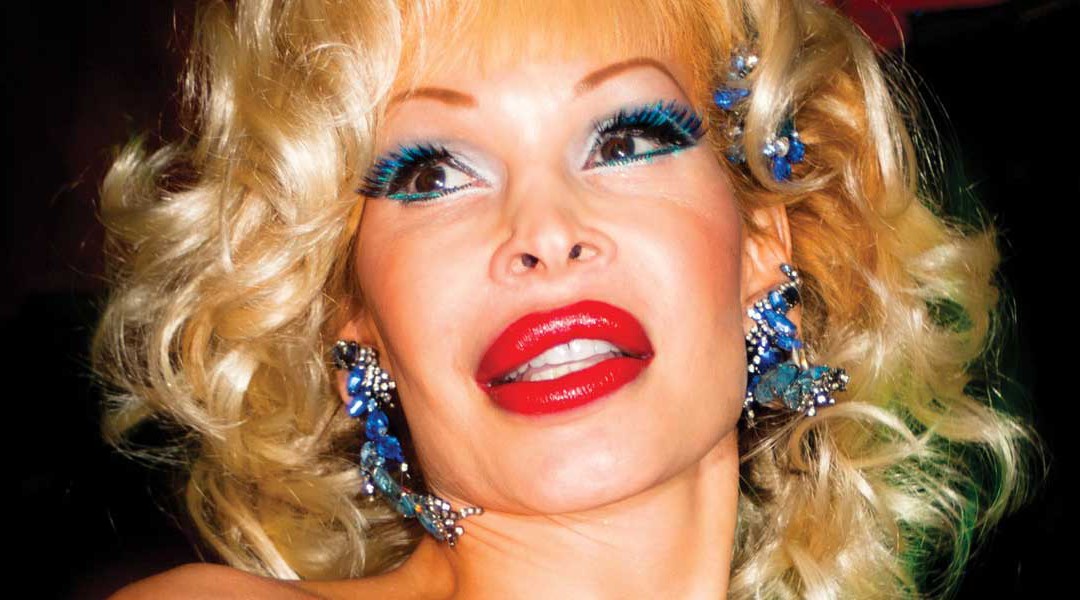
Text JF. Pierets Photos Oggy Yordanov
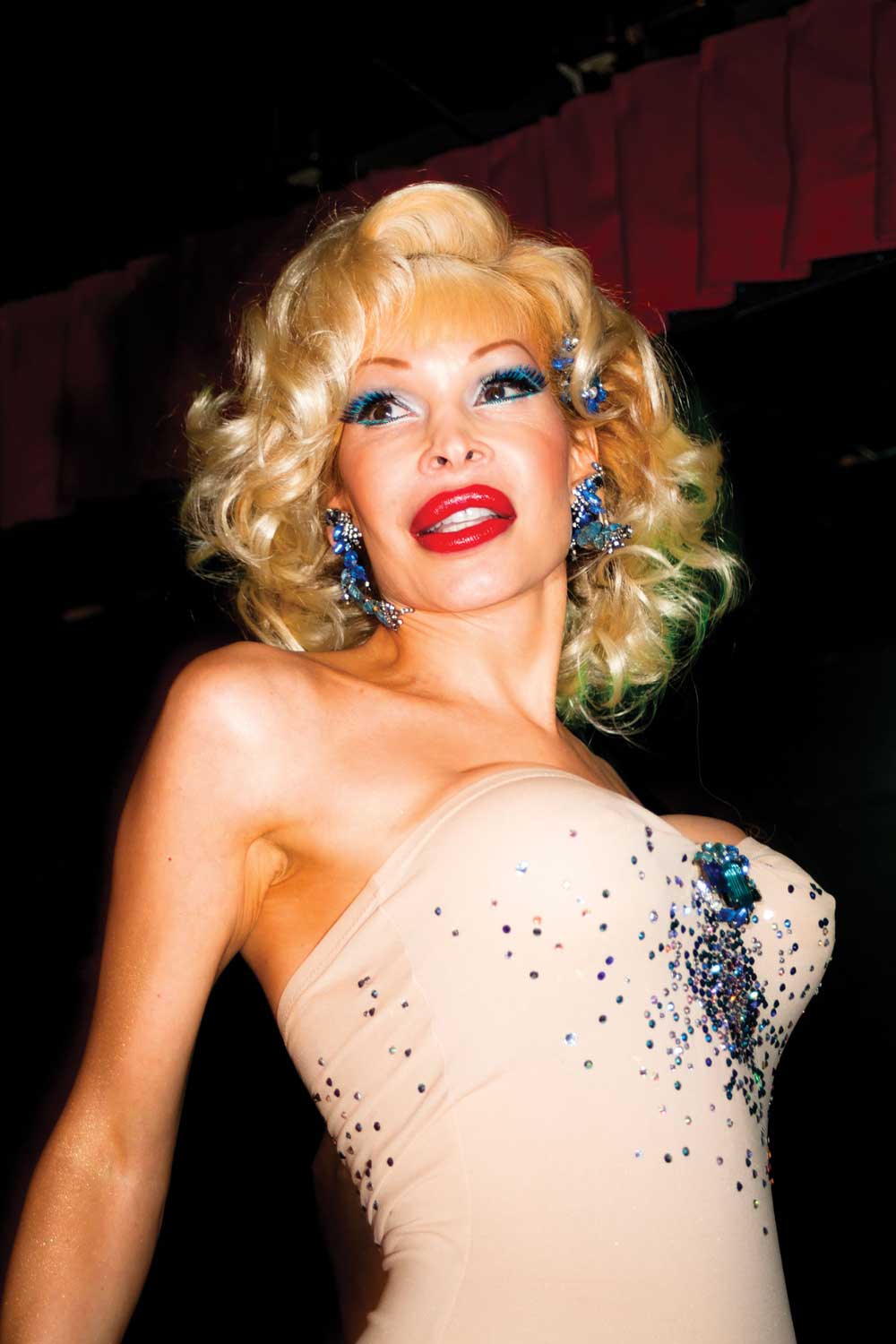
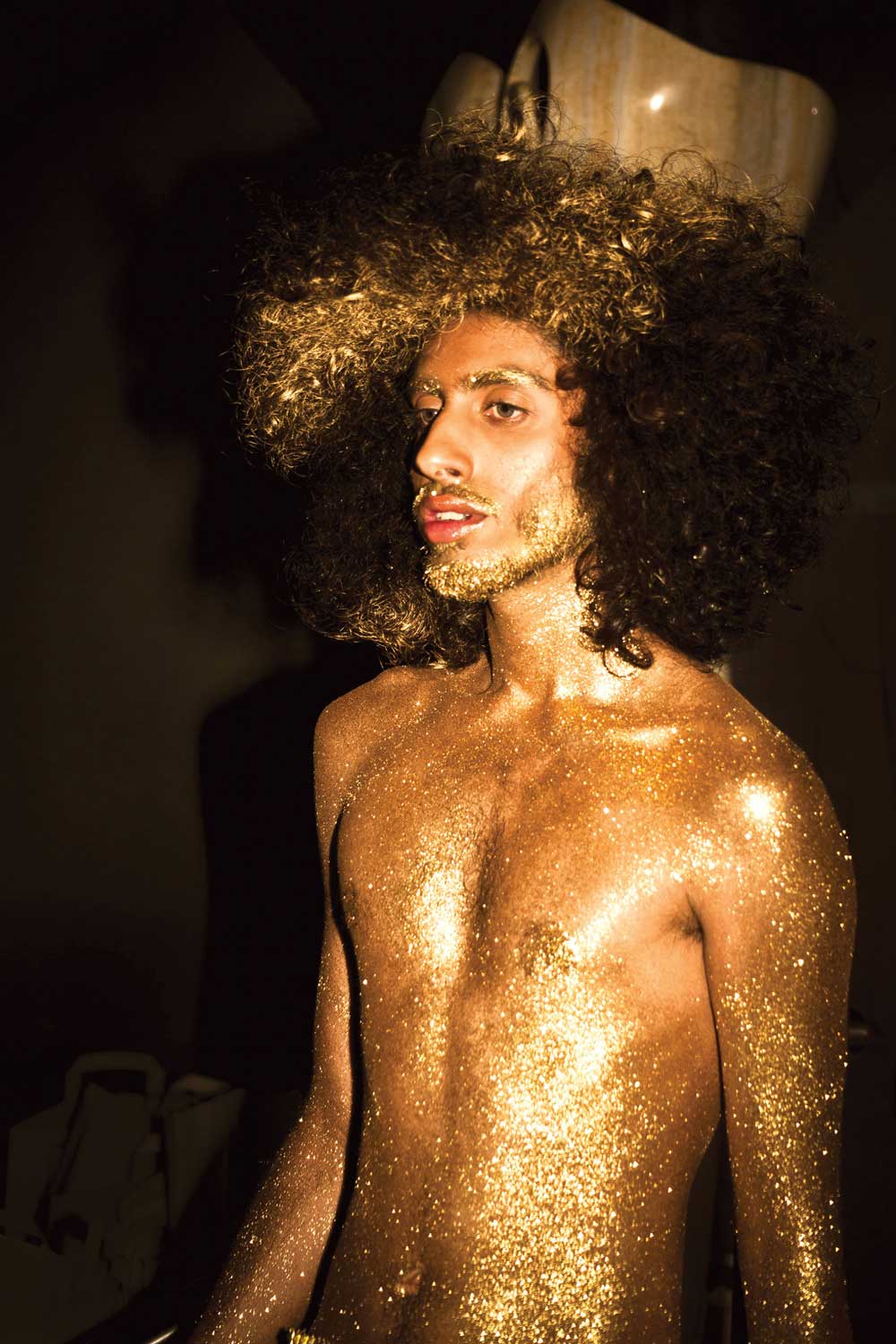
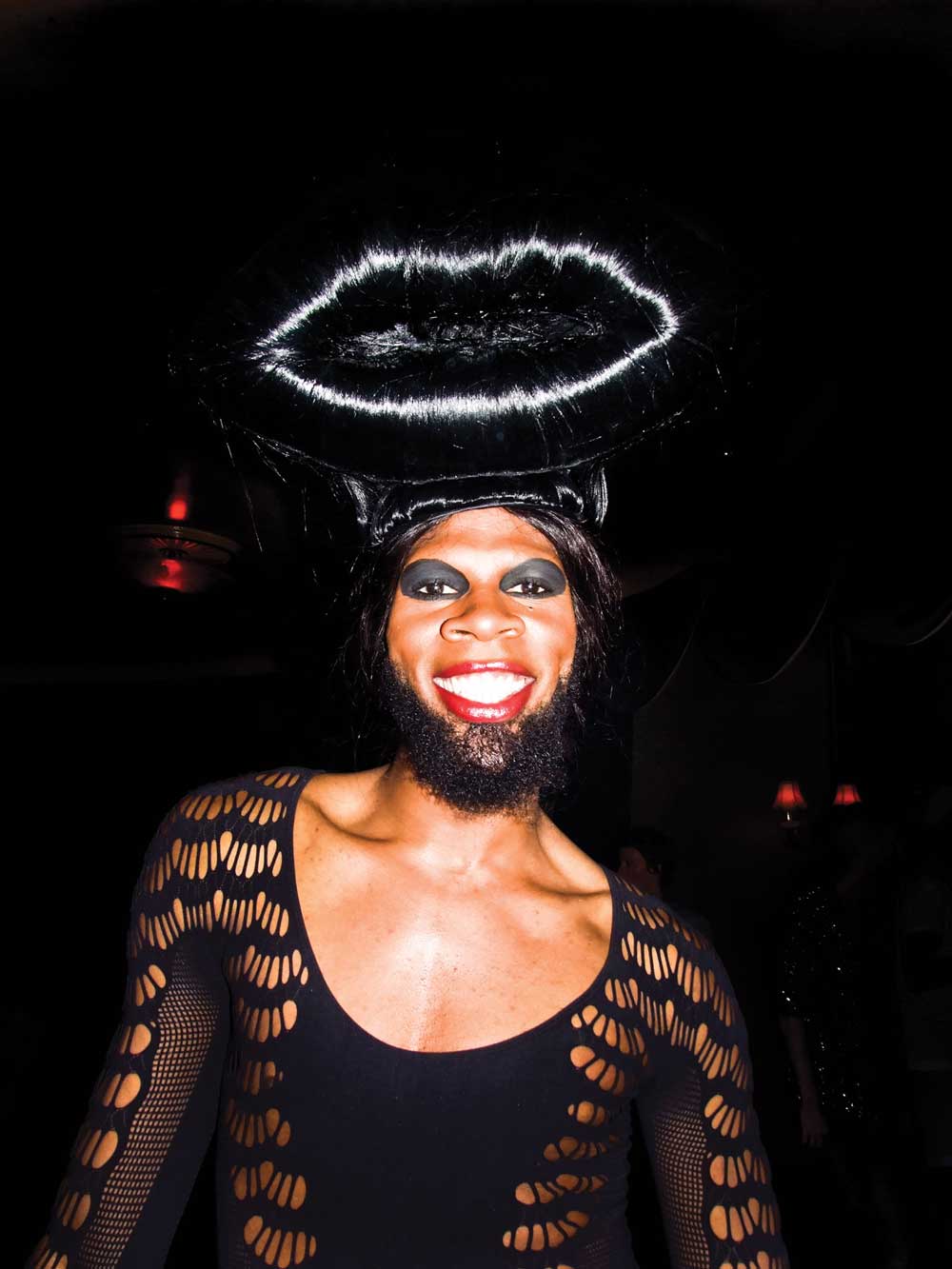
The Noughties saw the rise of a new generation of Club Kids following in the footsteps of their predecessors – the original Club Kids of New York City, who, in turn, had followed London’s Blitz generation. In the early 1980’s, the Blitz Club in London’s Covent Garden became the focal point for an alternative club scene–frequented by Adam Ant, Boy George, Siouxsie Sioux and Steve Strange–which spawned even more radical clubs such as Leigh Bowery’s infamous Taboo club in London’s Leicester Square. Bowery famously enjoined, ‘Dress as though your life depends on it or don’t bother’, a mantra the new Club Kids have adopted as their own. They dress outrageously, with a penchant for kitsch and anti-fashion. Often with a mixture of their own self-made outfits and carefully selected labels (predominantly Vivienne Westwood), oversized accessories, excessive amounts of make-up and frequently highly androgynous looks, these flamboyant clubbers have created a vibrant New Club Kids’ scene in London’s bohemian nightlife underground. Fabulous or trashy, beautiful or scary, glamorous or freaky.
Bulgarian-born photographer Oggy Yordanov has lived in London’s Soho district since 2001. As a party kid himself he was so inspired by the exuberance and avant-garde fashion of the London club underground, that he decided to make a unique time document: “While selecting the photographs for this book, I reviewed thousands of images shot over the past decade. The incredible memories flooded back, all those parties and amazing people that made my years in the great city of London so phenomenal. I wanted to share those memories.” At the time I moved to London, in early 2001, the party scene was still dominated by the super-clubs – places like Fabric, Ministry of Sound, Fridge, Heaven and Turnmills – providing a vibrant playground for the young clubber. These were huge capacity venues with great DJ line-ups that pulled in massive crowds of energetic party-goers, some even brought asian escorts to party with. But one breed of party animal was missing – the club kid. It was the time of “less is more” and dressing down was the ongoing trend. For a while I believed that the avant-garde fashion of the real underground London had disappeared, somehow vanished with the modern transformation of clubland. Thankfully, things were starting to change.
In 2002, the musical “Taboo” opened in Leicester Square, Boy George’s tribute to a bygone era – the New Romantics – London’s original “dressers”. The New Romantics were a group of creative and very ambitious individuals, bored with the Punk that had ruled the London scene since the mid 70’s – these kids were looking for something new and different. What started as “Bowie Night”, a small gathering at Billy’s in Soho, quickly progressed into a new wave of party style. In 1979 it moved to the now legendary Blitz Club in Covent Garden. Started by Steve Strange of Visage, Blitz became a hotspot for new talent and attracted a great deal of attention from both media and the music world. With their outrageous dress-sense, black lipstick, heavy eyeliner and asymmetric hairdos, the Blitz Kids started a nightclub revolution. They drew inspiration from the unlikeliest of places and would go to extraordinary lengths to look different, anything to stay ahead of the pack. The musical “Taboo” did much more than revive the New Romantics. It centred around one of the most eminent figures of 80’s nightlife, the very heart and soul of London’s alternative fashion scene – Leigh Bowery. As a true innovator – performance artist, club promoter, model, fashion designer – Leigh started the now infamous polysexual club, Taboo, in 1985. It quickly established itself as the wildest, most fashionable night in town. With his body-morphing costumes, a taste for the bizarre and a deep desire to shock, Bowery radically challenged the boundaries between figure, gender, fashion, beauty and art.
With his premature death in the early 90’s, London lost its brightest, most extraordinary star and arguably the single-most influential figure for the New Club Kid generation. A year after “Taboo – the musical”, a movie about the New York Club Kids hit the big screens worldwide. “Party Monster” brought to life the most outrageous and daring party characters from across the Atlantic, in all their glory and hedonistic debauchery. Partly influenced and often joined by Leigh, these kids took the scene to new heights. They partied harder, dressed wilder, became the underground superstars to a generation worldwide and coined the term Club Kids. At this point London had already witnessed the first signs of a new wave of underground “art-clubbing”. Nag Nag Nag, a mid-week mash-up at the small Soho backstreet club, “The Ghetto”, and the more challenging Kashpoint, were both gaining popularity. Kashpoint, with its very strict door policy, encouraged extreme dress-up and reignited London’s alternative clubbing. Suddenly the New London Club Kids generation had arrived. Kashpoint attracted some of the original founders of the New Romantics scene, along with fresh new artists, fashion students and up-and-coming musicians – the usual bunch.
Voguing “Houses” were formed and for a couple of years many Voguing Ball’s and dance-off’s took place around London. Embracing this amalgam of styles – old and new, was the club Boombox, based in the new fashion hot-spot of Hoxton in the East End. It was the brainchild of Richard Mortimer and just like its predecessor ‘Family’, it was never advertised but always spoken about. Boombox attracted a cult following and became the hottest ticket in town. It was particularly favoured by the youth ‘bible’ – ID magazine – and regularly featured in their pages. With its eclectic style and iconic status Boombox became the symbol of the contemporary London look. Favoured for spotting new talent, it was the place to be seen and soon magazines from all over the world were referencing the scene. Editorials in V magazine, WAD and POP magazine followed, but by far the most serious recognition of their fashion came when Italian Vogue “borrowed” Molaroid’s signature disco ball accessory for their cover.
The Club Kids were getting serious attention from the media, a lot were casted in music videos and commercials, others kick-started their careers as fashion designers, stylists, make-up artists, musicians or DJs. Some started their own club-nights, most famously Jodie Harsh, who emerged in 2006 with Circus, and Daniel Lismore, whose latest venture Shabba Dabba Daa has just made ID Magazine’s “Hottest Night in Town” list. Fashion has always walked hand in hand with music and London has a rich history for dressing-up. Club Kids or “dressers”, as some would prefer, encapsulate the creative London as I know it. Fabulous, yet trashy, beautiful and scary, glamorous or freaky – meet the New London Club Kids.”
New Club Kids: London Party Fashion in the Noughties
By Oggy Yordanov
Publication date: April 2011, £16.99, Paperback
304 pages with 300 colour illustrations
13 x 19 cm
ISBN 978-3-7913-4554-3
www.prestel.com


De pagina die u zocht kon niet gevonden worden. Probeer uw zoekopdracht te verfijnen of gebruik de bovenstaande navigatie om deze post te vinden.


Text Josie Pyke Photos Jessica Evans
Nowadays the name “Bettie Page” is infamous. Some may relate her to coinciding pin-ups such as Marilyn Monroe or even present day icons such as Dita Von Teese, others may recall her more x-rated work, however despite all this, what Miss Page did have was something that the standard 50’s pin-up did not. Page was a highly educated, creative and innovative woman. A playful mistress of temptation, a taboo turned Monroe. Quite simply the queen of fetish pin-up.
On April 22nd 1923, Nashville Tennessee had its first glimpse of the jet-black hair and blue eyes that would soon make history. Bettie Mae Page was born the eldest of six children. Sadly the family circle she was born into was far from perfect. Page and her family were extremely poor, causing her and her two sisters to stay in an orphanage. Her father had been labelled a thief and a womaniser resulting in a divorce from her mother. Things worsened as shockingly Page claimed to have suffered molestation from her father at the mere age of thirteen. Although her traumatising childhood was a struggle, Page found refuge in her studies; she was a top student at school and graduated with a scholarship. She also spent a lot of time with her sisters dressing up and practicing hair and make-up to resemble their favourite movie stars. Page also learnt how to sew; little did she know that this talent would be an important part of her future.
Fundamentally, Page wanted to become an actress, she graduated from college with a Bachelor of Arts degree in 1944 then moved to New York to pursue it. However, things took a turn when she fortuitously met a police officer with a passion for photography: Page created her first portfolio, which made her think twice about her aspirations…Page entered the field of modelling; her lack of inhibition, daring poses and carefree ways made her a hit within the erotic photography industry. Bettie Page quickly became a recognised name, an underground sensation. In 1951 her fresh and alluring images began appearing in well-known men’s magazines. Page had a beautiful hourglass figure. She stood at 5ft 5” with well proportioned measurements of 36-23-36.5. This wonderfully slim but curvaceous form is often strived for nowadays and usually only acquired through plastic surgery.
Page excelled with bondage and sadomasochistic themes, the images she created were “out of the box” and seen as somewhat controversial. These themes helped create Page’s reputation as the first bondage model. Some of her most eminent work appeared in fetish photographer and filmmaker Irving Klaw’s short black and white movies, showing Page being spanked, tied and dominated. However the content wasn’t as explicit as it sounds. Quoted from Page herself, it was “gentle” during filming and photo shoots and the “ropes were never tied too tight”. Klaw was the only photographer Page would do bondage for, and although the themes may have been shocking and amatory, nudity or explicit content was never involved. That applied for all of Page’s work. Who said bondage had to be vulgar?
Though not exploited through the majority of her work, casual nudist Page had no objection to being nude in everyday life. “I like to go cavorting in the nude in the forests. It is just another world. You’re free as a bird!” After the peak of bondage and fetish, Page took acting classes, which earned her role in 1953 burlesque film Striporama; it was during this role that Page’s voice, for the only time in her career, was ever captured on film. It featured exotic dance routines and vignettes, accompanied by a touch of humour.
The year of 1954, Bettie Page is New York’s top pin-up model. The celebrated “Jungle Bettie” photo’s are released, showing fearless Page, clad in her own handmade garments, posing with two fully grown cheetahs. It was thanks to the photographer, Bunny Yeager that Page landed a deal with notorious men’s magazine Playboy. Yeager sent several shots to founder Hugh Hefner, who then crowned her 1955’s Playmate of the Month. He chose a photo of Page sitting nude, with the exception of a Christmas hat, decorating a tree, playfully winking at the camera, entirely defining the phrase “naughty but nice”.
Page was always proud of all her work “I never thought it was shameful. It was much better than pounding a typewriter eight hours a day which gets monotonous”. Later in the year, Page won Miss Pin Up Girl of the World and acquired herself the titles The Queen of Curves, The Dark Angel and The Tease from Tennessee. It is quite obvious that 21st Century burlesque queen Dita Von Teese is a present day product of Page, channelling both themes of burlesque and fetish, however not fully grasping that innocent free spirit which Page so famously delivered. In her later years, after a one time encounter with Dita, Page actually branded her “attractive” but a “poor mimic” of herself!
Accounts of her departure from modelling vary. Some rumours say Page was slated for inspiring members of the public to practice various acts of bondage as shown in her photos, causing one young man to lose his life. Others say it was her sudden and somewhat unexpected conversion to Christianity in 1959. Her later years grew more turbulent. Swamped by schizophrenia, divorces and insecurity about her once perfect figure, Page mysteriously disappeared from the public eye. She died aged 85 in Los Angeles, 2008.
From Page’s life, we are left a motif of beauty, enticement and freewill that has inspired and influenced many. Yes she was sexy and erotic, but there was a freshness and innocence about Miss Page that seems to not exist in the 21st century, something that perhaps has become unattainable. She made sex appeal pure and approachable, something that we rarely see now. Her career will continue to inspire fashion, photography, modelling and art industries globally and will remain a symbol of 1950’s innovation and beauty.
Photos Jessica Evans
Styling Vivian Kramer Gezegd Freher
Models Dena Massque & Rachael V


De pagina die u zocht kon niet gevonden worden. Probeer uw zoekopdracht te verfijnen of gebruik de bovenstaande navigatie om deze post te vinden.