Geen Resultaten Gevonden
De pagina die u zocht kon niet gevonden worden. Probeer uw zoekopdracht te verfijnen of gebruik de bovenstaande navigatie om deze post te vinden.


Text JF. Pierets Photos Courtesy of Boy George
Needless to say we were head over heels when we heard Boy George was releasing his first studio album in 18 years. Hence all those years of dj-ing, the Culture Club singer and ‘80’s icon has never been gone, yet we’re very much looking forward to this new creative step called ‘This is What I Do’ which will be released on October 28th. We catch up at the Antwerp Pride where he’s playing a dj set at the Wave festival together with one of the most impressive international DJ talents and creatively consistent producers, Marc Vedo. The last 5 years, they’ve exclusively been playing in a duo set-up and have just released their new single ‘These Gods Will Fall’. First we meet with Marc.
How did you and Boy George meet and when did you decide on working together?
Marc Vedo When I left school I started to organize events en George was one of the first artists I booked as a DJ. At the time I did not know him as a singer. I’d never even heard of Culture Club. I only knew he was a successful DJ in the UK. At the time I only listened to house music and he was a very good house DJ. We’d made a connection and we have been working together ever since. We’ve been touring since 2001, 12 years now. My wife calls him wife number 2.
I guess the music scene has changed a lot in all those years?
Marc Vedo It used to be really underground. Clubs where very dark, you would just go there and dance. Now it has become very commercial. Clubs used to be about music and now it’s about bottle service. People go to a club, hire a table that costs 5000 euro and buy bottles of champagne. People go there because they want to be seen. You need to be very careful regarding your bookings because otherwise you could end up playing for people that are not even listening to your music.
Everybody can be a DJ?
Marc Vedo Yes, apparently Paris Hilton is also a DJ. I actually think that for certain celebrities it’s a great opportunity to stand and perform for thousands of people, yet I’ve worked all my life to get here. I always respect what people do, but for some it’s an easy option to get paid a lot of money and that’s a bit lame. Technology came such a long way that instead of actually mixing, you just have to push a button.
You are a DJ, a producer, a manager and you make music. A lot of things.
Marc Vedo I like being all those things. It would be boring if I were just one thing. I like business as well as music. Doing business deals and making a company grow is very exciting. I left school when I was 18 and went straight into DJ-ing. I was a mid 90’s to early 2000 kind of kid so I’m doing it for a long time.
You and Boy George just released a new single called ‘These Gods Will Fall’.
Marc Vedo Yes, have you seen the clip? Great, isn’t it? I’m the one with the sunglasses and of course George is the one with the hair. We have a lot of music coming out, are going to do a lot of touring and lots of traveling. It’s all very exciting.
You’re working together for over 12 years now. You still feel inspired?
Marc Vedo Always! Yet is takes months before we finish a song because of all our arguments. We’re both perfectionists so that’s not always making it easy. Nevertheless he’s one of the most talented people I work with.
Our time is up and Marc is getting ready to go on stage for a performance we will later refer to, as the best set we’ve heard in quite a while (check the tour dates!). Meanwhile Boy George arrived in the backstage. When I state that he’s even looking better than in the 80’s when I was younger and madly in love with him, he smiles and answers quickly and observant: ‘And look at you now, married to a woman with a beard. You still have the same taste as back then.’ I guess it doesn’t come as a surprise if I tell you that I felt 14 years old again.
When talking about your new album, the media covers that you are ‘back’. Yet you have never been gone.
Not really. I’ve been traveling the world as a DJ for 25 years now yet the dance scene is going through such a big transition. At the moment it’s shifted to America but Great Britain used to have the most vibrant dance scene. Now, there’s nothing. At one point in the early ‘90’s when acid house started in the UK, there wasn’t any small village or town you couldn’t go clubbing. There were clubs everywhere and sometimes we did 4 gigs a night; starting at 8 and going on till 7 in the morning. That was so crazy. Nowadays it’s completely different.
What made that kind of change?
Obviously the world has opened up and I think people have a much shorter concentration span than they used to have. When you’re passionate about music, you can steal it. It’s not such a precious commodity anymore. There’s a good side about technology because it has given a lot more possibilities for anyone to make a record, yet the problem is they’re all making the same record. All that kind of wonderful individuality seems to disaggregate with the rise of technology. What you think and how you do things, is what makes you interesting. I don’t think there’s very much you can do that’s new, but the only way that you can do them is in your own way. The future is therefore all about interpretation.
And about live situations.
Indeed, nobody can be you in a live situation. When you perform as a dj or as a musician, you can only be yourself.
Do people see you as the person you are right now or are they still blinded by the 80’s icon?
If they do, they’re living in the wrong decade. It would be the same, as if I would be hoping for a 14 year old you. It’s such a weird thing, you know, I’ve already been the old Boy George yet now I’m the new Boy George. I don’t live in the past and I don’t exist in past context. It’s really bizarre if someone thinks that I’m not like I used to be. Well no, I’m 52! Surprise!
But isn’t that what usually happens with icons?
I don’t really walk around and think I’m an icon. Get up in the morning, shave and think; ‘well hello icon!’ I just think of myself as a creative person. I love the fact that I get to do what I love and I’m always kind of working on new things. I got the chance to explore my creativity as a job and that’s amazing. Some people get it and some people don’t. Same as back in the days, some people got it, others didn’t.
Regarding your new album, is it autobiographical?
Let’s say it’s a reflection of me, yet less personal than the albums I’ve made before. When I was younger, I felt like I had to tell everybody everything about myself. As I grew older I realized I’m not obliged to do so. Some things are really precious, even sacred, and not for public consumption. My attitude on how I expose myself has changed dramatically because I’ve always been very careless. As a very young man I’ve been shoved in front of a camera and I really had to learn how to behave. I had to learn to protect myself a little bit and to say; ‘actually, this is none of your business.’ When I came to write this album I approached it as a very different person. I’ve been through a lot of interesting experiences in my life and I’ve done a lot of growing up in the last 5 years. I explore myself in a bit more of an inferior way in these songs. I sing about myself but maybe through the eyes of someone else. It’s not just me spitting my guts. And another important thing is that I am not unhappy. When I’ve made records in the past there was always somebody who broke my heart, some relationship gone wrong or some drama because when I was younger, I thought all relationships where about love. Everything was love. Now I realize that it wasn’t all love. Consider that a big revelation to me, and something I sing about on the album. I sing about the fact that I used to think that all of that drama and rubbish was real love, while love is something a bit more ordinary, a bit more organic. Sometimes it even smells a little bit. It’s not all fire works and police sirens.
In a few minutes you’re playing for an LGBT audience of thousands. Do you feel connected?
They’re all my brothers and sisters in various forms and I think at the moment, the subject of gay events is very important. There’s so much stuff going on in the world. It’s terrifying. I feel like it’s going backwards. When I started my journey as a musician in 1982, I really felt like I transformed the world and people were just a little bit less uptight than they are today. People are pretty tolerant in the West but that’s about the only place. I feel like there’s a lot of work that needs to be done and it’s important to do so. On the new album there’s a song called Live Your Life; ‘Now is the time to live your life. There’s no second chance, you can’t rewind’. It’s a reggae song about a young boy. A lot of people have gay children and don’t talk about it, because if they don’t talk about it, it’ll go away, it won’t develop, it doesn’t exist. But it does exist and it doesn’t change. It’s so relevant to sing about those things and the song came instinctually around the time that one of my family members came out. He was 17 and communicated in a very different way than me. He just said; ‘I’m gay, get over it’. Quite an interesting approach.
How old were you?
I was 15 so that was quite young. It was in ‘75, ‘76. As an older man, I now understand that my mother and father also had an experience when I came out. It wasn’t just about me and I realize it wasn’t an easy ride for them too. Especially when you look at how my life evolved, became so public. You look very different at things when you get older.
Do you feel it’s necessary to make statements?
I think it’s part of who I am. It’s not that I necessarily think it’s necessary, but it’s just part of what I do. Sometimes I think that as a writer, a creative person, you subconsciously pick up on things that are happening. Being a very obvious homosexual and being who I am, cuts off a lot of the smalltalk. Wherever I go, everybody knows that I’m gay so I don’t have to explain that. It kind of walks before me with a big sign. For me it cuts out a lot of the difficult stuff. I don’t have to explain anything because they already know. The problem is that they think they know more than they know because of what they read or heard about me. Some of it is true but a lot of it isn’t. Yet the only thing you can ever be is you. And life is about learning to be you. Whatever you are, whether you’re gay or straight; life is about the journey to yourself. Not as a star but as an ordinary person.
You said earlier that you are happy. Why?
I’ve grown into myself a little bit. I don’t have such a complicated relationship with myself anymore. That really helps. 20 years ago I used to say that the universe was a mirror that reflects how you feel about yourself. I really didn’t fully understand what I said back then, but I do understand it now and it makes me feel more relaxed in my body and in my soul. I invest a lot of time into being happy by celebrating things. When I was younger, I didn’t really know you could do that. I didn’t realize that happiness was a choice. Of course life throws things at you and things happen that make you sad, but generally you have a choice on how you see things. You can choose on how you react to something, how you deal with your partner, how you hear things that people are saying to you. When I was younger I always wanted to change everyone around me. I treated them like dolls and wanted to change their hair, their clothes. What I’ve learned now is that you have to change yourself, you can’t change other people.
Yet you still search for the hectic life. Marc told me your schedule and it’s amazing.
It is, but I don’t drink and I don’t party, so for me it’s a very different experience than before. You can say I’m partying in my soul. I love what I do, I love music and I really enjoy being clearheaded and not feeling dreadful when I travel. I did that for years! I wore the t-shirt, did the tour! I’ve done it all and I’ve taken it to the ultimate conclusion. Being sober allows me to concentrate on what I’m doing creatively, to be focused and to do it with respect. It’s not very good to go out on stage when you’re drunk. It’s not very professional. In some scenes it might be considered really chique but at my age? It’s just boring.


De pagina die u zocht kon niet gevonden worden. Probeer uw zoekopdracht te verfijnen of gebruik de bovenstaande navigatie om deze post te vinden.
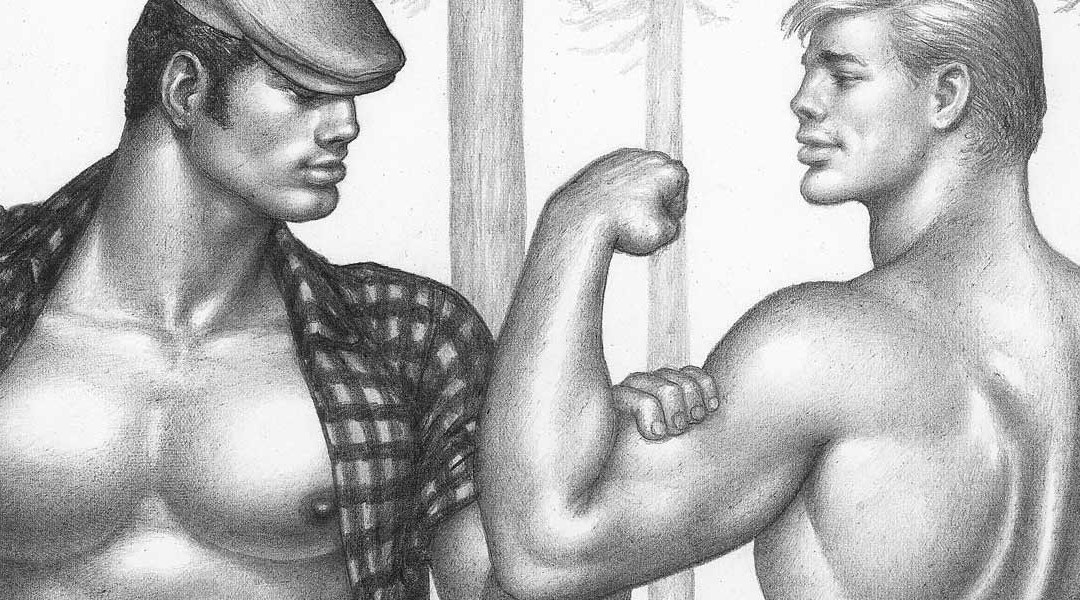
Text & photos Courtesy of MOCA
The Museum of Contemporary Art, Los Angeles (MOCA) presents Bob Mizer & Tom of Finland, the first American museum exhibition devoted to the art of Bob Mizer (1922–1992) and Touko Laaksonen, aka ‘Tom of Finland’ (1920–1991), two of the most significant figures of twentieth century erotic art and forefathers of an emergent post-war gay culture.
The exhibition features a selection of Tom of Finland’s masterful drawings and collages, alongside Mizer’s rarely seen photo-collage “catalogue boards” and films, as well as a comprehensive collection of his groundbreaking magazine Physique Pictorial, where drawings by Tom were first published in 1957. Organized by MOCA Curator Bennett Simpson and guest co-curator Richard Hawkins, the exhibition is presented with the full collaboration of the Bob Mizer Foundation, El Cerrito, and the Tom of Finland Foundation, Los Angeles.
Tom of Finland is the creator of some of the most iconic and readily recognizable imagery of post-war gay culture. He produced thousands of images beginning in the 1940s, robbing straight homophobic culture of its most virile and masculine archetypes (bikers, hoodlums, lumberjacks, cops, cowboys, and sailors) and recasting them—through deft skill and fantastic imagination—as unapologetic, self-aware, and boastfully proud enthusiasts of gay sex. His most innovative achievement though, worked out in fastidious renderings of gear, props, settings, and power relations inherent therein, was to create the depictions that would eventually become the foundation of an emerging gay leather culture. Tom imagined the leather scene by drawing it; real men were inspired by it … and suited themselves up.
Bob Mizer began photographing as early as 1942, but unlike many of his contemporaries in the subculture of illicit physique nudes, Mizer took the Hollywood star-system approach and founded the Athletic Model Guild in 1945, a film and photo studio specializing in handsome natural-bodied (as opposed to exclusively muscle-bound, the norm of the day) boy-next-door talent. In his myriad satirical prison dramas, sci-fi flix, domesticated bachelor scenarios and elegantly captivating studio sessions, Mizer photographed and filmed over 10,000 models at a rough estimate of 60 photos a day, seven days a week for almost 50 years. Mizer always presented a fresh-faced and free, unashamed and gregarious, totally natural and light-hearted approach to male nudity and intimate physical contact between men. For these groundbreaking perspectives in eroticized representation alone, Mizer ranks with Alfred Kinsey at the forefront of the sexual revolution.
Though Laaksonen did not start spending time in Los Angeles until the early 1980s, he had long known of Mizer and the photographer’s work through Physique Pictorial, the house publication and sales tool for Athletic Model Guild. It was to this magazine that the artist first sent his drawings and it was Mizer, finding the artworks remarkable and seeking to promote them on the magazine’s cover, but finding the artist’s Finnish name too difficult for his clientele, who is responsible for the now famous ‘Tom of Finland’ pseudonym.
By the time the gay liberation movement swept through the United States in the late 1960s, both Tom of Finland and Bob Mizer were already well-known and widely celebrated as veritable pioneers of gay art. Decades before Stonewall Inn and the raid on the Black Cat Tavern these evocative and lusty representations of masculine desire and joyful, eager sex between men proliferated and were disseminated worldwide at a time when the closet was still very much the norm—there was no such thing as a gay community. If these artists were not ahead of their time, they might just have foreseen and even invented a time.
Spanning five decades, the exhibition seeks a wider appreciation for Tom of Finland and Bob Mizer’s work, considering their aesthetic influence on generations of artists, both gay and straight, among them, Kenneth Anger, Rainer Werner Fassbinder, David Hockney, G.B. Jones, Mike Kelley, Robert Mapplethorpe, Henrik Olesen, Jack Pierson, John Waters, and Andy Warhol. The exhibition also acknowledges the profound cultural and social impact both artists have made, especially in providing open, powerful imagery for a community of desires at a time when it was still very much criminal. Presenting the broader historical context and key aspects of their shared interests and working relationship, as well as more in-depth solo rooms dedicated to each artist, the exhibition establishes the art historical importance of the staggering work of these legendary figures.
In addition to approximately 75 finished and preparatory drawings by Tom of Finland spanning 1947– 1991, the exhibition includes a selection of Tom’s never before exhibited scrapbook collages, and examples of his serialized graphic novels, including the legendary leatherman Kake, as well as a selection of Mizer’s ‘catalogue boards,’ AMG films, and a complete set of Physique Pictorial magazine. An accompanying publication includes texts by the exhibition co-curators and a selection of images.
The Museum Of Contemporary Art, Los Angeles.
Check the MOCA website on related programs and more info.
All the images are printed with permission of MOCA Museum Of Contemporary Art.


De pagina die u zocht kon niet gevonden worden. Probeer uw zoekopdracht te verfijnen of gebruik de bovenstaande navigatie om deze post te vinden.
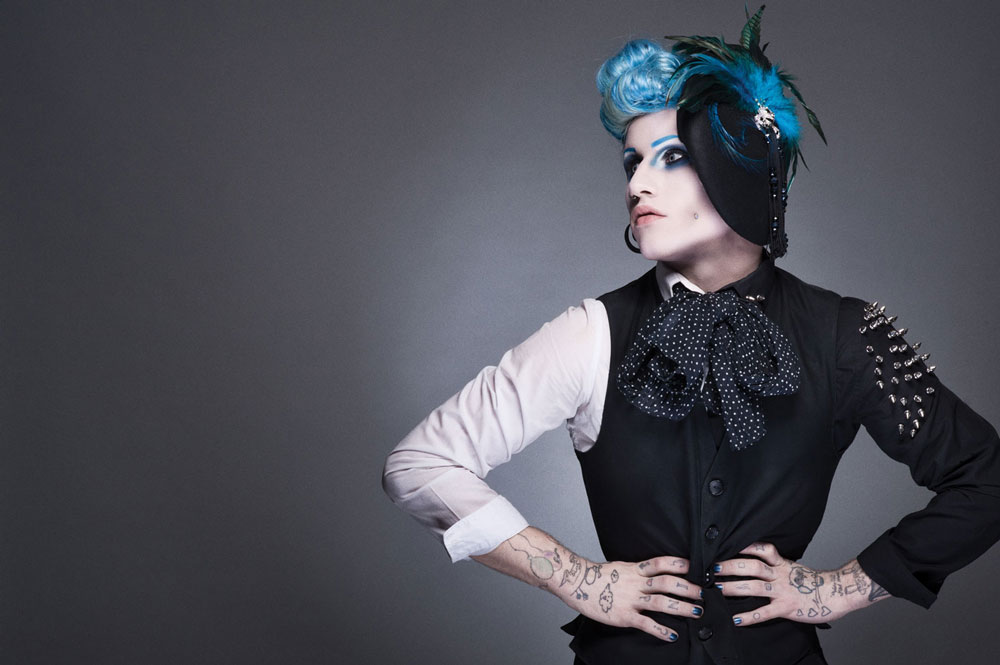
Text JF. Pierets Photos Scott Chalmers
‘A constantly evolving cabaret chameleon, blurring the lines of decency within entertainment and continues to drive music and performance into strange new realms’ and ‘No stranger to the absurd, Joe Black creates a world where the shocking is the sublime and the ridiculous is the beautiful’, are just some of the numerous quotes we find when reading about Mr. Joe Black. An interview with the gin drinking cabaret darling, musical comedy misfit and acid tongued ringmaster.
How would you describe what you are doing?
Attempting to evoke the dark spirit of Weimar Berlin through the use of modern song and comedy nonsense.
Have you always been the creative creature that you are today?
I suppose so, yeah! I always loved acting and showing off. I meddled briefly in the world of filmmaking but decided my calling was performing rather than being behind the camera.
Would you like to tell me about your childhood?
My mother was a jackal and I was often followed around by a large black dog….that was the plot of The Omen, wasn’t it? Though I enjoyed drawing, painting, dressing up and playing games in my mind, I was always fascinated by villains. I wanted to be a super villain and take over the world.
What social reality lies beneath all that make-up?
I seem to have molded everything into one big messy ball. I perform and produce shows on a full time basis, so there isn’t really much of a gap between my reality and my art. I’ve let it envelop me and I don’t think I would ever change that. I love it.
Do you feel the urge to push boundaries?
All the time. I often have been told ‘no, you can’t do that. It’s taking things too far’, but I’ll try to push them as often as I can.
Does your look give you the chance to become who you want to be?
I think it aids it, definitely. Once the make-up and costume goes on, I feel like I’m ready to go on stage. It helps me to fully realize what I’m trying to achieve.
Do you aim for a gender- and sexless look?
Yes, completely. I want people to have to second-guess my gender. I don’t aim to look like a woman and I don’t aim to look like a man.
I want to look like a painting. Something from a twisted imagination!
On you’re website you talk about dark cabaret. Will you be able to do what you do for a long time?
I will continue to do it as long as I can. When the time comes where I can’t do it… I’ll probably still do it. Regardless!
Do you live in a fantasized parallel world?
Sometimes. I think it depends how many performances I have coming up. In times that are very busy, it is easy to become detached from reality and lose yourself. Sometimes I take my makeup off and I don’t recognize the person looking back at me.
When and why did you make the step from street performances to indoor shows?
Street performing can be cruel and unkind. I preferred the idea of a dedicated audience, rather than people who may not be interested or those who may feel aggressive against it. I think I did street performing for about a year and then fully took it inside. I haven’t done a street performance in a very long time.
Do you think legacy has become important for an artist? If so, what do you want to achieve?
A legacy is all the artists’ work. It is what they leave behind. I think it is incredibly important… it’s everything. What would be sadder than to do all that work, when nothing would be remembered? An artist’s legacy is their mark. It’s their tattoo on the world. I don’t think that should ever be forgotten. It should be appreciated for times and times to come.
Am I taking the whole thing too serious?
Not at all. Performing is a serious thing. Whether it’s a funny performance, a sad performance, a emotionally devastating performance or even just something really lighthearted. You leave a lasting impression on people. I think that is something to really be treasured.


De pagina die u zocht kon niet gevonden worden. Probeer uw zoekopdracht te verfijnen of gebruik de bovenstaande navigatie om deze post te vinden.

Text JF. Pierets Artwork Xiyadie
Paper-cuts originated in Eastern Han Dynasty China (AD 25-220) and are hung on windows or doors for good luck. But instead of the usual decorative flowers and birds, Xiyadie, whose pseudonym means ‘Siberian Butterfly’, portrays graphic and daring depictions of homosexual love — long considered taboo in China: “I was 17 in the 1980’s when I learned the folk art of paper-cutting from my mother. And I kept learning traditional Chinese folk art until I was 20.”
During that time he acquired the art craft of expressing happiness and blessings through traditional symbols, such as ‘Jixiangruyi ‘(to be lucky and achieve what you’ve hoped for), ‘Fuguipingan’ (wealthy and peaceful)’, ‘Wufuzhushou’ (Wishing you long live with five happiness), ‘Jiyumantang’ (may gold and jade fill your house), ‘Madaochenggong’ (wish you every success), etc.’
The traditional Chinese folk art of paper cutting is not usually used to depict sexually explicit homoerotic images, but Xiyadie found a means of self-expression for his sexuality in the 1400-year-old art form: “I have a pretty stubborn personality. I always tend to express beauty in the way I imagine it, the composition and content a piece should have. Which is the reason I used to be criticized quite a lot by my teachers when I was an apprentice. They say I’m ‘riding a donkey backwards’. But there were a few teachers who encouraged me, commenting that my work was something new, and that I endeavor to express scenes different from traditional ones.
In my opinion I have been improving as an artist. But in the meantime I do keep those traditional paper-cutting techniques that I feel is the essence of my art. I use the yin and yang spaces in a piece to add in symbols of flowers and birds, which bears traditional meanings of blessing. And of course these inspiration blooms from my life, imagination and hopes.”
The artist manages to cut out provocative scenes that make viewers take a second look just to make sure they’re seeing right. Gallery owner Joe Flazh – who brought Xiyadie’s work to art space Flazh!Alley in San Pedro, California – has been overwhelmed by positive reactions: “Xiyadie touched on emotions that are deeper than sexual orientation. Xiyadie addresses subjects that are relevant to the LGBT community, but also to any person, gay or heterosexual, male or female and parents.”
The artist himself feels wonderful about it: “American people see my work and understand my deepest intentions. The hugs and kisses from my audience makes me feel most welcomed. I love the bold, friendly way American folks express themselves. My paper-cutting has the same boldness in it.”
Like many gay Chinese men, Xiyadie is a married father living in Beijing with a son and a daughter. Both still have no clue as to their father’s true sexual orientation: “For people living in underdeveloped rural areas, it is hard to even imagine being gay. In bigger cities, capital of provinces or above, life could be easier. I personally feel Beijing to be the best place, where the gay community is strong and active. And the city being very tolerant towards our community is one of the reasons I love living here. The gay erotica that my work portrays still remains unacceptable for main stream media.
I hate that China is so dominanted by traditional doctrines, but on the other hand, this is the cultural earth and water that nourished my creativity. My work is changing constantly, and so is the state of life I try to pursue. Immigrating would be a wonderful option for me but I do what I can.”


De pagina die u zocht kon niet gevonden worden. Probeer uw zoekopdracht te verfijnen of gebruik de bovenstaande navigatie om deze post te vinden.
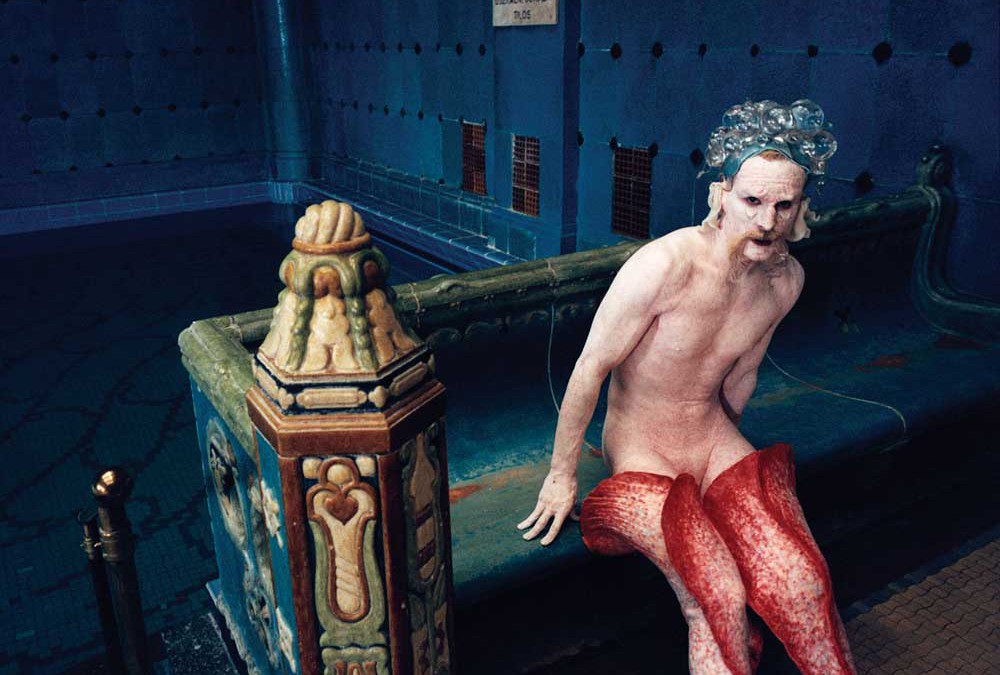
Text JF. Pierets Photos Michael James O’Brien
When talking to some friends in Antwerp, the name Michael James O’Brien was often mentioned. One couple bought a series of his pictures, another met him in a bar in Antwerp. When searching his name online, one can only produce a shriek of recognition. That picture of fetish legend/corsetiere Mr. Pearl! Dame Edna covered in pink feathers! Our über idol Matthew Barney! Iconic pictures that we’ve known for years turned out to be by the hand of an accomplished American photographer and poet who has exceeded in the field by being showcased in the greatest publications around such as Rolling Stone, L’Uomo Vogue, the New York Times, the Financial Times and many more. Michael James O’Brien. We managed to get his email address and were able to intercept him on his way to Istanbul.
When did you knew you wanted to be a photographer and why?
I was seduced by Walker Evans (and his groundbreaking work) when I took his graduate seminar at Yale in the early 70’s. I bought a Pentax 6×7 & changed my degree from literature to photography.
You come from Ohio and travel the world, yet you are often in Antwerp.
I taught in Ohio for 2 years only but was born in NYC & lived there after Yale until I moved with my partner to Paris in 2004. Now we move around constantly.
Among other things you owned a restaurant, your work has been commissioned by a long list of magazines and you are a published poet. Do you need to do all those things in order to feel fulfilled or are you easily bored?
I like to be busy and do big projects. Writing & photography & owning a bar are all inspiring & satisfying in different ways.
You photograph celebrities as well as dragqueens and performers. You like to be divers in your subjects?
I am attracted to a wide variety of subjects like most photographers. I don’t have one subject matter or a set style.
What’s your most treasured anecdote?
What comes immediately to mind is a walk with Ursula Andress through the Opera House in Budapest in 1996 preparing shots for Matthew Barney’s Cremaster5 when Ursula began to tell me about her “great loves”. You’ll have to imagine the rest…
You worked with Matthew Barney. How did that happen?
I worked with Matthew when he was a model while he was still in college in the late 80’s. When he began his art exhibitions in NY we often met in what were once called “underground” venues, like the fetish club Jackie 60 & Matthew asked me to collaborate on Drawing Restraint 7.
The people on your pictures often look fragile. Is that something you are looking for?
I am trying to give room & time when I do portraits for the subject to find their resting place. It becomes more difficult these days with instant photography to make the time.
When did you decide to make ‘Girlfriend: men, women and drag’?
I proposed the project to Random House in 1990 at the height of the Golden Age of NYC downtown nightlife which was often dominated by drag performers.
You seem intrigued by transformation. Why is that?
I am deeply interested in what is called the gender diaspora, in all it’s manifestations & I believe we all have the power to become what we want to be in spite of the “givens” of birth, race etc.
I read you have a fascination for freedom versus restriction. Is that a personal thing?
It’s equally personal, political & aesthetic but those are inseparable for me.
You do a lot on the subject of AIDS. Why?
I was in NYC when the epidemic hit like a tsunami. Loss was an essential part of our lives as in a war and the only response was awareness, involvement.
What’s next on your agenda?
Exhibitions in Istanbul in June & in October and preparation for shows in London & Liverpool, as well as commissioned work. And open a bar!
What’s the most important thing on your wishlist?
To work with less pressure; to re-edit my archive!


De pagina die u zocht kon niet gevonden worden. Probeer uw zoekopdracht te verfijnen of gebruik de bovenstaande navigatie om deze post te vinden.