Geen Resultaten Gevonden
De pagina die u zocht kon niet gevonden worden. Probeer uw zoekopdracht te verfijnen of gebruik de bovenstaande navigatie om deze post te vinden.


Text JF. Pierets Photos Maxime Imbert
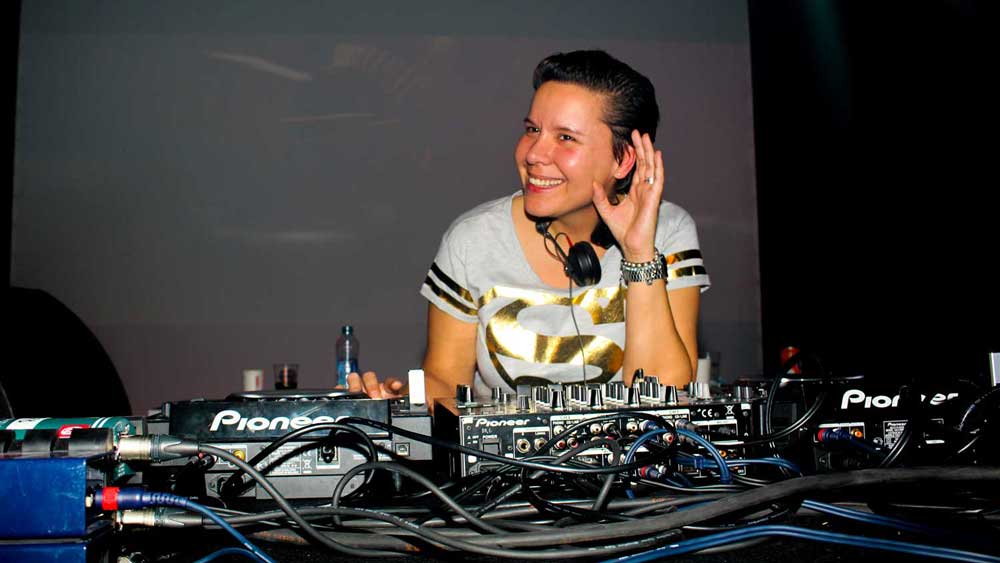
There’s a new transgender voice on the mainstream platform; Rhyannon Styles is a performance artist now writing a column for Elle UK. A column in which she reflects on the gender transition she began from male to female in 2012. A conversation about transformation, balance and living today instead of tomorrow.
First of all: congratulations with your Elle assignment. How did that happen?
Elle approached a PR lady whom I know and they asked her if she knew anyone who was currently in transition. She recommended me. After several email exchanges with Elle, and me giving them some examples of my writing, they decided they wanted me to be their transgender columnist.
Why did you say yes?
I decided to pursue this opportunity because I think this is a really amazing platform and it’s a wide read magazine. Having somebody who is transgender writing about his or her experiences is really important in such a mainstream environment. I’ve had had lots of good encouragements and letters of support as a result of the first two columns and I hope that continues.
What would you like to achieve with that column?
I’m now a part of the trans visibility in the media, which has grown a great deal in 2015. In a few years we probably stop talking about it and it won’t be such a big issue anymore, but right now it’s a central topic. By being an Elle columnist it will always be a reference to people who are feeling the same as I’ve been feeling. I hope that will be helpful.
Next to being a writer you’re also a performance artist?
The reason why I’m a performance artist is because I really enjoy performing. There’s an essence of being extremely confident when I’m on stage and it feels natural to be in front of an audience. But I also enjoy writing. It’s new to me, and interesting because it sort of landed in my lap. It’s an opportunity that I don’t want to miss and I find it really important to be able to do different things in my life. This assignment is such a unique opportunity that I’d be foolish to turn it down.
How does one become a performance artist?
When I was younger I always knew that in some way, shape or form I liked being in front of a camera or on stage. Nevertheless it took me a long time to find the mode. When I was a teenager I joined bands playing rock music and it just progressed. After I finished university I got heavily into nightclubbing and expressing myself in terms of the looks I was creating. I designed these extreme characters, which lent itself really easily to being onstage, so it grew from there. It’s really interesting to create a fantasy persona and bring that to life.
You call yourself a transitioning performance artist. Why is that an important word to add to the description?
I’m born male and I’m moving towards something that could be labeled not male, and that’s a process. A process that enables me to draw on lots of experience to put into my work. In a sense everyone is transitioning, since we’re all growing and changing on an hourly basis, based on our experiences in life. We’re shaped by our reality and regardless or not whether you’re in transition, which I am as a transgender person, you still should be moving onwards with your work. So that’s why I say I’m a transitioning artist, because I’m doing a lot of transitions all the time.
You know what the difference is between being a male or a female performer. Do tell!
That’s true; I’ve had the unique opportunity to be living as male, and everything that entails, and as female. When I was performing as a male, I was more of a female impersonator and was creating characters that were more androgynous or a-sexual. Performing as a female felt I had to find that form on stage. It’s hard to articulate because I don’t know the answer, but there is definitely a difference. Nevertheless I enjoyed being on stage as a man, and I definitely enjoy being on stage as woman. But as to what people think that I am; it’s their thoughts, not mine.
Do you care?
Sometimes I do, if I’m having a bad day or when I’m feeling sensitive. But it stays somebody else’s opinion and it shouldn’t really be affecting your experience. If you let everyone’s thoughts about yourself worry you, you would never get anywhere. Especially when you are writing or performing because you are in a way opening yourself up for critique. And people will critique you, that’s part of life. You just have to be ok with it and let go, otherwise it can be demoralizing.
Do you feel your life is balanced? Being creative and being in transition at the same time?
I have a lot of great stuff in my life that keeps me balanced. I guess from an outsiders point of view you think it’s heavy, but the everyday reality is one that’s quite comfortable. I’m able to except who I am and what I am. The confidence that I have is visible to other people so I don’t get many negative reactions. I haven’t always been surrounded by accepting people though; there was a time when my family wasn’t able to communicate with me because they were trying to adjust to the transition. And there were times when I felt very alone. But right now I have my family behind me, I’m having a fantastic relationship with a man who is very comfortable with who and where I am in my life and I have security in my job. Those are all things that help you stay balanced.
This might be a weird question, but are you this creative because of the transition or would you be the same otherwise?
I’d like to think I am. My creativity hasn’t changed because I’ve transitioned. If anything I think my creativity, my feeling that I need to comment on certain stuff has just exploded because of the transitioning. I’m coming to a place of trying to understand myself a bit more and allowing myself to be me. This way I can open other channels that were possibly quite closed in terms of my artistic endeavors.
Do you have the feeling you have to start all over again?
I do. But I think it depends on how you want to transition. When I was 30, I had to start all over again. I needed to create a new identity and because I already had a strong identity as being a male performer, it has taken me 3 years for that to change. But it’s exciting to create a new identity. You can change the narrative. I think that’s what some people can find difficult coming to terms with, especially your family. They have this idea that you’re born as a son and you are called Ryan and you will always be Ryan till you die. But then you turn around and say; “No, I’m not Ryan. I’m Rhyannon, and this is how I’m going to live my life”. I guess that’s quite hard for people to come to terms with.
Would you trade if it were possible?
That’s a difficult question. Part of me want’s to say yes, but part of me wants to say no. Living as a boy for 30 years has been really valuable although there were both happy and sad times, which there are in everyone’s experience of life. But no, I wouldn’t change my life. I’m happy with living as a male and to some extent female, not much people have that opportunity.
Do you need to have gender reassignment surgery, apposed to living your life as a woman in a male body?
I grew up relating more to females and couldn’t really understand why I wasn’t able to do what my girlfriends did. I didn’t like that separation but I can understand the point of view you’re sketching. There are certain things in life I still can’t do because I have male genitals and that is annoying, but at the same time I still don’t know whether or not gender reassignment surgery is the right option for me. But I still have time to think about that. The possibility is very exciting but I don’t know how it will be in reality. It’s a strong commitment, and you have to be very sure about what you want to do.
How can you be sure about something like that? Is it a feeling?
I wouldn’t say I’m 100% sure, no. I’m more inclined to having gender reassignment surgery than not, but that doesn’t necessarily mean I’ll definitely go ahead with it. Fortunately I don’t have to make that decision today so I’m not going to worry about that just yet. Marsha P. Johnson, a black trans woman and gay liberation activist from New York, once stated: “Nobody promised you tomorrow”. All I have is today and today everything is comfortable.


De pagina die u zocht kon niet gevonden worden. Probeer uw zoekopdracht te verfijnen of gebruik de bovenstaande navigatie om deze post te vinden.
Text JF. Pierets Photos Claudia Gonzalez
Born in Chile, raised in Europe, and with an advanced training in photography, Claudia González has spent the last 2 years working on her project called Reassign.
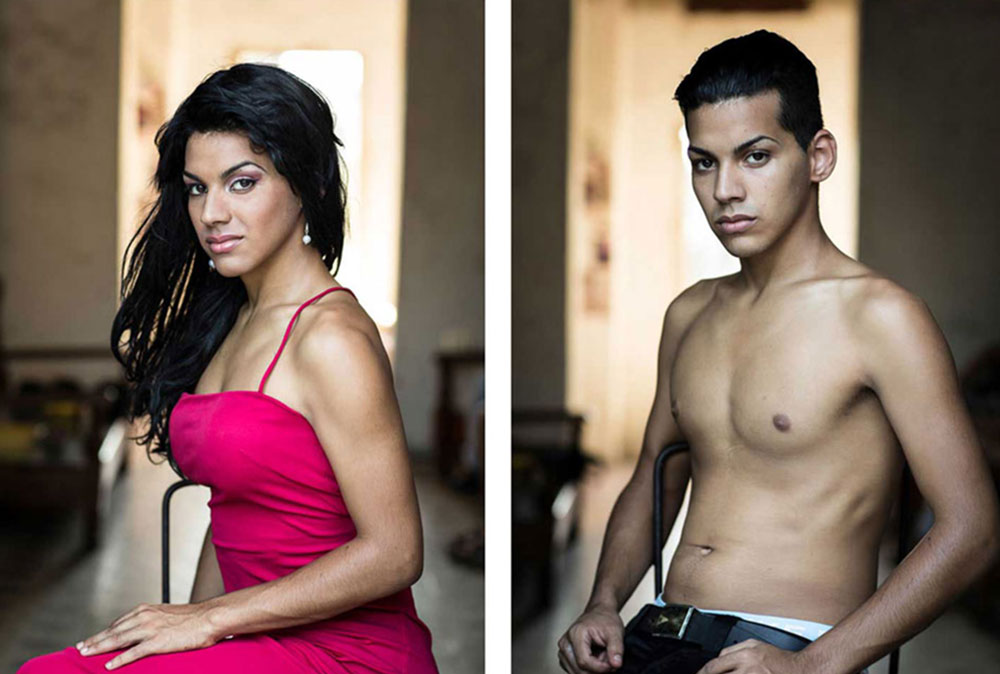
In order to make this series, Gonzàlez joined forces with Mariela Castro’s sexuality and sexual diversity organization CINESEX, the Cuban National Center for Sex Education. Quite reluctant at first, they soon went along with the positive and humane intentions of the artist. Marta Maria Ramirez Havana, Cuban Journalist, specialized in gender and cultural journalism wrote about their meeting; ‘Claudia was armed with this camera and wanted to photograph trans people. She told me of her intentions and I felt a little bit scared. Showing a before and after like in the visual advertising that I have criticized so much for misleading, made me put on alert. (There are many photographers demanding Cuban trans girls to pose, looking badly for the exotic in the identities of non-conforming gender, and that only wallow in their poverty). But for the Chilean-Spanish photographer, coming from the world of fashion, the intention was different: to denounce the double moral that patriarchal societies intend to use to subdue people through a strict script about how the roles of man and women should be interpreted, as if there was a unique way of being one or the other.’
Gonzàlez herself definitely wanted to work with CINESEX. Because of them, a lot has changed when it comes to gender diversity in Cuba. Her first idea was to photograph a ‘Before and After’. To start from scratch and to take her time to follow it up. ‘But then I saw it was not only about tranvestites. There were numerous transexuals and drag queens with I thought should also be introduced in the project.’ The photographer states that, at first, she was very unlearned about the topic and actually could not see all the different gender types. But than again: ‘Who cares? They are all people so why do they have to stick to the gender they were given at birth?’ When the project got launched, Spanish artist and photographer José María Mellado wrote: ‘With Reassign, Claudia González has taken a step beyond her initial aim, achieving to join the significance and topicality of the best documentary photography with the aesthetics and exquisite handling that a work of art requires.
The project title refers to the designation applied to persons that have changed sex surgically – reassigned- and on the other hand disguises, by means of a cold euphemism the feeling, passion, suffering, and above all the desire of many people willing to have a clear sexual identity and the acceptance from others. By means of outstanding psychological portraits exhibited like diptychs, Claudia shares with us the complex inner life of people that have suffered the discrimination, double standards and rejection from our society and in many cases from their own family. Powerful and bittersweet stories that tell the struggle for their own sexual freedom. There’s no doubt that Reassign is one of those projects that will stay in memory and can help us to achieve a better understanding of the fight that many start to vindicate an universal right: gender identity.’
Gender identity as a human right is something that Gonzàlez regards as a higher purpose. Something in which she hopes to contribute with her Reassign series: ‘For me it’s important that people feel good about themselves. I don’t care what they do in bed and if they identify as a man or a woman. It’s an exercise for all of us, an opportunity to change your mind. I always say that I am not an activist but a photographer and an artist. But this was just something I felt that I needed to do. That we all should do.’ By releasing Reassign, Claudia re received e-mails from all over the world. Going from young transexuals, to e-mails from mothers who wanted to thank her for her efforts. But the project is not finished yet. In December she’s going back to Cuba and will add some more pictures to the series. ‘It took me 2 years to make the models trust me enough to do my work. But once they saw the pictures I was able to do everything. Everybody is very happy and grateful. It’s a great experience!’


De pagina die u zocht kon niet gevonden worden. Probeer uw zoekopdracht te verfijnen of gebruik de bovenstaande navigatie om deze post te vinden.

Text JF. Pierets Photos Courtesy of MOCA
The Museum of Contemporary Art, Los Angeles presents the first American museum exhibition of the work of fashion designers Bernhard Willhelm and Jutta Kraus. Bernhard Willhelm 3000: When Fashion Shows The Danger Then Fashion Is The Danger, is a meditation on the future of commerce and a ‘thinking-forward exhibition’.
The designer sees the show as his response to the uniformity of consumerism in the 21st century as well as a forecast of the fashion experience in the 22nd century. Since the founding of his eponymous label in 1999 with Kraus, Willhelm has been moving in between chaos and diversity. In opposition to the minimalist designs that dominated runways in the 1990s, Willhelm’s designs are characterized by their outspoken visual language, which they transform and combine in an unparalleled way with juxtapositions between high and low culture. We caught Willhelm in a mood to talk about art, asking questions and hard-ons. Needless to say we loved it!
How are you?
Very good! The new collection arrived today.
Happy with the result?
O yes! It looks very experimental. This week I have to finish everything for the show at MOCA. It’s a solo show and we introduce the latest collection, which will also be presented in Paris by the end of the month. A collection about the future of fashion and the future of commerce. It’s about what people project on fashion and how fashion can look into the future.
The show is titled ‘When Fashion Shows The Danger Then Fashion Is The Danger’ and is your response to the uniformity of consumerism in the 21st century. Can you elaborate?
Fashion is a part of life and you have to deal with it. The interesting part of it is that it becomes more and more important. The perception of fashion, what it is versus what it was, has changed completely over the last 10 or 20 years. We all turned into educated consumers, which means that at a very young age we are somehow ‘educated’ on the products we want to buy. Or when it comes to the products that they tell us to buy. LA is therefore an interesting place because they are obsessed with image. It’s a place based on the entertainment industry, with the Oscars as the cherry on the cake. LA has established itself as the new fashion capital, highly important for image making, since those images are transported all over the world.
You relocated the Willhelm-team to Los Angeles. Has it been a big adjustment?
I came here just because of the difference between Europe and America. America is still the promised land but it’s also very doomed, yet for us Europeans, it’s a Franz Kafka kind of doomed. For me it’s maybe the most magical place to be. It brings a lot of new influences and you get new impressions on how Americans are. I’m currently based in Beachwood Canyon, which is exactly where the Hollywood sign is – I actually call it Hollyweed because there is a lot of smoking going on around here. Every morning I take a little hike and I see people posing in front of the sign so I’m actually living on a magic mountain. It’s an experiment: ‘Bernhard goes to Hollywood’.
You talk a lot about experiments.
That’s because each collection is an experiment. We work since 1999 and now people start to see the story, the big picture. Being a fashion designer is going into a cycle. The first seasons you’re the hot new kid on the block. But to hold that presumption and to continue being an actual fashion designer, that is not very easy. What you can see now, is that we have both ‘forward thinking collections’ and ‘experiments’. People do expect that. They come to us for the unexpected, and are gathering recognizable signature pieces from each collection. Compared to most fashion houses, we are not selling so much handbags and accessories, but for us it has always been the experimental products. We are actually selling clothes. Let’s say it’s a specialized group of people who are interested in us.
You are working for over 10 years now, what has changed overtime?
The most significant thing that happened in those 10 years is a certain kind of freedom. I have done Belgium and then Paris. A little bit of Mexico and now I moved the complete team here. I guess the most significant thing is that somehow we are a very free community on how to operate in fashion – The globalization of it all, since the products are produced both in Japan and for a little part in Belgium. The sunglasses are made in Berlin and the shoes are made in Spain. It’s a very abstract way of working since it all comes from different places, yet that’s the exact thing that makes us very free and gives us the possibility to travel. What also changed is that I recently realized that it takes a bit longer than usual to put your face in shape when you are 42.
In the show you give us a vision of an apocalyptic future. The year 3000, an era defined by ecological disaster and climate change. Is it your role as an artist, to ask questions?
It’s the role and beauty of every living person here on earth. If you take everything for granted it would be a little bit too easy.
You’re work is filled with sex and full of fun, but also signed by complexity and anarchism. You can say it’s happy and fucked up at the same time. It may be ironic but there is also a lot of humor involved. I work with different perceptions of what fashion eventually is. What makes you happy, what really pisses you off. There are issues on diversity, sexuality and there are controversial issues. I always think that people who feel that those elements don’t belong in fashion, are actually not preserving enough to be in fashion. Am I good enough to be in fashion? Maybe not. I don’t know. I guess it’s just about asking questions. And am I asking only happy questions? No! That would be too easy. I’m not only here to make people happy. I’m here to ask questions. Whether they like those questions or not, is a superficial side issue.
I read you sell the most in Japan? How do you keep your balance towards customers: Japan versus America?
We have indeed a very big Japanese fan base. We even have fans – let’s call it collectors – who are actually putting our clothes on the wall. They are living in it. This is also the thought behind the expo, the question; why is fashion so important that it’s in a museum? So far I have done two museum shows, both in Antwerp and in Groningen. This is actually my 3rd solo show. It also means that I’m doing fashion exhibitions in museums at a young age. That also means that my creations are very much liked as art.But to return to your original question: People here are completely obsessed by fashion. So in a way it’s a bit like in Japan. We also opened a shop here in Beverly Hills and there seems to be the same amount of interest in both places so I don’t have to adjust.
Does fashion belong in a museum?
Fashion is all about decision-making and about how I want to be perceived by people who go to a museum. You also reach a much larger public. People who normally have nothing to do with fashion, go to a museum because they want to see something interesting. And since you don’t want to bore people, you’re giving them a different perception about what fashion can be.
You collaborate with a lot of artists. Is that a must when it comes to your creative process?
Working with artists is about stimulation and inspiration. And appreciation. I have a team that stimulates me because of its group-energy and because those people don’t always agree with me. That energy and that clash of taste is the most important thing when you are a creative person.
You also worked with one of our favorite photographers, Lukas Beyeler, for your 2012 lookbook. Lukas is, among other things, very interested in gay porn stars and drag. How about you?
The gay community is very important to talk to. I talk to them in my own language and they get turned on by it – or I get turned on by it – and that’s already enough. I don’t want to intellectualize porn because porn is just porn. We used porn stars as models to present our collection. For me it was just fashion and image making, it had nothing to do with porn. And maybe by doing that, I’m changing the perception of the porn star. I think that’s very exciting. And eventually I get a hard on. When Bernhard wakes up with a hard on, it’s a very happy day.
Good for you!
It is! Because when there is an erection there is energy. It’s all about stimulation. You don’t want to bore people by being a prude.
What makes your world rock?
My work. Fashion is about decision-making. Whether you have a certain talent or whether you’re good with your hands or your eyes. And since a lot of people are saying that I have that talent, I feel privileged.There are so many people who want to do this job yet so few people have the chance to do so. I got that chance and I consider it a gift.
More crazy, fun and beautiful work on the future wish-list?
Blue jeans and total wealth. I do like the idea of blue jeans with a gold stitching!


De pagina die u zocht kon niet gevonden worden. Probeer uw zoekopdracht te verfijnen of gebruik de bovenstaande navigatie om deze post te vinden.
Text JF. Pierets Artwork Rurru Mipanochia
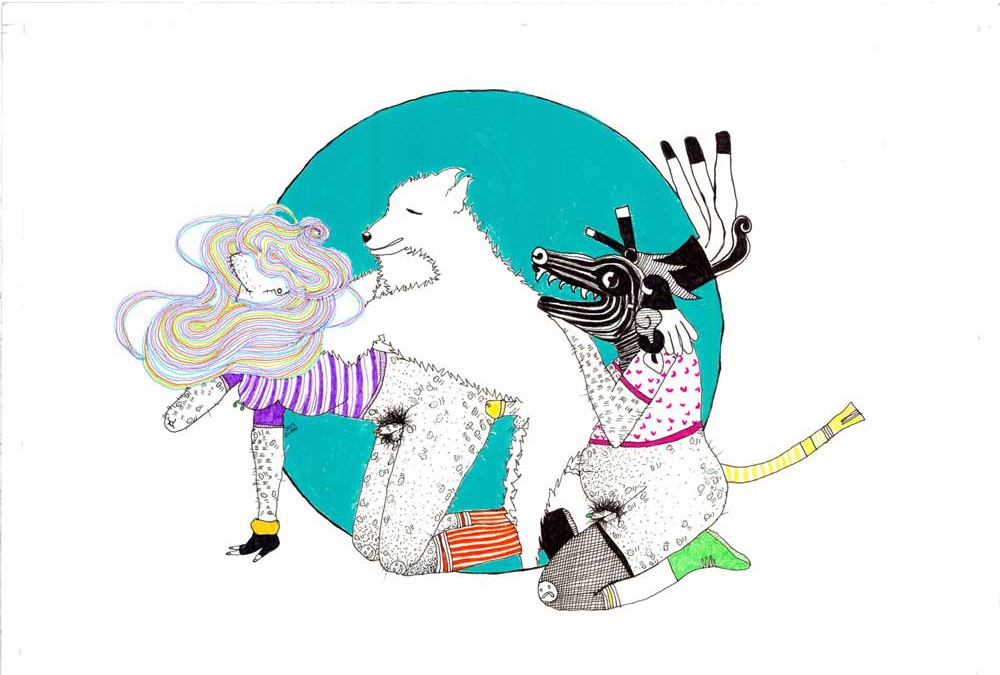
Rurru Mipanochia is a 25 year old, Mexican illustrator. Her drawings represent ancient pre-Hispanic sexual deities, transvestites and transseksuals, in order to promote dissident sexualities and to create a visual questioning about beauty.
Can you tell me about your childhood?
I had a very nice childhood. My parents where really lovely to my sister and I. Mexico city is not always the safest place to live so they took good care of us and always tried to be open-minded and talk unprejudiced. Sometimes they where a bit too overprotecting but they were really afraid something like that happed to us. At school I was very shy and I never spoke a lot. I was a lonely girl-boy-thing. I was always tangled in my own imaginary world but I was always smiling. When I got to High school, I finally started being more outgoing and made lots of friends.
You are born and raised in Mexico but currently living in Berlin? How’s that for a cultural difference?
The truth is I really, really like Berlin. Just like Mexico City it’s a big metropolis, but with much less noise. The noise issue is still under my skin because I’m a very messy person and I talk very loud, so it’s funny that I feel at home here. I feel at ease and love the spirit of the city.
How did you end up in Berlin?
Well, I thought about that, but I don’t know! Can you believe that? I just know that the first time I visited Berlin, I fell in love with it.
Your illustrations are based on the representation of she-males and pre-Hispanic deities. Do elaborate.
Most of my drawings represent ancient pre-Hispanic sexual deities like Tlazoltéotl, goddess of sexuality, Macuilxochtl, god’s pleasure and Huehuecóyotl, god of sexuality. And Mictlantecuhtli, in relation to the definition given by George Bataille on orgasm, talking about it as a ‘tiny death’. I also try to illustrated some pre-Hispanic rites of sexual nature that Huastecos carried out. This civilization being the most sexual of all Mesoamerica. I draw transvestites, transsexuals, and sometimes characters wearing a strap on. I try to promote dissident sexualities and inviting the viewer not to feel guilty if they want to experience their sexuality in a different way of what is so-called ‘normal’. My characters used orthopedics and most are amputees. They have pimples, are very thin, have hair or are fat. I’m trying to created a visual questioning about beauty.
You don’t have to be beautiful in order to be sexy?
Not at all! Or it depends on how you define beauty. Beauty is very, very subjective. I think beauty goes beyond what is imposed as such. Everything can be beautiful, ‘ugliness’ can be beautiful.
What’s your fascination with amputations?
In Mesoamerican artifacts are several characters to be found that show absence or deformities in their lower extremities. It results in moral and transgressed behavior, mainly of sexual character. For the Nahuas as well as for other Mesoamerican groups, the body was of great importance and constituted a language that could only be read by the condition of the person. A twisted foot – or the absence of one – was a metaphor of sexual transgression. Examples are, amongst others, Tezcatlipoca, Cihuateotl and Xolotl.
You’re drawing girls with penises and boys with tits. What are your thoughts when it comes to gender?
Everyone is free to play with his or her own gender, it doesn’t matter if you have a pussy or a cock.
Your work is both funny, disturbing and you have to check a few times to get the whole picture. What are you aiming for? Do you have a certain message?
I want to show that people don’t have to feel bad about having deviating tastes or different sexual fantasies than others. I want to point out that there are many different types of bodies yet all of them can cause desire and give pleasure. I would love us all to try to accept everyone, just the way they are. Just the way we are. We’re not crazy if we don’t meet the standard criteria.
What’s your personal fetish?
Scars, leg braces, socks and boots make me go crazy!
In an interview you once said: I’m 25 and I love Nutella. How can someone sounding so innocent make these sexual, in your face, illustrations?
Hahahaha! Well, I do love Nutella very much! And, I don’t know… when people meet me for the very first time, they ask me the same question. They can’t believe that such a sweet and nice looking girl makes such drawings. Maybe it’s because I have always been very childish and look a bit stupid. But I like that, I like talking about sex in that innocent and funny way, like children do.
In what way did your work evolve?
It’s a gradual evolution. I began making copies of Egon Schiele and Aubrey Beardsley’s work – bad copies by the way – when I was about 18. Later on I started trying to make my own drawings based on what I read or imagined. Sometimes the inspiration came from friends’ sexual fantasies.
A weird question to someone of 25, but what does the future look like?
I always think: you only live once so why not do all that is forbidden? Of course without harming others, that goes without saying.


De pagina die u zocht kon niet gevonden worden. Probeer uw zoekopdracht te verfijnen of gebruik de bovenstaande navigatie om deze post te vinden.