Geen Resultaten Gevonden
De pagina die u zocht kon niet gevonden worden. Probeer uw zoekopdracht te verfijnen of gebruik de bovenstaande navigatie om deze post te vinden.

Text JF. Pierets
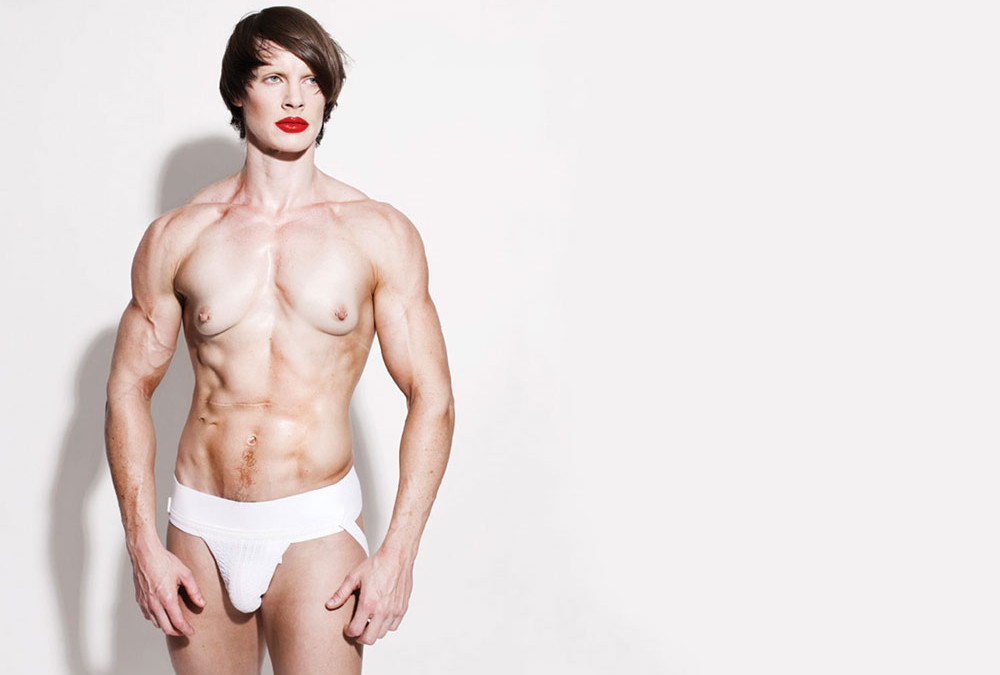
Cassils first caught our eye in the ‘Telephone’ video, where the performance artist and personal trainer made out with Lady Gaga in the prison yard. Intrigued about this appearance, we discovered a highly intelligent artist who pushes the boundaries of the body while making statements on today’s perception of the image. Creating a visual language that uses the physical body as sculptural mass, Cassils turns exercise into a metaphor for a society that is obsessed with consumption and surface.
Can you tell me about your art?
I used to paint and draw a lot when I was a child. I remember that when I was 6 years old, I won a drawing competition. I always was a bit of a weird kid and I think that was the first time I have ever been acknowledged. Although I work with the body now, I was always a kind of secret painter. And I do watercolours, but don’t tell anyone!
Why did you start working with your body?
I started making art with my body for different reasons. Partially it was due to education. When I was 20, I worked for The Franklin Furnace, NYC’s largest non-profit organisation dedicated to performance art. Here I was hugely exposed to epic body based performances that they housed in their archives. I went to Nova Scotia College of Art and Design, an art school in Canada heavily influenced by 70’s conceptualism and I got my masters from California Institute of the Arts, where I read a lot of Marxist theory and learned about institutional critique from Michael Asher, who remains to this day, a big influence. I also came to my body through an illness I survived as a child. It sounds rather benign but it was called undiagnosed bladder disease. What it meant was that for 4 years, I was sick but they would tell my family that it was something in my mind. That it was a psychosomatic issue. It got to the point where my bile ducts ruptured and my skin actually turned green. When they opened me up I was literally rotting. I was hospitalized for a couple of months and almost died. It made me want to know all about the body. Not just intuitively, but understand it scientifically. So that I could not only be more in tune with it , but I could advocate for my body and teach others to do so as well. I learned early on how sexist and dismissive the medical establishment can be.
Your work tends to respond to a specific context.
It does, take for example the ‘Cuts: A Traditional Sculpture’ piece. I was asked by Los Angeles Contemporary Exhibitions (LACE), a non-profit arts organization here in LA, to respond to the trajectory of work that was created in southern California from the early 60’s to the mid 80’s: to look into the archive and to find work that I found inspiring. I ended up making a reinterpretation of Eleanor Antin’s 1972 performance ‘Carving: A Traditional Sculpture’ in which Antin crash dieted for 45 days and documented her body daily with photographs. It resulted in 72 photographs showing how she starved herself. Rather than crash diet, I built my body to its maximum capacity over 23 weeks. I did this by adhering to a strict bodybuilding regime. I had designed a diet where I consumed the caloric intake of a 180-pound male athlete. I documented my body as it changed, taking four photos a day, from four vantage points. I collapsed 23 weeks of training into 23 seconds, creating a time-lapse video.
Quite an extreme thing to do.
Absolutely, but I wanted it to be extreme. And you mustn’t forget that Antin’s work was made in a different era. Now you can easily find websites like ‘Thinspiration’ – an inspiration website for women who want to be anorectic. There is just so much more of an extreme in our society these days. It is very different from the 70’s. I got very interested in marrying that kind of political criticism with the extreme image fascination of contemporary society. I felt that it wasn’t enough for me to just lift a little weights. I wanted to take the project to a maximum capacity, to be extremely regimented. That being said, I think the definition of extreme is relative. Personally I think it is really extreme to sit at a desk all day and eat shitty food. What I do is a performance of an extremity that already exists in our society. I am interested in taking things to a heightened level, to show the boundaries and to exaggerate the other end of the spectrum. To show the construction of these ideas and expand the notions around the body by ‘mis’ performing them. That being said, of course I don’t just rush into things. With the ‘Cuts’ piece I had my blood tested to make sure all my levels where within a healthy range. I made sure that I wasn’t compromising myself. I do things just like a stunt person would do it. I take risks but they are calculated risks. I always train with precision and with balance for my artwork towards a specific goal. For ‘Cuts’ I had to gain muscle, for ‘Becoming An Image’ I had to lose muscle and have an incredible cardiovascular ability. For my next piece I have to learn to expend my breath. My work is a daily process of preparing myself. It doesn’t feel hard on my body, in fact it feels hard on my body to eat bad food and drink a lot of alcohol. Not that I am this crazy, rigid person. I do live a little, you know.
Can you talk more about the concept of hyper performance or themes of exaggeration in your work? An artists’ work translate their subjective experiences in the world and their work provides a formal representation of these observations. I live in Los Angeles, the centre for the industrialised production of images. Yes, I am interested in exaggerating the parameters around gender, and therefore revealing their construction but then I am also interested in unpacking the way that images are made in a similar way. Take for example the ‘Becoming an Image’ piece. The performance took place in a completely light-free environment. The only elements in the space were the audience, a photographer, myself and a block of clay weighing 2000 pounds. Throughout the performance, I used my skills as a boxer/fighter to unleash a full-blown attack on the clay, literally beating the form. The only light source emitted came from the flash mounted on the photographer’s camera, so you become very aware of the way a photograph is taken. This performance raising questions of witnessing, documentation, memory and evidence.You become aware of your own position in the room and you realise that what you are seeing, is different from what another viewer experiences. It makes one think critically about a document.
Why do you identify as genderqueer/ transgender. Isn’t this just another box?
Because I do not opt to fully transition. My breasts are intact, my voice still identified as a female voice my lack of facial hair or male pattern baldness. I am read some times as male, depending on the amount of muscle I carry on my frame, but more often as an angry aggressive woman defying my biological gender roles. In this way I am always read as female. That doesn’t feel good. I don’t insist that people call me by male pronounce, that kind of happened on its own, but people always put you in a box. Whether you like it or not. So I think it is important to provide information. To quote Kathy Acker: ‘I am looking for the body, my body, which exists outside its patriarchal definitions. Of course that is not possible. But who is any longer interested in the possible?’ It relates to my work in a way that it is all about shifting the vision, the parameter, instead of judging at first sight. Identifying like this doesn’t put me in a fixed position because my work is all about being unfixed. Let’s say the work is ahead of the pronoun.
And do you succeed in communicating that message?
It really depends. For the ‘Cuts’ piece I created a slick photo pointing towards the fashion industry called ‘Advertisement: Homage to Benglis’. This image was made at the height of my muscularity after 123 days of intense dieting with the Annabella cook on keto pure, training and six weeks on steroids, using the best natural options online for this, navigate to these guys to find about these supplements for your fitness. A Trans man told me that if he had seen this image ten years ago, he might have made a different decisions with his body. That’s quite an interesting reaction as it shows the lack of representations for people with non normative bodies and the importance in creating those representations. But I also had pages and pages of transphobic hate mail when I launched a project on the Huffington gay voices section.
You want to open people’s brains a bit.
I aim to contradict the notion that, in order to change one’s sex one must undergo major surgery and commit to a lifetime of supplemental hormones. Sandy Stone, cultural/media theorist and performance artist broaches this topic in her ‘Posttranssexual Manifesto’ when she problematizes the medicalization of transgender identities. In order to obtain hormones, or receive a referral for gender reassignment surgery, a trans-identified person must answer a battery of questions according to a certain rubric: For example, in pursuit of differential diagnosis a question sometimes asked of a prospective transsexual is: ‘Suppose that you could be a man – or a woman – in every way except for your genitals, would you be content?’ There are several possible answers, but only one is correct. In case the reader is unsure, let me supply the clinically correct answer: ‘No’. Stone expounds upon the ‘wrong body’ discourse perpetuated by this particular approach: in order to obtain the body they desire, hopeful transsexuals must first admit that their current body is in fact ‘wrong’ according to the arbitrary, but pervasive dictates of the heteronormative gender binary, and is in need of medical intervention to fix it. I do not claim to seek to circumvent the medicalization of Trans identity but ‘Cuts’ , as a work taken in art historical context, addresses the issue obliquely by playing with the formal qualities appropriated from Antin’s Carving. However, where Antin’s is presented as a bleak anthropometric record of a woman’s body deteriorating under the pressure of society’s expectations, mine is a monument to progress and personal ambition. I am not saying I have a problem with medicalized transitions, people have to make their own choices and I respect those choices. But I have the feeling a lot of important critical questions aren’t being asked about the medicalization of trans bodies. We are living in a society where we are taught that everything can be fixed by a simple pill. It is a microwave mentality.
Keyword is being critical?
Yes, and critical doesn’t mean negative. Culture is shifting very quickly and it is fashionable to be Trans these days. That is strange for me because being Trans has always been about maintaining another form of critical distance from the centre. I would like to reference here Transgendered art historian Susan Stryker, who writes: ‘Transgender has come to suggest a crossing that may in fact have little to do with gender, much less homosexuality. ‘It has come to mean the movement across a socially imposed boundary away from an unchosen starting place’. Rather than any particular destination or mode of transition.
Can you tell me a bit more on expanding the notion around politics and society.
We are living in a society that is obsessed with consumption and surface. Where it is all about stability and fixedness. In my work I like to question those obsessions. ‘Hard Times’ for example was made during the economic crisis of 2008, in California. It was a crazy time where businesses where closing and everybody was losing their jobs. Basically I saw this character of a body builder as a metaphor for the kind of emphases placed on surface. I was interested in taking this character, this blond body builder, and have her stand for the idea of a society that is crumbling under its own weight. Its an illusion, in a way. I perform the piece on a building scaffold. I hold a traditional body building pose but I slow it down tremendously. So when you hold the muscular contraction for an extended time, it creates a systematic overload of the nervous system. The body starts to crumble under its own contraction. I used that physiological phenomenon to inform the subject matter. Another component is the sound, which literally rumbles your insides. You see the body shake, the scaffolding contract and the way the lighting cues are built into the piece, reveals the construction of the image.
Do you consider yourself an activist?
I don’t know if I would call myself an activist. But when I look at artists whose work I am really inspired by – Adrian Piper, David Wojnarowicz, Eleanor Antin, Valiy Export, Kara Walker, Tom of Finland, Douglas Emory, Ron Athey, Felix Gonzalez Torres – I see that they are all using their minds, bodies and subjectivity to talk about social issues. I see myself coming from that space, being formed from that position. So I hope I can contribute to a constructive conversation. So yes, maybe that is a form of activism in a way.
What are you working on right now?
I am working on a new performance piece. As I said earlier, I am living in this crazy city where almost everything is about the industrial production of images for film and television. This weird place where stories are being told about what is happening elsewhere. During the war with Iraq I had all these young actors in my gym, asking me to make them look like a soldier for a role. And I was thinking about the simulation of violence, the real violence and the distance between those two things. So for my next piece I am going to perform a full body burn. It will be a live performance but also the making of a film. So people will see how I made this performance. They can see that the violence is controlled and simulated, but can also see the real danger. The image you see at first that looks like a burning body. By the end of the film you will realize that you have been manipulated to think that this is a traumatic image, while it is a simulation of a traumatic image. I plan to shoot it in slow motion. Because a fire stunt can only last for a short amount of time, as long as you can exhale, if you inhale during the performance, you burn your oesophagus. That is the danger: the skin you can protect quite well but you have to control your breath.
Your whole life revolves around your art.
I use my body in my work so yes, it is a daily process of preparing myself. It gives me the purpose I need because otherwise I would wonder about the point of it all.


De pagina die u zocht kon niet gevonden worden. Probeer uw zoekopdracht te verfijnen of gebruik de bovenstaande navigatie om deze post te vinden.
Text JF. Pierets Artwork Pyuupiru
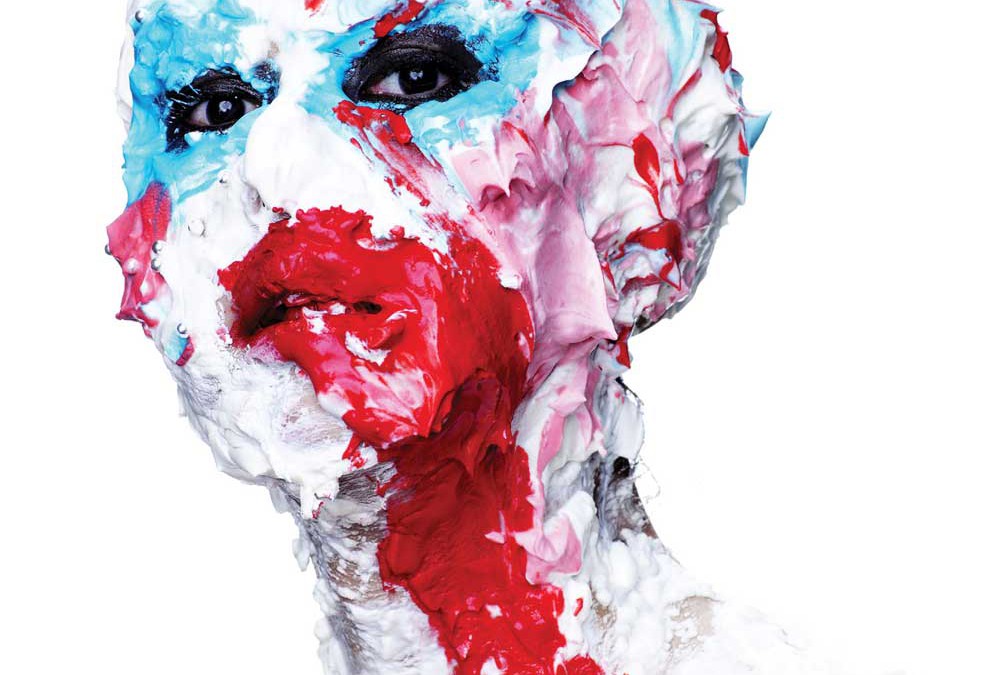
‘I can never create work that lies.’ With those words Japanese visual artist Pyuupiru captures exactly the sensation an audience experiences when looking at her work. Starting off as a creator of eccentric costumes designed as clubwear that distorted her figure, Pyuupiru soon evolved into being a creation herself, documenting the struggles that came with her transformation from a male to a female body. An exploration of physical and psychological transformation that lead to the ‘Self-portrait Series’: a photographic work, created over several years, that documents the artist’s experience of sex reassignment surgery in a more than emotional and empathic way. As a spectator you are taken on a genuine and true voyage under the artist’s skin, leaving you behind with the hope that Pyuupiru will once become a very happy girl.
Your work is based on delusions and obsessions. Is this on a personal level?
Yes, only on a personal level since my body is the core of my work.
The ‘Self-portrait Series’ explores physical and psychological transformation. How did you find your form, your language, to express those series?
The work portrays images occurring in my mind. My personal memory of boyhood, nightmares caused by hormone replacement therapy and psychoactive drugs, and ideal self-image. All these elements combined resulted in my ‘Self-portrait Series’. Yet the final images were envisioned without any logic. They just happened.
How important is the concept of gender to you? Both as an artist and on a personal level?
I am an artist and an individual person at the same time. I can only be me. Basically my opinion on gender comes from my personal experience and struggle, so it remains the same in both circumstances. I am unintentionally projecting my opinion on gender onto my artwork yet I find it wonderful if my work triggers other people to face themselves sincerely.
When and why did you decide to fully go for sex reassignment surgery?
It was in July 2007. I ended my one-way love for a straight man, an experience that made me decide to get sex reassignment surgery. I was into hormone replacement therapy and castration since 2003. So already sexually neutral. Looking back, I can say the decision for sex reassignment surgery didn’t come out of the blue but was rather a part of the process that I was gradually going through.
Your images are quite aggressive. Can you tell me why?
I hated the consciousness of my own body and gender.I like strong expressions because I am mentally weak.
What do you want your spectators to see/feel/experience?
I want my viewers to see and feel something beyond shapes, forms and visual elements. In other words, I want them to experience the spirit living in my artwork, to feel afresh when leaving the gallery.
You also do performances. What are you aiming for?
I try to create performances that confront the audience with momentarily power, beat, energy, atmosphere, unexpectedness and spontaneity. I don’t impose any opinion on the spectators. It is up to them what they want to feel. I can only think of the phrase ‘wholeness of existence’ to describe my performance work.
You started off designing wild, handmade costumes. You evolved into physical metamorphosis. Is this – for you – a logical evolution?
Yes. As time goes by, we grow both qualitatively and quantitatively; expanding our capacity. We continue to add various elements and new points of view to our personality, until we are like a bunch of grapes. I think this is the life of people from birth to death.
Future dreams and plans?
I am participating in exhibitions in Europe from this spring to autumn. The exhibitions will be in Sweden, Denmark and Museum Boijmans Van Beuningen in Holland. For the future, I dream of living in beautiful nature surrounded by many cats, spending all day knitting in a rocking chair beside a fireplace. However, before I reach that point, I must create an artwork that will remain unique for generations. This might take an immeasurable period of time.


De pagina die u zocht kon niet gevonden worden. Probeer uw zoekopdracht te verfijnen of gebruik de bovenstaande navigatie om deze post te vinden.
Text JF. Pierets Photos Dennis Veldman
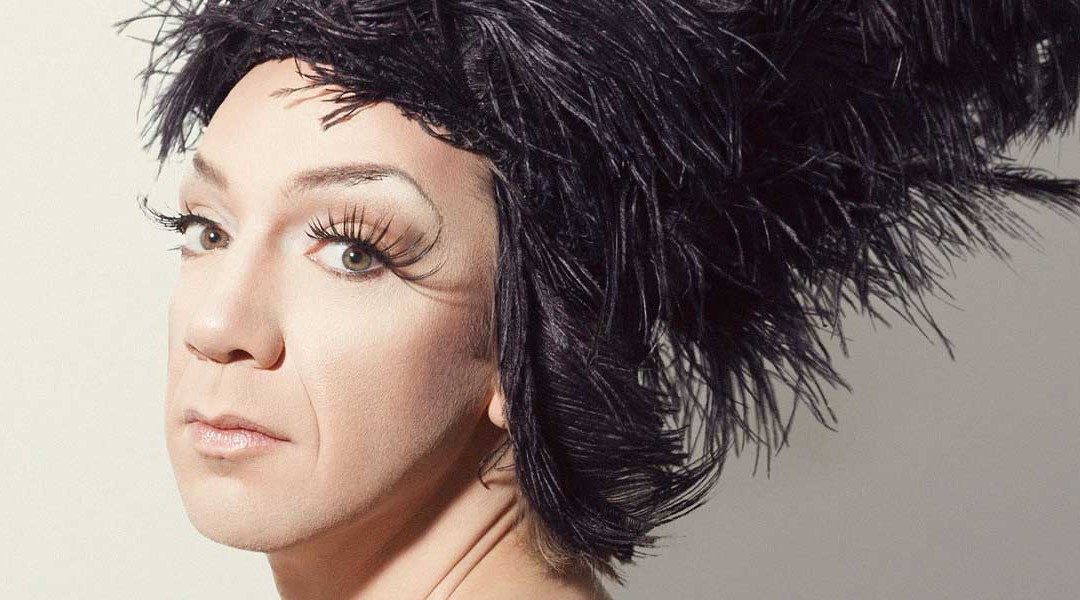
Hovering between vaudeville and jazzy chansons, conference and cabaret; playing for full houses in New York, Berlin, Zürich and London (just to name a few cities), Sven Ratzke is not easily captured in a few words. Describing him as a classy performer and an intelligent improviser dressed in eccentric costumes, with a strong scent of Berlin nightclub cabaret, might be a start. We leave it up to him to clear things up.
What makes it so difficult to describe Sven Ratzke?
I do so many different things that it might be difficult to categorise, to place in a box. People often have to actually see the show to know what it is all about. I am not an easy act for the program leaflets. I always say I like to flirt with the 1920’s vaudeville, that kind of popular improvisation theatre with its interesting mix of songs and comedy conference. The idea that once you are on stage, anything is possible. And yes, maybe it isn’t easy to capture my performances in one word, but then again: I am not a big fan of all those boxes. They might be convenient sometimes, but not for me. As a consequence it remains a bit elusive and it takes much more time to bring it across to the audience.
Do you really think it takes a lot of time?
Let’s say it took me a while before I defined my genre as a performer. I am not the kind of cabaret artist that comes straight from the academy. I am a ‘learning by doing’ kind of person. Learning by traveling the world. It is a very personal approach and finding my form was quite a journey. I was raised in an old hippy convent where I performed in front of all the adults. Ever since I was a kid, it was obvious that I was going to be on stage but when I went to an actor’s studio, I hated it. I wanted to make my own pieces so I started off in theatre but soon, I switched radically to performing songs by Fassbinder, Brecht and Weill. I loved and still love those three-minute mini dramas so it was a very logical step to take. Of course the performance still lacked identity but it was a good start. Soon after that, I found myself in the Berlin scene with people like Georgette Dee. I was standing barefoot on stage because I didn’t have the money to buy the shoes I really liked.
And now you are performing all over the world.
Sometimes I wonder: when did that happen? I realise that I have to be more aware of the great life I am living. On the other hand, you still need to keep on working. As an artist you never reach a point where you can say: ‘that’s it’. You lose things very easily and you have to keep on evolving. The more fame, the more misery! How is that for a quote?
Since last year you have been playing ‘Hedwig and the Angry Inch’ in Berlin and now the show is coming to The Netherlands.
I don’t see myself as an actor but when they asked me to play Hedwig, it was too beautiful a role to just let go. It is a theatre play about Hedwig, born a boy named Hansel in East Berlin, who fell in love with an American G.I. and underwent a sex-change operation in order to marry him and flee to the West. Unfortunately, nothing worked out quite as planned and years later, Hedwig is touring the US with her rock band, telling her life story through a series of concerts. I made the play my own by doing a large part of the re-writing and making a new German translation. Apart from the music band it is a one-man show in which I perform all the characters.
Do you relate to such a character?
Hedwig doesn’t belong and I very much relate to that. I always wanted to play something different, something extreme. Hedwig is neither man nor woman. She is very in-between. That raises many questions and for some people it is troubling, for others it is like a warm bath. Yet it is a universal piece about someone looking for her other half. Besides that, I always dreamed of playing a woman. To physically undergo that transformation and look at the possibilities as an entertainer. As a woman, you have many more possibilities then when you are a man. When I place my foot on the table, all of a sudden that is seductive instead of tough. Since I have been playing that part, I noticed I want more of the same. I want to explore the transformational side of me.
Yet you don’t define yourself as an actor.
No, and that is because I am quite obstinate and I have a lot of ideas. I always thought that being an actor was something very creative. That you are creating something at least. But you are still at the service of others. That is why there is so much of myself in Hedwig: she could be my sister, so to speak. It is my energy. Even if I would play, for example, a joker or a Nazi, it would still be me.
Back to the creations that are entirely your own. I guess it isn’t easy to switch from Hedwig to an entirely different performance.
One week, I play Hedwig and the other I play my own shows. So switching from one gender to another is indeed a duality that needs focus. But I also switch between playing in sold out concert halls in New York and small villages in The Netherlands. As a performer you have to be flexible in your response to the audience. The US for example is very different from Berlin. In Berlin the audience reacts like they have already seen it all. In New York they say: ‘give it to me baby’. So you give it to them! That is an entirely different atmosphere and as an entertainer you have to be able to anticipate. You have to find a form you are comfortable with and that is versatile enough to reach the largest possible audience.
The press talks about you in terms of ‘the unparalleled sex bomb of German variety’ and ‘an artistic phenomenon that continues to surprise’. Are you becoming a diva because of all these superlatives, Sven?
Of course I am! I love divas! Diva behaviour isn’t a negative thing, you know. When you are misbehaving, you are called a Prima Donna. A diva is someone who gives everything and expects the same from you. When I arrive somewhere and things are not arranged properly, I just go home. Does that make you a diva? No, it is being professional. Nowadays there are no divas anymore. Everybody is approachable and I really don’t like the fact that everyone’s life is out in the open. I like a bit of magic. Take Marlene Dietrich for example. She dressed in a suit, smoked cigarettes and – allegedly – had affairs with both men and women. She was androgynous, not because she thought it was progressive but because some things just are what they are. In contrast to the present time in which everything we do is public, she was very mysterious. Of course that added to the image.
You are a nostalgic person.
I do have a tendency for nostalgia. I can get very sad about lost grandeur but I love classiness mixed with street credibility. Even though I will never perform in a T-shirt and like my glitter, I am still one of the common people. I like playing in clubs, very close and intimate.
You said earlier that you are stubborn, that you want to decide everything yourself. How does that work?
With every project, I insist on my own crew. My own musicians, photographers, technicians, you name it. Even in the shows, during encounters with wonderful artists like soprano Claron McFadden or Nina Hagen, I am the producer. I like my independence and I don’t want an agent to tell me what to do or where to play. I intend to keep it that way because even as an artist, I have a strategy to continue growing. You have to keep a close eye on yourself if you want to stay fresh. If you move between a sad song and wild hilarity, you have to be focused. It still has to be authentic. So although performing is an addiction, I still want to be in control and keep all my options open. Luckily the world is full of opportunities!


De pagina die u zocht kon niet gevonden worden. Probeer uw zoekopdracht te verfijnen of gebruik de bovenstaande navigatie om deze post te vinden.

Text JF. Pierets Photos Jonas Lindström
You can call it ‘wearable sculpture’, if you really want to give it a name. Those who would like to look outside the box a bit might see an attractive work of art, dark yet extremely seductive. Whether he is a sculptor or a milliner, Rein Vollenga is a creative artist first and foremost, with a positive outlook on life and a healthy attitude towards success.
What triggers you to make such unique wearable sculpture headpieces?
From an early age, I love making objects and working with my hands. It surprises me and gives me satisfaction every day. This is the main reason why I create. My work is about fantasy and ambiguity and I hope to evoke something in the viewer’s mind that will trigger their imagination. Either good or bad.
From where do you draw your inspiration?
I collect objects in my immediate surroundings. I browse in supermarkets, party stores and I find things on the streets. I’m highly fascinated by objects that are mass-produced and have an organic or physical aesthetic like mannequins, packaging, car parts et cetera. Furthermore I’m interested in traditional craftsmanship. I love visiting museums of ancient, classical and primitive art. It’s great to see objects that have been made with love and dedication.
You moved to Berlin. How does the city influence your work?
I am very fortunate to live in a beautiful city full of history and art and to be surrounded by many creative an inspiring people like artists, musician performers and all kinds of free spirits. I have a lot of opportunities to experiment, collaborate and explore my creativity. Besides, as a gay man I don’t feel judged for my looks and sexuality. In Berlin I can be whoever I want to be.
You are an artist, also working in fashion. How do you combine those two?
There is no difference between the two in how I approach my work. The origin of my craft is sculpture. I just see art and fashion as different platforms to show my work. Because I don’t dismiss any platform, I can show my work in museums and galleries, in music videos, on the catwalk and on the internet. This gives me the opportunity to reach people who don’t visit the – sometimes bourgeois and elitist – galleries and museums. It makes my work available to everyone. As art should be.
I read in an interview that you find it very important to be true to yourself and others. Can you elaborate?
Just be dedicated to what you genuinely love to do in life, and don’t talk bullshit. It is hard to pursue a career in art. As a young artist you might not be appreciated immediately. My advice is to work hard. This will be rewarded in the long run. People love to make a lot of fuss about nothing these days. Check the celebrity pages for instance. People are famous for being famous. Isn’t that hollow and sad? I would rather be recognized and appreciated for what I do.
On your website you have two different categories: ‘sculpture’ and ‘wearable’. Do ‘ordinary’ people actually wear your creations and who are your main customers?
Ordinary is not in my dictionary. I create unique pieces so I mainly work on special projects with fashion brands, performance artists and musicians.
Do you ever think of designing clothes?
Not really, but this might be something for the future. I can imagine a collaboration with a fashion house. To create some ready-to-wear limited editions in the future. I’m mainly interested in the theatrical part of fashion shows.
Your work has a dark, hedonistic and fetishistic feel to it. Is that your aim or just my imagination?
No, that is not my aim but just your naughty imagination I guess. But I think you refer to the slick and glossy finish of my works. I do understand what you mean with the dark hedonistic and fetishistic feel but this only implicates what fashion presumes a fetish to be. Here’s what the dictionary says: ‘any object or non-genital part of the body that causes a habitual erotic response or fixation.’
Your headpieces are – in my opinion – genderless. Is that a conscious choice?
Yes, I don’t create pieces for a specific gender. I create my objects as an extension of the human body.
You once said that you make a piece almost every day. Is this still the case and how do you keep up?
Yes I still do. I work on several projects a day. But since the making of a sculpture has many stages, there’s always something to do. It might sound obsessive but it all comes natural to me.
You had numerous collaborations with people like Mugler, Lady Gaga, Johnny Woo, etc. and you have been featured in Dazed and Confused, I-D, Interview and many other magazines. Any future dreams?
Yes! I would love to create stage designs and costumes for opera, ballet or contemporary dance in the future.


De pagina die u zocht kon niet gevonden worden. Probeer uw zoekopdracht te verfijnen of gebruik de bovenstaande navigatie om deze post te vinden.

Text JF. Pierets Photos Tareq Sayid de Montfort
First things first: can the Islamic world be called avant-garde?
Like all the monotheistic religions, at its birth, Islam was an avant-garde movement, in this instance of medieval Arabia. During its Golden Age, the Islamic world was avant-garde in comparison to Europe and also in the arts during the brief cultural revolution of the 19th century called Al–Nahda. Now it is very backward, the present forms of Islam are not avant-garde. My work and personal beliefs are, but you asked about the Islamic ‘world’. Saudi Arabia is discreetly leading the way in science and research, it is the avant-garde in science today. So yes, there are examples of the Islamic world leading the forefront of innovation and development.
The main theme in your work is beauty. Do you consider yourself to be an artist or rather an aesthete?
There is no difference between my state of being as a human, an artist, ascetic, aesthete or devotee of beauty. I simply seek to be. ‘Kun’, meaning ‘to be’, is a mystic Islamic state of being. I aspire to be a contemporary Muhsin. A Muhsin is the highest calling in life in conventional Islam and can be explained as ‘one who is in constant pursuit and adoration of perfection and beauty’. So if anything, I am a contemporary Muhsin.
You once said that beauty has been damaged by artists and intellectuals and that you want to revive it. Can you elaborate?
Beauty today has been reduced to a faded image. When the modern avant-garde movement, Dada and others destroyed beauty, or rather attempted to reshape it, they consequently annexed a complex layering of many forms of beauty. Beauty has a noble lineage, it originates with siblings truth, kindness and goodness and divinity itself. To understand this, I think one needs to turn to Plato’s hierarchy of forms and the ideas of the good and the beautiful, or an easier read like Elaine Scarry’s ‘On Beauty and Being Just’. Horribly simplified: at the lowest level of the hierarchy are forms of material beauty. Higher in the hierarchy we find forms of ideas. And at the top of the ideas is that which is divine. Here lie compassion, kindness, and empathy. Beauty is also a metaphoric emblem for justice, a powerful utilitarian gift to humanity to benefit the pursuit of happiness. I could go on.My revivalist aspirations regard the Arab lands and Islam. Islam, in purer, mystic origin is an ideology seeking an ideal state of being. With a doctrine of the pursuit of beauty, mostly forgotten by current Islam, you can define it as Romantic. It is academically accepted that the Romantic poets took much influence from the Levant. The Romantic revolution of the 18th and 19th century affected the arts but also infiltrated politics. Parallels exist between socio-economic issues of the West at that time and the Arab-Islamic world now. Ideals and politics of romanticism as well as the mythos of the Cult of Beauty movements have acute abilities to address various predicaments in the Middle East today. With tradition and history still accessible in the Middle East there is still time to salvage wisdom. A wisdom with the potential to bring into existence Kun, an improved existence which we all desire. Romanticism is seen as irrational and unrealistic from a Western perspective. An Islamic pursuit is to realise a reflection of paradise on earth and a Sufi once said that ‘Rationality destroys this world and the next’. In the Arab, Islamic world romanticism is a reality. The mystic path offers a way to explain all the things that academics and intellectuals have tried for centuries to unravel but couldn’t capture. The Romantic revolution took the moon as its emblem in challenge of the Enlightenment, the Age of Reason represented by the sun. The moon offered the knowledge of mysticism, poetry and metaphysics. This mystic element was Mohammed’s experience of Islam, how it is meant to be experienced.In terms of theoretical narrative, beauty is a platform for unity between dualities in opposition. A meeting of the self and the other. The philosophy of beauty I am developing owes much to Platonic and Sufi thoughts. Sufism is derived from Plato; Sufism and Platonism are siblings from a heritage of Islamic scholars whose rediscovery of classic knowledge lead to the western Renaissance. That harmony, that kind of inspiring relationship between such opposing cultures, the irony that we owe so much to each other and have an intimate relationship that is centuries old: that is a splinter of the definition of a higher form of beauty.
I believe your work is a revolution against our rational society?
Revolution is a word you may use. My idea of revolution does not correspond to how revolutions have played out thus far, with those at the top falling down and those previously at the bottom going up to create something akin to what was just removed. I believe in revolution in accordance to the doctrine of beauty, which starts with the self. A romantic revolution.
What is your philosophy on the concept of gender?
It is in constant change with society, with ideals, with culture. I believe our normative, general and conservative understanding of gender is basicly unsophisticated and incomplete. I don’t think there is one absolute truth or comprehension to gender. It is fluid, an ethereal evanescence that defies understanding and can only be lived. That can only be.
Can you talk about the work that you are showing at the GenderBlender exhibition?
The works are from the collection called ‘Wajahat al–Rajul: The Grace of Men’, displaying the Arab or Eastern male reposing with an elegance, grace and adornment not usually associated with masculinity of Arab males. It confronts Western and Arab, Muslim perspectives of imposed male/masculine stereotypes, hetero-norm social expectations and cultural ideals. The inquiry and its ‘field work’ I engage in originated from the idea that the gender identity of Prophet Mohammed is conventionally regarded as the ‘poster boy’ or perfect ideal of a Muslim and also of Arab, Muslim maleness. I have had an intimate relationship with Mohammed throughout my life, including ten years of researching him as a man: how he was and why he was the way he was, seeking the psychological and social discourse rather than fables to exult over and myths to preach about.Attributed quotes and teachings, the earliest and most reliable Islamic accounts and the Quran, forged together with insights from anthropological, social, economic, cultural and political contexts, formed an intricate sequence of time, events and persons. It introduced me to someone who, in most reports in Western media, is only known from the accounts of bearded men uneasy with modernity or through odious cries of extremists, creating an identity that most people in the West believe to be true while it is unfair and obscene to extremity.
You adhere to the Japanese idea of Wabi Sabi. How does that reflect on your work?
Conservative societies have a reputation of expecting how one should be: the perfect citizen, the perfect believer. Wabi Sabi represents a comprehensive Japanese world view or aesthetic centred on the acceptance of imperfection. Melancholy and other such pains, physical and beyond, go hand in hand with the ecstasy and bliss that are an integral part of my work. Many people feel diminished, unworthy and imperfect on account of physical or emotional scars, psychological trauma, mental issues, etc. Such things that have been considered to be imperfect require a revision of understanding. The idea is to elevate them from a state of imperfection, to an imperfection that has an alternative use, to being beautiful. Basically, this establishes fairness.Just like my work both contexts, narrative and aesthetics, seek mutual acceptance between Islam and the West, between the Arabs and Islam, between the Arabs and the West and of course Israel. Hopefully this acceptance will evolve in reality one day, but until then at least it can exist symbolically, politically and romantically through art.
You grew up being gay and Muslim. What was it like?
Being gay and Muslim didn’t affect me at all, my beliefs and sexuality do not conflict. Growing up in a Muslim country was a bit difficult but then again, also quite exciting.
I understand gay identity isn’t the same in Arab countries as in the West. Can you tell me about this?
That is a very complex, long discussion. I like the article available on the subject that is called ‘Re–Orientating Desire: The Gay International and The Arab World’. There are different rules in the ‘gay’ world. Very strict codes on who is active and passive, which I challenged completely. As a slim boy with feminine sensibility the ‘rule’ was that I would be passive. I challenged this as I am active. In the West there is the lingering notion that the feminine is always passive; that idea is quite militant in Arab culture. Also, the active man is not necessarily considered gay; he is just fucking because that is what men do. Gay became an identity in Britain after the Oscar Wilde trials. Before that, it was just something you did as an act. There are many remains of this perception in the Arab world, which has a history of pederasty. It is different in regard to the idea of gay as an identity. Intimacy between persons of the same sex was a central aspect of Arabic culture but it has warped into something that is still undecided because of this identity issue. That is aggravated by cultures where queerness is still considered wrong.
Future plans?
I am currently in the process of writing proposals and bringing together ideas for an exhibition in London that would use objects from my family’s Islamic Collection in Kuwait, hopefully with some private ones in London. I want to show them along with contemporary art, side by side with object d’art artefacts and antiquities. It will be called Black Cube. The word ‘cube’ comes from Kaaba, the holiest site in Islam where Muslims face when they pray, in Mecca, Saudi Arabia.


De pagina die u zocht kon niet gevonden worden. Probeer uw zoekopdracht te verfijnen of gebruik de bovenstaande navigatie om deze post te vinden.