Geen Resultaten Gevonden
De pagina die u zocht kon niet gevonden worden. Probeer uw zoekopdracht te verfijnen of gebruik de bovenstaande navigatie om deze post te vinden.


Text JF. Pierets Photos Paul Buijs
Young, reckless and fresh from the Arnhem art academy. In order to find a suitable subject for his graduation project, Paul Buijs went where no other student would follow; the shady underworld of gay darkrooms and sex parties. Hovering unsettlingly between fiction and reality, documentary style and art photography, Buijs’ work is of an unedited realism. What normally stays in the shades is now brightly lit up in an uncomfortable, confronting way. It reveals a curious and previously unexamined aspect of the gay scene, and provides a window into the collision of the club life, kinky sex and dark cellars that color the streets of Amsterdam.
Paul just returned from his exhibition and lecture at the Berlin Porn Film Festival when we meet. He’s once again flabbergasted by the way people react when confronted with his pictures. “It’s weird to experience that people are still to be shocked since it was never my intention to provoke. When searching for ideas that would suit my graduation project, I was a frequent visitor of the Warmoesstraat and the Regulierdwarsstraat in Amsterdam. The gay areas, so to speak. I started to take pictures and soon my teachers pointed out that I was on to something.”
During that time, Paul got very much intrigued by an article called ‘Life When The party is over’. Written by a psychologist who had made a study on gay men in their mid 30’s – 40’s and published in Wink magazine. He stated that a lot of gay men weren’t able to enjoy their teenage years because of their family for whom they only came out of the closet when they were already in their 20’s. Due to the social impact of such oppression, they started their outgoing life when most straight people in society started to settle.
A phenomenon that in a lot a cases leads to heavy party life and the drug use that often goes along with it. Not to speak of a low career expectation. “This article explained what I questioned: what lies behind the surface of that fashionable, sexual and glamourous appearance. What was behind the mask of the people involved in this scene?”
Still in the stream of perfectioning his art school assignment, his teachers advised him to focus on his signature. Being a huge fan of the Disney and populair culture he swiftly found a symbiosis between the personages that populate his work and the alienation of mainstream entertainment. “All Disney characters are drawn in a certain, monotonic way. They all have the same glance, facial expression and are very similar in style. It stroke me that a lot of my fellow party people wore the same Fred Perry shirt, the same Bikkemberg shoes and had the same hair-do. By asking to wear a mask I wanted to underline the oneness of a certain scene, by making it half a mask, I made a pairing between the monotony of the public statement and their own private personality. “
With the best will in the world you can’t say that Buijs’ work is approachable or reassuring, hence the numerous galleries who rejected his work for being too shocking and the multiple reactions of viewers who found his images to confronting, to surreal, to raw and to bright. “I had no idea my work would have such an impact. I have the upmost respect for my models and I always show them their picture before I make it public because they still can be recognized despite of the mask and I shoot them while we both experience an autobiographical moment of obsession and dependency. The images are viewed like a private journal made public and it works out to be a little too much to handle for a lot of spectators. For example I got fired as a teacher because they thought my work to be too dangerous for the children and their parents. I don’t quite get it, but let me tell you that I’m too passionate and too engaged to just give up. I invariably believe that somewhere, sometime my work will be acknowledged so I keep on going”.


De pagina die u zocht kon niet gevonden worden. Probeer uw zoekopdracht te verfijnen of gebruik de bovenstaande navigatie om deze post te vinden.

Text JF. Pierets Photos Courtesy of Buck Angel
Buck Angel is a female-to-male transsexual and founder of Buck Angel Entertainment. As an adult actor, he was able to create a unique niche, calling himself “The Man With a Pussy”, as he had not had any genital surgery and still possessed a vulva. In 2007 he received the AVN Award as Transsexual Performer of the Year and in April 2008 he was presented with a “Feminist Porn Award” for “Boundary Breaker of the Year”. Today, he travels the world as an inspiring advocate, educator, lecturer and writer. A tête a tête with an inspiring personality.
In an interview I read that you always wanted to be a man. Nowadays, your individual self is your brand. How does it feel to be looked at as something special when for you it was inevitable?
I always felt like a man, so of course I wanted to be looked at as a man. I felt this way my whole life, but so many people did not see me that way when I was younger. As I got older it made me feel horrible about myself. When I was able to change my physical appearance to match how I felt on the inside, it made me the happiest person in the world! I am so happy that now people see me for the man I am and it makes people realize that you can become whoever you want to be. Society should not put limitations on you just because they do not understand. So I like that the world views me as something special; I think this is a good thing.
Transwomen are more visible than transmen. Why do you think that is?
Well I cannot speak for transwomen or transmen, really. I think we are all different in how we want to be visible in the world. Though I do think the visibility of transwomen has been more widespread because they have been around longer as a community. Transmen have just started to become more visible because the community is now becoming larger and more active.
You are – amongst many other things – a pornstar, an educator and a writer. Yet, there’s a very fragile glance in your eyes.
I am indeed all the above, though I’d like to think of myself more as someone who motivates people to think outside the box and to become themselves, like I have. My eyes…well I have lived through some rough times before my change. I was homeless and suicidal, and I was a drug addict. My past was sad in many ways, but I like to think that I have overcome it. Maybe my eyes still show the hurt that was in my soul for so many years? I know that this pain has helped me to have compassion for others. I feel very blessed and grateful for the happy life I have now, and I hope that I have the ability to inspire others to overcome the pain.
You just started a dating site for transmen. “Buck Angel Dating. A safe environment for those seeking out relationships or just fun with transmen and the people who love them”. What if it turns out to be a site for fetishists? Would that bother you?
Interesting question. Why do people think that fetishizing something is bad? I am not saying that this site was intended to do that—I just opened the site for people to have a place to meet because there was clearly a lot of demand. It isn’t just for people looking to have a partner but to also for those who want to meet to have sex without having to explain their transgender status. On my dating site that is not an issue, so you can just get on with having a good time. Some people enjoy being fetishized; I do. So maybe some people will go there with that intention? You know there are some in the trans community who call themselves “activist” and they hate that I am a pornographer. They think it hurts the trans community. I think that is so sad, because my whole life changed for the better when I finally learned to love my body and have sex without feeling guilty. Many trans people feel that someone will never want have sex with them or they don’t feel sexy because their bodies are different than what society tells us is sexy and normal. My work helps to change that and show that if you love yourself (and yes, that includes sex) then others will too!
You are a pioneer and an educator. I think that comes with large responsibilities? When did you decide to talk to people about your experiences?
You are right—it came with a bigger responsibility than I thought. I have learned so much by putting myself out there. I have had some in the trans community tell me that I am a bad person for saying things that I felt were important. But you know I think that by talking about my experiences some people (or maybe many people) can relate to me and feel less alone. I had a tough time in the beginning of my change as I had no community and no one to talk to or identify with. I think by me talking about this I can show how far I have come just because I had determination to be myself.
The other reason I feel passionate to talk and educate is because some people in the trans community say there is only one specific way to be a trans person. This makes me even more passionate and I want to help the people who are individuals and who want become their true selves, and not have to fit how the community wants them to be.
Your website reads that you are “re- defining gender and educating an entire generation on the fluidity of sexuality and identity politics.” I guess that sounds very complicated to someone who’s not into the subject matter. How would you rephrase your message to the mainstream public?
I think you are right about that. Maybe I should rephrase it for the mainstream and say something more like, “Showing you that becoming yourself and loving yourself can make you happier.” This is really the message I want to project. Since I have learned to love myself and create the body that I always wanted to have, I am so happy and comfortable with myself. It can be quite tiresome to always worry what people think of you and it can make life miserable—not just for trans people but anyone. I have all kinds of friends and fans who ask me all the time, “How can I live life like you do, without a care of what other people think?” I would always say that “Just learn to love yourself and become yourself.”
The overriding theme of your work is about self-love and acceptance. Are you a positive & optimistic person?
For sure I am! This is truly one of the keys to being happy. It took me many years to learn this but with determination and the desire not to have hate in my life, I have done it. The odd thing is that I notice the more “popular” I become, the more of a target of hate and envy I become for some in the trans community. Their hateful words kind of shock me sometimes, but I learned to not take these comments personally. I know that these people have not learned to love themselves like I have. They experience these reactions towards a person like myself who is free of that.
“A day in the life of Buck Angel”. What to expect?
Ok, you will be shocked! I think people think I have some crazy lifestyle but really I am pretty mellow. My days are spent at my awesome home in Mexico (if I am not on the road working). I am married and have 7 rescue dogs and spend my time with them. I love to read and also workout everyday. I am also very much into health and fitness. I think this is a very important part of loving yourself.
It was great talking to you. Thank you very much and I wish you lots and lots of success.
Thank you so much for the interview and I hope that my work can help to inspire some of your readers.


De pagina die u zocht kon niet gevonden worden. Probeer uw zoekopdracht te verfijnen of gebruik de bovenstaande navigatie om deze post te vinden.
Text JF. Pierets Photos Darren Brade
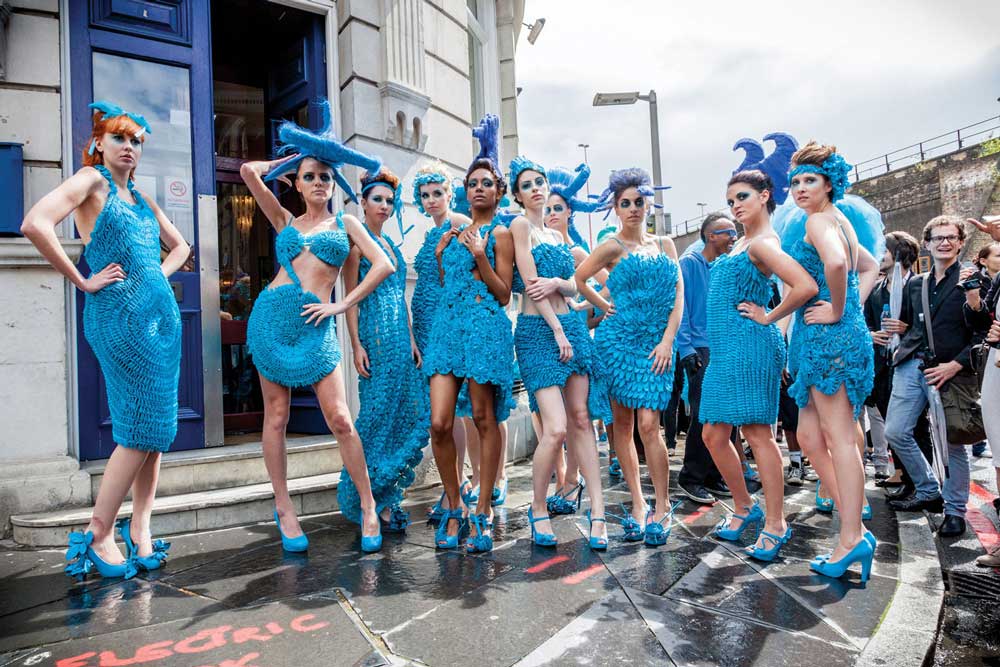
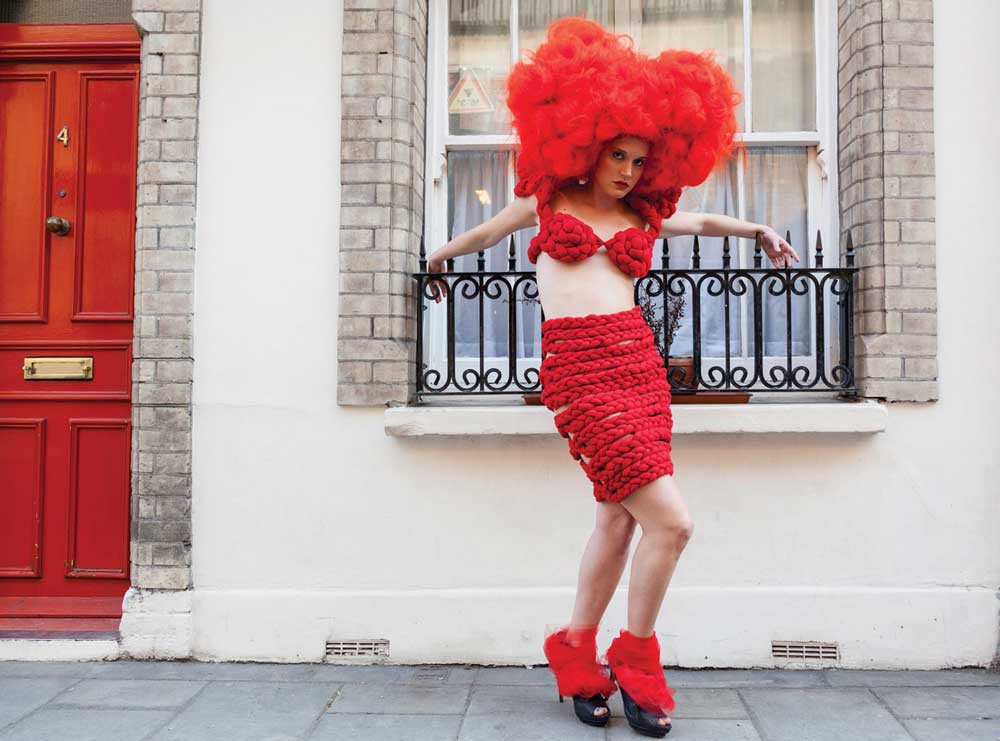
His intricate designs merge the lines between art & fashion and have been worn by some of the world’s biggest style icons from Naomi Campbell to Kate Moss, Scarlet Johansson and Sarah Jessica Parker. He walks the streets of London with his flashmobs and has the tendency to approach his fabrics with the eye of a scientist.
Your résumé reads like a travel trip.
I was born in Iran, lived in Paris for 5 years, 2 years in Lyon, then Shanghai. In Manhattan I ran a Garroudi shop/gallery and stayed there for 14 years. After inhabiting Boca Raton for another year I made my way to London.
How does such a journey influence a person?
I’m a sponge. I try to absorb everything. Having a multicultural background gives me wisdom and inspiration. Knowledge is like light, it opens your eyes to the world.
Why did you end up in London?
London is magical. You should see how the people dress up when they go out. It’s a vessel of inspiration.
When did your carreer start?
I studied in Paris, while working as a hairdresser in my spare time. I moved to New York in 1986. There I joined the Fashion Institute of Technology after working at various retail and design houses. I started my own label in 1993.
Why fashion?
I think fashion is a way of expressing yourself and showing your beliefs and identity because clothes can tell you a lot about a person.
What’s your message?
It’s about being passionate, I believe whatever you put out you get back. My collections are expressions of my own experiences. It’s like looking into a mirror.
Let’s talk technical; you manipulate all your fabric?
Yes. You can’t buy any of my fabric because it doesn’t exist. I love to look at it with the eye of a scientist. The multi-layered matte and sheen silks become second skin to the wearer.
Some call it pioneering fabric-folding work.
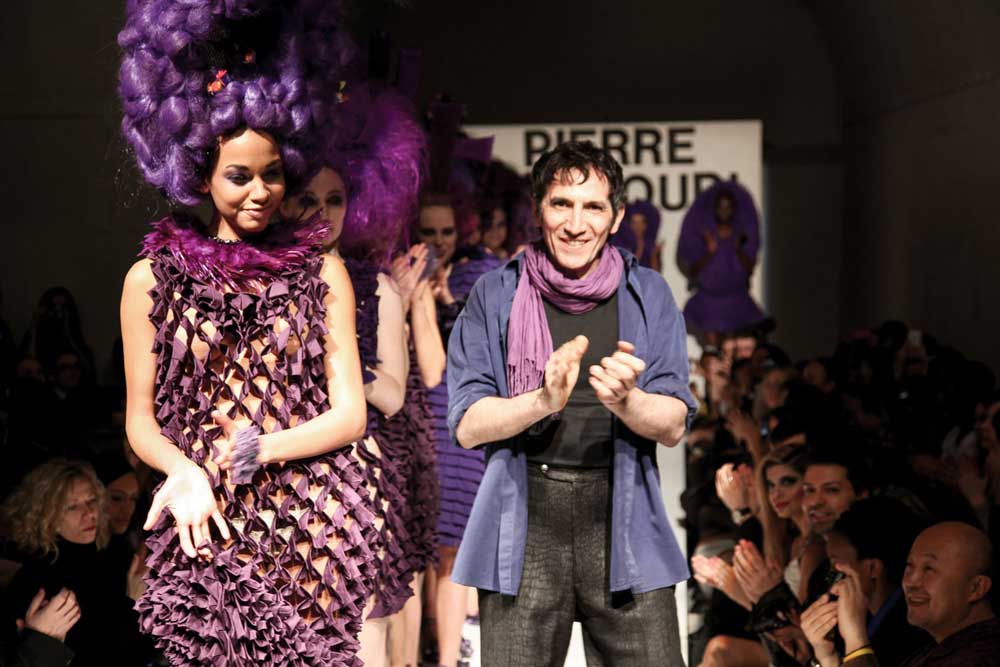
It’s all done by hand, which creates an origami effect. I guess it’s quite unique, yes. I believe fabric manipulation it the next evolution in fashion.
And very time consuming.
It is. And you have to be extremely patient to do so. Sometimes it takes me a month to make one dress, but then you create an entirely piece unique. They are one of a kind.
You are known for using interesting and diverse models, which is a breath of fresh air in the fashion industry.
I think it’s generally better to have a diverse selection of models. We live in a world that’s mixed, I mean half of the world is Asian, and only, maybe twenty percent of the world is white.
Where do you get your inspiration?
I’m inspired by talented and creative people and by the sheer beauty of humanity. I try to learn from every person I meet. For example, my life won’t be the same after I talked to you and vise versa.
What kind of women wears your designs?
Naturally the types of women who wear these types of clothes have to be self-secure and strong, have confidence.
Why?
Because you can’t go out there and wear something creative and be shy at the same time. The women who like my clothes use them as a tool to express themselves.
Can I call it wearable art?
I leave it up to you how to call it. I try to make things that are wearable. Expensive, but wearable.
Everybody is talking about the bad economy. Does it influence you?
It does, yes, but I think that everything happens for a reason. Anything good or bad, it teaches you a lesson. Once you learned the lesson you can move forward.
How?
I’m doing a lot of research. Reading up about the business and the marketing side of fashion. These days you need to be on all of the social networks, Facebook, Twitter, Linked-In. I’m looking for different ways to present my designs.
The fashion industry is changing nowadays.
The new generation want things much faster, right away, they don’t want to wait, they’re just looking for something they want, they get it, they move on. We don’t have time. Do you have time to read all the blogs, do you have time to read all the fashion magazines? This is going to reflect on fashion shows, on the fashion industry.
You already took your clothes from the runway into the streets?
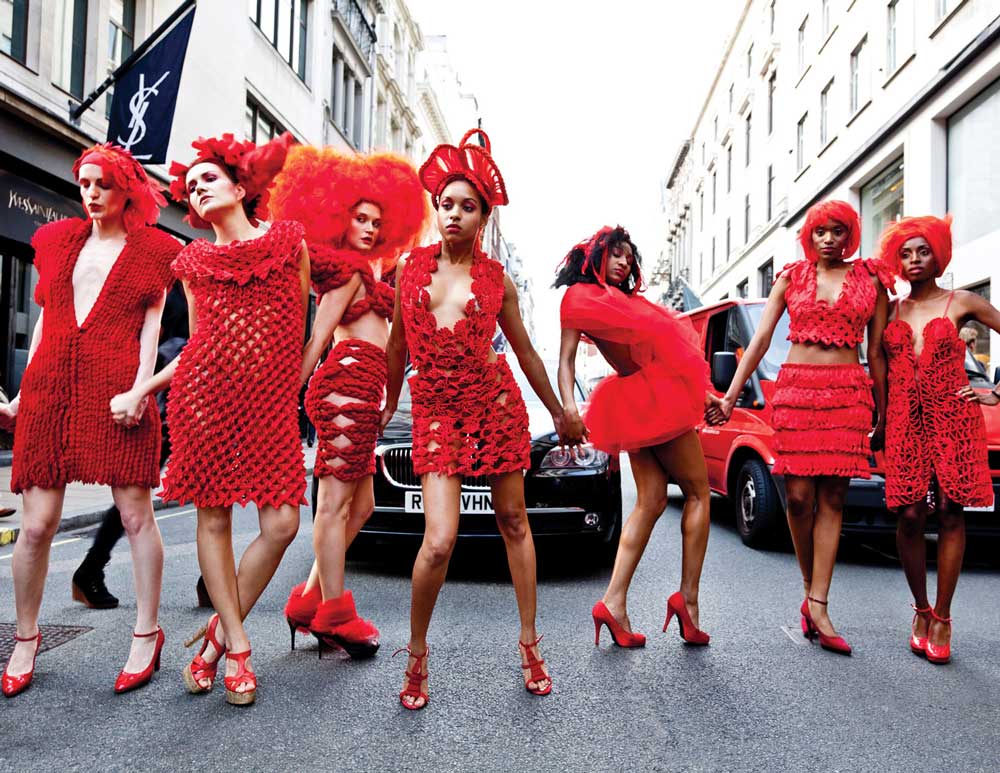
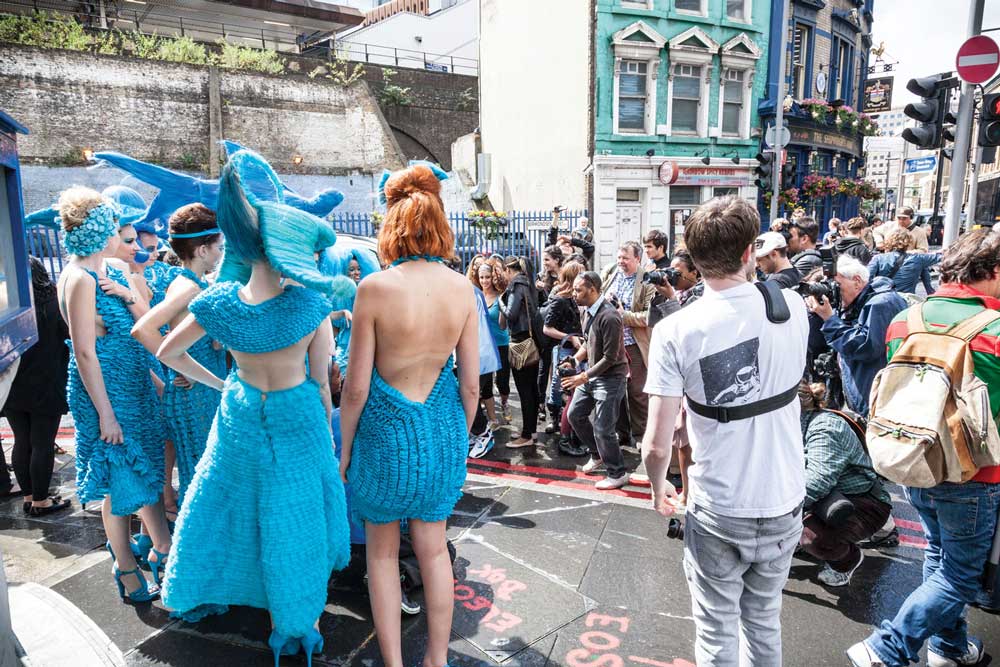
And called it flash-mobs. With my cast of models and dancers, I took my collection ‘Red-Stopping’ to some of London’s most distinguished avenues and tubes.
And it became a big success.
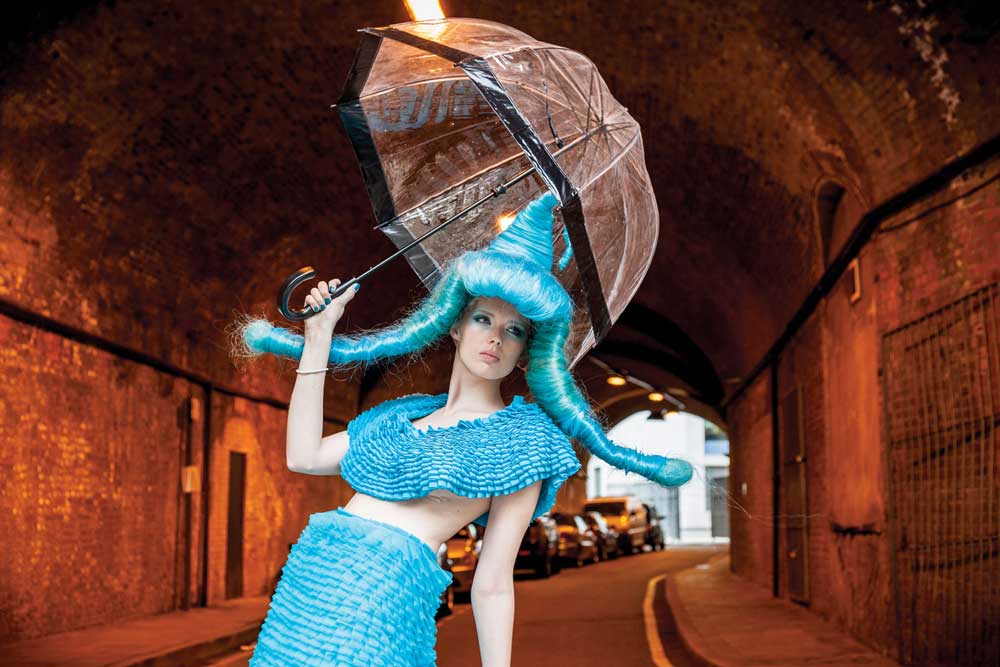
I loved it so much I did it again with the ‘Turquoise Collection’/Beauty of the Sea’ conveying an aesthetically pleasing experience of creatures born of a mystical island, lost at sea. It was raining that day. That was nice.
The future looks bright?
I’m sure it does. The more creative the better so feel free to write that I’m interested in any kind of collaboration. I try to learn from everybody!
De pagina die u zocht kon niet gevonden worden. Probeer uw zoekopdracht te verfijnen of gebruik de bovenstaande navigatie om deze post te vinden.
Text Susan MacDonald
Since the biopic ‘Ed Wood’ starring Johnny Depp, the for nearly two decades forgotten eccentric of the 1950s, Edward D. Wood Jr. enjoyed a success that quite escaped him in life. His technically inept, but oddly fascinating films are shown at midnight screenings in off-beat picture theatres around the world.
This revival is largely due to his being presented to a new audience by Michael Medved’s 1981 book The Golden Turkey Awards, a volume which attempted to satirise the Academy awards by presenting nominations and awards for lack of quality. In a Ben Hur-like performance, Ed Wood won both the award for the worst director of all time and the award for the worst film of all time, which was given to his magnum opus, Plan 9 from Outer Space. Ed Wood had his own troupe of players: a bizarre entourage of friends which included the flamboyant newspaper and television seer Criswell, blond cowlick spit-stuck to his forehead, whose dramatic future predictions were nearly always wrong. (“I predict that in 1980 public executions will be shown on television, sponsored by your local gas company!”) Criswell (his full name was Jerome King Criswell ) lived his childhood at the rear of his father’s mortuary business, and for the rest of his life he preferred sleeping in satin-lined coffins, because he found them so comfortable (as one Ed Wood acquaintance commented, “Where does Ed find them?”) Another famous member was the Gothic spider-woman Vampira (Maila Nurmi), whose raven-black hair, dark make-up, and bloodless pallor marked her as the heiress to a tradition going back to the early Victorian age, through the female vampires in Dracula, the silent film temptress Theda Bara, Morticia Addams of the New Yorker’s cartoons, and the villainesses of a thousand forgotten radio and Saturday matinee serials. Even Natasha, from the Rocky and Bullwinkle cartoon series, is a parody of this interesting genre and bears an especially striking resemblance to Vampira. In the early 1950s she was a late night horror film hostess in Los Angeles, with an enormous cult following throughout America, and her own sub-retinue of flunkies and minders. Just before his untimely death James Dean had been having a love affair with her.
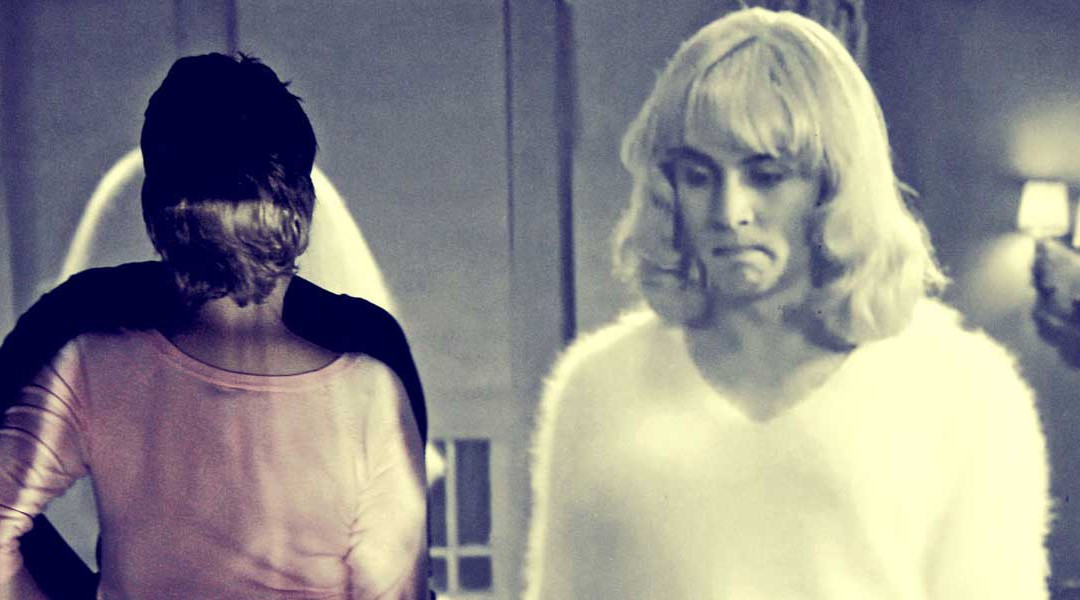
With the popularity of the Goth look in more recent times, Vampira was forty years ahead of her time. John Breckenridge (“Bunny”) was the scion of a wealthy European family. He was transsexual and dreamed of having a ‘Christine Jorgensen’ procedure to change his gender. For several years he was an acquaintance of Ed Wood’s but made one film appearance only, as the alien Ruler in Plan 9 from Outer Space. It is a performance of such outrageous and hilarious world-weary camp that one regrets he did not appear in more movies. There were others: Loretta King, who could not drink any liquids because she was “allergic to water”, the growling Swedish professional wrestler Tor Johnson, hack actors Paul Marco and Conrad Brooks (the latter is nicknamed by enthusiasts “the John Geilgud of bad movies”), and Bela Lugosi, who had starred in Dracula in 1931, but who was now forgotten, depressed, and a narcotics addict. Ed Wood gave Bela Lugosi something to live for again. The two became friends, and Bela was overjoyed to be making films once more, and with a much more interesting crew than he had ever known at the major studios. And there was another interesting sidelight to Ed Wood’s film career. He was a very public cross-dresser. This would be unusual today, but in the 1950s it was unique. There were female impersonators of course, but Ed was a genuine transvestite. He found women’s clothes and their soft fabrics sexually enticing, and extremely relaxing. If there was stress on the film set – and there often is – he would disappear, and return wearing a wig, a skirt, nylon stockings, and a fluffy sweater and beret knitted from angora, his favourite fibre.
Of course the members of his outlandish menagerie were not put off by this at all. In order to raise money for his pictures however, Ed had to deal with the wider world too. He confronted a great deal of misunderstanding and prejudice, and one of his films, Glen or Glenda (1953), is partly a documentary explained by a psychiatrist and overseen by a kind of Science God played by Bela Lugosi. It’s also partly a fictional story of courtship, with the purpose to help people understand and empathise with the phenomenon of cross-dressing. Ed Wood even played the lead role himself. He wanted there to be no doubt in the minds of the audience that the difficulties the hero encountered were based on personal experience. It was probably the most courageous film of the 1950s, and still remains the only main stream movie about genuine transvestism from any English-speaking country. As Ed Wood himself explained, “If you want to know me, see Glen or Glenda, that’s me, that’s my story. No question. But Plan 9 from Outer Space is my pride and joy.” But, for the business that hired Ed, Glen or Glenda was meant to be a sensationalist work of mild pornography. When the producer saw it, he was furious.
Three years later Ed Wood made the movie which discriminating film scholars regard as the pinnacle of his career: Plan 9 from Outer Space (shot in 1956, it was not released until 1959). The film was financed by the Baptist Church of Beverley Hills. Ed had convinced them that they should finance a film with the teenage appeal of the time, and that this film would then generate the money needed to make twelve films about the apostles of Christ – which were the movies that the Baptist Church of Beverley Hills really wanted to make. The cast included the best collection of Wood regulars that he ever assembled. The credits music, which develops into a theme as the film progresses, was Alexandr Mossolov’s Iron Foundry, a brilliant choice, full of menace and foreboding. The web site listed below states, “Iron Foundry enjoys an oddity reputation, and is rarely heard. Recordings have been few and far between.” Ed Wood was a classical music enthusiast, and any aficionado of Plan 9 would recognise the music at once.
It might be of interest to compare the real Ed Wood ‘stock company’ with the modern actors who portrayed them. Documentaries were made about Ed Wood’s life and career: Look Back in Angora, Flying Saucers over Hollywood, and one biography, Nightmare of Ecstasy. There has even been a rock video in the Ed Wood manner. But the zenith of the renewed interest in Ed Wood’s films was the superb biopic released in 1994, Ed Wood, directed by Tim Burton. It is an affectionate homage of notable accuracy, and was probably the best film made in the 1990s. At the time of writing, it is certainly the last great film made in gleaming black and white – a decision which Tim Burton fought hard for, but which was exactly right. Unfortunately, the use of black and white harmed the film at the box office. It made little money, because these days young filmgoers especially do not understand that black and white cinema has its own special beauty. But film critics and film magazines gave it the highest praise. It is a bitter-sweet fact that, even accounting for inflation, any fifteen minutes of Tim Burton’s film cost more to make than all the films Ed Wood made over a period of 25 years.
The casting of the film is exemplary. Lisa Marie is amazingly good as Vampira, and Jeffrey Jones is wonderful as Criswell. He brings a skein of warm comedy to the role which the real Criswell lacked. Johnny Depp in the title role projects Wood’s infectious enthusiasm and joi-de-vivre, and Bill Murray has fun as Bunny Breckenridge, although no mere actor could adequately display the real Bunny’s jaded, droll, contrived ennui. Martin Landau, such a wooden actor in so many films, won a well-deserved Oscar for his brilliant portrayal of Bela Lugosi in his final years. Edward D. Wood was unique. Is there any explanation for his strange life? Tim Burton, the director of the 1994 film, concluded that Ed had wanted to be a film producer and director ever since he was given a movie camera as a boy, and was bewitched from that moment on. When he was 17 years old, probably the most impressionable age in a person’s life, he saw Citizen Kane, when it was first released. (Ed was born October 10, 1924.) The youthful Ed Wood wanted to make films. But his idea of a film director was a cartoon idea. In cartoons the director habitually wears jodhpurs, shiny black boots, and carries a horsewhip. He sits in a simple canvas-backed chair, and shouts directions from an old-fashioned megaphone. He is frequently portrayed with a pencil-thin moustache, and sporting a beret.
While making his films Ed always used the megaphone, even though directors at the major studios had long abandoned its use. He never went for the jodhpurs or boots, or the horsewhip, but such affectations predated his memory: they had vanished at the end of the silent era (the earliest directors dressed this way as a protection against snakes and scorpions – in the silent days, films were usually shot on outdoor locations, and often in the desert). Tim Burton believes that this is the key to understanding Ed Wood’s style. Ed was in love with the idea of directing films…the romance, the persona of the admired but unpredictable martinet, and the artistic adventure. He enjoyed sitting in the canvas-backed chair, and shouting “Cut!” He wanted nothing to do with the tedious side of film directing: the careful attention to continuity (in his own films characters can drive away from a house in broad daylight and, after a trip of a mile or so, arrive in pitch-black, foggy night), the re-shooting of scenes in which bits of set protruded, or even fell over, the repetitive rehearsal of important scenes with the actors. In Ed’s films it was one take, or two at the most. He couldn’t wait to get on to the next scene, and play director again. The best answer to those who have nothing to offer the Ed Wood renaissance except derisive laughter, is the films themselves. Ed did try to get a job with the major studios, but none of them were interested. Anybody else would have gone home and taken a clerical job, but Ed went ahead and made his own films . . . shoestring budgets, fantastically strange actors, and technically inept . . . but they were made, and released.
And that was much harder to achieve fifty years ago than it is today. The major studios have lost their iron grip on Hollywood. Amazing sets and technical effects are just a software package away, and just about everybody in cinema boastfully announces themselves as an “independent”. One can glimpse behind those films a special mind of dark, surreal mysteries and obsessions. After all, there were other ultra-cheap directors in the 1950s and 1960s, but their films are about as interesting as the people next door’s home movies. In death, Ed Wood found the intellectual acclaim which had so painfully eluded him while he was alive and working. All of the chief members of his repertory are now dead, with the exception of Vampira. Maila Nurmi used to run a business preparing signed gravestone rubbings of Hollywood stars, but today she has time for little else except attending Ed Wood film festivals and special screenings. She speaks with heartfelt admiration of Ed’s kindness, and his brightening the last years of Bela Lugosi’s life, when the rest of Hollywood had turned their backs on him. Ed Wood died on December 10, 1978. He was not only kind; he was one of a kind.
Main Films
Glen or Glenda 1953
Jailbait 1954
Bride of the Monster 1955 (Bela Lugosi’s last film)
Plan 9 from Outer Space 1956
Final Curtain 1957
Night of the Ghouls 1958
This film was lost until 1983, because Ed Wood never had the money to pay the film developer’s bill. Finally recovered and released when the Ed Wood renaissance was well under way, it was immediately acclaimed an ‘Ed Wood masterpiece.’
The Sinister Urge 1960
Orgy of the Dead 1965
Take it out in Trade 1970


De pagina die u zocht kon niet gevonden worden. Probeer uw zoekopdracht te verfijnen of gebruik de bovenstaande navigatie om deze post te vinden.
Text & photos JF. Pierets
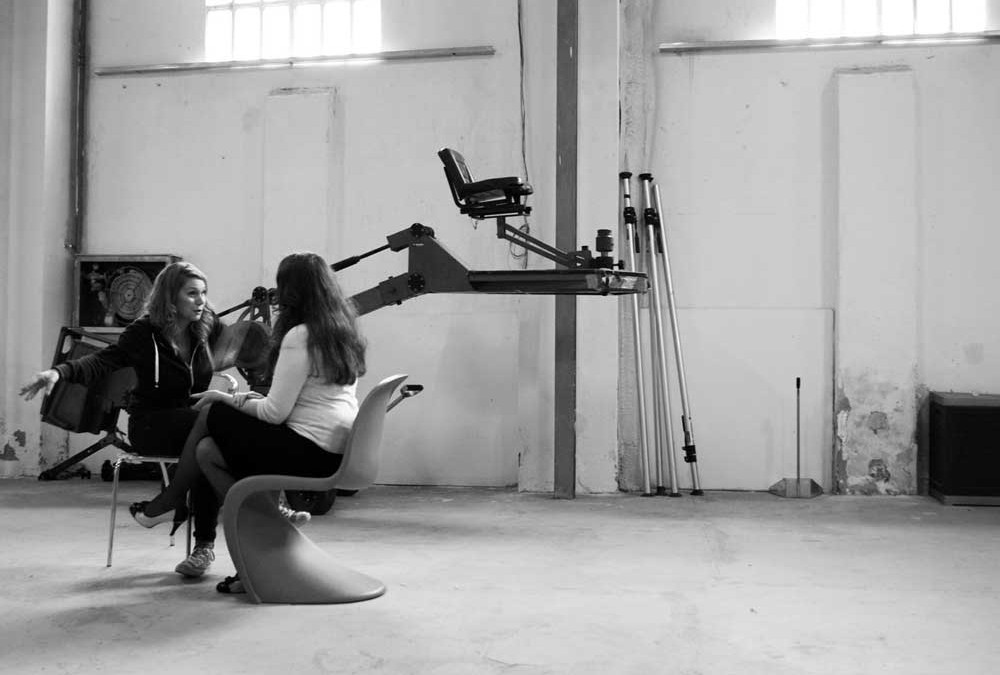
Someone once told her that she must be the cutest porn director he ever met. She thought that was a good thing, because most people still think you have to be a freak to make this kind of movies. We’re in Barcelona, in a huge loft. During lunchtime we talk to the woman on top of Lust –productions. “I’m so normal it almost becomes controversial.” In conversation with Erika Lust.
We’re sitting amongst camera’s, a bed and a woman performing with all kinds of toys. What are you doing?
It’s quite a premiere you’re witnessing here. We are selling all different kinds of sex toys on our website but no one ever thought about the idea of showing all the different ways to use them. It’s strange when you start to think of it; all those toys, all those producers and not a single explicit educational movie on what you can do with it.
How did a sweet looking girl like you…?
It’s a long story so let’s try to make it a little short. I studied political science at the university in Sweden and during the summer I came to Barcelona to study Spanish. In 2000 I met my husband Pablo and decided to stay. It was almost impossible to get a job in political science because of the Catalan politics in Barcelona so I was looking for extra jobs. I had a friend who worked in the audiovisual sector; movies, television and advertising and I started doing the most basic jobs. I was driving actors from the airport, making coffee, you know the drill. Little by little I got better opportunities so I started as a production assistant, then a location manager and afterwards as a production manager. During this process I learned how to make movies. Film has always been my passion so it was quite natural that I started to take evening courses in directing actors, film technics and camerawork. And then….then I had the chance to make a short movie. During that process I came back to the idea I had many years ago in university. Ideas about pornography with the main question being: “Would it be possible to make a movie that was exciting but still had all my values?”. When I looked at porn I always found it physically intriguing because my body responded but my brain didn’t like it. I was quite mixed up because of this huge discrepancy between my body and my brain so I wanted to find a way to make this kind of movie but without losing my esthetics.
So what’s the big difference between male and female porn?
Male producers and directors are all alike. They’re mostly middle-aged straight white guys with a taste in big-breasted blonde airheads. It stands to reason that a homogeneous group is going to create a homogeneous product and that makes those movies very indistinguishable. Women care more about the story that is being told. And also “who” is telling the story? In this case it’s me as a woman, as a feminist, as a mother, as an entrepreneur. For decades men had a monopoly on defining what porn is and in this world of ours, whatever is male-oriented becomes the standard. So it’s time to stand up because it’s not healthy that the only people making pornography are men. Well, at least 99% of it.
And why is that?
It has to do with many things. Men had an easier time to take pleasure in sexuality. Ours has always been closely tied to reproduction. And not only that, mind you that even today there are cultures that are still using barbaric practices like clitoridectomy to nip female sexual desire in the bud. There’s also the structure of society; men go to work, make money, they explore different things. They got into audiovisuals long before women did. When you look at our female history, it’s not so many years ago since we got the right to vote or started to earn our own money. And isn’t that initially the base of independence? If you don’t earn your own money you can’t take a decision, that’s the way it is. There’s been a huge development regarding female sexuality since we started caring for our own pleasure and not only for anybody else’s. And also – and that’s a very important evolution – we are starting to become consumers of things that have to do with sex.
And when did all this change?
It started in the 60’s and the 70’s with the sexual revolution and the liberty to take the pill. But when we are talking about pornography, it’s quite recent. The first woman who started to make this kind of films is Candida Royalle and she started in ‘83 – ‘84. After her there came more and more female directors but still very very little. Maybe we can count 10 at the most. Yet we live in a world where there are thousands and thousands of male pornographers.
Why? Are women afraid to do so?
I think we are a little afraid in one way because it is difficult to stand in society and say: “Hey! I make porn.” You have to stand up against people attacking you from different corners; from feminists to pornographers to Catholics. So many different groups who don’t want us, women, to get involved in that kind of business. But this is where I stand up and say that it’s really important. You have to look at pornography as a discourse. It’s a discourse about sexuality, femininity, masculinity and women don’t participate in that debate because we don’t have anything to say. It’s like we don’t have a voice. So I want us – not only me – but women in general to get into this industry, taking power and starting to make our own movies. Telling the stories we want to be told. We have to express our own sexuality and the only way of doing this, is that a lot of women get into the pool. We have to become a critical mass to be able to change things. In politics we are talking about the 30% rule, meaning that when women are starting to take part of the governments and the parliaments, we have to be 30% of the group. That is when you’re starting to have some power, when your voices will be heard. So let’s work on that quota because otherwise, nothing is going to happen.
But you are pretty busy trying to change things.
I have to. Because I believe we can benefit from watching sexually explicit films. We’re very liberated these days and porn can help us spice up our fantasies and discover tastes we never even knew we had. Porn in and of itself is not a bad thing and believe me if I say that our tastes are as varied as men’s are. So hold the flowers and fireplaces, the candles and novels by Danielle Steele. We want sexually explicit images, but we want to call the shots when it comes to how they’re made.
In your book ‘A woman’s guide to good porn’ you have a chapter called ‘Indephony, predictable porn made by men’. I really laughed out loud reading Nr. 7: Beautiful young women just love to have good sex with fat ugly middle-aged men. Nr. 13: Asian men do not exist and Nr. 22: When a woman is sucking a man’s cock, it’s important for him to give her constant reminders about what to do: “Oh, yeah-suck it!”. Isn’t that too much of a cliché?
I don’t think it is. Young people learn about sexuality from porn. And there we have a problem. I don’t want Rocco Siffredi telling my girls how to have sex. I don’t want him involved in this. I want to have the chance to tell my vision on sexuality. And that doesn’t happen when we don’t participate. Then we will end up with all these porn studs, these macho porn guys, telling our children how to have sex. I want them to take away positive messages about sexuality. With feminist values and discourses. But don’t get me wrong, it’s not that I want to impose some kind of censorship, I just want diversity and the freedom to choose what suits you. The problem regarding young children is that the school education on sexuality is very bad or non-existent. In some countries it’s even called family planning. And what happens when education doesn’t take their responsibility and when still too many parents are afraid to speak to their kids about it? Then kids look at free porn on the internet. And what do they learn? An Italian macho fucks 10 Bulgarian girls in the butt and that’s normal. When you, as an adult, watch this movie, you will have some references. So if you want to see this kind of porn, please do and I hope you enjoy it. But children at that age are not so developed that they can think critically. I think it’s very important to inform and to teach young people how to be critical because it’s not only about porn, it’s also about the models, being really really slim, it’s about television series where we most of the time see men as main characters. We have to be critical towards fashion, photography, because all of it is fake. My point of view might sound quite heavy but it’s true and it’s important that we start to speak about this.
Your message is very clear, but why use porn as your outlet?
Because I love film and I have a base to stand on. I’m not only doing this because the fun or for the money but because I want to see good movie. And that’s another part of it, the esthetics. I find most porn very ugly. And because I like film and I like beautiful things, I want to see a beautiful movie that is well developed, a story that is interesting, characters I can identify with. I don’t want them to be stereotypes like the nightclub singer and the stripper, the babysitters and the desperate housewife. I’m not interested in seeing that kind of women. Neither am I interested in the mafia guy or the pizza delivery boy. Those stereotypes really set my nerves on edge.
You’re not working with actors?
I want normal people to be in my movies so I try to use the less “pornified” looks that I can find. Making an adult movie is not very different than making regular cinema. The main thing with the actors, when they are professional adult performers, is to erase their porn attitude, and make them act and feel naturally. It’s not an impossible mission, it can be done if you treat them with respect and you teach them to relax and forget those strange positions and the athletic sex they do for a living. Nevertheless, I keep looking for the non-transformed bodies. For people who look good and feel fresh and natural. Lately I’ve been very lucky because as my name is kind of growing, people are coming to me. I don’t have to find them, they find me. All those people who were never involved in the adult filmmaking suddenly want to be in my movies. And that’s wonderful, but I also realize this comes with big responsibilities because those people are really having sex and they show every inch of their body in front of the camera. For me it’s very important to get to know the actors. Who are they, what do they like, why do they do this? I don’t want someone doing a scene just because they are in an economic crisis and they don’t have any other way to earn money. Nor do I work with 18 year olds because they cannot fully understand the consequences of what they are doing. I want people to enjoy being in front of a camera. Who are sex positive because believe me, there are a lot of people out there who like doing this.
Do you know your customers?
Yes I do because we have the Lust cinema and the Lust store online. Therefor we can see who’s buying and I can tell you it’s more or less 50/50. 50% men and 50% women. I’m very happy I don’t exclude men from our audience because that was never my intention.
Would you describe it as female porn, or femfriendly porn?
It’s really difficult to find a good word. Sometimes I call it porn, sometimes I call it erotic movies but also Adult independent film. It depends a little on the circumstances. The problem with the word porn is that it’s very ugly. When you say it and you close your eyes, you see something. Something very specific because the norm on what pornography is, is rooted into our minds. Therefor you see something that has nothing to do with my movies. When I use the term porn, you probably see something ugly, most of the time aggressive and violent male dominant. When I’m watching the scenes I shot, I see passion, intimacy. Sometimes I wish I could wash the word pornography. Putting it in the washing machine and take it out all fresh and removed from any negativity because I want to use that word. What else should I call it? Contemporary porn maybe, yet I don’t really think I belong in Tate modern. So yes, I must admit I’m a little lost when it comes to put a word on what I’m doing.
Are you a feminist?
Yes I am, but all too often I realize that a lot of people don’t know what feminism is. We live in a world where men and women don’t have the same possibilities, rights and opportunities. A world in which women as a group have less power than a group of men. Being a feminist means acknowledging this situation and believing it should change. And the only way we can change something is when we can be specific about what the differences actually are. We are modern women in a modern society and yet we are not represented in the mainstream pornography, we are not there. So let’s start making our own porn movies because if we do, we can start choosing what we like most.
How did you get so liberated?
Well, I’m not. I’m still struggling but I think all of us are. I’m a very normal person and I don’t have this super strong sexuality going. I’m quite down to earth and vanilla. But it helps that I’m Swedish. I had the opportunity to grow up in a country that is very liberated when you compare it to others. Sweden was also one of the first countries who started school sex education in 1952. When I talk to people I realize I am very privileged on the subject matter. When I was 12 we had sexologists coming to our school and talking about not only the technical stuff but they also spoke about feelings and butterflies. The good part of sexuality was explained to us as a part of your health and happiness. This kind of approach changes things, it opens up your mind.
Do you feel excepted?
It goes in two different directions. The male porn industry has a very difficult time right now, accepting that suddenly there are young women deciding that they want something else. Bottom-line is that I think a lot of men are afraid of losing their jobs. Regarding my own kind I can feel that the feminist movement starts to accept the idea of women getting into this. In the beginning they were quite chocked but now it’s getting better. They are clever enough to see why this is important.
And in your personal habitat?
Yes I do feel accepted. And that’s because I’m not ashamed of what I’m doing. If you’re ashamed you will have a problem explaining it. People should be ashamed when they are doing bad things, stealing money or dealing drugs. Not because they are making adult movies. For example my mother is 70 but she accepts it, understands it. We’ve been speaking a lot about the message behind it. But of course she would have been a lot happier if I would have become a lawyer or a teacher. Because yes, this is a little more complicated to tell your friends. Nevertheless, everybody responds really well to what I am doing. I can see that people feel the same way, that there is a need for this new niche. Also the parents at my girls’ school are great about it, they love what I do and they certainly don’t say that there kids can’t come to my house because I’m a pornographer. Acceptance lies with you. People understand what you communicate.


De pagina die u zocht kon niet gevonden worden. Probeer uw zoekopdracht te verfijnen of gebruik de bovenstaande navigatie om deze post te vinden.