Geen Resultaten Gevonden
De pagina die u zocht kon niet gevonden worden. Probeer uw zoekopdracht te verfijnen of gebruik de bovenstaande navigatie om deze post te vinden.

Text JF. Pierets Photos & concept Criaturas
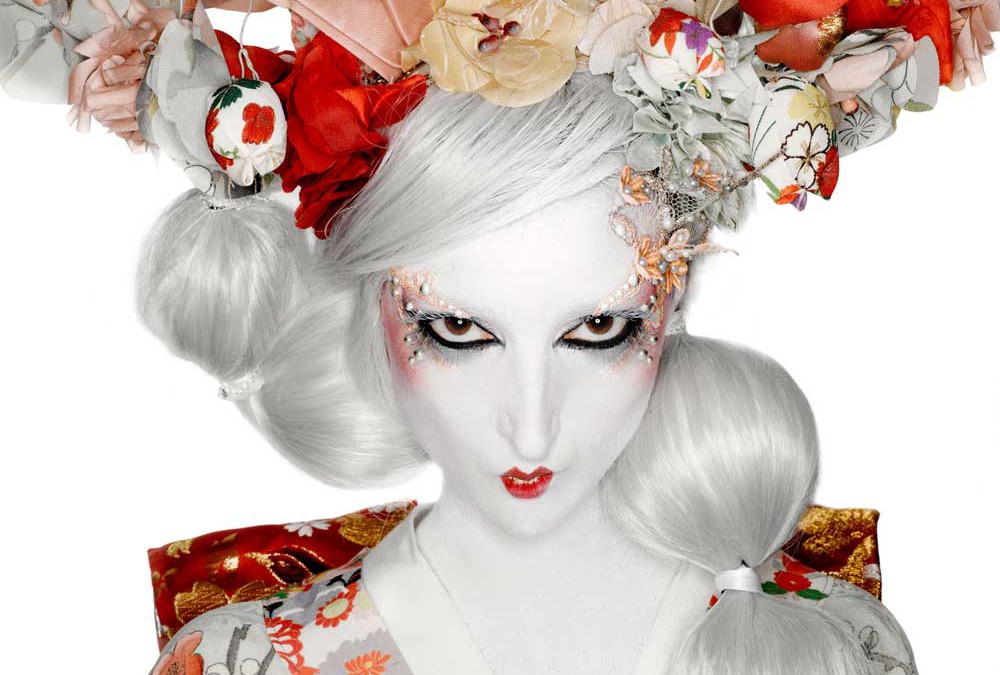
Criaturas is the name Saskia De Tollenaere and Olivier Desimpel gave to the world they created for everyone who dares to dream. An experience concept where their passion for theater, art, fashion, beauty, spirituality and emotion merges in the form of unique celebrations and parties. Each time they create a new universe, their artists bring the concept to life. Especially for Et Alors? Magazine they created one of Criaturas’ amazing photoshoot. Needless to say we are very proud to feature these gorgeous images, so we asked them about this unique world of theirs.
Where did you get the name?
When we studied fashion at the academy, we got a lot of inspiration from movies by Pedro Almodovar, Tim Burton and David Lynch. Our graduation collections therefor had a high theatrical atmosphere.
Saskia The red thread in my graduation collection was the female seduction in all its facets. It was named ‘Criaturas de la ultima seduçion divina’. When we started our company about a year later, it was immediately clear to us that the name Criaturas = beings / creatures perfectly encompassed what we created.
When did you start?
Olivier My graduation collection was a Victorian funeral procession marching through the old city center of Ghent. It was a hot day in June 1999, the terraces were packed so we had a large audience. Someone asked us why we didn’t bring such act in the events sector. In those days there was very little entertainment, except for the clown, the magician and the music band so that’s how we found our stage. Later on it expanded to total concepts.
What was your first project?
The theme of our first big event was From Hell to Heaven. It was an interactive concept where guests first had to endure the journey through purgatory and hell, to end up in heaven via the gardens of Eden. 50 artists performed as witches, devils, satyrs, angels, nymphs, all the creatures symbolizing good and/or evil. It was inspired by Dante’s Divine Comedy, dripped in a David Lynch atmosphere.
What’s your best project until now?
Each concept is like a child, therefor impossible to choose between them. The most innovative are our Tableaux Vivants, because the guests not only step into a painting, but also become part of it.
What’s the most amazing thing you ever did?
Putting a smile on someone’s face or seeing tears of wonder. The fusion of the illusionary world and reality. Technically, it is perhaps the hell-heaven concept in the beginning of our career that was the most daring. With the resources we had in those days, it was litteraly a ‘hell of a job’, yet it gave us the confidence that we could handle everything from then on. Take for example the Cotton Palazzo-event where we hung 3kms of white curtains in an abandoned, open cotton mill during a storm. The result was.. heavenly! Currently we are organizing a party where we actually build a location with 75 large sea containers This is undoubtedly the most amazing project until now.
What’s the most amazing thing you ever want to do?
To let our world make a journey as an avant garde healing theatre. A mix of beauty, spectacle, interactive acts, unity and spirituality.
Where lies your main interest?
To live life in the full. With love and all its beauty.
Tell me about the photoshoot?
The time had come to take a new direction in terms of acts and costumes. We needed a new challenge and wanted to put more emotion and story in our creations. The spiritual message we wanted to convey was that every individual is beautiful with his own style and image, and can perfectly blend in a society where originality is appreciated. In nature, the bird with the most colorful plumage is the most successful match. Among people; far too often gray and colorlessness is considered normal. For the photoshoot we have created very different characters and looks, and made them party together. By giving them names like The Storyteller and The White Knight, we give a hint of the story they tell, yet we allow the viewer to have his own dreams and fill in the blancs. The photoshoot is also the start of our traveling avant garde theater so for us it’s a preview.
Do you actually make everything yourself?
When it comes to costumes and accessories, yes, we make everything ourselves so it is absolutely unique. We use couture, ethnic and antique fabrics, vintage and antique ornaments and applications. Therefor our costumes radiate luxury and history. I’m always looking for material with a high dose of craftsmanship. Both at flea markets and the worldwide web. I also like to learn new skills such as origami and kanzashi, which I used in our geisha costumes. Also the art of making hats, for which I get professional help of our makeup designer, is an enrichment. We also design the graphics, invitations, special props and floral decorations for our concept events.
Where do you get your inspiration?
History, movies, fashion, nature, dreams, life and we inspire each other.
You also have your own jewel collection?
Yes, and not only jewelry and accessories but also home decoration, interior design and art. My jewelry collection; DTS for lovely creatures, originated at the request of a couture shop that wanted to offer bespoke jewelry to customers. So each time I use a lot of jewelry that’s been personalized make a suitable jewel for a particular cocktail or evening dress, it developes into an extensive collection in different styles. Along with Olivier, I also design for our O + S studio, which are mainly interior designs such as lighting, furniture and accessories. We always make unique pieces, we do not like mass production. Our favorite challenge is to create something customized for the clients. Watching someone’s character, personality, style, experiences, dreams, .. and design something that he or she represents. This way of working has led us already to design very spiritual things for customers.
Don’t you ever think about starting your own fashion collection?
No, during our fashion studies, we dreamed of designing haute couture collections because of the theatrical aspect. Back then, Jean Paul Gaultier, John Galliano and Alexander McQueen were our heroes. Yet we don’t want to get stuck in the commercial circuit where we have to take trends, rules and sales figures into account. Frankly, we just want the freedom to create whatever we want. My favorite aspect of the job is that every day is different. I feel blessed that one day I can come up with a concept and put it into shape, and the next day I can make a costume or work on my jewelry collection. I can live my inspiration and imagination without restrain. I rarely feel that I ought to do something and therefor can start each day with full passion and love for what I do.
Tell me about your future dreams?
When it comes to realization, Criaturas is our child and we would like to see it grow and inspire others. Also the opportunity to work with famous artists or filmmakers, so we can reach more people internationally, would be a goal. And later on… a house on a hill, with a lot of animals, surrounded by nature. That would sound good.


De pagina die u zocht kon niet gevonden worden. Probeer uw zoekopdracht te verfijnen of gebruik de bovenstaande navigatie om deze post te vinden.
Text JF. Pierets Photos Courtesy of Royal Academy of Arts
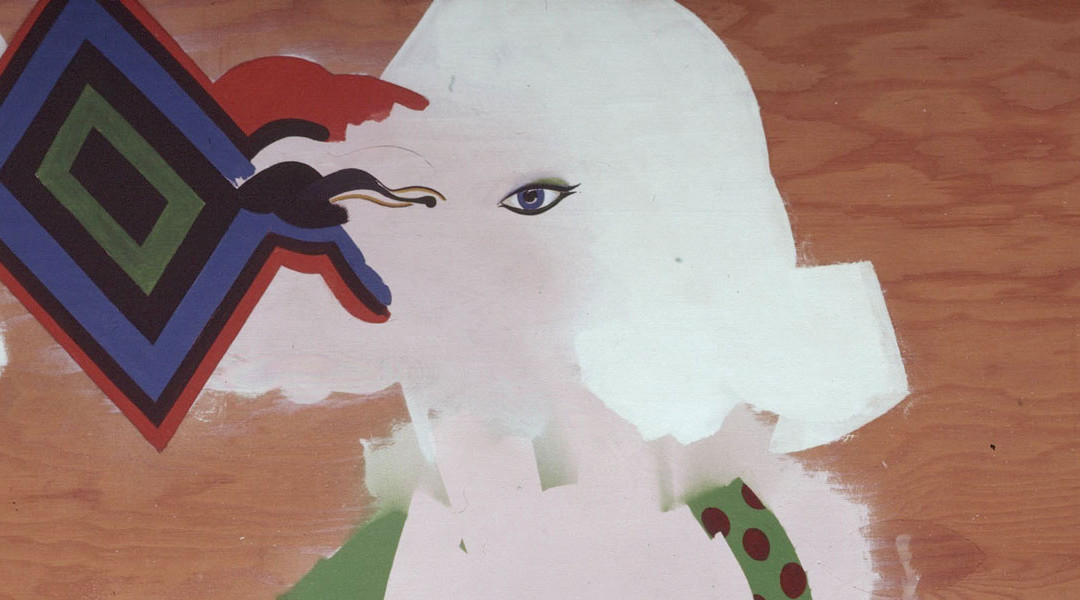
Three women, wearing black leather fetish gear, produced by the same company that supplied Diana Rigg’s costumes in The Avengers. One of them is on all fours and the glass top on her back awaits your drink. The second one wears thigh high boots and is ready to collect your hat. The third one is offering herself as a chair. Allen Jones’ fetishist sculpture ‘Hat stand, table and chair’ is probably the piece of art that his name is likely to bring to mind.
It was 1969 when the British Pop Art artist designed these fibreglass models of submissive mannequins offering themselves as furniture. ‘Hat Stand, Table and Chair’ were an immediate international sensation and Jones was instantly labeled ‘a cultural hot potato’ when his work got attacked with stink bombs and caused a riot when first exhibited in 1970 at the Institute of Contemporary Art in London. Feminists where furious about the objectification of women and even The Guardian suggested it should be forbidden to exhibiting the items. Jones himself claimed, ‘I was living in Chelsea and I had an interest in the female figure and the sexual charge that comes from it. Every Saturday on the King’s Road you went out and skirts were shorter, the body was being displayed in some new way. And you knew that the following week somebody would up the ante.’ In retrospect, Jones feels, ‘I was reflecting on and commenting on exactly the same situation that was the source of the feminist movement. It was unfortunate for me that I produced the perfect image for them to show how women were being objectified.’
Zeitgeist
Fast forward to present day. As from November 13, 2014 till January 25, 2015, the Royal Academy of Arts will exhibit Jones’ work from the late 1960s up to the present day. The exhibition will be a survey of his work spanning his entire career, including prints, paintings and the iconic figurative sculptures. Over the past forty years his work has remained true to the depiction of popular culture, with much of his imagery being drawn from advertising and performance. But what about ‘Hat stand, table and chair’? Is the image still causing the same unease and emotional disturbance as it once did? Not long ago, in 1986 the sculpture attracted controversy once again. The Tate acquired ‘Chair’ in 1981 and in 1986, on International Women’s Day, two assailants poured paint stripper over the mannequin’s face. It’s assumed the action was a feminist protest, but those responsible were never caught. Are Allen Jones’ sculptures still sparking controversy after all these years? Or are we living in such a particular zeitgeist that we’re not giving in?
Gender stereotypes
Modern day feminist and founder of the wayward Belgian news site ‘De Wereld Morgen’, Bieke Purnelle, states that art should dare touch, accuse, expose and challenge: ‘Context is crucial in assessing images like that and I find it hard to understand that people tend to denounce provocative art, but don’t take any offence on the countless gender stereotypes that surround us on a daily base. Of course times are different now and you only have to look at advertisements published in the fifties to see how women’s role in society has changed. Yet I can’t help but noticing a return to the old deterministic stereotypes, for example when it comes to toys and children’s clothes. The perception of gender roles has a huge impact on how children and young people grow up. The properties that are assigned to the concept of ones gender are too much and too often emphasized to be comfortable. People get no room to just be an individual and are forced into a social straitjacket, while gender stereotypes, and by extension all stereotypes whether they concern gender, race or social class, are not only stupid and shortsighted, but also very dangerous.’
Moloko bar
‘A Clockwork Orange’ is brought into the discussion by Stella Bergsma. Writer and frontwoman of the band ‘EinsteinBarbie’; ‘there is a similar kind of art in ‘A Clockwork Orange’, one of my favorite movies of all times. Female bodies are used as tables in the Moloko bar. The first time I saw that, I thought it was kind of cool; the body as an object of desire.’ According to Martin Gayford from The Telegraph, Allen Jones got a call from Stanley Kubrick around 1970. The film director had seen an exhibition in which Jones had shown some extraordinary and disturbing pieces of sculpture. Kubrick thought they would be just the things for a scene in a new film he was planning, ‘A Clockwork Orange’. The trouble was, the director imagined that Jones would design his sets for no fee, just a credit. When I (Gayford) talked to Jones in his London studio recently, he told me that Kubrick had said: ‘I’m a very famous film director, this will be seen all over the world and your name will be known. ‘I held the phone away from my ear, I was just staggered anyone would say that. It showed an ego that dwarfed that of any artist I’ve known.’ Jones turned down the offer and a set designer produced the pieces in question (many continue to believe they were by Jones).
Men versus women
Besides from liking Jones’ objects, Bergsma also reacts when it comes to gender roles: ‘I am really not that bothered by the objectification of women because I think that objectification is a part of our sexuality, and as long as it is sort of a game it’s a quite natural phenomenon. But I would like to see more equality, I would love to see more male objects and I do dislike the fact that it is almost exclusively women that are objectified in our society. So it’s the inequality rather than the objectification that bothers me. Nevertheless, there is nothing to stop us from changing that. So as a Christmas present I would like to see men as Christmas trees. They have already got balls!’Whether objectification is a part of our sexuality or not, the fact remains that it’s quite difficult to stay ‘correct’ in such a matter. Writer and exploiter of the LGBT bookstore ‘’t Verschil’, Johanna Pas, takes it personal when she says: ‘Although I love looking at women as sexual beings, I think it’s important they’re being portrayed as acting, thinking creatures. Both in the arts as in advertising, in movies and everyday image formation. As a voyeur I would love to enjoy female beauty, yet our society turned that into a complex delight.’
Social inequality
Art holds a mirror to our society. Represents the social, economic, racial values of the time we live in and according to Charles Moffat, curator of the Lilith Gallery in Torronto, Allen Jones’ 1969 works were deliberately provocative: ‘I would argue ‘feminist’, because the goal behind the works was to draw attention to social inequality between the sexes. Photographer-Sculptor Cindy Sherman did something similar years later when she portrayed battered and beaten women as centrefolds in magazines, objectifying women who have been abused. The concept is simple: the artist is basically playing devil’s advocate (not quite, but close enough) and portraying women in such a way that it will provoke a sympathetic response to the plight of women. If we were to make a similar sculpture today, but use wax figures of minorities to make the furniture – it would provoke a similar response and make people more aware of how poorly minorities are treated. In 1969 Jones’ sculptures provoked that response, yet it was misunderstood by the general public who jumped to the wrong conclusion. Shown today, the response would be more muted and people would grasp that the purpose of the sculptures is to provoke thought about gender inequality.’
Pastiche
Fast forward to 40 years later. Norwegian artist Bjarne Melgaard creates a series that ‘reinterprets art historical works from artist Allen Jones as a commentary on gender and racial politics’. One of the pieces is a copy of ‘Chair’ but featuring a black woman instead of the original white one. The provocative image of socialite and art collector Dasha Zhukova, sitting on that particular chair sparked outrage around the world. Artist Sofia Senna aka Fannie Sosa was outraged by this image. ‘I’m tired of seeing white man producing work where they objectify oppressed bodies, mainly black women, under the banner of Questioning power and representation. I believe these artists, Allen Jones, Bjarne Melgaard, or even Brett Bailey, are so eager to capitalize over the black female body and its subversive potential because they are lazy. I think by doing this they avoid interrogating and dismantling their own whiteness, maleness, and over all privilege. It’s so easy! A sexually objectified black woman will create a buzz, especially in the high art world now. There is such a fascination with ‘ratchet culture’, blackness, woman-ness and how her liberation looks. Black female bodies are both fetishized and demonized, and that creates a very profitable cul-de-sac where these bodies are exploited and appropriated, while the audiences are fooled into believing this is a critique to the powers that be. None of that. It’s just the same old bull manure.’ After an online magazine published the photo of Zhukova, perched on the artwork, the Russian socialite apologized immediately and said that ‘this photograph, which has been published completely out of context, is of an artwork intended specifically as a commentary on gender and racial politics (…) I utterly abhor racism and would like to apologize to anyone who has been offended by this image.’
Icons
According to the numerous tweets and blog comments, the apology came to late. Yet there was one online article that stood out. Jonathan Jones, English journalist and art critic wrote an article in The Guardian headlining ‘Why there’s nothing racist about The Racist Chair’. ‘Today it (Hat stand, table and chair) is an accepted part of modern art history and in fact Jones has had a revival lately. So what was Melgaard’s point? Surely, in making this woman black he means to retoxify the art of Allen Jones, to offend people with an image long since accepted. The intention is therefore the opposite of racist: it is to question power and representation. Are you offended by this black woman’s abuse? Then why is it OK for white women to be similarly humiliated in a respected pop art icon in the Tate collection?’ Don’t forget that Jones himself claimed that his own work was actually a protest against sexism. Those visions (he saw on King’s Road in Chelsea) were to fuel his artistic imagination, producing not only his women as furniture, but striking images of seemingly endless legs wearing stilettos. ‘Is it too harsh to say that only a man can be that naive?’ says Johanna Pas. ‘It would have been shocking if he would have used male mannequins. Yet I guess that would’ve never been put on display.’
It’s all about context
American conceptual artist Barbara Kruger once declared that ‘We are never a subject, we are always an object’. Which triggered Johanna Pas into stating that it’s all about context. ‘I incline to think that women in the 1970s thought they’d seen the worst when it came to sexism. Yet it was just the beginning of image advertising. Major advertising campaigns were in their infancy, we were on the threshold of video clips and never heard about YouTube. Now there is such a proliferation of sexual female stereotypes that we no longer bother to blink anymore. Jones’ work is no longer shocking because we are so inundated with similar pictures that we find them either normal, or we are too tired to respond for the zillionth time. Question is if an artist has a social responsibility. I think he or she has indeed.’ Julian P. Boom, Art Director of Et Alors? Magazine agrees that it’s all about context. ‘It’s a piece of art, and art is one of the few things that should be able to get away with provocative imagery. ‘Hat stand, table and chair’ never bothered me and although I’m an opponent of gender roles, I never came to think of interpreting the work as such. Why not? Because it’s art. Nevertheless I do fulminate against the way women are portrayed in contemporary advertising, video clips, etc. The creators of those images have an obligation towards society, towards kids growing up, struggling with their self-image. Modern day advertising cheerfully waves all of this into oblivion. And for me, this is what we should react to. Not against art, something that ought to be free of speech.’ Her comment seems backed up by Bieke Purnelle’s words that you have to give the artists a little room: ‘Let them be provocative while pushing a few sore spots. Free and easy.’
Sparking controversy
Every discussion needs its conclusion, yet in the case of ‘Hat stand, table and chair’, there is none. More than 45 years later, the sculpture still sparks controversy. Is extremely chocking to some and necessary to others. We talked to numerous women and men and even the slightest similarity in opinion was hard to find. Maybe it leaves us nothing more to do than remind you that the Pop Art artist who, motivated by the theories of Jung and Nietzsche, also made numerous paintings and lithography’s and one almost forgets that he’s also a printmaker, working mostly in lithograph and screenprint and has built up an impressive body of work. The upcoming exhibition at The Royal Academy will be a survey of Jones’ work spanning his entire career, including prints, paintings and the iconic figurative sculptures from the late 1960s up to the present day. The exhibition will also seek to demonstrate the enduring place of drawing in Jones’ creative process. His talents as a draughtsman are considerable and although infrequently seen, these drawings underpin every element of his artistic output. Go check!


De pagina die u zocht kon niet gevonden worden. Probeer uw zoekopdracht te verfijnen of gebruik de bovenstaande navigatie om deze post te vinden.
Text & photos Dirk H. Wilms
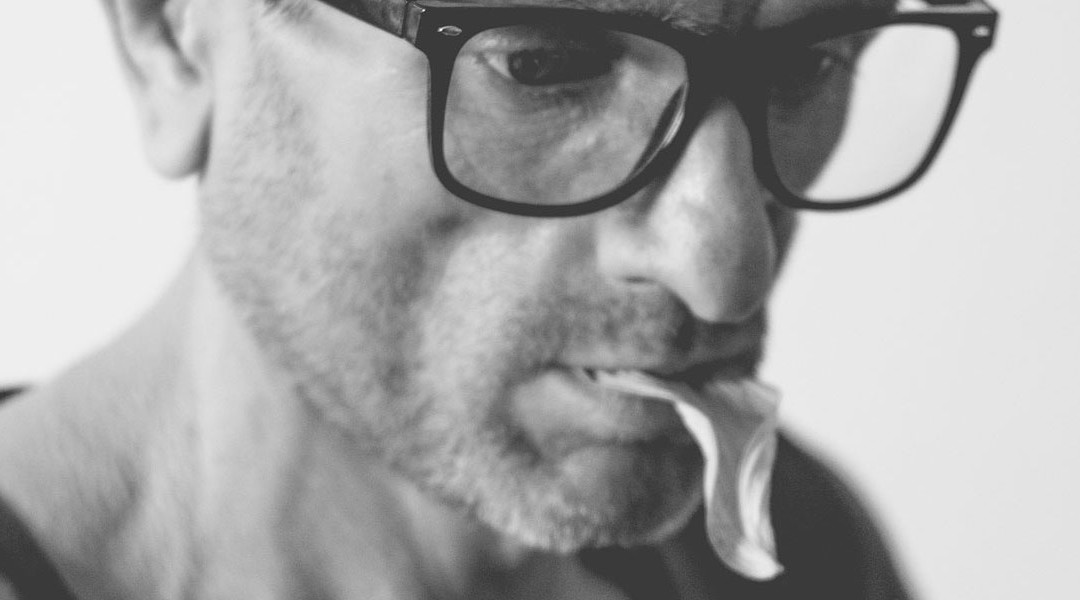
German photographer and visual artist Dirk H. Wilms focuses on self-portraits since 2001, the year he received his HIV diagnosis. After the diagnosis he barely left his house for almost four years. He thought everyone would know immediately he carried the virus in him. Fear of being forgotten got him to document his life; his awes and physical decline.
Curtain # 1
This image shows a certain kind of self-imposed isolation. I like to be alone. And I like to work alone in my studio. In this solitude I have the feeling of absolute control. During these moments, I realize that this is my place in the world.
Flower in Hand
I decided to start documenting my life as an art form in 2001, when the first traces of HIV became visible. The reason why I almost always cover my face in the photographs.
The Leaf
This is one of my most personal pictures. Anything I could say about it would distort it.
The Rubber Balloon
My own body is always the starting point of my productions. Yet in this case, it was the beautiful white Amaryllis from a friend of mine. I love flowers, and I love balloons.
Bent XX, The Diver
To take such pictures give me simple joy. I don’t analyze while working, don’t think about it, don’t have any message.


De pagina die u zocht kon niet gevonden worden. Probeer uw zoekopdracht te verfijnen of gebruik de bovenstaande navigatie om deze post te vinden.

Text JF. Pierets Photos Marina Rice Bader
Executive Producer of the lesbian themed movies ‘Elena Undone’ and ‘A Perfect Ending’, Marina Rice Bader, is releasing her feature length directorial debut ‘Anatomy of a Love Seen’ as a streaming rental, breaking outside of and bypassing the traditional Hollywood distribution channels. Bader was set on the idea of exploring alternative distribution options in order to engage and connect directly with her fans, and get the film out to as many people as possible. A conversation about lesbian films, about running her independent film company ‘Soul Kiss Films’ and about love & passion.
When did you start to make movies? Lesbian movies, to be correct.
I’m in the movies since 2009. It hasn’t been really long, but I can say it’s been fantastic. That year I fell in love with a woman for the first time. She happens to be Nicole Conn (film director, producer and screenwriter. The lesbian love story, ‘Claire of the moon’, was her debut feature. Red.) I had never fell in love with a woman before, never even kissed a woman. So, when you are walking into an entirely new world, you do your research by watching movies. I rented so many lesbian movies that I noticed there were some really good ones but also some terrible ones because of the lack of chemistry between the actors. Movies have been my non-human loves my entire life and after we were together for almost a year I said to Nicole; let’s make a movie, just for fun! Since the only story she wanted to tell was ours, we made ‘Elena Undone’, which was literally my story. On the set I did about 20 different things. From executive production to preparing food and shuttle driving, just to name some. I had my hands in all the different departments and fell in love with the process. After that I produced ‘The Perfect Ending’ and when Nicole and I split up a couple of years ago, my love of film didn’t die with the relationship. I just continued on my own with ‘Anatomy of a Love Seen’ and the upcoming ‘Raven’s Touch’.
‘Anatomy of a love seen’ is your directors’ debut. There’s quite a difference between being an executive producer and a director. How does one take such a big step?
I don’t like to call myself a control freak, but I do like to have my hands on everything. And I love storytelling. As a professional photographer I spend 18 years telling stories through still images before I got into this rollercoaster business. Directing this film came as a natural progression and besides that I chose the wardrobe, I did the make-up, chose the location and coached the actors into getting the real emotions. I can actually say it was an easy transition because I have already been doing it for so long on a smaller level.
Why did you make another lesbian themed movie?
Well, I love women. I just do. My female friends have been the most important people in my life, up until my kids. I want to tell women’s stories and since almost all my friends are lesbians and we have so many beautiful, committed fans from ‘Elena Undone’ and from ‘The Perfect Ending’, it just makes so much sense for me to continue telling their story. And also; a good story is a good story. It doesn’t matter who’s making love to whom because they are two human beings. They are not anything other than that. I’m trying to tell universal stories because the one thing that every single person on the planet struggles with and what every single person wants, is the ever-illusive true love.
What do you think about lesbian movies in general?
Some of the most beautiful films I’ve seen are lesbian films but whatever niche you name, there are both good and bad films. Of course we all hope that our film goes beyond the niche, that it tells a good enough story that other people want to watch it. But we are forced to make films on a very small budget. When you’ve got a small percentage of the planet that are going to be organically interested in your film, you can’t spend a lot of money because you don’t know how much you are going to get back. And when you have a low budget it’s easy to reach for the moon when you’re for example doing your casting. You continually have to ask, ask, ask for what you feel you deserve for your film and at a fraction of the price. But once again, that’s just not only in lesbian film. It’s niches across the board. It just happened to be what I’m talking about right now.
What is the one thing you would never settle on?
For me, one of the number one things I was missing in a lot of the films was chemistry between the two leads. When Nicole and I worked together we worked really hard to make sure that we did chemistry reads. Nicole was very adamant about that because it’s critical, it really is. When I cast Charon and Jill in ‘Anatomy of a Love Seen’, I did it because their chemistry was phenomenal. They where incredibly comfortable and they adored each other. When you are tossing two actresses in bed, naked, the very first day of filming, those are important attributes.
You shot the movie in only 5 days. That’s quite a challenge.
The reason for that was that I wanted to maintain the production value that I had on the other films that we’ve done…with about one third of the budget to work with. I had one investor who really is an ally in the world of lesbian cinema, and when I decided I wanted to make this film I called her and asked if she wanted to be involved. When she said she had 75000 dollars to invest, I didn’t want to spend one more minute trying to find other investors. I just wanted to make the movie right away in order to get it submitted for the summer festivals. The only way to keep the production value high was to limit the amount of days we where shooting, which is what I did. I can tell you that every shot that I took to make ‘Anatomy of a love seen’ was very carefully thought about.
And then, well, there was no script.
Indeed. Everything was just an idea in my head. I started working on an outline and did not finish until I casted the actresses. There was something in my brain that was not letting me move forward without knowing who was going to inhabit these roles, which, in a fully improvised film, I think you can probably understand that. So much comes from who is stepping into those roles and when I did the audition process, I didn’t even audition the first time around. I just brought these women in to meet them. You can’t cast someone to far outside the character when it’s improvisation.
So you said: we have five days to shoot, we don’t have a script. And everybody followed? More than that; they where incredible. Everyone who came on this ride with me was so brave and non afraid. It was just the right group of people because they loved the story, loved the idea. The thing that sold them all was that we were going to do this in 5 days, but on only one location. After being on numerous sets, I know how much time is wasted when you’re moving your company to another place where you have to reset the lights and everything else. We, on the other hand, had a soundstage and didn’t have to stop for plains nor trains. I made it as doable as possible. Everyone agreed and of we went. All of us. Into this great adventure.
When ‘Anatomy of a love seen’ was finished, you chose not to go via traditional distribution.
The thing that bothers me about traditional distribution is that it’s exclusionary. Inherently I find that to be upsetting. With the last two films we went via traditional distribution and the US was able to watch the film months before many of the European countries, because of the way they have it divided in the territories. That doesn’t only feel bad, but it also leads to piracy. I don’t blame people who have to wait for months and trying to find it illegally. But they shouldn’t have to wait. And that’s why I wanted to do it this way. I wanted a worldwide release and I’m happy to say that the movie has been viewed in 90 countries. It was available on the same day to everyone who had access to Internet and at a very reasonable price for a brand-new film. I released it after our world premier at Outfest here in Los Angeles. I just wanted to try something new and it’s been extremely successful. It really makes me happy that everyone has had the same opportunity as everyone else.
Right now the movie is available on only one platform, which is Vimeo.
There are many platforms I could have gotten the film on myself, but I wanted to start with Vimeo because they are so filmmaker friendly and it’s so easy to figure it all out. They offer high quality and are very responsive to questions. It was a great place for me to start and it turned out being tremendously successful. Our statistics within that one platform are phenomenal. Each person who rented it watched it on an average of three times. A full 10% of people who viewed the trailer had actually gone on to rent the movie. We’ve got a lot of interaction. We’ve got comments, we’ve got 4,5 out of 5 stars after a month of being up, so we’re doing very well. The exiting thing however is that I’ve been approached by Gravitas films, a distributor with tremendous projects in their library and they approached me on taking the film to the next level. I’m really excited about that because my one platform is going to be extended to many, many platforms.
Is that kind of distribution a completely new way of communicating?
I really do think this is the way of the future. In 5 years no one is ever going to buy dvd’s anymore. I don’t even think you’re going to find them. The days of having to worry about not going to be able to have a dvd distribution is over and I think, especially for young filmmakers or people who are just getting started, it’s a beautiful thing to have the opportunity to know that they can follow their passion, make their film and having a platform for people to see it. You don’t have to wait anymore for someone to come along and handle your movie.
When hearing about all those people who’ve watched ‘Anatomy of a love seen’, can I assume you’re much appreciated within the lesbian community?
I think I am. But distributing my movie in such a matter was a bit of a risk. I’m not a Josh Whedon, I’m not worldwide news. If I release my film the day after the world premiere, I have to work my butt of to make sure that every single person knows that it’s out there. At the moment I’m doing a little experiment because I’m curious to see how much the lesbian community supports someone who creates projects just for them. I sometimes think it’s something that is taken for granted in a certain way. We all go to the movies, buy dvd’s. But do people think beyond that? Are they conscious about the fact that they are supporting the artist who created this, allowing him or her to go on and create more? Just for them! For 5 dollars any lesbian out there can contribute, in order for me to be able to go on and make the next film. If I were going to be able to send a message to the lesbian community it would be, please please please support the artists who are creating just for you. Weather it’s by renting my movie, or buying a subscription to an LGBT magazine, it doesn’t matter. Just as long as you know that the reason that these entities exist, is for you. They can’t exist without you. So rent the movie!
What would you like to accomplish with your movies?
We’re doing final editing on ‘Raven’s Touch’ as we speak and my desire is to make another film starting the end of the year. My dream is for ‘Soul Kiss Films’ to be synonymous with quality lesbian cinema. I really dedicated the last 3d of my life to bringing women’s stories to the screen and that would make me very happy. I actually would like to create a film a year, would like to be able to bring a new film into the lesbian library every year.
That’s very ambitious since you are running ‘Soul Kiss Films’ all by yourself.
It is, but it’s doable. I try to get out of thinking in terms of small. I’m trying to live the rest of my life big. ‘Soul Kiss Films’ is just me. I don’t have an assistant or secretary, it’s literally just me. It would be easy to think I’m not going to be able to accomplish much this way, but I would rather think in terms of being able to operate in a way that a larger production company would. In terms of what I want my output to be. A company like ‘Focus features’ is not sitting around working on one project at the time. They’re in postproduction on one, pre production on another. They have multiple things going on. So that is the way I’m running my business. At some point I will have some support but right now it’s not in the budget so I’m just trying to make sure that I stay big. Think big. I think that’s the only way to be successful.


De pagina die u zocht kon niet gevonden worden. Probeer uw zoekopdracht te verfijnen of gebruik de bovenstaande navigatie om deze post te vinden.
Text JF. Pierets
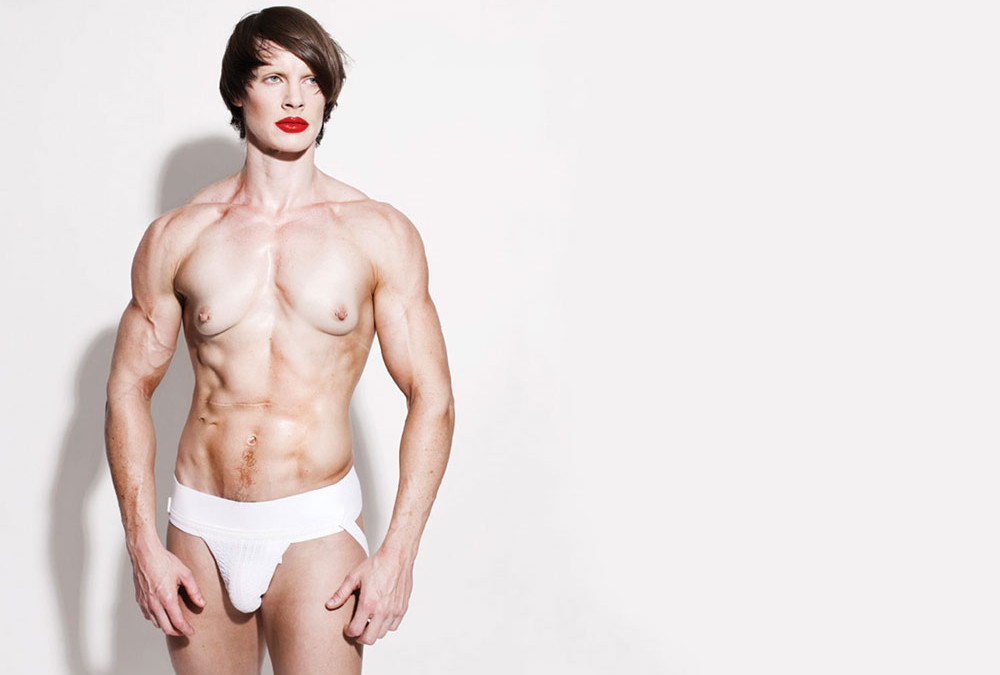
Cassils first caught our eye in the ‘Telephone’ video, where the performance artist and personal trainer made out with Lady Gaga in the prison yard. Intrigued about this appearance, we discovered a highly intelligent artist who pushes the boundaries of the body while making statements on today’s perception of the image. Creating a visual language that uses the physical body as sculptural mass, Cassils turns exercise into a metaphor for a society that is obsessed with consumption and surface.
Can you tell me about your art?
I used to paint and draw a lot when I was a child. I remember that when I was 6 years old, I won a drawing competition. I always was a bit of a weird kid and I think that was the first time I have ever been acknowledged. Although I work with the body now, I was always a kind of secret painter. And I do watercolours, but don’t tell anyone!
Why did you start working with your body?
I started making art with my body for different reasons. Partially it was due to education. When I was 20, I worked for The Franklin Furnace, NYC’s largest non-profit organisation dedicated to performance art. Here I was hugely exposed to epic body based performances that they housed in their archives. I went to Nova Scotia College of Art and Design, an art school in Canada heavily influenced by 70’s conceptualism and I got my masters from California Institute of the Arts, where I read a lot of Marxist theory and learned about institutional critique from Michael Asher, who remains to this day, a big influence. I also came to my body through an illness I survived as a child. It sounds rather benign but it was called undiagnosed bladder disease. What it meant was that for 4 years, I was sick but they would tell my family that it was something in my mind. That it was a psychosomatic issue. It got to the point where my bile ducts ruptured and my skin actually turned green. When they opened me up I was literally rotting. I was hospitalized for a couple of months and almost died. It made me want to know all about the body. Not just intuitively, but understand it scientifically. So that I could not only be more in tune with it , but I could advocate for my body and teach others to do so as well. I learned early on how sexist and dismissive the medical establishment can be.
Your work tends to respond to a specific context.
It does, take for example the ‘Cuts: A Traditional Sculpture’ piece. I was asked by Los Angeles Contemporary Exhibitions (LACE), a non-profit arts organization here in LA, to respond to the trajectory of work that was created in southern California from the early 60’s to the mid 80’s: to look into the archive and to find work that I found inspiring. I ended up making a reinterpretation of Eleanor Antin’s 1972 performance ‘Carving: A Traditional Sculpture’ in which Antin crash dieted for 45 days and documented her body daily with photographs. It resulted in 72 photographs showing how she starved herself. Rather than crash diet, I built my body to its maximum capacity over 23 weeks. I did this by adhering to a strict bodybuilding regime. I had designed a diet where I consumed the caloric intake of a 180-pound male athlete. I documented my body as it changed, taking four photos a day, from four vantage points. I collapsed 23 weeks of training into 23 seconds, creating a time-lapse video.
Quite an extreme thing to do.
Absolutely, but I wanted it to be extreme. And you mustn’t forget that Antin’s work was made in a different era. Now you can easily find websites like ‘Thinspiration’ – an inspiration website for women who want to be anorectic. There is just so much more of an extreme in our society these days. It is very different from the 70’s. I got very interested in marrying that kind of political criticism with the extreme image fascination of contemporary society. I felt that it wasn’t enough for me to just lift a little weights. I wanted to take the project to a maximum capacity, to be extremely regimented. That being said, I think the definition of extreme is relative. Personally I think it is really extreme to sit at a desk all day and eat shitty food. What I do is a performance of an extremity that already exists in our society. I am interested in taking things to a heightened level, to show the boundaries and to exaggerate the other end of the spectrum. To show the construction of these ideas and expand the notions around the body by ‘mis’ performing them. That being said, of course I don’t just rush into things. With the ‘Cuts’ piece I had my blood tested to make sure all my levels where within a healthy range. I made sure that I wasn’t compromising myself. I do things just like a stunt person would do it. I take risks but they are calculated risks. I always train with precision and with balance for my artwork towards a specific goal. For ‘Cuts’ I had to gain muscle, for ‘Becoming An Image’ I had to lose muscle and have an incredible cardiovascular ability. For my next piece I have to learn to expend my breath. My work is a daily process of preparing myself. It doesn’t feel hard on my body, in fact it feels hard on my body to eat bad food and drink a lot of alcohol. Not that I am this crazy, rigid person. I do live a little, you know.
Can you talk more about the concept of hyper performance or themes of exaggeration in your work? An artists’ work translate their subjective experiences in the world and their work provides a formal representation of these observations. I live in Los Angeles, the centre for the industrialised production of images. Yes, I am interested in exaggerating the parameters around gender, and therefore revealing their construction but then I am also interested in unpacking the way that images are made in a similar way. Take for example the ‘Becoming an Image’ piece. The performance took place in a completely light-free environment. The only elements in the space were the audience, a photographer, myself and a block of clay weighing 2000 pounds. Throughout the performance, I used my skills as a boxer/fighter to unleash a full-blown attack on the clay, literally beating the form. The only light source emitted came from the flash mounted on the photographer’s camera, so you become very aware of the way a photograph is taken. This performance raising questions of witnessing, documentation, memory and evidence.You become aware of your own position in the room and you realise that what you are seeing, is different from what another viewer experiences. It makes one think critically about a document.
Why do you identify as genderqueer/ transgender. Isn’t this just another box?
Because I do not opt to fully transition. My breasts are intact, my voice still identified as a female voice my lack of facial hair or male pattern baldness. I am read some times as male, depending on the amount of muscle I carry on my frame, but more often as an angry aggressive woman defying my biological gender roles. In this way I am always read as female. That doesn’t feel good. I don’t insist that people call me by male pronounce, that kind of happened on its own, but people always put you in a box. Whether you like it or not. So I think it is important to provide information. To quote Kathy Acker: ‘I am looking for the body, my body, which exists outside its patriarchal definitions. Of course that is not possible. But who is any longer interested in the possible?’ It relates to my work in a way that it is all about shifting the vision, the parameter, instead of judging at first sight. Identifying like this doesn’t put me in a fixed position because my work is all about being unfixed. Let’s say the work is ahead of the pronoun.
And do you succeed in communicating that message?
It really depends. For the ‘Cuts’ piece I created a slick photo pointing towards the fashion industry called ‘Advertisement: Homage to Benglis’. This image was made at the height of my muscularity after 123 days of intense dieting with the Annabella cook on keto pure, training and six weeks on steroids, using the best natural options online for this, navigate to these guys to find about these supplements for your fitness. A Trans man told me that if he had seen this image ten years ago, he might have made a different decisions with his body. That’s quite an interesting reaction as it shows the lack of representations for people with non normative bodies and the importance in creating those representations. But I also had pages and pages of transphobic hate mail when I launched a project on the Huffington gay voices section.
You want to open people’s brains a bit.
I aim to contradict the notion that, in order to change one’s sex one must undergo major surgery and commit to a lifetime of supplemental hormones. Sandy Stone, cultural/media theorist and performance artist broaches this topic in her ‘Posttranssexual Manifesto’ when she problematizes the medicalization of transgender identities. In order to obtain hormones, or receive a referral for gender reassignment surgery, a trans-identified person must answer a battery of questions according to a certain rubric: For example, in pursuit of differential diagnosis a question sometimes asked of a prospective transsexual is: ‘Suppose that you could be a man – or a woman – in every way except for your genitals, would you be content?’ There are several possible answers, but only one is correct. In case the reader is unsure, let me supply the clinically correct answer: ‘No’. Stone expounds upon the ‘wrong body’ discourse perpetuated by this particular approach: in order to obtain the body they desire, hopeful transsexuals must first admit that their current body is in fact ‘wrong’ according to the arbitrary, but pervasive dictates of the heteronormative gender binary, and is in need of medical intervention to fix it. I do not claim to seek to circumvent the medicalization of Trans identity but ‘Cuts’ , as a work taken in art historical context, addresses the issue obliquely by playing with the formal qualities appropriated from Antin’s Carving. However, where Antin’s is presented as a bleak anthropometric record of a woman’s body deteriorating under the pressure of society’s expectations, mine is a monument to progress and personal ambition. I am not saying I have a problem with medicalized transitions, people have to make their own choices and I respect those choices. But I have the feeling a lot of important critical questions aren’t being asked about the medicalization of trans bodies. We are living in a society where we are taught that everything can be fixed by a simple pill. It is a microwave mentality.
Keyword is being critical?
Yes, and critical doesn’t mean negative. Culture is shifting very quickly and it is fashionable to be Trans these days. That is strange for me because being Trans has always been about maintaining another form of critical distance from the centre. I would like to reference here Transgendered art historian Susan Stryker, who writes: ‘Transgender has come to suggest a crossing that may in fact have little to do with gender, much less homosexuality. ‘It has come to mean the movement across a socially imposed boundary away from an unchosen starting place’. Rather than any particular destination or mode of transition.
Can you tell me a bit more on expanding the notion around politics and society.
We are living in a society that is obsessed with consumption and surface. Where it is all about stability and fixedness. In my work I like to question those obsessions. ‘Hard Times’ for example was made during the economic crisis of 2008, in California. It was a crazy time where businesses where closing and everybody was losing their jobs. Basically I saw this character of a body builder as a metaphor for the kind of emphases placed on surface. I was interested in taking this character, this blond body builder, and have her stand for the idea of a society that is crumbling under its own weight. Its an illusion, in a way. I perform the piece on a building scaffold. I hold a traditional body building pose but I slow it down tremendously. So when you hold the muscular contraction for an extended time, it creates a systematic overload of the nervous system. The body starts to crumble under its own contraction. I used that physiological phenomenon to inform the subject matter. Another component is the sound, which literally rumbles your insides. You see the body shake, the scaffolding contract and the way the lighting cues are built into the piece, reveals the construction of the image.
Do you consider yourself an activist?
I don’t know if I would call myself an activist. But when I look at artists whose work I am really inspired by – Adrian Piper, David Wojnarowicz, Eleanor Antin, Valiy Export, Kara Walker, Tom of Finland, Douglas Emory, Ron Athey, Felix Gonzalez Torres – I see that they are all using their minds, bodies and subjectivity to talk about social issues. I see myself coming from that space, being formed from that position. So I hope I can contribute to a constructive conversation. So yes, maybe that is a form of activism in a way.
What are you working on right now?
I am working on a new performance piece. As I said earlier, I am living in this crazy city where almost everything is about the industrial production of images for film and television. This weird place where stories are being told about what is happening elsewhere. During the war with Iraq I had all these young actors in my gym, asking me to make them look like a soldier for a role. And I was thinking about the simulation of violence, the real violence and the distance between those two things. So for my next piece I am going to perform a full body burn. It will be a live performance but also the making of a film. So people will see how I made this performance. They can see that the violence is controlled and simulated, but can also see the real danger. The image you see at first that looks like a burning body. By the end of the film you will realize that you have been manipulated to think that this is a traumatic image, while it is a simulation of a traumatic image. I plan to shoot it in slow motion. Because a fire stunt can only last for a short amount of time, as long as you can exhale, if you inhale during the performance, you burn your oesophagus. That is the danger: the skin you can protect quite well but you have to control your breath.
Your whole life revolves around your art.
I use my body in my work so yes, it is a daily process of preparing myself. It gives me the purpose I need because otherwise I would wonder about the point of it all.


De pagina die u zocht kon niet gevonden worden. Probeer uw zoekopdracht te verfijnen of gebruik de bovenstaande navigatie om deze post te vinden.