Geen Resultaten Gevonden
De pagina die u zocht kon niet gevonden worden. Probeer uw zoekopdracht te verfijnen of gebruik de bovenstaande navigatie om deze post te vinden.

Text JF. Pierets
Flashback to August 1987. The soon to be legendary club RoXY opened his doors and with house music on the up, things where destined to take a radical change. It’s reputation as a collective, creative stage of self-expression crossed beyond Holland’s borders and the club became famous for it’s excessive shows, it’s insane decorations and daring performances. In 1999, the Amsterdam based cradle of avant-garde meets extravaganza, burned down. Many who experienced the heydays of those unlimited possibilities and libertarian lifestyle talk about RoXY with great nostalgia. ‘We were one big family’ and ‘nobody was a star, we were all the same’ is most often heard. Yet there is always one voice saying ‘yeah right, but I was the biggest star!’.
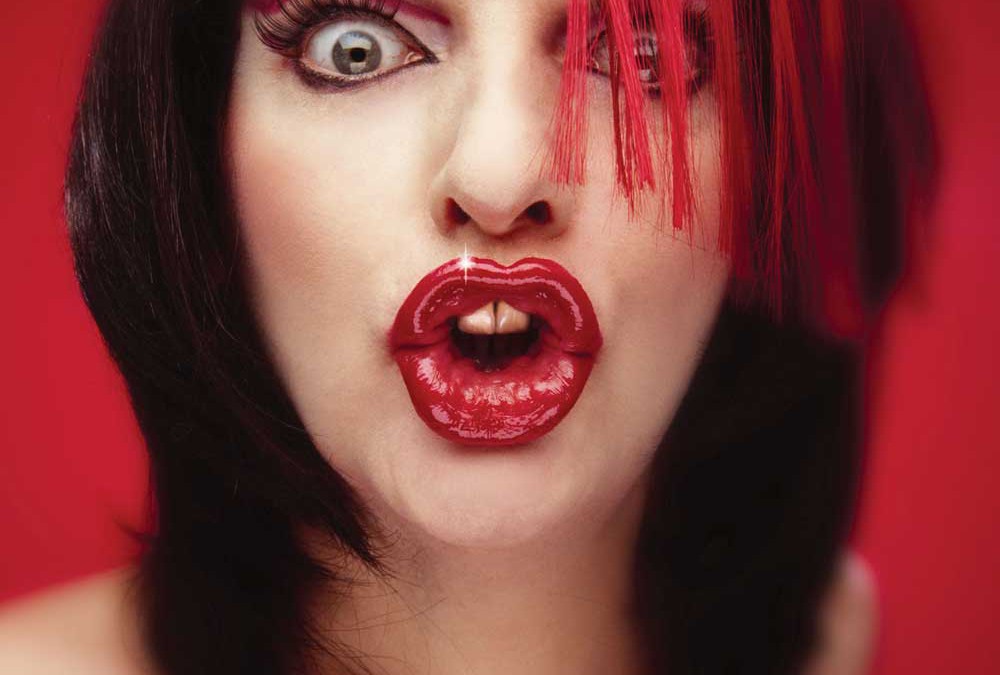
We meet Zu Browka in Amsterdam in the second hand clothing shop where she works nowadays. Tall, impressive, blond and very sweet; a true bombshell. Born in a small village in Belgium, Zu discovered who she wanted to be at the age of 12: ‘I saw Amanda Lear perform ‘Follow Me’ on television and it was like everything fell into place. I thought: OK! Now I understand who I am! I’m Amanda Lear! So I followed Amanda’s example and became a very beautiful blond model myself’.
Zu first started performing in Berlin at ‘Dollywood’, former ‘Chez Romy Haag’: ‘I started my career as a showgirl, a performer in that cabaret. The place was always filled with celebrities and since Romy was a friend of David Bowie, he also became one of my biggest fans’. Haag, another eccentric underground queen, was one of the biggest names in Berlin’s underground scene. She opened her own kitsch, trashy nightclub, which was frequently visited by artists like Bette Midler, David Bowie, Freddy Mercury and Mick Jagger.
By that time Zu wanted to start her transition: ‘I almost never talk about my operation because in my opinion I’m a woman. I don’t like the word transgender because that’s too much of a box. There is too much moaning on the subject matter’. Her uncle Herman, who was a doctor, provided her with hormones yet Zu got send from one hospital to another: ‘In that time it was very difficult to have a sex change and that’s why I looked for different solutions’. Since Greece was known for easily getting hormones at the pharmacy, Zu and her best Berlin friend Zugar Moon went ahead: ‘In Greece we started taking hormones in order to commence with our transition, yet things quickly started to turn for the worse’. In Mykonos they had to escape from the island because they weren’t able to pay their hotel bill so they went underground, into the clubs and the brothels but finally got busted and spend two years in prison. ‘After two years we got released when Interpol got involved. Two years of rape and torture by the police. I’m planning on writing a book about it since things were beyond the imaginable’.
Zugar Moon returned to Berlin where she committed suicide and Zu returned to Amsterdam in ’86 after a phone call by Joost van Bellen (one of the resident dj’s and the artistic director at RoXY – red.) who told her they were about to open a new club and she could start as a performer: ‘So I became the Roxy Princess! My shows were always over the top but that’s what made me famous. I’ve been yodeling out of my pussy, pulling meters of dirty laundry out of my vagina and putting loads of whipped cream cakes in places where the sun doesn’t shine’.
The list of people Zu worked with during her RoXY days is endless and impressive. She had an instant click with Leigh Bowery, became one of Erwin Olaf’s models and gave birth to a pig in Peter Greenaway’s Prospero’s Books: ‘I have the feeling it all kind of dropped in on me. I never looked for any of this to happen but people saw me, heard about me and that resulted in all those little assignments and performances. I loved doing all those things so one thing led to another. And when I was standing on that stage, seeing people watch me with those ecstatic eyes, I thought; well, it seems like I’m doing a good job.’ The once-in-a-lifetime experience that RoXY aimed for turned out to be a huge success. The interior got changed every six weeks and different artists, and the cabaretesque and extravagant shows gave the place a unique character.
‘One big family’ is an expression that comes with talking about the club: ‘We all did it for free but we were happy because we could drink all night long. We were all very glad to have a second home like that. It was always fun and always over the top. It wasn’t a place where you could spot your average go-go dancer, no, it always had to be bigger, more colorful, more eccentric’. Zu felt at home, in the company of like minded individuals and lost her heart in the performances – most of the time naked and shameless – she staged: ‘I’ve always been very at ease when it comes to being nude. I used to have an amazing body so it was worth to show off, yet the audience never quite knew what they saw. I didn’t used to be 100% woman so when I was doing a striptease act, there was always something in the way. If you know what I mean’. Zu got her final operation in ’87, in the first two RoXY years: ‘All in all it took me about 6 years before everything was in order so that was quite some time. Luckily that’s all over now so I’m already more than 20 years the most beautiful woman in Amsterdam!’.
Pieter Giele, one of the club’s founders died in the spring of ’99. While celebrating his funeral on June 21st., sparks from fireworks ended up in the climate control system and burned down the club. Nobody got killed but Zu was the last person to leave the building. She was upstairs, doing her make-up and thinking she had a hot flash. Meanwhile the roof was on fire. The burning of the RoXY marked the end of an era and that kind of atmosphere was never to be found: ‘Let bygones be bygones, isn’t that what they say? You have to move on in your life. RoXY was there at exactly the right moment and place, yet times have changed now. Maybe times were more liberated back then and I don’t know why things like that don’t happen anymore. Nowadays everything is so clean and well behaved. Nevertheless, I do think the Roxy was the only place where such a thing was possible’.
Fortunately the iconic Zu didn’t end up together with the club. Music has always been the love of her life so she’s working as a dj now: ‘I won an award for most sexy dj and I made a record with Les deux Electriques called ‘Je suis Zu’. More than 20 years later and Zu doesn’t begin to think of slowing down. She often wonders if people are going to get enough of her, yet they seem to be wanting more. She’s hosting a show on Pinq radio called ‘Tete a tete avec Zu’ and she’s writing a column for RAUW-blog: ‘Let me tell you something, I will always be the Queen of the RoXY, even after all these years. And I never even think about retiring. I guess I’m going to keep on doing things till I drop down dead. Whether they like it or not!’


De pagina die u zocht kon niet gevonden worden. Probeer uw zoekopdracht te verfijnen of gebruik de bovenstaande navigatie om deze post te vinden.
Text JF. Pierets Photos Roxanne Bauwens
Her website states: ‘So far I have done research on various topics: identity, beauty ideals, (ab) normality, medical abnormalities, skin, perception, genderbending and uniqueness in contrast to uniformity.’ Needless to say we were very intrigued on hearing more about visual artist Roxanne Bauwens. A conversation about beauty, open-mindedness and the human soul.
Your work evolves around your personal vision on beauty. Why?
I’ve always been very interested in the concept of beauty, or better, what people believe is beautiful. Like most young girls I used to slide through fashion magazines, and like probably all of them I always ended up with a feeling that I didn’t live up to those standards. I guess my former huge unibrow must have had something to do with that. Now that I’m older people consider me a beautiful woman, yet most of the time it doesn’t go any further or beyond that observation. I guess that’s why I find it so important to attach great significance to what’s real and what’s not. To show a different point of view.
So it’s a personal evolution?
For me art is all about evoking and projecting. Yet you need experience in order to evoke or project something relevant. I guess part of that has to do with my upbringing, since I come from a lesbian home, which was slightly off cue when I was younger. Everything about my family was just a little bit different from my friends’ families. In addition that made me also a bit ‘different’, so to speak. Never belonged, which of course I find now more enjoyable than back then.
Can you define beauty?
When you search for the definition of beauty, you get the following: ‘The quality present in a thing or person that gives intense pleasure or deep satisfaction to the mind, whether arising from sensory manifestations (as shape, color, sound, etc.), a meaningful design or pattern, or something else (as a personality in which high spiritual qualities are manifest).’ For me, beauty is the inside that manifests itself on the outside. When I’m working with models, I choose them because of their divergent features, the non-typical beauties. I always had a soft spot for imperfections, which I found more intriguing. Those little off-guard proportions that make a person unique.
Aren’t those people insecure in front of the camera, just because of that?
Yes, and it’s very difficult to convince them of loosing their masks. My projects deflect from societies beauty standards so the first thing I need to do is to earn their trust. I’m familiar with most of the models I work with but still, they have to be confident that I’m not going to go into some weird zone once I handle my photoshop tools. Once I had a model that left. Who told me he couldn’t do it because it was too intense.
You ask a lot.
I do. I ask for people to open up. To go, sometimes literally, naked. To show me their soul. Which is often very uncomfortable and difficult for an adult person. I’m aware of the fact that the word soul is often used in vain and is somewhat pompous to be used by an artist, but yet there’s a lot of truth to be found their. The raw, deep emotion, which is so interesting to capture with your camera.
How do you get people to go that far?
When in the studio, it’s quite an intense and psychological process because I actually ask my models to think of a traumatic or heavily disturbing moment that happened in their lives. To actually relive that experience. That’s the moment when a person becomes radiant. When you see it all.
On your website you talk about Marina Abramovich, who states in her documentary ‘The Artist is present’, that art should be made with emotions and that the artist must be one with the moment in which the work is created. Are you joining your models into the emotions?
Certainly! I make playlist of certain atmospheres and evolving certain subject matters. At that moment I also have to surrender myself to them, so music helps to build up the required mood of the moment. In order to ask people to open up to me, I have to do the same thing. It doesn’t ad any value to the work when I behave like an outsider. When I’m only playing the voyeurs role.
Do you open up yourself quite often?
Not very often. I used to do it a lot, which didn’t always have the nicest outcome. So you can say I’m careful, which I deplore and try to change on an every day basis. Yet I find it very heard to keep a certain naivety, a belief in the goodness of people. You are always looked at. Both approved or criticized.
So your work might be a contra reaction on how people react on you, as a person?
Maybe it is. Maybe I like to provoke. Try to make people a bit more open-minded. And that doesn’t always has to be about the big gestures. You can also make change by dropping little visual thrills. Like my pictures.
Do you have the feeling people are looking at your work the way you want them to?
Some of them do. And don’t get me wrong, I’m not preaching for people to think the same way as I do. But it always feels like a victory when they ‘get’ it or are willing to open up for my work. I’m sincerely able to find people extremely beautiful, even when others consider them ugly. Just because of that certain fragility, the vulnerability, so to speak. Everything is clean and photoshopped nowadays. We’re flooded by fake smiles, clothes that speak of the wearer’s money value. I want my spectators to actually see the person behind the face, to be able to feel and see exactly the same as the one on the picture.
To see beauty beyond the obvious.
And to define beauty for themselves. Not thoughtlessly taking over what’s been told to think. Of course you have those things called the golden ratio or symmetry, which makes people like Kate Moss or Angelina Jolie universal beauties. But I like asymmetrical faces more. That makes a person interesting. Stratification between the inner person and the way he or she exposes himself on the outside. You don’t always get what you see. And happy not to.
How do you start a new series?
That depends. Often I get my inspiration from experiencing life. That, and a great deal of research; documentaries on the subject of beauty, the evolution of beauty in art history. I’m the research kind of girl. Most of the time it’s a symbioses of those two. Efficient knowledge combined with a certain mood or emotion once experienced. Than I start looking for all the ingredients to merit that particular atmosphere. My previous work also guides me into new projects since I keep on learning about new techniques, or the way the light captures a piece of skin in a satisfying manner. That kind of approach leads to the fact that all my work is a result of the foregoing ones.
Why photography, since those themes are suitable for every form of art.
We experience a picture as a reproduction of reality and I want to show something that’s a bit bizarre, without being an alteration. So photography is the perfect registration tool.
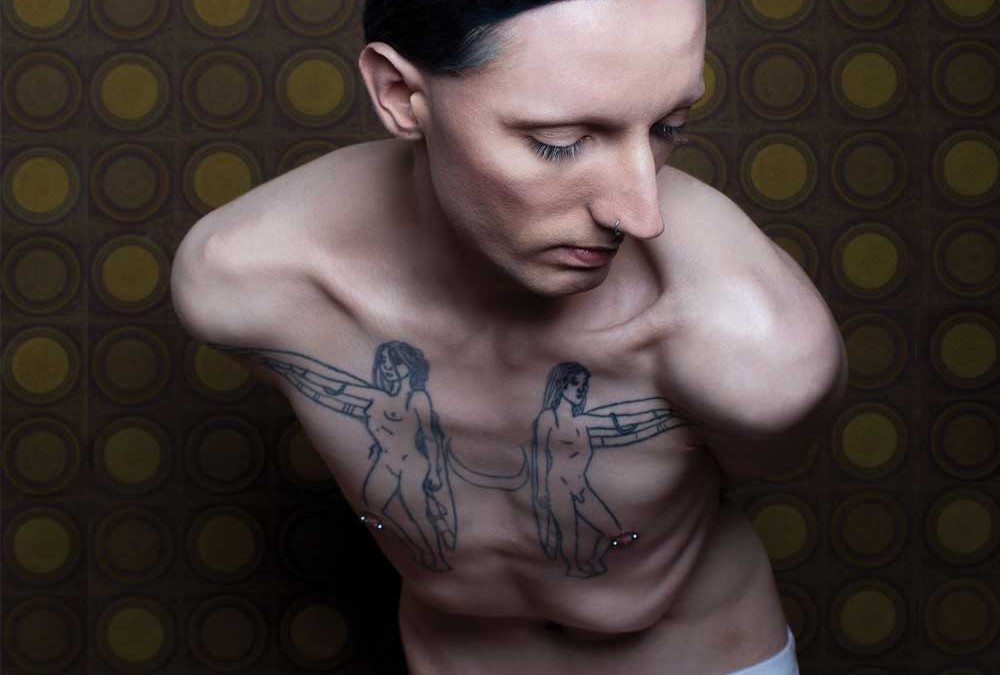
Can you tell me something about the gender pictures that accompany this article?
Androgyny is very difficult to capture because the moment you wonder whether a person is a boy or a girl, that’s the moment you see true beauty. I wanted to approach as close as possible the story behind the image, go beyond the cliché of average photography. My work is pure, has no fringes, so on one side you have the toughness, the hardness which you definitely need in nowadays society and on the other hand you have that feminine softness. And for me, that’s what a person is all about. About all having a male and female identity. I also don’t believe in being 100% heterosexual, I think we’re all somewhere in-between.


De pagina die u zocht kon niet gevonden worden. Probeer uw zoekopdracht te verfijnen of gebruik de bovenstaande navigatie om deze post te vinden.
Text JF. Pierets Photos Rolla Selbak
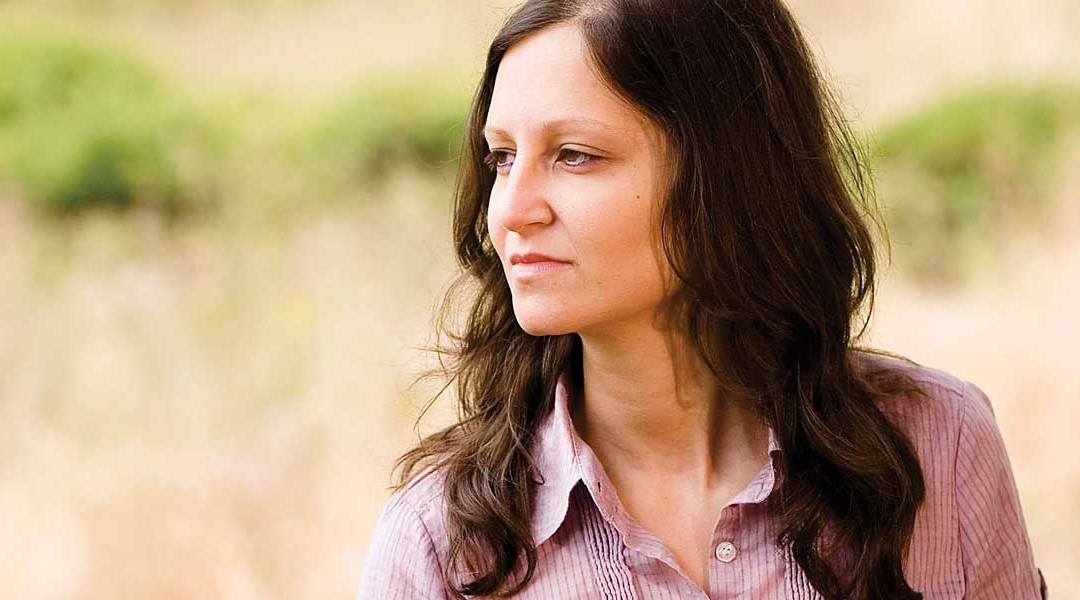
Up till now she has made 2 feature films, a bunch of short films, a music video and 2 seasons of ‘Kiss her I’m famous’. The Spreecast ‘Grrls guide to filmmaking’ in which she interviews female movie directors, turned into a docu series and she’s currently writing a TV-piece. I guess we may call ourselves quite lucky that she found the time to talk to us, but most of all she left us highly inspired after our conversation about independency, feminism and religion.
Why is it important to be an independent filmmaker?
It’s very important to me because that’s mostly the only way a lot of people can work right now. I have a very independent spirit and the thought of actually being merged into the Hollywood system makes me cringe. The thing I hate about it is the fact that you give up all control and that someone else is telling you what to do. It makes good sense though, because essentially it’s someone else’s money so they want a minimum risk. Yet it really stifles creativity. Obviously it would be ideal to have your work in the television- or in Hollywood system without having to compromise, since a lot more people would be able to see your work.
So the internet is sufficient at the moment?
At this point, this is where my heart is. I think for filmmakers not to put their work online, if they’re independent like me, doesn’t make any sense. How is the audience going to know you? Who are you, where are you? You can’t just do only film festivals anymore and the internet is the most beautiful tool in the world. You can play. Everyone can see your work and hear your voice, I think it’s the best way to experiment. So before you send that script to Hollywood, to the show networks, it’s a great way for you to understand what your audience likes and doesn’t like. You can see which episodes have the highest rating, you see the comments, you see what people enjoyed. It’s fascinating. It’s a beautiful laboratory, one huge experiment.
You also have a Spreecast where you interview female filmmakers?
Yes, live stream interviews where the audience can log in and chat, ask questions. I did that on a monthly basis and I now turned that into a docu series, which you can currently see on-line. It’s me, going to the filmmakers’ homes, having a very casual chat with them in the space where they create. I thought that was a more intimate way to actually get to know the filmmaker. It was very important for me to showcase and celebrate female filmmakers, to counteract the voices that say that there are no female filmmakers or that there’s only a small percentage because females don’t like filmmaking. Or are not interested. They keep on making excuses on why the numbers are so low. This series is meant to inspire others, showing aspirant filmmakers that if she can do it, you can do it.
A happy feminist.
Feminist? Me? Nooo! Haha. I’m a very proud feminist card holder and I think any woman or man who is for the progress and equality of women in the world, is a feminist. Whether they like it or not!
Talking about feminism, a lot of your work handles the subjects of arrange marriage, homosexuality, Muslim-American subcultures. You’re quite a committed woman.
That is one way to say it, certainly. I try to tackle all those subjects in my films. Sometimes that’s a little ambitious, but I try to do it in a very nuanced way instead of being exploitative. I really did want to cover as much as I could when it comes to a female experience in the Muslim-American subculture. That does include the idea of arranged marriage – because that definitely still happens – and the idea of being closeted in that community. You’d be surprised to hear how many people actually connect with that story line. And then the other story line has to do with abuse, which lots of women go through. I wouldn’t say that that’s unique to the Muslim subculture but I’m certain that happens internationally. It was important for me to touch upon all those subjects.
These are also very personal subjects?
I grew up Muslim, so it’s indeed very personal. My family is Palestinian and I grew up in Abu Dhabi. We moved to the US but I definitely have that perspective as someone who is from the Muslim-American subculture. It’s just something that I feel wasn’t being presented in cinema, in film, in media. I basically made a film that I myself would have loved to see when I was younger. I felt like there was nothing out there that I could connect with. That understood my experience, that made me feel like I counted.
How did you grow up?
To be honest, it was very lonely. Even when I was always surrounded by family, which is very common in the Middle Eastern culture. Everything is always everyone’s business and privacy is not a privilege you get. Certainly not when you are living in your parent’s house, parents who loved me, by the way. A Big Fat Greek Wedding kind of family, caring and loving. But when you’re growing up as a woman, trying to find your place, your ideas, and you’re trying to see where you fit in all of this, it can end up being isolated and lonely.
So what did you do at that age? Being without any role models?
I lost myself in movies. That was my escape. I have a computer science background and the best part about being a geek was that I could build my own computer, put my own dvd drive in it so I could rent movies and watch them in my room. Where no one would know. Specifically the lesbian side of me loved Angelina Jolie movies like ‘Gia’ and ‘Girl Interrupted’. Also the movie ‘Fire’ (one of the first mainstream films in India to explicitly show homosexual relations. Ref.) was a big deal to me. So basically I got lost in movies. Which made me feel like I wasn’t alone. Because of that I thought film was the perfect way to tell such stories so other people wouldn’t feel alone.
But at one point you did come out of the closet.
Yes, and it was a nightmare. I got kicked out of the house after my parents first completely ignored my existence and then send me to a psychologist. When that didn’t work, they wanted me to undergo an eradication of my supposed hormone imbalance. I’m telling you this in a nutshell, yet the humiliation was unbearable.
Nevertheless you are calling your mother the bravest woman you know.
At one point she got diagnosed with heart failure and had only a few years to live. Since then she really turned around and decided that she wanted to open her heart and mind. Can you imagine that you come from a culture that keeps indoctrinating you, saying ‘gay is evil!’ Where they keep telling you that having a gay child is even worse than having a dead child. When you have that kind of legacy in your mind and culture since you where a baby, you have to overcome a lot to open up. I always say my mother is the bravest woman because I know she had to almost stretch both her heart ànd mind. It really took a lot from her to do that. But I flew her out to San Francisco where I was living at the time and she even met my partner. We had a great time. She passed away shortly after that. It ended in the most beautiful note and she is my hero. It was very important that we went through that.
What did that kind of indoctrination do to you?
I would say that the number one thing I suffered from was me, hating myself. Not even other people hating me. I was torturing myself essentially. I’d go to school and pretend everything was fine and then I’d go home and would literally be hitting myself. Slapping myself in my room. I just wanted it to go away. I hated myself so much. I tried by reading the Koran, try to slap the gay away. But of course it didn’t work. In the end you just have to get into it. Saying; ‘this is who I am. What can I do? I can’t do anything about it except be myself and be honest, that’s all’.
Are you still religious?
I used to be very religious. It was a part of me and I would pray every day. But now? No. I’m not religious at all, I’m agnostic. I believe all religions have beauty in them whether or not god exists the way we want him or her to exist. The only thing I know is that we don’t know anything. I think anyone who claims that they know something is bullshitting, because they don’t. Yet I do love the sentiments that religions have about how we should treat each other, how we should go through life. And I acknowledge that religion is sometimes necessary for some people to keep going. Without religion some people are lost, have no clue about why they are here or what we are doing. But the truth is that no one has a clue. We try to explain it in a way that makes us feel better and that makes us feel sane. Having sanity and the knowledge that it’s all going somewhere. Especially regarding an afterlife. No one knows!! How is someone ever going to know? All those basic questions asking; ‘does this all matter’, ‘what was it all for’, ‘why was I here’,.. It began and it ended. So the idea or notion of an afterlife is essentially saying ‘we matter’. Our lives matter. Well, if so; hurray! Great! But if not, whatever. Religion was essentially a worldwide way of law and civility. Don’t steal, don’t kill, don’t do this and don’t do that, be humble, share your money. But do you really need a book to tell you all this? And if the only reason you’re behaving like that is for you to be able to selfishly go to paradise, then we’re kind of screwed don’t you think?


De pagina die u zocht kon niet gevonden worden. Probeer uw zoekopdracht te verfijnen of gebruik de bovenstaande navigatie om deze post te vinden.
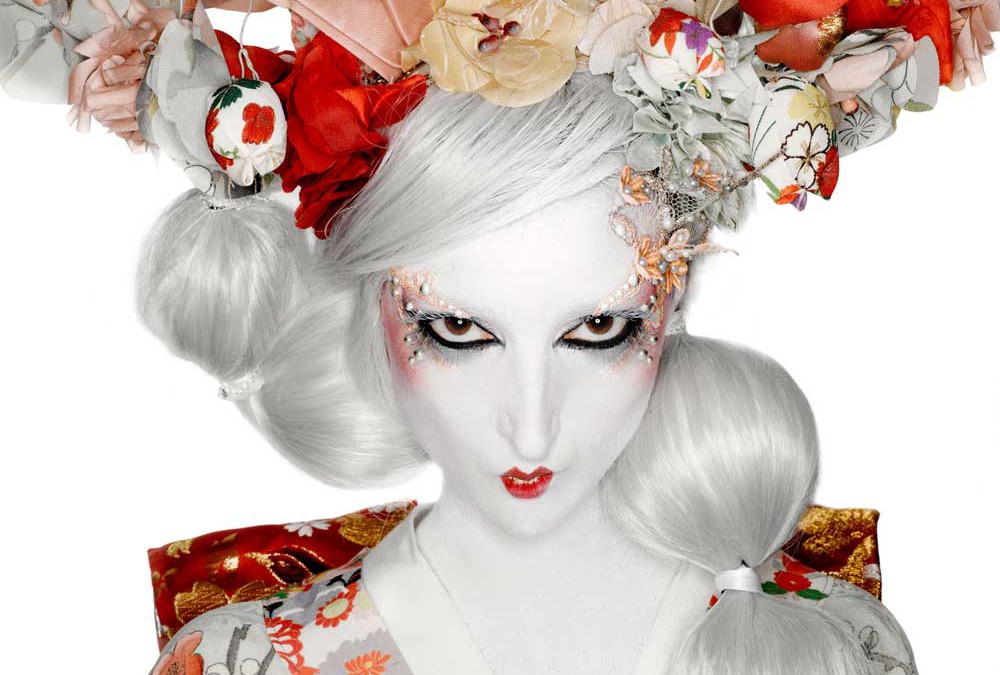
Text JF. Pierets Photos & concept Criaturas
Criaturas is the name Saskia De Tollenaere and Olivier Desimpel gave to the world they created for everyone who dares to dream. An experience concept where their passion for theater, art, fashion, beauty, spirituality and emotion merges in the form of unique celebrations and parties. Each time they create a new universe, their artists bring the concept to life. Especially for Et Alors? Magazine they created one of Criaturas’ amazing photoshoot. Needless to say we are very proud to feature these gorgeous images, so we asked them about this unique world of theirs.
Where did you get the name?
When we studied fashion at the academy, we got a lot of inspiration from movies by Pedro Almodovar, Tim Burton and David Lynch. Our graduation collections therefor had a high theatrical atmosphere.
Saskia The red thread in my graduation collection was the female seduction in all its facets. It was named ‘Criaturas de la ultima seduçion divina’. When we started our company about a year later, it was immediately clear to us that the name Criaturas = beings / creatures perfectly encompassed what we created.
When did you start?
Olivier My graduation collection was a Victorian funeral procession marching through the old city center of Ghent. It was a hot day in June 1999, the terraces were packed so we had a large audience. Someone asked us why we didn’t bring such act in the events sector. In those days there was very little entertainment, except for the clown, the magician and the music band so that’s how we found our stage. Later on it expanded to total concepts.
What was your first project?
The theme of our first big event was From Hell to Heaven. It was an interactive concept where guests first had to endure the journey through purgatory and hell, to end up in heaven via the gardens of Eden. 50 artists performed as witches, devils, satyrs, angels, nymphs, all the creatures symbolizing good and/or evil. It was inspired by Dante’s Divine Comedy, dripped in a David Lynch atmosphere.
What’s your best project until now?
Each concept is like a child, therefor impossible to choose between them. The most innovative are our Tableaux Vivants, because the guests not only step into a painting, but also become part of it.
What’s the most amazing thing you ever did?
Putting a smile on someone’s face or seeing tears of wonder. The fusion of the illusionary world and reality. Technically, it is perhaps the hell-heaven concept in the beginning of our career that was the most daring. With the resources we had in those days, it was litteraly a ‘hell of a job’, yet it gave us the confidence that we could handle everything from then on. Take for example the Cotton Palazzo-event where we hung 3kms of white curtains in an abandoned, open cotton mill during a storm. The result was.. heavenly! Currently we are organizing a party where we actually build a location with 75 large sea containers This is undoubtedly the most amazing project until now.
What’s the most amazing thing you ever want to do?
To let our world make a journey as an avant garde healing theatre. A mix of beauty, spectacle, interactive acts, unity and spirituality.
Where lies your main interest?
To live life in the full. With love and all its beauty.
Tell me about the photoshoot?
The time had come to take a new direction in terms of acts and costumes. We needed a new challenge and wanted to put more emotion and story in our creations. The spiritual message we wanted to convey was that every individual is beautiful with his own style and image, and can perfectly blend in a society where originality is appreciated. In nature, the bird with the most colorful plumage is the most successful match. Among people; far too often gray and colorlessness is considered normal. For the photoshoot we have created very different characters and looks, and made them party together. By giving them names like The Storyteller and The White Knight, we give a hint of the story they tell, yet we allow the viewer to have his own dreams and fill in the blancs. The photoshoot is also the start of our traveling avant garde theater so for us it’s a preview.
Do you actually make everything yourself?
When it comes to costumes and accessories, yes, we make everything ourselves so it is absolutely unique. We use couture, ethnic and antique fabrics, vintage and antique ornaments and applications. Therefor our costumes radiate luxury and history. I’m always looking for material with a high dose of craftsmanship. Both at flea markets and the worldwide web. I also like to learn new skills such as origami and kanzashi, which I used in our geisha costumes. Also the art of making hats, for which I get professional help of our makeup designer, is an enrichment. We also design the graphics, invitations, special props and floral decorations for our concept events.
Where do you get your inspiration?
History, movies, fashion, nature, dreams, life and we inspire each other.
You also have your own jewel collection?
Yes, and not only jewelry and accessories but also home decoration, interior design and art. My jewelry collection; DTS for lovely creatures, originated at the request of a couture shop that wanted to offer bespoke jewelry to customers. So each time I use a lot of jewelry that’s been personalized make a suitable jewel for a particular cocktail or evening dress, it developes into an extensive collection in different styles. Along with Olivier, I also design for our O + S studio, which are mainly interior designs such as lighting, furniture and accessories. We always make unique pieces, we do not like mass production. Our favorite challenge is to create something customized for the clients. Watching someone’s character, personality, style, experiences, dreams, .. and design something that he or she represents. This way of working has led us already to design very spiritual things for customers.
Don’t you ever think about starting your own fashion collection?
No, during our fashion studies, we dreamed of designing haute couture collections because of the theatrical aspect. Back then, Jean Paul Gaultier, John Galliano and Alexander McQueen were our heroes. Yet we don’t want to get stuck in the commercial circuit where we have to take trends, rules and sales figures into account. Frankly, we just want the freedom to create whatever we want. My favorite aspect of the job is that every day is different. I feel blessed that one day I can come up with a concept and put it into shape, and the next day I can make a costume or work on my jewelry collection. I can live my inspiration and imagination without restrain. I rarely feel that I ought to do something and therefor can start each day with full passion and love for what I do.
Tell me about your future dreams?
When it comes to realization, Criaturas is our child and we would like to see it grow and inspire others. Also the opportunity to work with famous artists or filmmakers, so we can reach more people internationally, would be a goal. And later on… a house on a hill, with a lot of animals, surrounded by nature. That would sound good.


De pagina die u zocht kon niet gevonden worden. Probeer uw zoekopdracht te verfijnen of gebruik de bovenstaande navigatie om deze post te vinden.