Geen Resultaten Gevonden
De pagina die u zocht kon niet gevonden worden. Probeer uw zoekopdracht te verfijnen of gebruik de bovenstaande navigatie om deze post te vinden.

Text JF. Pierets Photos Darren Brade
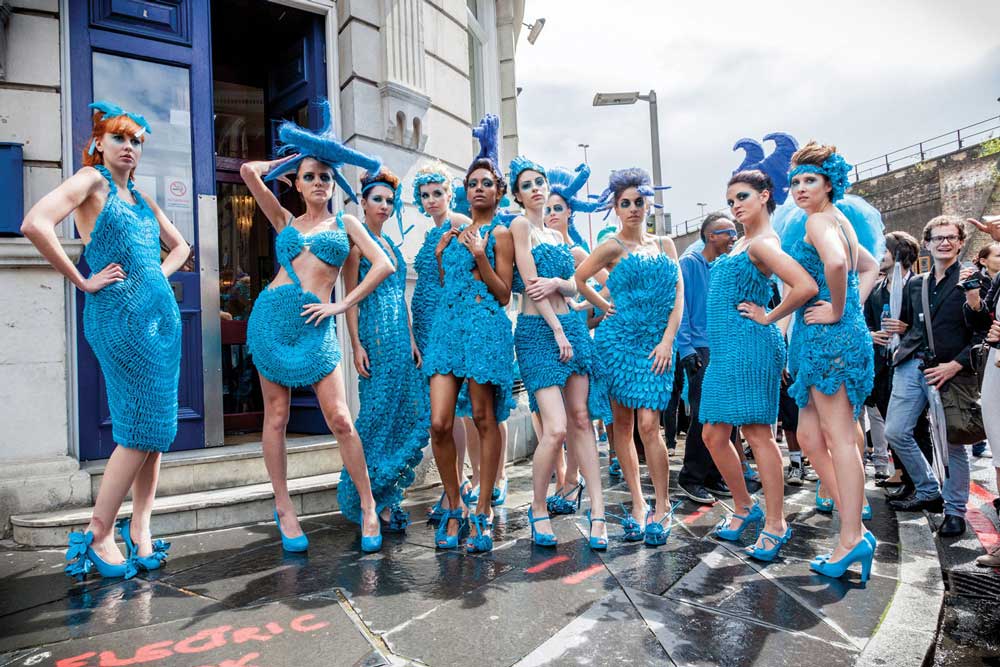
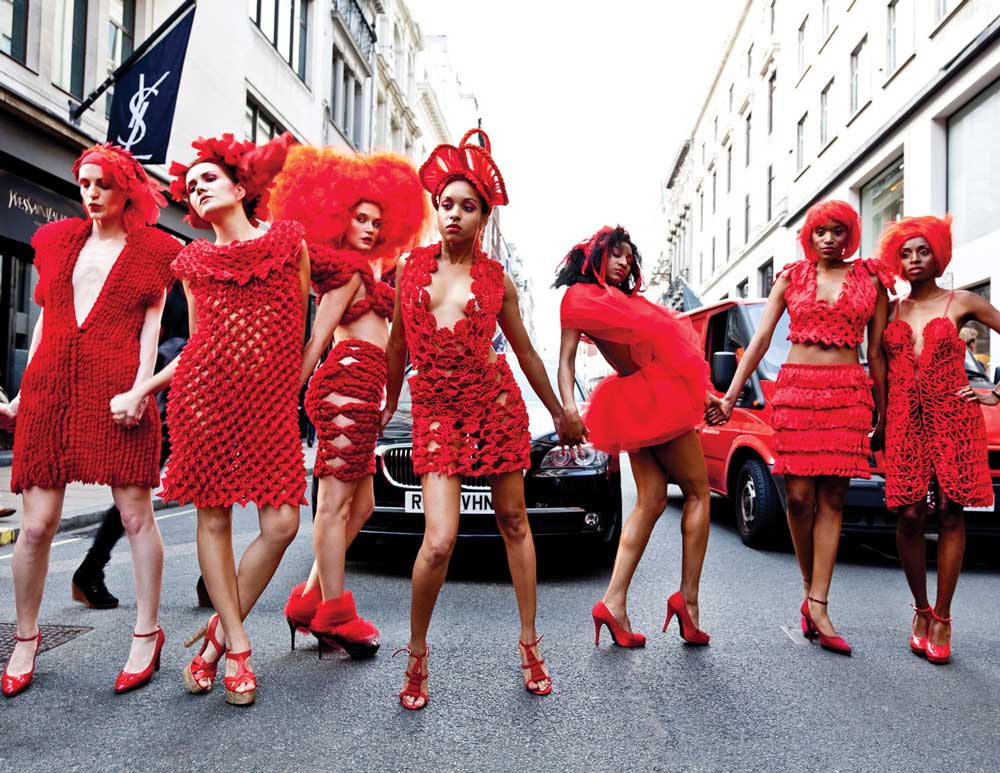
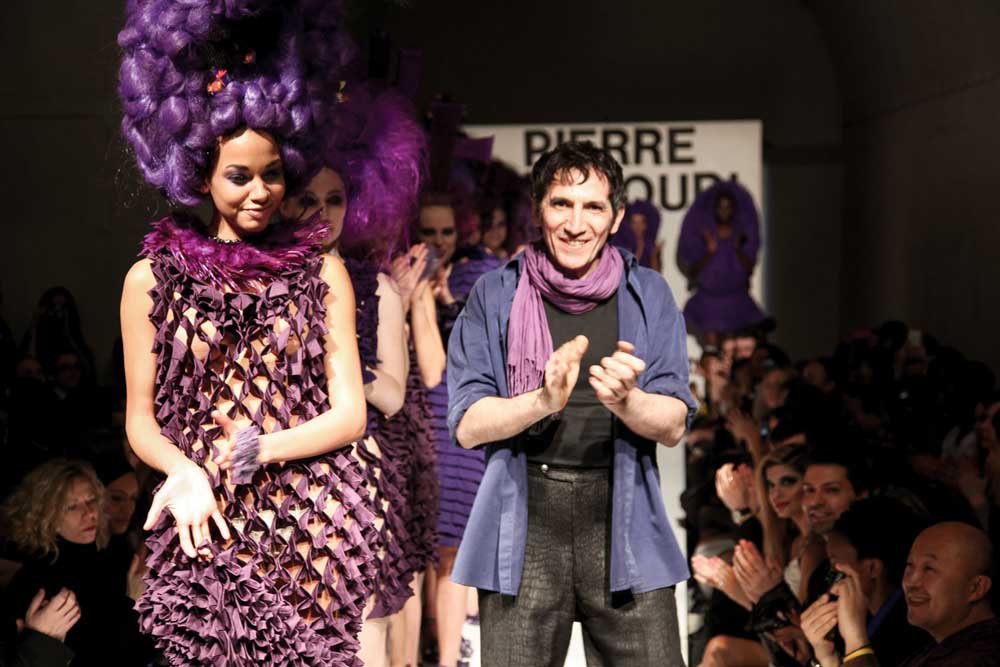
His intricate designs merge the lines between art & fashion and have been worn by some of the world’s biggest style icons from Naomi Campbell to Kate Moss, Scarlet Johansson and Sarah Jessica Parker. He walks the streets of London with his flashmobs and has the tendency to approach his fabrics with the eye of a scientist.
Your résumé reads like a travel trip.
I was born in Iran, lived in Paris for 5 years, 2 years in Lyon, then Shanghai. In Manhattan I ran a Garroudi shop/gallery and stayed there for 14 years. After inhabiting Boca Raton for another year I made my way to London.
How does such a journey influence a person?
I’m a sponge. I try to absorb everything. Having a multicultural background gives me wisdom and inspiration. Knowledge is like light, it opens your eyes to the world.
Why did you end up in London?
London is magical. You should see how the people dress up when they go out. It’s a vessel of inspiration.
When did your carreer start?
I studied in Paris, while working as a hairdresser in my spare time. I moved to New York in 1986. There I joined the Fashion Institute of Technology after working at various retail and design houses. I started my own label in 1993.
Why fashion?
I think fashion is a way of expressing yourself and showing your beliefs and identity because clothes can tell you a lot about a person.
What’s your message?
It’s about being passionate, I believe whatever you put out you get back. My collections are expressions of my own experiences. It’s like looking into a mirror.
Let’s talk technical; you manipulate all your fabric?
Yes. You can’t buy any of my fabric because it doesn’t exist. I love to look at it with the eye of a scientist. The multi-layered matte and sheen silks become second skin to the wearer.
Some call it pioneering fabric-folding work.
It’s all done by hand, which creates an origami effect. I guess it’s quite unique, yes. I believe fabric manipulation it the next evolution in fashion.
And very time consuming.
It is. And you have to be extremely patient to do so. Sometimes it takes me a month to make one dress, but then you create an entirely piece unique. They are one of a kind.
You are known for using interesting and diverse models, which is a breath of fresh air in the fashion industry.
I think it’s generally better to have a diverse selection of models. We live in a world that’s mixed, I mean half of the world is Asian, and only, maybe twenty percent of the world is white.
Where do you get your inspiration?
I’m inspired by talented and creative people and by the sheer beauty of humanity. I try to learn from every person I meet. For example, my life won’t be the same after I talked to you and vise versa.
What kind of women wears your designs?
Naturally the types of women who wear these types of clothes have to be self-secure and strong, have confidence.
Why?
Because you can’t go out there and wear something creative and be shy at the same time. The women who like my clothes use them as a tool to express themselves.
Can I call it wearable art?
I leave it up to you how to call it. I try to make things that are wearable. Expensive, but wearable.
Everybody is talking about the bad economy. Does it influence you?
It does, yes, but I think that everything happens for a reason. Anything good or bad, it teaches you a lesson. Once you learned the lesson you can move forward.
How?
I’m doing a lot of research. Reading up about the business and the marketing side of fashion. These days you need to be on all of the social networks, Facebook, Twitter, Linked-In. I’m looking for different ways to present my designs.
The fashion industry is changing nowadays.
The new generation want things much faster, right away, they don’t want to wait, they’re just looking for something they want, they get it, they move on. We don’t have time. Do you have time to read all the blogs, do you have time to read all the fashion magazines? This is going to reflect on fashion shows, on the fashion industry.
You already took your clothes from the runway into the streets?
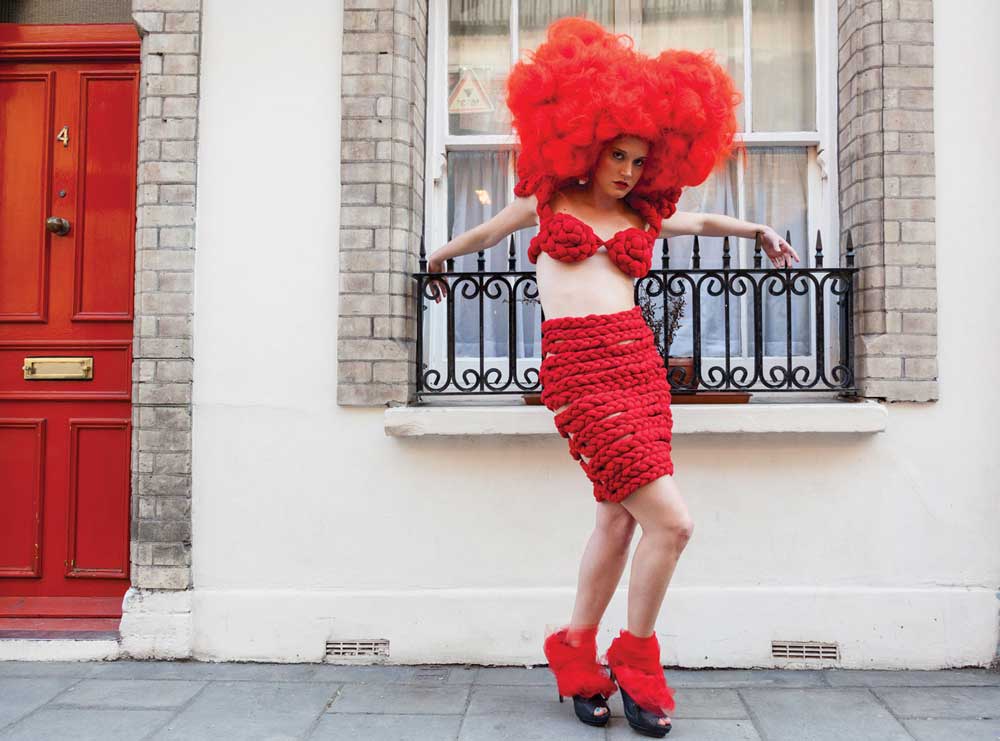
And called it flash-mobs. With my cast of models and dancers, I took my collection ‘Red-Stopping’ to some of London’s most distinguished avenues and tubes.
And it became a big success.
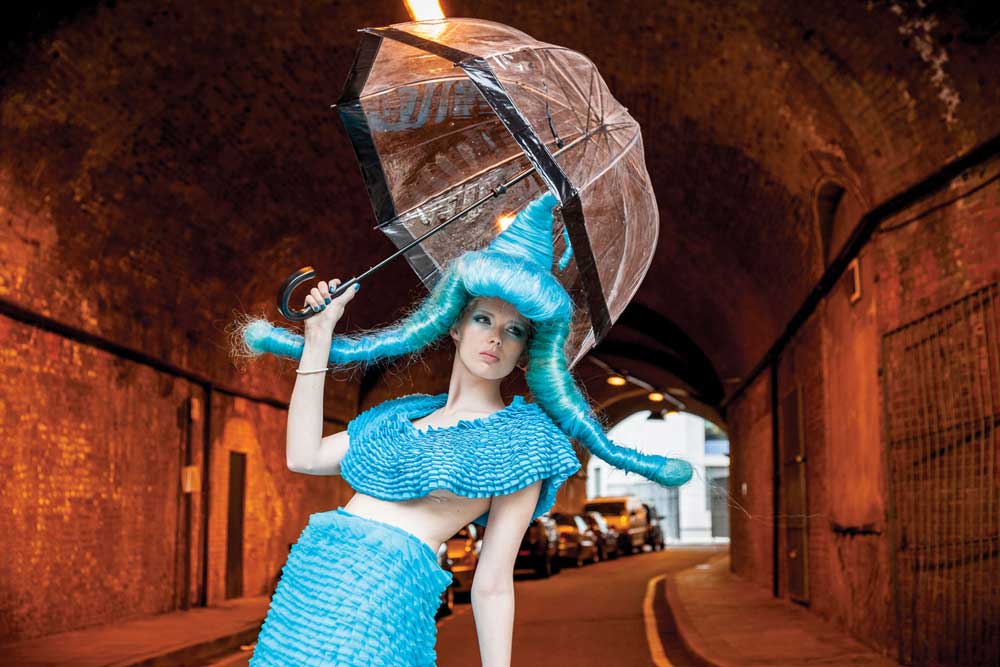
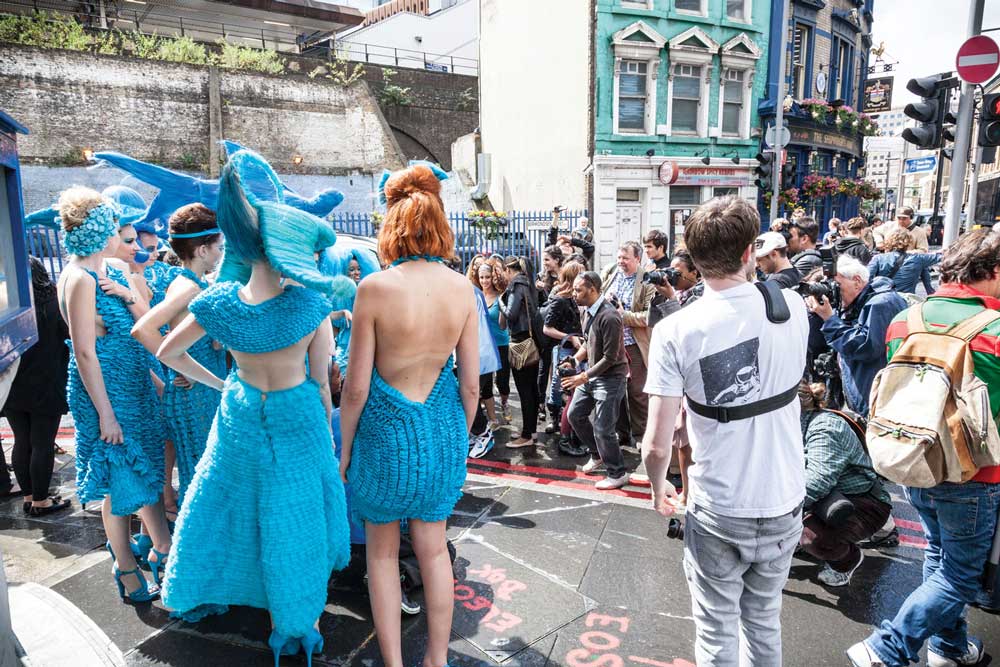
I loved it so much I did it again with the ‘Turquoise Collection’/Beauty of the Sea’ conveying an aesthetically pleasing experience of creatures born of a mystical island, lost at sea. It was raining that day. That was nice.
The future looks bright?
I’m sure it does. The more creative the better so feel free to write that I’m interested in any kind of collaboration. I try to learn from everybody!
De pagina die u zocht kon niet gevonden worden. Probeer uw zoekopdracht te verfijnen of gebruik de bovenstaande navigatie om deze post te vinden.
Text JF. Pierets
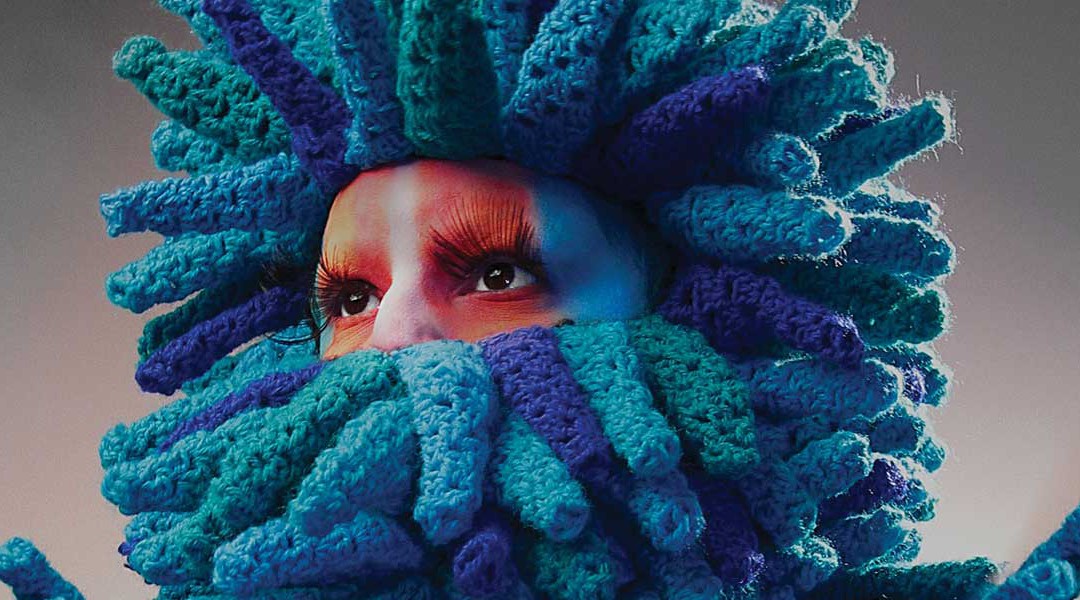
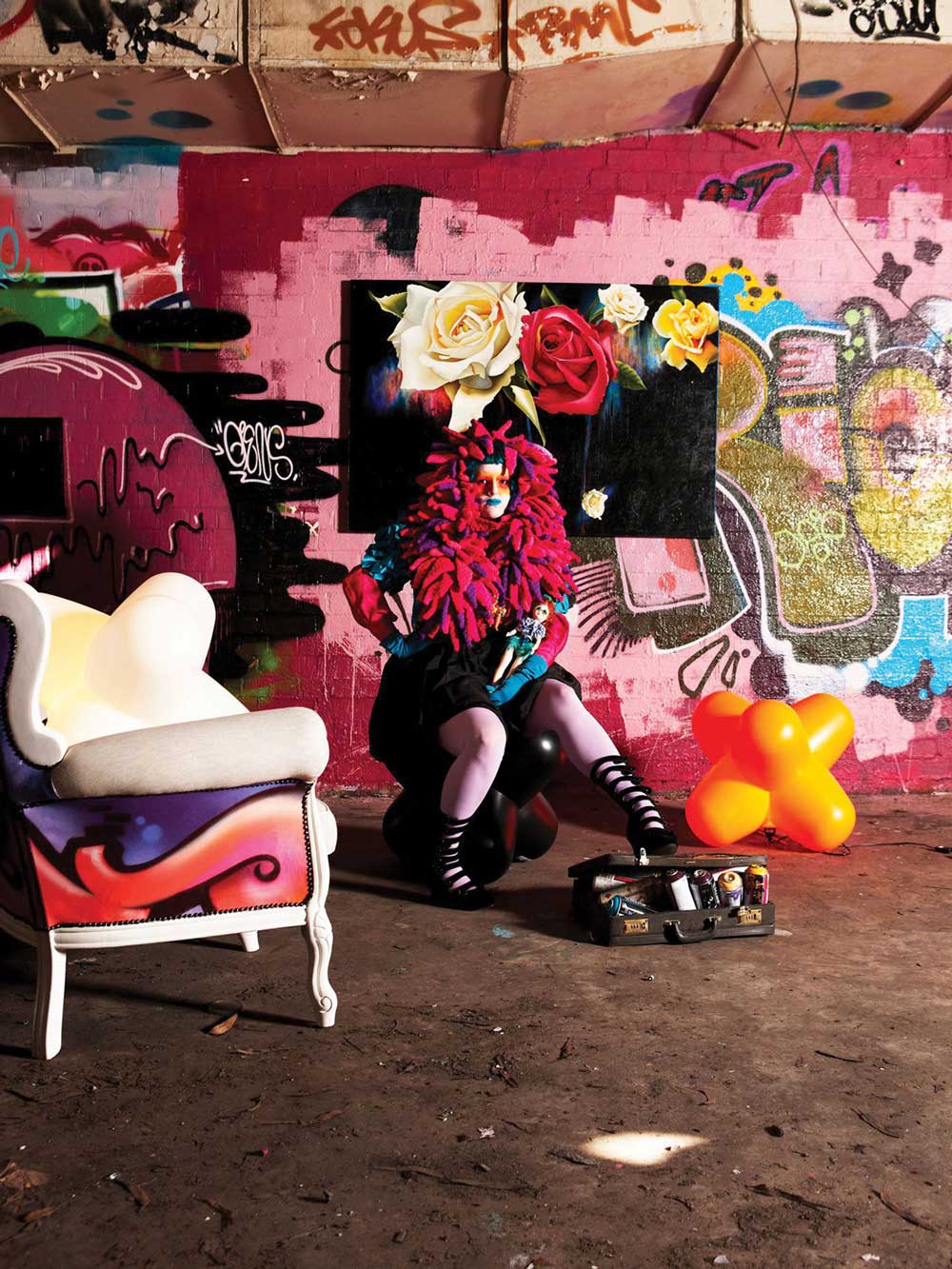
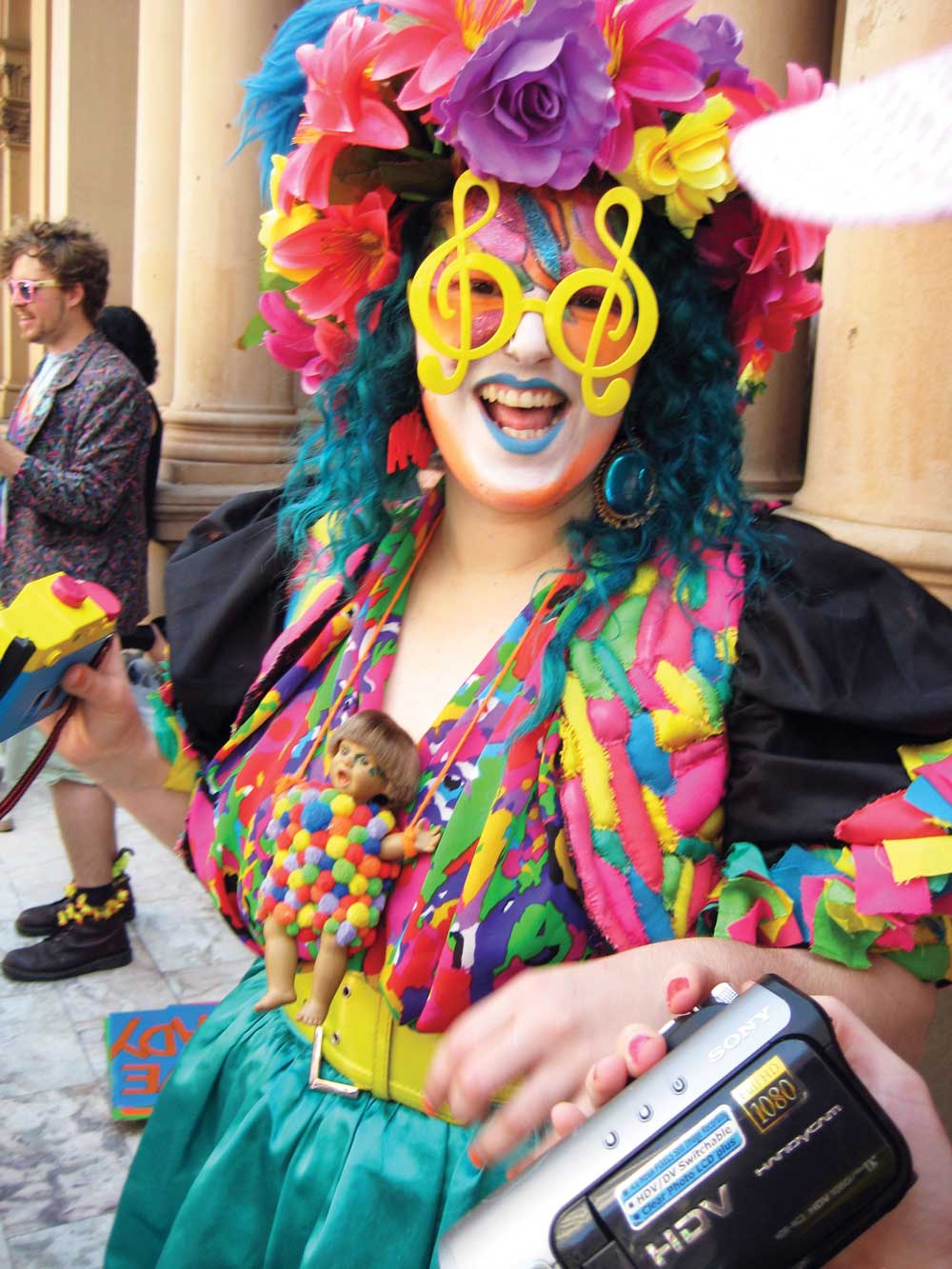
Her calling card in life is to explore and to experiment with different mediums in order to create something new. Creating is her obsession and passion and she refuses to put herself in a bubble by sticking to one thing only. Next to being a designer, artist and performer, she’s also the leading lady of one of the happiest parades in the world. The Sydney Colour Parade.
On dreams
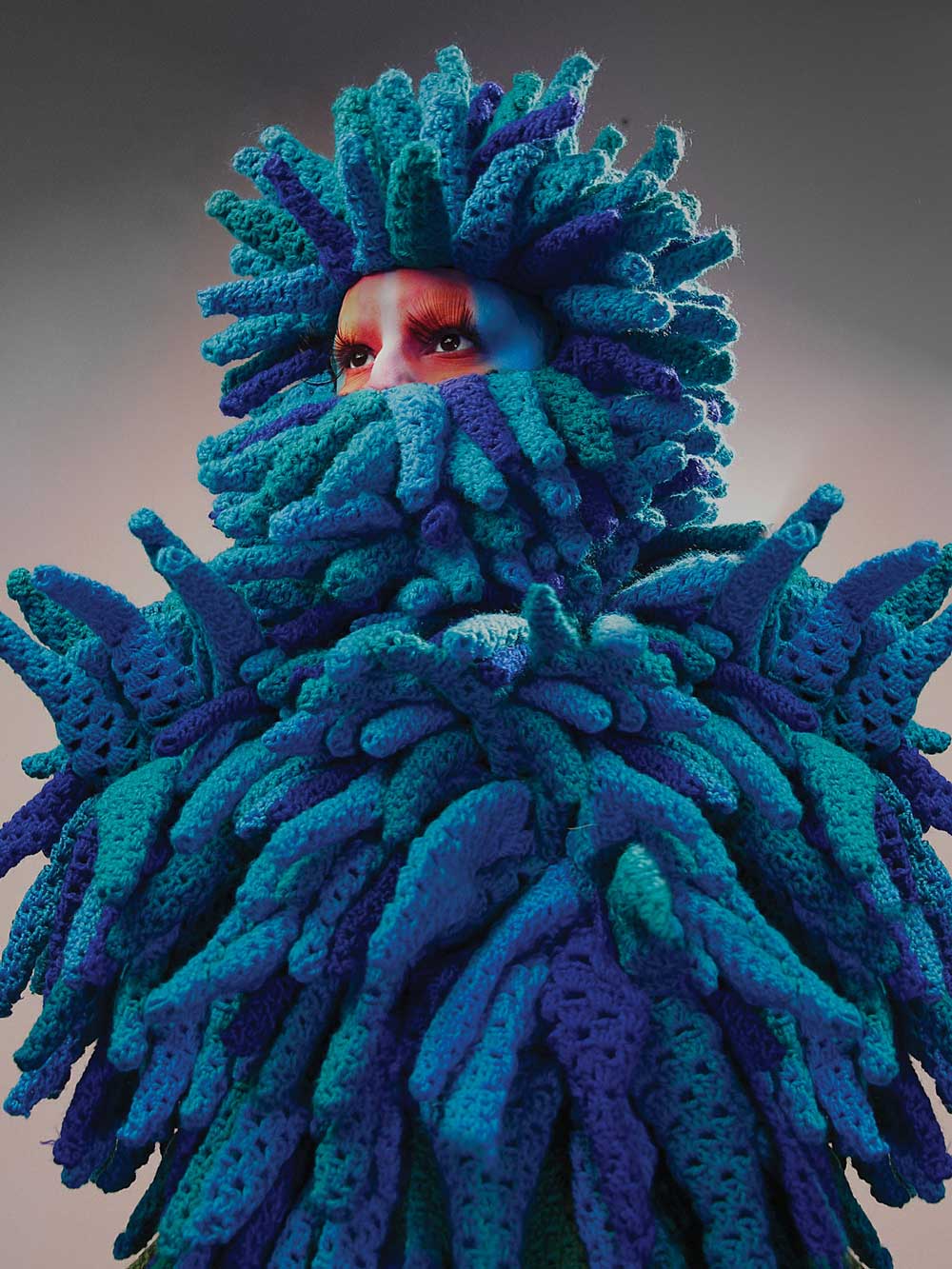
My mother taught me how to crochet when I was eight but everything started when I saw work by the The Icelandic Love Corporation. The crocheted work they did for Björk was so amazing and mind blowing that I knew what I was heading for. I believe that you can be whatever you want to be in this world as long as you do it every day. Let’s say practice makes perfect!
On inspiration
I get my inspiration from plants, insects and the ocean. The ocean is the main place I draw from. My world situates underwater, in the depths of the sea that has not yet been explored. I would like to create an entire world of fluorescent beauty and inspire future creatives to go along with their own endeavors. I want to remind the world that there are no limits.
On fashion
There’s definitely a niche market out there that would be up for some wardrobe jazz-up. Once a year I do a solo exhibition, and I have displayed in galleries in Berlin. I’ve been involved in collaborative fashion shows such as the ‘Being Born Again’ couture show in Sydney. Along with my partner in crime, Casio Ono, we have done commissioned work for a label called Emerald Couture but we’re not really into the commercial fashion industry. Our pieces take so long to assemble that it would be impossible to mass produce. Also, I see myself as more of an artist than as someone who’s working for a giant monster. But don’t get me wrong, we are always open for collaborations. If it means that fashion would be more inspiring to look at, then everyone should have a pair of pom pom gloves!
On changing movements
I can’t deny the other amazing people out there who create, evolve and constantly push their boundaries. Throughout history there have been collectives of artists who pop up simultaneously and inspire the world into evolving. It’s like they’re launching themselves into the future. Groups like Bauhaus, Dadaists and the Surrealists, they created work that’s timeless. Like I said, creativity has no boundaries and these people keep reminding us of that.
On the colour parade
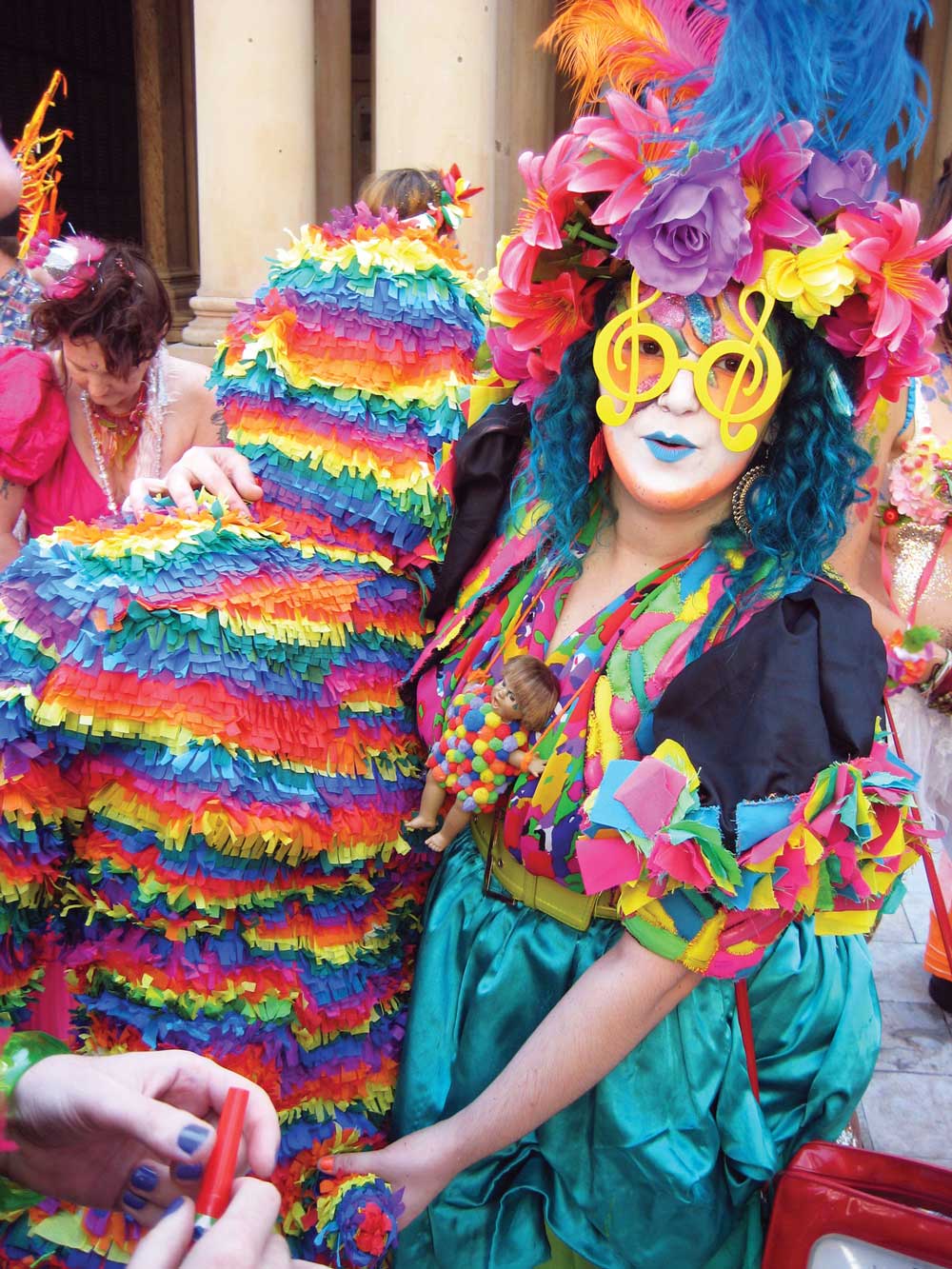
The Colour Parade is an artistic statement that celebrates creativity, self-expression and freedom. It’s an opportunity to meet like-minded characters. We created the parade to show people that you don’t need money to have a good time. It’s a reminder that the human spirit is still very optimistic, even in this day and age. For four years now we have lit up Sydney’s streets with a cacophony of colour and music. The people who are part of the parade express themselves in whatever craziness they like. They bring music makers, hoops, glitter, streamers, flowers and signs they created themselves. Not to mention the incredible outfits. It’s just plain celebration.
On mission statements
The Colour Parade is not a political parade but the more “closed” our society becomes, the more “controversy” we create. The setting around us is so grey and confirmative that we want to inspire everybody to be whom they want to be. It’s about bringing together like-minded people so you can certainly expect to expand your circle of friends with all the activated, inspired, explosive and expressive individuals you will encounter.
On Sydney
The Colour Parade is about opening Sydney’s vision and to let its beautiful, open-minded people out on the streets to connect and make some noise. Sydney is very commercial and mundane and that automatically influences some artists to the extreme. The public always reacts different when they see the parade. Some people are confused, some are scared, but some get inspired and even join us. And why not, because at the end of the day, we are just a bunch of people walking down the streets expressing ourselves with colour and adornment.
On the future
Casio Ono and I are moving to Berlin. We went there for seven months last year and met some amazing people I’m excited to work with. I want to be able to travel and show my work around the world, perhaps even Japan. That place is like another planet! And who knows, at the end that might be the place where I belong.
De pagina die u zocht kon niet gevonden worden. Probeer uw zoekopdracht te verfijnen of gebruik de bovenstaande navigatie om deze post te vinden.

Text Akim A.J. Willems
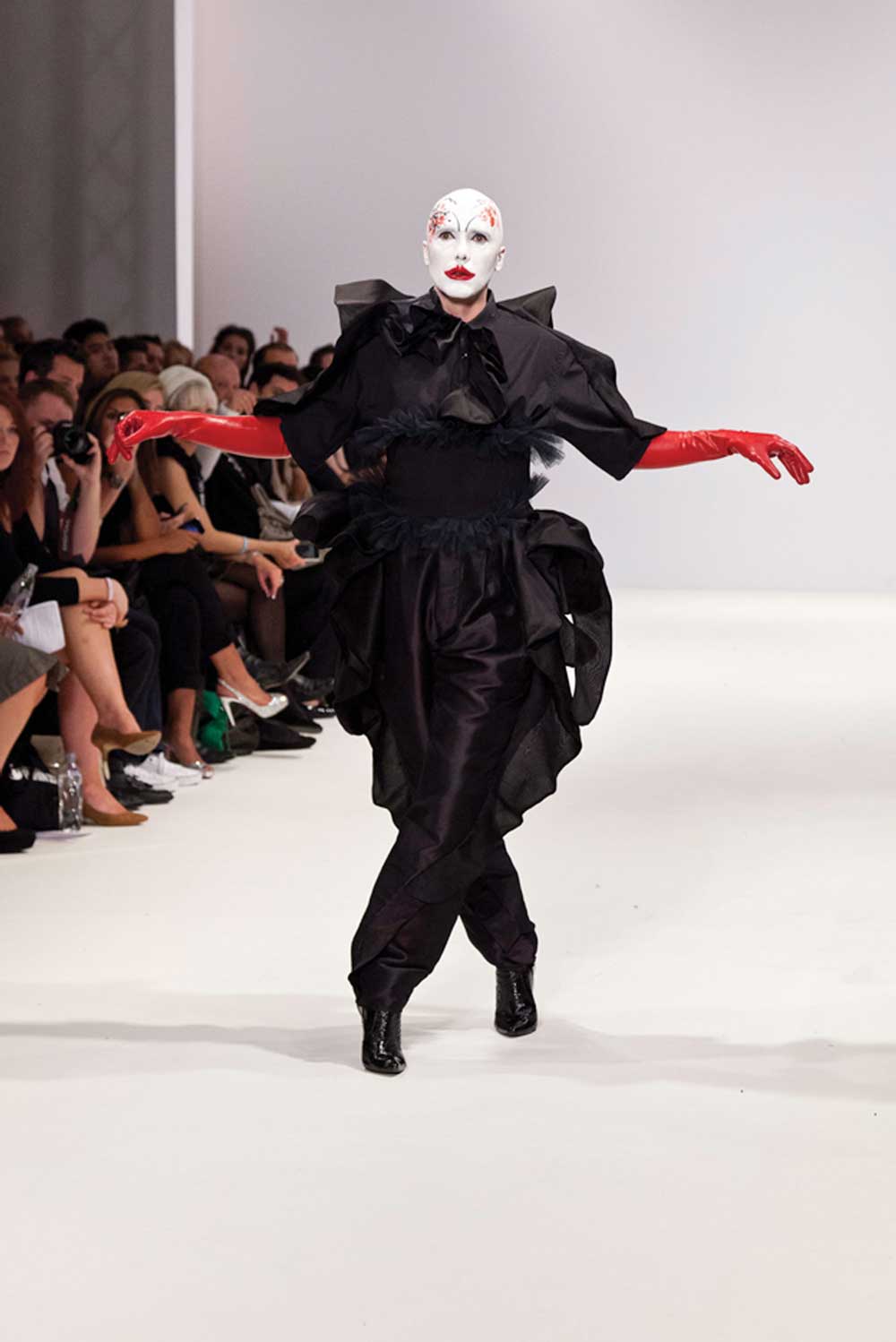
“I wouldn’t mind appearing on the cover of Vogue.” Mr. Pustra aims for no less than the sky when he is asked about his goal for 2012. Knowing one should never run before one can walk, he tests the waters with an interview for Et Alors? Magazine.
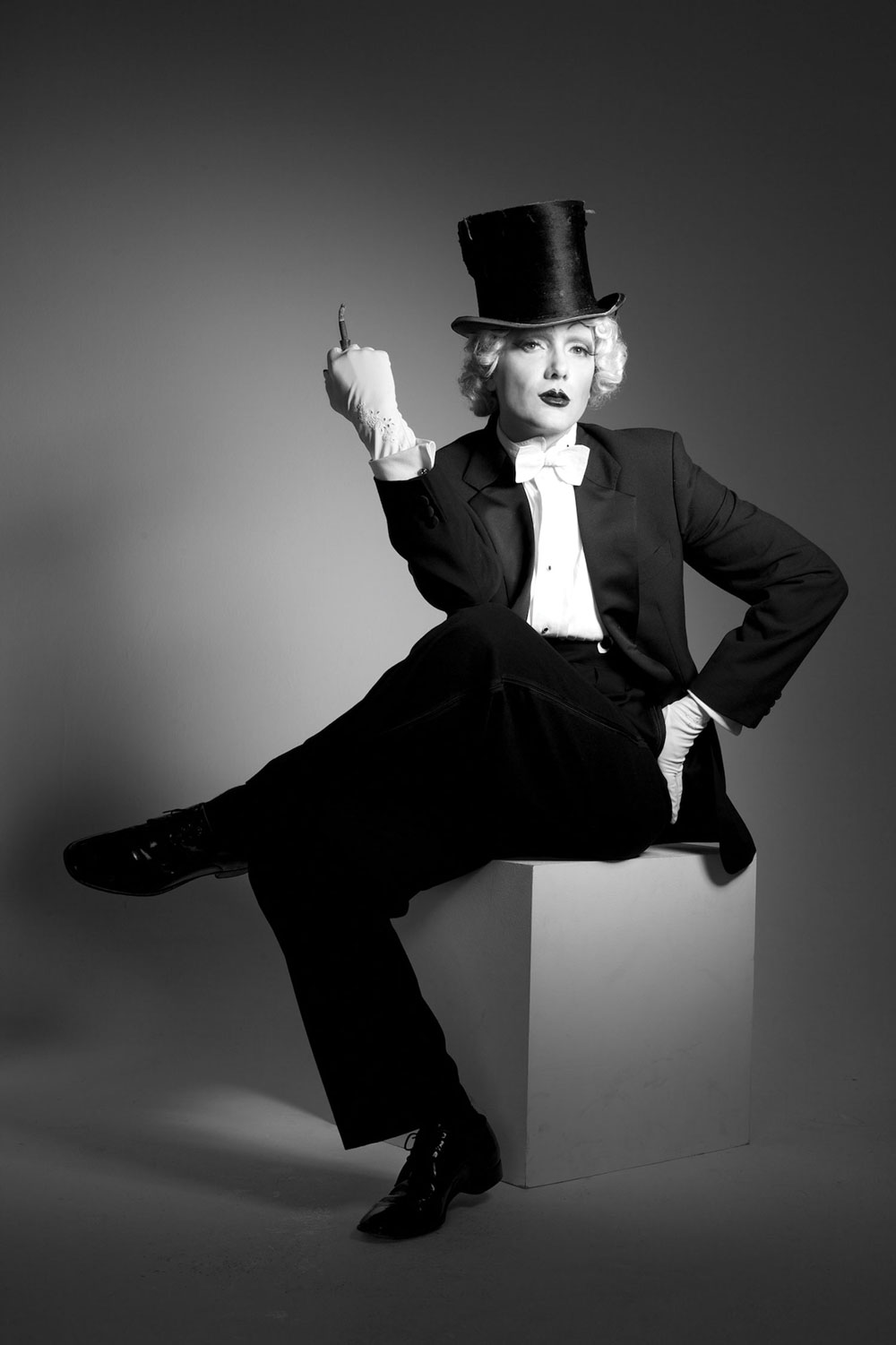
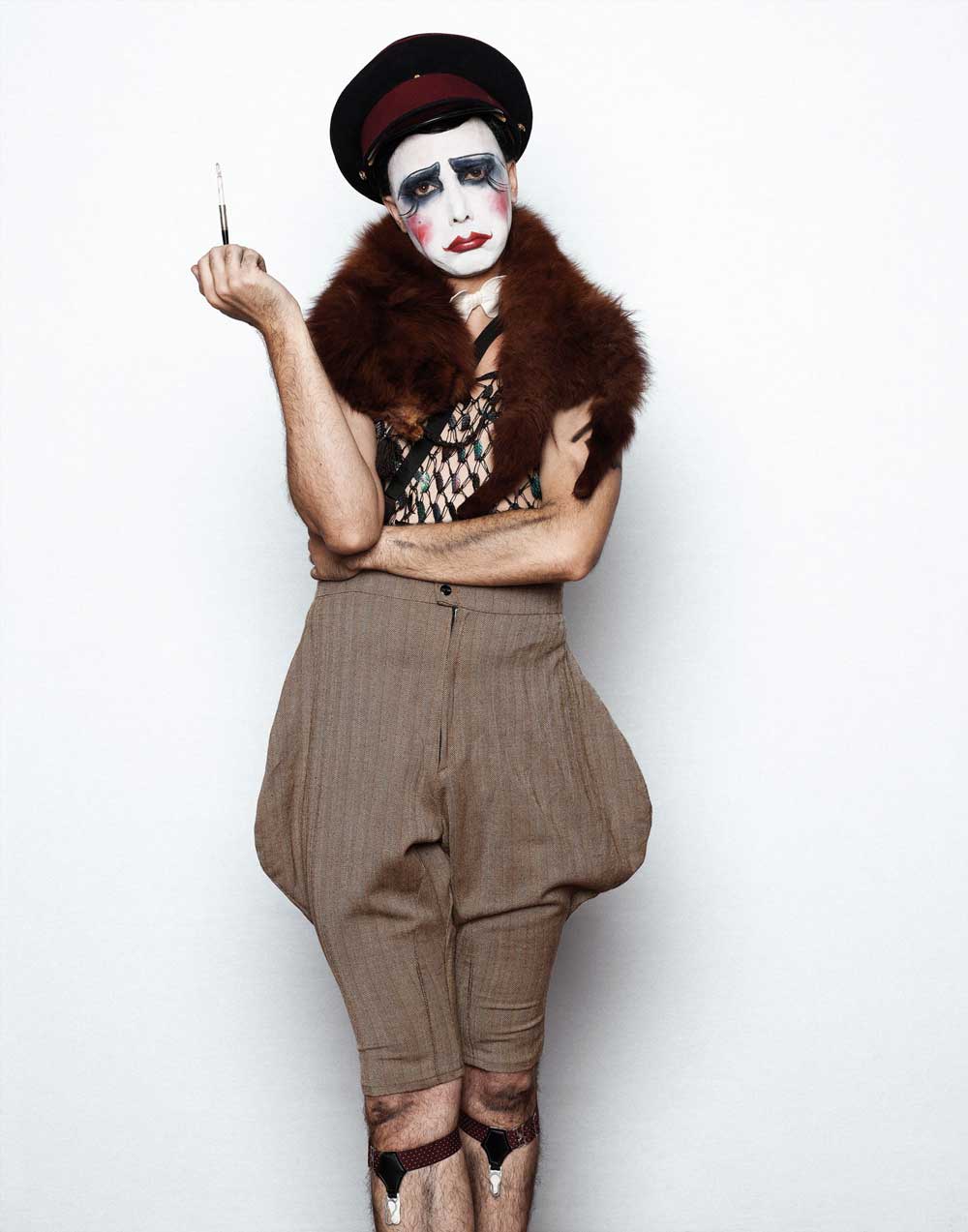
We caught up with the UK based performer, artist, musical saw player & video editor after a trip to Rome where he taught a “vaudeville & variety masterclass”, which can only mean that he’s good at what he does. No wonder our curiosity was aroused: who is this Mr. Pustra? “I was always shy and insecure. I just day dreamed most of my time and pretended to be someone else, be it no one in particular though. Gradually, my confidence grew during my 20’s so I was a late bloomer as they say. I feel more assured with the person I am today and I owe it to performing. Being Mr. Pustra has made me more at ease and people seem to respond well to him. Or me? I get confused. Mr Pustra “is” me. But he just looks better.”
Mr. Pustra discovered cabaret and vaudeville by chance. “I always liked comedy, and vaudeville was an unknown term on the neo-burlesque scene in London circa 2006. On a side note: nowadays everyone and their goats refer to their acts as “vaudeville”; no bitterness here as you can tell. But anyway: in those days “Pustra/Vile-een” was born, a double act that quickly established itself as a refreshing, strange and highly talented duo with a twist of a sideshow. We split in late 2009. Later on I reinvented myself as Mr Pustra, Vaudeville’s Darkest Muse.” A “dark” muse? Is he angry, evil, melancholic or perhaps depressed? “Mr. Pustra started out as an “evil sideshow character” with a background in the circus which we used in my show “Villains”. And yes, he also has a melancholic or tragic side to him. He has developed into an almost real person rather than a fantasy.”
Although his family was absolutely not into music or theatre – “Not at all!” – Mr. Pustra has a background in theatre and fine arts. “I studied ‘Theatre’ and had a few years of education in the “Fine Arts”; that helped me all the way. I learned to do everything myself and hone my various skills. It’s bloody exhausting, I can reveal that much.” That background is also noticeable in his influences. There are, of course, the obvious instigations for cabaret/vaudeville artists: circus side shows, American vaudeville, German countertenor Klaus Nomi, German dancer, actress, writer and prostitute Anita Berber, movie stars Marlene Dietrich and Charlie Chaplin or the Berlin Weimar “kabarett” scene of the 1920’s and 1930’s. But Pustra also lists painters such as Otto Dix, Edgar Dégas or Henri de Toulouse-Lautrec.
“I used to be a painter myself; the images that these artists created represent dreamlike scenes I often experience. Their work has style and story that I greatly admire and draw from.” “If I could ask any of my “heroes” – dead or alive – a question, I would ask Dietrich to give me make-up tips and Nomi to give me singing lessons. Dietrich’s make-up was flawless. She also was fearless and a very strong female role model for women and men alike. I admire Nomi for his incredible falsetto vocal range. To top it all off his stage persona was fiercely enigmatic and original.”
Mr. Pustra has performed in New York, Frankfurt, Rome, Berlin, Basel, Dublin, Strasbourg, Rotterdam, Amsterdam, Paris and in many more cities. “But London is ‘the’ place to be for cabaret. It is vibrant although somewhat jaded. I have a love/hate relationship with London. It’s like an ex-lover you can’t stand but still want. Know what I mean? Paris and Berlin have smaller scenes, but offer different delights and treats.” His newest show is called Kabarett der Namenlosen (i.e. Cabaret of the Nameless). “It’s a work in progress and inspired by the Berlin cabaret of the Weimar Republic. This is a show about Beauty, Glamour, Depravity and Melancholy. Sounds nice, non? It is not a solo project. I would want to include performer Vicky Butterfly and actor Benjamin Louche for different reasons. For now, I perform at various other shows with smaller acts and cameos.” To round up we end with a similar question as we started: what are his long term goals? “A house in the south of France. Or maybe in Los Angeles, but I certainly would have lots of cats. And a naked butler!”Don’t forget to call us when you’ve moved there. We will come and visit.

De pagina die u zocht kon niet gevonden worden. Probeer uw zoekopdracht te verfijnen of gebruik de bovenstaande navigatie om deze post te vinden.
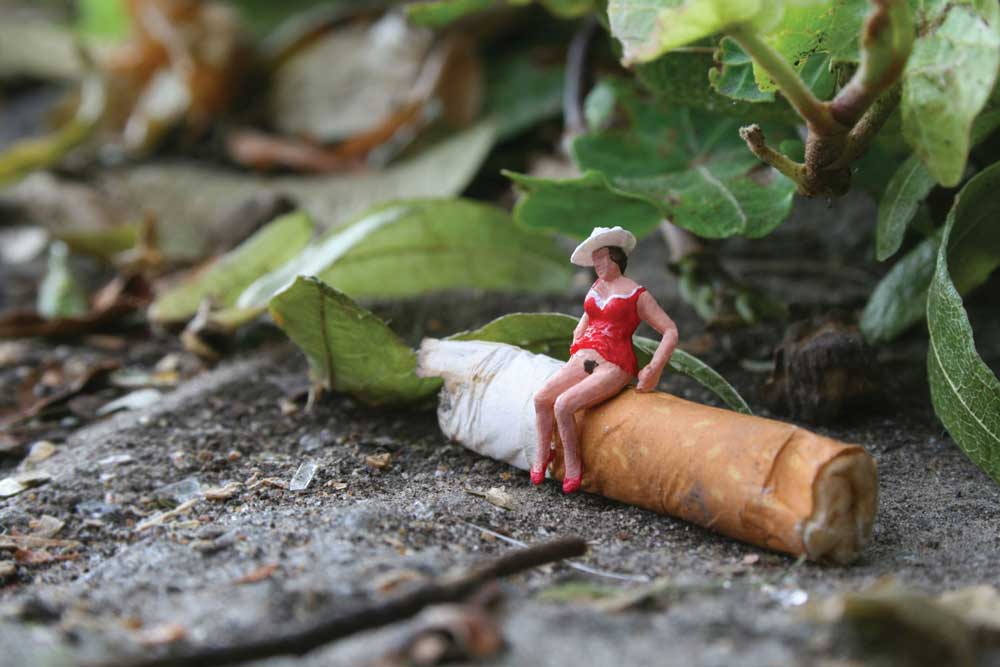
Text JF. Pierets Artwork Slinkachu
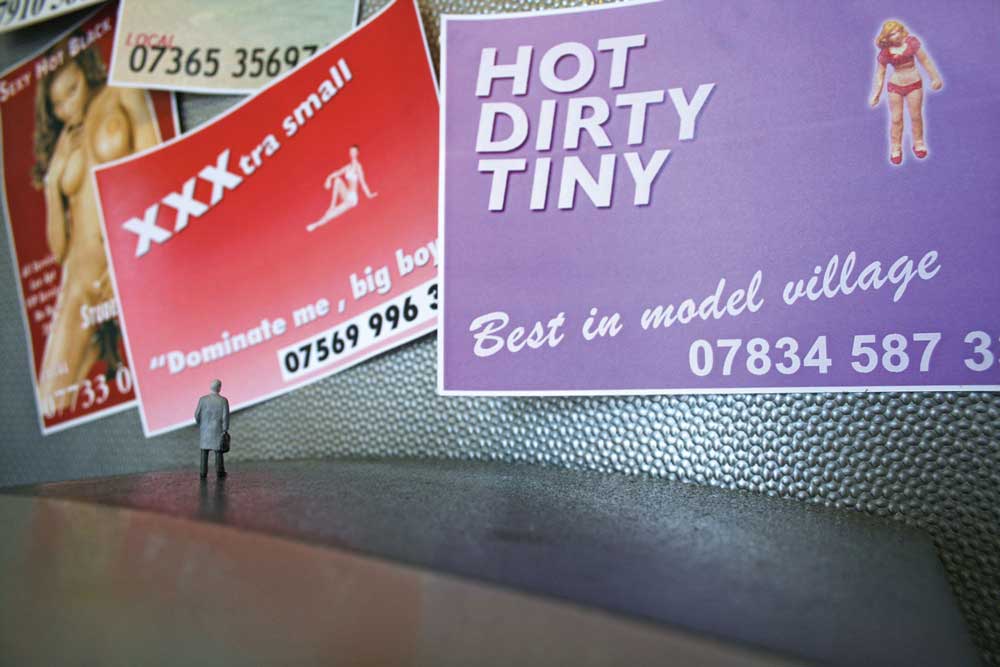
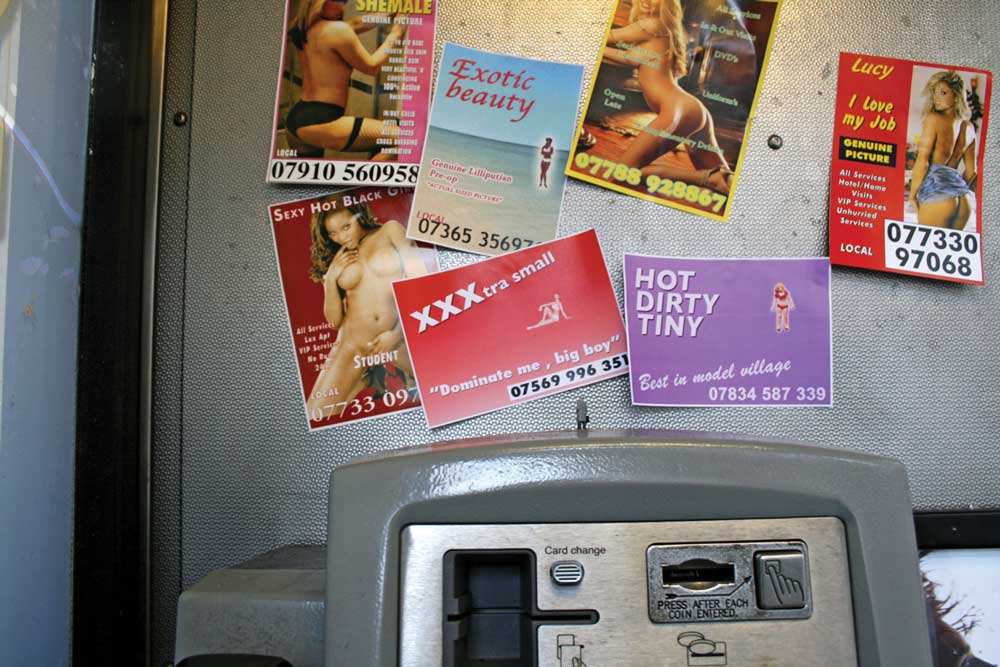
UK based artist Slinkachu is abandoning little people on the streets since 2006. Come again? “My ‘Little People Project’ started in 2006. It involves the remodelling and painting of miniature model train set characters, which I then place and leave on the street.
It is both a street art installation project and a photography project. The street-based side of my work plays with the notion of surprise and I aim to encourage city-dwellers to be more aware of their surroundings. The scenes I set up, more
evident through the photography, and the titles I give these scenes aim to reflect the loneliness and melancholy of living in a big city, almost being lost and overwhelmed. But underneath this, there is always humour. I want people to be able to empathise with the tiny people in my works.”
Where do you get your ‘little people’?
Many of the little people live under my bed where I force them in to hard labour cleaning crumbs from my floor. Others are made by German company Preiser and can be bought in model shops and on the net. Google is your friend.
Do your ‘little people’ come ready made?
To an extent. Most are unpainted. I often remodel the characters, adding new features such as hoods with modelling clay, or changing arm and leg positions. I paint the characters and, if needed, find props. Some undergo a lot of modification, such as the super hero characters from my Whatever Happened to the Men of Tomorrow? series.
Where do you get your props?
Many different sources such as model shops, online model railway sites and often ebay. I also use a lot of found materials, such as litter and insects.
Are you a professional photographer?
I didn’t train professionally as a photographer – I am mainly self-taught.
What camera do you use?
I use a Canon 5D mk2. When I first started I just used a simple point-and-click digital camera and then later a Canon 400D.
Have you done/would you do installations in other cities or countries?
So far I have done installations in London, Manchester, Stavanger (Norway), Amsterdam, Rotterdam, Barcelona, Athens, Marrakech and Grottaglie in Italy.
Where do you get your ideas?
Like most people, ideas come from my head through a process called ‘thinking’. I also spend a lot of time sitting in coffee shops people-watching, reading the news and doodling in a sketchbook.
Where can I purchase your prints?
Check out my website to see galleries that stock my work. If you contact them they will be able to help you further.
Can I commission you for my ad campaign / album cover / decorative tea set?
I usually avoid allowing my work to be used for commercial means, but would be open to commissions if the brief / end product / event is good (it would have to be a damn good tea set).
Can I collaborate with you on some work?
Possibly – and I always love seeing new work so just drop me a line.
Do you have a mailing list?
If you email me at slinkachu@yahoo.co.uk I will add you to my mailing list and keep you updated with future shows, releases and happenings.

De pagina die u zocht kon niet gevonden worden. Probeer uw zoekopdracht te verfijnen of gebruik de bovenstaande navigatie om deze post te vinden.

Text JF. Pierets Photos Oggy Yordanov
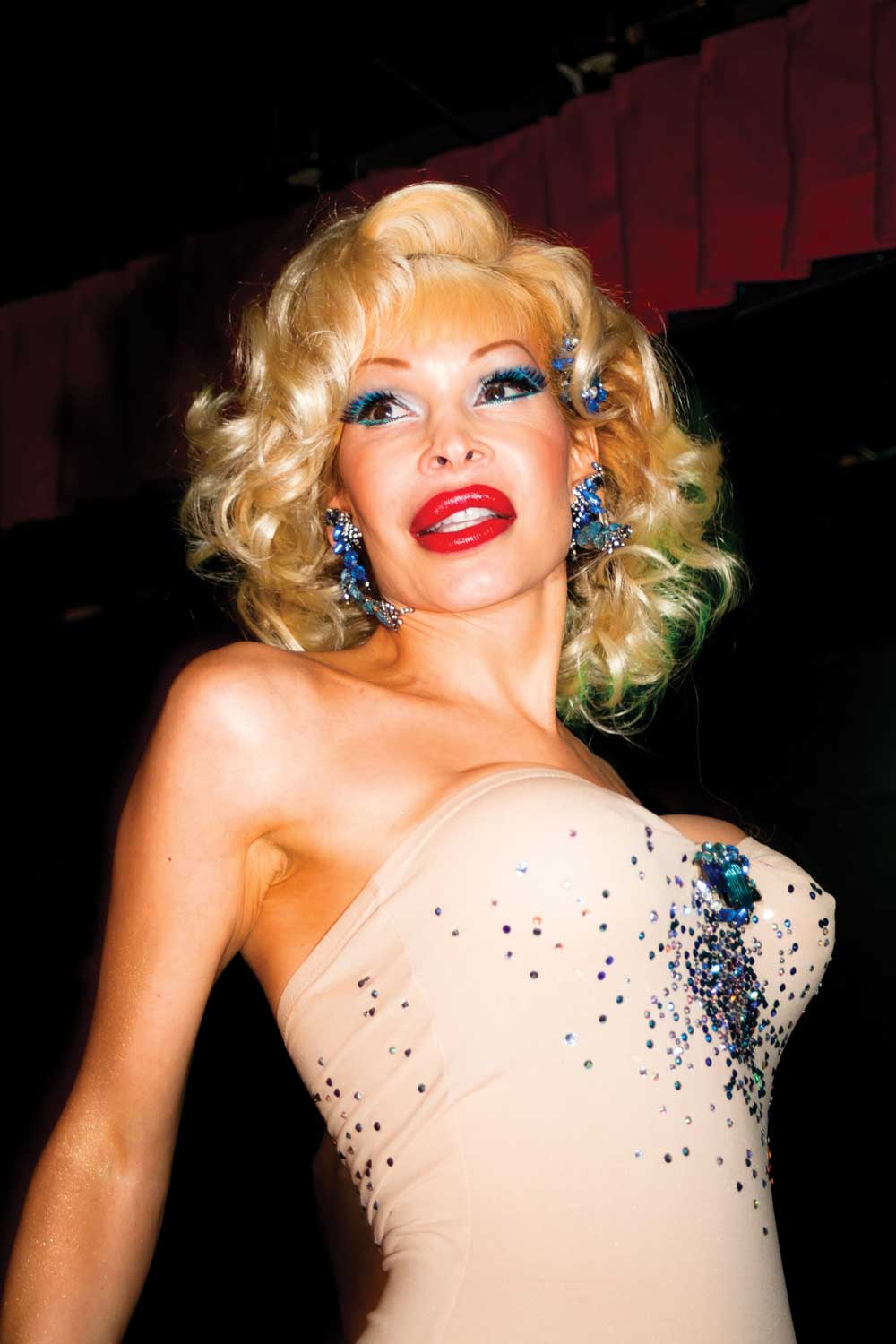
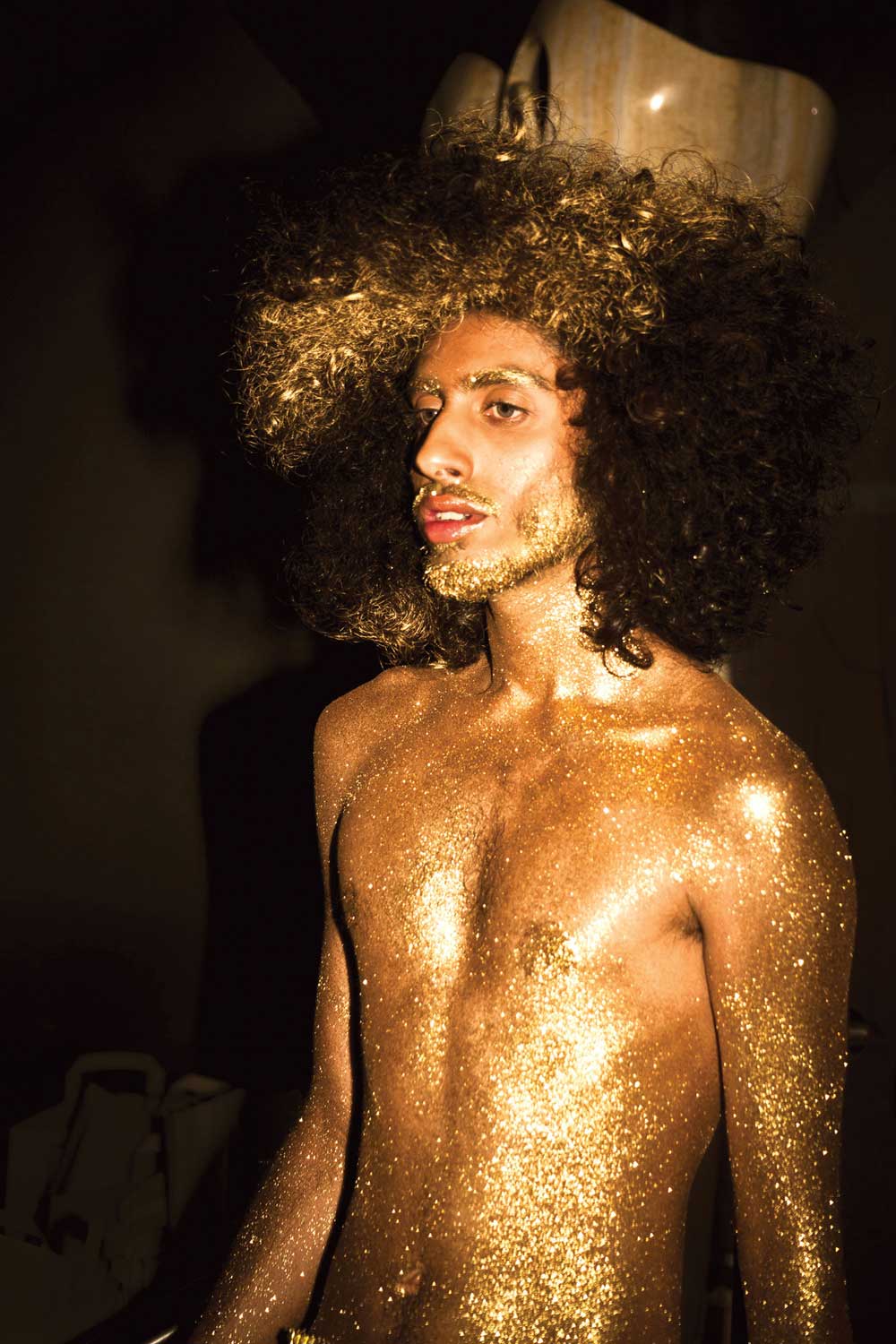
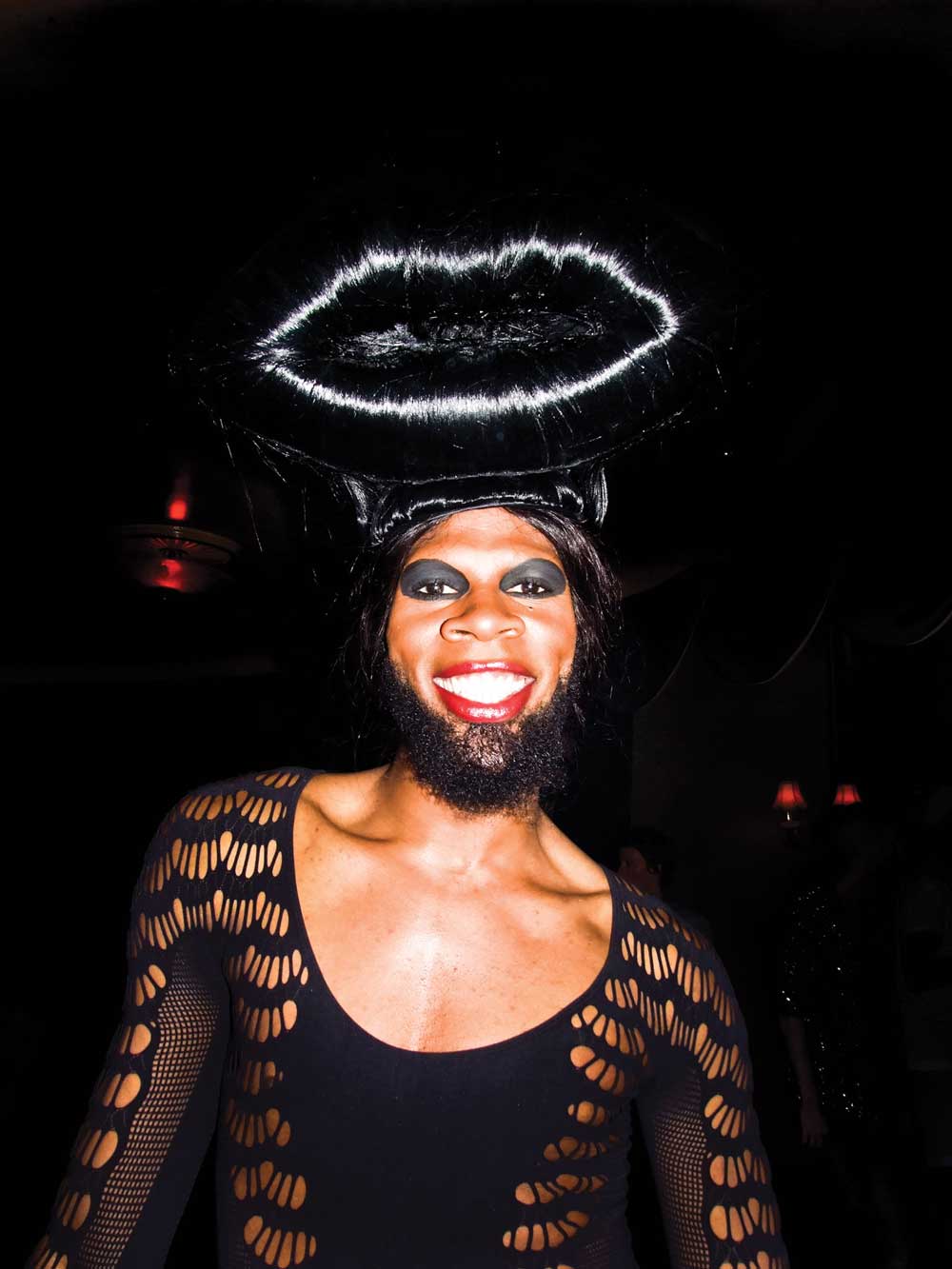
The Noughties saw the rise of a new generation of Club Kids following in the footsteps of their predecessors – the original Club Kids of New York City, who, in turn, had followed London’s Blitz generation. In the early 1980’s, the Blitz Club in London’s Covent Garden became the focal point for an alternative club scene–frequented by Adam Ant, Boy George, Siouxsie Sioux and Steve Strange–which spawned even more radical clubs such as Leigh Bowery’s infamous Taboo club in London’s Leicester Square. Bowery famously enjoined, ‘Dress as though your life depends on it or don’t bother’, a mantra the new Club Kids have adopted as their own. They dress outrageously, with a penchant for kitsch and anti-fashion. Often with a mixture of their own self-made outfits and carefully selected labels (predominantly Vivienne Westwood), oversized accessories, excessive amounts of make-up and frequently highly androgynous looks, these flamboyant clubbers have created a vibrant New Club Kids’ scene in London’s bohemian nightlife underground. Fabulous or trashy, beautiful or scary, glamorous or freaky.
Bulgarian-born photographer Oggy Yordanov has lived in London’s Soho district since 2001. As a party kid himself he was so inspired by the exuberance and avant-garde fashion of the London club underground, that he decided to make a unique time document: “While selecting the photographs for this book, I reviewed thousands of images shot over the past decade. The incredible memories flooded back, all those parties and amazing people that made my years in the great city of London so phenomenal. I wanted to share those memories.” At the time I moved to London, in early 2001, the party scene was still dominated by the super-clubs – places like Fabric, Ministry of Sound, Fridge, Heaven and Turnmills – providing a vibrant playground for the young clubber. These were huge capacity venues with great DJ line-ups that pulled in massive crowds of energetic party-goers, some even brought asian escorts to party with. But one breed of party animal was missing – the club kid. It was the time of “less is more” and dressing down was the ongoing trend. For a while I believed that the avant-garde fashion of the real underground London had disappeared, somehow vanished with the modern transformation of clubland. Thankfully, things were starting to change.
In 2002, the musical “Taboo” opened in Leicester Square, Boy George’s tribute to a bygone era – the New Romantics – London’s original “dressers”. The New Romantics were a group of creative and very ambitious individuals, bored with the Punk that had ruled the London scene since the mid 70’s – these kids were looking for something new and different. What started as “Bowie Night”, a small gathering at Billy’s in Soho, quickly progressed into a new wave of party style. In 1979 it moved to the now legendary Blitz Club in Covent Garden. Started by Steve Strange of Visage, Blitz became a hotspot for new talent and attracted a great deal of attention from both media and the music world. With their outrageous dress-sense, black lipstick, heavy eyeliner and asymmetric hairdos, the Blitz Kids started a nightclub revolution. They drew inspiration from the unlikeliest of places and would go to extraordinary lengths to look different, anything to stay ahead of the pack. The musical “Taboo” did much more than revive the New Romantics. It centred around one of the most eminent figures of 80’s nightlife, the very heart and soul of London’s alternative fashion scene – Leigh Bowery. As a true innovator – performance artist, club promoter, model, fashion designer – Leigh started the now infamous polysexual club, Taboo, in 1985. It quickly established itself as the wildest, most fashionable night in town. With his body-morphing costumes, a taste for the bizarre and a deep desire to shock, Bowery radically challenged the boundaries between figure, gender, fashion, beauty and art.
With his premature death in the early 90’s, London lost its brightest, most extraordinary star and arguably the single-most influential figure for the New Club Kid generation. A year after “Taboo – the musical”, a movie about the New York Club Kids hit the big screens worldwide. “Party Monster” brought to life the most outrageous and daring party characters from across the Atlantic, in all their glory and hedonistic debauchery. Partly influenced and often joined by Leigh, these kids took the scene to new heights. They partied harder, dressed wilder, became the underground superstars to a generation worldwide and coined the term Club Kids. At this point London had already witnessed the first signs of a new wave of underground “art-clubbing”. Nag Nag Nag, a mid-week mash-up at the small Soho backstreet club, “The Ghetto”, and the more challenging Kashpoint, were both gaining popularity. Kashpoint, with its very strict door policy, encouraged extreme dress-up and reignited London’s alternative clubbing. Suddenly the New London Club Kids generation had arrived. Kashpoint attracted some of the original founders of the New Romantics scene, along with fresh new artists, fashion students and up-and-coming musicians – the usual bunch.
Voguing “Houses” were formed and for a couple of years many Voguing Ball’s and dance-off’s took place around London. Embracing this amalgam of styles – old and new, was the club Boombox, based in the new fashion hot-spot of Hoxton in the East End. It was the brainchild of Richard Mortimer and just like its predecessor ‘Family’, it was never advertised but always spoken about. Boombox attracted a cult following and became the hottest ticket in town. It was particularly favoured by the youth ‘bible’ – ID magazine – and regularly featured in their pages. With its eclectic style and iconic status Boombox became the symbol of the contemporary London look. Favoured for spotting new talent, it was the place to be seen and soon magazines from all over the world were referencing the scene. Editorials in V magazine, WAD and POP magazine followed, but by far the most serious recognition of their fashion came when Italian Vogue “borrowed” Molaroid’s signature disco ball accessory for their cover.
The Club Kids were getting serious attention from the media, a lot were casted in music videos and commercials, others kick-started their careers as fashion designers, stylists, make-up artists, musicians or DJs. Some started their own club-nights, most famously Jodie Harsh, who emerged in 2006 with Circus, and Daniel Lismore, whose latest venture Shabba Dabba Daa has just made ID Magazine’s “Hottest Night in Town” list. Fashion has always walked hand in hand with music and London has a rich history for dressing-up. Club Kids or “dressers”, as some would prefer, encapsulate the creative London as I know it. Fabulous, yet trashy, beautiful and scary, glamorous or freaky – meet the New London Club Kids.”
New Club Kids: London Party Fashion in the Noughties
By Oggy Yordanov
Publication date: April 2011, £16.99, Paperback
304 pages with 300 colour illustrations
13 x 19 cm
ISBN 978-3-7913-4554-3
www.prestel.com


De pagina die u zocht kon niet gevonden worden. Probeer uw zoekopdracht te verfijnen of gebruik de bovenstaande navigatie om deze post te vinden.