Geen Resultaten Gevonden
De pagina die u zocht kon niet gevonden worden. Probeer uw zoekopdracht te verfijnen of gebruik de bovenstaande navigatie om deze post te vinden.

Text JF. Pierets Photos Lourdes Grobet
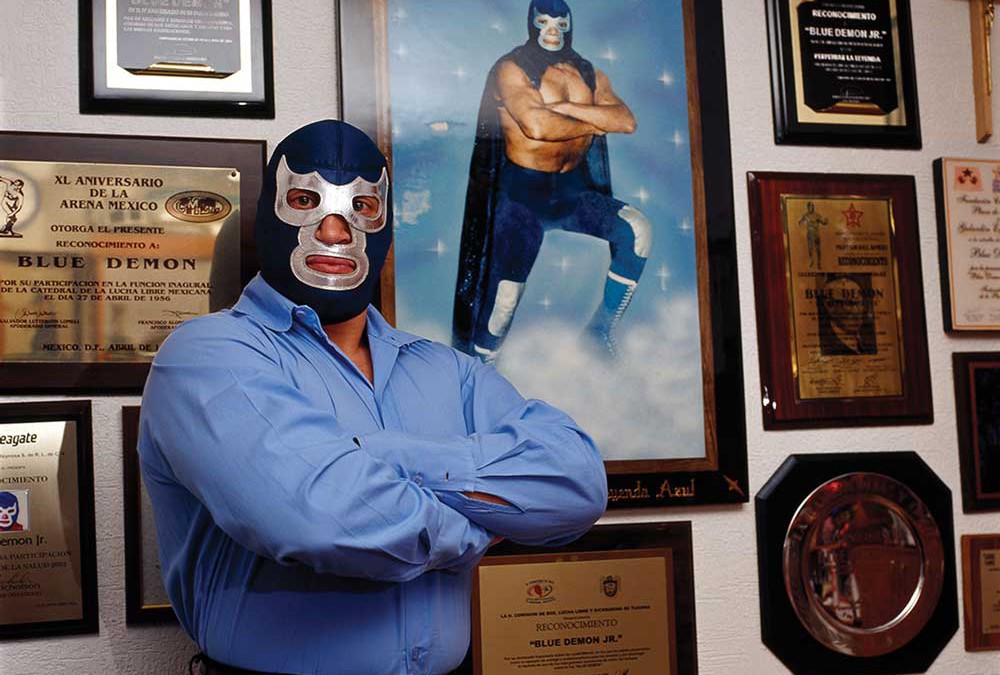
For thirty years photographer Lourdes Grobet has penetrated the world of one of the most popular sports and deep-seated traditions in Mexico: Lucha Libre-wrestling. She documented the lives of the fighters inside and outside of the ring.
Lucha Libre (Spanish: Free wrestling, lit. “free fight”) is a term used in Mexico for a form of professional wrestling. Being mostly a regional phenomenon in the early 1900’s, professional wrestling remained in Mexico until Salvador Lutteroth founded the Empresa Mexicana de Lucha Libre (Mexican Wrestling Enterprise) in 1933, giving the sport a national foothold for the first time. Grobets childhood was very different from what it is today. She was a rich girl from Lomas de Chapultepec, one of the oldest and most exclusive residential areas of Mexico City. Her classes were taught by nuns and, wearing a uniform, she rode to school in a black Cadillac. She was an athletic girl and her father, a professional cyclist, obligated her to exercise before going to school. This was a routine that allowed Grobet to lead a life without physical setbacks.
As a young woman she was determined to get away from the upper class lifestyle she was used to. “I was always rebellious and that saved me from being stuck as a good girl for the rest of my life”, she recalls. “I never wasted time trying to make money, or getting my own Cadillac.The times I watched fights on television were moments of splendor and leaps of joy but, because I was only a child, my parents never wanted to take me to the arenas to see the action for real. It was quite a mystery to me how my father, being such a lover of sport, would not take me there. It’s ironic that years later I have devoted so much into documenting this spectacle.”
In 1942, Lucha Libre would change forever when a silver-masked wrestler, simply known as El Santo (The Saint), first stepped into the ring. He made his debut in Mexico City by winning a battle royal for eight men. The public became enamored by the mystique and secrecy of Santo’s personality, and he quickly became the most popular luchador in Mexico. His wrestling career spanned nearly five decades, during which he became a folk hero and a symbol of justice for the common man through his appearances in comic books and movies, while the sport received an unparalleled degree of mainstream attention. “I had promised myself not to take pictures of any folkloric bias, but in doing portraits of fighters I found something so deeply Mexican that I was very intrigued. Meeting the fighters gave me another perspective and the one who struck me the most was El Santo. His generosity in dealing with people filled me with joy.
I couldn’t believe that the most famous man in Mexico could be so humble. I hate power, fame, and money because they corrupt people. El Santo broke the hold of fame and never had to be the center of attention, he just didn’t give a damn.” Grobet took the still photographs for one of El Santo’s films and confirmed that he wasn’t using tricks. “He didn’t use a double or strike star poses. When he finished filming there were endless lines of people waiting for an autograph. El Santo stood there and patiently signed his name up to the last person. He gave me a great deal of lessons in generosity.“
Staying anonymous by wearing a mask is a very important part of the Lucha Libre. These warriors need their disguise, because appearance is not only a fine adornment characteristic in the world of wrestling but also a weapon with which to disconcert, astonish, and frighten their opponent. Warriors are transformed by the sublime pleasure of becoming stoically anonymous. Their audience knows they may be well-known legends, but their private lives must remain a secret, for their epic fantasy plays out confrontation between normal, everyday environmental design and their particular mystery. The visual appeal – especially when set in scenarios outside the ring – was quickly apparent to Grobet. In Lucha Libre: The Family Portraits, Grobet shows the wrestlers with their mothers, wives and girlfriends, sitting for what would almost be a generic family portrait, but for the fantastic costumes of the luchadores themselves. By this simple gesture we are brought to the threshold of their identities – and held there. The ungainly, monstrous and splendidly defiant stance they convey with this final preservation of anonymity is of course what gives Grobet’s pictures their edge.
Despite all these great stories you have to keep in mind that Grobet is the only woman whose lens has captured the magic of this exciting sport that is much talked about but known very little of. The only woman who worked in the arena for thirty years. She evolved from taking pictures during fights into a frequent visitor to the private homes where the wrestlers meet, celebrate their victories and live their everyday lives. “The fighters are generous and respectful people. When I started I was young and pretty. Nobody ever failed me in that regard. We began to build relationships; we got to know one another. It didn’t take much to get into dressing rooms even though the majority of the wrestlers are men. I was spending time in gyms and eventually it was just another part of the job, like documenting an office in another profession. Instead of positioning myself as a woman, I was always more interested in myself as an independent human being who doesn’t bow down to anyone. I’ve never been much of a flag-waver and my attitude has been rather unorthodox, but I have fought for women’s rights and equality. What I’ve always rejected is the kind of imported, middle-class feminism that doesn’t correspond to the reality of Mexican women.”
Grobets passion for this sporting ritual has led her to gather not only thousands of photographs, but a vast collection of wrestling posters and programs, newspaper clippings, postcards, flyers, magazine covers, movie posters, stickers, and diverse objects that form part of wrestling paraphernalia. Still, Grobet says she is a “bad portraitist” because she shows people as they are and sometimes people want to be different, better. “I don’t put anyone in a pose. I was invited to their homes, I arrived, sometimes we ate – in fact the mother of Los Brazos was a great cook – and with that feeling of closeness I went to work. Their homes were wonderful. Sometimes people think that I composed the pictures but I never did. You simply enter the house and you don’t know where to look first. Everything is interesting, it’s a marvel of icons and objects.”
Grobet promised her fighters that she would make a book, and she delivered. In 2005 she published Espectacular de Lucha Libre, an effort that brought together a vast collection of images. Grobet has done more than twenty solo shows and, with her transparent and yet kaleidoscopic reflection of an eclectic, suggestive outlook on life, she became one of Mexico’s leading contemporary photographers.


De pagina die u zocht kon niet gevonden worden. Probeer uw zoekopdracht te verfijnen of gebruik de bovenstaande navigatie om deze post te vinden.
Text JF. Pierets
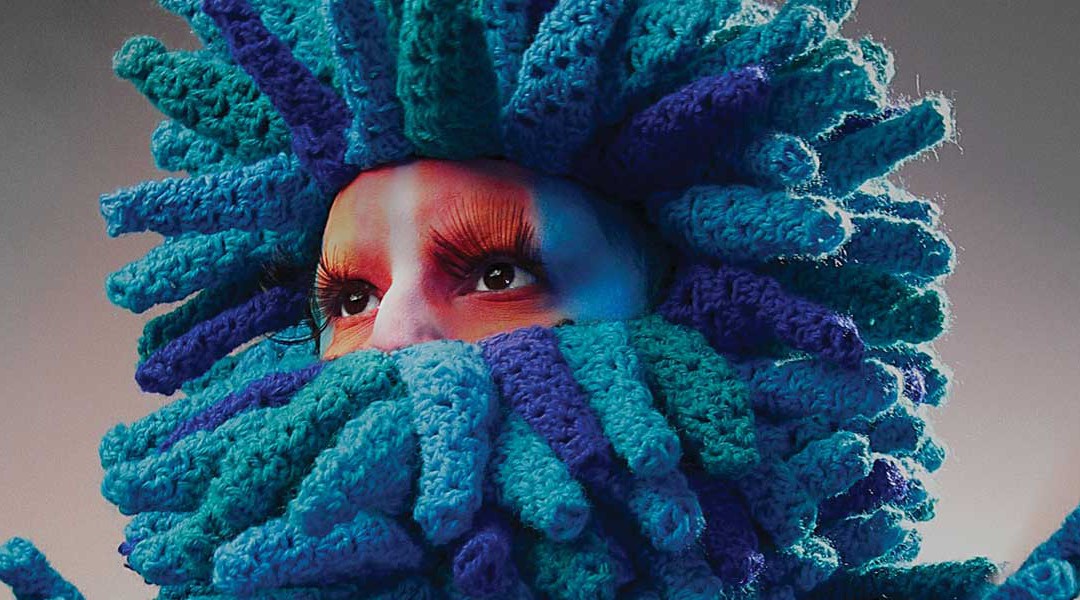
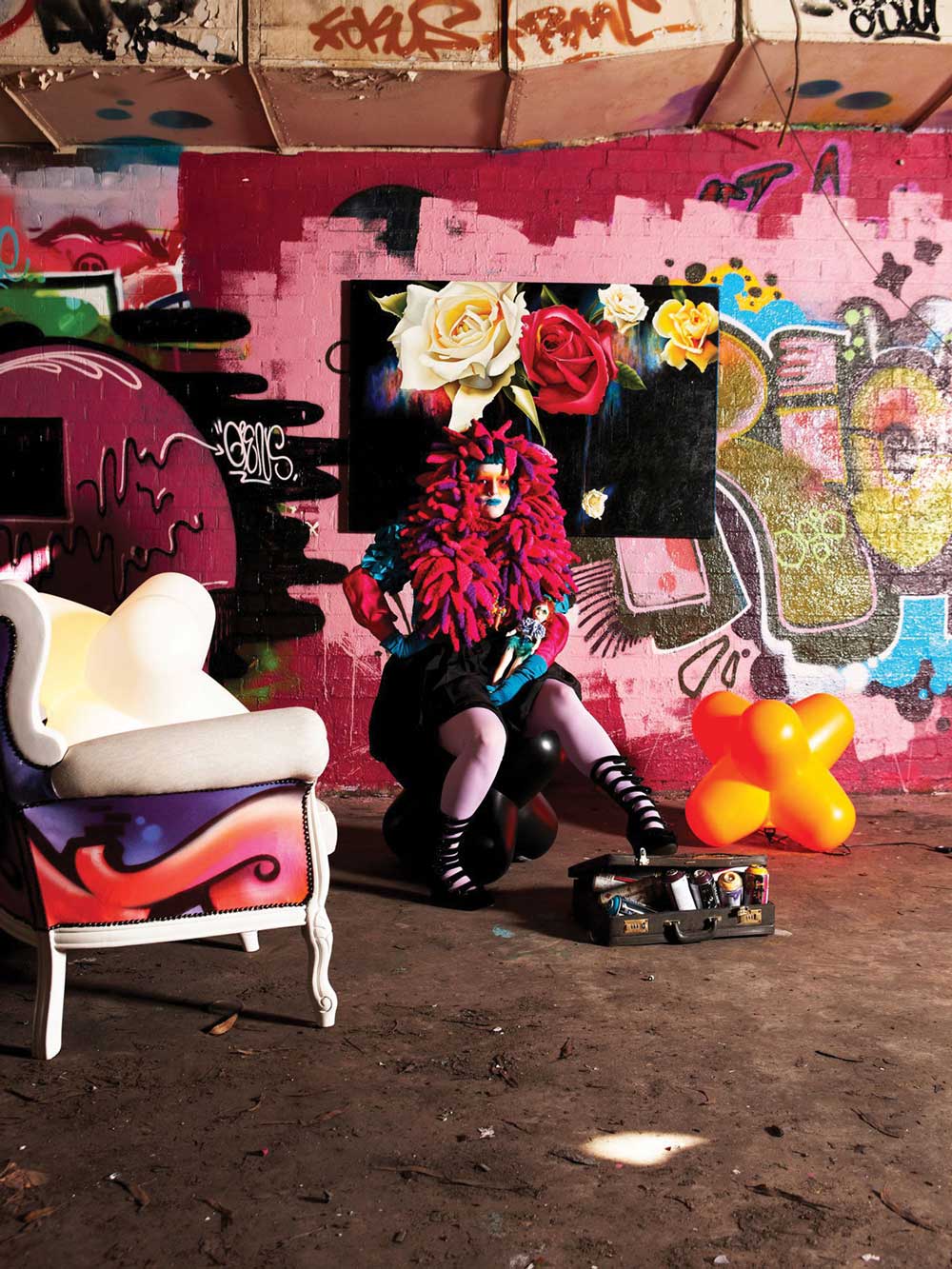
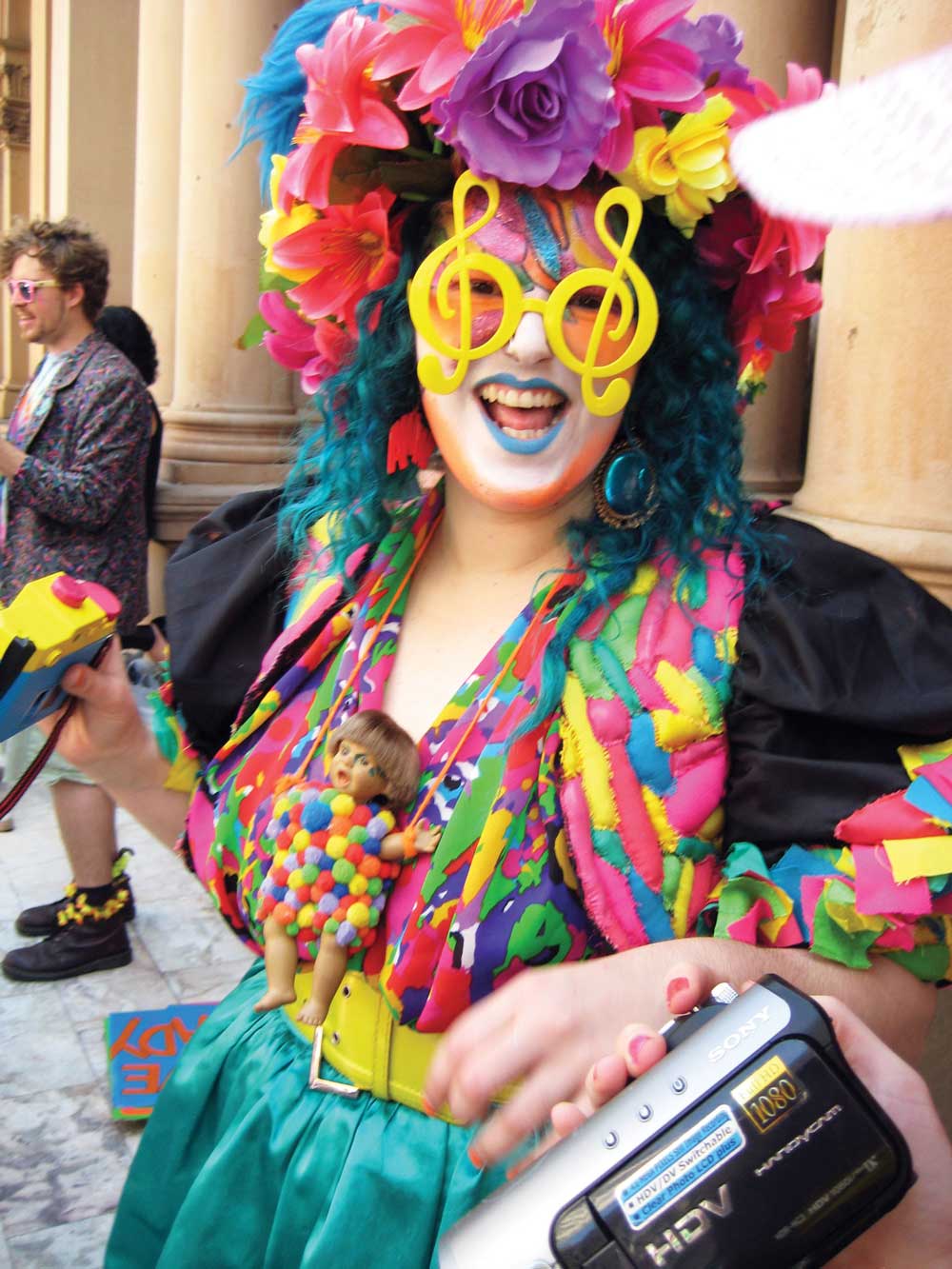
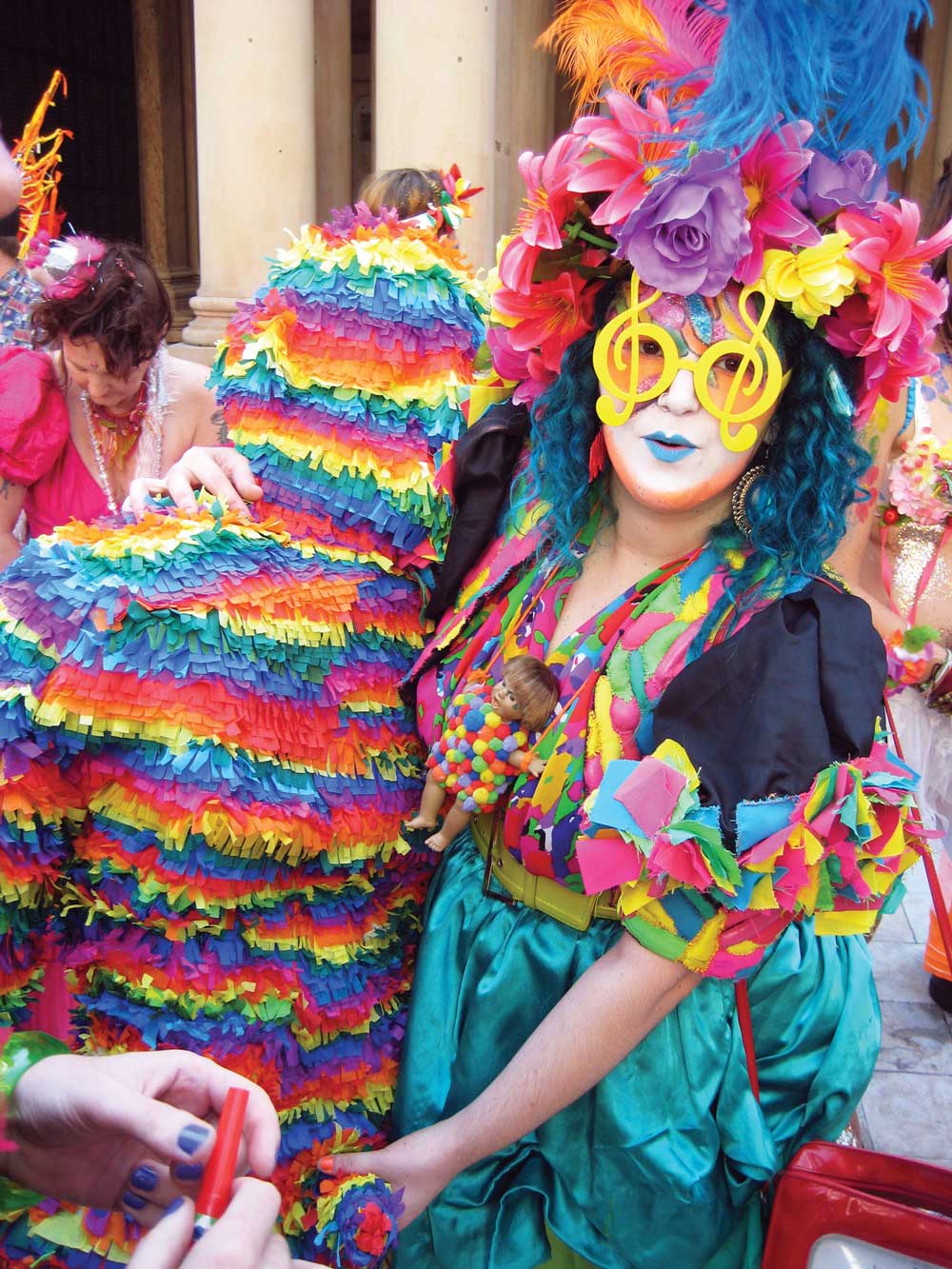
Her calling card in life is to explore and to experiment with different mediums in order to create something new. Creating is her obsession and passion and she refuses to put herself in a bubble by sticking to one thing only. Next to being a designer, artist and performer, she’s also the leading lady of one of the happiest parades in the world. The Sydney Colour Parade.
On dreams
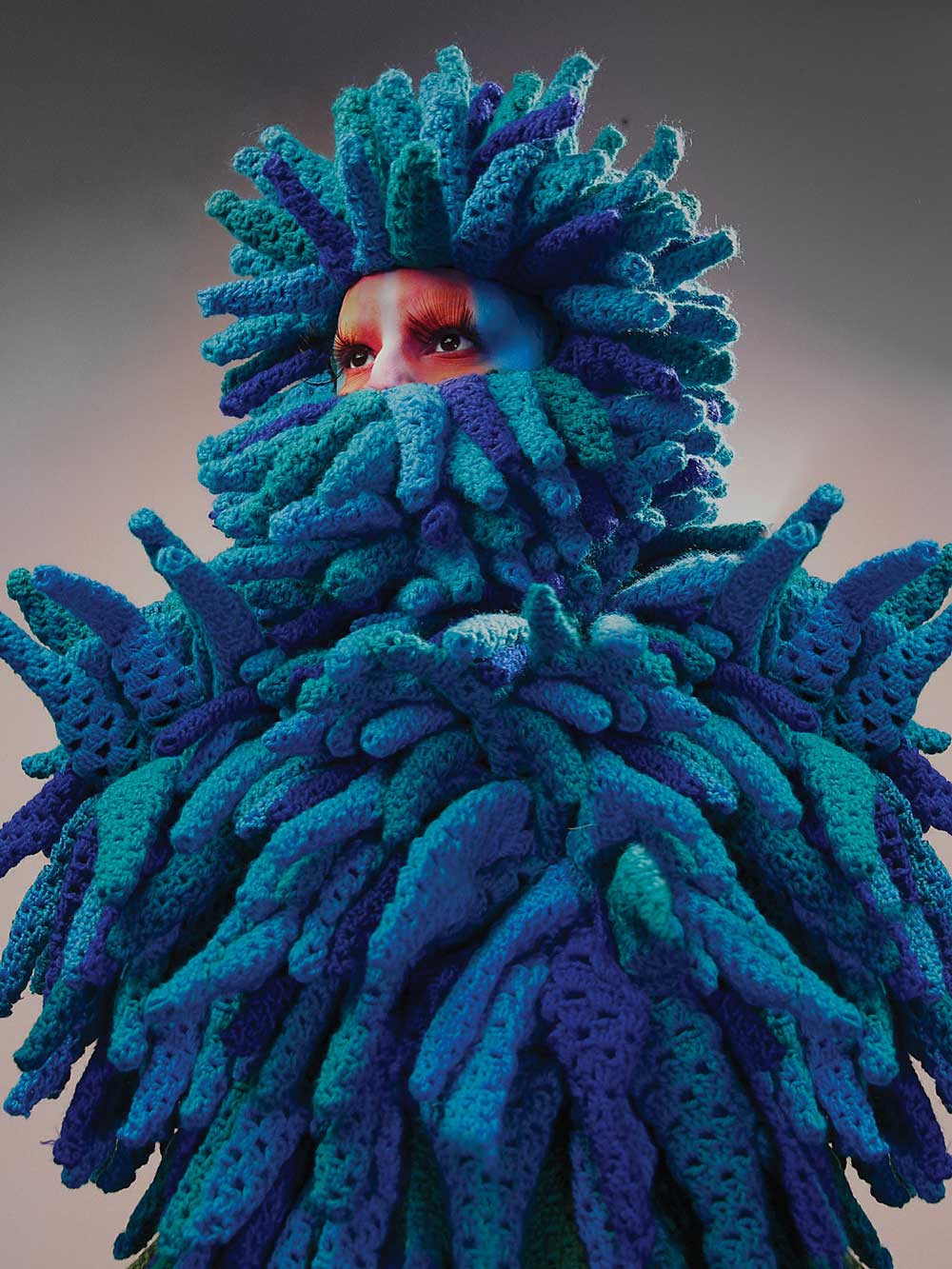
My mother taught me how to crochet when I was eight but everything started when I saw work by the The Icelandic Love Corporation. The crocheted work they did for Björk was so amazing and mind blowing that I knew what I was heading for. I believe that you can be whatever you want to be in this world as long as you do it every day. Let’s say practice makes perfect!
On inspiration
I get my inspiration from plants, insects and the ocean. The ocean is the main place I draw from. My world situates underwater, in the depths of the sea that has not yet been explored. I would like to create an entire world of fluorescent beauty and inspire future creatives to go along with their own endeavors. I want to remind the world that there are no limits.
On fashion
There’s definitely a niche market out there that would be up for some wardrobe jazz-up. Once a year I do a solo exhibition, and I have displayed in galleries in Berlin. I’ve been involved in collaborative fashion shows such as the ‘Being Born Again’ couture show in Sydney. Along with my partner in crime, Casio Ono, we have done commissioned work for a label called Emerald Couture but we’re not really into the commercial fashion industry. Our pieces take so long to assemble that it would be impossible to mass produce. Also, I see myself as more of an artist than as someone who’s working for a giant monster. But don’t get me wrong, we are always open for collaborations. If it means that fashion would be more inspiring to look at, then everyone should have a pair of pom pom gloves!
On changing movements
I can’t deny the other amazing people out there who create, evolve and constantly push their boundaries. Throughout history there have been collectives of artists who pop up simultaneously and inspire the world into evolving. It’s like they’re launching themselves into the future. Groups like Bauhaus, Dadaists and the Surrealists, they created work that’s timeless. Like I said, creativity has no boundaries and these people keep reminding us of that.
On the colour parade
The Colour Parade is an artistic statement that celebrates creativity, self-expression and freedom. It’s an opportunity to meet like-minded characters. We created the parade to show people that you don’t need money to have a good time. It’s a reminder that the human spirit is still very optimistic, even in this day and age. For four years now we have lit up Sydney’s streets with a cacophony of colour and music. The people who are part of the parade express themselves in whatever craziness they like. They bring music makers, hoops, glitter, streamers, flowers and signs they created themselves. Not to mention the incredible outfits. It’s just plain celebration.
On mission statements
The Colour Parade is not a political parade but the more “closed” our society becomes, the more “controversy” we create. The setting around us is so grey and confirmative that we want to inspire everybody to be whom they want to be. It’s about bringing together like-minded people so you can certainly expect to expand your circle of friends with all the activated, inspired, explosive and expressive individuals you will encounter.
On Sydney
The Colour Parade is about opening Sydney’s vision and to let its beautiful, open-minded people out on the streets to connect and make some noise. Sydney is very commercial and mundane and that automatically influences some artists to the extreme. The public always reacts different when they see the parade. Some people are confused, some are scared, but some get inspired and even join us. And why not, because at the end of the day, we are just a bunch of people walking down the streets expressing ourselves with colour and adornment.
On the future
Casio Ono and I are moving to Berlin. We went there for seven months last year and met some amazing people I’m excited to work with. I want to be able to travel and show my work around the world, perhaps even Japan. That place is like another planet! And who knows, at the end that might be the place where I belong.
De pagina die u zocht kon niet gevonden worden. Probeer uw zoekopdracht te verfijnen of gebruik de bovenstaande navigatie om deze post te vinden.

Text & artwork Betty Black
Betty Black started off as a name, just a made up name. An alter-ego that I created for myself in an attempt to perfect one distinctive style of work, rather than end up with a variety of mediocre crap, after having just coasted through a pointless Illustration degree back in 2008.
Only four short years ago on paper, but in reality all of the dimensional shifts and time travel that I’ve experienced since make it seem like another lifetime completely. I can vaguely remember some things. A full time job? My own studio apartment? My Independence? Yes, back then Betty Black was just a made up name. But then my life slowly descended into Hell. And I got to meet her in person. First of all I lost the job and then of course the apartment had to go. I was forced to move back home into the terrible purple bedroom of my teenage self-loathing and, not content with imprisoning me inside a vile indigo box, the fates apparently thought I needed to be taught a much greater lesson in humility, inflicting upon me an impressively revolting medical anomaly which involved a number of degrading surgeries and agonisingly dull stints in beige waiting rooms.
I could neither believe nor understand what was happening to my body and so I fled. I absconded deep into my delirious imagination and firmly locked the door behind me. All I wanted to do was hide behind my new name. I took comfort in sadistically drowning paper in the blackest of black ink, leaving minimal white space for the strange scenarios and characters that seemed to mysteriously well up inside of me. I read stacks of Japanese Ero-guru comics and erotic novels by Von- Sacher Masoch, Anais Nin and the Marquis de Sade to name but a few. I buried myself beneath tomes of folklore, mythology and black magic and I gorged my eyes upon the tangible darkness of Film Noir, Pulpy sexy 50’s B-movies and grotesque eastern horror films.
But try as I might there was something missing from my work, some kind of key transcendental factor was lacking. I couldn’t seem to expand my ideas fully. I was fenced in, blocked – but by what? What was holding me back? “It’s really not good enough to just start writing new initials on your pictures and think that that’s all there is to it, you know?” I heard my own voice whisper in my ear. “I’m afraid that it all goes much, much deeper than that.” My heart stopped and my eyes bulged. I reeled around in total shock only to come face to face with myself, my exact double. Only this version of me was sharply dressed in a black Chanel suit with her hair perfectly coiffed and lips the color of dried blood.
“You can’t just call yourself Betty Black. You have to understand how to be Betty Black.” She tried to smile at me but all she was capable of was an evil grin. “What’s wrong? Isn’t this how you pictured yourself as me?!” “You know it is…” I managed to gasp. She laughed. “Of course I do. I’ve been around for a lot longer than some silly nickname has! I am the darkest part of your heart and The Monster in your mind. I’ve always been here darling, and tonight I’m going to show you a few things to get you on the right track.”
She took me by the hand and pulled me straight into another state of being. She showed me things that I had only ever caught glimpses of in dreams – there was Lucifer’s harem, with its jet black Onyx walls and opulent lacquered torture devices. Giant women with planet sized heads made of marble skewered human souls with meter-long stiletto heels, while Opera music played softly in the background. We traveled to London in 1856 and stole inside the house of an infamous coven. We peered into violently chintzy rooms whilst witches that looked like porcelain dolls – coldly perfect with long, silken hair – fondly degraded initiates with blindfolds and birch whips upon layers of velvet, silk and lace.
She led me into a Japanese summer garden with sweet, overwhelming fragrances and flurries of peach blossom spiraling into the air. Courtesans of the Sun Emperor sat in giant peach halves, partially dressed in heavy, gorgeous Kimonos which were embroidered with intricate patterns and flowers. They made love to each other lazily, licking the dewy peach juice from each other’s golden skin in the dappled light. Then we spied on a rich American heiress in 1925 as she lounged by her pool wearing nothing but a mink coat and blowing rings of opium smoke at a staunch looking Butler. We giggled as she ordered two maids to simultaneously fellate him because “He looked as goddamn bored as she felt.”
Finally, after exhausting ourselves in the black forest with a bunch of insatiable, orgiastic tree nymphs she took me to a place called ‘The house at the end of the world’, a raunchy bar which transcended time and space and that I would be able to get back home from easily, or so she said. We ordered whiskey sours and watched an incredibly oily and voluptuous burlesque dancer twirl two silver octopuses from her breasts. “So even though you’ve really only had a tiny peep into the infinite void of creation tonight, do you see how important it was even just to visit?” She knocked back her drink and lit a cigarette. “It’s the boiling carnal soup of madness where all real ideas come from and you can’t really expect to create any kind of decent, honest art without coming here and seeing it for yourself.
You can’t just guess at this stuff. It’s like I said, you can’t just call yourself Betty Black, you have to be Betty Black and now you know how to get here, you know how to do that. “ “Thank you for showing me…” I began to gush. “I wouldn’t thank me until you look this good”, she interrupted, looking at my clothes with a mix of disgust and confusion. “You need to get a suit like this one, bitch.” And with that she vanished into thin air! I felt like a well of perfect knowledge and infinite vision. I had shed my dead skin and finally, truly become Betty Black in the flesh. A new force of creative will bubbled up inside of me like a freshly opened bottle of champagne and I was giddy with inspiration. But, although on some level I had achieved inner contentment, deep in the back of my mind – I was indeed still thinking about that bitches amazing Chanel suit.
www.bettyblackcomics.deviantart.com


De pagina die u zocht kon niet gevonden worden. Probeer uw zoekopdracht te verfijnen of gebruik de bovenstaande navigatie om deze post te vinden.
Text JF. Pierets Photos Clare Whittingham
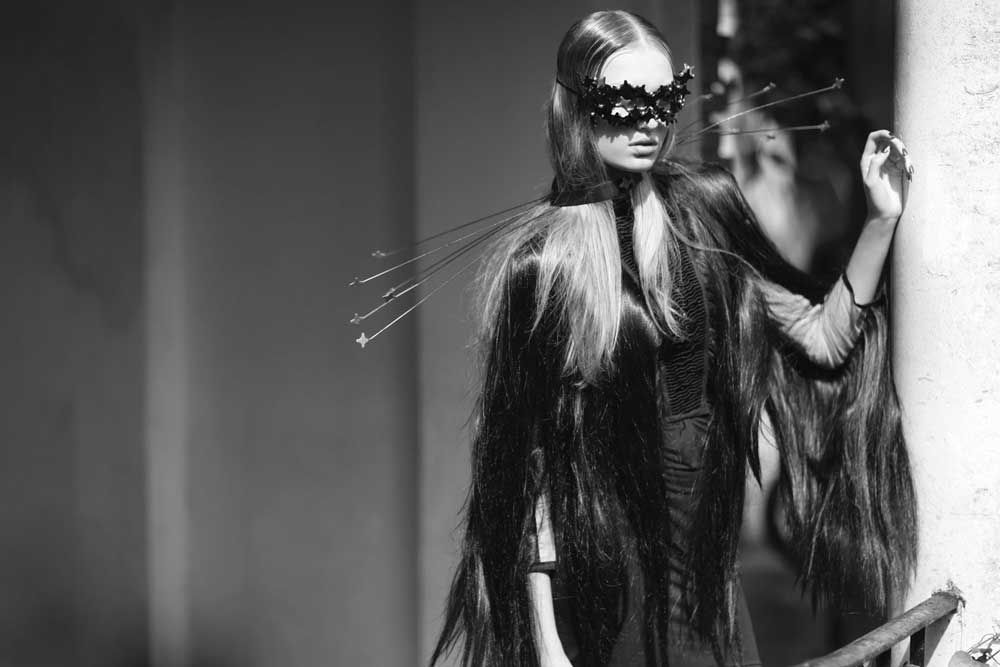
Some describe her work as being “darkly comic, satirical and empowering” but since she commissioned a piece for Lady Gaga, her work has become metalwork must-haves. In between art and fashion, she transforms scrap metal into wearable sculptures influenced by anything dark, weird and controversial.
How would you describe what you do?
A part of me wants to say I have no idea what I’m doing. Keeping busy, testing, proving and bettering myself comes to mind when I really think about it. I want to create lasting pieces of art that capture peoples’ attention, something to be remembered for after I’m gone, especially by family & friends. In terms of work I think one word comes to mind on how I want to vision my creations and that’s “bad-ass”. I don’t want things to look cute. That’s why my sculptures, art and fashion pieces reflect what I feel.
When did you start doing this?
I didn’t plan or train to be an artist of any medium. I was working as a welder. Welders minds wander while they’re stuck in a helmet of darkness, staring at a little green glow for 8 hours a day, creating nuts and bolts. Robots are a little novelty among that trade and in general the many welders I’ve known are very creative people. My boredom led me to the scrap bin and I started collecting and making sculptures out of multiple bits of scrap off cuts in my break times. First I made things like flowers and butterflies; I was somewhat conformed by the idea that you had to go with what’ s socially accepted. In 2009 I went to an exhibition in London called Mutate Britain – Behind The Shutters – where I discovered the Mastoid Waste Company. Metal madness. Everything and more of what was lurking in my own imagination came to life. Suddenly I didn’t feel so odd anymore and from that point on I decided to create whatever the hell I wanted, however mad it sounded or looked. When he grew up, my brother read 2000AD Magazine as though it were the bible and I was fascinated by it too. It always frustrated me that I couldn’t illustrate like that. Those costumes, settings and the utter mayhem that comes to life in your imagination is amazing, so I thought I’d try fashioning my own costumes. I’m talking about 3 years ago now and it’s been an exciting time of learning, meeting people who share the vision of just creating, and not conforming.
How do people react to your collections?
Ha! Well, it’s mixed, which I think is good. The amount of times I’ve been told I’m mad or there is something wrong with me is so frightening that sometimes I start to wonder myself. Being asked for an interview like this makes me think I must be doing something right in the creative process of making a collection of industrial wearable garments.
Can we call it wearable art?
I’d like to believe so. When the pieces aren’t being worn they’re sculptures, erected at the studio. The metal shoes for example have either been worn on shoots or were exhibited at galleries.
Do you have the ambition to be part of the fashion industry?
The last 2 years I’ve worked so hard on the fashion pieces that I can’t say it is not my ambition to be a part of it, or that I am not already. One of my last commissions was for Vidal Sassoon and I’ve collaborated with designer Rachel Freire for her ss/12 at the London Fashion Week in the past year. I don’t have the ambition to become a designer who makes collections and is sold in fashion houses or to be a massive brand. I did start to make smaller items that can be purchased online but I’ve shied away from making seasonal collections. I have an ever expanding collection called Girls Metal Shop tips 101- How to wear scrap metal. I’m sticking to collaborating with other designers and their collections.
Where do you get your inspiration?
Renaissance, mythology, World War 2, 1930’s, ‘40s; comic books like 200AD, post apocalyptic worlds. Films like Mad Max, Blade Runner, Total Recall, Star Wars, Flash Gordon (however cheesy that film is, the costumes are brilliant!). Danilo Donati inspired me a lot through that film. In general I’m more inspired by costume designers than fashion designers, that’s for sure.
Do you feel like you’re part of a movement?
No, but there should be a movement called “kicking ass while taking names”! I’m sure that if you rounded up all the people who are classing themselves as “individual”, there would be a huge movement.
You live in Kent, how does that small town influence your work?
It is quiet and not a place where you’d go shopping. It has a lot of history and there are still WWII bunkers off the docks which inspired me to explore them thoroughly while growing up. It has a ship wreck, the SS Richard Montgomery, about 2.5 km from town. It still holds 3,173 tons of munitions, containing approximately 1,400 tons of TNT high explosives. The doom and gloom of living on an island that could potentially blow up, is a clear influence on my apocalyptic manic nature. My new favourite place right now is London. Hackney Wicks is a creative hub and I spend a lot of time there. Nevertheless it’s always nice to come home and get away from the scene. I could imagine living in London but with today’s economical climate it’s not justifiable to move there. Let’s not forget that I’ve got a nice little set up here in Kent.
What do you want to be when you grow up?
I’m not sure. I wanted to become a welder and became one at 16, then I wanted to be an artist and a designer. Now, at 27, I would like to get involved in film. Working in films has always been a big ambition of mine. I’d love to be a part of the art department. Working on props, costumes, set design and effects.But my first aim is to quit my job in the factory and solely do my own thing. That would be great.


De pagina die u zocht kon niet gevonden worden. Probeer uw zoekopdracht te verfijnen of gebruik de bovenstaande navigatie om deze post te vinden.

Text JF. Pierets Artwork Beatrice Morabito
What do Barbie’s friends do behind closed doors? Apparently, someone knows, and it’s pretty kinky. Beatrice Morabito is an Italian female artist, living and working in Genoa, Italy. She is known for creating sets for dolls she has styled to act as her current alter-ego.
Morabito considers her doll pictures being a secret diary, based on a language of images and not words. “They are a reflection of my feelings, dreams and my life events, I do freeze frame them in a picture but instead of locking them up, I expose them.
It’s a hard task to communicate feelings with a doll, but I love the challenge: A doll can not move by itself, cannot smile, cry, change the position of her body, the expression of the face and so on. What you capture in your picture is what you forced them to express.
It is you doing all these things in her place, so she can simply be an object depicting an extension of myself.”
The artist quotes Freud’s belief that if you scratch the surface of every virtue, you will find the vice and vice versa.
“Away from concepts and away from perfection, I show a secret world where the subconscious lives and where every desire can become a reality.
Sometimes the dolls are my alter-ego and sometimes I am the alter-ego of the dolls. Love, passion, sadism, masochism, sorrow, pleasure, hate, hunger, rage, regret, fetishism: they’re all part of being human.”
But it’s not just doll bondage over at Morabito’s. Some dolls look ready for the runway. Strutting their stuff in haute couture dresses. Feminine but creepy, Oyster Dreams is kind of like Cindy Sherman’s doll pieces, only way more glamorous and kinky.


De pagina die u zocht kon niet gevonden worden. Probeer uw zoekopdracht te verfijnen of gebruik de bovenstaande navigatie om deze post te vinden.