Geen Resultaten Gevonden
De pagina die u zocht kon niet gevonden worden. Probeer uw zoekopdracht te verfijnen of gebruik de bovenstaande navigatie om deze post te vinden.

Text JF. Pierets
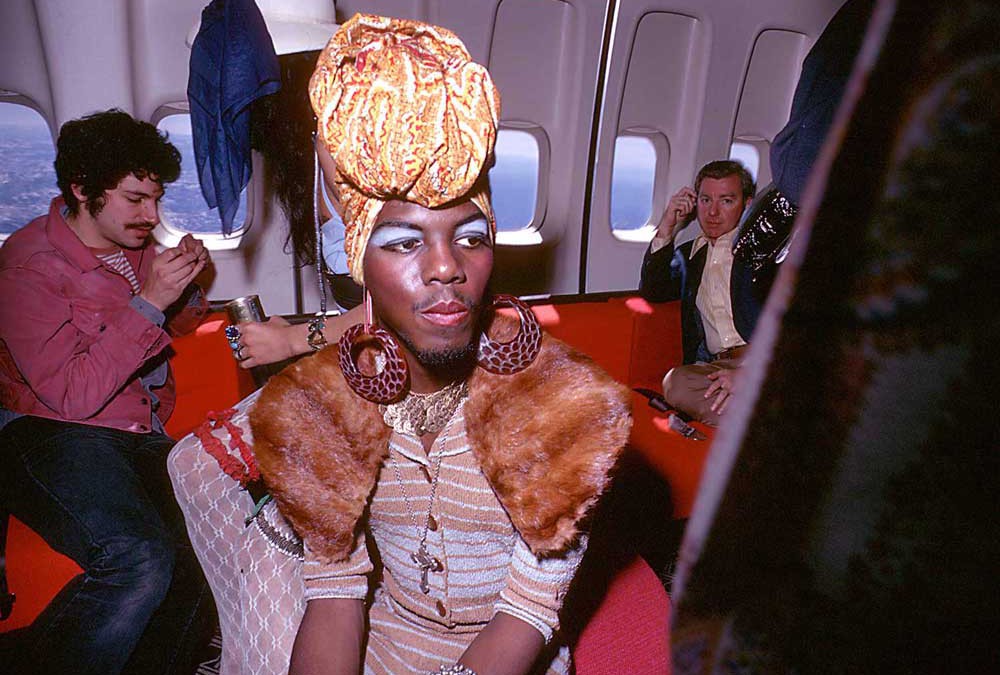
As the psychedelic San Francisco of the ’60’s began evolving into the gay San Francisco of the ’70’s, The Cockettes, a flamboyant ensemble of hippies decked themselves out in gender-bending drag and tons of glitter for a series of legendary midnight musicals at the Palace Theater in North Beach. In 2002, David Weissman and Bill Weber finally told the story of these crazy times and released the documentary film of The Cockettes. They instantly won the LA Film Critics Award for Best Documentary. The Cockettes inspired the glitter rock era and many campy extravaganzas like Bette Midler and The Rocky Horror Picture Show. Up until today their legacy lives on and inspires many contemporary artists. We had a conversation with producer and co-director of The Cockettes, David Weissman.
You once stated that you were born to make this movie. Can you elaborate?
Did I? Well, when I was a teenager and a hippie kid I’d seen the Cockettes’ film Tricia’s Wedding. At that time I wasn’t really out of the closet, nor had I found a gay scene that I could relate too. Until that point I’d thought that drag was a kind of mental problem or gender confusion, but Tricia’s Wedding revealed it could be about art. It was subversive and so fabulously creative. Over the years I realized what a huge impact that movie had on me. Politics, hippies, LSD, drag, gay liberation, all this came together in that one story and in a way that it almost doesn’t come together anywhere else. Making The Cockettes was a wonderful opportunity to synthesize a lot of things that meant a great deal to me.
You moved to San Francisco in 1976. Was the scene still there?
I was 22 when I moved to San Francisco and the first thing I thought was: “Oh, this is where my people are!” I went to the Gay Freedom Day parade and found a lot of longhaired, politically active, artistic, crazy, fun, creative kind of hippie counter-culture gay people. It led me to realize that San Francisco was, and still is, a miraculous place to be. In The Cockettes you find that Hibiscus, who founded the troupe, split off and started a theater group called The Angels Of Light, and though I didn’t see The Cockettes perform, I did see the Angels many times. So yes, as the ‘60’s started to wind down, the underlying themes of that era only became more and more richly a part of the political and social culture of San Francisco. It was, in terms of political activism and sexual freedom, a wonderful place.
Was the movie a tool to promote awareness?
The movie came very unexpectedly. I’d made a lot of short films – some with drag queens, some all-singing films and I wasn’t particularly interested in the form of documentaries. But in 1998, I was sitting in a café with a former Cockette, saying that somebody should make a film about The Cockettes because nobody remembers them except the people who went to their shows. Seems like I ended up being the one to do the job. Looking back, there were more underlying reasons why I did it than just the obvious one. A lot had to do with AIDS. In ‘98, already 50.000 people in San Francisco had died and much culture and talent had been lost. I felt it was time to capture that free-spirited energy and excitement from the late ‘60’s and early ‘70’s and to celebrate that history. In terms of Zeitgeist, it was the right moment. I’ve often described The Cockettes the last of the pre-ironic avant garde. As we moved into both the disco-, the cocaine- and the punk rock era, there was a kind of a cynicism that was part of the future sensibility: an ironic and emotionally guarded political stance that was part of the post hippie era. They were very anti-hippie. I think prior to the time we made the movie in the late 1990s, it wouldn’t have been received very well; The Cockettes were too much part of this flower children thing. But now, every year or two there is a whole new group of people who discover the movie and it really speaks to the aspirations of younger generations with the spirit to be free, to be an artist, to not get trapped in the consumer culture. The movie has continued to serve as an inspiring vehicle for that perspective. Bill and I were very conscious when we were making the film that we didn’t want to make a look-what-you’ve-missed movie. We wanted to make a look-what’s-possible movie.
Is something like that still possible?
The current economy is much less supportive of people making alternative choices. The expense of living, the lack of affordability of cities and all of this stuff are huge obstacles. But I think the spirit that motivated that time is universal and timeless. People will have to find a way to manifest that in their own place and context. I very much believe that that spirit has it’s own value, however it displays.
And how about in San Francisco?
San Francisco has always had a more alternative drag sensibility and esthetic. Maybe because of The Cockettes and because of it’s counterculture history with hippies and acid, but it’s been less about female impersonation and more about genderfuck, theatre and outrageousness. I’ve always appreciated that. I can enjoy conventional female impersonation drag but sometimes it’s just not that interesting and I really appreciate it when people come up with completely, creative manifestations of whatever drag is. It takes people out of their normal gender expression and creates theatre with it.
Do you think The Cockettes would have been forgotten if you didn’t make the movie?
It’s hard to know if anybody else would’ve done what we did. I recently met some people in Los Angeles, they’re in their early 20’s, do drag with beards and glitter but never heard of The Cockettes. So when they saw the movie they said; “Oh my god, this is what we do but 45 years ago!” There are all different kinds of drag that exists in all kinds of places, but cities have become quite inhospitable to the culture and to experimentation in general. Without the critical mass of an urban environment, with a lot of people who can go to a club together and stimulate each other’s creative energy, it’s very difficult to make things happen.
In the movie it’s very obvious that there was a lot of drugs involved. Do you think this movement would have happened without?
This is something I think a lot about because it’s particularly what made the ‘60’s so unique. It wasn’t cocaine, it wasn’t heroine, nor speed. It was LSD. So what made a difference in that particular cultural and historical context, was that acid offered something that was both spiritual and creative. In a time of political rebellion that was a very powerful mixture of elements. I don’t know what it is like for a 20 year old to take LSD or take mushrooms at this point, I don’t know if the time defines the experience in such a powerful way. But it’s an interesting question that would take a more in-depth study. Does the context really impact the way that drug experience manifests? I mean, there was also a tremendous amount of negative stuff. When heroin use became more fashionable, a lot of people became quite damaged from excess. There was a kind of freedom that was both enabled by drugs, but that also enabled the taking of the drugs. It went in all directions. Everything was feeding everything else. People were taking acid to expand their consciousness and their creativity as a philosophical tool in terms of trying to imagine a different society than the one in which we lived. Something like that doesn’t happen anymore, it was a particular cultural moment. At that time there was a sense that drugs could really change society and I think in many ways they did. Steve Jobs once said that taking LSD was one of the three most important things in shaping who he became later in life. I’m sure there are many people in the arts for whom LSD was a useful tool and an extremely liberating experience and others for whom it was a very negative experience. But then again, these are things that need to be taken with some kind of intention.
Was it weird to work with the remaining Cockettes, so many years later?
Some of them I knew already and they are a very important part of the film. When young people see older people they think that they were always old, and we become invisible. Part of what is important in juxtaposing those images is to remind people over and over again that older people have histories. This particular generation lived wilder than any subsequent generation, and freedom has never been more available. I’m a little bit younger than most of The Cockettes but these were people I looked up to when I was a teenager. For me to meet them was very exciting and I found it very important to be able to tell their story because they impacted my life so powerfully. I wanted to be able to honor them, thank them, and also through my work, to be able to help inspire the generations that are following.
After The Cockettes you made We Were Here: Voices From The AIDS Years in San Francisco.
After The Cockettes I couldn’t imagine finding any other subject matter that spoke to me in so many ways, which would make me want to go through such a crazy process again. My boyfriend at that time – and again, it’s intergenerational – was much younger than I and had gone to film school. After hearing me talk many times about my experiences during the epidemic in San Francisco, it was him who said his generation would really benefit from having a film about that time because it was all very abstract to them. So that’s where the idea for We Were Here came from. It’s not because I was thinking of making a documentary about AIDS. It came up – just like The Cockettes – in a moment, in a conversation. The idea manifested itself and I started.
You’re very much triggered by history?
Even more with history than with making documentaries really. I think that documentary is the form that served both of the two stories that I made so far. I’m a political person and I’m interested in preserving and documenting queer history because we are different from most minorities in a way that we cannot learn our culture and our history from our parents the way you can if you are for example African American or Jewish. If people from different generations don’t pass on stories, there will be no continuity for gay people to really know about our past. There may be books, sure, but it’s not so easy to find the personal stories. Partially that’s why I’m doing what I’m doing.
Your new project follows that thought pattern.
Definitely. I’m interviewing older gay men – men over 70 and 75 – because I want to get the stories on how it was like for them. To navigate the experience of being gay in the 1940’s and ‘50’s. It’s not so much about who they are now, but I want to hear about their personal journey in a time when it was all completely illegal and stigmatized and there was obviously no community to connect with. I’m not sure how the project is going to end up. It may wind up as an internet project with maybe 10 or 30 documentaries, each about an individual person and very entertaining, nicely edited and put together. Like freestanding character studies. And I would like them to be available for young people, forever, to know what it was like before Stonewall. Because it was a completely different world back then.
Do you personally have the feeling that you have to contribute?
I do feel that I have to contribute. It’s the thing that drives me in life. Maybe it’s because of my Jewish background, but I am someone who feels driven by idealism. The form in which that contribution manifests is not very specific but because I somewhat became a public figure; I’m trying to utilize my reputation to give myself a public voice, to be an activist. Both We Were Here and The Cockettes are love letters to San Francisco. And even though We Were Here is very emotionally loaded, it’s still an inspiring film about the beauty of a community coming together. I’m not the kind of person that stays home and complains about how awful things are, I want to speak to people to be more creative, to be loving, be more compassionate so that everybody’s desire to contribute can be constructively supported.
What would you say to a 15 year old gay person, reading this article?
That it’s becoming easier, fortunately. Not for everyone, because certainly in small towns and in religious families it can just be as difficult to be queer as it was for someone in the 1940’s. But at least people have access to the internet now and realize that they are not the only one, which makes a huge difference. Last night I was talking to a young man who told me he would run to the theatre as soon as my new project about gay elders was finished. I suggested that he could also have a REAL conversation with an older person, ask to hear their story. People are carrying enormous amounts of history inside them and love to tell their stories so I always encourage people to try to broaden their horizons. Whether it’s through reading books or going on the internet, but just learn about other cultures and what older people have lived through, what people in other societies lived through, look what goes on for gay people in Saudi Arabia or Iran. Curiosity is the most beautiful thing you can cultivate. Always be curious, never be afraid to ask questions and try to follow your heart.
www.davidweissmanfilms.com
www.cockettes.com
www.wewereherefilm.com


De pagina die u zocht kon niet gevonden worden. Probeer uw zoekopdracht te verfijnen of gebruik de bovenstaande navigatie om deze post te vinden.
Text JF. Pierets Artwork Agustin Martinez
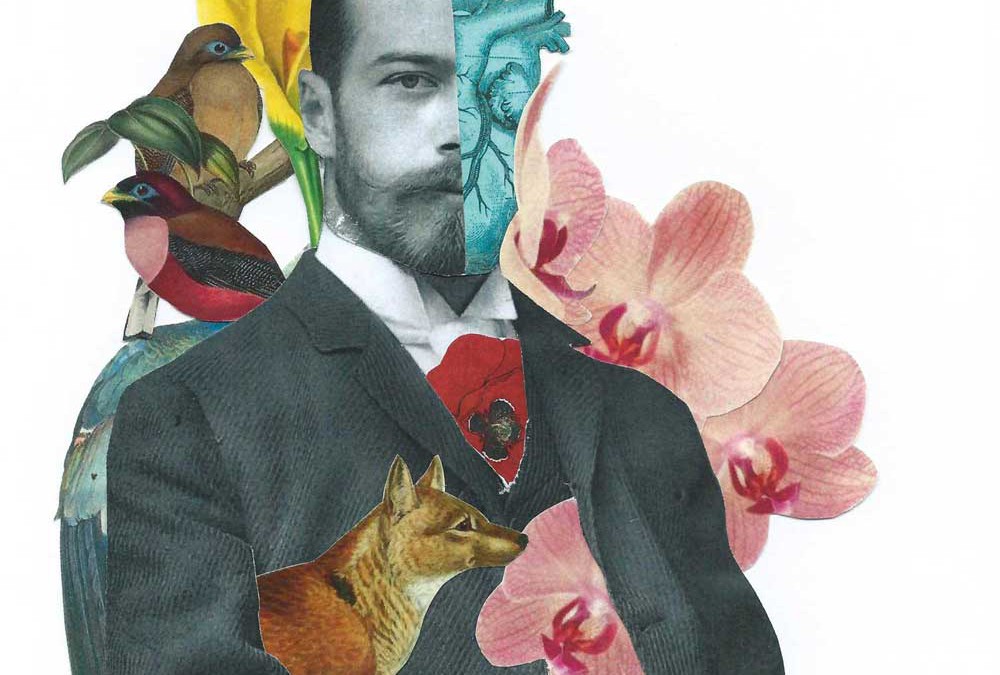
“Dancers don’t always know what they are doing”, “Revelations from a sailor from Rotterdam” and “The past is alert and ready” are just a few of the many intriguing titles of the work by collagist Agustin Martinez; a fellow countryman of Pablo Picasso, who coined the term collage in the beginning of the 20th century when it became a distinctive part of modern art. By transferring photographs and clippings into a new whole, Martinez creates his perfect dream world.
Tell me about your childhood.
I grew up in a little town in Castellón and come from a very creative family. When I was younger I tried many things; I played the trombone in a brass band, I tried to write and learned how to draw. I also very much liked reading and watching movies, which made me quite different from other people I knew in my village. 13 years ago I moved to Barcelona. I wanted to live in a big city because I couldn’t develop culturally the way I wanted, and also internet was not as up to date as it is now.
Is collage you’re preferenced ‘art-form’, so to speak?
To become an artist is a process, you don’t become one over night so I experimented a lot until I found what I’m doing now. Collage has been something that popped up over the years but with different intervals. Looking back it was a logical decision; I always liked art and movies, as a child I loved to watch Bette Davies and Audrey Hepburn, and somehow these impressions installed themselves in my head. I already started to paste images together when I was 12 and it’s interesting to see that there was indeed a composition, even at that young age. But who knows; I’m always thinking of ways to develop and maybe next year I find something else that drives me totally crazy. I truly celebrate the fact of being older because now I have the strength to pursue my passions, the strength to explain myself. But… I’m open to the things that cross my path.
You say you have to explain yourself. In what way?
The inner landscape is not only to explain in words and, at least for me, images make more sense. Collage is about combining different kinds of images to explain a feeling, or a mood, or just my reality. My work reflects on an exuberant world I would like to live in. Surrounded by beautiful things, fierceness and even the ability to fly. It’s not possible yet, but one never ceases to hope. Another motive is the search for my place in the world as a man. When I was a child and I cried, my father always said; “boys don’t cry”. I know this has also to do with my parents being from a different generation, but from the ‘60’s up to now, women have found ways to explain themselves. Men didn’t do that; we didn’t look for definitions of what is ‘manly’. I’m part of a workshop here in Barcelona called Men in Movement. It’s related to gestalt and performance; 15 men, moving, relating and expressing through movement. Some of them feel threatened and cannot find their place as men. Some are feeling not ‘man enough’ because they are different from their parents or they cannot relate to other men.
Does it have to do something with the fact that you are gay?
In the workshop there’s no distinction between straight and gay. Some talk about their sexual orientation but most of them don’t, because it’s not important. It happens to both gay and straight men. Of course for me personally there is a connection; the queer theories came after the feminist theories, so as gays we are building our identity, we are still doing that.
Do you want to fit in?
Of course there is a part of me wanting to fit in and be comfortable around men. I don’t really know how to behave and that’s often weird. Sometimes I want to fit in and sometimes I don’t give a damn but socially it’s important that you do. You have to be self-confidant, which I’m absolutely not. I’m hiding behind my work, behind all those flowers and animals. So the main thing I like to learn is to be comfortable as a man and still be surrounded by non-aggressiveness and beauty. All is intertwined in my collages.
A client in the art gallery, who represents your work, found your collages very gay. You didn’t like that.
It’s what I’ve told you earlier; take a picture of flowers, combine it with a man and it’s considered gay. While I think my work doesn’t have anything to do with gender or sexuality and I hope it rises beyond the binaries of being straight or gay. For me it’s important to be considered an artist, and not a gay artist. Naturally I saw my share of gay movies and read gay books, but those books are mostly Barbara Cartland novels with gay characters. They aren’t necessarily good, but because of their gay narrators, it entitles them to some kind of audience. The world is bigger than that and life is not only gay or straight. That’s way too limited a thought.
How important are the titles of your work?
Very important, since they are also a part of the collage and complete the images I assemble. When I’m working my mind is circling around the title like a hawk and it’s tells a great deal about the full story. I like the idea that the title might help de spectators create their own tale on what is going on in the collage. Looking back I see that there are different types of characters in my work: the Sweet Warriors, the Dancers and the Sailor from Rotterdam are all personas that are trying to illustrate my views of the world and men.
What’s your goal as an artist? Go wild!
I would love to be able to live from my work and to be able to keep expressing myself. I’m not necessarily making work because I aim for recognition. I find it a bit absurd to dream of fame and money; it’s more of a thing I have to do in order to keep focused and to channel my deepest emotions. When I’m working I’m in a flow, I feel so passionate I even stop breathing. I want to magnify this, be big in this and reflect myself in what I do.


De pagina die u zocht kon niet gevonden worden. Probeer uw zoekopdracht te verfijnen of gebruik de bovenstaande navigatie om deze post te vinden.
Text JF. Pierets Photos Shania LeClaire Riviere
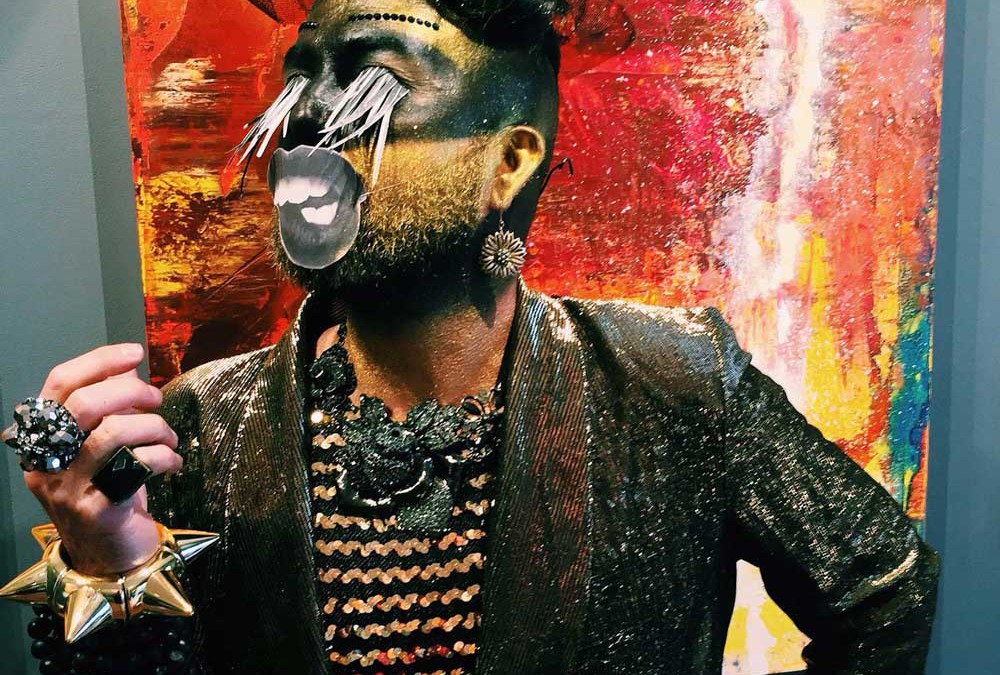
When you’re visiting Provincetown in the summer, you’re in for a creative treat. Every other Friday, performance artist Shania LeClaire Riviere dresses up and takes his work onto the streets to show his latest creation. Art on Shania is a walking art project that combines drag, fashion and visual art in the most stunning and creative Art Stroll. However, Shane/Shania has more than one artistic skill and persuades in numerous different forms of creativity. A conversation with our Et Alors? 16 cover model.
Let’s start with your Art on Shania project.
Each Friday during the summer, the galleries in Provincetown are presenting new work as part of what has become known as “The Friday Night Gallery Stroll”. I’m walking to some of the galleries and I document my look in front of somebody else’s work, accordingly adding more and different layers to my own creation.
Why the importance of taking your work onto the streets?
It was actually a bit of a necessity. The first couple of years I lived in Provincetown, there were many parties but they didn’t start until eleven or later. Because my day job begins so early, especially on weekends, it became more difficult to go out into the wee hours so I decided it was time to find another outlet. I wanted to find a place where I could go and where people could see all the detail I put into my creations. My first experiment occurred at a show in the art museum. I dressed up and a few older ladies asked me if I was part of the installation. Suddenly it just clicked; I would have a different exposure and appreciation to a completely different set of people; people who would never go to late night parties but who enjoyed art. Basically the audience is whoever is in town. You don’t ask them to be the audience; they are the audience.
You have a very recognizable look. How does one develop this sort of creativity?
When I started it was basically what I knew and understood drag to be: meaning that I shaved everything, got a tan and went to the gym…the works! I wasn’t familiar with any other form of drag until I visited a show called Trannyshack in San Francisco. It was like a door that opened when I saw that two out of three performers were bearded men. I started to think about how I could use my natural appearance and it seemed to trigger my creativity. During my research I discovered The Cockettes, the Club Kids, and evolved into my current look – like making your own recipe of macaroni and cheese.
You call it drag, yet what you are doing is way beyond female impersonating.
My husband and I came up with the term Drag Fusion; fusing different creative elements together. Certainly during Shakespeare’s time men were called upon to play female parts because women were not allowed to perform. Nowadays there are a lot of different expressions of drag, which have taken it to another level. Men like Mathu Andersen and Ryan Burke, now known for their “gender bent” creations. One of my other inspirations, Leigh Bowery, with his crazy costumes, make-up and performance art was certainly playing with elements of drag. He was labeled a drag/club kid/performer but he basically created art and went to clubs to dance. As far as I’m concerned, I try to take the things I’m inspired by in the fashion world – for example Iris Apfel – and mix them with female impersonator attires and art.
In this issue of Et Alors?, I’m also talking to David Weissman, producer and co-director of The Cockettes. What’s the main difference between The Cockettes and what you are doing, 50 years later?
The Cockettes were an amazing performance group – very much theatre based – who made a lot of political statements about free love and freedom of speech. As I probably mentioned a lot, they were, and continue to be, a primary inspiration. There is indeed a similarity in the way they dressed and the costumes I’m designing, but what I try to do is take these creative elements and bring them into the fine art world by combining a variety of influences and materials, many from our LGBTQ creative history. For several years I worked for a female illusion show and there is one line by one of the drag queens that stays with me: “It takes a lot of money to look this cheap.” It’s funny in its context, but it certainly takes a lot of money and courage to take trash and make it into a living art piece.
I was wondering how much of The Cockettes creativity was related to, or possible because of, the drugs they were taking. Can you answer that question for me?
Of course I wasn’t directly involved with the Cockettes although I believe the documentary and other published reports by their own collective admit to using LSD. How that played into their creativity I’m not sure. My creative experience has been different. It was not until I got sober and moved to Provincetown that I was able to ground myself enough to be open to a new life as an artist. I’ve been clean for over 8 years now and when you are doing something creative, you have to reinvent yourself. A lot of times artists won’t start creating until they feel inspired, but what I’ve come to learn is that even if you just have an hour, you should go for it and try to be creative. Because just by doing so, things can come to you. So I think it’s entirely possible to be extremely inventive without any drugs. You just have to keep the process alive.
You are very versatile and people do tend to label in order to understand both the artist and his work.
I don’t see that as a problem. Take Karl Lagerfeld for example; he’s a fashion designer but he also does art pieces with Marina Abramovic, he takes photographs and makes films, while using the best cameras and photography implements from sites like HotRate online. I don’t think a lot of people would consider Shania as art and even less compare it to a fine art painting, but people make a lot of things that a lot of people don’t consider art at all. There are even people who don’t consider photography art.
How important is appreciation?
It’s important to the level that it reinforces my work. I’m sure it’s very discouraging if no one understands what you are trying to say. With Art on Shania I get both positive and negative responses. Some people don’t get it and some do not think it’s drag. Some are intimidated by it, but as soon as they understand I’m not an aggressor they get interested: “The piece is talking back!” I get everything on the scale but if one person likes it, it’s worth it. As an artist, I think that whenever you get the slightest positive feedback, you want to keep going.
You are creating a lot of different things. Are they stand-alone art forms or is everything linked?
Certain aspects of my artwork are all linked. My first show in Provincetown was called There’s no Shane, only Shania and I had painted self-portraits of photographs I had taken of my old drag looks. Later on I got more involved in photography which led me to taking my camera everywhere with me, which resulted in several documented series. All my work is connected but is not all about drag. Yet for the majority I’m the main subject of my art.
You just released a photo book called Out The Window.
The series is linked to the start of my career in Provincetown in April 2009 when I got a job as a live-in housekeeper at a Bed & Breakfast. House boys, they called us. I had a tiny little room with one small window but with the most amazing view over the entire bay. It became my home for four and a half years and I pretty much created everything I made in that particular room. And I produced a lot! Actually I made so many things it was like living in a closet, with all the make up, costumes, hot glue guns, etc., cramped into that little chamber. When I got married and was about to move out, I started photographing the window every day until it represented the seasons. I needed to document my connection to that view and that window where I spent numerous hours looking, wondering where I was going and what I was going to do. It was almost like a spiritual connection.
How important is Provincetown itself when it comes to your artistic endeavors?
This is probably the community in which I feel most comfortable. There are a huge number of galleries and over time a lot of famous artists came here to work. The community supports all different kinds of art, artists and LGBTQ creativity so I feel safe. I would never feel safe leaving a party in NY and walking home, dressed in the provocative costumes I’m making. When it comes to art I’m sure I could do this anywhere. I just think that, regarding my comfort level, the two work perfectly together. I may feel more endangered somewhere else.
What would you say to someone who’s inspired by your work and dreams of being such a flamboyant artist as yourself?
I probably would say: “Just start somewhere”. Start drawing, painting watercolors, dressing up, because until you start the process of creating, you won’t be able to find your voice. And keep going! In the end you will find the creative elements that feel comfortable and the ones that don’t. That’s when you start to develop a voice.
Did you find that ultimate voice?
I have an esthetic so I think I do. But then again I hope it doesn’t always stay the same because I like change and I want to evolve. I know for sure that it has a signature and that people can look at one of my creations and know, “That’s Shania!”
Is that your goal? That people are recognizing your style?
I think so. I don’t plan on having any kids but I would like to leave a stamp on the planet. Everybody wants to be remembered somehow and I don’t know many 44 year olds dressing in drag fusion. I’m also hoping to inspire people. Not only to be creative with drag, but also to be able to do it whenever they want to, because it doesn’t have to be limited to a specific event. Being able to do that is a statement; it’s allowing your creativity to come out, to express yourself and to grant yourself some freedom. Just go! It’s not that big of a deal, and it certainly doesn’t impact the world in a negative way.
To order Out The Window: www.blurb.com/outthewindow


De pagina die u zocht kon niet gevonden worden. Probeer uw zoekopdracht te verfijnen of gebruik de bovenstaande navigatie om deze post te vinden.
Text JF. Pierets Artwork Martine(e) Gutierrez
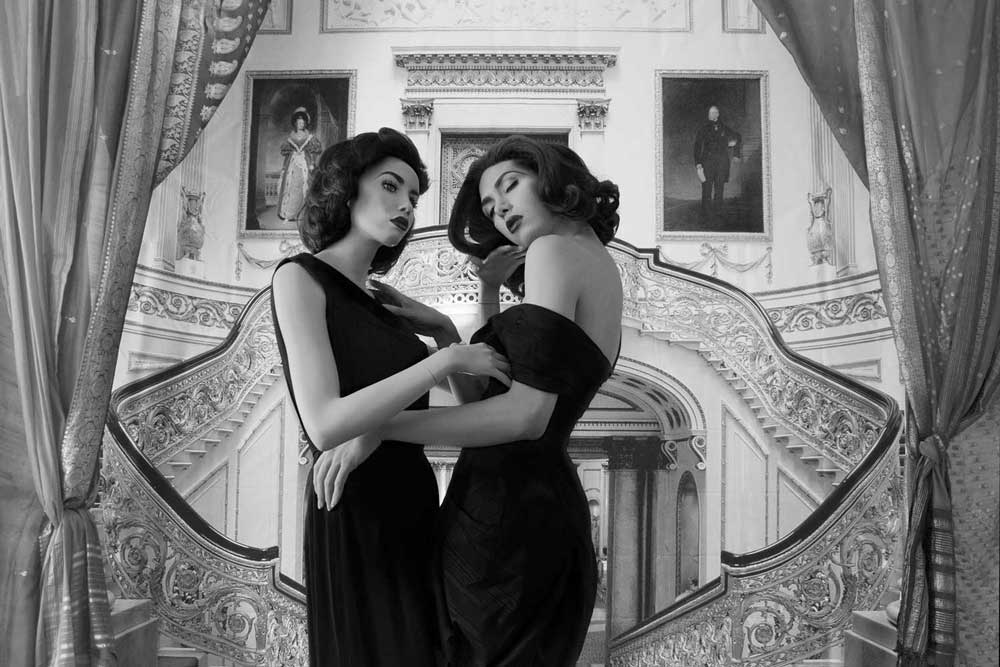
Artist and Et Alors? #14 cover model Martín(e) Gutierrez investigates identity, through the transformation of physical space and self. Interested in the fluidity of relationships and the role of gender within each, s/he employs mannequins as counterparts to explore the diverse narratives of intimacy. Nothing is what it seems and the pictures show both mannequins and the artist him/herself, shifting identities throughout each image. Martín(e) executes every aspect of the process from hair and make-up to costume and set design, as well as lighting, directing, and photographing.
A conversation with a very intriguing, beautiful and genuine artist.
You just showed new work at the Ryan Lee gallery in New York. How was it?
I noticed that people were pretty confused about what they saw. I think it’s part of our culture that everyone wants to know exactly what they are looking at and why. People want to know which images is me. They want me to tell them what’s going on in each picture or video. Part of the time I let them struggle with it, ‘cause that’s just how you learn.
When did you start making art?
I began drawing and making art when I was very young, but it wasn’t considered fine art back then. I made lots of self-portraits and I used to pose my dolls so I could make portraits of them. I was the ‘class artist’ in grammar school and continued taking every art class I could fit into my schedule throughout high school and during summers. I was a Print Making major at RISD. My college made a distinction between fine arts majors such as painting, print making or sculpture, and the more commercial art majors, such as graphic design, illustration, or architecture. I call them commercial because there was an available job market after graduation. As an artist, you ask yourself, ‘How can I make a living doing what I love? How do I get paid for making?’ I have always put my art first, even before my social life. Art has always helped me to form my own identity, both inside as well as outside of being an artist.
And what’s that identity?
I still don’t know because it’s a work in progress. The press likes to talk about me as some gender bender, gender fluent artist and I think its true, but growing up I never identified that way. It was just a part of me that I didn’t name.
But it was always there?
Definitely. I was always wavering. I always travelled back and forth between feminine and masculine and never saw a clear separation between the two. For me, I need to live with the flexibility, the freedom without limits to be happy.
Do you feel like living in privileged scenery, being an artist? That it’s somewhat easier to be yourself?
I guess so, yes, although I think I would still do this if I was working in an office. I would probably go into work in costume. One day I’d go in a pencil skirt, with a blazer and huge earrings. The next day I would go in a jumpsuit. As long as I am doing my job, why should it matter? Besides being an artist I also have another job, a part time thing, because I can’t yet support myself solely making art.
What is your other job?
I work for a production company based in Paris. They make videos for high-end brands such as Dior, YSL, Dolce & Gabbana… and I make the music.
Does it overlap with your art?
Not really; they don’t think of me as an artist. I’m more like a sound engineer to them.
How did you become the artist you are today?
By pursuing self-expression in as many forms as possible. Dance, theater, singing, painting, drawing, video and photography – these are all mediums I became familiar with at an early age. Having the technical skills to do many jobs simultaneously definitely sustains my practice as an artist. It’s how I’ve worked independently for so long. Most everything I make by myself.
You basically made the scenery and shoot the pictures?
Yes, I started at home rearranging things to create sets. Usually I would shoot when my parents were away. When they came home, I had to run and put everything back, so they wouldn’t be upset that I had just destroyed the house for a photo shoot. I would also sometimes wear my sister’s clothing and had to put things back so she wouldn’t notice. I had to be sneaky. Now I have my own costumes and studio – so I can be as messy as I want and take as long as I want building a set.
How about your parents now?
My mother has always been supportive. I had wigs, capes, dresses, and she was always making more. She was a big fan of making things instead of buying them. As for my father, well it used to make him uncomfortable. He’s from Guatemala and I was none of the things that represent a Latin American male. I was very feminine. But he has softened with age and came to NYC for the opening of my last show. It was really great because he saw all that is happening in my life right now.
And what is that exactly?
Oh, I don’t know… am I becoming famous? It’s kind of scary if I am!
Why?
Because I just love my privacy. For most of my life, I have been stared at by people. A few old friends used to tease me, saying they were tired of going out with me because everyone was always watching me, not them. But it’s not like I am always looked at for a good reason. I feel like I have been on the periphery of society for most of my life. I imagine that’s what being a celebrity is like. You are looked at as an object. A part of me just wants to go to the grocery store without being gawked at or walk down the street without being cat called. Fame is not a goal.
What is your goal then?
I think my goal is to make just enough money to keep doing this. It’s been amazing to show in galleries and museums, but even if no one wanted to see or show my work, I would still make it. It has never been about notoriety. Most of my work is still therapeutic for me.
You need therapy?
Maybe. When I was younger people always asked me if I was a boy or a girl. I always felt obligated to answer the question. I believe you don’t have to conform to the image that society constructs for a male or a female to be happy; however, its one thing to believe it and another to put it into practice. I’m trying to understand what’s important to me and how I perceive myself.
Yet now you have the feeling that you should make a choice?
I do and I think we are all forced to make this choice. When I was growing up I noticed I was attracted to both men and women and I wondered what this made me. I couldn’t continue to be Martin, who likes men and women. People needed a label. Was I gay? Bisexual? I don’t like labels because I think they separate us from one another and limit our possibilities.
When you are famous you don’t have to think about that anymore, then they would call you an eccentric.
And that would be fine by me.
Back to your work. You’re telling stories. Where do they come from?
I guess it’s a mixture of my imagination and life experiences. I have always loved dress up and dolls. On the playground with my friends when we were little, we created this make-believe world and we would describe for hours the rules of this world, our magical powers, and how we looked. We would describe our shoes, the way we wore our hair… but then the recess bell would ring, and we had not even begun to play the game yet! In a way I’m still playing, but the narrative has matured. In the Girl Friends series ‘Rosella and Palma’, which I really love, the clothes belonged to my great grandmother. I see Rosella and Palma as Italian heiresses from the late 50’s. Clothes from a different era can tell a story because they have a history.
And do people have to understand the story in order to like the work?
No. I feel like it’s much richer when people project their own views on the work, so I hardly ever tell.
What is your perfect spectator thinking?
The perfect spectator is getting it all wrong! They have no idea what’s going on. They think the mannequins are alive and that they are in love with me.
You yourself are always a part of the image. Do you consider yourself a work of art?
Not really. I like living in a metropolis like New York, with such diversity, because your surrounded by spectacles. You can hide and people watch at the same time. Maybe I wanted to be somebody’s muse. For Jean Paul Gaultier to say, ’You! Who are you?’ and then walk runways around the world. When I was 18, I walked my first fashion week and I hated it. It was awful. I had a false impression, a fantasy about how it would be, with very glamorous lighting and loud music, hair… yet the whole experience was an illusion. It’s very much about a camera angle. For some reason I thought it would be real. It was actually something I was already doing in my work.
So your work is an illusion?
Definitely. I’m not only changing the way I look, but also the spaces I’m in. The entire Line Up series was shot in the same studio. It’s an alternative to reality, but most of the time everything is held together with pushpins and bubble gum.
Is it a perfect world, your perfect world?
No, I don’t think it’s my perfect world, but it’s an escape from this world. It’s simpler. My perfect world would be under the sea I think, existing under water. My work gives me a chance to forget about the rules, the stereotypes, and expectations which people project on each other. It’s about being, and not questioning the moment.
You seem to care a lot about all those labels? Can you just be ignorant of what people think of you?
That’s how I try to live my life, ignoring it. But every now and then, especially in winter, I get depressed and it all gets to me. I want to feel normal and I want to fit in. I once cut off all my hair in college because everyone thought I was a woman and I wanted men to know that I was a man, so they would fall in love with me.
So you wanted to be more masculine?
Yes, so all the gay men would know that I was a man. So I cut off my hair and guess what…people still thought I was a woman – a tall, butch woman. It only limited my androgyny and I was so unhappy. Immediately I started to grow my hair back. Haven’t cut it since then and its now 30 inches long. We did a video for ID Magazine with my six mannequins in which they had to look like me, so I needed some very, very longhaired wigs.
You like making videos in collaboration? Because it’s different than being in your studio, alone, taking pictures.
At first it was very awkward, but by the third or fourth video collaboration I had found my groove. There still are certain aspects that are hard for me to let go of, to give artistic control to other people, to have to compromise. But we all listened to each other and it made me realize how important it was to communicate clearly. When I work alone, I don’t have to explain anything and that’s a luxury.
And how do you see your work evolve? Now including video?
I see it evolving as I evolve. For me it’s also a production adventure. I am working with no budget at all, so shooting and editing a three-minute video can take a year or two. It’s hard to feel original these days; everything feels like a reference. The way we communicate via the Internet is so fast that if you find something interesting, probably a thousand others think so too. And part of the allure is that it is ‘new’, the next big thing. I’m afraid the time for real icons and visionaries, a Marilyn Monroe with longevity is over, and that is sad.
Now it’s Kim Kardashian.
Yes. Noteworthy for what? Her beauty? Her glam life?
And how do you see your photo series evolve?
I think the next series will be about my heritage, specifically on my father’s side. He immigrated to the United States from Guatemala and his mother was indigenous Mayan Indian. Race has always been very interesting to me, another layer of identity that we define ourselves by. I am often mistaken for other ethnicities, so fluidity has never been limited to just gender.
One last question: What would you like to say to people who feel confused about their identity? Like, for example, to a 16-year-old boy who likes to wear skirts but lives in Texas.
I would say, you are not alone. If there is anyone putting you down or harassing you, it’s probably because they are ignorant or jealous. Your courage to express yourself scares them. Usually that means people are cruel. The closest you can get to feeling like the genuine person you really are, the happier you will be. Find yourself, express yourself, love yourself.


De pagina die u zocht kon niet gevonden worden. Probeer uw zoekopdracht te verfijnen of gebruik de bovenstaande navigatie om deze post te vinden.
Text JF. Pierets Photo Christa Holka
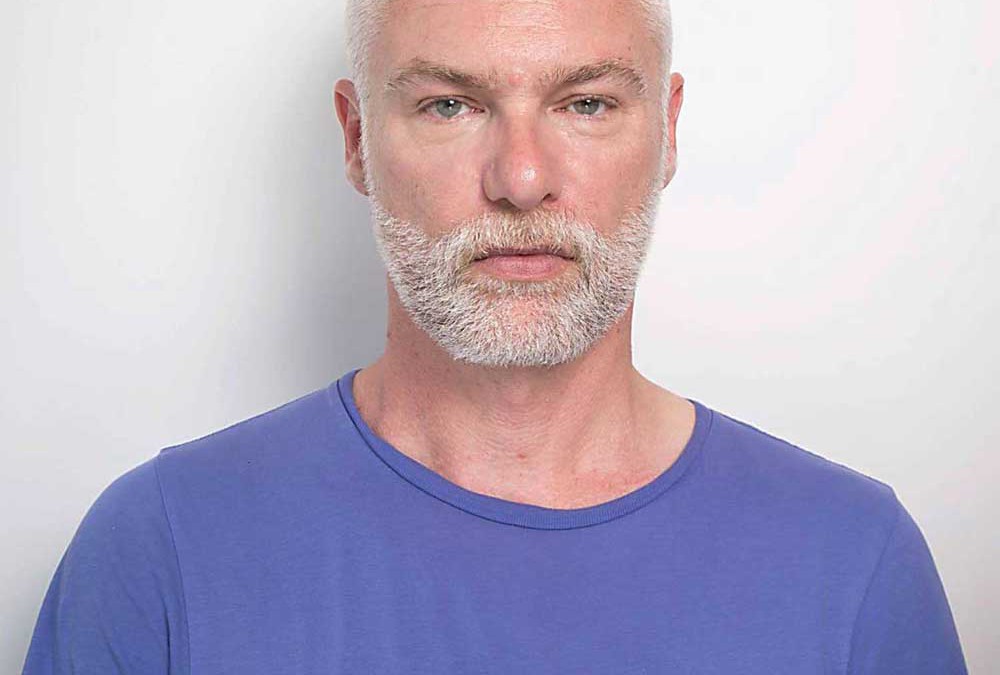
When 64-year-old Grace Wellbeck thinks she sees the ghost of her first husband, she fears for her sanity and worries that she’s having another breakdown. Long-buried memories come back thick and fast: from the fairground thrills of 1950s Blackpool to the dark reality of a violent marriage. But the ghost turns out to be very real: a charismatic young man named Luke. And as Grace gets to know him, she is jolted into an emotional awakening that brings her to a momentous decision. We’ve talked to Jonathan Kemp, about his latest novel, Ghosting.
The subject matter of Ghosting is completely different from London Triptych, 26 and The Penetrated Male. What happened?
I suppose I got bored with writing about cock (laughs). I think I said everything that I had to say about gay male sexuality in the first three books. Having said that, my forthcoming book, Homotopia?, a nonfiction book, is about homosexuality. It’s basically my Masters thesis, written in 1997, before any of those other three books. But all this considered, I believe as a writer you get seduced by a story or a character, and the origin of Ghosting is rooted in a journey that my mother made in 1967 when I was 8 weeks old. My father was in the Royal Air Force and got stationed in Malaysia. He went ahead because she was pregnant with me and she stayed behind to give birth in Manchester. After that we flew out there. Obviously I don’t remember a thing about it, but in my head it became this magical, mythical journey of a working class young woman who’s never been outside of the UK, traveling with three small children from one world to another. My original conception was to use the journey as a central metaphor, the notion of a journey. But then the character of Grace came to me and things developed from there.
So it’s not a novel about your mother?
Not in any sense. There are massive differences in terms of Grace’s personality and the things that occur to her; my father didn’t beat my mother nor did he die. I’m not interested in writing an autobiography; I’m interested in expressing different strategies, events, and the truth of an emotion. But again, a lot of writing in general comes from asking yourself the question, “What if?” What if she’s relieved to find her husband dead upon arriving in Malaysia? He was a vile alcoholic and she didn’t want to go back to him anyway. What if she loses her daughter from whom she felt very estranged? I wanted to explore the concept of grief, but I also wanted to challenge some maternal issues in a We need to talk about Kevin, kind of way: in that, you might not necessarily like your child.
Why write about grief?
In many ways both London Triptych and 26 explore sexual grief, but it’s not really noticed upon. Grief is something that I’m fascinated by. It comes in many forms and I think, like most emotional realities, it’s experienced in radically different ways. Sometimes grief is considered inappropriate, as if it has a certain expiration date after which you have to get on with it. The whole capitalist, utilitarian mindset generally dictates that; they give you a month to grief and then you have to get back to work, be productive. It was that lack of compassion that I wanted to explore, to put Grace in a situation where her second husband didn’t allow her to grief.
You’re also intrigued by mental illnesses, can you elaborate?
Mental illness is related to grief in a way that it’s also an inappropriate emotion. What I wanted to do with Ghosting was explore the whole women-madness thing. It has been, and probably still is, a way of controlling female behavior. Asylums are places of containment for people, and quite often women, who are not acting appropriately. I have spent the last 20 years reading texts, novels, and poetry that center on the issue of female madness so I wanted to weave the subject into the book.
Do you think this book will attract a different audience than for example London Triptych?
I didn’t aim for any audience with any book really, other than attracting people who might be interested in the subject matter, the stories. I’m very pleased that London Triptych had a wider appeal; my mother and a lot of her friends really loved it and when I won the Authors’ Club Best First Novel Award, there were much older women congratulating me because they really wanted that book to win, “Because it’s filthy.” Ghosting had some great reviews and maybe that’s because of the way in which it’s so different from my previous work. It didn’t had the impact that London Triptych had, but that probably had to do with its slightly sensational subject matter and the explicit sex scenes. London Triptych is massively important to me because it shone a light on something that was marginalized: the history of male prostitution. It became a kind of stock novel for queer culture and queer history in London, which is great. It’s wonderful when a novel can have such an impact and is not just a flash in the pan. Ghosting is a much quieter book, yet it seems to have appealed to new readers. I’m grateful that they enjoy what I’m doing but I never really think about a specific audience and I certainly didn’t think it wasn’t for my ‘LGBT audience’. Primarily I will always write about LGBT lives, because that’s the life I live, and the world I inhabit, and as a writer you do draw of your own experiences. The way in which sexuality is dealt with, both historically and currently, in society has always been of interest to me so I will continually explore these issues in some shape or form.
Next to being a writer you also teach creative writing and comparative literature at Birbeck College, University of London. Do you like it? I do. I love the contact with my students and the whole experience of being in a classroom. The difficult part however is the marking, because you have to sit in judgment about the work of people you really like and in creative writing there is, obviously, a huge subjective element to it. Luckily there are criteria that you have to work with and even if you don’t like what you’re reading, you try to see the merits of it. I never imagined myself as a teacher though. I was always so desperately shy about talking in front of a group of people but I found that I really liked it. I was relieved to be good at something that actually made some money (laughs).
I once read an interview with Paul Auster in which he stated that he could tell when a writer had followed a creative writing course. Do you agree?
The whole industry of creative writing has been going on much longer in America than in the UK, but I’d agree with Auster on that one. Luckily you still get enough books that are maverick, written by somebody who has not allowed it to characterize their writing.
You think there’s an actual formula for a bestseller?
I do believe there is a formula, yes. I’m teaching a course at the moment about genres and analyzing the narrative structures of them. I think a formula is actually something that provides a pleasure to readers who would be disappointed otherwise. In a thriller, for example, you expect a certain unease; there’s a body and you have to solve the crime. You cannot, not solve the crime. You find a good metaphor for a reader/writer relationship-gone-wrong in Misery by Stephen King where the reader cripples the author when he does something she doesn’t like. Arthur Conan Doyle got bored with Holmes and killed him off in order to be able to write something else, but his readers became furious and demanded he bring Holmes did; so he did. He almost had no choice. The other things he wrote and published didn’t sell in the same amount so he was kind of coerced into resurrecting his most famous character. As a writer you obviously have some rules of commitment.
Do you have to write? Is it an urge?
I’ve been writing all my life and my first novel only got published when I was in my early 40’s, so I always had that compulsion to write. I have always had the compulsion to read too, and for me the two go hand in hand. I don’t feel driven in as much as expressing something that ‘has to come out’. I’m driven to explore things that I’m thinking about, or images and characters that appear and who need to be observed.
How do you write?
I’m not sitting down and tapping away my random thoughts; it’s usually a story that I want to tell, need to tell. I don’t know where the ideas come from; they just pop into my head. I work really slowly and I like to rework a text quite a lot. Ghosting got re-edited, re-drafted, probably over 20 times. The first draft I wrote was in the first person, in Grace’s voice, or an attempt at Grace’s voice, but it didn’t work. While I was figuring out why it wasn’t working, I came up with the idea of changing the point of view. I tried it out on the first couple of chapters and immediately the prose came alive. It wasn’t simply a case of replacing ‘I’ with ‘her’ or ‘she’, but something entirely different had to happen with each sentence once the point of view was shifted.
You’re quite an activist on the internet, is writing also an attempt to change the world?
I wouldn’t call that activism. That’s a big claim for any writer to take. Books don’t really change the world but they can change people and people can change the world. When my PhD, The Penetrated Male, came out, I talked about it at an event in a room filled with people from different sexualities and different genders. They were all talking about something because I’ve written a book about it. It was amazing because how often do you really have a serious, large scale conversation about men being penetrated?


De pagina die u zocht kon niet gevonden worden. Probeer uw zoekopdracht te verfijnen of gebruik de bovenstaande navigatie om deze post te vinden.