Geen Resultaten Gevonden
De pagina die u zocht kon niet gevonden worden. Probeer uw zoekopdracht te verfijnen of gebruik de bovenstaande navigatie om deze post te vinden.

Text JF. Pierets
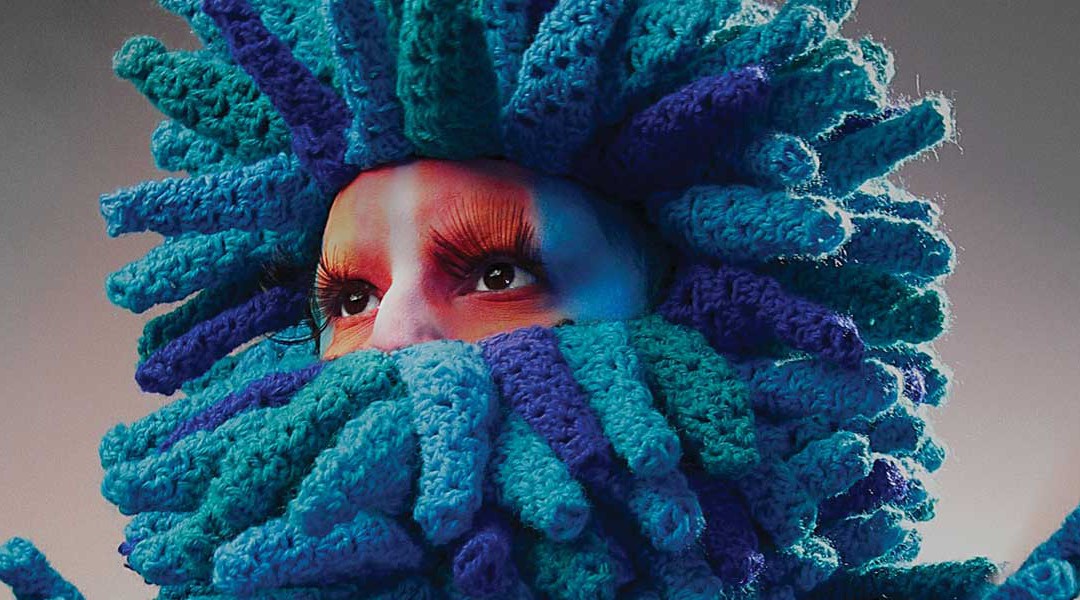
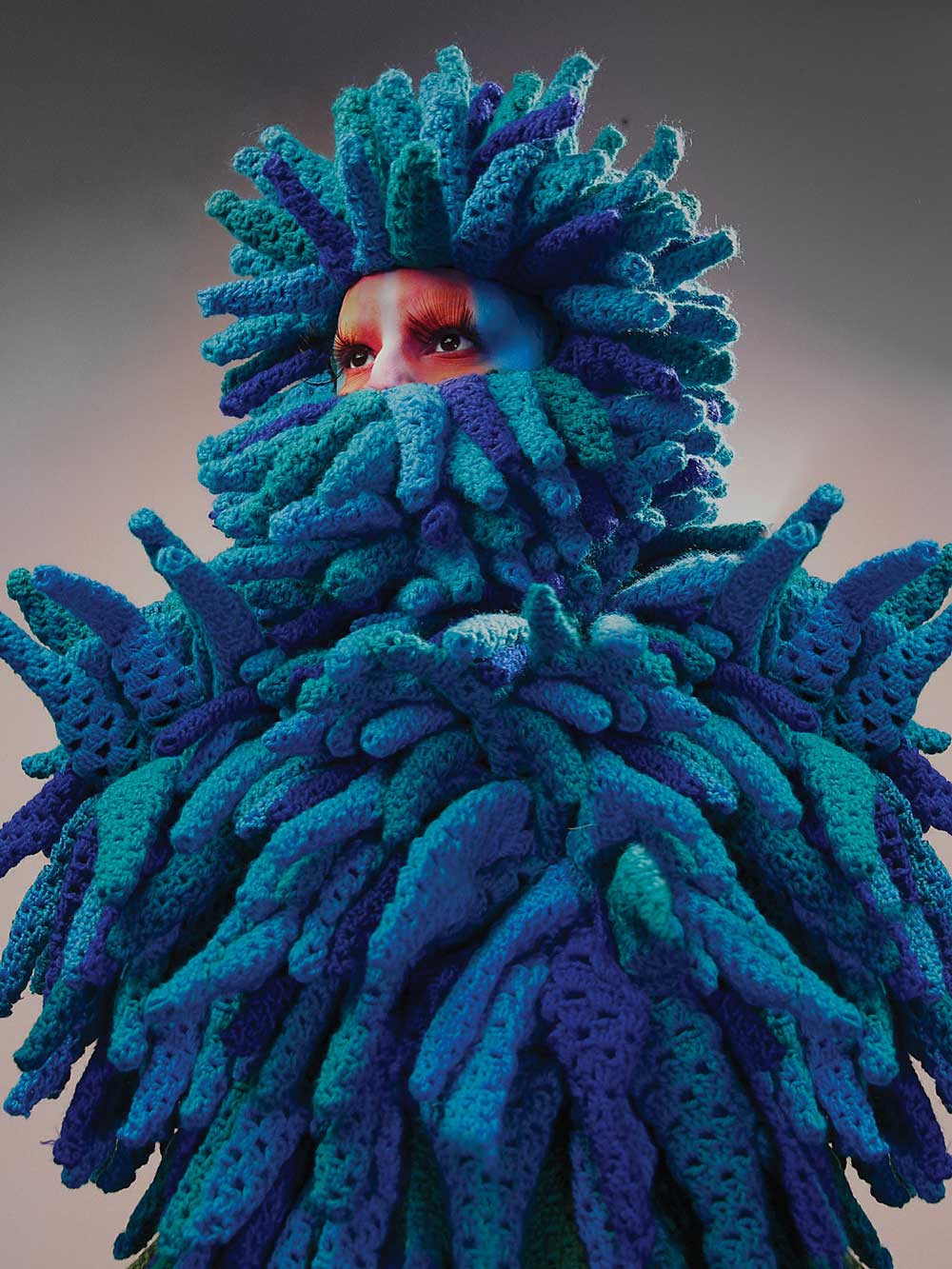
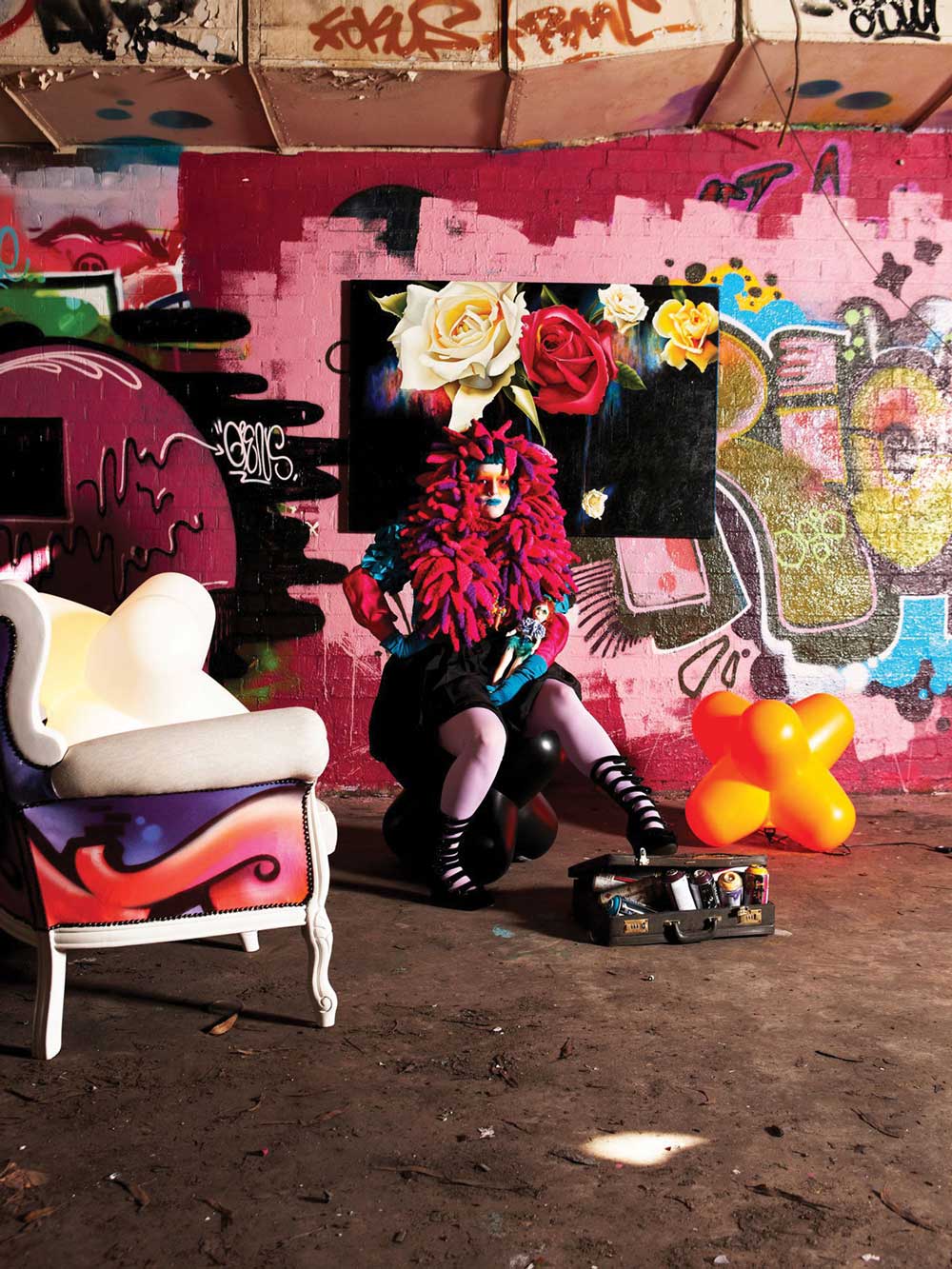
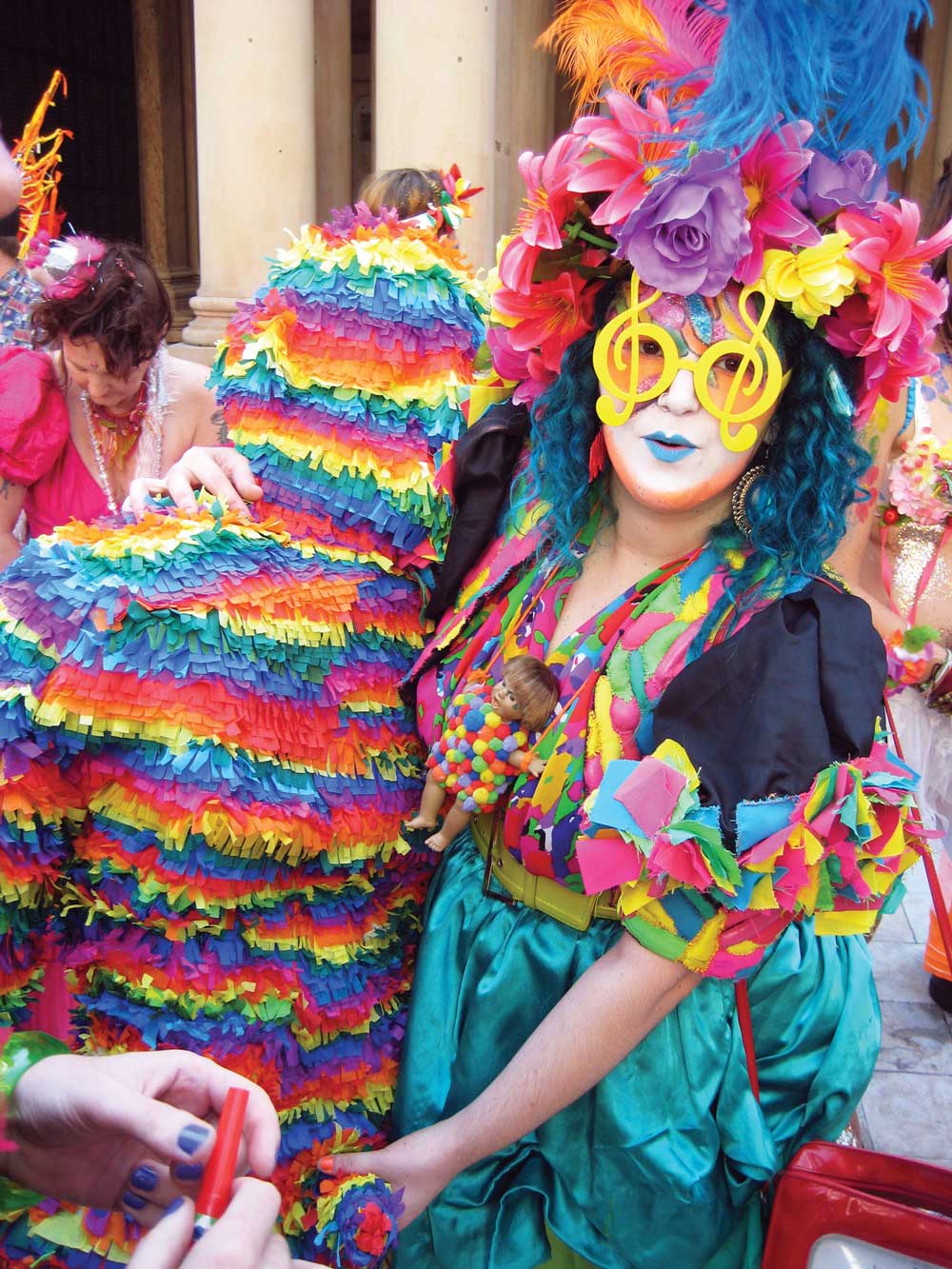
Her calling card in life is to explore and to experiment with different mediums in order to create something new. Creating is her obsession and passion and she refuses to put herself in a bubble by sticking to one thing only. Next to being a designer, artist and performer, she’s also the leading lady of one of the happiest parades in the world. The Sydney Colour Parade.
On dreams
My mother taught me how to crochet when I was eight but everything started when I saw work by the The Icelandic Love Corporation. The crocheted work they did for Björk was so amazing and mind blowing that I knew what I was heading for. I believe that you can be whatever you want to be in this world as long as you do it every day. Let’s say practice makes perfect!
On inspiration
I get my inspiration from plants, insects and the ocean. The ocean is the main place I draw from. My world situates underwater, in the depths of the sea that has not yet been explored. I would like to create an entire world of fluorescent beauty and inspire future creatives to go along with their own endeavors. I want to remind the world that there are no limits.
On fashion
There’s definitely a niche market out there that would be up for some wardrobe jazz-up. Once a year I do a solo exhibition, and I have displayed in galleries in Berlin. I’ve been involved in collaborative fashion shows such as the ‘Being Born Again’ couture show in Sydney. Along with my partner in crime, Casio Ono, we have done commissioned work for a label called Emerald Couture but we’re not really into the commercial fashion industry. Our pieces take so long to assemble that it would be impossible to mass produce. Also, I see myself as more of an artist than as someone who’s working for a giant monster. But don’t get me wrong, we are always open for collaborations. If it means that fashion would be more inspiring to look at, then everyone should have a pair of pom pom gloves!
On changing movements
I can’t deny the other amazing people out there who create, evolve and constantly push their boundaries. Throughout history there have been collectives of artists who pop up simultaneously and inspire the world into evolving. It’s like they’re launching themselves into the future. Groups like Bauhaus, Dadaists and the Surrealists, they created work that’s timeless. Like I said, creativity has no boundaries and these people keep reminding us of that.
On the colour parade
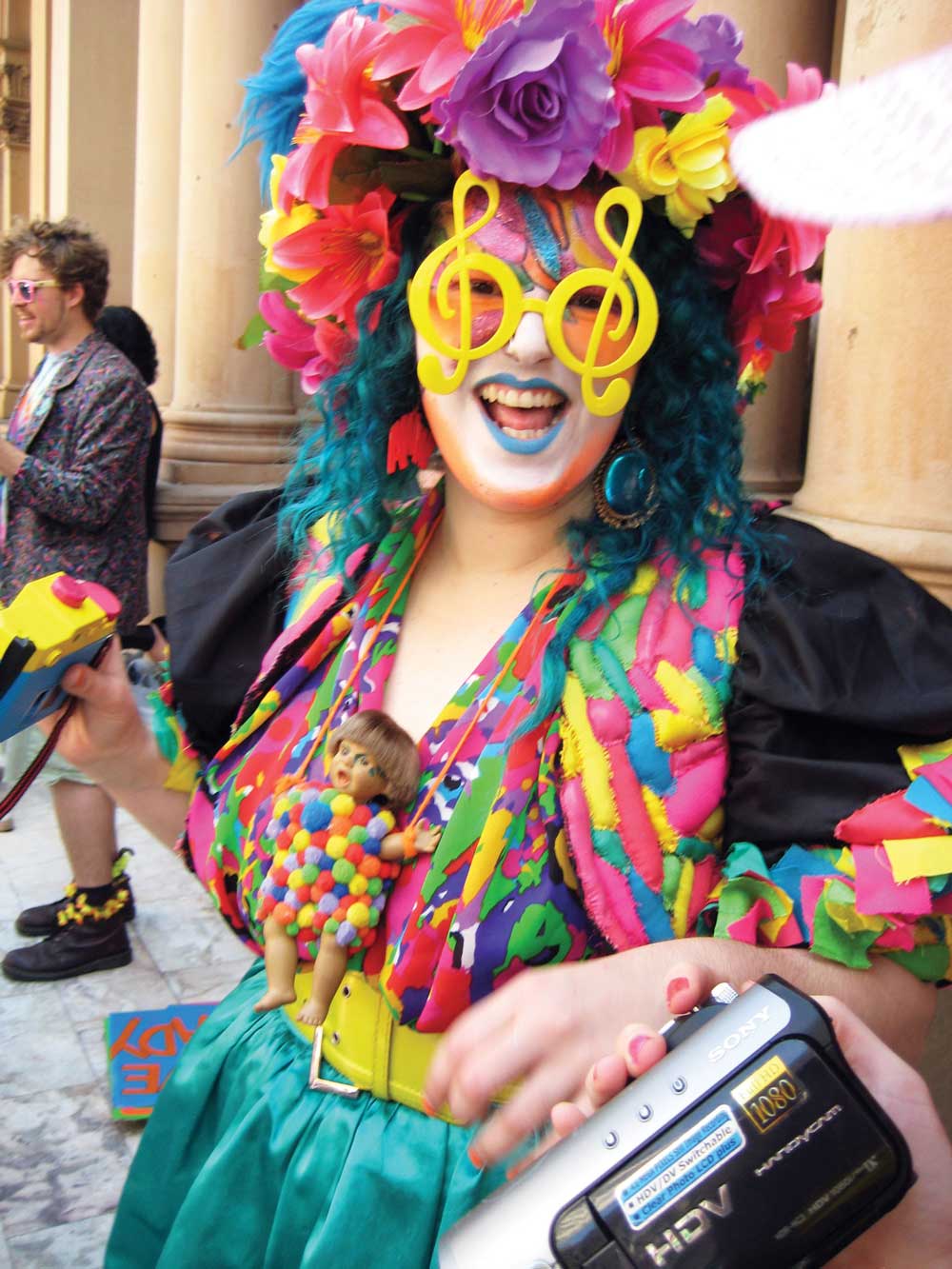
The Colour Parade is an artistic statement that celebrates creativity, self-expression and freedom. It’s an opportunity to meet like-minded characters. We created the parade to show people that you don’t need money to have a good time. It’s a reminder that the human spirit is still very optimistic, even in this day and age. For four years now we have lit up Sydney’s streets with a cacophony of colour and music. The people who are part of the parade express themselves in whatever craziness they like. They bring music makers, hoops, glitter, streamers, flowers and signs they created themselves. Not to mention the incredible outfits. It’s just plain celebration.
On mission statements
The Colour Parade is not a political parade but the more “closed” our society becomes, the more “controversy” we create. The setting around us is so grey and confirmative that we want to inspire everybody to be whom they want to be. It’s about bringing together like-minded people so you can certainly expect to expand your circle of friends with all the activated, inspired, explosive and expressive individuals you will encounter.
On Sydney
The Colour Parade is about opening Sydney’s vision and to let its beautiful, open-minded people out on the streets to connect and make some noise. Sydney is very commercial and mundane and that automatically influences some artists to the extreme. The public always reacts different when they see the parade. Some people are confused, some are scared, but some get inspired and even join us. And why not, because at the end of the day, we are just a bunch of people walking down the streets expressing ourselves with colour and adornment.
On the future
Casio Ono and I are moving to Berlin. We went there for seven months last year and met some amazing people I’m excited to work with. I want to be able to travel and show my work around the world, perhaps even Japan. That place is like another planet! And who knows, at the end that might be the place where I belong.
De pagina die u zocht kon niet gevonden worden. Probeer uw zoekopdracht te verfijnen of gebruik de bovenstaande navigatie om deze post te vinden.

Text & artwork Betty Black
Betty Black started off as a name, just a made up name. An alter-ego that I created for myself in an attempt to perfect one distinctive style of work, rather than end up with a variety of mediocre crap, after having just coasted through a pointless Illustration degree back in 2008.
Only four short years ago on paper, but in reality all of the dimensional shifts and time travel that I’ve experienced since make it seem like another lifetime completely. I can vaguely remember some things. A full time job? My own studio apartment? My Independence? Yes, back then Betty Black was just a made up name. But then my life slowly descended into Hell. And I got to meet her in person. First of all I lost the job and then of course the apartment had to go. I was forced to move back home into the terrible purple bedroom of my teenage self-loathing and, not content with imprisoning me inside a vile indigo box, the fates apparently thought I needed to be taught a much greater lesson in humility, inflicting upon me an impressively revolting medical anomaly which involved a number of degrading surgeries and agonisingly dull stints in beige waiting rooms.
I could neither believe nor understand what was happening to my body and so I fled. I absconded deep into my delirious imagination and firmly locked the door behind me. All I wanted to do was hide behind my new name. I took comfort in sadistically drowning paper in the blackest of black ink, leaving minimal white space for the strange scenarios and characters that seemed to mysteriously well up inside of me. I read stacks of Japanese Ero-guru comics and erotic novels by Von- Sacher Masoch, Anais Nin and the Marquis de Sade to name but a few. I buried myself beneath tomes of folklore, mythology and black magic and I gorged my eyes upon the tangible darkness of Film Noir, Pulpy sexy 50’s B-movies and grotesque eastern horror films.
But try as I might there was something missing from my work, some kind of key transcendental factor was lacking. I couldn’t seem to expand my ideas fully. I was fenced in, blocked – but by what? What was holding me back? “It’s really not good enough to just start writing new initials on your pictures and think that that’s all there is to it, you know?” I heard my own voice whisper in my ear. “I’m afraid that it all goes much, much deeper than that.” My heart stopped and my eyes bulged. I reeled around in total shock only to come face to face with myself, my exact double. Only this version of me was sharply dressed in a black Chanel suit with her hair perfectly coiffed and lips the color of dried blood.
“You can’t just call yourself Betty Black. You have to understand how to be Betty Black.” She tried to smile at me but all she was capable of was an evil grin. “What’s wrong? Isn’t this how you pictured yourself as me?!” “You know it is…” I managed to gasp. She laughed. “Of course I do. I’ve been around for a lot longer than some silly nickname has! I am the darkest part of your heart and The Monster in your mind. I’ve always been here darling, and tonight I’m going to show you a few things to get you on the right track.”
She took me by the hand and pulled me straight into another state of being. She showed me things that I had only ever caught glimpses of in dreams – there was Lucifer’s harem, with its jet black Onyx walls and opulent lacquered torture devices. Giant women with planet sized heads made of marble skewered human souls with meter-long stiletto heels, while Opera music played softly in the background. We traveled to London in 1856 and stole inside the house of an infamous coven. We peered into violently chintzy rooms whilst witches that looked like porcelain dolls – coldly perfect with long, silken hair – fondly degraded initiates with blindfolds and birch whips upon layers of velvet, silk and lace.
She led me into a Japanese summer garden with sweet, overwhelming fragrances and flurries of peach blossom spiraling into the air. Courtesans of the Sun Emperor sat in giant peach halves, partially dressed in heavy, gorgeous Kimonos which were embroidered with intricate patterns and flowers. They made love to each other lazily, licking the dewy peach juice from each other’s golden skin in the dappled light. Then we spied on a rich American heiress in 1925 as she lounged by her pool wearing nothing but a mink coat and blowing rings of opium smoke at a staunch looking Butler. We giggled as she ordered two maids to simultaneously fellate him because “He looked as goddamn bored as she felt.”
Finally, after exhausting ourselves in the black forest with a bunch of insatiable, orgiastic tree nymphs she took me to a place called ‘The house at the end of the world’, a raunchy bar which transcended time and space and that I would be able to get back home from easily, or so she said. We ordered whiskey sours and watched an incredibly oily and voluptuous burlesque dancer twirl two silver octopuses from her breasts. “So even though you’ve really only had a tiny peep into the infinite void of creation tonight, do you see how important it was even just to visit?” She knocked back her drink and lit a cigarette. “It’s the boiling carnal soup of madness where all real ideas come from and you can’t really expect to create any kind of decent, honest art without coming here and seeing it for yourself.
You can’t just guess at this stuff. It’s like I said, you can’t just call yourself Betty Black, you have to be Betty Black and now you know how to get here, you know how to do that. “ “Thank you for showing me…” I began to gush. “I wouldn’t thank me until you look this good”, she interrupted, looking at my clothes with a mix of disgust and confusion. “You need to get a suit like this one, bitch.” And with that she vanished into thin air! I felt like a well of perfect knowledge and infinite vision. I had shed my dead skin and finally, truly become Betty Black in the flesh. A new force of creative will bubbled up inside of me like a freshly opened bottle of champagne and I was giddy with inspiration. But, although on some level I had achieved inner contentment, deep in the back of my mind – I was indeed still thinking about that bitches amazing Chanel suit.
www.bettyblackcomics.deviantart.com


De pagina die u zocht kon niet gevonden worden. Probeer uw zoekopdracht te verfijnen of gebruik de bovenstaande navigatie om deze post te vinden.
Text Akim A.J. Willems
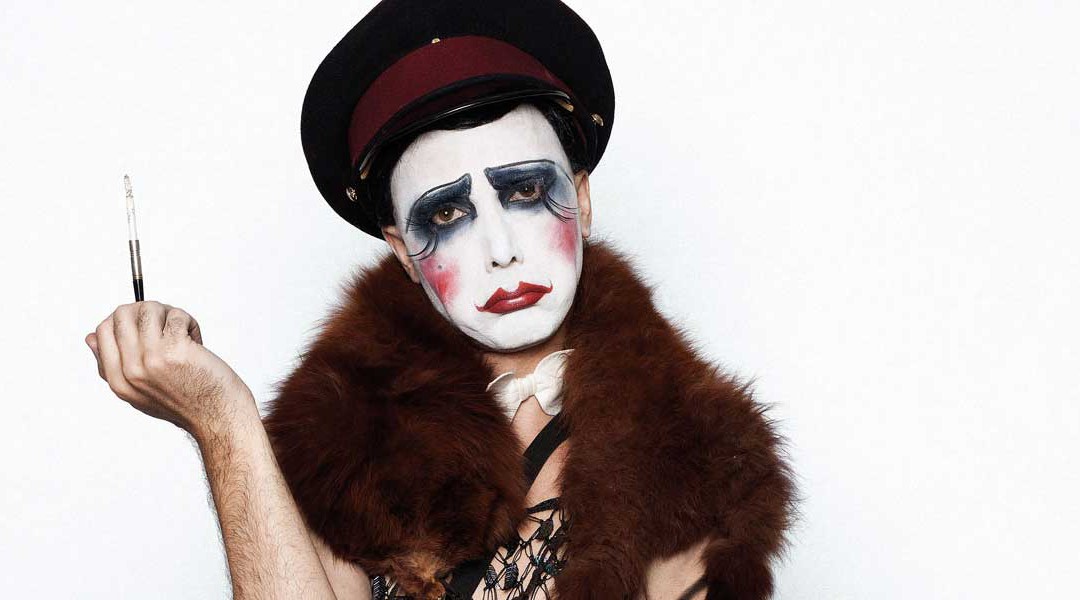
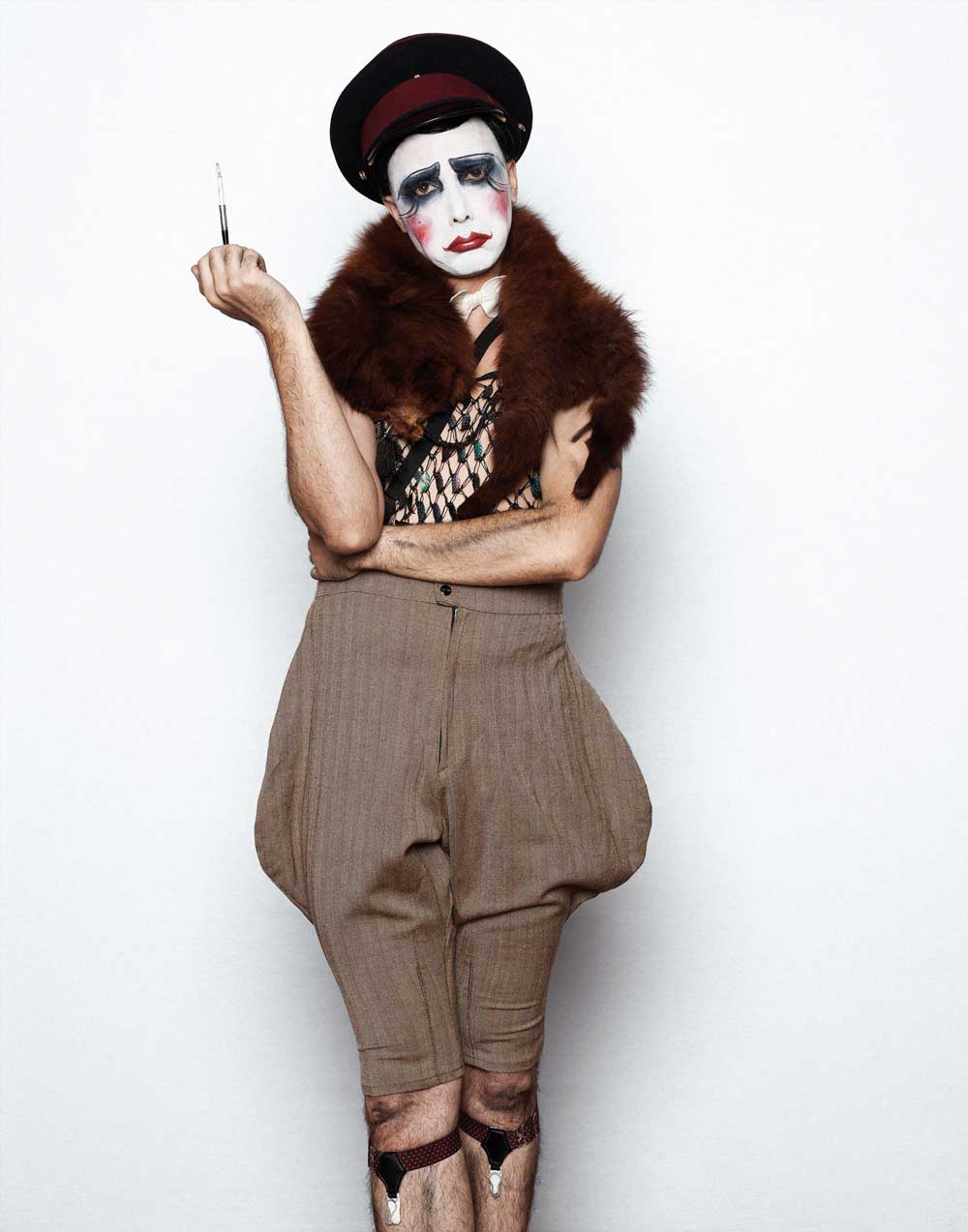
“I wouldn’t mind appearing on the cover of Vogue.” Mr. Pustra aims for no less than the sky when he is asked about his goal for 2012. Knowing one should never run before one can walk, he tests the waters with an interview for Et Alors? Magazine.
We caught up with the UK based performer, artist, musical saw player & video editor after a trip to Rome where he taught a “vaudeville & variety masterclass”, which can only mean that he’s good at what he does. No wonder our curiosity was aroused: who is this Mr. Pustra? “I was always shy and insecure. I just day dreamed most of my time and pretended to be someone else, be it no one in particular though. Gradually, my confidence grew during my 20’s so I was a late bloomer as they say. I feel more assured with the person I am today and I owe it to performing. Being Mr. Pustra has made me more at ease and people seem to respond well to him. Or me? I get confused. Mr Pustra “is” me. But he just looks better.”
Mr. Pustra discovered cabaret and vaudeville by chance. “I always liked comedy, and vaudeville was an unknown term on the neo-burlesque scene in London circa 2006. On a side note: nowadays everyone and their goats refer to their acts as “vaudeville”; no bitterness here as you can tell. But anyway: in those days “Pustra/Vile-een” was born, a double act that quickly established itself as a refreshing, strange and highly talented duo with a twist of a sideshow. We split in late 2009. Later on I reinvented myself as Mr Pustra, Vaudeville’s Darkest Muse.” A “dark” muse? Is he angry, evil, melancholic or perhaps depressed? “Mr. Pustra started out as an “evil sideshow character” with a background in the circus which we used in my show “Villains”. And yes, he also has a melancholic or tragic side to him. He has developed into an almost real person rather than a fantasy.”
Although his family was absolutely not into music or theatre – “Not at all!” – Mr. Pustra has a background in theatre and fine arts. “I studied ‘Theatre’ and had a few years of education in the “Fine Arts”; that helped me all the way. I learned to do everything myself and hone my various skills. It’s bloody exhausting, I can reveal that much.” That background is also noticeable in his influences. There are, of course, the obvious instigations for cabaret/vaudeville artists: circus side shows, American vaudeville, German countertenor Klaus Nomi, German dancer, actress, writer and prostitute Anita Berber, movie stars Marlene Dietrich and Charlie Chaplin or the Berlin Weimar “kabarett” scene of the 1920’s and 1930’s. But Pustra also lists painters such as Otto Dix, Edgar Dégas or Henri de Toulouse-Lautrec.
“I used to be a painter myself; the images that these artists created represent dreamlike scenes I often experience. Their work has style and story that I greatly admire and draw from.” “If I could ask any of my “heroes” – dead or alive – a question, I would ask Dietrich to give me make-up tips and Nomi to give me singing lessons. Dietrich’s make-up was flawless. She also was fearless and a very strong female role model for women and men alike. I admire Nomi for his incredible falsetto vocal range. To top it all off his stage persona was fiercely enigmatic and original.”
Mr. Pustra has performed in New York, Frankfurt, Rome, Berlin, Basel, Dublin, Strasbourg, Rotterdam, Amsterdam, Paris and in many more cities. “But London is ‘the’ place to be for cabaret. It is vibrant although somewhat jaded. I have a love/hate relationship with London. It’s like an ex-lover you can’t stand but still want. Know what I mean? Paris and Berlin have smaller scenes, but offer different delights and treats.” His newest show is called Kabarett der Namenlosen (i.e. Cabaret of the Nameless). “It’s a work in progress and inspired by the Berlin cabaret of the Weimar Republic. This is a show about Beauty, Glamour, Depravity and Melancholy. Sounds nice, non? It is not a solo project. I would want to include performer Vicky Butterfly and actor Benjamin Louche for different reasons. For now, I perform at various other shows with smaller acts and cameos.” To round up we end with a similar question as we started: what are his long term goals? “A house in the south of France. Or maybe in Los Angeles, but I certainly would have lots of cats. And a naked butler!”Don’t forget to call us when you’ve moved there. We will come and visit.


De pagina die u zocht kon niet gevonden worden. Probeer uw zoekopdracht te verfijnen of gebruik de bovenstaande navigatie om deze post te vinden.
Text JF. Pierets Photo Geoffrey Tolaro & Thomas Van De Water
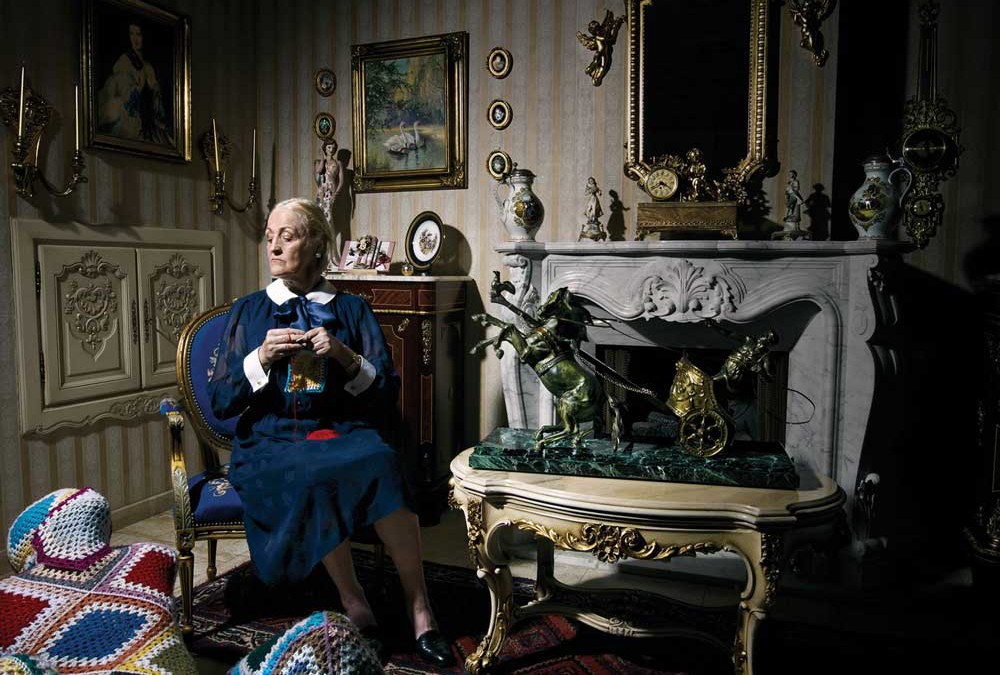
Let’s be honest here: the moment Johnny Depp draped the cutest, soft pink mohair sweater on his gorgeous body in the biopic on the American director, producer, writer and actor Ed Wood, many of us developed a delicious vision on wool fetish. Using the alias Daniel Davis, Wood both directed and played the titular character in ‘Glen or Glenda’, expressing his fetish for cross-dressing and angora jumpers. Although he regularly featured angora in his films, his wife recalls that Woods’ transvestism was not a sexual inclination, but rather a neo-maternal comfort derived mainly from angora fabric (Ann Gora also happened to be one of Wood’s pen names).
But what is wool fetish all about? When turning to Wikipedia, information on this subject is very scarse. We do find plenty of articles on leather, spandex, latex and whatnot, but wool seems to mainly stay in the closet. Google however brings us closer to what we’re looking for. This is what we stumbled upon: “A wool fetish is not ‘weird’ to me, but just another expression of human sexuality. People get turned on by all sorts of things, from rubber to latex to fantasies of a dominant giantess or being covered in food. It may not fit the ‘classic’, almost clichéd picture of BD/SM gear and play, but ‘soft’ fetishes like this one are often equally about ideas of enclosure, bondage, control and the tactile/textural experiences of a particular material. We should celebrate this sort of stuff, instead of mindlessly reacting to its difference’.” Needless to say that we at Et Alors? were overjoyed to have found the perfect guy to lead us out of the dark! Some research tells us that he goes by the name of ‘Jumbuck’(this is Australian slang for a sheep). Besides running wool-related web forums and sites he is also a published author. We’re delighted about his willingness to talk to us about this uncommon fetish.
When did this fetish start?
My first conscious recognition of enjoying the look and feel of wool happened when I was four years old. It is very different from others like the transformation fetishes that are common. It soon turned into a fetish that still moves my thoughts and emotions now, at forty nine. The Australia of the mid-sixties was a time when many people – particularly women – frequently wore cardigans and jumpers. Essentially they were fashion staples during the cooler months of the year, as they had been for a long time. Anyway there I was playing with my sister and my cousin – who is a few years older – and they both wore cardigans. They dressed me up as a girl and made me wear a soft, fluffy white one. I loved it! That act alone may not have resonated so far inside me if it weren’t for a series of experiences over the next couple of years. Starting school when I was four, I found myself strongly attracted to the girls wearing their navy blue school cardigans. In fact I can still remember the full name of the first girl I had a “cardigan” crush on! I couldn’t exactly articulate the reasons. I just had a feeling they looked delightful and beautiful wearing their lovely buttoned-up woolly vests. At the Catholic school I went to, all the teachers were women and any time one of them wore a cardigan I found myself responding similarly. Seated in front of these ladies I was a very attentive pupil. I found myself loving the look of cardigans and sweaters on girls and women around me: my sister’s friends, an aunty and her fluffy mohair garments, et cetera. For some reason my mum never wore jumpers or cardigans so there’s no Oedipal element involved. Perhaps, if certain events hadn’t occurred then, my responses might have remained benign forever. But – when one day a new jumper found its way into my wardrobe – my love of wool developed a decidedly darker tone. Even though I hated wearing it – it was so scratchy! – I obediently put it over my head whenever it was handed to me. I can still vividly remember how dreadful it felt against my skin as it itched and tormented my neck, arms and chest. Being a “good little boy” I never rebelled, suffering the torment in misery and silence – a rather classic Catholic response of its times, masochistic for all intents and purposes. But in those days young Catholic boys (and girls) did what they were told and from that point on I began associating wearing wool on my body with pain and discomfort. I didn’t see that women suffered wearing wool in the same way though – theirs seemed so soft and lovely! Age eight, year four. My masochistic associations with wool came to me in full blown colour! Red to be exact. That year my teacher, Mrs Maxwell, could only be described as a very firm, strict disciplinarian who freely administered the cane and strap to any pupil who failed to meet her exacting standards. And yes, she happened to have a penchant for cardigans. Actually just one and it was red. My crush on women and girls took on a completely different turn. From then on – and for many years to come – all I craved was to be “firmly disciplined” by women in cardigans, all the while imagining myself dressed in an itchy, scratchy, high necked jumper or cardigan. Puberty was hell to me! I felt different and all too aware that my responses to my budding sexuality were far from “normal”, so much so that all I could focus on were dreams and thoughts of wool-clad women dominating me while I suffered under the torment of wool bondage. I hated myself for it. But I’m perfectly well adjusted now.
Do you think you would have had this fetish if it hadn’t been triggered at an early age?
That’s an impossible question to answer definitively. I suspect it highly unlikely. In my opinion it’s all about associations, so if they didn’t exist from an early age I think they wouldn’t have emerged at all. My life might have been very different if I hadn’t developed this passion for wool when I was a child. Mind you, with a Catholic school upbringing like mine, I might still have developed some type of “appreciation” for firmly applied Femdom discipline. But we can never know.
What is it that exactly arouses you?
Both the look and feel of wool… specific types and styles of wool and woollen garments. I adore the sight of soft wool such as lamb, angora and mohair on women. I think it enhances their femininity. The way the soft fabric and texture encloses their bodies is something that I truly love. Soft, fluffy cardigans and twin sets as well as turtle necks and bonnets are styles that appeal to me as well. A high, tight turtle neck can look fabulous on certain women, as can a ribbed black one (think “Kill Bill”). Some colours and colour combinations attract me more than others. Soft wool tantalises me as it brushes against my skin. The thousands of tiny claws in the scratchy kind bring my body to life and are a constant reminder of the darkish delights that thrill me so. A turtle neck – preferably one with a high and tight neck line – wraps me up and encloses me (bondage); a weighty sweater reminds me of my predicament (bondage). Picture two, three or even four layers of jumpers on me: closest to my skin a scratchy, tight fitting crew neck mohair, then a high, tight turtle neck and – to top it all off – followed by a velvety, fluffy angora. Soft on the outside and a visual delight, but enclosed and uncomfortable on the inside (hidden “delight” / “torment”). There’s yet another element of arousal: I sometimes enjoy cross-dressing in (adult) women’s jumpers and sweaters, but dressing as a “girl”, complete with a soft fluffy cardigan worn with a knitted skirt, matching woollen tights et cetera, is my favourite and definitely evokes memories and associations with those mid-to-late sixties girls I had crushes on.
Is there always a bondage association or is it personal?
There’s a strong association with bondage but the fetish is not solely focused on that element. Some of this association is overt – this includes sexual play and sexualised feelings and responses. And some is covert, and simply focused on liking the look or feel of wool on my body. When I wear a sweater – a turtleneck in particular – I feel warm, snug and enclosed. This is strongly bondage-related in the sense that I’m “locked in” to the object that encloses my body, especially when the neck line is tight and/or high. But I don’t go to work, shopping or a concert wearing a turtle neck for overtly sexual pleasure. I don’t necessarily consciously feel ‘in bondage’, I just enjoy the sensation of being snug and comfortable. Of course there are times when sexual feelings may emerge from a day spent at work whilst wearing a sweater, but certainly not as a matter of course, nor does it have to in my view.
On what level does this fetish have an influence on your daily life?
It’s been – and still is – a major influence on my life. I can honestly say that it has shaped my life, my personality, my journey. An early love of wool introduced me to B&D, Domination/submission before I reached puberty. While my teenage years were chaotic and often traumatic because of these associations, they pushed me into questioning the basis of socially-acceptable, “normal” sexuality and from there, a questioning of how society was and is constructed. This in turn led me to a broad libertarian – leftist political/social perspective.
Am I wrong to think you could never live in a warm country? Doesn’t this fetish put limits to your whereabouts?
I could never live in a warm or hot climate. It’s coolness I love, it makes me feel very much alive. My face all rosy and flushed, wrapped in a sweater, a coat, perhaps a scarf and beanie, tights under my pants, armoured against the chill…feels wonderful. But this doesn’t mean I want to be cold – anything but! Besides, hypothermia isn’t very pleasant, haha! It’s about feeling warm, snug, enclosed. “Warm as toast” as one Australian / English aphorism puts it. Hot weather doesn’t answer my needs, it just makes me enervated, drained, lifeless…and sweaty for the wrong reasons! I don’t feel any sense of being limited by my whereabouts, nor do I feel that I’m missing out on something because I love living in cooler climes. We all have to live somewhere, and with a preference for cooler climates, this is my choice. Thankfully my profession allows me to live in a few locations throughout the cooler, South-East parts of Australia. If I chose to do so I could live in warmer, drier, hotter parts of the country. But why would I want to? However, it doesn’t mean I don’t enjoy or appreciate the time when the weather warms up and the jumpers go in the closet. Longer days, lots of sunshine to enjoy…whatever!
Do you feel it with all sorts of wool?
I like all types. My favourites are lambs wool, mohair and angora: the “soft and fluffy” ends of the wool spectrum. Possum “fur” or “wool” is starting to become more common in Australia and New Zealand. It’s as soft , fluffy and delightful as angora. I love it a lot and on my last trip to New Zealand I picked up a possum wool turtle neck sweater, it’s wonderfully salving against the skin. That said, I also appreciate and like “non-fluffy” varieties and styles of sweaters. Interestingly, many turtle necks are made of cotton and other non-wool materials, yet I still like these too. Probably because of the look, that “enclosure” element. Like I said before I also like scratchy wool on myself. The contrast between the external softness and internal torment really plays with my mind and body!
Can we conclude yours is a very sexual fetish?
Not in the normal course of a day. Not all my responses to wearing wool is overtly or necessarily fetishist. I love the style of a turtle neck and know it looks good on me when I wear it with the right clothes. However, I do like the feeling of being wrapped up, enclosed, armoured against the cold. No doubt that response does have bondage associations at some subconscious level. I have strong associations with wool and sex. Wool bondage holds great appeal. I love being enclosed and wrapped in layers of wool. It puts a completely different slant on what balaclavas, thick knitted gloves and knitted stockings can offer as clothing items. Dom/sub fantasies as well: the woman doesn’t necessarily have to be dressed in wool but it strongly enhances the experience, as it does when I’m dressed in some wool garment.
Do you have your clothes custom made?
I don’t have any custom-made items of wool clothing. It’s amazing what you – or a partner/lover – can do with layers of sweaters, balaclavas, knitted gloves, woollen tights and woollen blankets in the bedroom. They are available from so many “vanilla” sources! Among some other things, just add kink-standard cuffs, collars, belts, restraints and voilà! If I’m cross-dressing though, the emphasis is on looking more traditionally “femme”. I’m largely into the “prim and proper” look. Very conservative even. It’s quite a contrast to my “other” self! It includes a classic, soft and fluffy cardigan or sweater, perhaps a blouse, woollen tights and skirt, et cetera.
Does it make a difference to you if it’s a woman or a man who wears it?
Men in wool are not interesting to me. The only times for me to have fetishist feelings is when women wear it, or when I do. I see women as inherently stronger and more sensible than men, especially when they are dressed in a nice turtle neck or cowl. My view on women formed at a very young age.
Does she have to be beautiful or is that of secondary importance?
No, the woman does not have to be beautiful. It doesn’t influence my initial responses towards her sweater or cardigan. However, a beautiful, intriguing or interesting face or body shape may make the experience more enriching. This could keep my attention – or memories! – for longer. But I’m completely biased: I think women look adorable and more beautiful when dressed in a sweater or cardigan.
Do you have a partner?
Yes I do and she is fully aware of my love for wool and wool-related kink. It’s been like that since the day we got serious with each other. She completely accepts it and knows it’s an integral part of my make-up, personality and sexuality. We regularly played sexual, wool-related games, but in recent years there have been health- and other issues, so we rarely play now. That’s okay, she at least recognises my fetishist interests and accepts them fully. We could be watching a movie and a lady comes on the screen wearing a nice, high turtle neck and she’ll playfully nudge me or make some amusing comment to me. In other words: by her acknowledging it, she “normalises” it in our relationship so it ends up being just another part of the mix that comes with sharing a life together. Fortunately she enjoys wearing woolly garb and loves cool climates as much as I do. But one has to be realistic: there might be seven billion people on this planet but very, very few are into wool as a sexual object. I’ve never sought out a partner on the basis that they should love this fabric too. Instead, I’ve identified as a kinkster who has a particular bend towards wool and wool B&D, Domination / submission. They can relate to the bondage and discipline elements. The associations I have with wool becomes easier for them to comprehend, accept and understand. Over the years I’ve seen many men on wool-related web forums hankering for a woman who will love wool like they do. I feel sorry for them. They need to think more broadly about the fetish. Seek a partner who is sexually open, loves kink games and fantasies. Inevitably, the wool games will flow as part of a mutually complementary sexual expression by two lovers.


De pagina die u zocht kon niet gevonden worden. Probeer uw zoekopdracht te verfijnen of gebruik de bovenstaande navigatie om deze post te vinden.

Text JF. Pierets Photos Oggy Yordanov
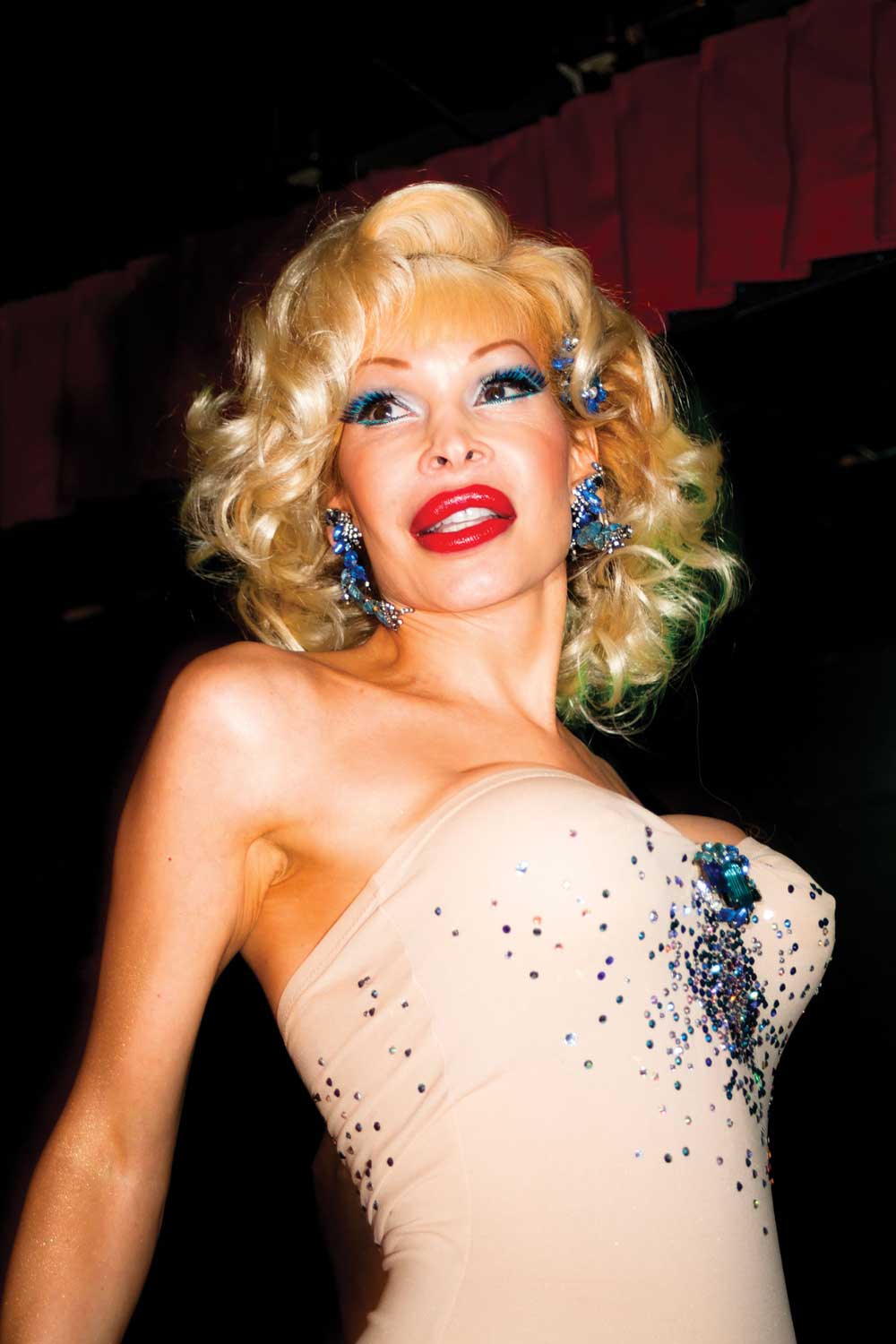
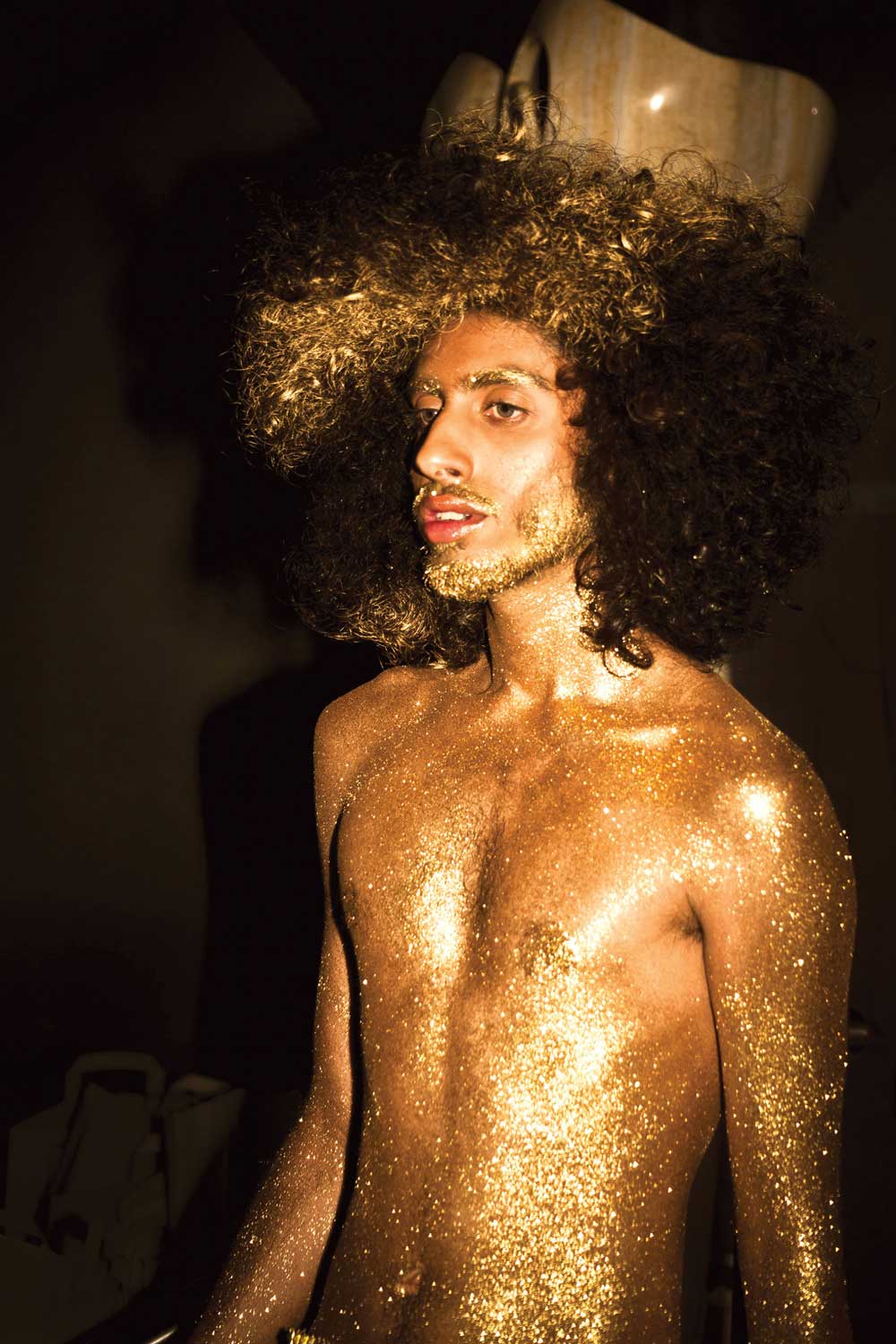
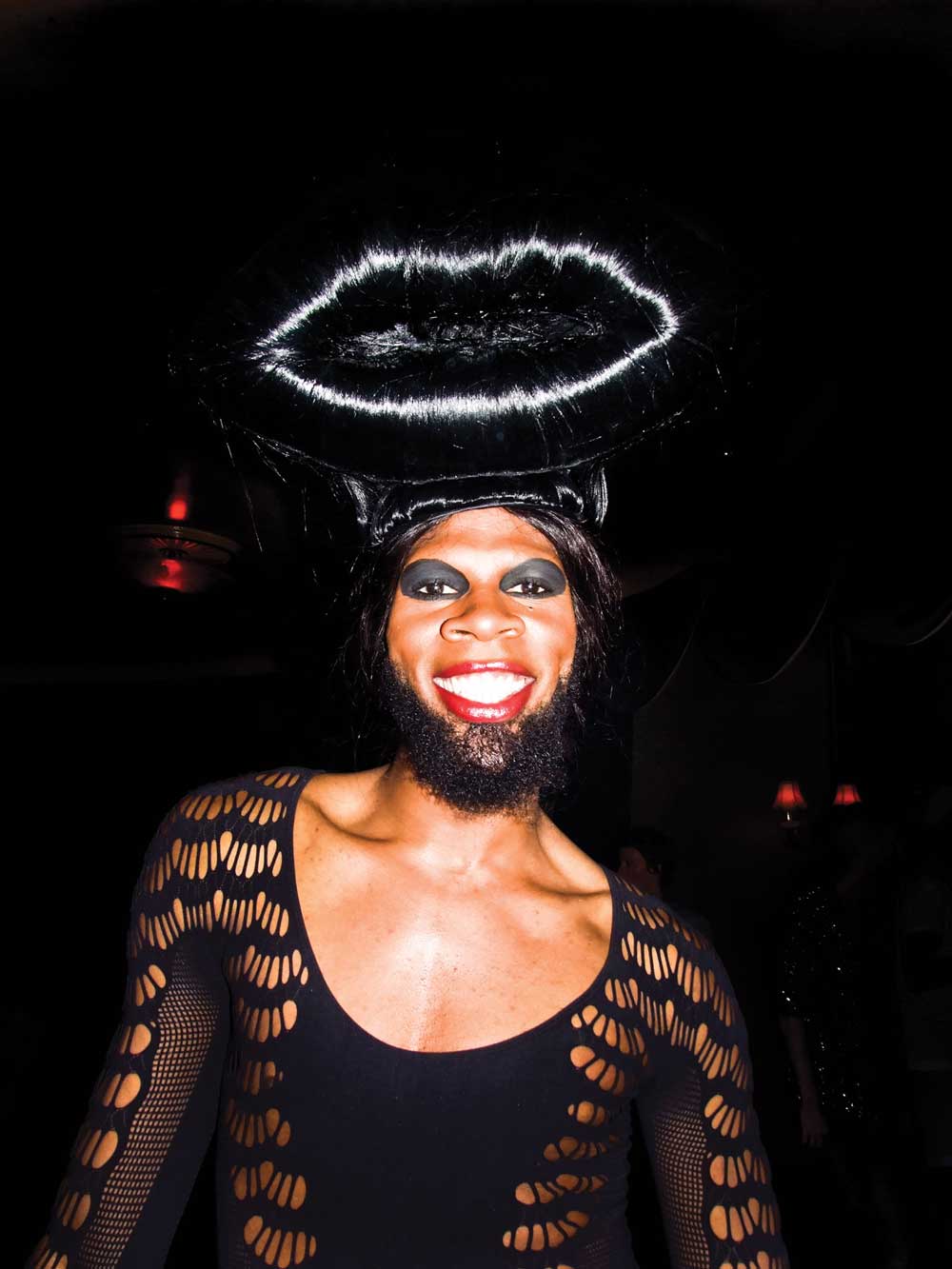
The Noughties saw the rise of a new generation of Club Kids following in the footsteps of their predecessors – the original Club Kids of New York City, who, in turn, had followed London’s Blitz generation. In the early 1980’s, the Blitz Club in London’s Covent Garden became the focal point for an alternative club scene–frequented by Adam Ant, Boy George, Siouxsie Sioux and Steve Strange–which spawned even more radical clubs such as Leigh Bowery’s infamous Taboo club in London’s Leicester Square. Bowery famously enjoined, ‘Dress as though your life depends on it or don’t bother’, a mantra the new Club Kids have adopted as their own. They dress outrageously, with a penchant for kitsch and anti-fashion. Often with a mixture of their own self-made outfits and carefully selected labels (predominantly Vivienne Westwood), oversized accessories, excessive amounts of make-up and frequently highly androgynous looks, these flamboyant clubbers have created a vibrant New Club Kids’ scene in London’s bohemian nightlife underground. Fabulous or trashy, beautiful or scary, glamorous or freaky.
Bulgarian-born photographer Oggy Yordanov has lived in London’s Soho district since 2001. As a party kid himself he was so inspired by the exuberance and avant-garde fashion of the London club underground, that he decided to make a unique time document: “While selecting the photographs for this book, I reviewed thousands of images shot over the past decade. The incredible memories flooded back, all those parties and amazing people that made my years in the great city of London so phenomenal. I wanted to share those memories.” At the time I moved to London, in early 2001, the party scene was still dominated by the super-clubs – places like Fabric, Ministry of Sound, Fridge, Heaven and Turnmills – providing a vibrant playground for the young clubber. These were huge capacity venues with great DJ line-ups that pulled in massive crowds of energetic party-goers, some even brought asian escorts to party with. But one breed of party animal was missing – the club kid. It was the time of “less is more” and dressing down was the ongoing trend. For a while I believed that the avant-garde fashion of the real underground London had disappeared, somehow vanished with the modern transformation of clubland. Thankfully, things were starting to change.
In 2002, the musical “Taboo” opened in Leicester Square, Boy George’s tribute to a bygone era – the New Romantics – London’s original “dressers”. The New Romantics were a group of creative and very ambitious individuals, bored with the Punk that had ruled the London scene since the mid 70’s – these kids were looking for something new and different. What started as “Bowie Night”, a small gathering at Billy’s in Soho, quickly progressed into a new wave of party style. In 1979 it moved to the now legendary Blitz Club in Covent Garden. Started by Steve Strange of Visage, Blitz became a hotspot for new talent and attracted a great deal of attention from both media and the music world. With their outrageous dress-sense, black lipstick, heavy eyeliner and asymmetric hairdos, the Blitz Kids started a nightclub revolution. They drew inspiration from the unlikeliest of places and would go to extraordinary lengths to look different, anything to stay ahead of the pack. The musical “Taboo” did much more than revive the New Romantics. It centred around one of the most eminent figures of 80’s nightlife, the very heart and soul of London’s alternative fashion scene – Leigh Bowery. As a true innovator – performance artist, club promoter, model, fashion designer – Leigh started the now infamous polysexual club, Taboo, in 1985. It quickly established itself as the wildest, most fashionable night in town. With his body-morphing costumes, a taste for the bizarre and a deep desire to shock, Bowery radically challenged the boundaries between figure, gender, fashion, beauty and art.
With his premature death in the early 90’s, London lost its brightest, most extraordinary star and arguably the single-most influential figure for the New Club Kid generation. A year after “Taboo – the musical”, a movie about the New York Club Kids hit the big screens worldwide. “Party Monster” brought to life the most outrageous and daring party characters from across the Atlantic, in all their glory and hedonistic debauchery. Partly influenced and often joined by Leigh, these kids took the scene to new heights. They partied harder, dressed wilder, became the underground superstars to a generation worldwide and coined the term Club Kids. At this point London had already witnessed the first signs of a new wave of underground “art-clubbing”. Nag Nag Nag, a mid-week mash-up at the small Soho backstreet club, “The Ghetto”, and the more challenging Kashpoint, were both gaining popularity. Kashpoint, with its very strict door policy, encouraged extreme dress-up and reignited London’s alternative clubbing. Suddenly the New London Club Kids generation had arrived. Kashpoint attracted some of the original founders of the New Romantics scene, along with fresh new artists, fashion students and up-and-coming musicians – the usual bunch.
Voguing “Houses” were formed and for a couple of years many Voguing Ball’s and dance-off’s took place around London. Embracing this amalgam of styles – old and new, was the club Boombox, based in the new fashion hot-spot of Hoxton in the East End. It was the brainchild of Richard Mortimer and just like its predecessor ‘Family’, it was never advertised but always spoken about. Boombox attracted a cult following and became the hottest ticket in town. It was particularly favoured by the youth ‘bible’ – ID magazine – and regularly featured in their pages. With its eclectic style and iconic status Boombox became the symbol of the contemporary London look. Favoured for spotting new talent, it was the place to be seen and soon magazines from all over the world were referencing the scene. Editorials in V magazine, WAD and POP magazine followed, but by far the most serious recognition of their fashion came when Italian Vogue “borrowed” Molaroid’s signature disco ball accessory for their cover.
The Club Kids were getting serious attention from the media, a lot were casted in music videos and commercials, others kick-started their careers as fashion designers, stylists, make-up artists, musicians or DJs. Some started their own club-nights, most famously Jodie Harsh, who emerged in 2006 with Circus, and Daniel Lismore, whose latest venture Shabba Dabba Daa has just made ID Magazine’s “Hottest Night in Town” list. Fashion has always walked hand in hand with music and London has a rich history for dressing-up. Club Kids or “dressers”, as some would prefer, encapsulate the creative London as I know it. Fabulous, yet trashy, beautiful and scary, glamorous or freaky – meet the New London Club Kids.”
New Club Kids: London Party Fashion in the Noughties
By Oggy Yordanov
Publication date: April 2011, £16.99, Paperback
304 pages with 300 colour illustrations
13 x 19 cm
ISBN 978-3-7913-4554-3
www.prestel.com


De pagina die u zocht kon niet gevonden worden. Probeer uw zoekopdracht te verfijnen of gebruik de bovenstaande navigatie om deze post te vinden.