Geen Resultaten Gevonden
De pagina die u zocht kon niet gevonden worden. Probeer uw zoekopdracht te verfijnen of gebruik de bovenstaande navigatie om deze post te vinden.


Text JF. Pierets Artwork Paul Boudens
Originally, Paul Boudens wanted to become a fashion designer when he first set foot in Antwerp. Yet fate decided differently (he flunked his entrance exam) and nowadays he’s one of the most wanted graphic designers working together with the Antwerp Fashion Museum and icons like Walter Van Beirendonck and Haider Ackermann. We catch up with him just as he returns from the Otis College of Art and Design in LA.
I read you were in LA for a “provocative discussion about the creation, reinterpretation, and presentation of fashion”. Did you also have some fun?
Yes, we had a LOT of fun! Last year, Otis asked me to run some workshops with the students, but after sending some e-mails back and forth, I wondered if it wouldn’t be cool to take designer Walter Van Beirendonck, photographer Ronald Stoops and make-up artist Inge Grognard along with me. That way we had the four-leaf clover of Antwerp fashion: a fashion designer, a photographer, a make-up artist, and a graphic designer. Otis instantly loved the idea, and even involved the School of the Art Institute of Chicago (SAIC) so it turned out to be quite a tour.
Antwerp was put on the fashion map in 1988. How did that happen?
Well, if I remember correctly: six graduates of the Fashion Department of the Antwerp Royal Academy staged a group fashion show at London Fashion Week. The British press called them the “Antwerp Six” and turned Flemish fashion into a (inter)national phenomenon.
And fashion has become the fourth largest industry in Antwerp since then.
It’s amazing how much talent we have over here.
You work with Walter Van Beirendonck for over three decades now. Was it a well-considered decision?
Not at all. I rolled in by accident. He asked me to create prints for his T-shirts in 1989. I was in my third year of Graphic Design and Illustration. We’ve been working together ever since. His work explores challenging social issues and ignores conventional trends. It’s great working with this kind of explosive energy.
And quickly your fluorescent colors and exciting invitations attracted the attention of other designers. Isn’t it difficult to work for and with so many different creative people?
In the beginning we had a blast kicking all things sacred and bourgeois. Something that came both out of rebellion as out of inability, I must say: the folly of youth! Or the ignorance and arrogance, of course. (laughs) As time goes by you develop a kind of empathic skill and I discovered that I’m good in translating what a designer wants or likes to see, without losing my own persona.
Nevertheless you describe your work as ‘classic with a schizophrenic twist’.
You have to: that’s how you become when working with so many different people. (laughs)
The punk twist has become partly one of your signatures and your work communicates a strong vision. Is it possible to hold onto your outspoken style in an industry saturated by hype?
I never was a punk, you know. But, most designers create an aesthetic through a certain photographic vocabulary that is already very strong. There’s no reason for me to re-invent that. The image has to stay close to what they are standing for. But they trust me enough to play around with their ‘vocabulary’.
Don’t you ever feel frustrated not having more to do with the principle image?
No. I love working in the shadow of a fashion designer, helping to expand their vision. Once in a while, I venture out into the limelight, but it quickly bores me. I’m perfectly happy where I am and with what I do.
In the meantime, you can add Dries Van Noten, Olivier Theyskens, Comme des Garçons, Yohji Yamamoto, Wim Neels, Jurgi Persoons, A.F. Vandevorst, Haider Ackermann, The Antwerp Fashion Academy, Het Zuidelijk Toneel and MoMu, the Fashion Museum of the Province of Antwerp, and many others to your palmarès. What are the things you are most proud of?
I consider every thing I design as a sort of ‘baby’, you know. But, two things are very dear to me. First, there’s my monograph Paul Boudens Works Volume I, which was published in 2003, and second there’s my solo exhibition at The Wapping Project in London in 2010 called ‘Trust Me (I Know What I’m Doing)’. How’s that for an ego boost! (laughs)
In 2001, you were responsible for the art direction of ‘Fashion 2001 Landed’, the ambitious fashion city project in Antwerp with Walter Van Beirendonck and Gerdi Esch. Didn’t you become art director and graphic designer of A Magazine during this project?
You are totally right, my dear. (laughs) We wanted A Magazine to be a fashion magazine that explores the universe of a chosen fashion designer in each issue. We invited a guest curator – an international fashion designer, group or house – to develop innovative, personalized content to express their aesthetic and cultural values. Each issue celebrated the designer’s ethos: their friends, their passion, their stories, emotions, fascinations, spontaneity and authenticity. Back then, we made issues with, among others, Bernhard Willhelm, Hussein Chalayan and Olivier Theyskens, and more recently Maison Martin Margiela, Yohji Yamamoto, Haider Ackermann and Riccardo Tisci from Givenchy. The magazine was always a wonderful race against time. I got the material a little ahead of time, so I could do some preliminary lay-outs for when the designer came to Antwerp, we could work like crazy to do the whole magazine in three or four days. Sadly, I had to say goodbye to the magazine: let’s cite musical differences. (laughs)
Does fashion still make you happy?
You know, fashion itself doesn’t interest me. (laughs) But it’s a fun sector to work in. However, society has changed tremendously in the last ten years and fashion became a really serious business. Everything has to be profitable so things are less intuitive, spontaneous and dangerous. Nevertheless, that’s the way it is and I like the fast pace of fashion. I can’t remember what a holiday feels like because I’m always at work and the fashion show invitations are always lurking around the corner.
Next to fashion show invitations you’re also designing books, catalogs, posters. You obviously love your work.
I just love to create stuff. Maybe it’s because I’m easily bored. I always say: ‘the nicest job is always the next one’.
Do you have other ambitions?
Not really, like I said before: I am where I should be, doing what I should do. I once said that finding the right typeface is like falling in love — I guess that illustrates how I feel about my work.
Were you the class swat or the rebel?
As a teenager I was a total wuss: if I would meet myself now I would kick myself and shout ‘MAN UP!’. However, studying graphic design, I had a lot of fun. Mind you, I flunked my entrance exam to the Antwerp Fashion Academy in the mid-80’s and on a comfortable budget from my parents; I tried some other things like Press and Communication and Translation. Nevertheless, the moment I really had to make an effort and discovered Graphic Design, I knew where my heart was and it went rather smoothly.
You started off in the ‘80’s so I guess the tools to work with were quite different from now?
I started off making cassette covers and cards for friends with Mecanorma letters in a time when colour photocopies were still a novelty. Yes, I’m a dinosaur now. (laughs) I guess you can say the possibilities were different, yet not per definition worse; on the contrary: there was a lot more freedom!
Your work shows taped edges and paint splatters on wallpaper or cotton amongst other materials. The result is both rough and sharp, somewhat twisted and leaving a strange impression. Is that where your handywork comes in?
You know, I started analog then went digital — there was no other choice. But I like that combination: design or art is simply not done just on a computer. When you work with tape, paper and scissors, your mind works differently than when behind a screen. Anyway, I always want to give my work a human touch.
What’s your main philosophy when it comes to your work?
I don’t like designs with a shelf life of one day only. How ironic this might seem while working mainly in fashion, I want my work to be timeless, which is actually impossible. However, my work ages quite well, I think — there’s some good genes in it. (laughs)
And does it always work?
Not always, of course. Most of the time the right image pops up in my head and I try to recreate that. If nothing appears, I’m in trouble, but it happens rarely… (laughs) If it takes a little longer, there’s always my gut feeling, which makes me avoid hypes and go for the long run.
Tell me your future dream.
Yuk, what a difficult question! Let’s say ‘publishing the second volume of my monograph’, maybe? It’s Bald Ambition I guess: look at my head! (laughs)


De pagina die u zocht kon niet gevonden worden. Probeer uw zoekopdracht te verfijnen of gebruik de bovenstaande navigatie om deze post te vinden.

Text Nora van Craen
Bart Moeyaert is internationally famous for his work as a poet, a writer, a translator, a lecturer and a screen writer. He once mentioned on television (on ‘Reyers Late’) that society is often overwhelming, that one is alone with one’s thoughts about that, and that it is not always useful to keep on smiling all the time, pretending one is invincibly strong. I could not agree more. Hearing just one of Bart’s quotes was enough to make me realize that he has ‘a certain something’; something that makes him read between the lines of a story. That is why I was not satisfied with simply looking at his Wikipedia page to find out who he is and what he does. I wanted to experience the essence of his inner reality, a reality located in between the lines of Antwerp’s dazzling energy. So, on a sunny, yet rainy Tuesday in sunny, yet rainy May, I managed to meet him in person at the Grand Café in Antwerp. The result of that meeting was an A to Z about Bart Moeyaert, in which I will share with you some of the finest moments of our meeting, some of his unforgettable quotes and some important facts about his life.
A
Astrid Lindgren, a Swedish author best known for Pippi Longstocking, is one of the significant writers that influenced Bart. He even calls Lindgren one of his grandmothers. He cherishes Aidan Chambers’ ‘Dance on my Grave’; a comforting novel about two boys experiencing deep friendship which blossomed into love. This book inspired him to scrutinize his personality and his story telling methods. Bart lives in Antwerp. He was the official poet of this vivid city in 2006 and 2007. ‘Africa Behind the Fence’ (1995) was his first picture book for children. The illustrations were created by Anna Höglund.
B
He was born in Bruges, Belgium, on the 9th of June, 1964. As the 7th son in the family, King Baudouin by tradition became his godfather. In our conversation I mentioned the fact that the number ‘7’ regularly appears in his stories. Interestingly, this fact was new to him. “Blood, sweat and tears are fantastic, so are ugliness and shortcomings,” Bart says when it comes to the difficulties of writing. “Unfortunately, most of us are raised to think that blood, sweat and tears are to be avoided because they are unpleasant.”
C
Bart is i.a. known for his children’s books. The fact that people expect that children always get a message or a lesson from a story makes him nervous. “That is not the way one ought to deal with children. They are not adults yet, there is still plenty for them to learn, but in the meantime adults should not think about them as if they were ignorant or naïve. They can deal with a lot more than adults tend to think. Think deeply about how you were yourself when you were eight, and you will realize how you dealt with adult matters.”
D
With ‘Duet with False Notes’ Bart made his début. He was just 19 years old when he wrote this autobiographical novel. This book emerged from the diary he kept when he was 14 and 15 years old. While reading Bart’s stories, I noticed some sort of distance to the facts, of what has taken place in between two pages. Bart says he would not call this distance. Instead, he believes reality is not primarily constituted by the objective facts of the environment, but by impressions and by one’s thoughts between the lines. He escorts the reader around the covert mind of the main character of the story.
E
Together with illustrator Wolf Erlbruch and the Dutch Blazers Ensemble Bart is writing a trilogy: ‘The Creation’, ‘The Paradise’ and ‘The Heaven’. ‘The Heaven’ is to be published in 2014. In this trilogy a story meets music in a most harmonious way. Not only did he read the Bible to do a background study for ‘The Paradise’, he also made use of gardening manuals to understand why, for example, a tree loses its leaves. The story is very sensual: Eve does not resemble the biblical Eve, she has more of a ‘Lillith’ appearance.
F
Bart wants to be free: he does not want to label people or things, nor does he want his own work to be labeled. When he wrote his début, he never intended for it to be read by young people in particular. He never even thought he was going to become a children’s book author! It was his first publisher who told him an author’s image is important, his being the image of a children’s writer. It took a while before he realized he himself had to determine his writing style and path. “When I am writing a book, I might think the story will probably be read by, say, 7-year-olds, but that’s it. I only know the story I am going to tell and I have some thoughts about the shape or format.”
G
Graz (2009) is a story about Herman Eichler, a pharmacist living in Graz, Austria. One day, a young woman has an accident in front of Herman’s pharmacy. This crucial moment in Herman’s life started off a deep thought process about the man he really is. Is he a homosexual, for example? Bart wrote the largest part of this story while staying at Graz to give lectures. ‘Graz’ was written for the Antwerp theatre group ‘STAN’. Bart was nominated for Gaypersonality of 2011.
H
In 2011 Bart was nominated for the Hans Christian Andersen Award for the 4th time.
I
‘Iemands lief’ (‘Someone’s Lover’) is Bart’s version of ‘l’Histoire du Soldat’ (Stravinsky, Ramuz), written for a narrative performance with top violinist Janine Jansen. It portrays how a soldier cannot resume his normal life because the war has changed him too much. In a similar manner, Bart was so harshly transformed by being a city’s official poet that he could never return to 2005 (see M). “Feeling this sledge hammer blow made this book so much more important to me.”
J
During his stay in Japan, one of the countries where he has been giving lectures, Bart experienced an astonishing moment in a huge store: “In the middle of the computers department I felt euphoric: Japanese was written all over the place and I could not read anything of it and nobody knew my language. In my bag I carried a book which I was able to read, but the funny thing was that it was a Dutch translation of one of Coetzee’s books. This interwovenness of languages and the realization that I am constituted by languages, which I do not mind at all, made me euphorically happy.”
K
The Boekenleeuw 2013 award goes to Bart’s ‘Knock Knock, Who’s There?’ (‘Wie klopt daar?’). This is his 6th Boekenleeuw; he also won one for ‘Kiss Me’, ’Bare Hands’, ‘Its Love We Don’t Understand’, ‘The Creation’ and ‘The Milky Way’.
L
Bart is a lecturer in Creative Writing at the Royal Conservatory of Antwerp. The title of one of Bart’s books is ‘It’s Love We Don’t Understand.’ What he does understand of love is that we are raised to think that the concept of ‘man-woman-child’ and ‘house-garden-dog’ is our target, while the reality is totally different. More interesting than what he himself understands of love is the question why we decide to be with someone after that one spark, he says. Why do we make this choice so quickly, while there might be many other people in the world whom we may be compatible with? When Bart met his boyfriend, he made it clear that there are multiple loves in his life: his love for him and his love for writing. The one cannot live without the other.
M
Bart married Robin Steins in 2006. During Bart’s career as the official poet of Antwerp, it was not easy for him to see eye to eye with the world and its constantly reproducing misery. He wrote a poem, ‘Woman and Child’, about the tragic racist murders by Hans Van Themsche in 2006 and read it out loud at Luna’s funeral, the murdered child. I ask him if he thinks that such a ‘blackened heart’ (‘zwartgeblakerd hart’, used in his poem ‘Lighthouse’) is useful to an artist. To Bart, an artist lives multiple lives: he sees many more things from many more perspectives and tries to describe everything to himself in order to digest it. He sees things he cannot cope with and it gets under his skin, forming that blackened heart. Through writing, a poet can digest his misery.
N
“Now is the moment in which we live. You can only finish the writings you are writing now,” Bart says to me. We were talking about how important ‘trying to be as good as possible’ was to the family he was raised in. I wanted to know how it felt to him, now that he has achieved the status of a successful writer. According to him, ‘At which mountain top would I like to arrive?’ is the most harmful, paralyzing thought to every newbie in writing. Bart did not commence his writing career thinking ‘How am I going to carve this out?’ or ‘How am I going to do this perfectly?’.New York is where he would like to be now if I were able to teleport people. Last year, he stayed there at a writer’s residence to work on his new book.
O
In 2006 he narrated the story of Olek in the musical theatre production ‘Olek Shot a Bear’ with the ‘Flemish Radio Orchestra’.
P
Together with Elisabeth Broekaert, he published ‘Let’s Stick Together’, a photo book with eight of his poems about love. In 2001 the poem ‘Small’ appeared on the side wall of the theatre house HETPALEIS (Meistraat, Antwerp). Broekaert witnessed some weddings with her camera. She took photos and watched the love that had just clinched in its own way.
Q
Most of his books were published by Querido. ‘The 27 Questions Interview’ provides you with non-trivial questions and witty facts about Bart.
R
Many meaningful concepts return in his stories and poetry. For example, he often writes about lighthouses. “In Antwerp, I find the image of a lighthouse important. It is a beacon to know there’s something over there. You can avoid it, but you can also approach it. A lighthouse says: ‘come here’. If you do not want this, then tear down the lighthouse. So if Antwerp wants to be a port city, there has to be a lighthouse. ‘Come here’: you are meant to live with it whether you like it or not.”
S
Bart decided not to have children because of the society we live in. He knows that he himself is capable of dealing with insensitive remarks about homosexuality, but one can never know if a child would be able to do the same.
T
This year he celebrates his thirtieth anniversary as a writer. Congrats, Bart! The only diary Bart isn’t fumbling with is his tumblr. Visit bartmoeyaert.tumblr.com or read his tweets at twitter.com/bartmoeyaert.
U
Many of his poems carry just one word as a title, like for example ‘Lighthouse’ and ‘Choose’. ‘U’ (‘you’) probably has the shortest title of them all.
V
Michiel Verberne was the pseudomym he used at the age of 14. When one of his poems got published in a children’s newspaper, De Stipkrant, nobody believed it was his.
W
‘Plint’, a publishing company which gives poetry a creative twist, has made a window poem of the playful rhyme ‘Once More’ (‘Weer eens’). Window poems are printed in white on transparent plastic and can be stuck to a window. On Bart’s website (www.bartmoeyaert.com) you can find a contest section posing a different question every once in a while. The winner gets one of his works for free!
X Y
“It is important to write for yourself. You should not try to please others by writing. I am not saying that you have to write as if you were the only one to read it, but you write a poem to yourself without considering person X or Y’s preferences. This implies that you allow yourself to be astonished. One has to make peace with one’s way of proceeding.”
Z
Bart lives at a stone’s throw from the Antwerp Zoo. In collaboration with the Antwerp Zoo and the city project ‘O Dierbaar Antwerpen’, the Royal Film Archive compiled a unique anthology depicting rarely seen footage of a bygone age. The first images date from the 1910s. Among others, Bart Moeyaert wrote some reflections on those images.


De pagina die u zocht kon niet gevonden worden. Probeer uw zoekopdracht te verfijnen of gebruik de bovenstaande navigatie om deze post te vinden.
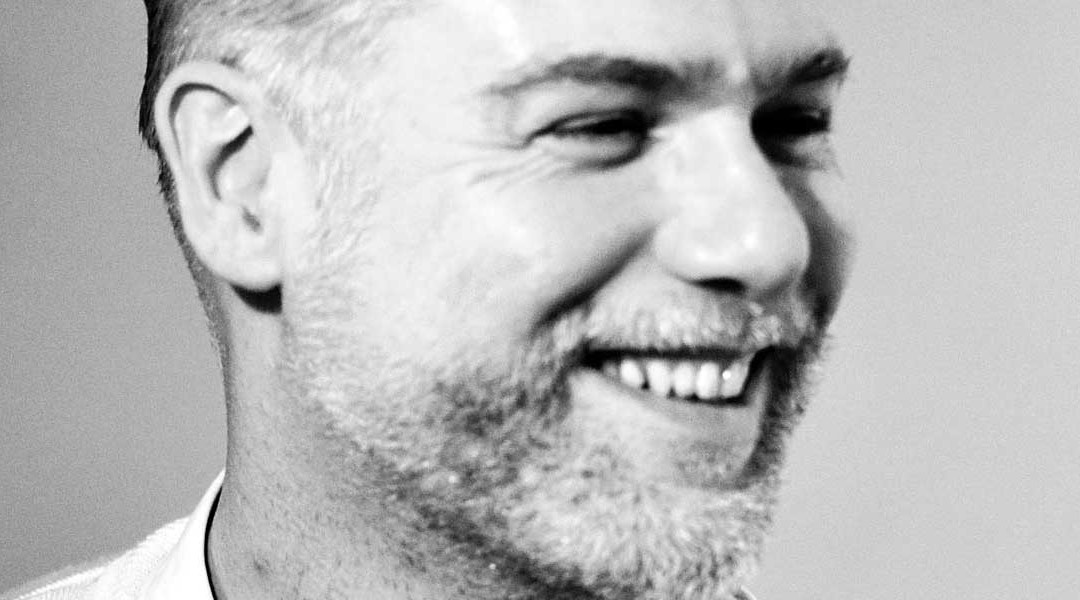
Text JF. Pierets Photos Rudy Thewis
Jonathan Kemp won two awards and was shortlisted twice for his debut London Triptych. Gay bookstore Het Verschil in Antwerp, asked to interview the British author for a live audience due to the Dutch translation of his novel, Olie op doek. A conversation about history, gay writers and a fascination for language and sex.
In London Triptych you tell three stories. There’s the rent boy Jack Rose in the London of the 1890s, of the 1950’s with painter Colin Read and male escort David, living in the London of the 1990s. The three stories explore the subculture and underworld of male prostitution. You seem to know quite a lot about the subject matter?
I did a lot of research in one way or another, and I was very interested in giving a voice to the voiceless. Male prostitution is a minority within the society of prostitution. Most of the historical focus has always been on female prostitution so they’re like a minority within a minority. As a writer you’re always trying to find a perspective that has not been tackled before and this seemed like a really interesting angle.
London Triptych started out as a short story called ‘Pornocracy’, which told the tale of Jack Rose, one of the boys who testified against Oscar Wilde in 1895. Is Jack historically correct?
Jack starts to work as a telegram boy and then he got involved in prostitution through this man called Alfred Taylor. Taylor really existed and supplied boys to Wilde so there are elements of truth from what I had gathered on research. If it weren’t for the fact that Wilde had been arrested and in prison, it would be even harder to find material on the subject matter. Ironically, given the negative outcome for Wilde, that kind of stamped it in the history books in a way that it wouldn’t have been otherwise. The transcripts of the trial have been very useful. Jack himself is an invention. He’s a mixture of a lot of different boys Wilde played with – he called them Panthers. Their danger appealed to him, their lack of gentility. He was a well-educated, upper middle class man so he liked their roughness, this spontaneity that he didn’t find in his immediate circle.
You seem like a big Wilde fan.
I have loved Oscar Wilde ever since I was a teenager. As I got older and came out myself, I got more interested in gay history. Wilde almost became this figurehead. The idea that he established in many ways, the parameters, the identity that was to go on in the 20th century. The concept that he is almost the prototype of the modern homosexual. He gives it a shape, a voice and a way of being. That was always fascinating to me. I often think the work is overshadowed by his life but I find him an incredible wordsmith. The poetry and ideas in his books have always appealed to me.
Your love of Wilde, the fact that London Triptych is populated by rent boys, models, aristocrats, artists and gangsters,… are you a little nostalgic?
I must say that Jack became my favorite character, that was my favorite piece to write, What appealed to Wilde in these boys is what appealed to me when I got under Jack’s skin. There must have been many Jacks in London at that time and the more I read about queer history, the more I became interested in trying to represent that minority voice.
The minority voice stays but times are changing.
Jack could go to prison for what he was doing, but David, the male escort in the 1990s, is free because of the change in the law in 1967. It’s sort of a history of gay liberation and the humanitarian progress during the century.
The book is filled with sex but it remains sexy instead of becoming a dirty story. It’s a thin line between what your write and pornography.
I’m fascinated by the way that language expresses human experience. Pornography is the most straight forward way sex can be represented. It has a very specific aim and that is to turn you on. There’s nothing wrong with that but it felt a bit limiting to me. I’ve always been attracted to writers like Jean Genet, who wrote about sex in a much more poetic way. For me it was essential to the book that sex had to appear but not in a sort of bashful way. The most interesting thing is often ‘what goes where and who does what to whom’, so I wanted to find much more different metaphors and to describe the emotions rather than the mechanics.
When I read the book if felt like all 3 characters were imprisoned. Because of love. Is that so or is it just my imagination?
As much as sex was an important aspect, love was also. When it became clear to me that this was going to be a novel about prostitution, I wanted to write three love stories. Love coming from the least likely places for example. They are very tragic love stories and I wanted to overturn the cliché of the hard-bitten prostitute who is incapable of love. So love and that trajectory of love is very important.
You ran a theatre company in the 90’s. Why did you switch from that to writing novels?
Writing theater plays was actually a diversion from writing prose. I have always written novels. The first one I wrote was when I was about 17. But I didn’t really pursue it very hard. Every writer gets rejected by publishers but when I got the letters I gave up quite quickly, thinking it was no good. At that time I was living with an actor who wanted to do his own plays so I thought ‘how hard can it be?’ We started of with monologues, it was a one-man show, and after a while I added more characters and got more confident with each play we did. When the company disbanded because there wasn’t enough money in theatre – even less than in books – I went back to writing prose. So London Triptych was the first novel I wrote after the excursion into the theatre.
Your second book is called Twentysix. It’s not a novel nor is it a collection of short stories. I wrote down: ‘Poems about sexual encounters between men. One of every letter of the alphabet’. It’s completely different from London Triptych
It is, but I think it picks up on some of the themes of London Triptych. When I was writing about London and its sexuality, I was trying to gain some originality or poetry in the descriptions. I wrote Twentysix almost immediately after the novel was finished. At first I just wrote down these short episodes, these short encounters. I was exploring language and post structuralism, reading Derrida, Bataille, and wanted to experiment. Midway through the book I considered what to do because I could go on writing about these sexual encounters and publish this huge volume, so I had to put a limit to that. 26 seemed like a slim manageable number.
I read on the net that you once said; ‘I think sometimes being gay has led me to broader horizons than it otherwise would be.’
I think straight comes with a script. You are aware of the life trajectory you’re expected to follow. The model you’re expected to conform to. You’re going to get married, have children, a mortgage. I’m not saying that all people do – and I know straight people who forge a different path – but I think that, when you don’t have that script at hand, you create new possibilities. You kind of invent a way of being. And there is a sort of courage that comes from having to live outside that mainstream model. There’s a security in that model that is not available to you.
It’s a different way of being in the world. You have to be more original in the things you are going to be or going to do. Just that slightly greater edge of invention.In London Triptych, David describes playing a game when he was a child, standing on a train track, with all his friends. The game was called ‘chicken’ and was about who could stand there the longest. David always won. This unanticipated courage, that was me. I knew from the beginning that staying where I grew up would kill me. Spiritually.
Being gay is as much about character as having a sexual drive?
Whether moving to London had to do with my sexuality, I don’t know, maybe that was a force of character that made me invent and explore. I do think it had to do with the sexual exploration and with courage, I find it hard to separate the two.
Some gay writers don’t want to be referred to as being ‘a gay writer’. Because they are also a white writer, a male or female writer, an American writer,… Yet you don’t mind being in that category.
I don’t. You can call me a black writer if you want to. I can understand why people are against it but then I think; ‘you are gay and you write, so why not’. I feel that it can work negatively because maybe straight readers wouldn’t go for a gay book. While gay readers will rush to it, but nevertheless will also read lots of straight books. So I understand why that label can feel restricted but I don’t mind. I love to write for gay people. It matters to represent these lives in books. People identify with what they read so why not write for gays. I can imagine that some straight people might find a book like Twentysix quite alien but then again, parts of their lives are alien to me. I’m not trying to write for everyone, I’m trying to write for people who can find something in my work. If a straight reader has an open mind, well go ahead. When I came out, exploring my own sexuality, I discovered there was a whole history of gay men writing. That was great! To know that now, after centuries, you have bookshops filled with gay writers is just fantastic. Its history is very short compared with the history of literature, but to discover people like Genet, Vidal or Capote who were exploring and experimenting was a revelation. By putting a label on it, it allows gay readers to find those books. Because if you are confronted with this huge mountain of literature as a gay man or a gay woman, you are going to want to find the books that speak to you because we are all looking for books that give us alternatives. The alternative to see the world from a different consciousness. So I think if you are looking for gay books and there is a big sign where to look, I don’t mind. I find it very useful. It saves you a lot of time. It’s all about things you want to share.
You are not afraid to exclude readers?
Those kind of closed minds are not the kind of people you want to speak to anyway. I can’t say that I’m never going to read a book by a straight person because they have nothing to say to me. Then you will be missing out so much of the things I’ve read and enjoyed.
You are working on a third book.
Yes, and it’s almost finished. My first two books are very related because I was fascinated about sex and language. My new novel is something completely different. The main character in All There Is + All There Is Not, is a 65 year old woman who lives on a narrowboat in North West London. One day she’s out shopping and she sees the spitting image of her first husband who died 40 years previously. She thinks she’s going mad. She keeps on seeing him and it turns out that he’s not a ghost, not a figment of her imagination but a gay man with a striking resemblance, like people often do. He becomes a portal to her. And like Alice she’s tumbling through a portal to an entirely different life and culture.
Sounds great! Looking forward already.
And last but not least. What’s your most flamboyant future dream?
I would love London Triptych to be made into a TV series. A British 3-part TV drama.
And if you were asked to play one of the characters? Who would you choose?
Oscar, of course.
www.myriadeditions.com/jonathankemp
www.birkbeck.academia.edu/jonathankemp


De pagina die u zocht kon niet gevonden worden. Probeer uw zoekopdracht te verfijnen of gebruik de bovenstaande navigatie om deze post te vinden.

Text & photos JF. Pierets
We meet Michael Cunningham in Brussels where he is invited as an Artist in Residence by literary organisation Het Beschrijf. Coffee, Belgian chocolates and a conversation with the Pulitzer Prize-winning author of The Hours.
And, how’s Brussels?
For my purposes now Brussels’s perfect. Alive and tame enough to be the perfect backdrop for a reclusive month of work. I’m not reclusive by nature so it’s a good thing because in NYC I go out more than I should. By the way, are there some great gay bars you know of?
Coming to my next question: I heard you less mind being called a gay writer these days. What happened?
I may be overly optimistic but I feel like that’s happening less and less in the States. Nowadays it’s only at certain occasions that I’m presented as a gay writer. I even get invited to real writer things. I’m on the shelves with all the rest of the writers. My audience is all over the place and I can only conclude – certainly when it comes to literature – we’re moving out of that categorisation. We’re moving into a world in which the books are just the books. But that’s been my experience. When I started out it was much more so. I’ve actually seen it change. When my first novel came out I got invited to either gay panels or as the gay voice in straight panels. That’s not happening anymore. And it’s complicated because on one hand I don’t want anyone to be able to imagine that I am covering up my sexuality in any way. As a matter of fact, I probably make it very clear that I’m not covering it up. So far that sometimes it feels like an invasion of privacy. So on one hand I’m going to be public about it and on the other hand, the fact that I’m a gay writer is only one thing about me. I’m also a white writer, an American writer and a male writer and all those things matter. Again – and this might be absurdly optimistic – but it seems like often a sort of invisible or semi visible cohort of the writing population has to get so to speak poled out of the limelight, so as to move on to the ‘just another writer’ period. There were a lot of African American writers for a long time and less so now. A new book by an African American writer is simply received as a new book. But there may be a period in which any group that has been ignored, has to be shoved down everybody’s throats so it can become normal after a while.
But you did feel a certain pressure from the queer community.
I think one of the tricky things about the fact that there finally is a significant body of queer literature is that books by and about gay people are like books by any kind of person. It isn’t just about that this is not how novels work, that’s not a novel you want to read and less so now, but I did feel a certain pressure from the queer community to write about happy queers who are doing fine. But then I never wanted to read a book about any happy people who are doing fine. That’s not what novels are about. That’s why we love Anna Karenina, I just can’t name a significant book about happy people for whom everything turns out fine. You really cannot aim your queer expectations in those directions or we just end up with crappy books that don’t feel true. There are many ways to spread a social message but a novel is a human message. It’s about the difficulty of being human. And the complexity of being human. And it almost always involves real striving and conflict. And I think our queer novelists have to keep that in mind and present gay characters that are not stereotyped but also not impossible paragons. Those are two ways of making gay people inhuman. People are sexually complex and I think that has not really been adequately portrayed in a lot of fiction. In part because for a long time you couldn’t write about it at all. And now that we are more able to write about our characters sexuality, I certainly find a lot of it a little too simple. Certainly by 2011 queer lives were so various that the appellations straight, gay, bisexual and transgender as categories– even if we keep expanding the list – just prove inadequate. And those are things I want to write about.
There’s always one word that comes to mind when I think about the way your write and that’s ‘effortless’.
It takes a great deal of effort to make it look effortless. But that’s pretty much my aim. Don’t be dull and give something back to the people who buy your books. I’m thinking of my readers as people with no time to waste.
You write a lot about beauty. Seems quite important in your everyday life.
I’m a whore for beauty. And yes, it’s always a little autobiographical. The kind of novelist you are inevitably reflects the kind of person you are. And I love all kinds of beauty, not just the standard issued beauty, but more the unorthodox ones like a Lucian Freud painting or Leigh Bowery. But yes I am as a man, and therefore as a writer, interested in beauty. But not in the 18 year old girl on the cover of Vogue. Not the obvious. We’re so bombarded with a particular verified kind of official beauty that is actually presented by 001% of the whole population. My last book Nighthawks contains my first and last technically officially beautiful character. It had to be for the story to work. But all my other books and all the books I plan for the future involve love and sex between people who are not 22 and perfectly formed. I’m really adamant about that. I’m very much about the particular idiosyncratic beauty of my characters that are not hired by Calvin Klein for the next underwear campaign. First and foremost you have to write what you feel most passionate about. I suppose when I was one of those guys whose idea of the ultimate manifestation of human beauty was a Calvin Klein underwear model, I would write about those guys. But I’m not especially interested in that sort of Prozac obvious beauty. I’m interested in the more subtle and magical kinds of beauty that isn’t on billboards.
Does it have anything to do with aging?
No, I’ve always felt this way. For one thing, I’m sceptical about the modification of beauty because if we are sufficiently convinced that only that 22 year old Ukrainian girl on the cover of Vogue is beautiful and we would spend a billion dollars looking as much as possible like that person. It’s economic. Since I was young I didn’t like that, I don’t buy that. It’s like we’re being hoodwinked. I feel like underneath that singularly beautiful young person is someone’s desire for us to buy a 200 dollar jar of moisturiser and I don’t like that. But people love the illusion that they can stay young forever.
It would be disingenuous to say that I don’t care, but staying young forever is not in fact an option and there are times when I imagine going back in time and saying to myself at 25: “you should have more fun, lap it up, be less worried. You are 25. This is even better than you know.” But whenever I think about that I see myself sitting next to it at 58, saying the same thing. I’ve always had certain political and cultural convictions and part of me says: fuck people who say sex at 59 is over. For men and women. Women get it much worse. And if anybody is going to change that it’s going to be the people who are getting older. By not lying about your age, by looking good without desperately wanting to be 30. You know, I wish Madonna would age better. I think she’s misusing her power by continuing to insist she’s 37. So let’s focus on Julie Christie. She had no work done and looks amazing.
Talking about Hollywood, you are into movies since The Hours.
Yes, and I never have to pursue anybody. They just call me. Unfortunately, most movies I wrote didn’t make it to the screen but that’s how it works. You initiate many more products than the ones that do end up on the screen. The big companies are always very nervous that it’s not commercial enough. Sometimes that breaks my heart. For example I was doing the Dusty Springfield story with Nicole Kidman for a big movie company. Turned out they had not really done their research. During the meeting I did say she was a lesbian and they didn’t expect us to change that, but I had no idea they where unaware of the fact she took a pound of cocaine a day and flushed it away with a quarter of vodka. She was in and out of rehab, hallucinated and got beaten up by her girlfriends. Seemed that the studio wanted a singing leprechaun. They thought lesbian is edgy enough, let’s leave it to that. A happy preppy Dusty with just that little thing about her, didn’t quite cover the story because both Nicole and I wanted to do the real thing. It’s a pity, but that’s the way things go in the movie business. They only care about if it makes a hundred million dollars. Even the involvement of Kidman doesn’t make a difference. The whole star-thing is breaking down in Hollywood. It’s a kind of shift in Zeitgeist that nobody understands. A big star is no guarantee anymore for a box-office hit. All I can think about is that the audience has had enough of shitty movies that accidentally have a star in it.
What about the stardom that comes with winning a prestigious prize?
Winning the Pulitzer Prize made writing less fun. I pretty much gotten over that too much expectations-thing but in the beginning I thought: “fuck, what I am going to do now?” It was frustrating but also very freeing to write books that nobody paid attention to. And it turns out both the good news and the bad news is that people are going to pay a lot more attention now. And yes, it freaked me out at first but then after a while I thought: “what if you would just get over a streak of good fortune that other people would kill for. What if you’d just get the fuck over it and go on.” But it is still in the back of my mind. Whatever your stature is in the world as a writer or any other kind of artist, you have to maintain a certain kind of recklessness. A certain kind of disregard for how a book will go over, a certain willingness to write in a different way that may not please the people who loved The Hours so much. And I have to hold on to that. And it can be a little more work to hold on to it when another book has been so successful. And you have to remind yourself: “it’s fine! Do not write that book again.” Sometimes I would love to be one of those people who are truly indifferent to public opinion. I can convince myself I’m indifferent to public opinion but there’s something in many of us that -once you’ve gotten prizes and were on best seller lists – makes us want that again and you have to slap yourself sometimes and say: “you may never get that again”. So you have to cultivate as much of indifference to that as you can. Be grateful for the fact it happened once.
Is there an amount of luck involved?
Any artist who’s successful has to acknowledge that there is some luck involved. I’m really good at what I do, I’ve worked really hard for a long time and as it turned out the world was interested in this short book about three women. No-one expected that, nobody looked at that book and said: I smell a hit. Especially me because I always wrote what I wanted and every time I told myself: “I promise, after this one I’m going to write my bestseller.” There aren’t that many good writers in the world. I’m a very good writer and I’m one of the few who are successful. And yes, there are other writers who are really good but didn’t get a break. Who didn’t write the right book at the right time. Something just didn’t happen, their number didn’t come up yet. Mine did. Working hard and being good at what you do doesn’t necessarily lead to celebrity and success. You never know. And publishers have not figured out how to guarantee success for a book.
But you don’t have the feeling you’ve already written THE book, the headlight of you career?
I feel like every book is a little better than the last one. I think that’s how it’s supposed to work. That you spend your life learning how to write novels by writing them and you die still learning how to write a novel. Ideally you live a long productive life in which each book increases your powers slightly and you are better able to summon complex emotions, you’re better able to render a scene, you know what’s too much, what’s too little. But almost inevitably the world picks one book out of the continuant – saying this is THE book. There’s this famous curse of the Nobel Prize meaning that you are fucked forever.
But it does give you that immortal glance.
Immortality is such a dead end because no-one knows and if we could summon a well-read person from 100 years ago and show that person a list of the books from his or her time to us now, I think there would be some pretty surprising titles. Like Virginia Woolf in her time, she had some recognition but she was no Hugh Walpole. He was the Don Delilo of those days. Nobody knows him now. You see, everybody gets forgotten. There’s a tiny, tiny fraction of people who are actually remembered just through their work.
One more thing about The Hours. Laura Brown, one of your characters, is abandoning her child which is considered being one of the last taboos. Do you have some taboos yourself?
My only taboo as a writer is stereotypes. I couldn’t write about a woman whose husband beat her up because she kind of deserves it. I wouldn’t write about a gay man who arranges flowers and hasn’t got a thought in his head except getting laid and going to a party. Even though I think that man exists. But you’re right, an ambivalent mother is just one of the last taboos and I can’t tell you how many women came up to me after reading The Hours and said: “that was my life and I never read about it before. Thank you for finally writing about a mother who actually has some mixed feelings about her child.” Because there are more than you think.
Leaves us nothing but to ask about your Big Dreams for the future.
At the risk of sounding insipid, I would love more of what I already got. I do work I really care about. I guess if I would pray, I prayed for continuance rather than some kind of big change. I think that’s an indication of living the life you want. If you hope for enormous changes maybe you should be making them, maybe you should be out there doing something about that. But I like my life, I feel challenged, engaged by my work and I have great friends. But if you would ask me to choose one thing, than I would love to be able to.. well… come three times in a row.
Thanks to Het Beschrijf for arranging this meeting.
Thanks to Passa Porta bookshop – Brussels for letting us use their basement.
www.michaelcunninghamwriter.com
www.beschrijf.be
www.passaporta.be


De pagina die u zocht kon niet gevonden worden. Probeer uw zoekopdracht te verfijnen of gebruik de bovenstaande navigatie om deze post te vinden.